Seventh-day Adventist Belief in Creation
In the Seventh-day Adventist belief system, Creation is a fundamental belief based on the Bible. It emphasizes the importance of understanding the inspired nature of the Scriptures and the account of Creation in Genesis. The belief in God as the creator of everything is central to their faith, with a focus on the literal interpretation of the seven-day Creation week. The Bible, considered the inspired Word of God, holds all the necessary knowledge for life and salvation, guiding believers in various aspects of life. This belief system highlights the significance of God's creative power and the sacredness of the Sabbath day.

Download Presentation

Please find below an Image/Link to download the presentation.
The content on the website is provided AS IS for your information and personal use only. It may not be sold, licensed, or shared on other websites without obtaining consent from the author.If you encounter any issues during the download, it is possible that the publisher has removed the file from their server.
You are allowed to download the files provided on this website for personal or commercial use, subject to the condition that they are used lawfully. All files are the property of their respective owners.
The content on the website is provided AS IS for your information and personal use only. It may not be sold, licensed, or shared on other websites without obtaining consent from the author.
E N D
Presentation Transcript
UNDERSTANDING THE MASS An Overview of Its Core Elements
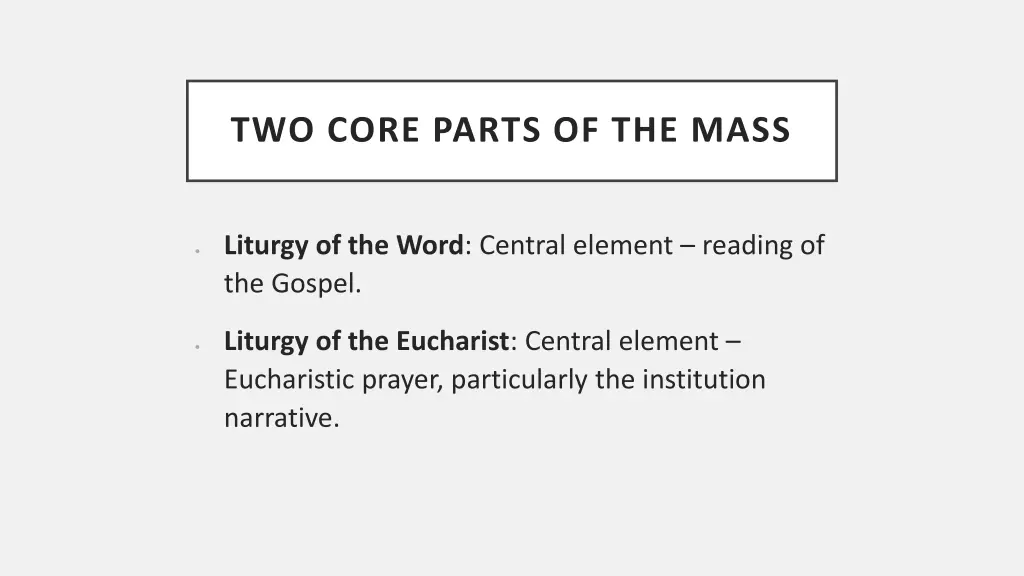
TWO CORE PARTS OF THE MASS Liturgy of the Word: Central element reading of the Gospel. Liturgy of the Eucharist: Central element Eucharistic prayer, particularly the institution narrative.
BEFORE THE CORE PARTS INTRODUCTORY RITES Purpose: Leads into the Liturgy of the Word. Begins with the Opening Hymn and priest processing in. Key Action: Priest kisses the altar.
SIGNIFICANCE OF THE ALTAR Place of the Eucharistic sacrifice. The Cross is made present under sacramental signs. Lord s Table: Where His Body and Blood are given as food and drink.
THE SIGN OF THE CROSS First Action: Sign of the Cross. Significance: o Enters us into the Trinity through the power of the Cross. o Reminds us of Baptism and sets the tone for the Mass.
GREETING Priest s Words: The Lord be with you. o Meaning: Desire and exhortation for the Lord s presence. Response: And with your spirit. o Recognition of the Holy Spirit s gift in the priest.
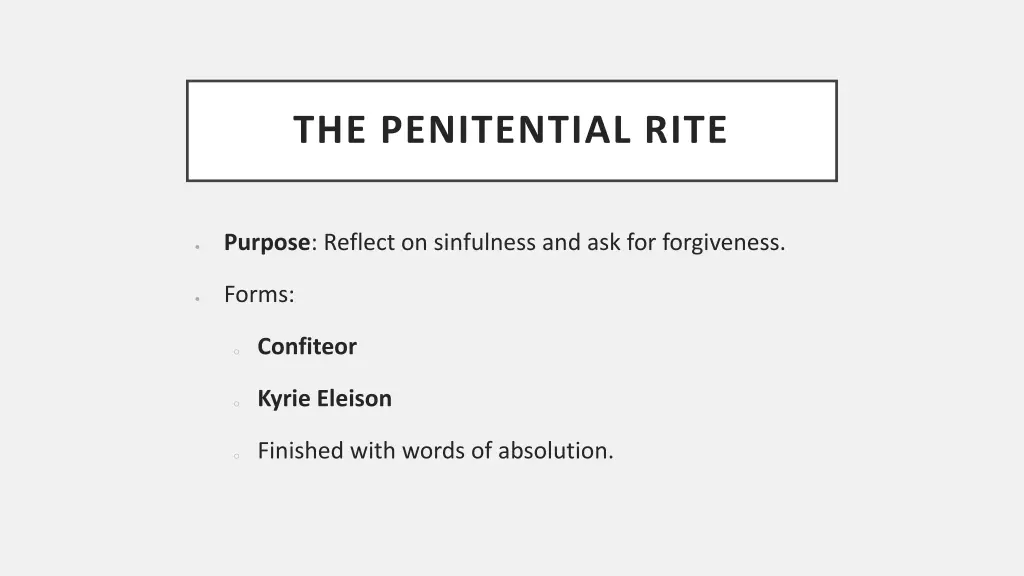
THE PENITENTIAL RITE Purpose: Reflect on sinfulness and ask for forgiveness. Forms: o Confiteor o Kyrie Eleison o Finished with words of absolution.
GLORIA GLORY TO GOD What we do: Sing or say the ancient hymn of praise. Opening Lines: Inspired by the angels announcement of Christ s birth. Focus: Praise to God Father, Son, and Holy Spirit.
THE COLLECT Purpose: o Gathers us together and directs intentions to God. o Prepares us for the Liturgy of the Word. Structure: o Addressed to the Father. o Anamnesis: Remembering God s great works. o Petition: Tied to the liturgical season.
THE LITURGY OF THE WORD Understanding Its Structure and Significance
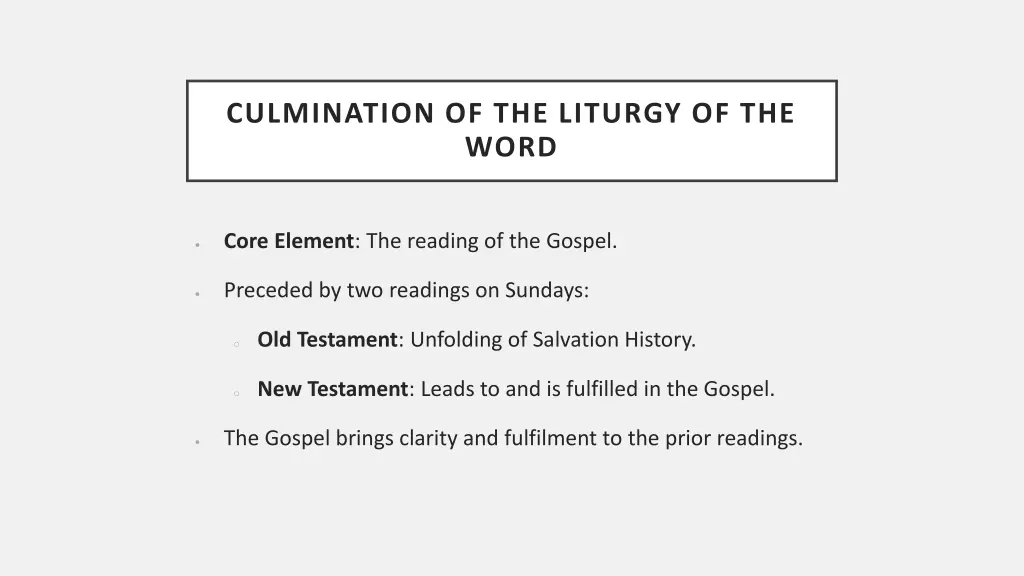
CULMINATION OF THE LITURGY OF THE WORD Core Element: The reading of the Gospel. Preceded by two readings on Sundays: o Old Testament: Unfolding of Salvation History. o New Testament: Leads to and is fulfilled in the Gospel. The Gospel brings clarity and fulfilment to the prior readings.
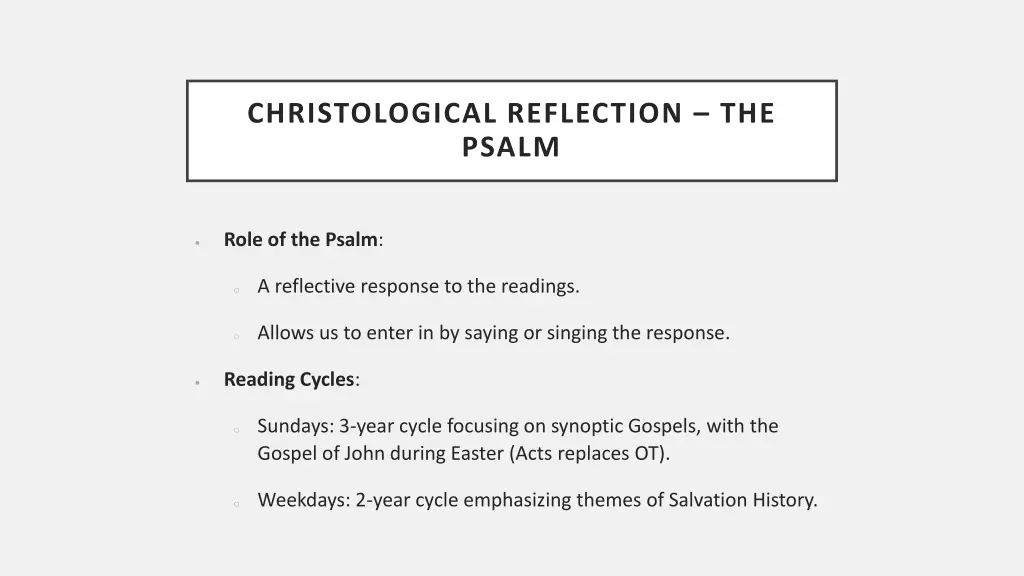
CHRISTOLOGICAL REFLECTION THE PSALM Role of the Psalm: o A reflective response to the readings. o Allows us to enter in by saying or singing the response. Reading Cycles: o Sundays: 3-year cycle focusing on synoptic Gospels, with the Gospel of John during Easter (Acts replaces OT). o Weekdays: 2-year cycle emphasizing themes of Salvation History.
POSTURE AND REVERENCE FOR THE GOSPEL Seating for Readings: Reflecting and receiving the Word. Standing for the Gospel: o Posture of attention and reverence. o Accompanied by the Gospel acclamation (sung or spoken). Special Significance of the Gospel: o Priest kisses the Gospel. o Reading is more elaborate, reflecting its importance.
THE HOMILY Purpose: Connects the Word of God with the Eucharistic celebration. Focuses on Jesus, whom we have met in the Word, and prepares us to meet Him in the Eucharist. Quality: The homily can vary but should enrich our spiritual experience.
THE CREED PROFESSING OUR FAITH Response to the Homily: Standing together to declare our faith. Two options for the Creed: o Early baptismal creeds. o Nicene-Constantinopolitan Creed (4th century) Reflects responses to heresies about the Trinity and Jesus.
BRINGING OUR PETITIONS Final Step of the Liturgy of the Word: Emboldened by our faith, we bring petitions for the community, the Church, and the world to God. o




![get⚡[PDF]❤ The Healthiest People on Earth: Your Guide to Living 10 Years Longer](/thumb/20470/get-pdf-the-healthiest-people-on-earth-your-guide-to-living-10-years-longer.jpg)