Explore the fundamentals of statistical methods in Chapter 1 - Describing Data with Graphs. Learn about variables, experimental units, types of variables like qualitative and quantitative, and examples illustrating univariate, bivariate, and multivariate data. Understand how to categorize variables based on their characteristics and measurements.
Please find below an Image/Link to download the presentation.
The content on the website is provided AS IS for your information and personal use only. It may not be sold, licensed, or shared on other websites without obtaining consent from the author. If you encounter any issues during the download, it is possible that the publisher has removed the file from their server.
You are allowed to download the files provided on this website for personal or commercial use, subject to the condition that they are used lawfully. All files are the property of their respective owners.
The content on the website is provided AS IS for your information and personal use only. It may not be sold, licensed, or shared on other websites without obtaining consent from the author.
Variables A variable is a characteristic that changes or varies over time and/or for different individuals or objects under consideration. Examples: GPA White blood cell count Hair color Time to failure of a computer component
Definitions An experimental unit is the individual or object on which a variable is measured. A measurement results when a variable is actually measured on an experimental unit. A set of measurements, called data, can be either a sample or a population.
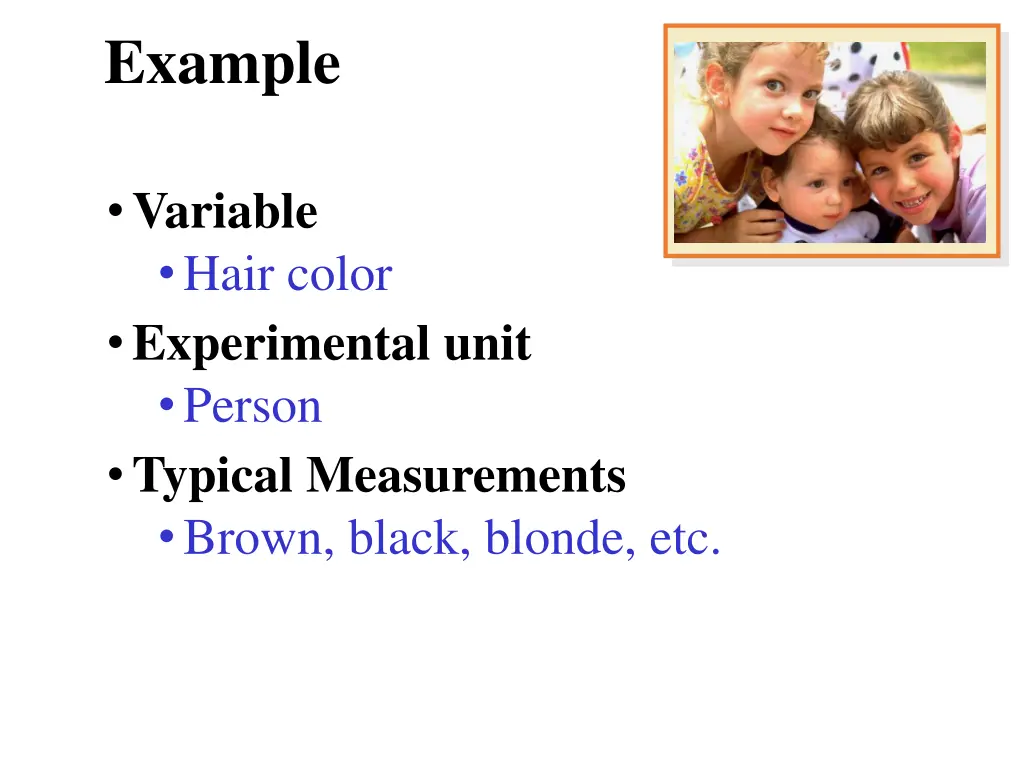
Example Variable Hair color Experimental unit Person Typical Measurements Brown, black, blonde, etc.
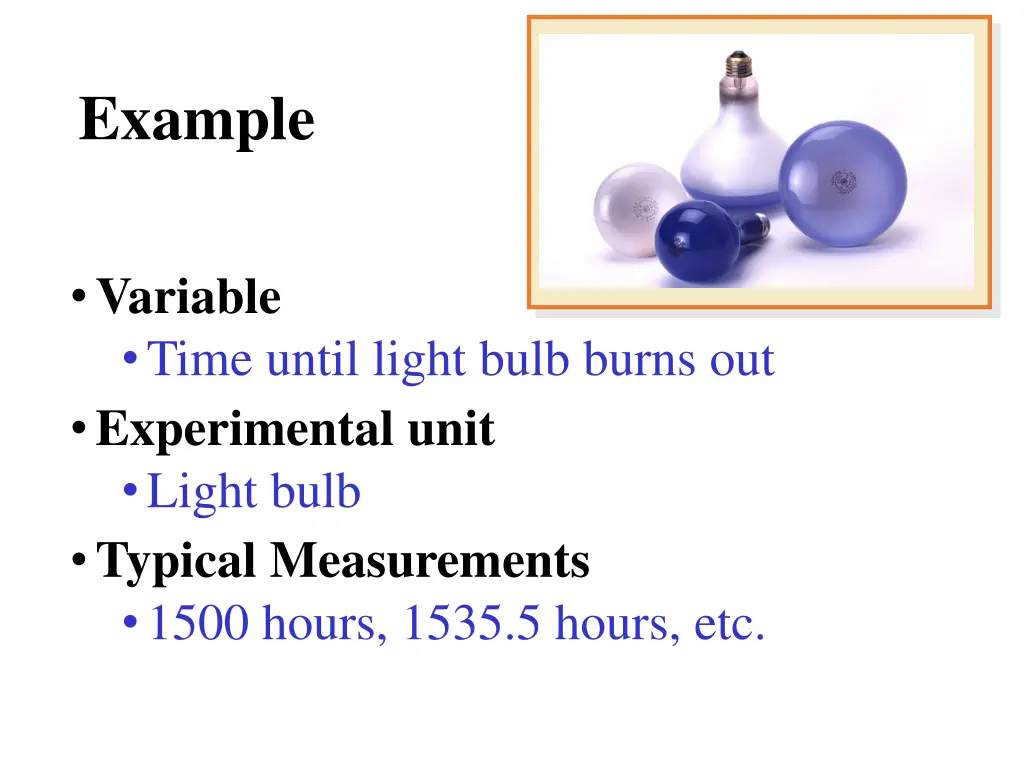
Example Variable Time until light bulb burns out Experimental unit Light bulb Typical Measurements 1500 hours, 1535.5 hours, etc.
How many variables have you measured? Univariate data: One variable is measured on a single experimental unit. Bivariate data: Two variables are measured on a single experimental unit. Multivariate data: More than two variables are measured on a single experimental unit.
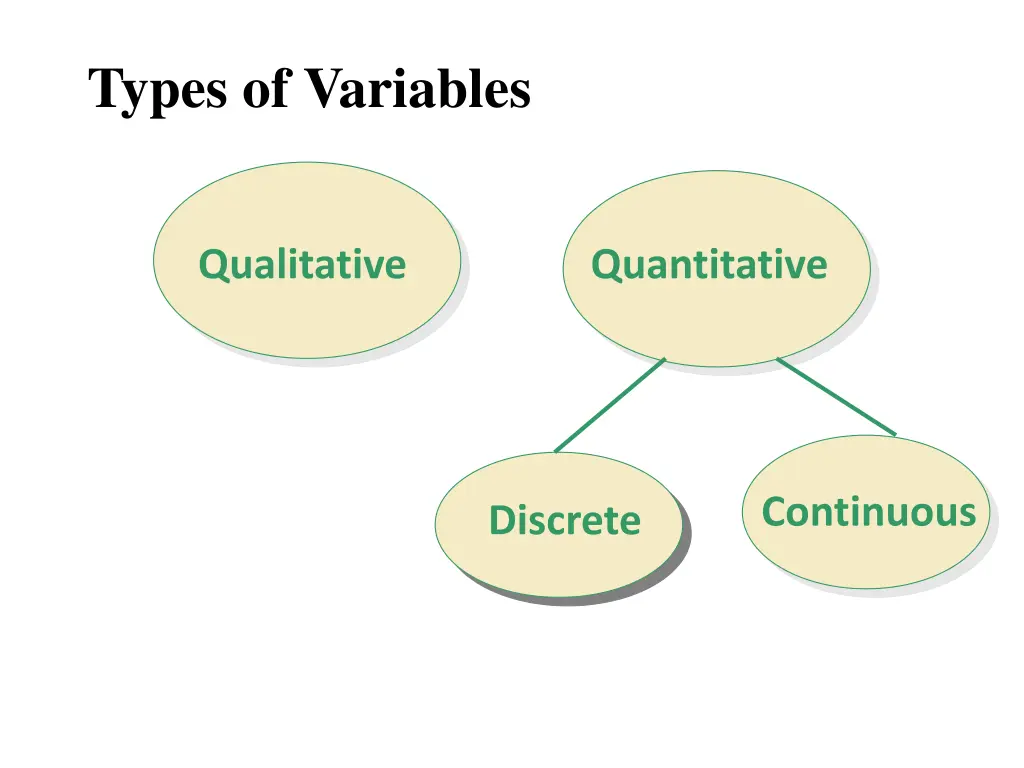
Types of Variables Qualitative variables (what, which type ) measure a quality or characteristic on each experimental unit.(categorical data) Examples: Hair color (black, brown, blonde ) Make of car (Dodge, Honda, Ford ) Gender (male, female) State of birth (Iowa, Arizona, .)
Types of Variables Quantitative variables (How big, how many) measure a numerical quantity on each experimental unit.(denoted by x) Discrete if it can assume only a finite or countable number of values. Continuous if it can assume the infinitely many values corresponding to the points on a line interval.
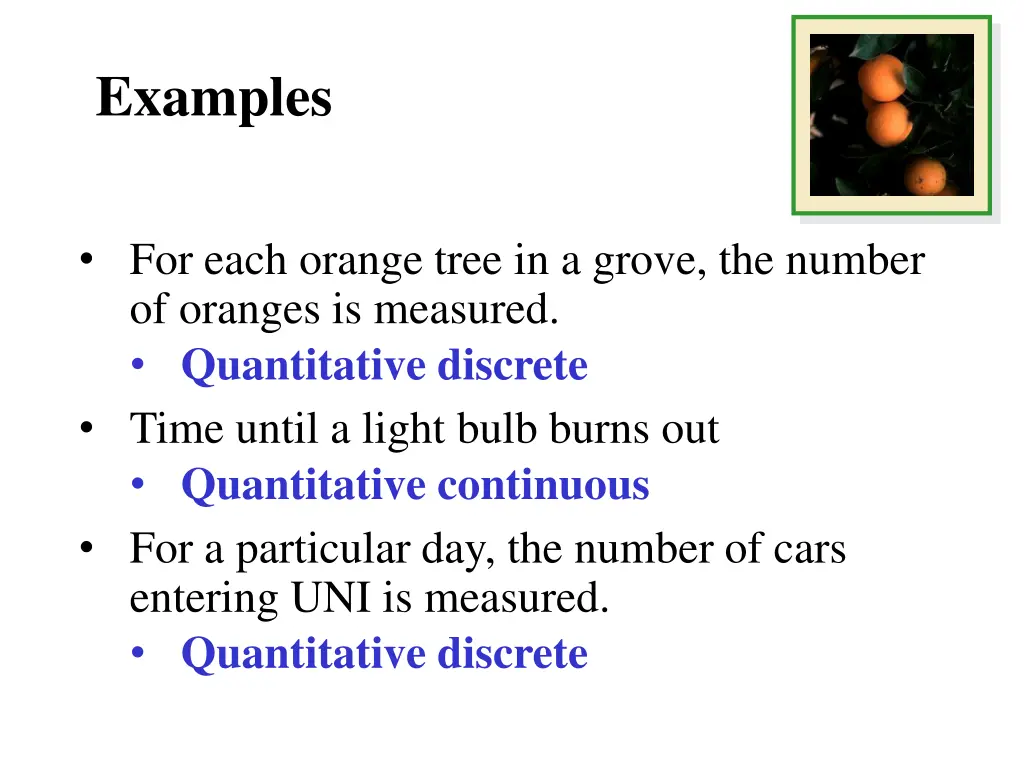
Examples For each orange tree in a grove, the number of oranges is measured. Quantitative discrete Time until a light bulb burns out Quantitative continuous For a particular day, the number of cars entering UNI is measured. Quantitative discrete
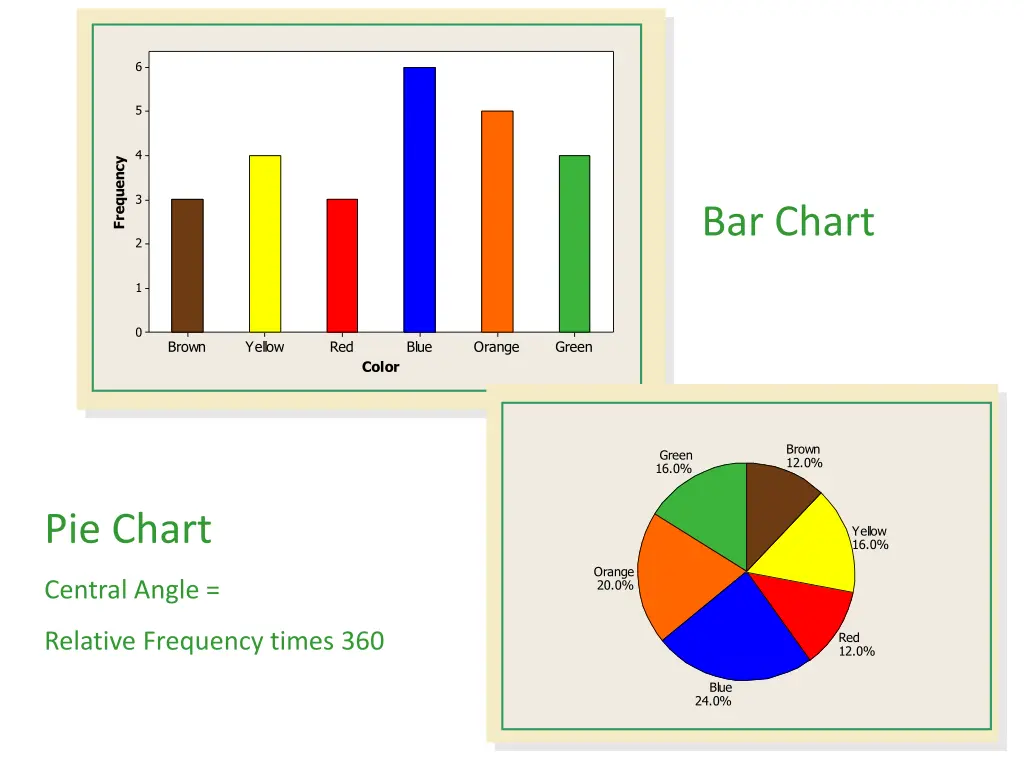
Graphing Qualitative Variables Use a data distribution to describe: What values of the variable have been measured How often each value has occurred How often can be measured 3 ways: Frequency Relative frequency = Frequency/n Percent = 100 x Relative frequency
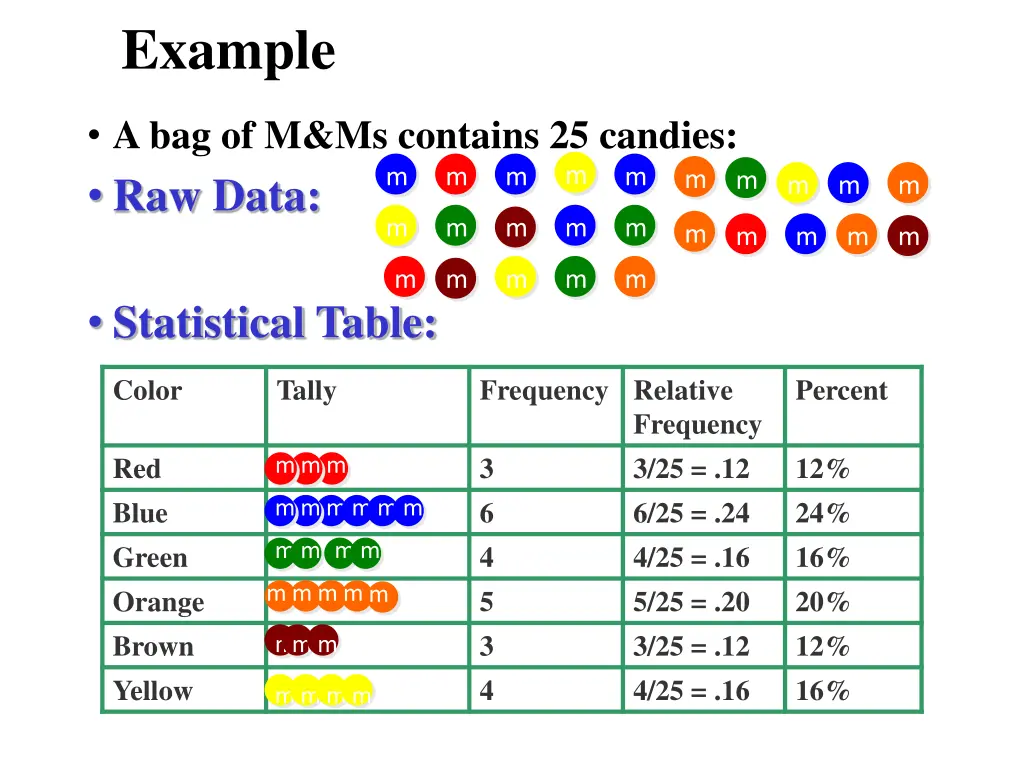
Example A bag of M&Ms contains 25 candies: Raw Data: m m m m m m m m m m m m m m m m m m m m m m m m m Statistical Table: Color Tally Frequency Relative Percent Frequency 3/25 = .12 6/25 = .24 4/25 = .16 5/25 = .20 3/25 = .12 4/25 = .16 Red Blue Green Orange Brown Yellow 3 6 4 5 3 4 12% 24% 16% 20% 12% 16% m m m m m m m m m m m m m m mm m m m m m m m m m
6 Graphs Graphs 4 5 Frequency 3 Bar Chart 2 1 0 Brown Yellow Red Blue Orange Green Color Brown Green 12.0% 16.0% Pie Chart Yellow 16.0% Orange Central Angle = 20.0% Relative Frequency times 360 Red 12.0% Blue 24.0%
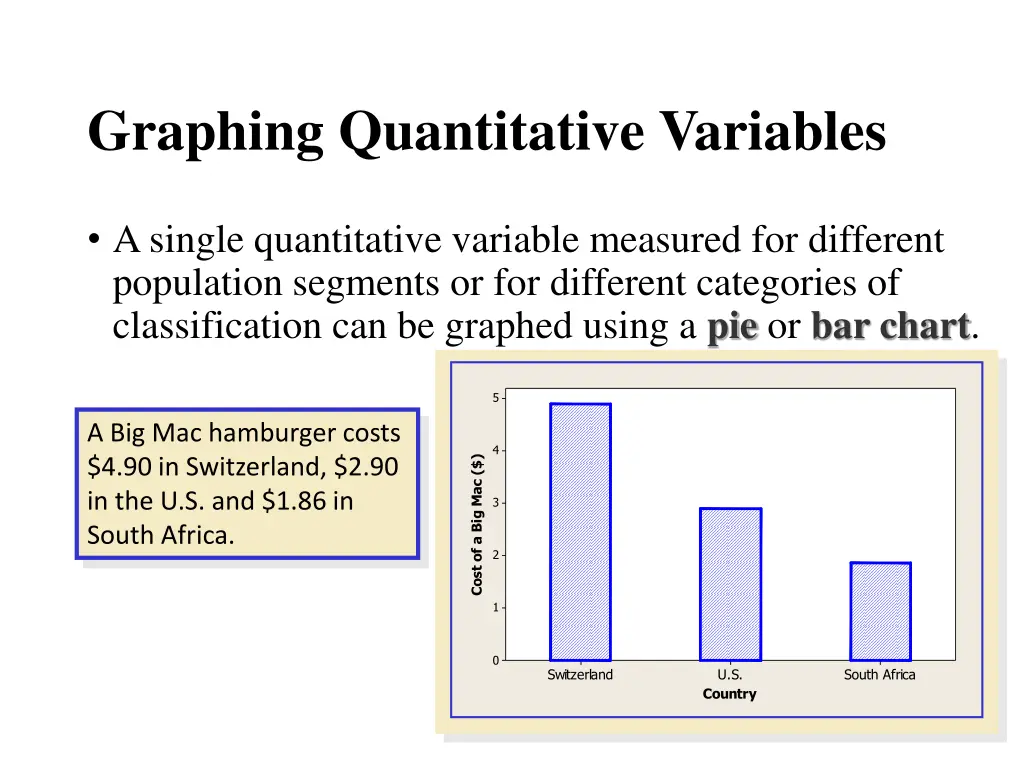
Graphing Quantitative Variables A single quantitative variable measured for different population segments or for different categories of classification can be graphed using a pie or bar chart. 5 A Big Mac hamburger costs $4.90 in Switzerland, $2.90 in the U.S. and $1.86 in South Africa. 4 Cost of a Big Mac ($) 3 2 1 0 Switzerland U.S. South Africa Country
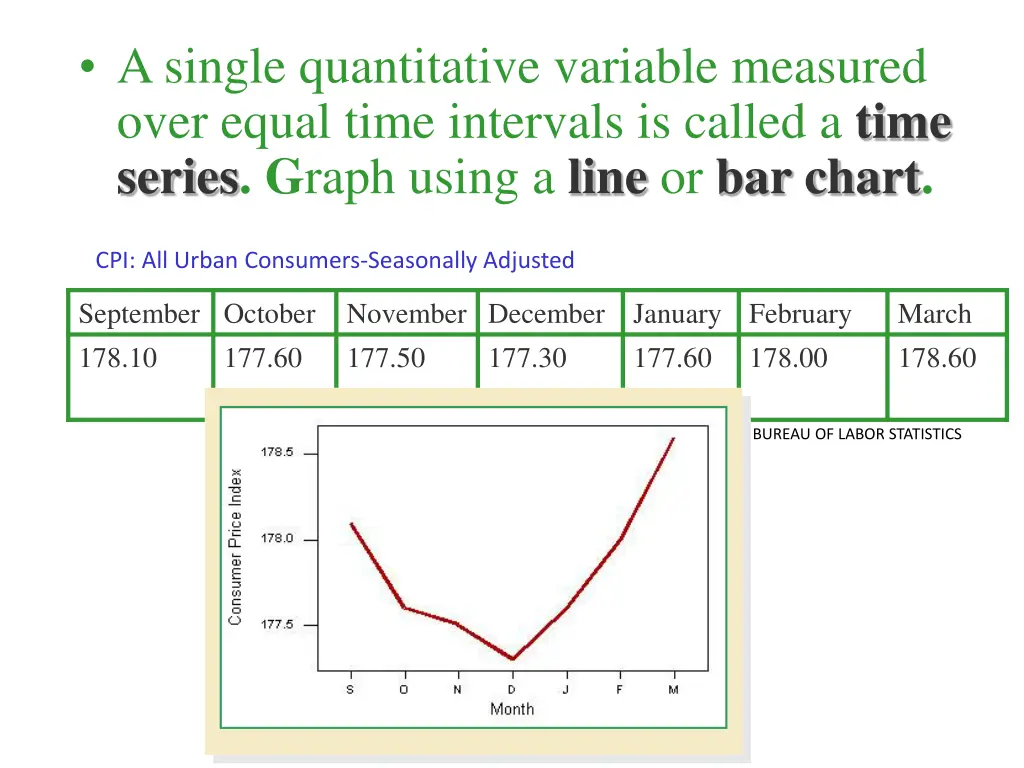
A single quantitative variable measured over equal time intervals is called a time series. Graph using a line or bar chart. CPI: All Urban Consumers-Seasonally Adjusted September October 178.10 November December 177.50 January 177.60 February 178.00 March 178.60 177.60 177.30 BUREAU OF LABOR STATISTICS
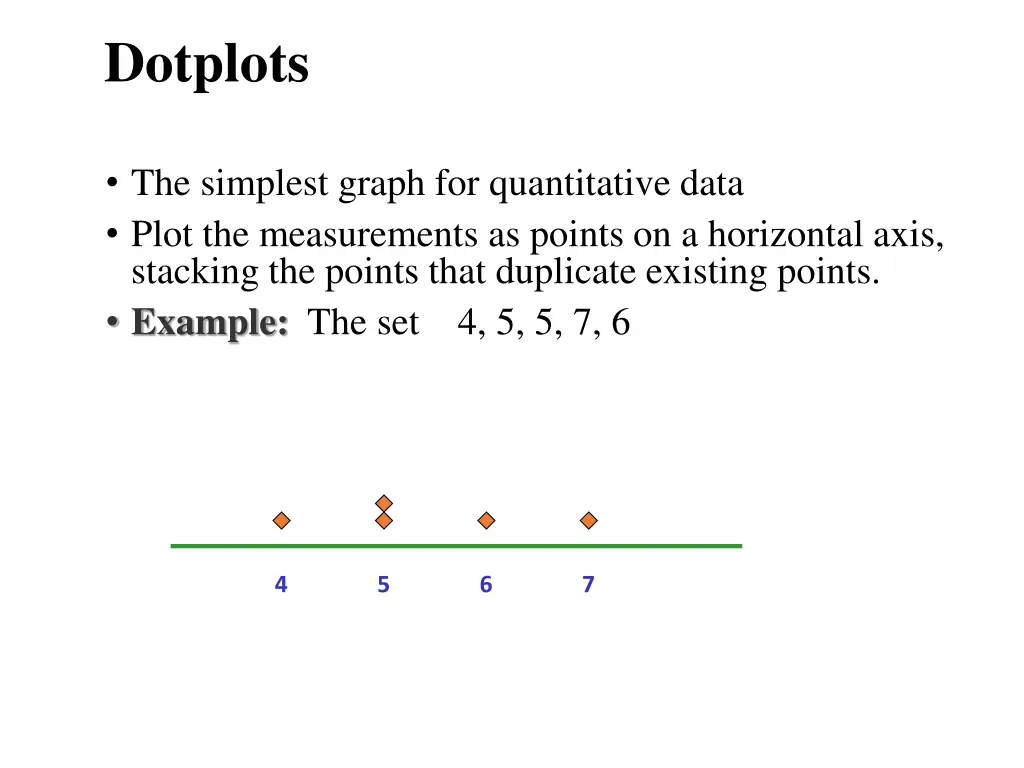
Dotplots The simplest graph for quantitative data Plot the measurements as points on a horizontal axis, stacking the points that duplicate existing points. Example: The set 4, 5, 5, 7, 6 4 5 6 7
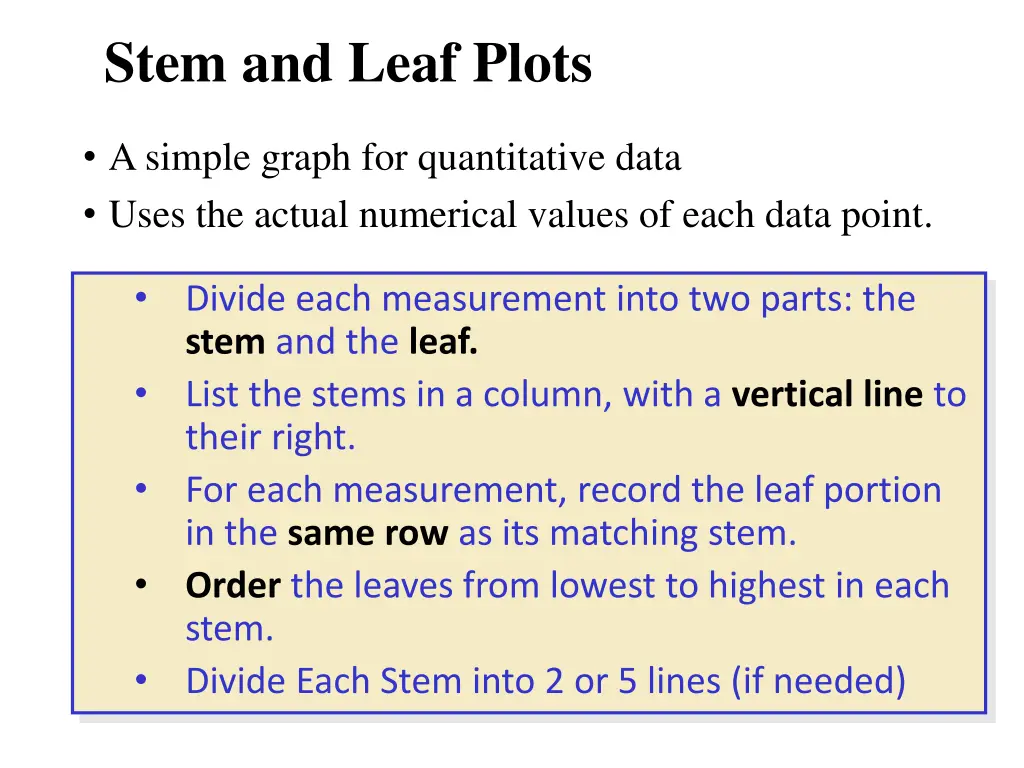
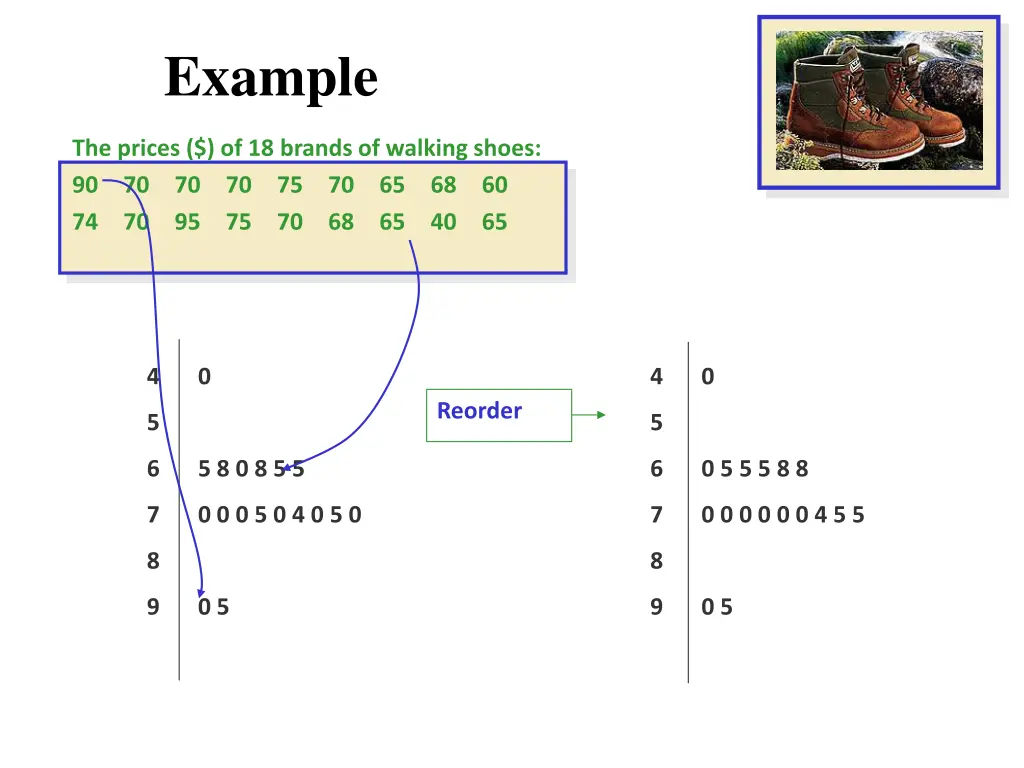
Stem and Leaf Plots A simple graph for quantitative data Uses the actual numerical values of each data point. Divide each measurement into two parts: the stem and the leaf. List the stems in a column, with a vertical line to their right. For each measurement, record the leaf portion in the same row as its matching stem. Order the leaves from lowest to highest in each stem. Divide Each Stem into 2 or 5 lines (if needed)
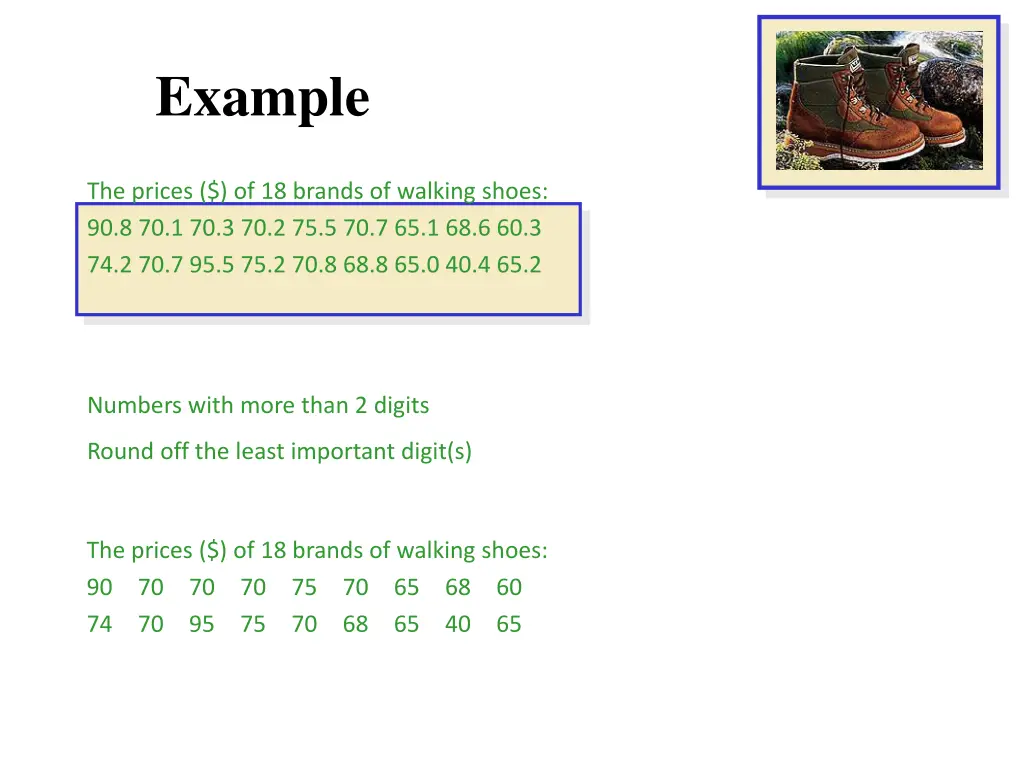
Example The prices ($) of 18 brands of walking shoes: 90.8 70.1 70.3 70.2 75.5 70.7 65.1 68.6 60.3 74.2 70.7 95.5 75.2 70.8 68.8 65.0 40.4 65.2 Numbers with more than 2 digits Round off the least important digit(s) The prices ($) of 18 brands of walking shoes: 90 70 70 70 75 70 65 68 60 74 70 95 75 70 68 65 40 65
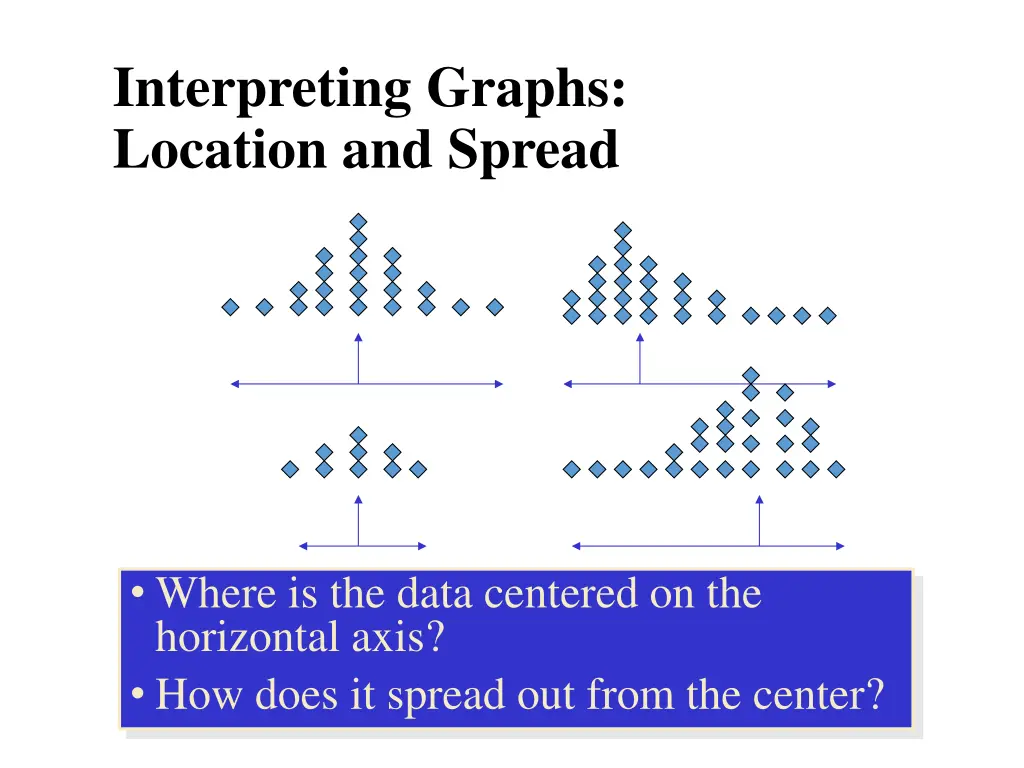
Interpreting Graphs: Location and Spread Where is the data centered on the horizontal axis? How does it spread out from the center?
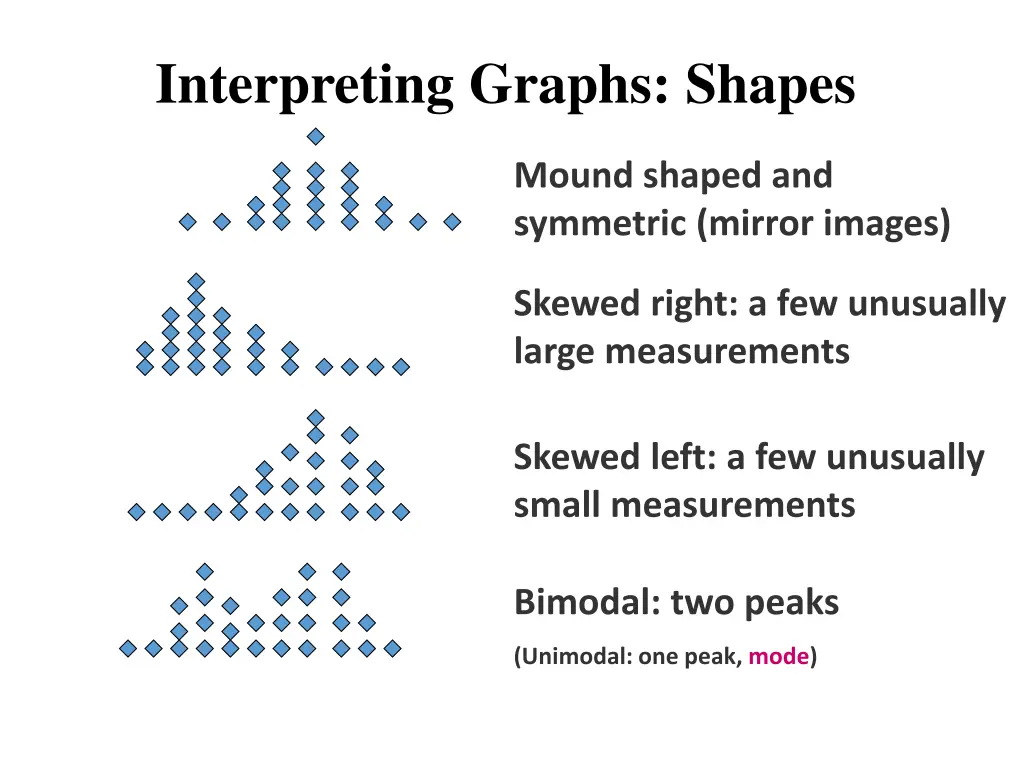
Interpreting Graphs: Shapes Mound shaped and symmetric (mirror images) Skewed right: a few unusually large measurements Skewed left: a few unusually small measurements Bimodal: two peaks (Unimodal: one peak, mode)
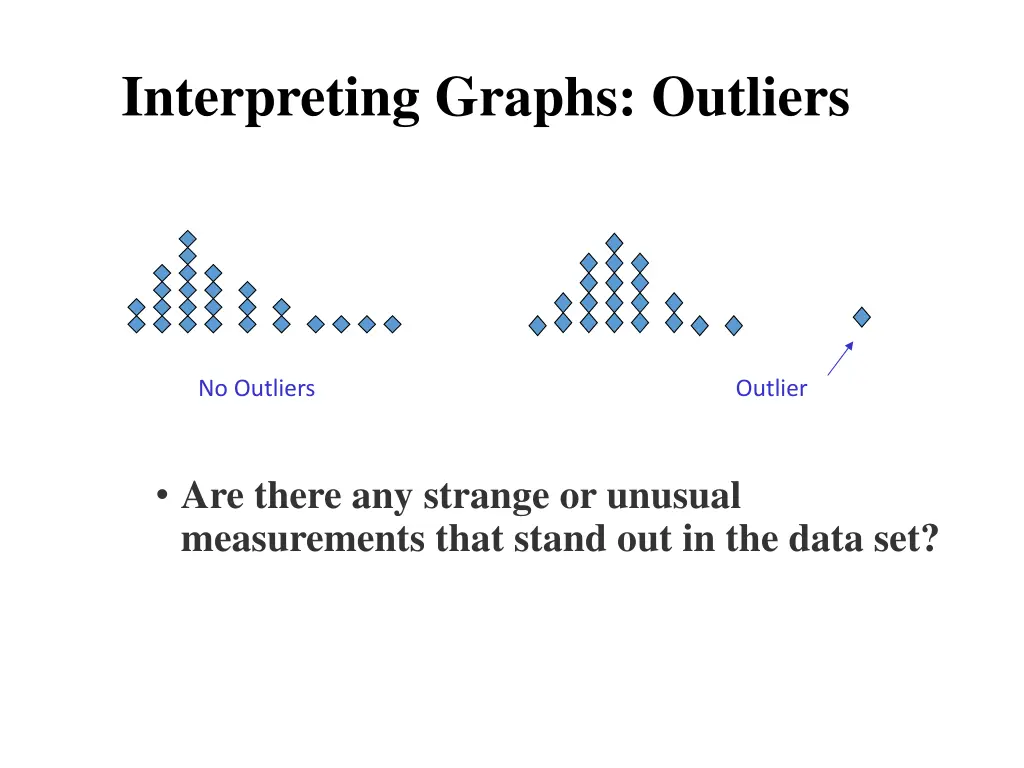
Interpreting Graphs: Outliers No Outliers Outlier Are there any strange or unusual measurements that stand out in the data set?
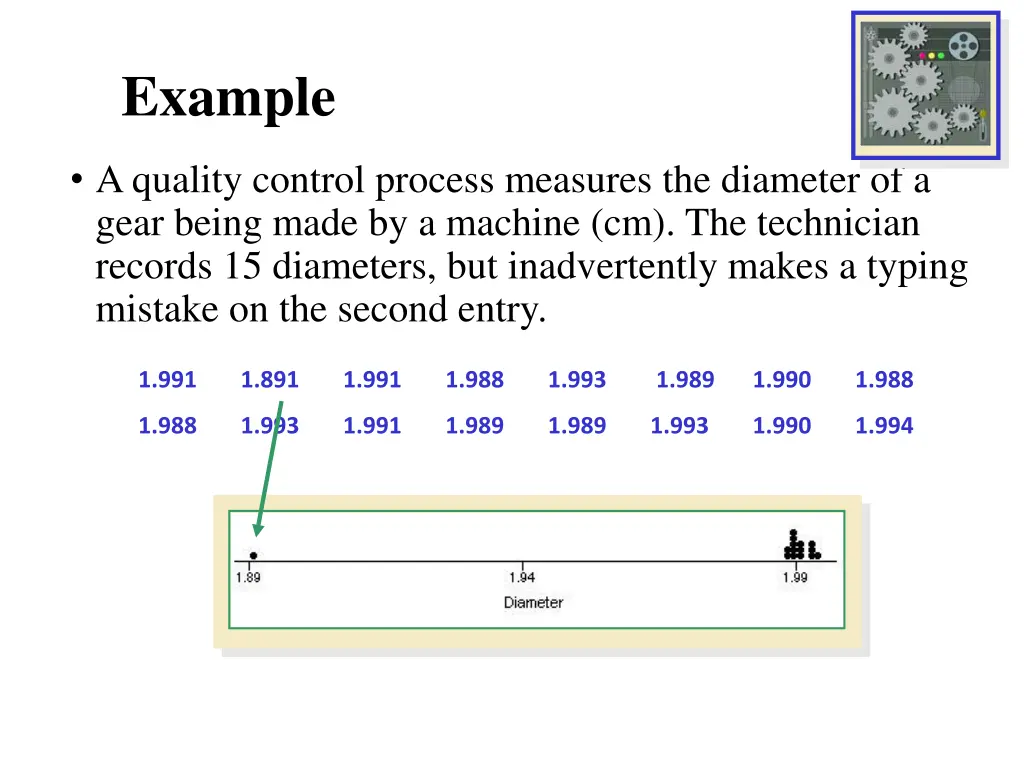
Example A quality control process measures the diameter of a gear being made by a machine (cm). The technician records 15 diameters, but inadvertently makes a typing mistake on the second entry. 1.991 1.891 1.991 1.988 1.993 1.989 1.990 1.988 1.988 1.993 1.991 1.989 1.989 1.993 1.990 1.994
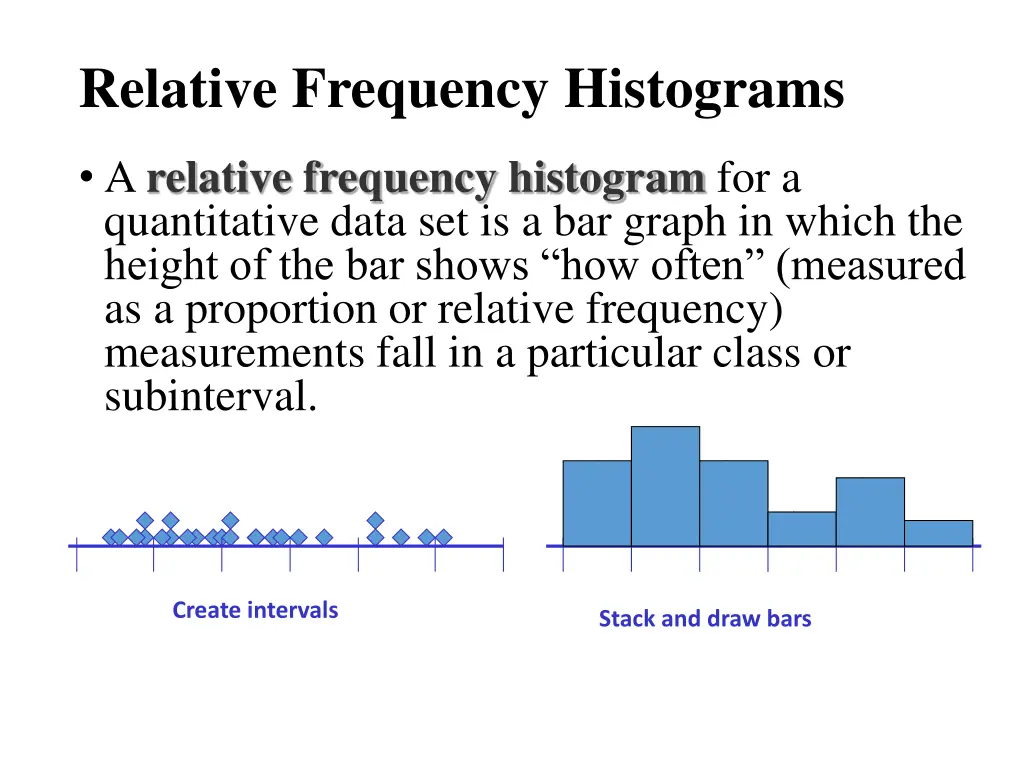
Relative Frequency Histograms A relative frequency histogram for a quantitative data set is a bar graph in which the height of the bar shows how often (measured as a proportion or relative frequency) measurements fall in a particular class or subinterval. Create intervals Stack and draw bars
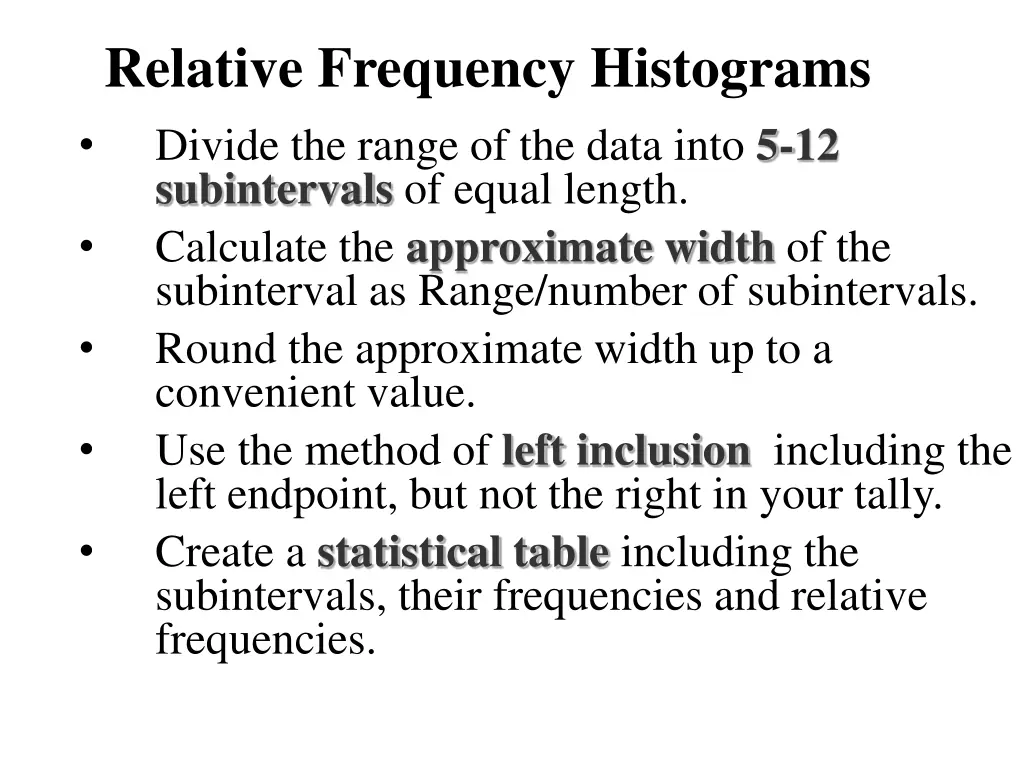
Relative Frequency Histograms Divide the range of the data into 5-12 subintervals of equal length. Calculate the approximate width of the subinterval as Range/number of subintervals. Round the approximate width up to a convenient value. Use the method of left inclusion, including the left endpoint, but not the right in your tally. Create a statistical table including the subintervals, their frequencies and relative frequencies.
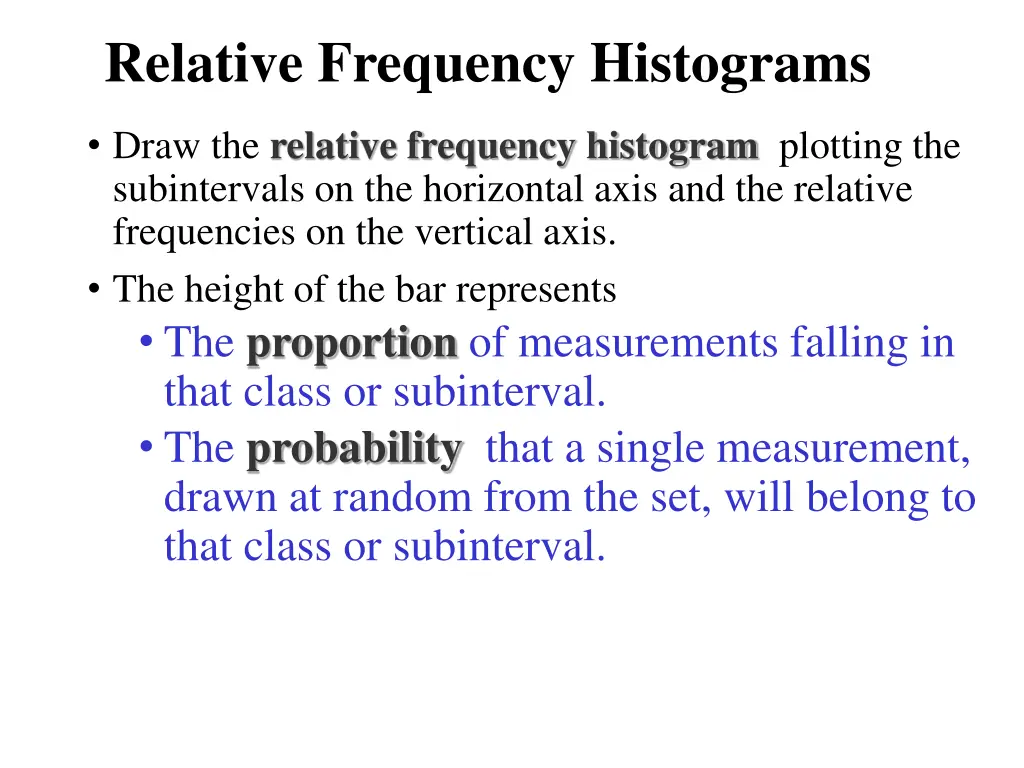
Relative Frequency Histograms Draw the relative frequency histogram, plotting the subintervals on the horizontal axis and the relative frequencies on the vertical axis. The height of the bar represents The proportion of measurements falling in that class or subinterval. The probability that a single measurement, drawn at random from the set, will belong to that class or subinterval.
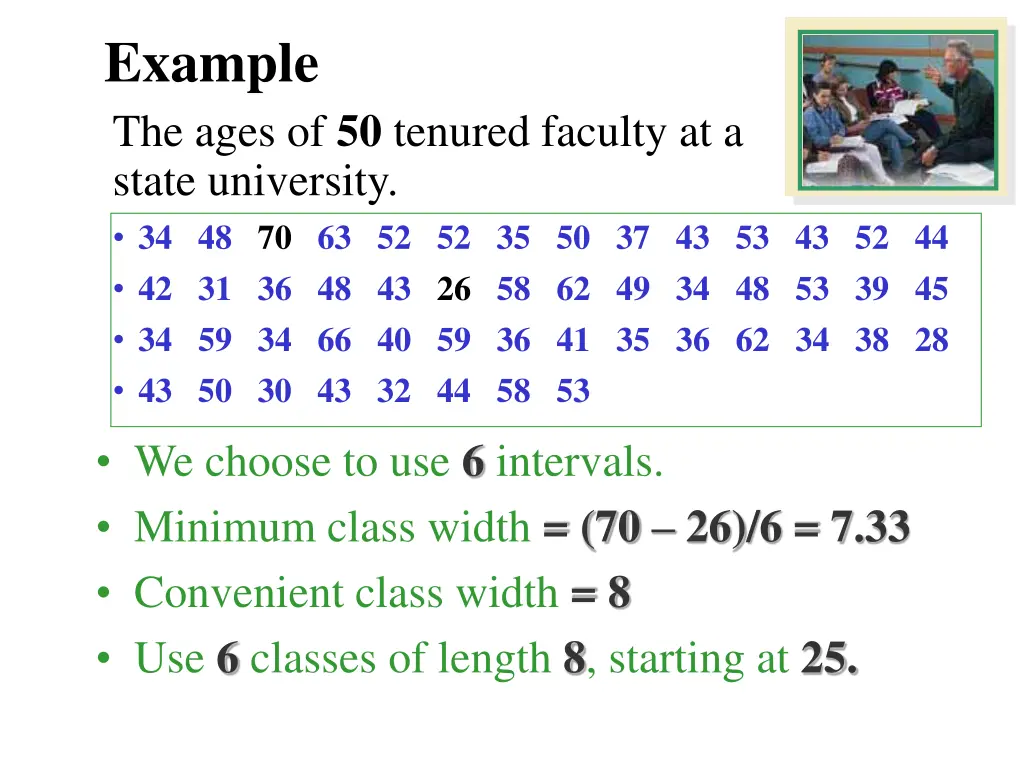
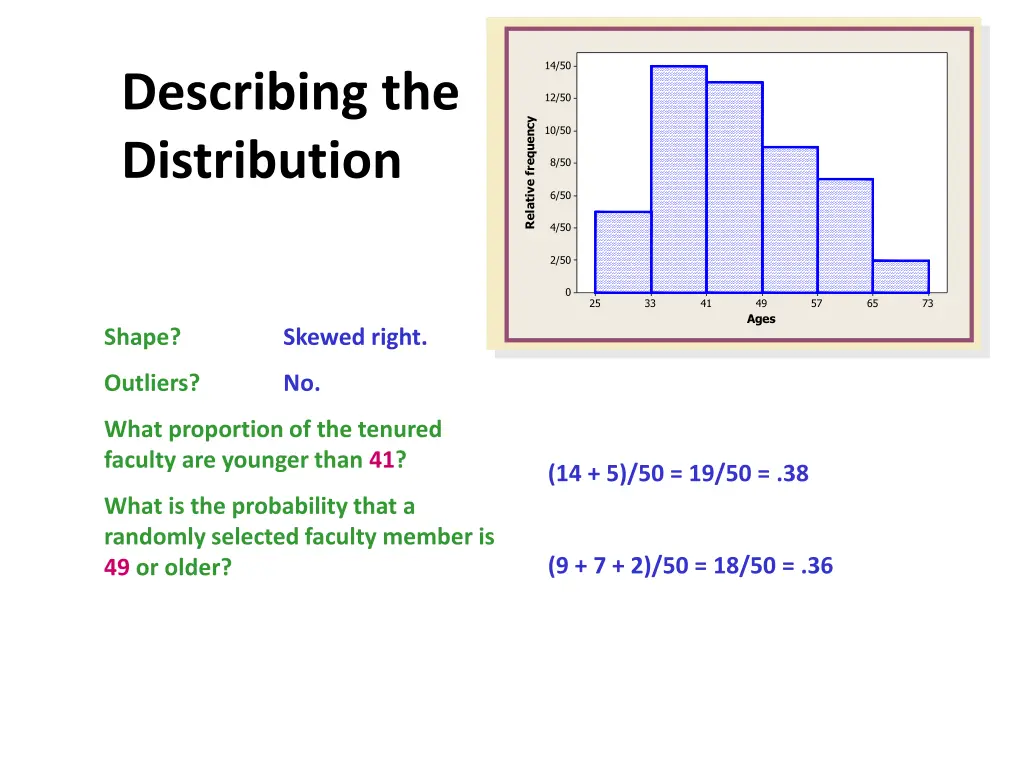
Example The ages of 50 tenured faculty at a state university. 34 48 70 63 52 52 35 50 37 43 53 43 52 44 42 31 36 48 43 26 58 62 49 34 48 53 39 45 34 59 34 66 40 59 36 41 35 36 62 34 38 28 43 50 30 43 32 44 58 53 We choose to use 6 intervals. Minimum class width =(70 26)/6 = 7.33 Convenient class width = 8 Use 6 classes of length 8, starting at 25.
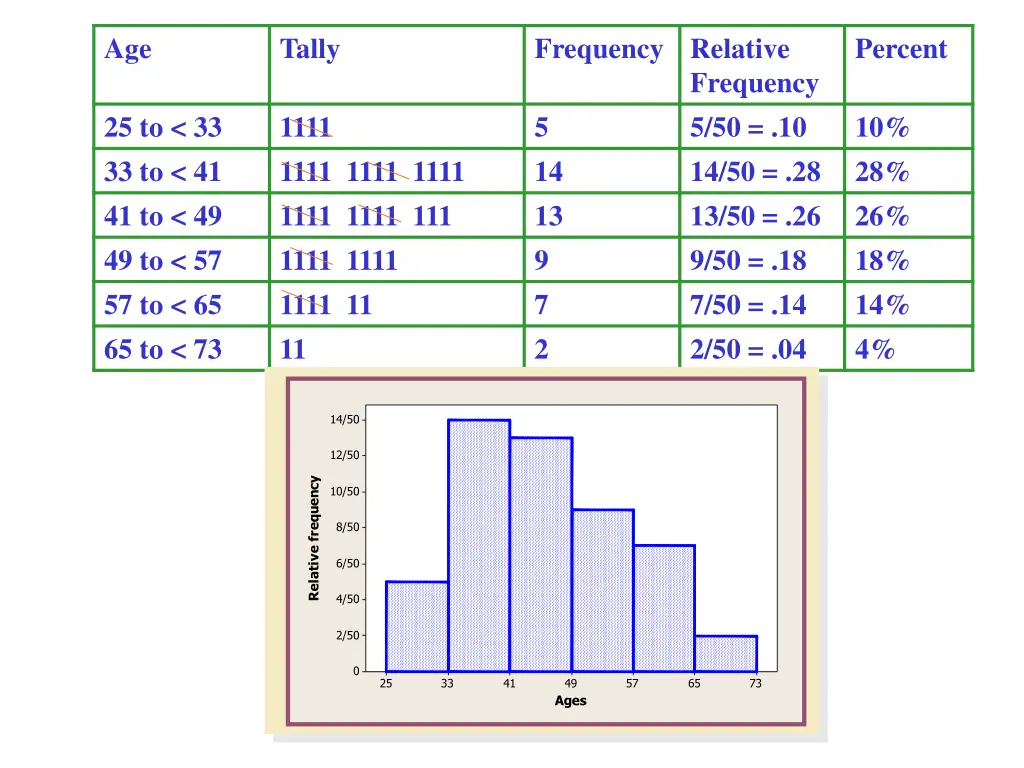
Age Tally Frequency Relative Frequency 5/50 = .10 14/50 = .28 13/50 = .26 9/50 = .18 7/50 = .14 2/50 = .04 Percent 25 to < 33 33 to < 41 41 to < 49 49 to < 57 57 to < 65 65 to < 73 1111 1111 1111 1111 1111 1111 111 1111 1111 1111 11 11 5 14 13 9 7 2 10% 28% 26% 18% 14% 4% 14/50 12/50 Relative frequency 10/50 8/50 6/50 4/50 2/50 0 25 33 41 49 57 65 73 Ages
14/50 Describing the Distribution 12/50 Relative frequency 10/50 8/50 6/50 4/50 2/50 0 25 33 41 49 57 65 73 Ages Shape? Skewed right. Outliers? No. What proportion of the tenured faculty are younger than 41? (14 + 5)/50 = 19/50 = .38 What is the probability that a randomly selected faculty member is 49 or older? (9 + 7 + 2)/50 = 18/50 = .36
Key Concepts I. How Data Are Generated 1. Experimental units, variables, measurements 2. Samples and populations 3. Univariate, bivariate, and multivariate data II. Types of Variables 1. Qualitative or categorical 2. Quantitative a. Discrete b. Continuous III. Graphs for Univariate Data Distributions 1. Qualitative or categorical data a. Pie charts b. Bar charts
Key Concepts 2. Quantitative data a. Pie and bar charts b. Line charts c. Dotplots d. Stem and leaf plots e. Relative frequency histograms 3. Describing data distributions a. Shapes symmetric, skewed left, skewed right, unimodal, bimodal, mode b. Proportion of measurements in certain intervals c. Outliers