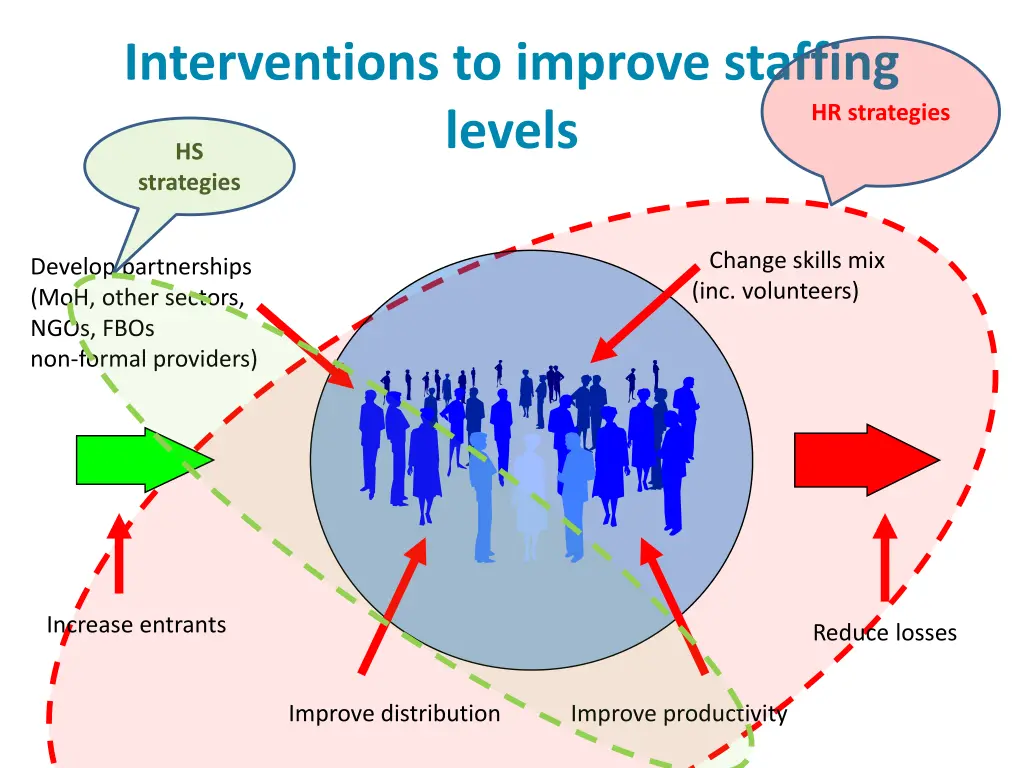
Enhance health workforce performance through interventions, scale definitions, and strategies. Explore staffing level improvements, individual staff understanding, and workforce management considerations for optimal outcomes. Implement integrated strategies for sustainable solutions with a focus on HR practices and wider health system enhancements.
Please find below an Image/Link to download the presentation.
The content on the website is provided AS IS for your information and personal use only. It may not be sold, licensed, or shared on other websites without obtaining consent from the author. If you encounter any issues during the download, it is possible that the publisher has removed the file from their server.
You are allowed to download the files provided on this website for personal or commercial use, subject to the condition that they are used lawfully. All files are the property of their respective owners.
The content on the website is provided AS IS for your information and personal use only. It may not be sold, licensed, or shared on other websites without obtaining consent from the author.
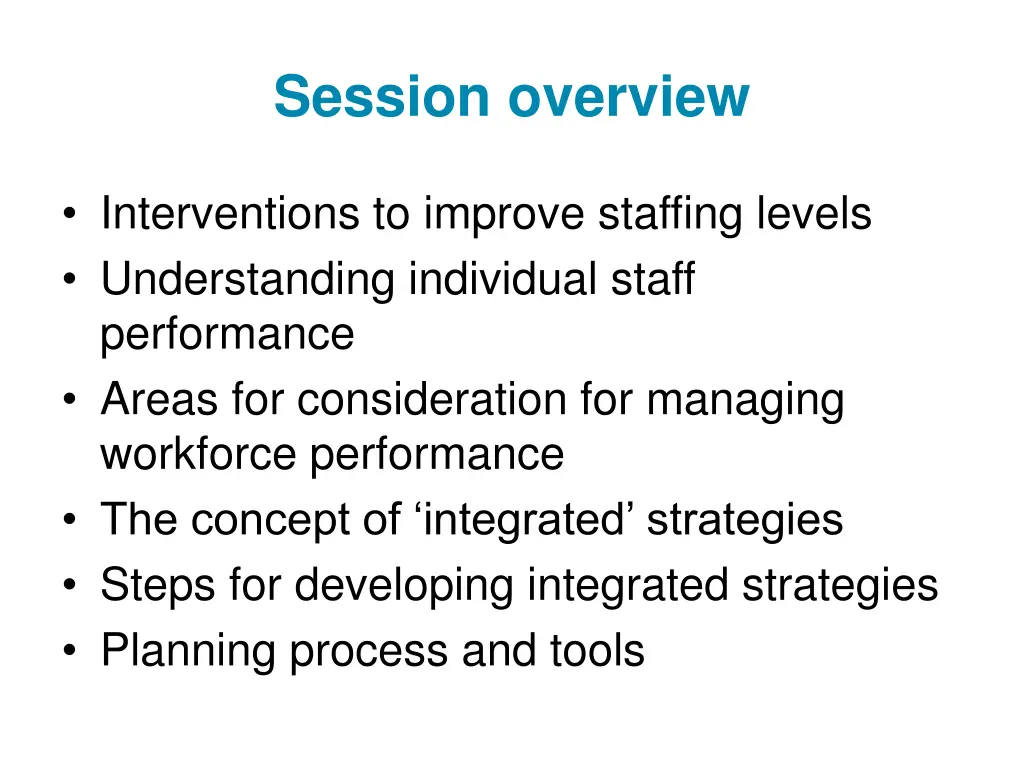
Session overview Interventions to improve staffing levels Understanding individual staff performance Areas for consideration for managing workforce performance The concept of integrated strategies Steps for developing integrated strategies Planning process and tools
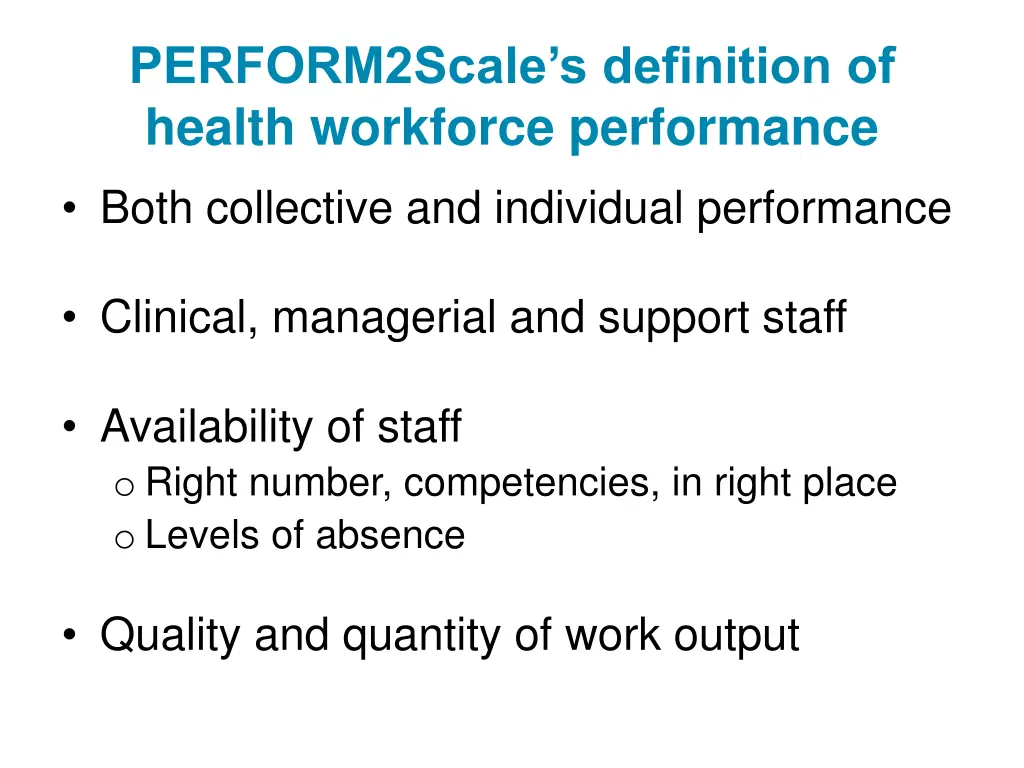
PERFORM2Scales definition of health workforce performance Both collective and individual performance Clinical, managerial and support staff Availability of staff o Right number, competencies, in right place o Levels of absence Quality and quantity of work output
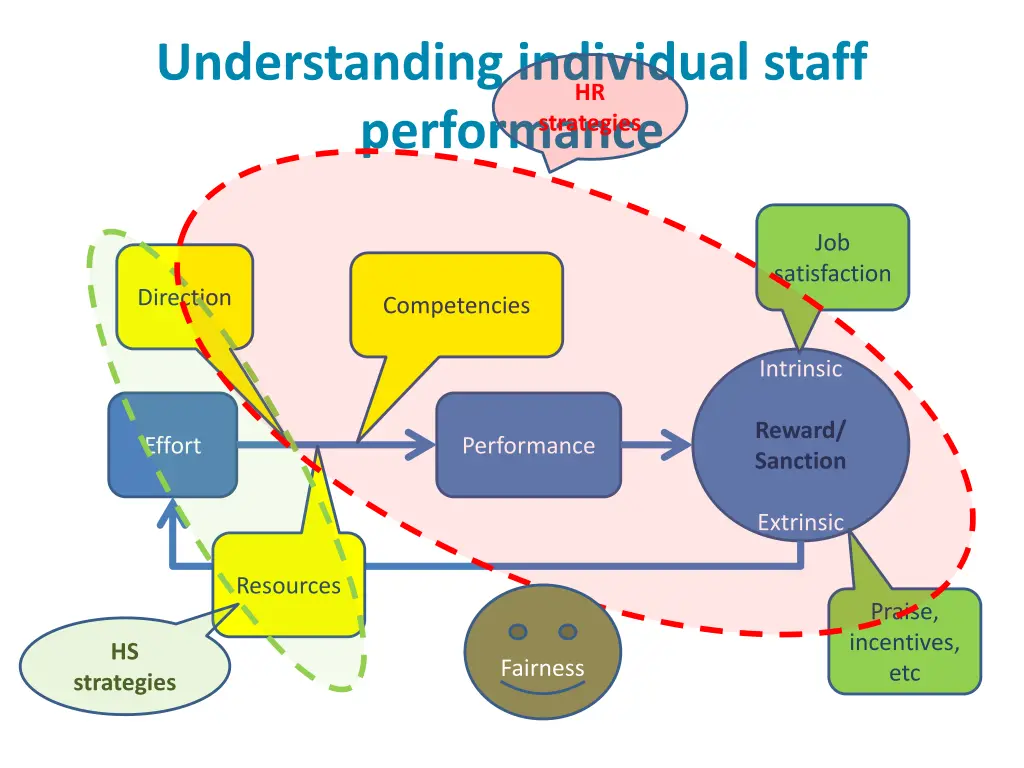
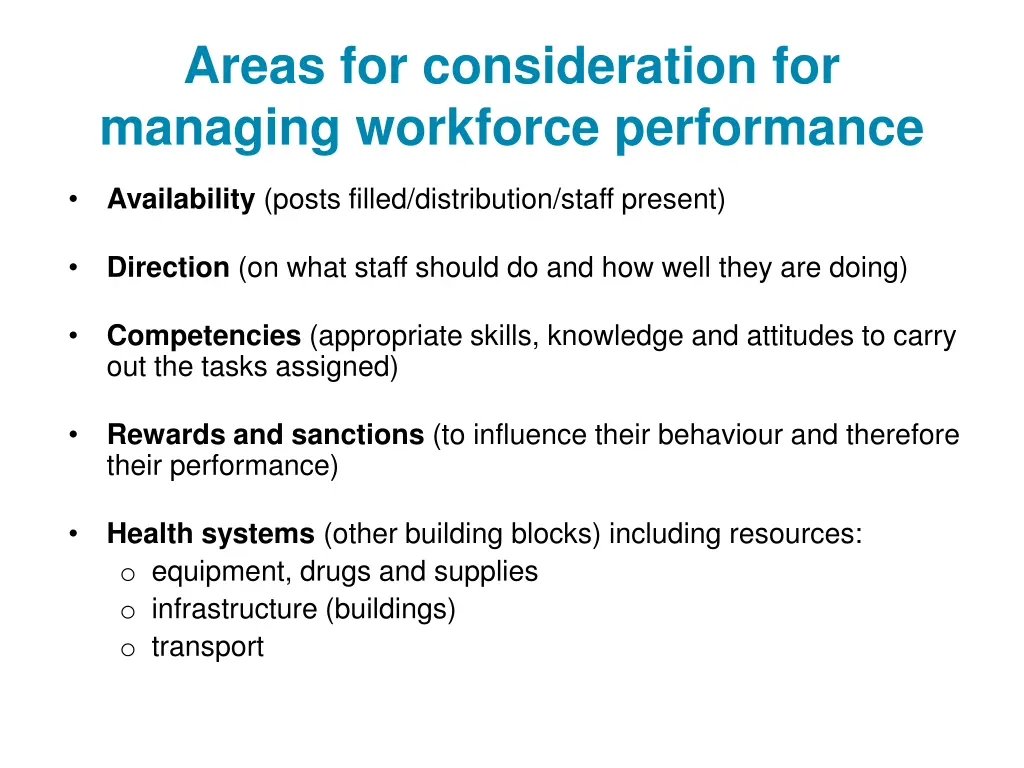
Areas for consideration for managing workforce performance Availability (posts filled/distribution/staff present) Direction (on what staff should do and how well they are doing) Competencies (appropriate skills, knowledge and attitudes to carry out the tasks assigned) Rewards and sanctions (to influence their behaviour and therefore their performance) Health systems (other building blocks) including resources: o equipment, drugs and supplies o infrastructure (buildings) o transport
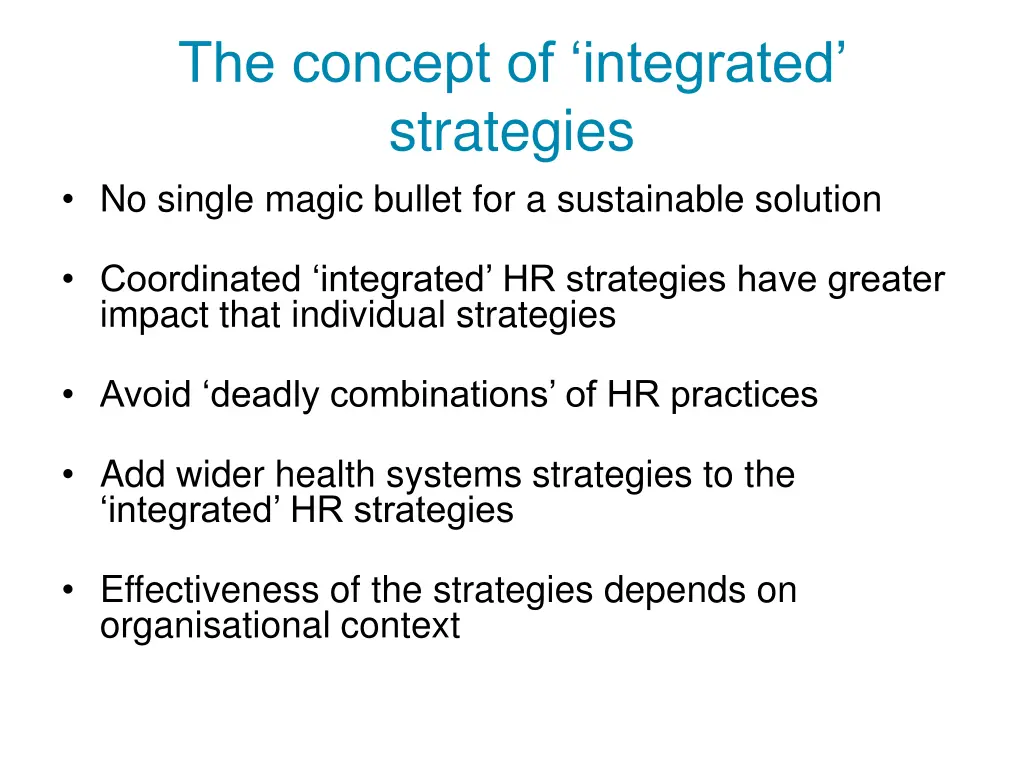
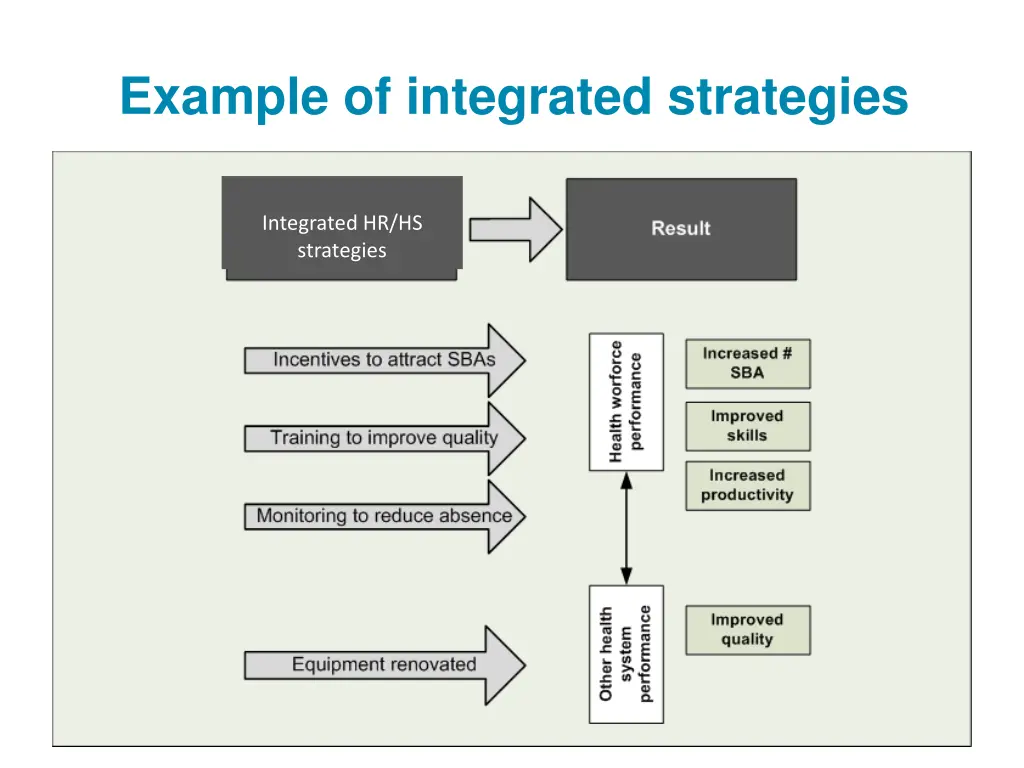
The concept of integrated strategies No single magic bullet for a sustainable solution Coordinated integrated HR strategies have greater impact that individual strategies Avoid deadly combinations of HR practices Add wider health systems strategies to the integrated HR strategies Effectiveness of the strategies depends on organisational context
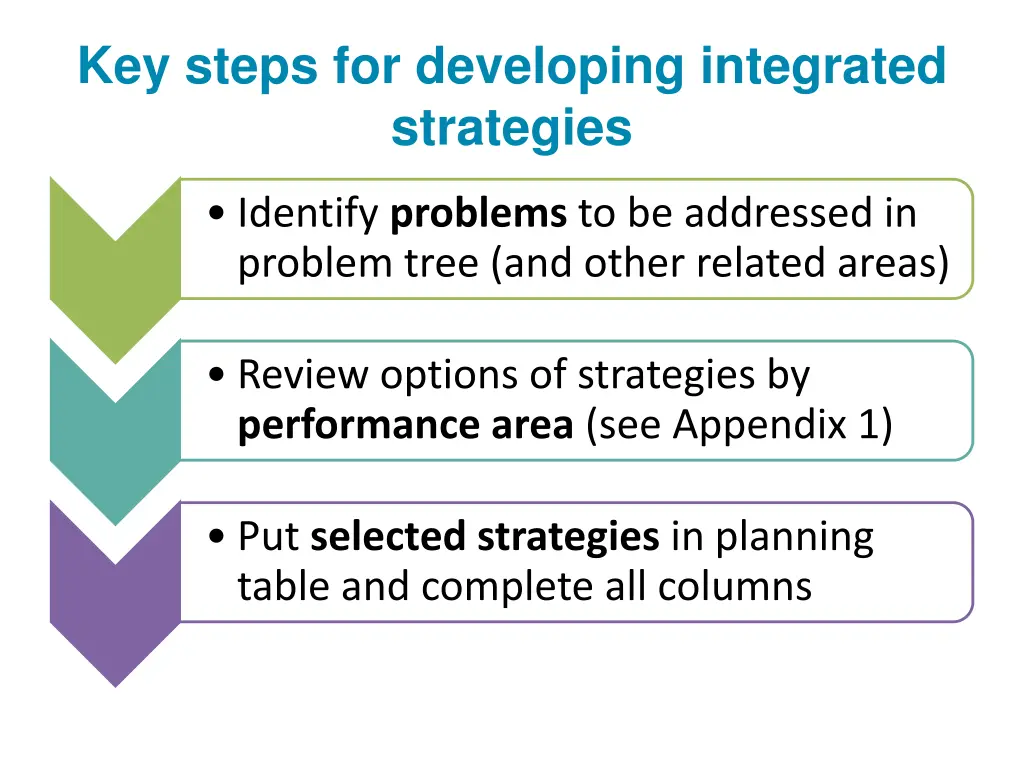
Key steps for developing integrated strategies Identify problems to be addressed in problem tree (and other related areas) Review options of strategies by performance area (see Appendix 1) Put selected strategies in planning table and complete all columns
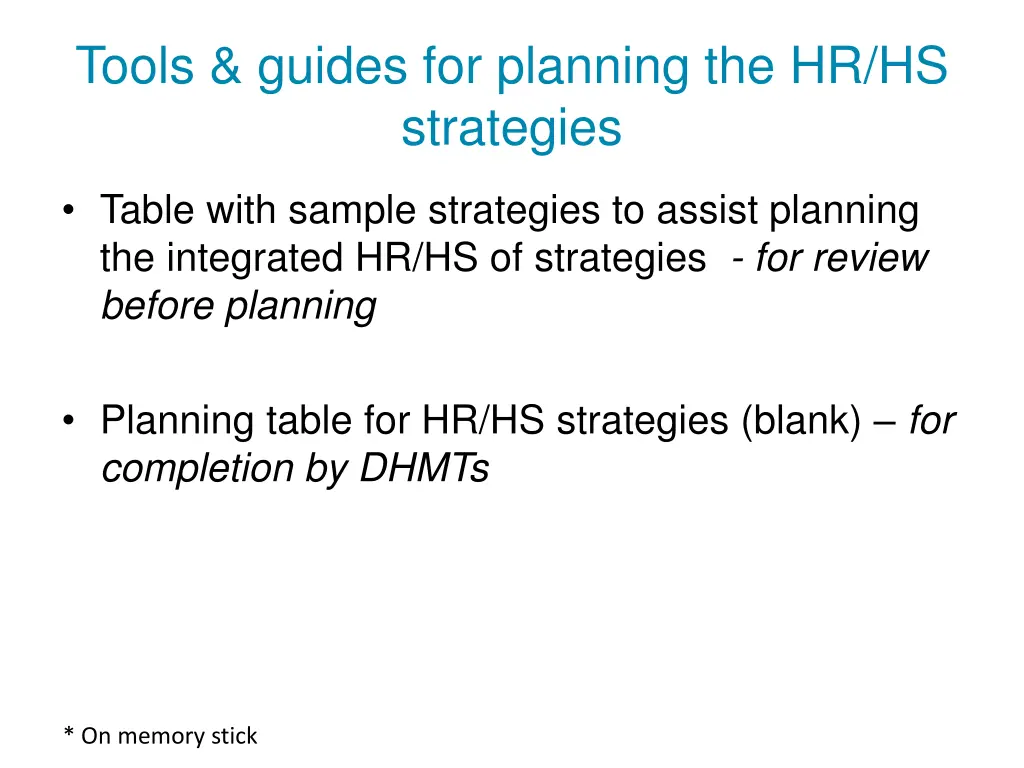
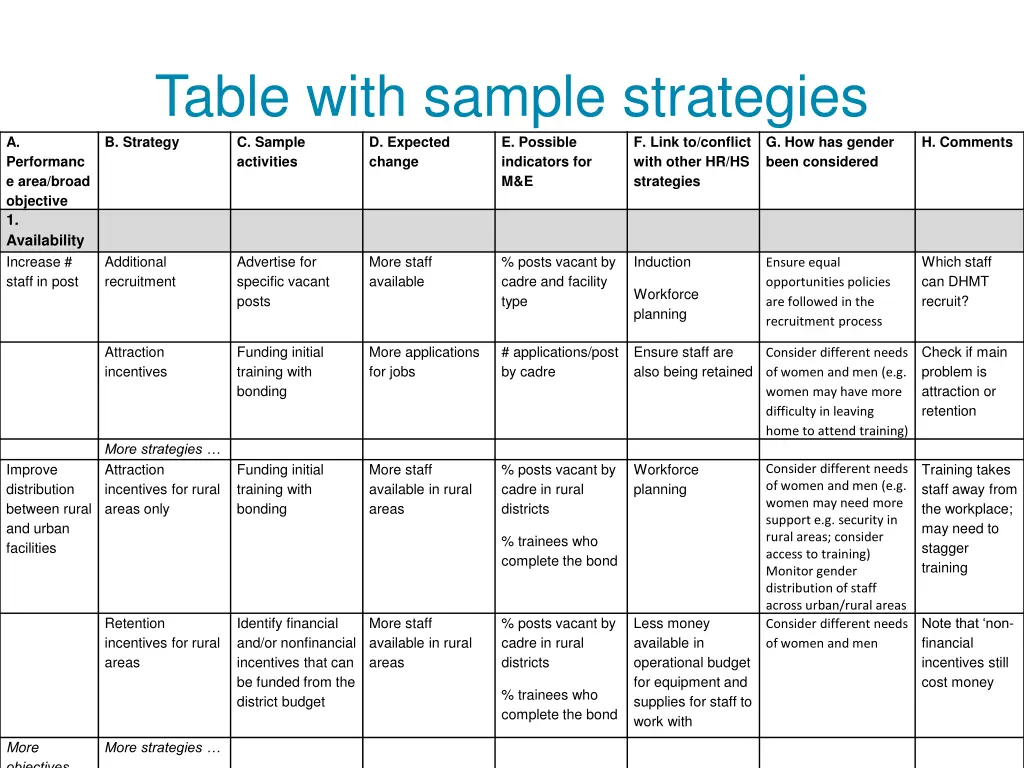
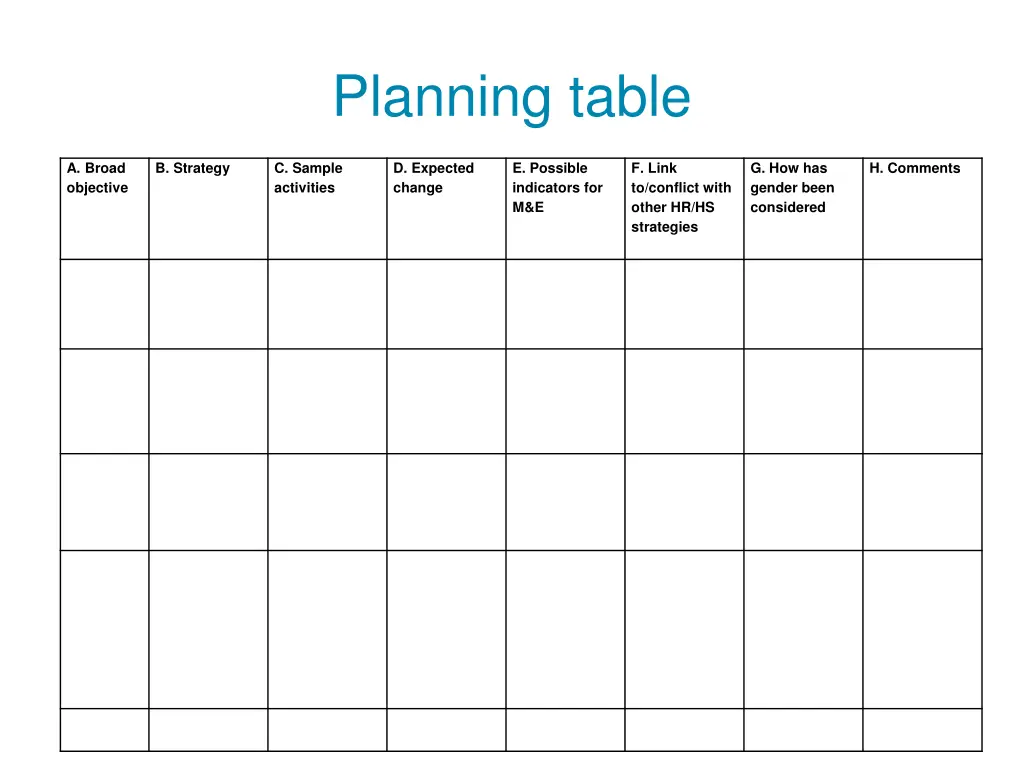
Tools & guides for planning the HR/HS strategies Table with sample strategies to assist planning the integrated HR/HS of strategies - for review before planning Planning table for HR/HS strategies (blank) for completion by DHMTs * On memory stick
Table with sample strategies B. Strategy C. Sample activities change A. Performanc e area/broad objective 1. Availability Increase # staff in post D. Expected E. Possible indicators for M&E F. Link to/conflict with other HR/HS strategies G. How has gender been considered H. Comments Additional recruitment Advertise for specific vacant posts More staff available % posts vacant by cadre and facility type Induction Which staff can DHMT recruit? Ensure equal opportunities policies are followed in the recruitment process Workforce planning Attraction incentives Funding initial training with bonding More applications for jobs # applications/post by cadre Ensure staff are also being retained Check if main problem is attraction or retention Consider different needs of women and men (e.g. women may have more difficulty in leaving home to attend training) More strategies Attraction incentives for rural areas only Improve distribution between rural and urban facilities Funding initial training with bonding More staff available in rural areas % posts vacant by cadre in rural districts Workforce planning Training takes staff away from the workplace; may need to stagger training Consider different needs of women and men (e.g. women may need more support e.g. security in rural areas; consider access to training) Monitor gender distribution of staff across urban/rural areas Consider different needs of women and men % trainees who complete the bond Retention incentives for rural areas Identify financial and/or nonfinancial incentives that can be funded from the district budget More staff available in rural areas % posts vacant by cadre in rural districts Less money available in operational budget for equipment and supplies for staff to work with Note that non- financial incentives still cost money % trainees who complete the bond More objectives More strategies
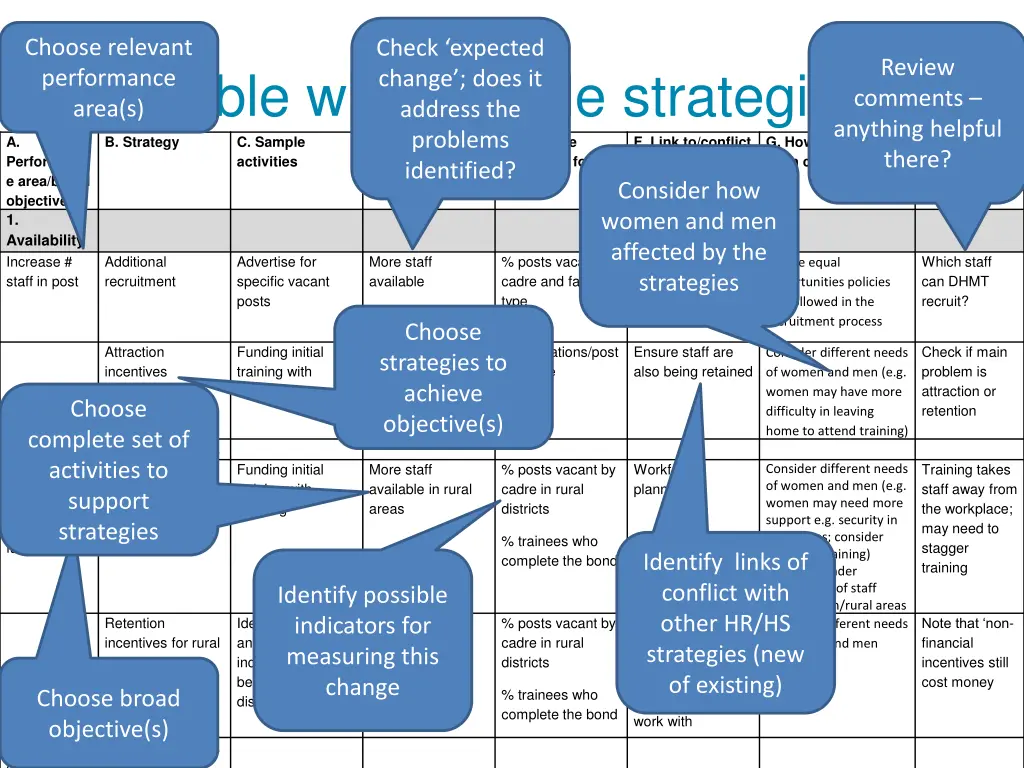
Choose relevant performance area(s) Check expected change ; does it address the Review comments anything helpful Table with sample strategies B. Strategy C. Sample activities change identified? D. Expected problems A. Performanc e area/broad objective 1. Availability Increase # staff in post E. Possible indicators for M&E F. Link to/conflict with other HR/HS strategies Consider how women and men affected by the strategies G. How has gender been considered H. Comments there? Additional recruitment Advertise for specific vacant posts More staff available % posts vacant by cadre and facility type Induction Which staff can DHMT recruit? Ensure equal opportunities policies are followed in the recruitment process Workforce planning Choose Attraction incentives Funding initial training with bonding More applications for jobs strategies to achieve objective(s) # applications/post by cadre Ensure staff are also being retained Check if main problem is attraction or retention Consider different needs of women and men (e.g. women may have more difficulty in leaving home to attend training) Choose complete set of activities to More strategies Attraction incentives for rural areas only support strategies Improve distribution between rural and urban facilities Funding initial training with bonding More staff available in rural areas % posts vacant by cadre in rural districts Workforce planning Training takes staff away from the workplace; may need to stagger training Consider different needs of women and men (e.g. women may need more support e.g. security in rural areas; consider access to training) Monitor gender distribution of staff across urban/rural areas Consider different needs of women and men % trainees who complete the bond Identify links of conflict with other HR/HS strategies (new of existing) Identify possible indicators for measuring this Retention incentives for rural areas Identify financial and/or nonfinancial incentives that can be funded from the district budget More staff available in rural areas change % posts vacant by cadre in rural districts Less money available in operational budget for equipment and supplies for staff to work with Note that non- financial incentives still cost money % trainees who complete the bond Choose broad More strategies objective(s) More objectives
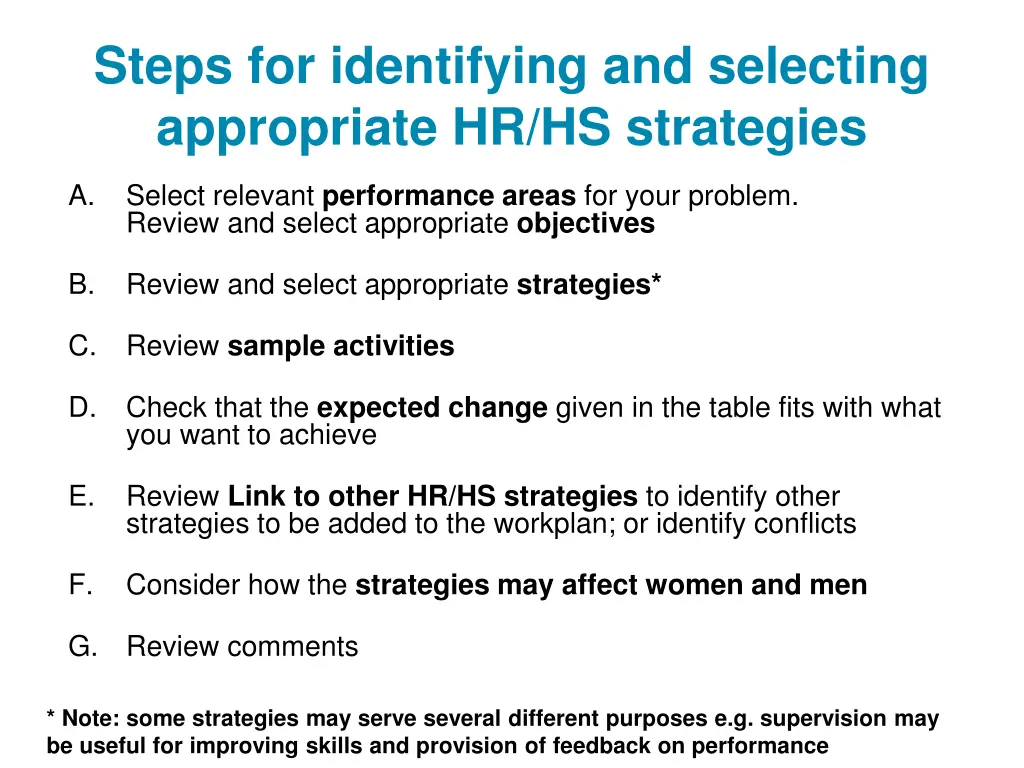
Steps for identifying and selecting appropriate HR/HS strategies A. Select relevant performance areas for your problem. Review and select appropriate objectives B. Review and select appropriate strategies* C. Review sample activities D. Check that the expected change given in the table fits with what you want to achieve E. Review Link to other HR/HS strategies to identify other strategies to be added to the workplan; or identify conflicts F. Consider how the strategies may affect women and men G. Review comments * Note: some strategies may serve several different purposes e.g. supervision may be useful for improving skills and provision of feedback on performance
Planning table A. Broad objective B. Strategy C. Sample activities D. Expected change E. Possible indicators for M&E F. Link to/conflict with other HR/HS strategies G. How has gender been considered H. Comments
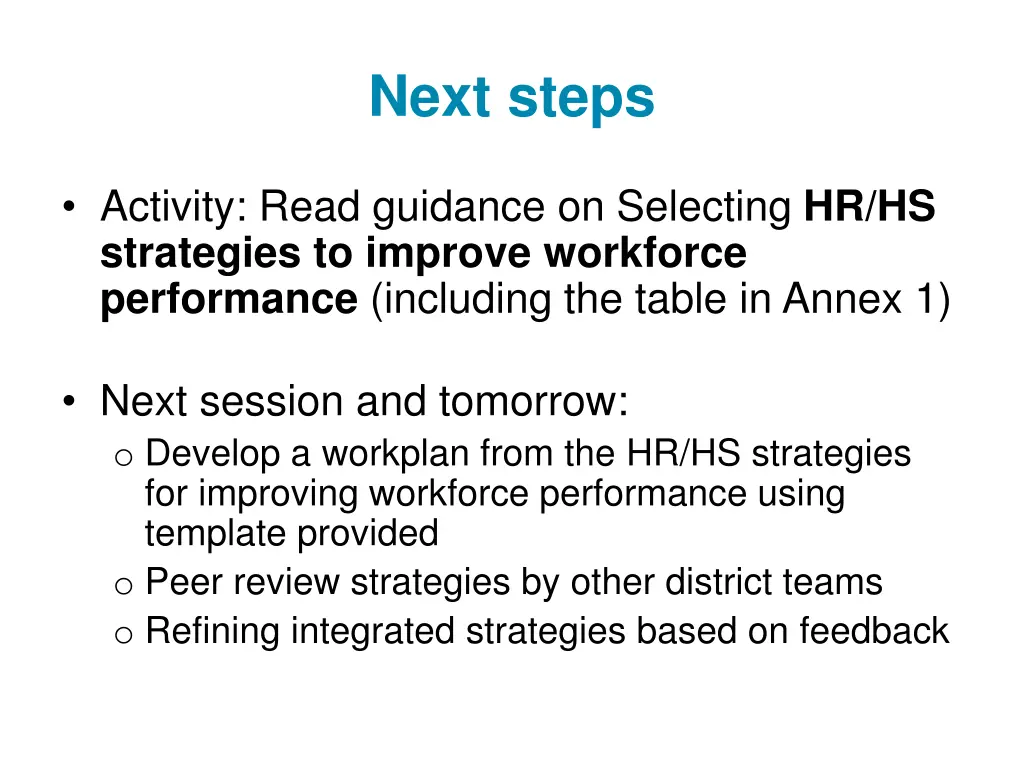
Next steps Activity: Read guidance on Selecting HR/HS strategies to improve workforce performance (including the table in Annex 1) Next session and tomorrow: o Develop a workplan from the HR/HS strategies for improving workforce performance using template provided o Peer review strategies by other district teams o Refining integrated strategies based on feedback