Learn about the importance of efficient feedback and marking practices in education, including debunking common myths surrounding workload in marking. Explore principles for meaningful and motivating feedback, and understand the purpose of feedback for pupils, teachers, parents, schools, and others. Discover insights from Ofsted regarding marking and feedback requirements.
Please find below an Image/Link to download the presentation.
The content on the website is provided AS IS for your information and personal use only. It may not be sold, licensed, or shared on other websites without obtaining consent from the author. If you encounter any issues during the download, it is possible that the publisher has removed the file from their server.
You are allowed to download the files provided on this website for personal or commercial use, subject to the condition that they are used lawfully. All files are the property of their respective owners.
The content on the website is provided AS IS for your information and personal use only. It may not be sold, licensed, or shared on other websites without obtaining consent from the author.
E N D
Presentation Transcript
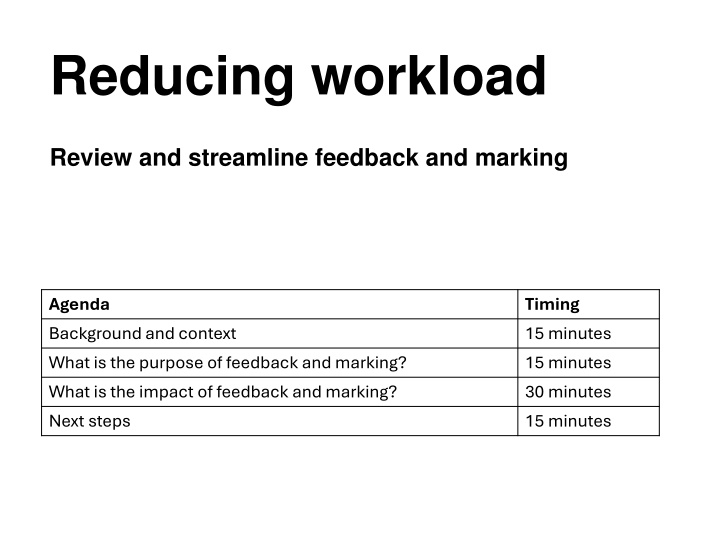
Reducing workload Review and streamline feedback and marking Agenda Background and context What is the purpose of feedback and marking? What is the impact of feedback and marking? Next steps Timing 15 minutes 15 minutes 30 minutes 15 minutes
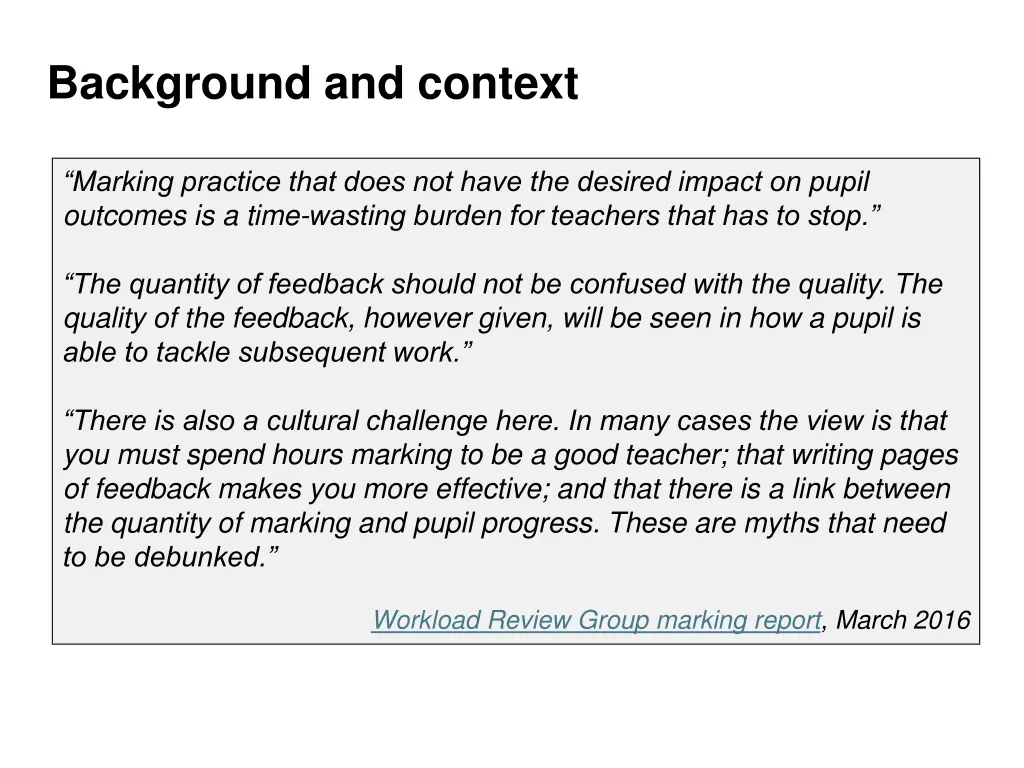
Background and context Marking practice that does not have the desired impact on pupil outcomes is a time-wasting burden for teachers that has to stop. The quantity of feedback should not be confused with the quality. The quality of the feedback, however given, will be seen in how a pupil is able to tackle subsequent work. There is also a cultural challenge here. In many cases the view is that you must spend hours marking to be a good teacher; that writing pages of feedback makes you more effective; and that there is a link between the quantity of marking and pupil progress. These are myths that need to be debunked. Workload Review Group marking report, March 2016
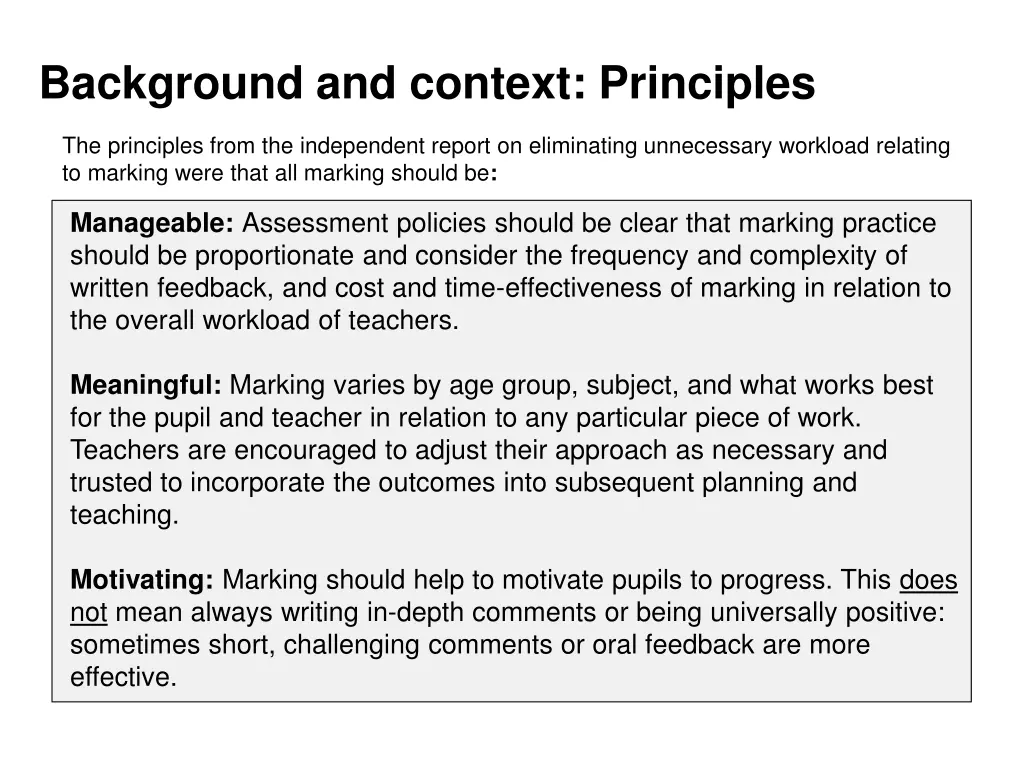
Background and context: Principles The principles from the independent report on eliminating unnecessary workload relating to marking were that all marking should be: Manageable: Assessment policies should be clear that marking practice should be proportionate and consider the frequency and complexity of written feedback, and cost and time-effectiveness of marking in relation to the overall workload of teachers. Meaningful: Marking varies by age group, subject, and what works best for the pupil and teacher in relation to any particular piece of work. Teachers are encouraged to adjust their approach as necessary and trusted to incorporate the outcomes into subsequent planning and teaching. Motivating: Marking should help to motivate pupils to progress. This does not mean always writing in-depth comments or being universally positive: sometimes short, challenging comments or oral feedback are more effective.
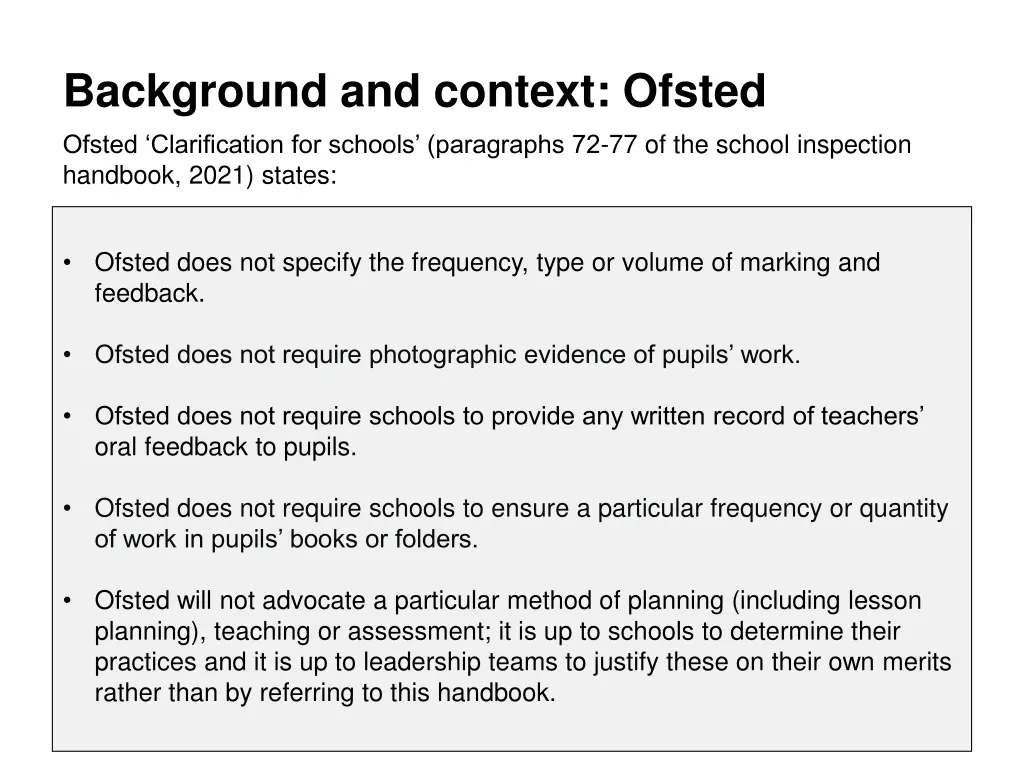
Background and context: Ofsted Ofsted Clarification for schools (paragraphs 72-77 of the school inspection handbook, 2021) states: Ofsted does not specify the frequency, type or volume of marking and feedback. Ofsted does not require photographic evidence of pupils work. Ofsted does not require schools to provide any written record of teachers oral feedback to pupils. Ofsted does not require schools to ensure a particular frequency or quantity of work in pupils books or folders. Ofsted will not advocate a particular method of planning (including lesson planning), teaching or assessment; it is up to schools to determine their practices and it is up to leadership teams to justify these on their own merits rather than by referring to this handbook. 4
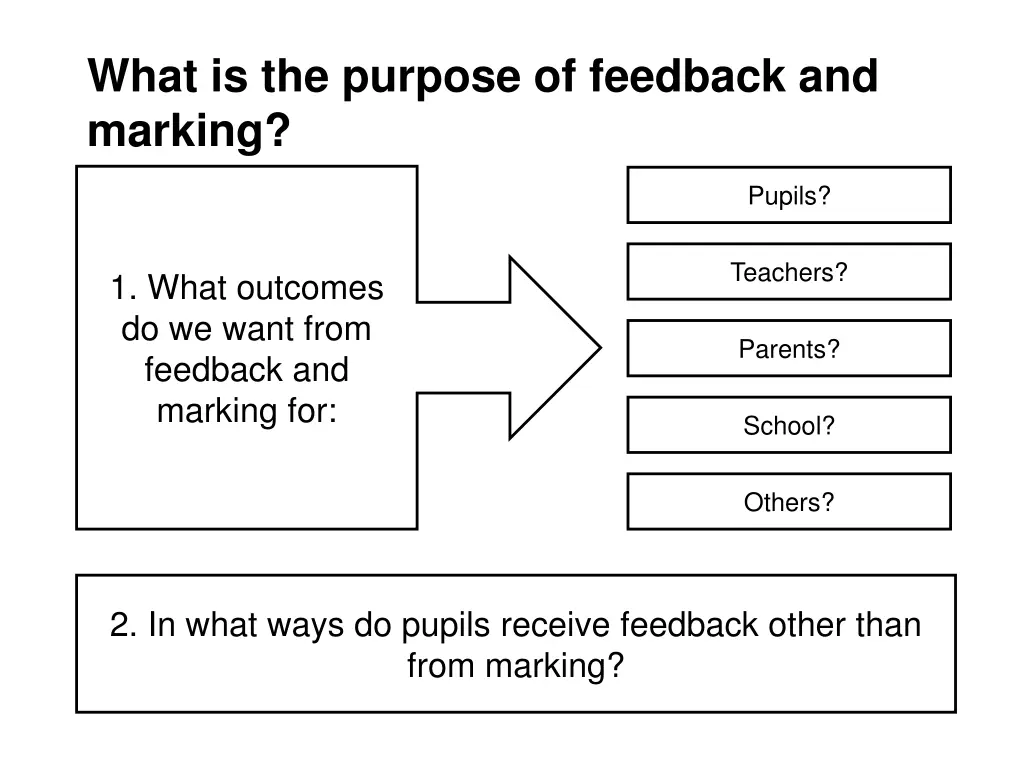
What is the purpose of feedback and marking? Pupils? Teachers? 1. What outcomes do we want from feedback and marking for: Parents? School? Others? 2. In what ways do pupils receive feedback other than from marking?
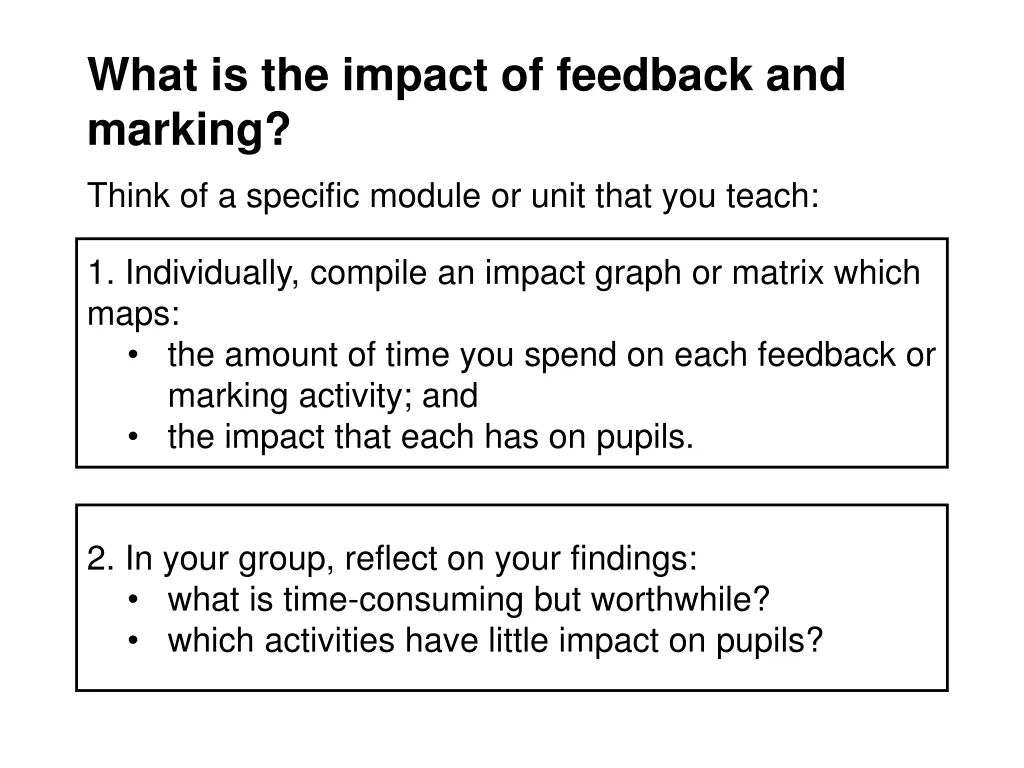
What is the impact of feedback and marking? Think of a specific module or unit that you teach: 1. Individually, compile an impact graph or matrix which maps: the amount of time you spend on each feedback or marking activity; and the impact that each has on pupils. 2. In your group, reflect on your findings: what is time-consuming but worthwhile? which activities have little impact on pupils?
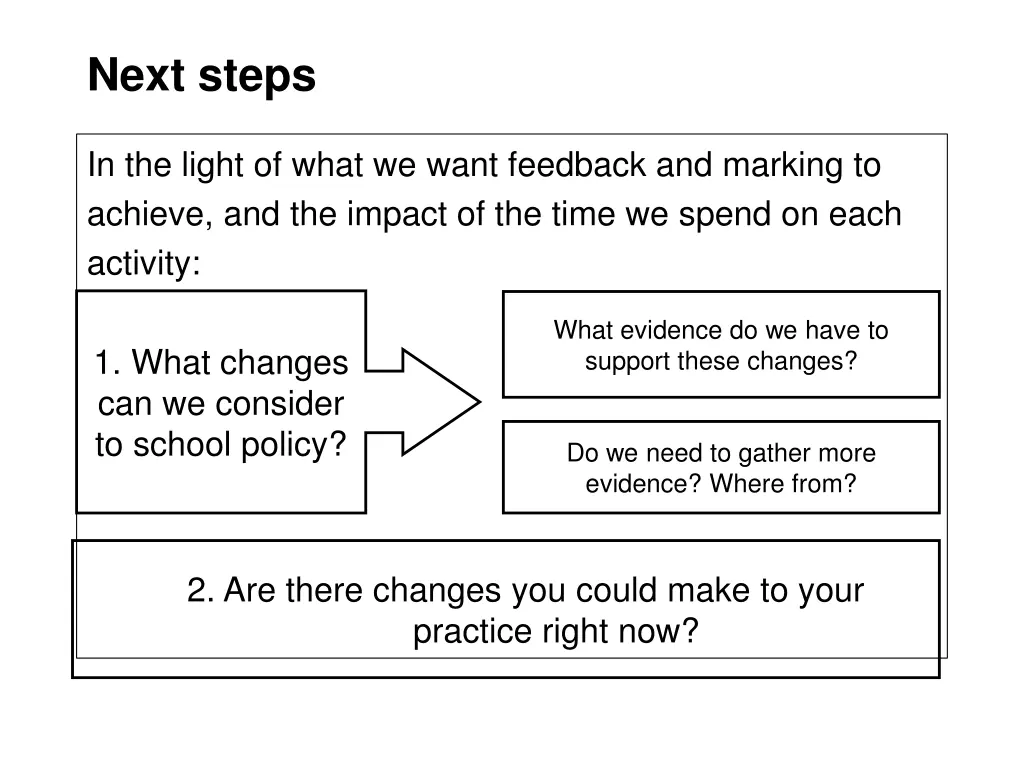
Next steps In the light of what we want feedback and marking to achieve, and the impact of the time we spend on each activity: What evidence do we have to support these changes? 1. What changes can we consider to school policy? Do we need to gather more evidence? Where from? 2. Are there changes you could make to your practice right now?