Structured Education for Type 1 Diabetes
Explore the benefits of structured education for Type 1 Diabetes, including the DAFNE course, different names across the UK, and the impact on diabetes management. Learn more through videos and online resources to deepen your understanding of this important aspect of diabetes care.

Download Presentation

Please find below an Image/Link to download the presentation.
The content on the website is provided AS IS for your information and personal use only. It may not be sold, licensed, or shared on other websites without obtaining consent from the author. If you encounter any issues during the download, it is possible that the publisher has removed the file from their server.
You are allowed to download the files provided on this website for personal or commercial use, subject to the condition that they are used lawfully. All files are the property of their respective owners.
The content on the website is provided AS IS for your information and personal use only. It may not be sold, licensed, or shared on other websites without obtaining consent from the author.
E N D
Presentation Transcript
Diabetes Learning Year 4 Structured Education for Type 1 Diabetes
Structured education for Type 1 Diabetes Learning objectives To appreciate the individual benefits people with Type 1 Diabetes may get from taking part in Structured Education Deepen your understanding of structured education in Type 1 Diabetes Tasks Watch videos and answer the questions You can also take part in online diabetes education at www.Bertieonline.org.uk
Structured Education for Type 1 Diabetes Structured Education for Type 1 Diabetes DAFNE ( Dose Adjustment For Normal Eating) is a structured education course for people with Type 1 diabetes There are many different names to structured education courses for people with type 1 diabetes in different parts of the UK In Grampian we call it DIANE (Diabetes Insulin Adjustment for Normal Eating ). There are also online courses for example Bertie online (www.bertieonline.org.uk ) They are run by diabetes specialist health care professionals in particular Dieticians and Diabetes Specialist Nurses They typically last for 4-5 days either in a row or spread across a few weeks People with type 1 diabetes improve their skills at carbohydrate counting and insulin adjustment by increasing them knowledge and practicing their skills with support from the diabetes team. They need to be on a basal bolus insulin regime. Structured education is considered to be a core part of diabetes care and all people with type 1 Diabetes should be able to access it
Structured Education for Type 1 Diabetes Structured Education for Type 1 Diabetes Watch the videos and answer the following questions: Why were they initially reluctant to try DAFNE? What other barriers do you think people may have to attending similar courses? What problems were they having with his blood glucose levels and why did they decide to try the course? Can you think of other reasons people would want to attend? After completing the course, how had his diabetes management improved? What feelings did he describe? What impact do you feel it may have on him?
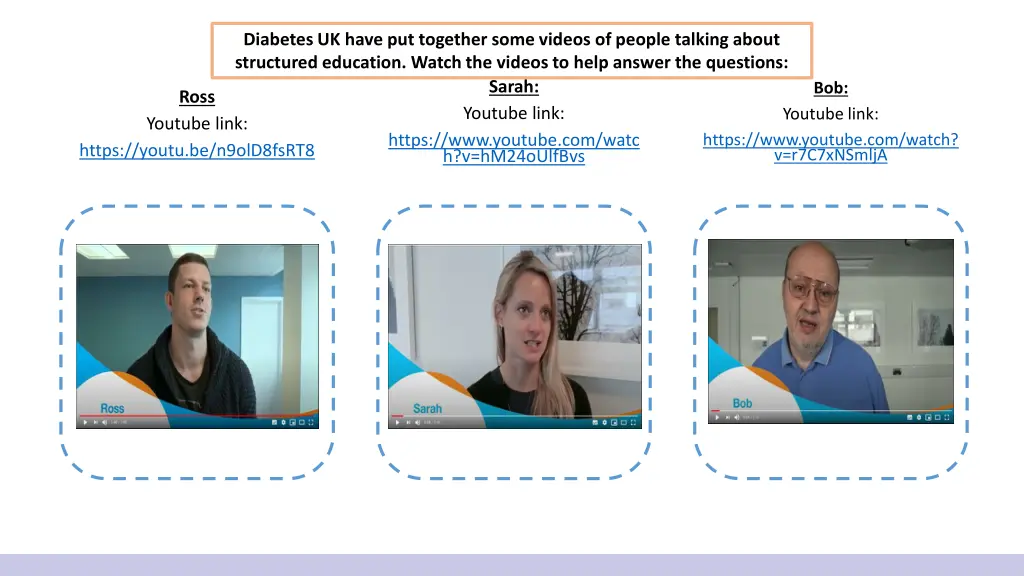
Diabetes UK have put together some videos of people talking about structured education. Watch the videos to help answer the questions: Sarah: Youtube link: https://www.youtube.com/watc h?v=hM24oUlfBvs Bob: Ross Youtube link: Youtube link: https://www.youtube.com/watch? v=r7C7xNSmljA https://youtu.be/n9olD8fsRT8
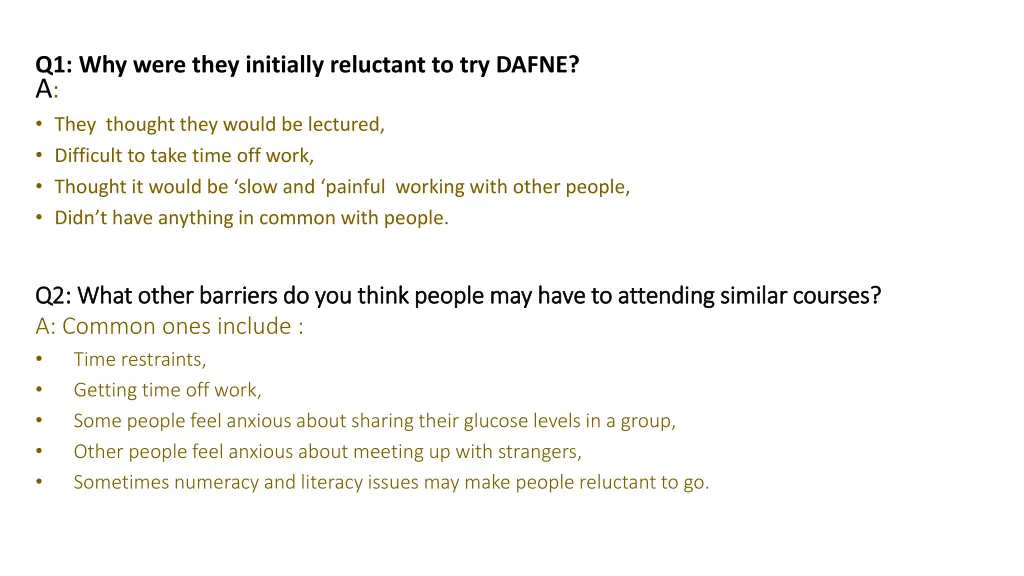
Q1: Why were they initially reluctant to try DAFNE? A: They thought they would be lectured, Difficult to take time off work, Thought it would be slow and painful working with other people, Didn t have anything in common with people. Q2: What other barriers do you think people may have to attending similar courses? Q2: What other barriers do you think people may have to attending similar courses? A: Common ones include : Time restraints, Getting time off work, Some people feel anxious about sharing their glucose levels in a group, Other people feel anxious about meeting up with strangers, Sometimes numeracy and literacy issues may make people reluctant to go.
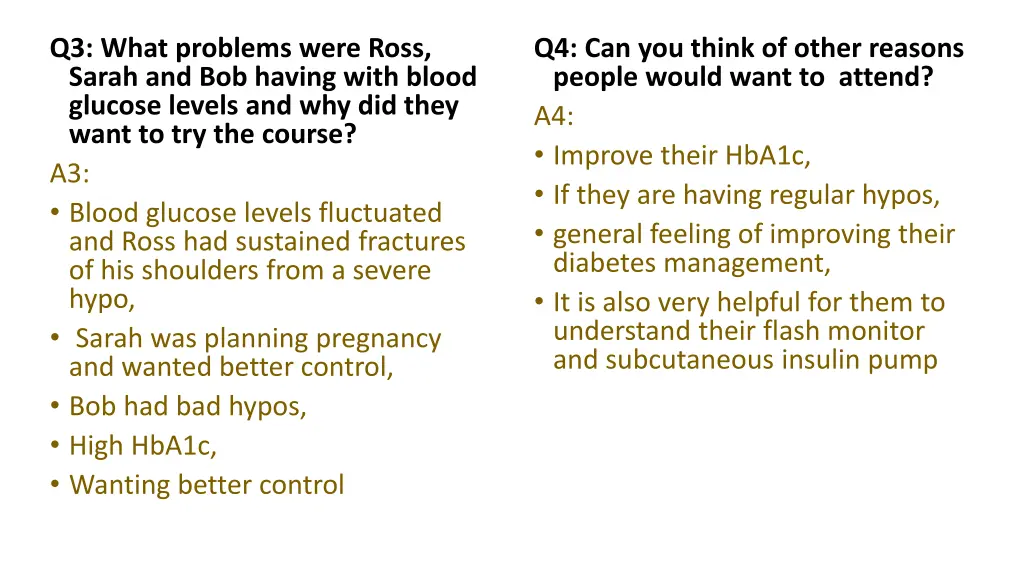
Q3: What problems were Ross, Sarah and Bob having with blood glucose levels and why did they want to try the course? A3: Blood glucose levels fluctuated and Ross had sustained fractures of his shoulders from a severe hypo, Sarah was planning pregnancy and wanted better control, Bob had bad hypos, High HbA1c, Wanting better control Q4: Can you think of other reasons people would want to attend? A4: Improve their HbA1c, If they are having regular hypos, general feeling of improving their diabetes management, It is also very helpful for them to understand their flash monitor and subcutaneous insulin pump
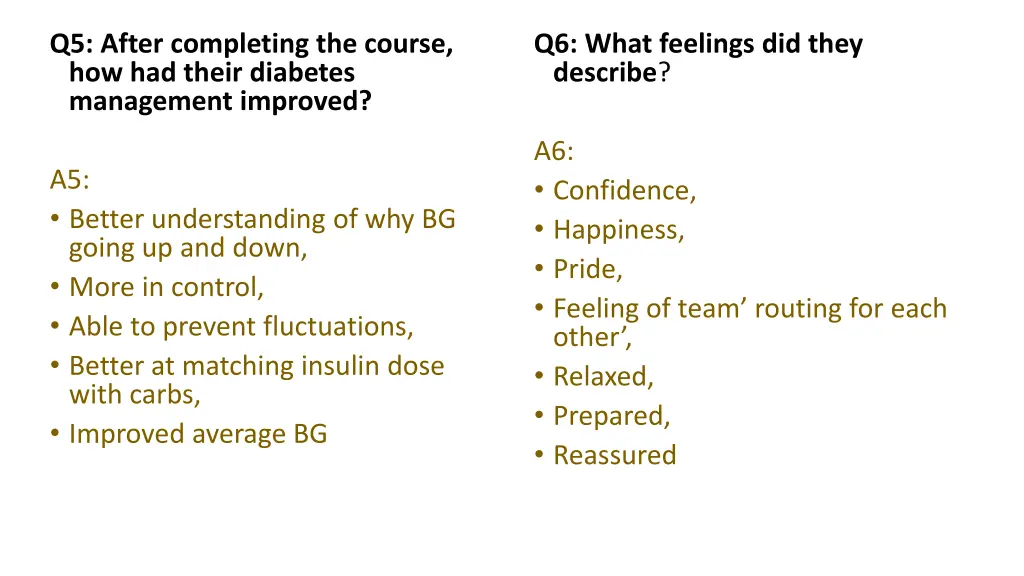
Q5: After completing the course, how had their diabetes management improved? Q6: What feelings did they describe? A6: Confidence, Happiness, Pride, Feeling of team routing for each other , Relaxed, Prepared, Reassured A5: Better understanding of why BG going up and down, More in control, Able to prevent fluctuations, Better at matching insulin dose with carbs, Improved average BG
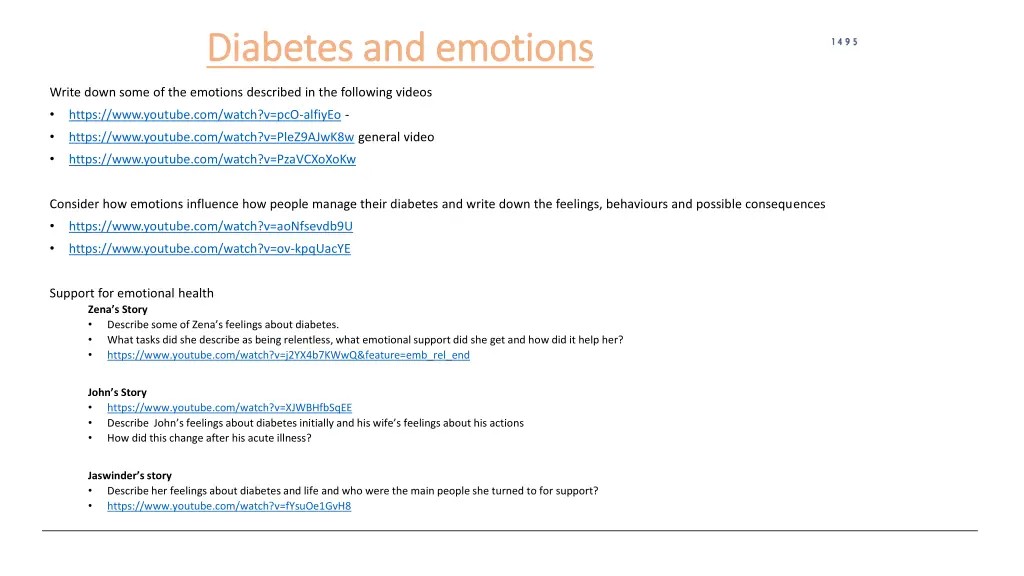
Diabetes and emotions Diabetes and emotions Write down some of the emotions described in the following videos https://www.youtube.com/watch?v=pcO-alfiyEo - https://www.youtube.com/watch?v=PleZ9AJwK8w general video https://www.youtube.com/watch?v=PzaVCXoXoKw Consider how emotions influence how people manage their diabetes and write down the feelings, behaviours and possible consequences https://www.youtube.com/watch?v=aoNfsevdb9U https://www.youtube.com/watch?v=ov-kpqUacYE Support for emotional health Zena s Story Describe some of Zena s feelings about diabetes. What tasks did she describe as being relentless, what emotional support did she get and how did it help her? https://www.youtube.com/watch?v=j2YX4b7KWwQ&feature=emb_rel_end John s Story https://www.youtube.com/watch?v=XJWBHfbSqEE Describe John s feelings about diabetes initially and his wife s feelings about his actions How did this change after his acute illness? Jaswinder s story Describe her feelings about diabetes and life and who were the main people she turned to for support? https://www.youtube.com/watch?v=fYsuOe1GvH8