Student-Driven Vocabulary Program

Develop a vocabulary program where students actively engage in creating and mastering technical words through contextual learning, intentional instruction, and repeated practice. Utilize student-led approaches, cyclical methods, prediction charts, and interactive activities to deepen understanding and application of vocabulary across content areas.

Download Presentation

Please find below an Image/Link to download the presentation.
The content on the website is provided AS IS for your information and personal use only. It may not be sold, licensed, or shared on other websites without obtaining consent from the author.If you encounter any issues during the download, it is possible that the publisher has removed the file from their server.
You are allowed to download the files provided on this website for personal or commercial use, subject to the condition that they are used lawfully. All files are the property of their respective owners.
The content on the website is provided AS IS for your information and personal use only. It may not be sold, licensed, or shared on other websites without obtaining consent from the author.
E N D
Presentation Transcript
INTEGRATED VOCABULARY
As a CTE Teacher Students are in your program because they want a NON-TRADITIONAL approach to learning. Your lessons include technical words that require intentional instruction for understanding Create a vocabulary program that is student driven Teach vocabulary definitions contextually, thoughtfully and repeatedly Cycle your vocabulary program DEVELOP A VOCABULARY PROGRAM
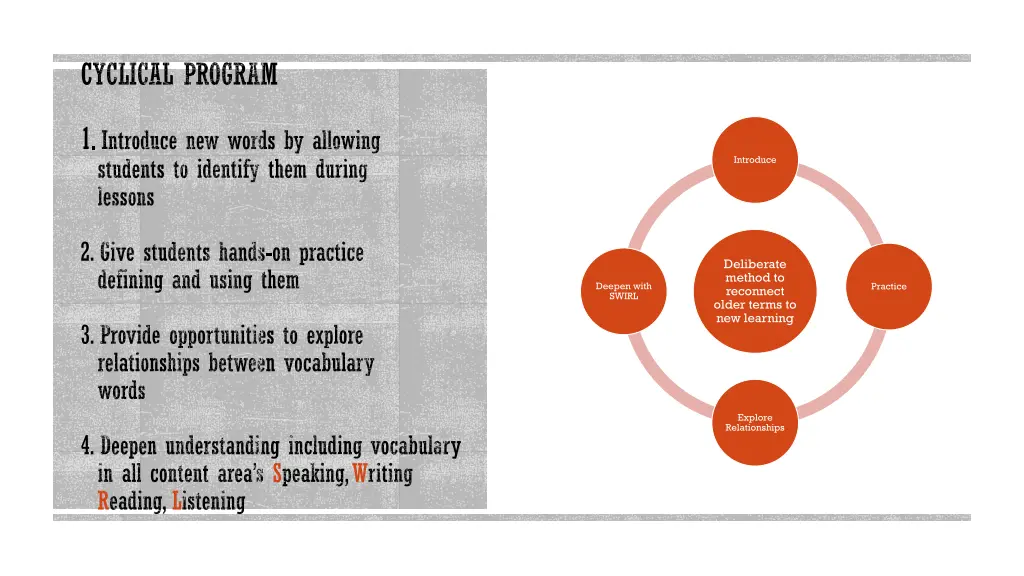
CYCLICAL PROGRAM 1. Introduce new words by allowing students to identify them during lessons Introduce 2. Give students hands-on practice defining and using them Deliberate method to reconnect older terms to new learning Deepen with SWIRL Practice 3. Provide opportunities to explore relationships between vocabulary words Explore Relationships 4. Deepen understanding including vocabulary in all content area s Speaking, Writing Reading, Listening
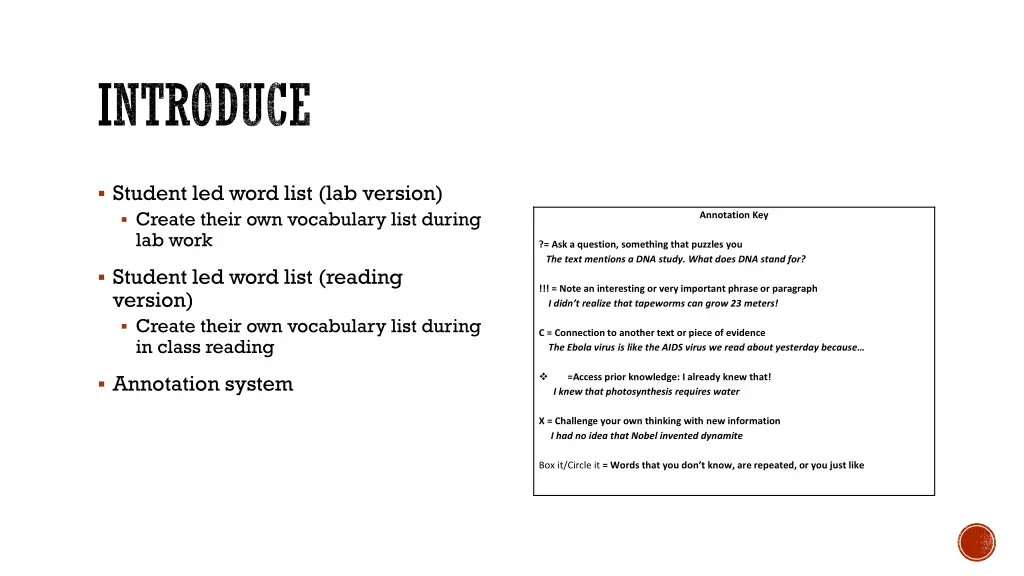
INTRODUCE Student led word list (lab version) Create their own vocabulary list during lab work Annotation Key ?= Ask a question, something that puzzles you The text mentions a DNA study. What does DNA stand for? Student led word list (reading version) Create their own vocabulary list during in class reading !!! = Note an interesting or very important phrase or paragraph I didn t realize that tapeworms can grow 23 meters! C = Connection to another text or piece of evidence The Ebola virus is like the AIDS virus we read about yesterday because Annotation system =Access prior knowledge: I already knew that! I knew that photosynthesis requires water X = Challenge your own thinking with new information I had no idea that Nobel invented dynamite Box it/Circle it = Words that you don t know, are repeated, or you just like
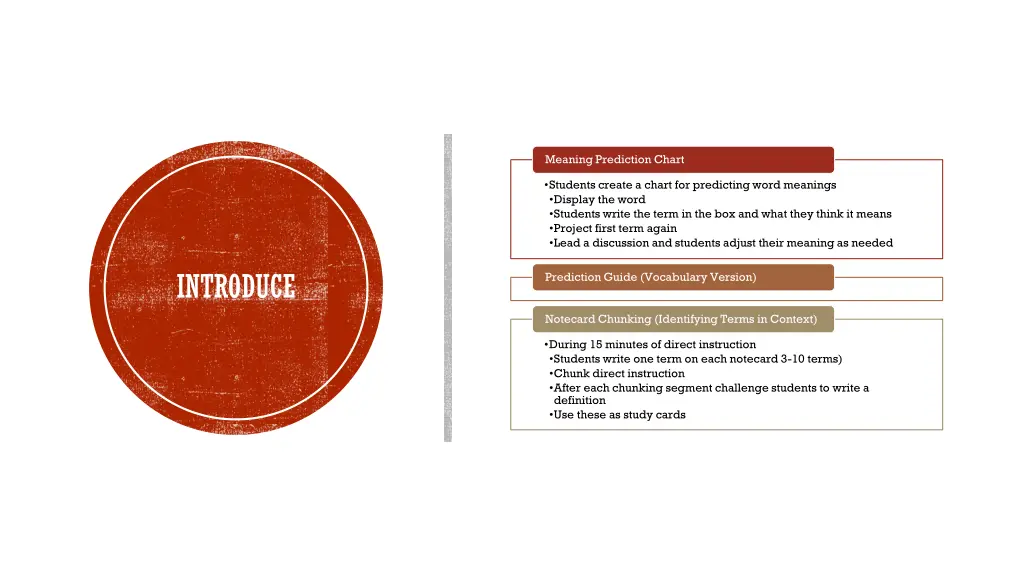
Meaning Prediction Chart Students create a chart for predicting word meanings Display the word Students write the term in the box and what they think it means Project first term again Lead a discussion and students adjust their meaning as needed INTRODUCE Prediction Guide (Vocabulary Version) Notecard Chunking (Identifying Terms in Context) During 15 minutes of direct instruction Students write one term on each notecard 3-10 terms) Chunk direct instruction After each chunking segment challenge students to write a definition Use these as study cards
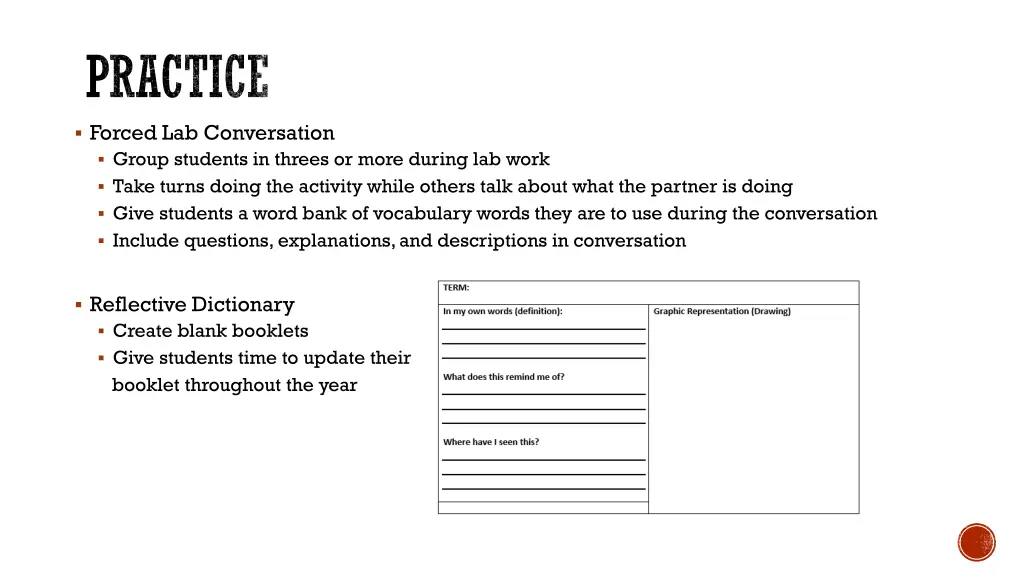
PRACTICE Forced Lab Conversation Group students in threes or more during lab work Take turns doing the activity while others talk about what the partner is doing Give students a word bank of vocabulary words they are to use during the conversation Include questions, explanations, and descriptions in conversation Reflective Dictionary Create blank booklets Give students time to update their booklet throughout the year
Technology Games Quizlet Kahoot Two Column Notes (Split Page) Split the page by drawing a vertical line all the way down the paper. The line should be located 2.5 to 3 inches from the left-hand side of the paper. Right-hand side is used for taking notes in class Use the left column for writing down keywords from the notes or questions they may have Variation of the split-page (three columns) Middle column is used for taking notes in class Left-hand column is used for outlining the text Right-hand column is used for writing down keywords, cues, and questions the student may have PRACTICE
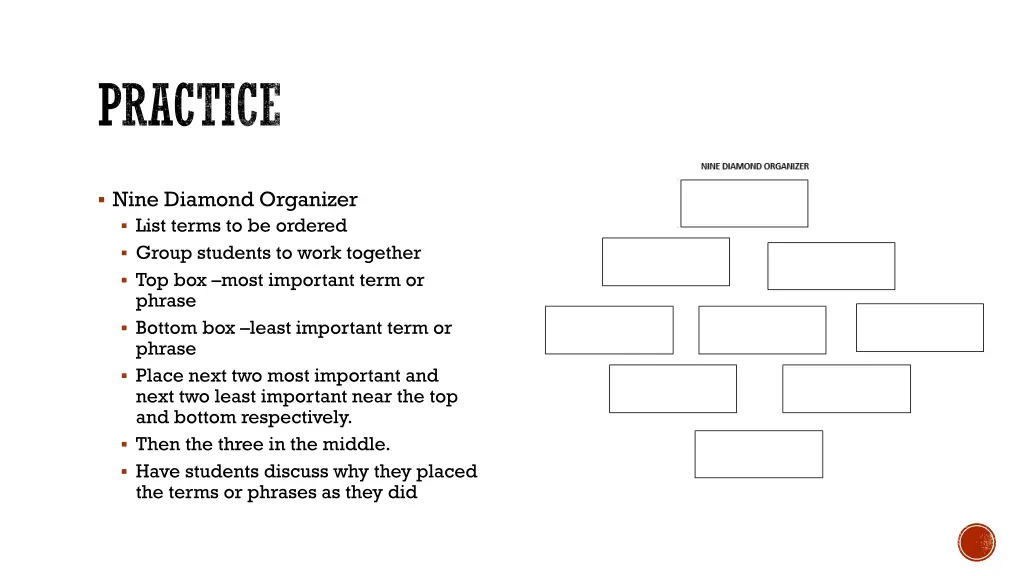
PRACTICE Nine Diamond Organizer List terms to be ordered Group students to work together Top box most important term or phrase Bottom box least important term or phrase Place next two most important and next two least important near the top and bottom respectively. Then the three in the middle. Have students discuss why they placed the terms or phrases as they did
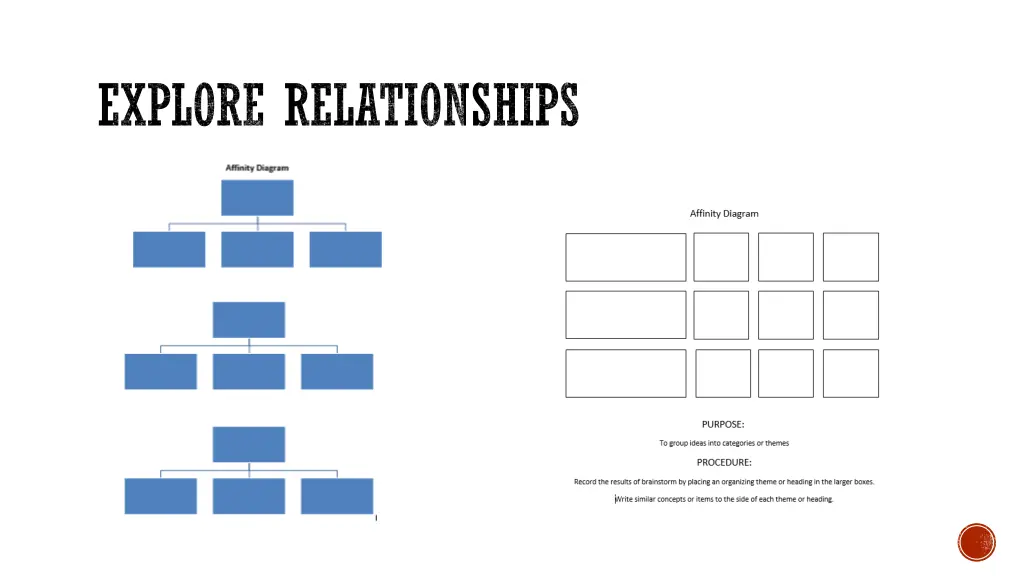
EXPLORE RELATIONSHIPS Affinity Diagrams Categorizing words helps students see the big picture of how they understand concepts Students analyze a list of random Vocabulary words Students determine which category they fit into Attributes Details Examples See charts on next slide
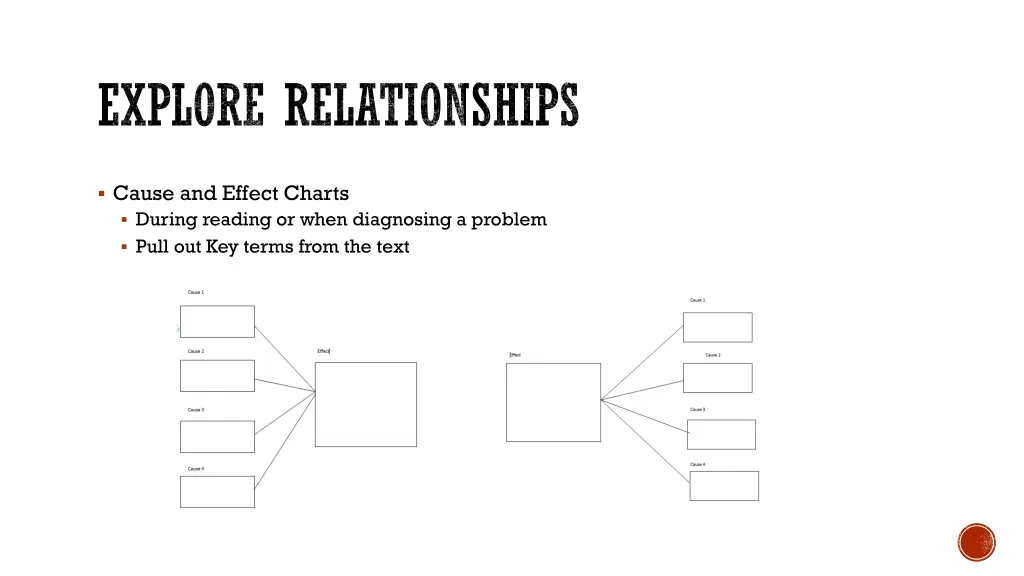
EXPLORE RELATIONSHIPS Cause and Effect Charts During reading or when diagnosing a problem Pull out Key terms from the text
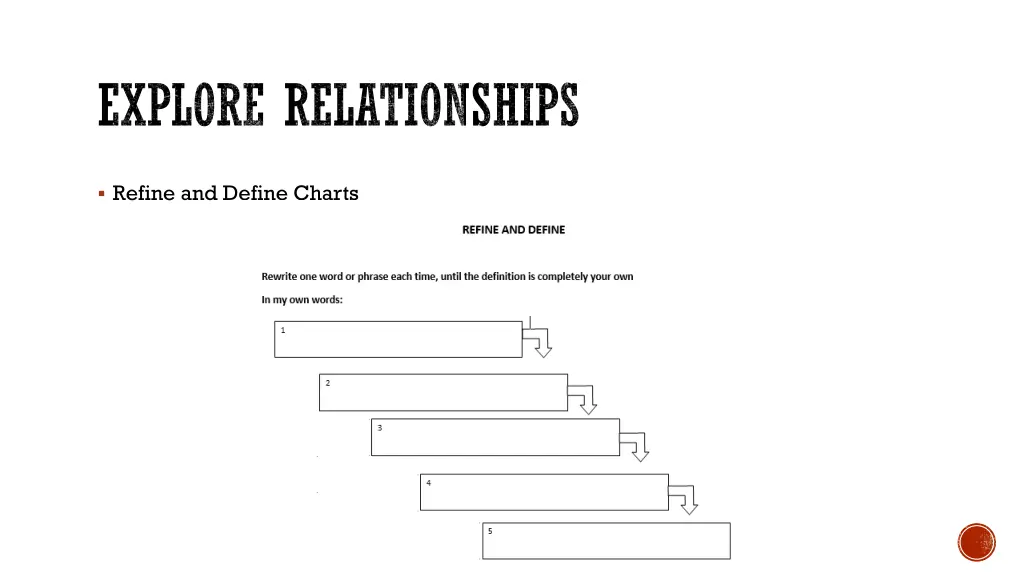
EXPLORE RELATIONSHIPS Refine and Define Charts
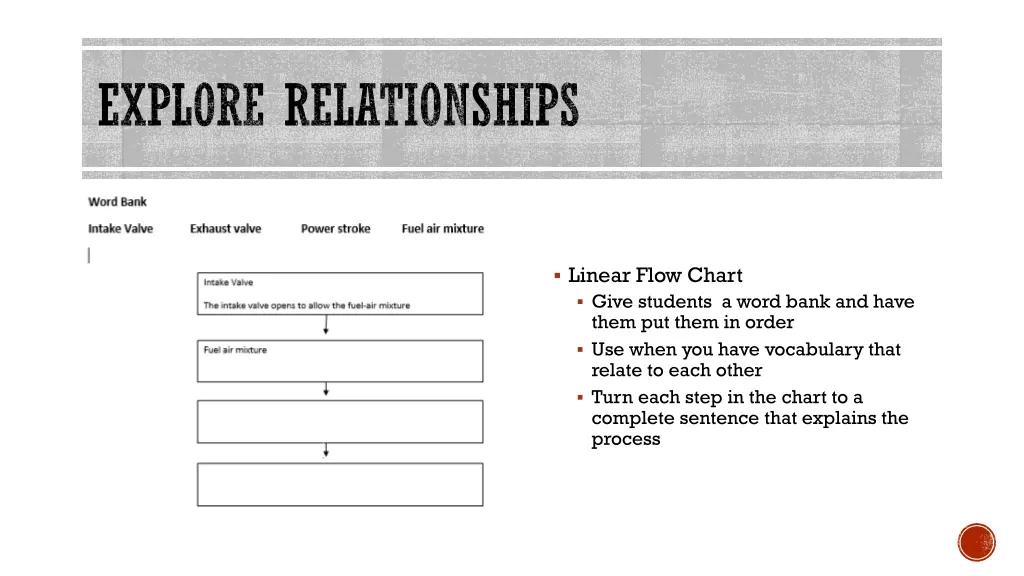
EXPLORE RELATIONSHIPS Linear Flow Chart Give students a word bank and have them put them in order Use when you have vocabulary that relate to each other Turn each step in the chart to a complete sentence that explains the process
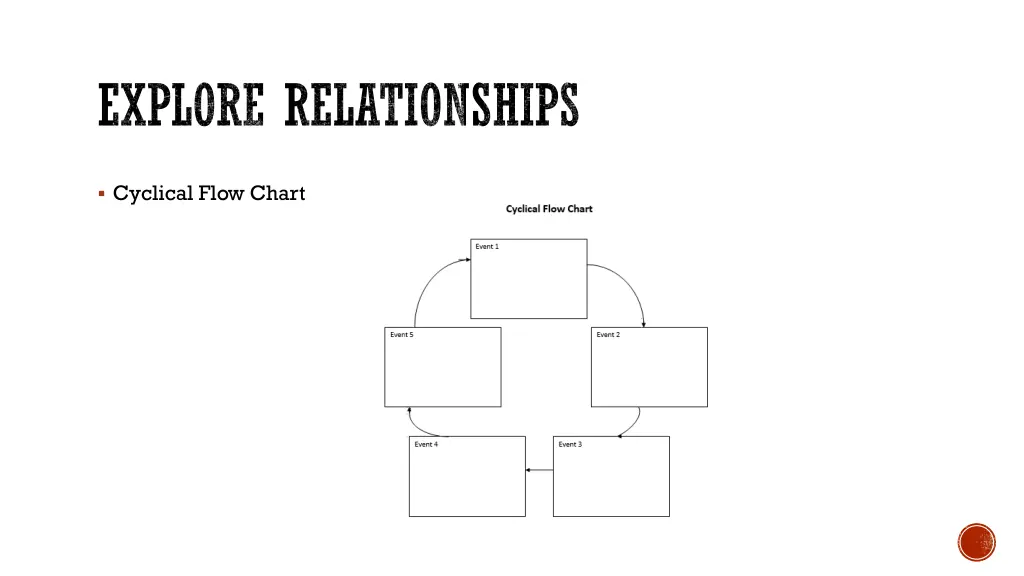
EXPLORE RELATIONSHIPS Cyclical Flow Chart
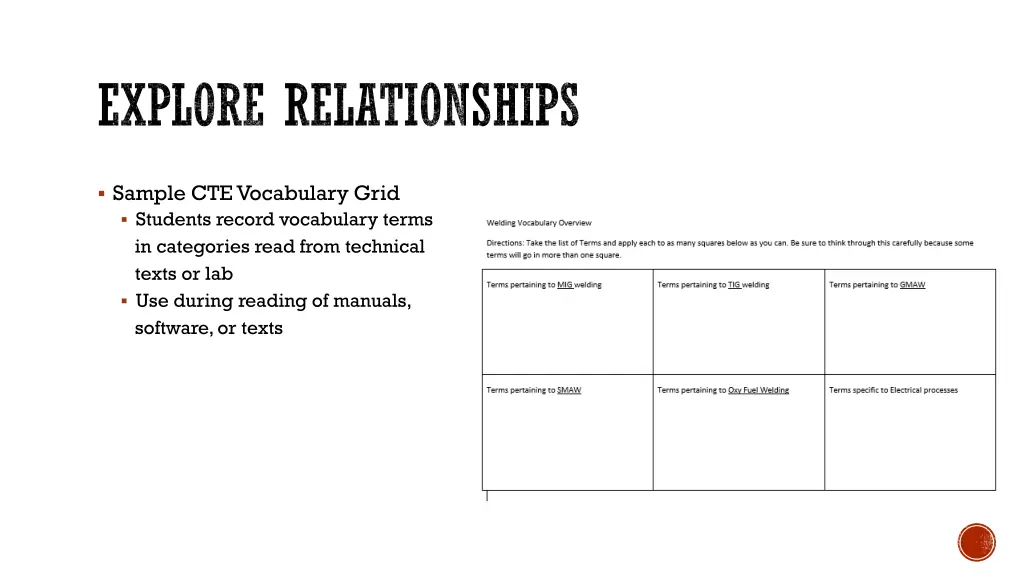
EXPLORE RELATIONSHIPS Sample CTE Vocabulary Grid Students record vocabulary terms in categories read from technical texts or lab Use during reading of manuals, software, or texts
DEEPEN UNDERSTANDING WITH SWIRL SWIRL (Speaking, Writing, Reading, and Listening) activities Great to use when you are performance testing one on-one and others are in small groups Groups use graphic organizers to brainstorm problems that could arise during performance tests Students act out with their partner and record their thought processes Students should use all the technical terms written on the board
DEEPEN UNDERSTANDING WITH SWIRL Other strategies to use with SWIRL 30 second talk-about Entrance and Exit Cards Webquest your career path