Studying Emotions at Work: Multilevel Challenges & Advances
This research delves into the use of physiological measures to study emotions at work, highlighting benefits, examples, and challenges faced in entrepreneurial team settings.

Download Presentation

Please find below an Image/Link to download the presentation.
The content on the website is provided AS IS for your information and personal use only. It may not be sold, licensed, or shared on other websites without obtaining consent from the author.If you encounter any issues during the download, it is possible that the publisher has removed the file from their server.
You are allowed to download the files provided on this website for personal or commercial use, subject to the condition that they are used lawfully. All files are the property of their respective owners.
The content on the website is provided AS IS for your information and personal use only. It may not be sold, licensed, or shared on other websites without obtaining consent from the author.
E N D
Presentation Transcript
Multilevel Challenges and Advances in Studying Emotions at Work: Physiological Measures and Organization Level Affect Andrew P. Knight Olin Business School Washington University in St. Louis knightap@wustl.edu | http://apknight.org
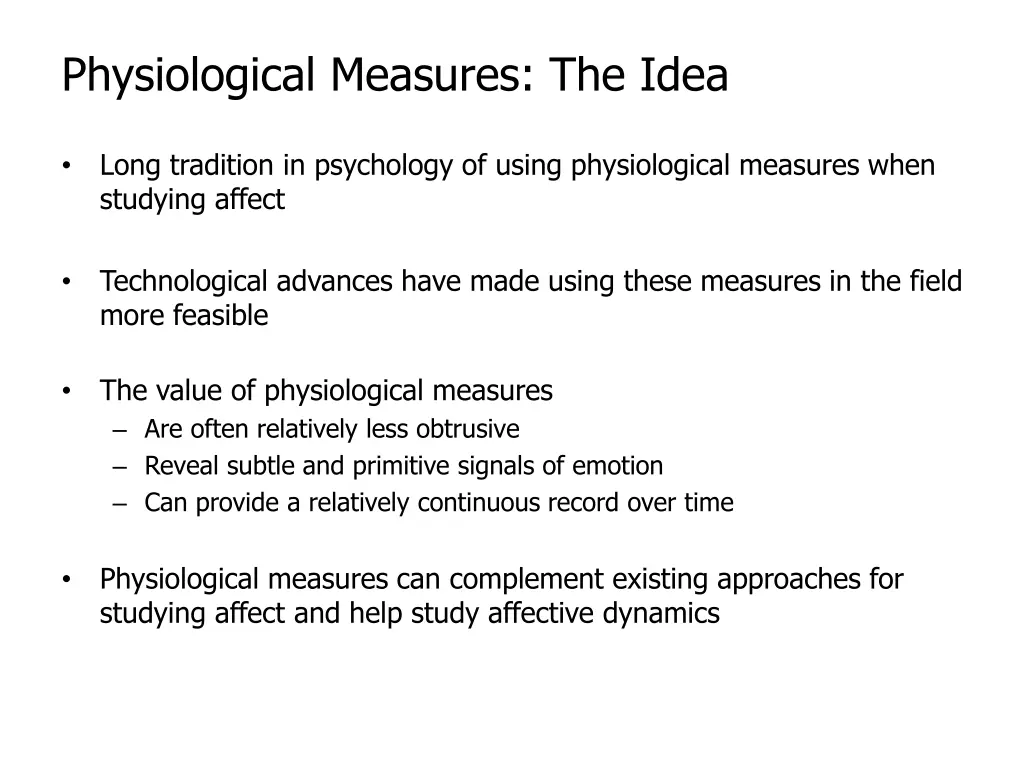
Physiological Measures: The Idea Long tradition in psychology of using physiological measures when studying affect Technological advances have made using these measures in the field more feasible The value of physiological measures Are often relatively less obtrusive Reveal subtle and primitive signals of emotion Can provide a relatively continuous record over time Physiological measures can complement existing approaches for studying affect and help study affective dynamics
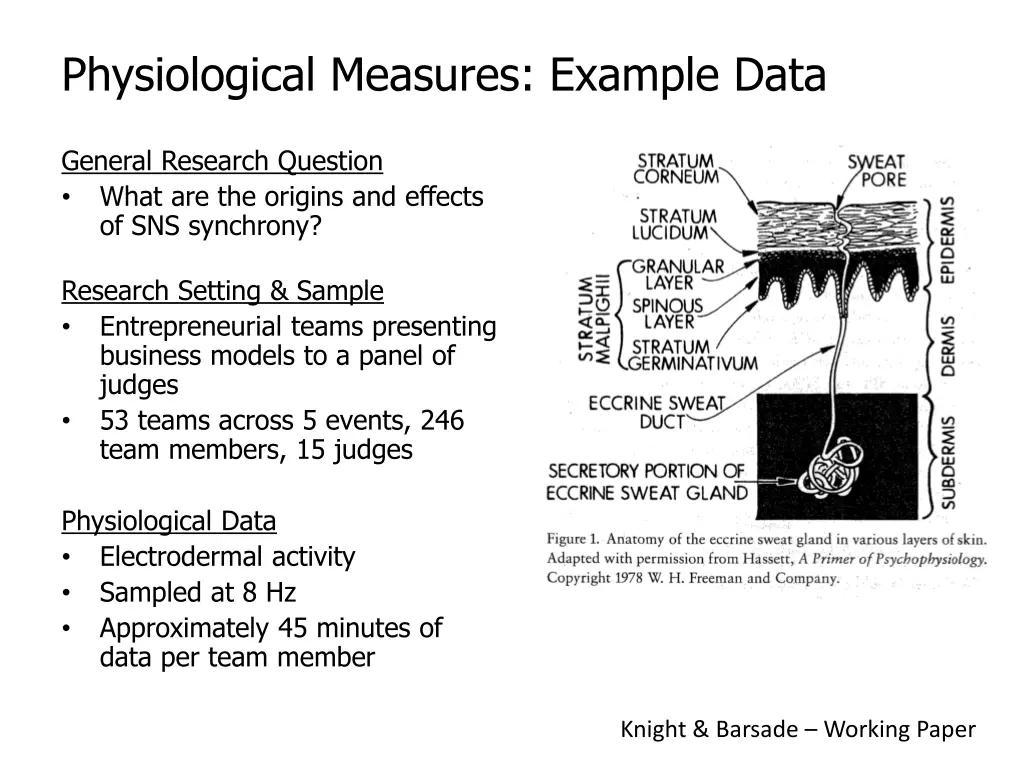
Physiological Measures: Example Data General Research Question What are the origins and effects of SNS synchrony? Research Setting & Sample Entrepreneurial teams presenting business models to a panel of judges 53 teams across 5 events, 246 team members, 15 judges Physiological Data Electrodermal activity Sampled at 8 Hz Approximately 45 minutes of data per team member Knight & Barsade Working Paper
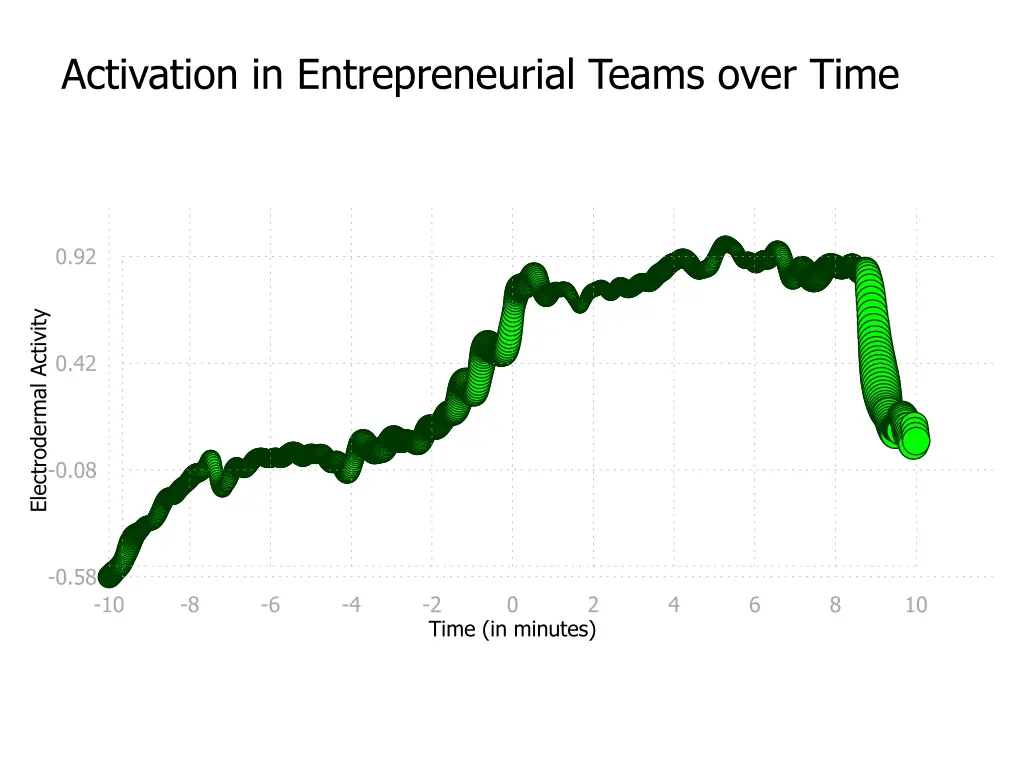
Activation in Entrepreneurial Teams over Time 0.92 Electrodermal Activity 0.42 -0.08 -0.58 -10 -8 -6 -4 -2 0 2 4 6 8 10 Time (in minutes)
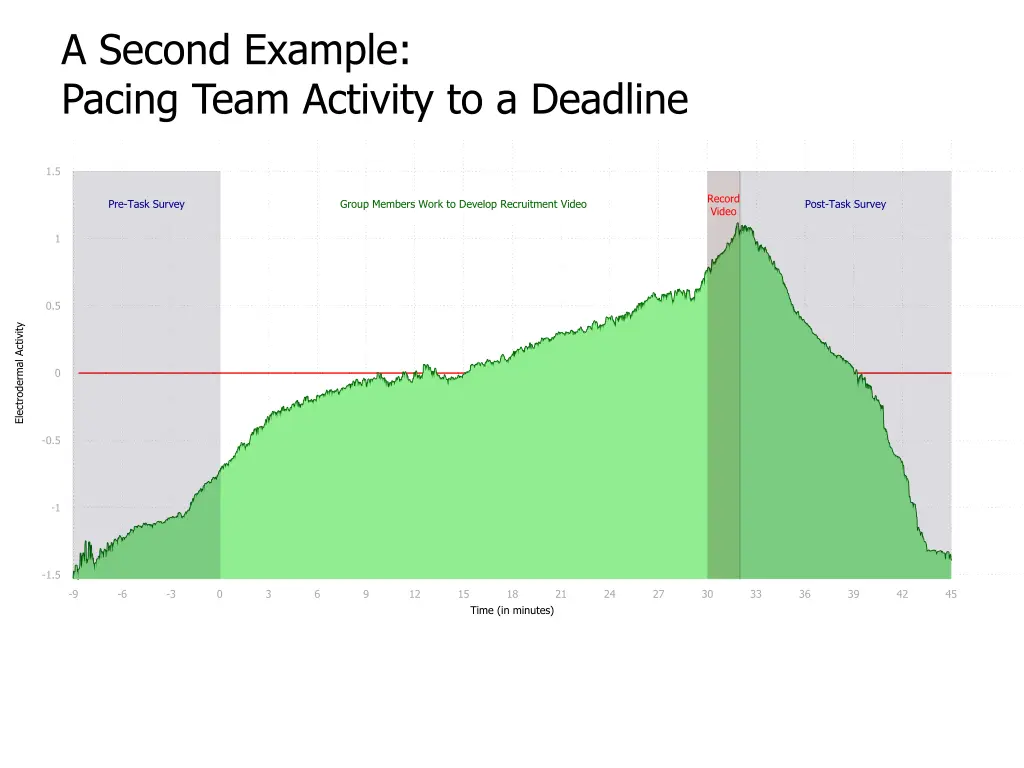
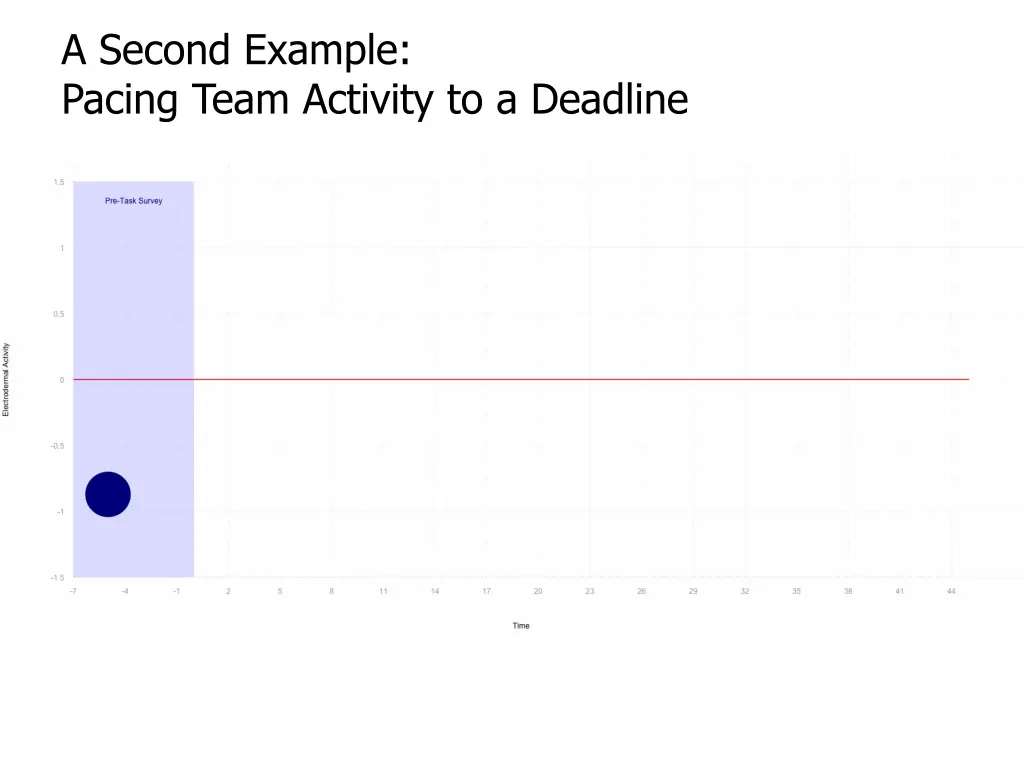
A Second Example: Pacing Team Activity to a Deadline 1.5 Record Video Pre-Task Survey Group Members Work to Develop Recruitment Video Post-Task Survey 1 0.5 Electrodermal Activity 0 -0.5 -1 -1.5 -9 -6 -3 0 3 6 9 12 15 18 21 24 27 30 33 36 39 42 45 Time (in minutes)
A Second Example: Pacing Team Activity to a Deadline
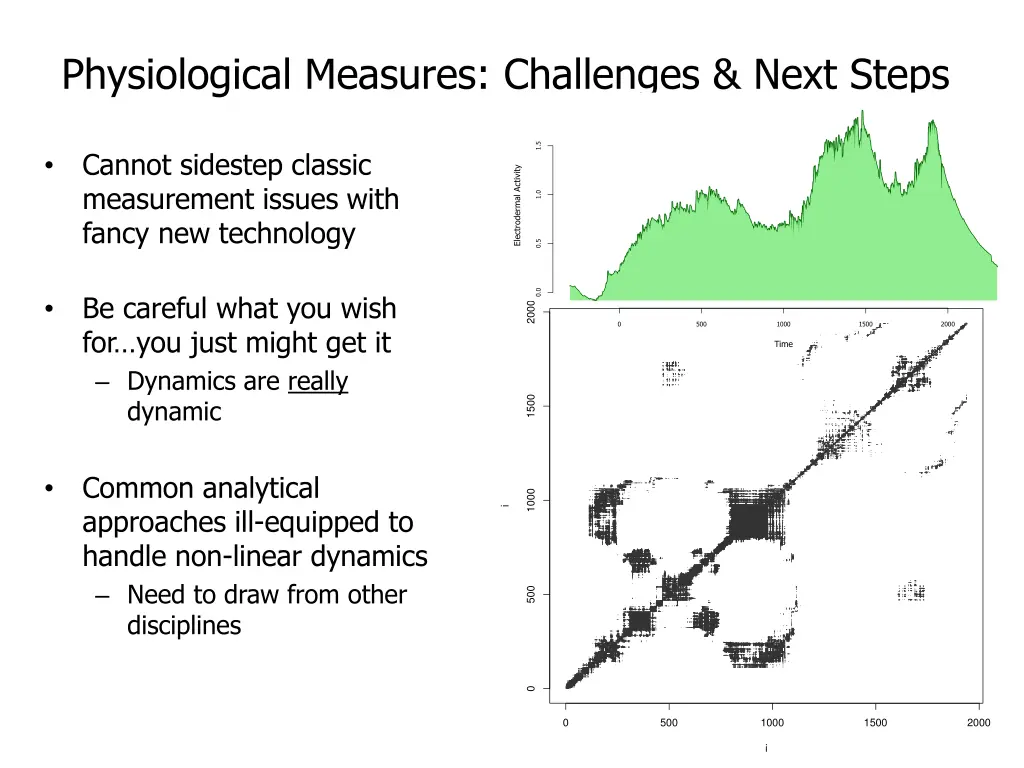
Physiological Measures: Challenges & Next Steps 1.5 Cannot sidestep classic measurement issues with fancy new technology Electrodermal Activity 1.0 0.5 Recurrence Plot 0.0 Be careful what you wish for you just might get it Dynamics are really dynamic 2000 0 500 1000 1500 2000 Time 1500 Common analytical approaches ill-equipped to handle non-linear dynamics Need to draw from other disciplines 1000 i 500 0 0 500 1000 1500 2000 i
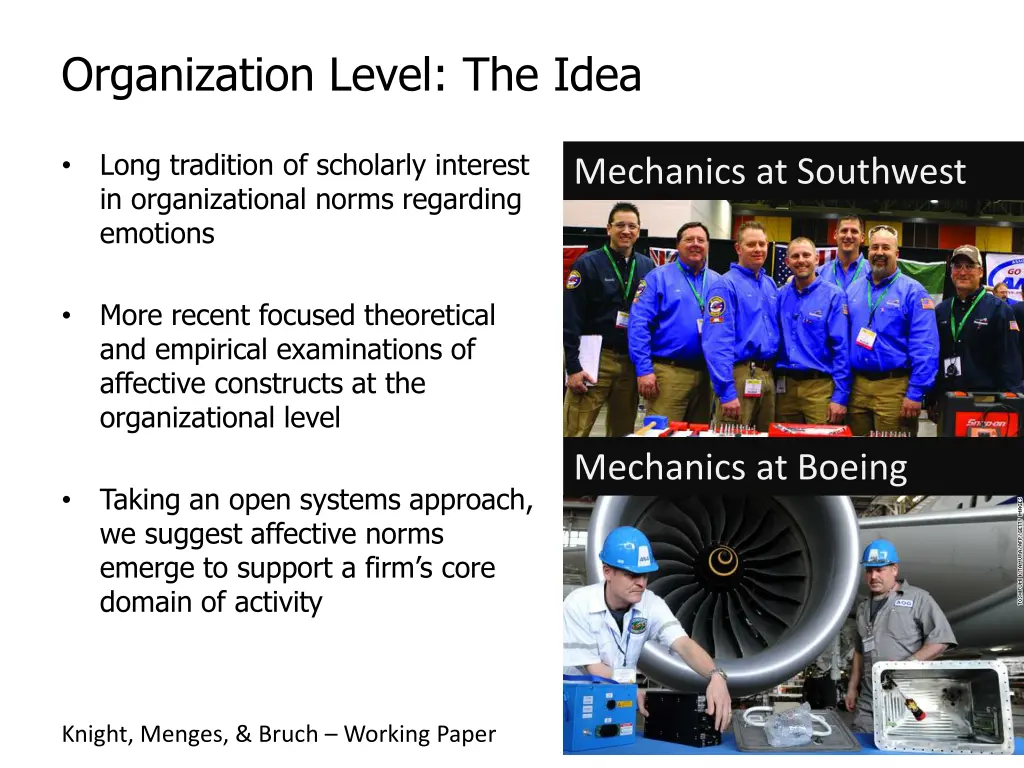
Organization Level: The Idea Long tradition of scholarly interest in organizational norms regarding emotions Mechanics at Southwest More recent focused theoretical and empirical examinations of affective constructs at the organizational level Mechanics at Boeing Taking an open systems approach, we suggest affective norms emerge to support a firm s core domain of activity Knight, Menges, & Bruch Working Paper
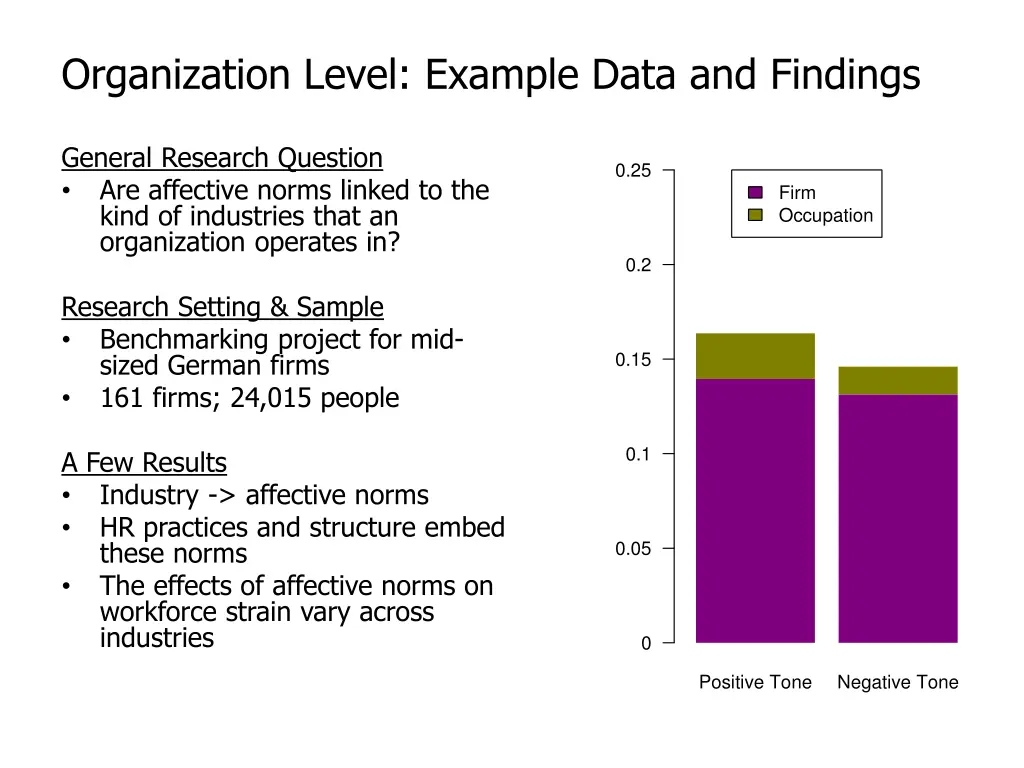
Organization Level: Example Data and Findings General Research Question Are affective norms linked to the kind of industries that an organization operates in? 0.25 Firm Occupation 0.2 Research Setting & Sample Benchmarking project for mid- sized German firms 161 firms; 24,015 people 0.15 0.1 A Few Results Industry -> affective norms HR practices and structure embed these norms The effects of affective norms on workforce strain vary across industries 0.05 0 Positive Tone Negative Tone Centralization Formalization
Multilevel Challenges and Advances in Studying Emotions at Work: Physiological Measures and Organization Level Affect Andrew P. Knight Olin Business School Washington University in St. Louis knightap@wustl.edu | http://apknight.org