Surgical Pathway
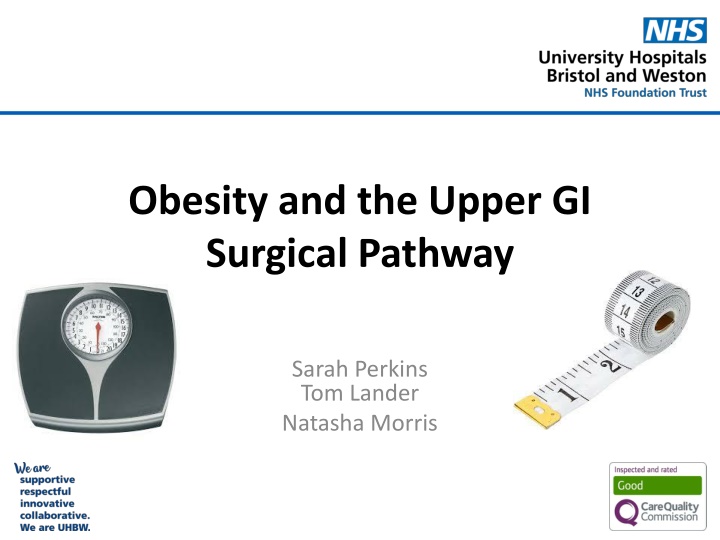
In this presentation, Sarah Perkins, Tom Lander, and Natasha Morris discuss the challenges and potential solutions related to obesity in the upper gastrointestinal surgical pathway. They address the desired outcomes, current limitations, proposed models, patient resources for improving fitness pre-surgery, and strategies for managing nutritional needs across different regions. The content highlights the importance of tailored nutritional interventions, consistent messaging for patients, and reducing surgical risk to enhance patient outcomes.

Download Presentation

Please find below an Image/Link to download the presentation.
The content on the website is provided AS IS for your information and personal use only. It may not be sold, licensed, or shared on other websites without obtaining consent from the author.If you encounter any issues during the download, it is possible that the publisher has removed the file from their server.
You are allowed to download the files provided on this website for personal or commercial use, subject to the condition that they are used lawfully. All files are the property of their respective owners.
The content on the website is provided AS IS for your information and personal use only. It may not be sold, licensed, or shared on other websites without obtaining consent from the author.
E N D
Presentation Transcript
Obesity and the Upper GI Surgical Pathway Sarah Perkins Tom Lander Natasha Morris
Contents What we want What we ve got How can we use what we ve got to get closer to what we want? Proposed model Potential challenges What next? Questions/ discussion
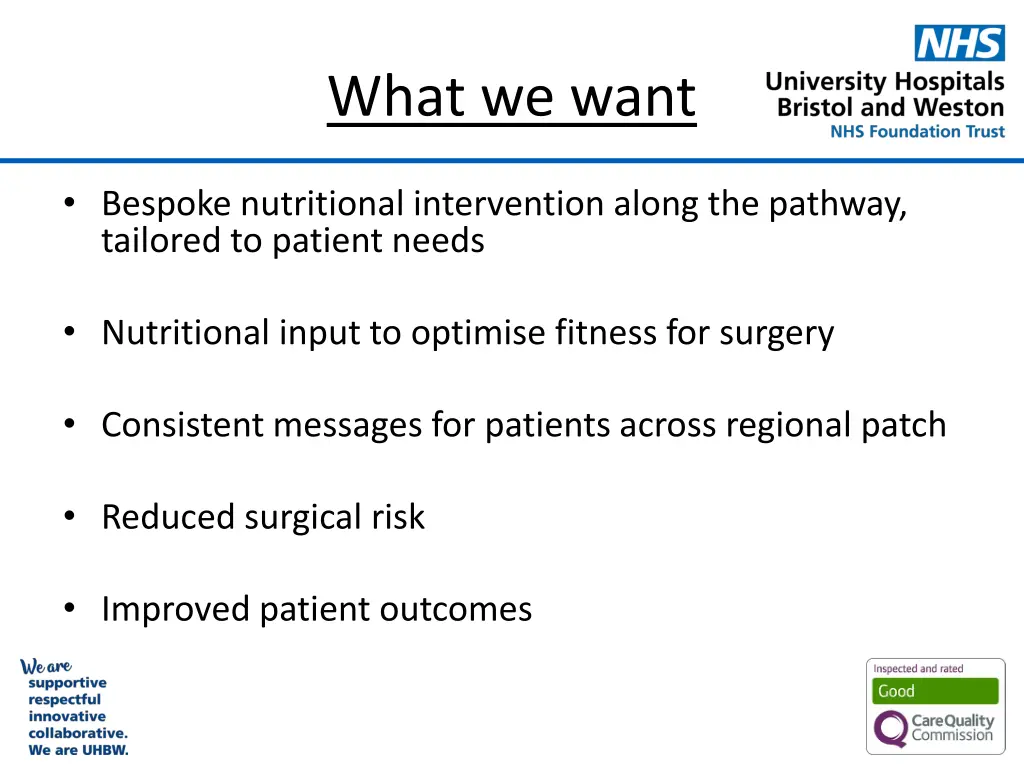
What we want Bespoke nutritional intervention along the pathway, tailored to patient needs Nutritional input to optimise fitness for surgery Consistent messages for patients across regional patch Reduced surgical risk Improved patient outcomes
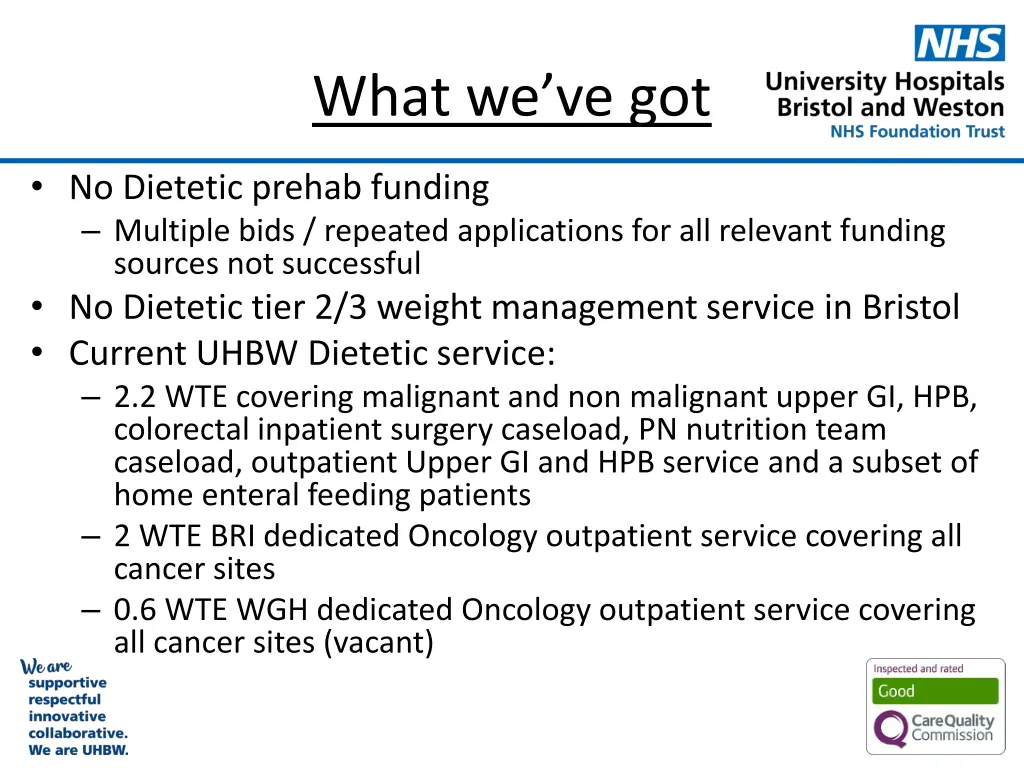
What weve got No Dietetic prehab funding Multiple bids / repeated applications for all relevant funding sources not successful No Dietetic tier 2/3 weight management service in Bristol Current UHBW Dietetic service: 2.2 WTE covering malignant and non malignant upper GI, HPB, colorectal inpatient surgery caseload, PN nutrition team caseload, outpatient Upper GI and HPB service and a subset of home enteral feeding patients 2 WTE BRI dedicated Oncology outpatient service covering all cancer sites 0.6 WTE WGH dedicated Oncology outpatient service covering all cancer sites (vacant)
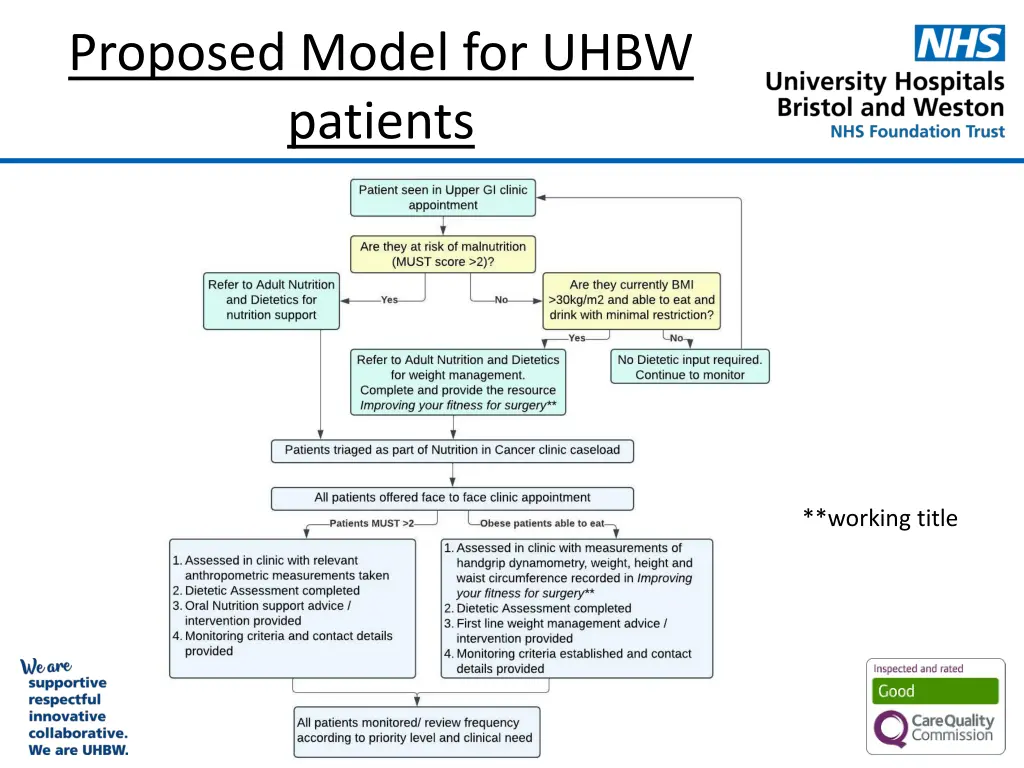
Proposed Model for UHBW patients **working title
Improving your fitness for surgery Patient resource including: Tables to record weight, waist circumference and hand grip strength throughout treatment Healthy eating advice tailored to Upper GI cancer patient group Physical activity advice in liaison with prehab team Target % weight loss set by surgical team with duration (5- 10% likely to be clinically significant and still realistic) Outlines risk of unintentional weight loss/ sarcopenia and potential of balancing nutrition support needs if situation changes (e.g. worsening dysphagia) Local and regional Dietetic contact details
What if theyre out of area? Clear documentation of nutritional aim in Upper GI clinic letter Improving your fitness for surgery could be sent to regional Dietitian teams and follow the patient across the pathway
Potential Challenges Little evidence for management of obesity in this context, but strong evidence for the risk of malnutrition Other prehab services do not recommend weight loss for cancer patients Contacted Upper GI specialist groups/ BDA specialist groups and does not appear to be an intervention provided elsewhere Potential for mixed messages/ difficult to switch between nutrition support and weight management Complexity of patient relationship with supplement drinks Is this a realistic moment for behavioural change? Patient specific factors: literacy, engagement, social circumstances
What next? If we want to go ahead with this: Can liaise with YDH/MPH/WGH/RUH Dietitians Development of Improving fitness for surgery resource and agree criteria of patients to receive this Draft sent round Dietetic and surgical teams for feedback Launch of resource Monitoring/ audit of this intervention