Sustainable Golf Tourism: A System Dynamics Approach for Regional Planning
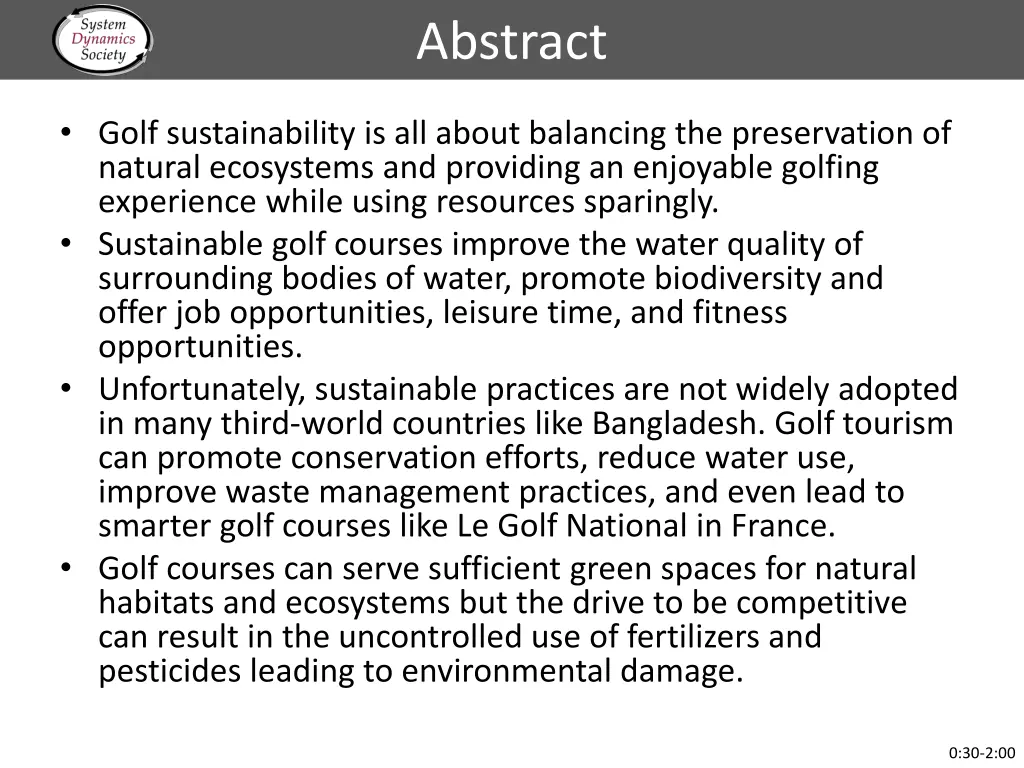
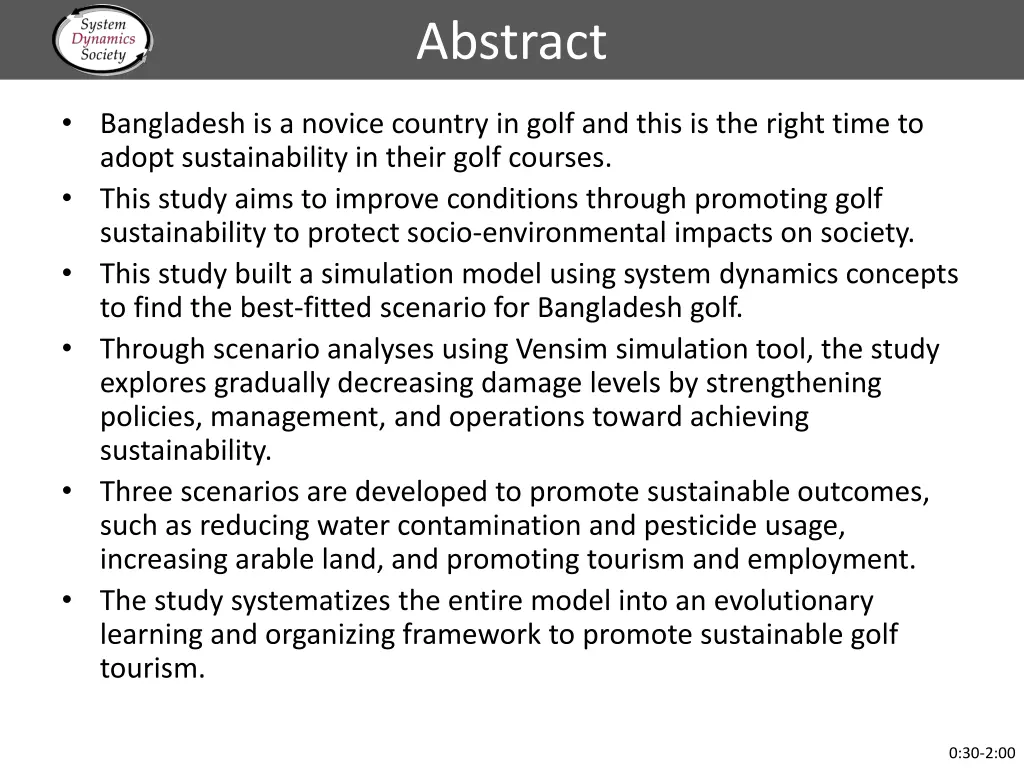
Golf sustainability involves balancing ecosystem preservation with creating an enjoyable golfing experience. This study focuses on transitioning to sustainable golf tourism in Bangladesh through system dynamics modeling, aiming to improve socio-environmental impacts and promote sustainable outcomes.

Download Presentation

Please find below an Image/Link to download the presentation.
The content on the website is provided AS IS for your information and personal use only. It may not be sold, licensed, or shared on other websites without obtaining consent from the author.If you encounter any issues during the download, it is possible that the publisher has removed the file from their server.
You are allowed to download the files provided on this website for personal or commercial use, subject to the condition that they are used lawfully. All files are the property of their respective owners.
The content on the website is provided AS IS for your information and personal use only. It may not be sold, licensed, or shared on other websites without obtaining consent from the author.
E N D
Presentation Transcript
2023 INTERNATIONAL SYSTEM DYNAMICS CONFERENCE Chicago & Online | July 23 27, 2023 Transitioning to Sustainable Golf Tourism: A System Dynamics Approach to Regional Planning Dr. Mohammad Shamsuddoha Associate Professor of Supply Chain Western Illinois University, USA 0:00-0:30
Abstract Golf sustainability is all about balancing the preservation of natural ecosystems and providing an enjoyable golfing experience while using resources sparingly. Sustainable golf courses improve the water quality of surrounding bodies of water, promote biodiversity and offer job opportunities, leisure time, and fitness opportunities. Unfortunately, sustainable practices are not widely adopted in many third-world countries like Bangladesh. Golf tourism can promote conservation efforts, reduce water use, improve waste management practices, and even lead to smarter golf courses like Le Golf National in France. Golf courses can serve sufficient green spaces for natural habitats and ecosystems but the drive to be competitive can result in the uncontrolled use of fertilizers and pesticides leading to environmental damage. 0:30-2:00
Abstract Bangladesh is a novice country in golf and this is the right time to adopt sustainability in their golf courses. This study aims to improve conditions through promoting golf sustainability to protect socio-environmental impacts on society. This study built a simulation model using system dynamics concepts to find the best-fitted scenario for Bangladesh golf. Through scenario analyses using Vensim simulation tool, the study explores gradually decreasing damage levels by strengthening policies, management, and operations toward achieving sustainability. Three scenarios are developed to promote sustainable outcomes, such as reducing water contamination and pesticide usage, increasing arable land, and promoting tourism and employment. The study systematizes the entire model into an evolutionary learning and organizing framework to promote sustainable golf tourism. 0:30-2:00
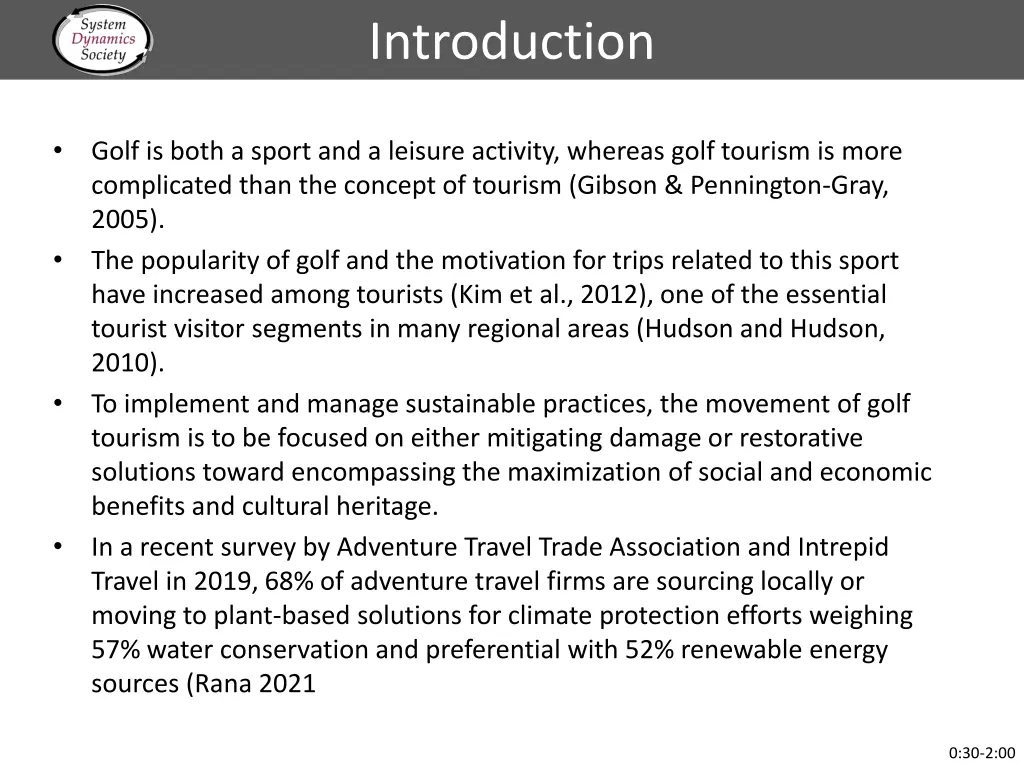
Introduction Golf is both a sport and a leisure activity, whereas golf tourism is more complicated than the concept of tourism (Gibson & Pennington-Gray, 2005). The popularity of golf and the motivation for trips related to this sport have increased among tourists (Kim et al., 2012), one of the essential tourist visitor segments in many regional areas (Hudson and Hudson, 2010). To implement and manage sustainable practices, the movement of golf tourism is to be focused on either mitigating damage or restorative solutions toward encompassing the maximization of social and economic benefits and cultural heritage. In a recent survey by Adventure Travel Trade Association and Intrepid Travel in 2019, 68% of adventure travel firms are sourcing locally or moving to plant-based solutions for climate protection efforts weighing 57% water conservation and preferential with 52% renewable energy sources (Rana 2021 0:30-2:00
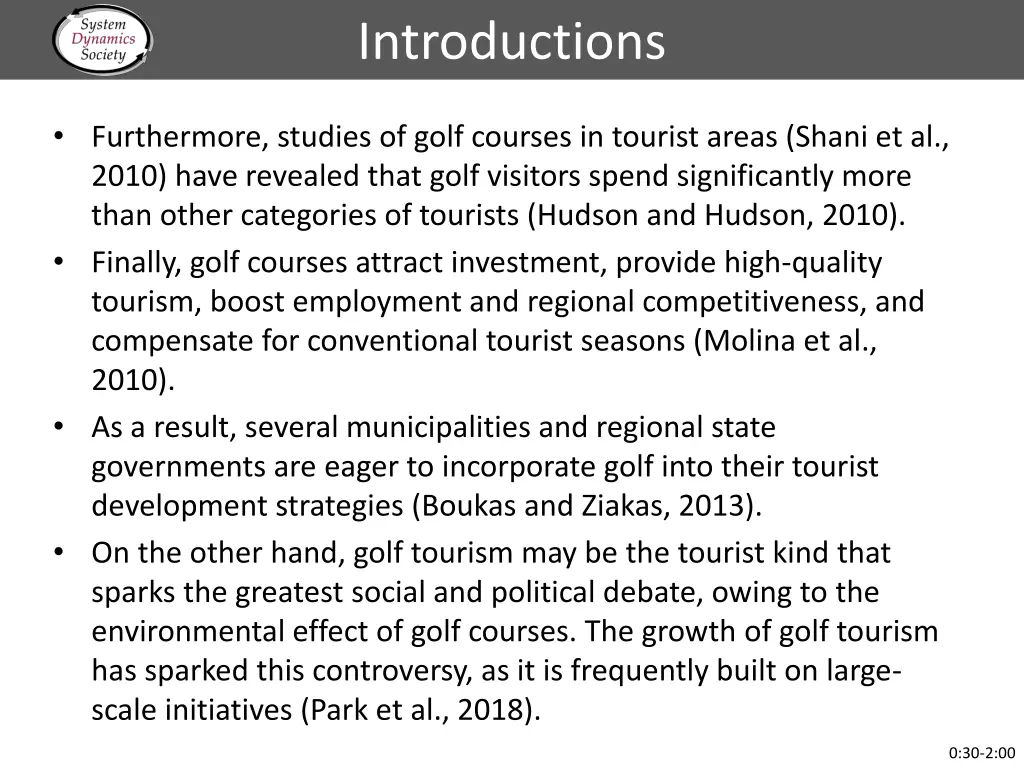
Introductions Furthermore, studies of golf courses in tourist areas (Shani et al., 2010) have revealed that golf visitors spend significantly more than other categories of tourists (Hudson and Hudson, 2010). Finally, golf courses attract investment, provide high-quality tourism, boost employment and regional competitiveness, and compensate for conventional tourist seasons (Molina et al., 2010). As a result, several municipalities and regional state governments are eager to incorporate golf into their tourist development strategies (Boukas and Ziakas, 2013). On the other hand, golf tourism may be the tourist kind that sparks the greatest social and political debate, owing to the environmental effect of golf courses. The growth of golf tourism has sparked this controversy, as it is frequently built on large- scale initiatives (Park et al., 2018). 0:30-2:00
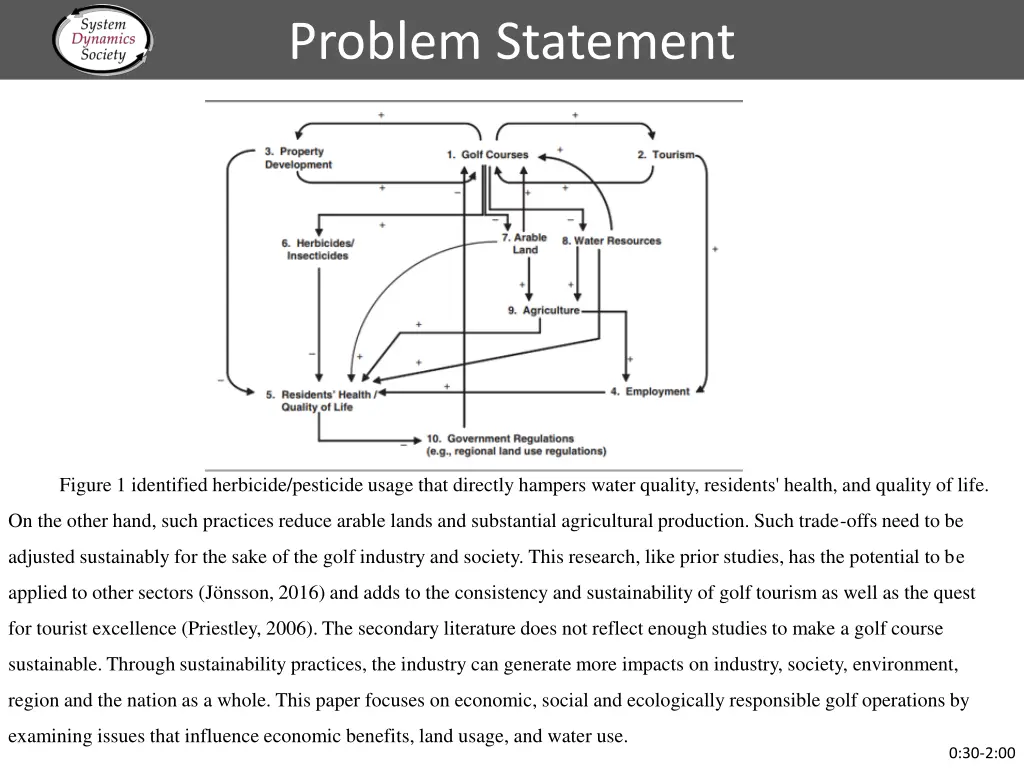
Introductions However, the negative impacts of golf operations include, to name a few, the degradation of natural landscapes, the overexploitation of primary resources such as water, the overuse of fertilizers, pesticides, and other chemical products, and pollution in general. As Petrosillo et al. (2019) stress, most academic studies of golf courses focus on negative environmental repercussions and those who see them as a favored tool for maintaining biodiversity in urban situations. Woodside (2009) examined the criticism of golf tourism and environmental aspects and considered how the golf-tourism- environmental relationship might achieve economic well-being. Woodside also proposed the below causal loop and initial model to achieve workable solutions. This paper is motivated by Woodside (2009) models below and develops further inquiry on achieving sustainability while maintaining golf operations. 0:30-2:00
Problem Statement Figure 1 identified herbicide/pesticide usage that directly hampers water quality, residents' health, and quality of life. On the other hand, such practices reduce arable lands and substantial agricultural production. Such trade-offs need to be adjusted sustainably for the sake of the golf industry and society. This research, like prior studies, has the potential to be applied to other sectors (J nsson, 2016) and adds to the consistency and sustainability of golf tourism as well as the quest for tourist excellence (Priestley, 2006). The secondary literature does not reflect enough studies to make a golf course sustainable. Through sustainability practices, the industry can generate more impacts on industry, society, environment, region and the nation as a whole. This paper focuses on economic, social and ecologically responsible golf operations by examining issues that influence economic benefits, land usage, and water use. 0:30-2:00
Method This research will deploy a system dynamics and computer simulation modeling approach for analyzing diverse aspects of golf tourism along with sustainable features. This study followed four steps based on Peji -Bach & eri (2007), which are as follows: The simulation model develops from an influence diagram (from Woodside 2009). Then identify resources and their states through secondary literature, in-depth interview and observation. After that, the study intends to find the standard structures for golf fields and related research fields of sustainability (Figures 1 and 2). Finally, examine and find the best-fitted strategy for the system dynamics models (scenario analyses and the best possible scenario for achieving sustainability) to find an optimal solution for sustainable golf tourism in light of economy, society and environment. The study uses secondary literature and in-depth interviews with golf management to develop a simulation model. 0:30-2:00
Method Vensim 6.01 (DSS) version has been used to create the simulation model. This paper develops a system dynamics simulation model based on a particular golf course in Bangladesh. It is assumed that other courses in Bangladesh follow a similar operational methodology. An open-ended interview was conducted to get the model variable averages and range of data. The variable data were given input to run the model and the model successfully replicated the closest output of the case golf course operations. The results were discussed with the club members and validated the outcomes for the main variables. This paper will be produced a real number to understand which scenario best fits golf tourism to make this leisure and sports industry sustainable. Later, the research develops three unsustainable, moderate sustainable and sustainable scenarios to compare and contrast the progress. 0:30-2:00
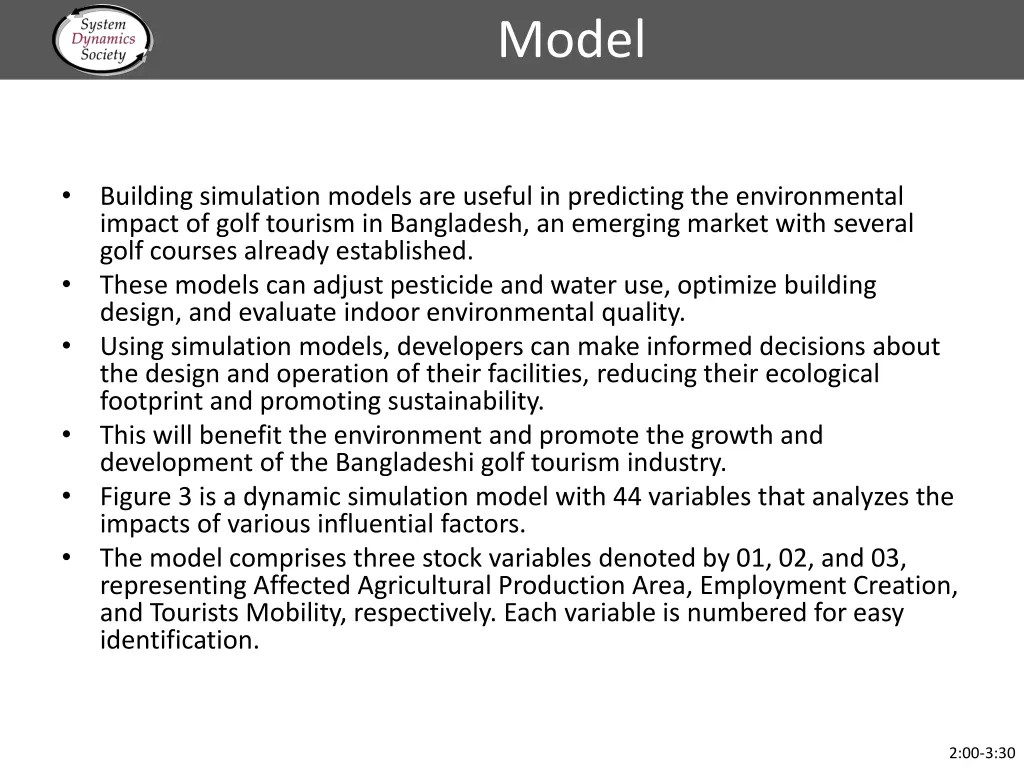
Circular Economy Figure 3: System dynamics simulation model for finding a sustainable solution 2:00-3:30
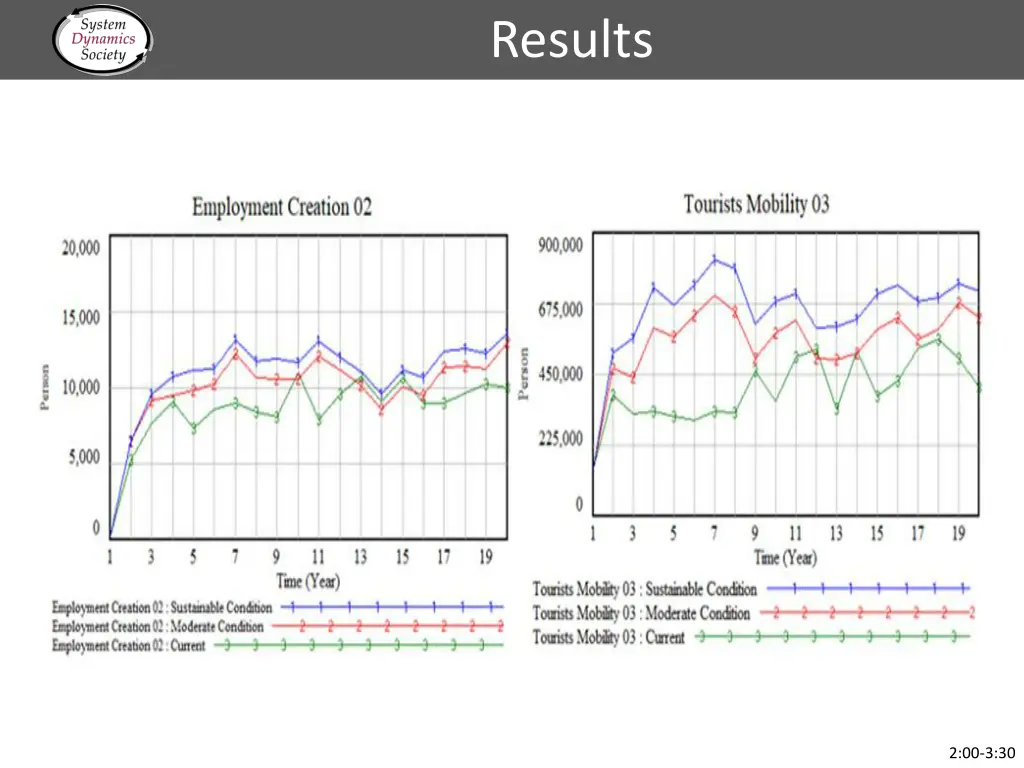
Model Building simulation models are useful in predicting the environmental impact of golf tourism in Bangladesh, an emerging market with several golf courses already established. These models can adjust pesticide and water use, optimize building design, and evaluate indoor environmental quality. Using simulation models, developers can make informed decisions about the design and operation of their facilities, reducing their ecological footprint and promoting sustainability. This will benefit the environment and promote the growth and development of the Bangladeshi golf tourism industry. Figure 3 is a dynamic simulation model with 44 variables that analyzes the impacts of various influential factors. The model comprises three stock variables denoted by 01, 02, and 03, representing Affected Agricultural Production Area, Employment Creation, and Tourists Mobility, respectively. Each variable is numbered for easy identification. 2:00-3:30
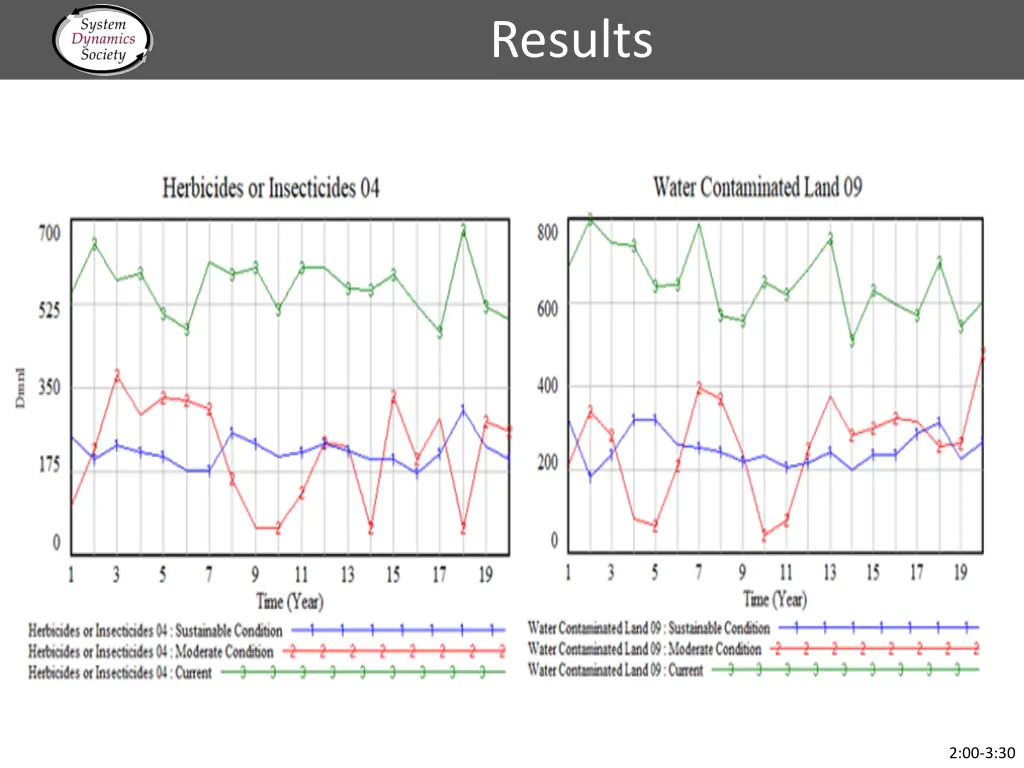
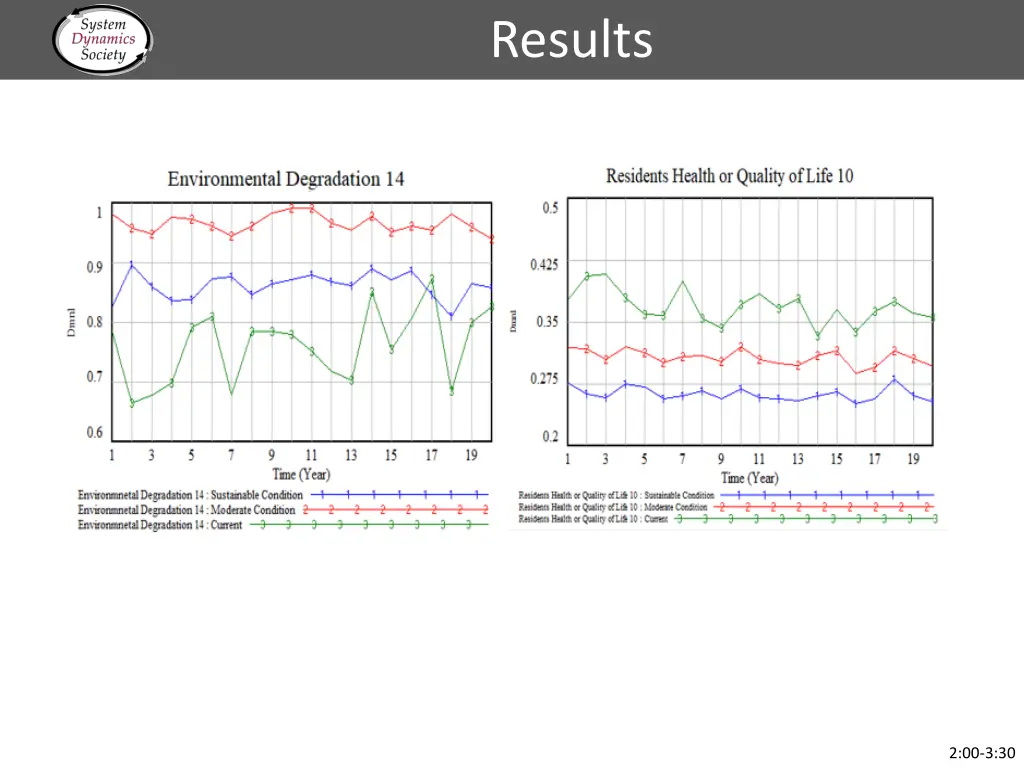
Model The model also incorporates variables such as Herbicides and Contaminated water impacts (08), Water Contaminated Land (09), Residents' Health or Quality of Life (10), and Decrease Arable Land (07), which help to understand the social and environmental effects of a golf course. The simulation model also includes Government Regulations (11) and Environmental Regulations (44) to evaluate the golf course's compliance with sustainability standards. To reduce water contamination, the Water Recycling variable (43) decreases surrounding water flow pollution, while the Organic Usage variable (42) controls insecticide impacts on golf courses. The Accumulated Crop Losses variable (26) is also included to understand the trade-off between possible crop production and golf course economic activities. The variable values were determined through in-depth interviews and found to be within an approximate range of information. In most cases, average values and random uniform calculations were used to run the model. 2:00-3:30
Results 2:00-3:30
Results 2:00-3:30
Results 2:00-3:30
Results 2:00-3:30
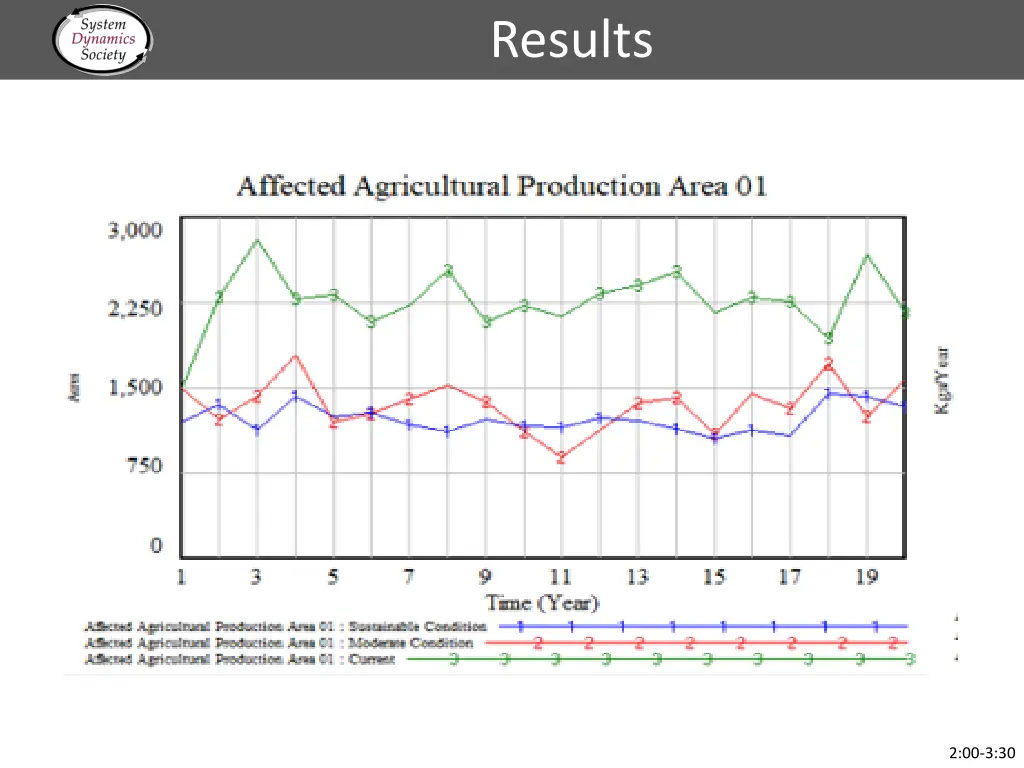
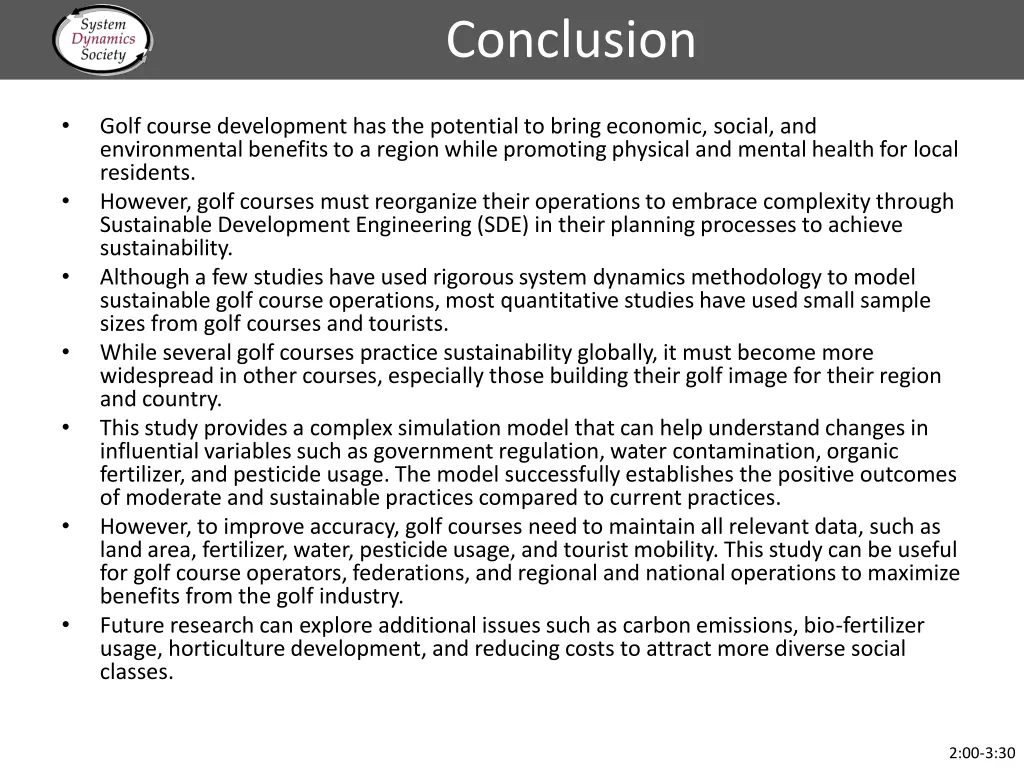
Conclusion Golf course development has the potential to bring economic, social, and environmental benefits to a region while promoting physical and mental health for local residents. However, golf courses must reorganize their operations to embrace complexity through Sustainable Development Engineering (SDE) in their planning processes to achieve sustainability. Although a few studies have used rigorous system dynamics methodology to model sustainable golf course operations, most quantitative studies have used small sample sizes from golf courses and tourists. While several golf courses practice sustainability globally, it must become more widespread in other courses, especially those building their golf image for their region and country. This study provides a complex simulation model that can help understand changes in influential variables such as government regulation, water contamination, organic fertilizer, and pesticide usage. The model successfully establishes the positive outcomes of moderate and sustainable practices compared to current practices. However, to improve accuracy, golf courses need to maintain all relevant data, such as land area, fertilizer, water, pesticide usage, and tourist mobility. This study can be useful for golf course operators, federations, and regional and national operations to maximize benefits from the golf industry. Future research can explore additional issues such as carbon emissions, bio-fertilizer usage, horticulture development, and reducing costs to attract more diverse social classes. 2:00-3:30