This call for proposals aims to enhance the employability of vulnerable youth, women, and girls in the sustainable tourism and hospitality sector in Uganda's Busoga region. Enabel, the Belgian development agency, is focused on skills development, education, and employment to create economically independent citizens in a sustainable society. Explore opportunities for quality non-formal skills development, private sector involvement, and post-training support services to promote green and decent jobs in the region.
Please find below an Image/Link to download the presentation.
The content on the website is provided AS IS for your information and personal use only. It may not be sold, licensed, or shared on other websites without obtaining consent from the author. If you encounter any issues during the download, it is possible that the publisher has removed the file from their server.
You are allowed to download the files provided on this website for personal or commercial use, subject to the condition that they are used lawfully. All files are the property of their respective owners.
The content on the website is provided AS IS for your information and personal use only. It may not be sold, licensed, or shared on other websites without obtaining consent from the author.
E N D
Presentation Transcript
Call For Proposals UGA 22007-10113 - Skills development for increased employability of vulnerable youth, women and girls in the sustainable tourism and hospitality sector in Busoga region Information session
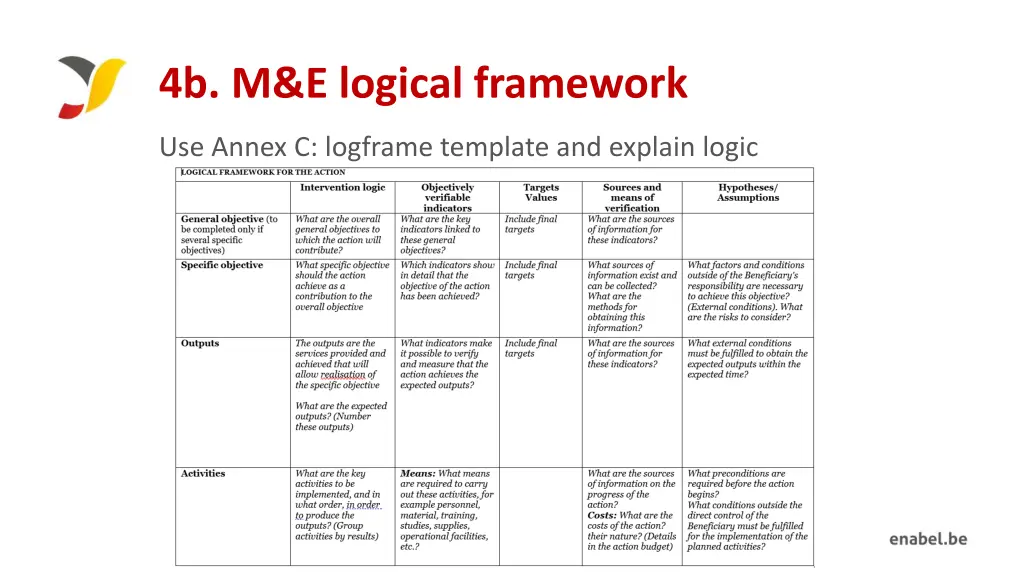
Presentation Presentation outline outline 1. Introduction 2. Objectives of the call 3. Admissibility criteria 4. Proposal template a) Annex A: Application form b) Annex C: Logical framework c) Annex B: Budget 5. Application procedure/next steps
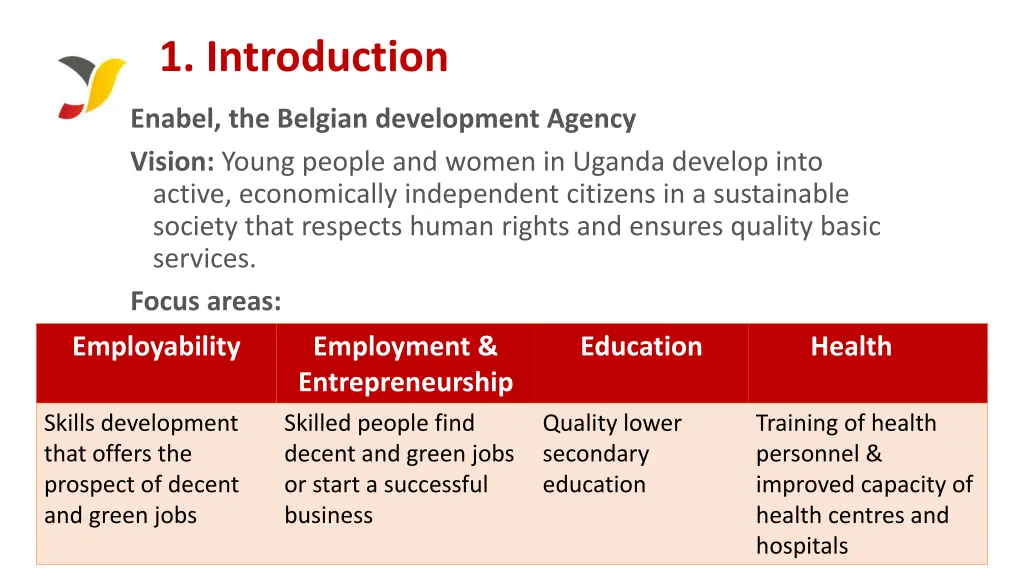
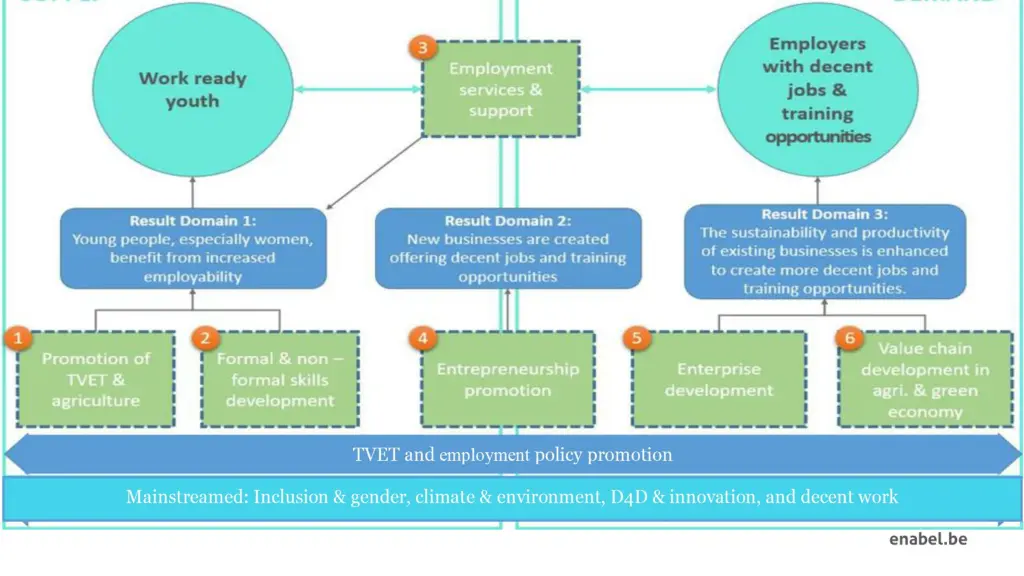
1. Introduction Enabel, the Belgian development Agency Vision: Young people and women in Uganda develop into active, economically independent citizens in a sustainable society that respects human rights and ensures quality basic services. Focus areas: Employability Employment & Entrepreneurship Education Health Skills development that offers the prospect of decent and green jobs Skilled people find decent and green jobs or start a successful business Quality lower secondary education Training of health personnel & improved capacity of health centres and hospitals
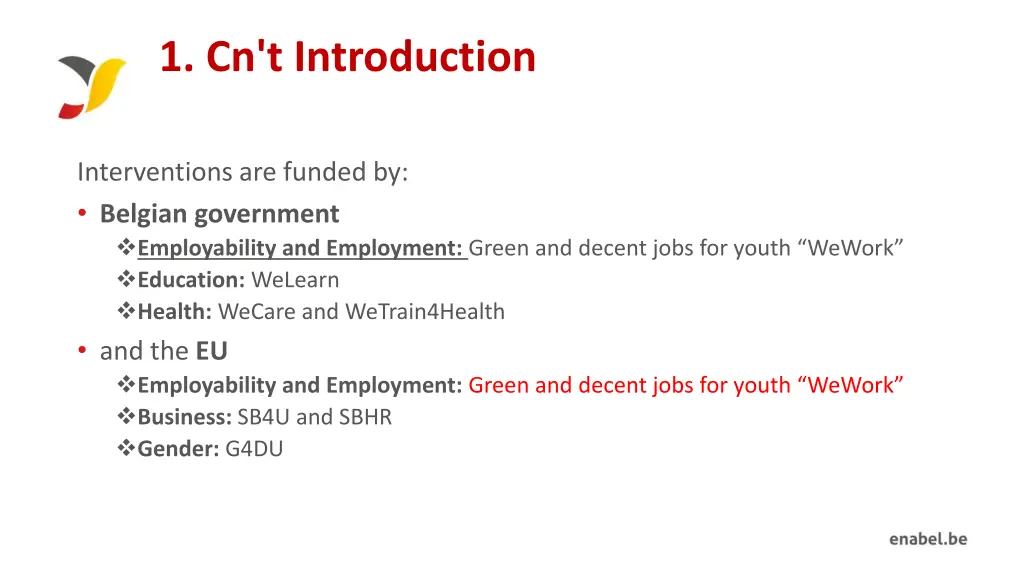
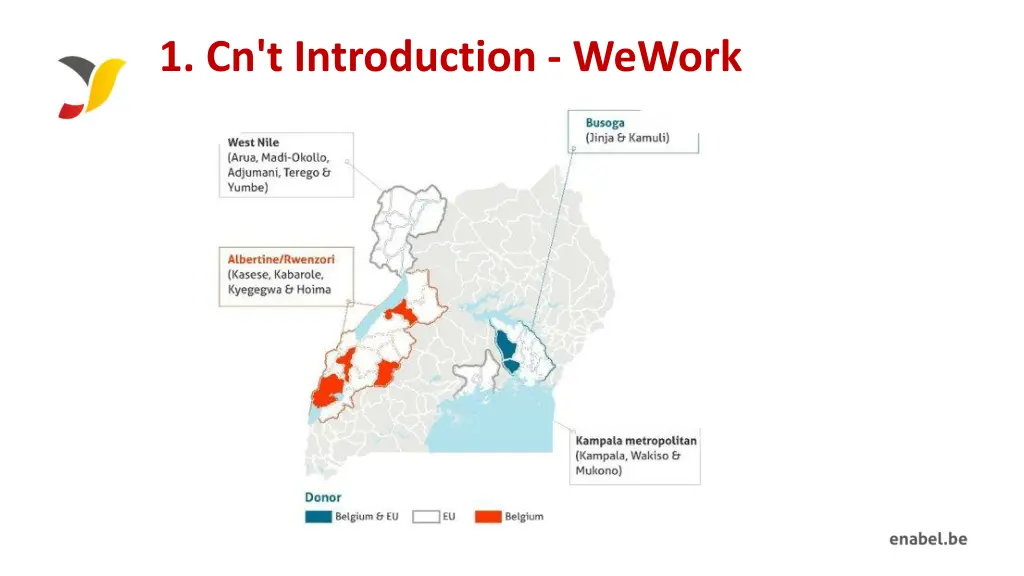
1. Cn't Introduction Interventions are funded by: Belgian government Employability and Employment: Green and decent jobs for youth WeWork Education: WeLearn Health: WeCare and WeTrain4Health and the EU Employability and Employment: Green and decent jobs for youth WeWork Business: SB4U and SBHR Gender: G4DU
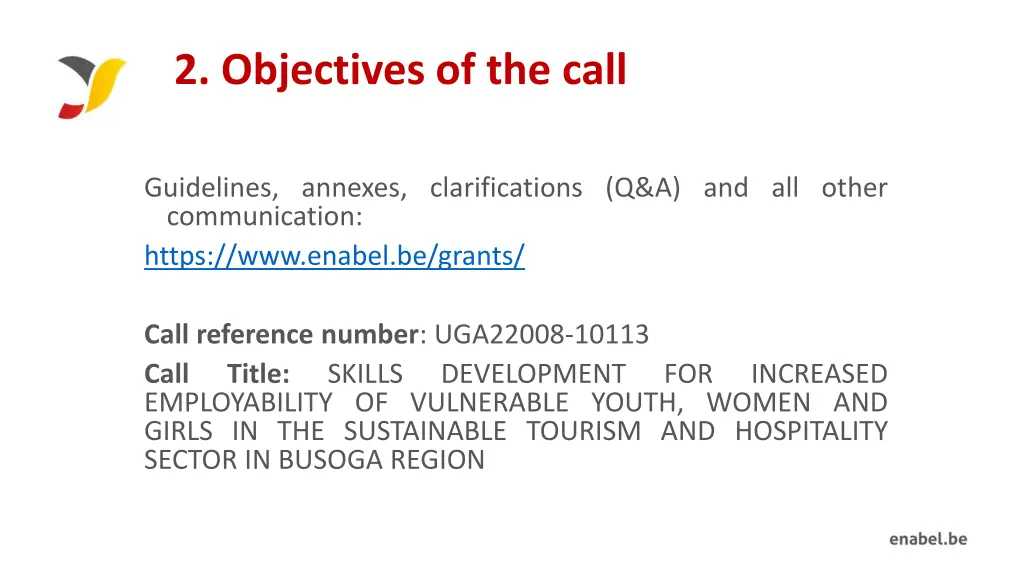
2. Objectives of the call Guidelines, annexes, clarifications (Q&A) and all other communication: https://www.enabel.be/grants/ Call reference number: UGA22008-10113 Call Title: SKILLS EMPLOYABILITY OF VULNERABLE YOUTH, WOMEN AND GIRLS IN THE SUSTAINABLE TOURISM AND HOSPITALITY SECTOR IN BUSOGA REGION DEVELOPMENT FOR INCREASED
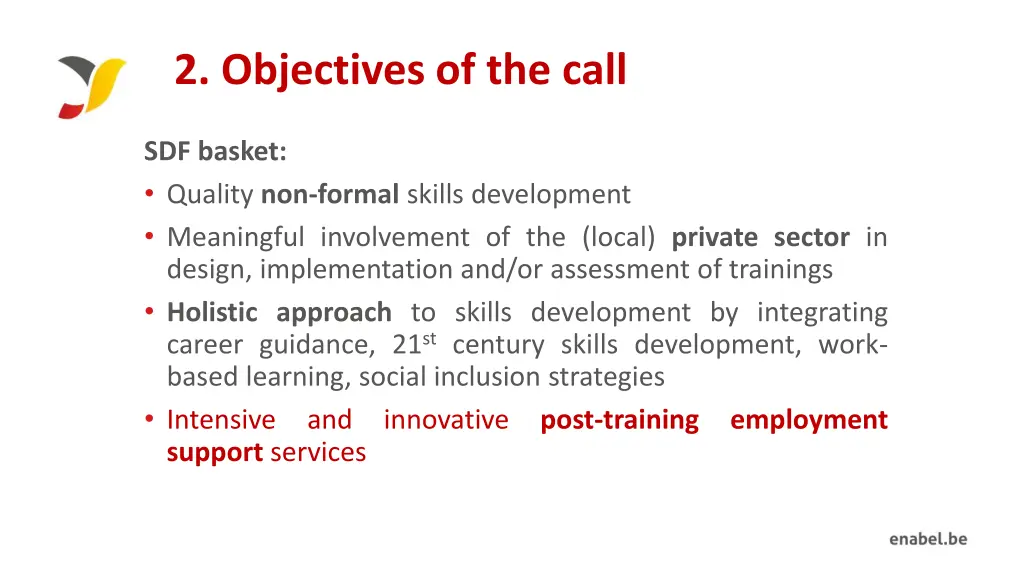
2. Objectives of the call SDF basket: Quality non-formal skills development Meaningful involvement of the (local) private sector in design, implementation and/or assessment of trainings Holistic approach to skills development by integrating career guidance, 21stcentury skills development, work- based learning, social inclusion strategies Intensive and innovative support services post-training employment
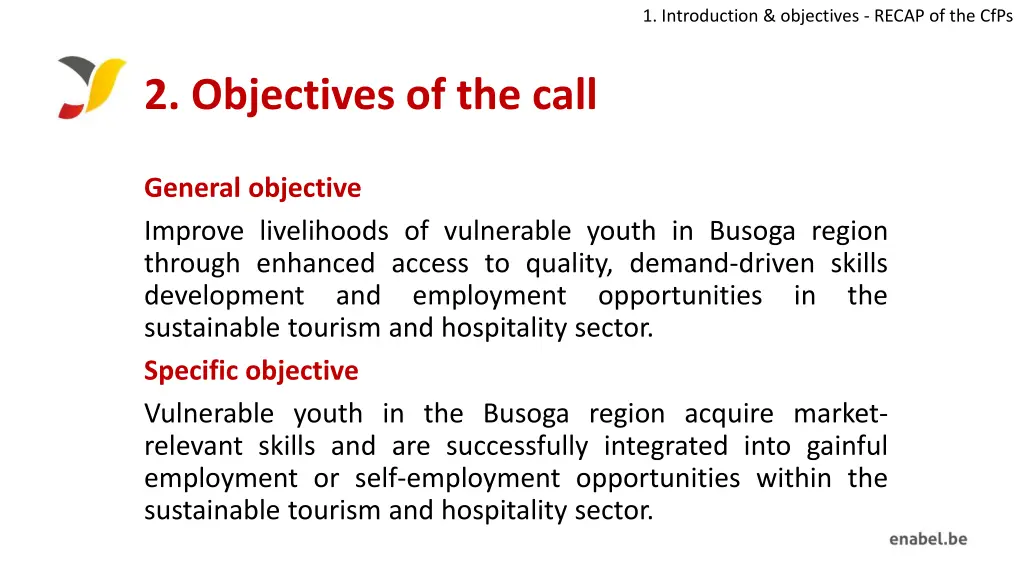
1. Introduction & objectives - RECAP of the CfPs 2. Objectives of the call General objective Improve livelihoods of vulnerable youth in Busoga region through enhanced access to quality, demand-driven skills development and employment sustainable tourism and hospitality sector. Specific objective Vulnerable youth in the Busoga region acquire market- relevant skills and are successfully integrated into gainful employment or self-employment opportunities within the sustainable tourism and hospitality sector. opportunities in the
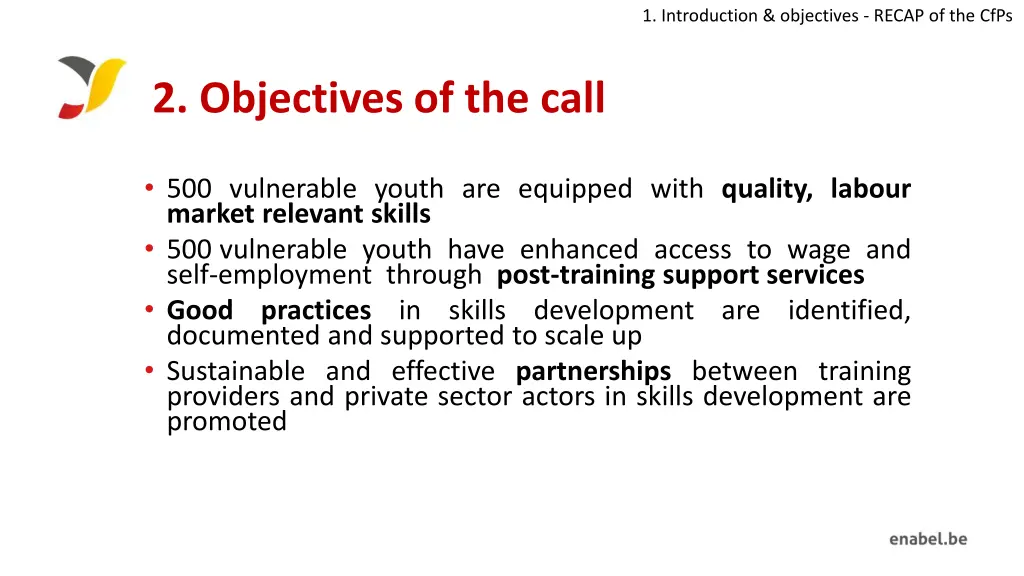
1. Introduction & objectives - RECAP of the CfPs 2. Objectives of the call 500 vulnerable youth are equipped with quality, labour market relevant skills 500 vulnerable youth have enhanced access to wage and self-employment through post-training support services Good practices in skills documented and supported to scale up Sustainable and effective partnerships between training providers and private sector actors in skills development are promoted development are identified,
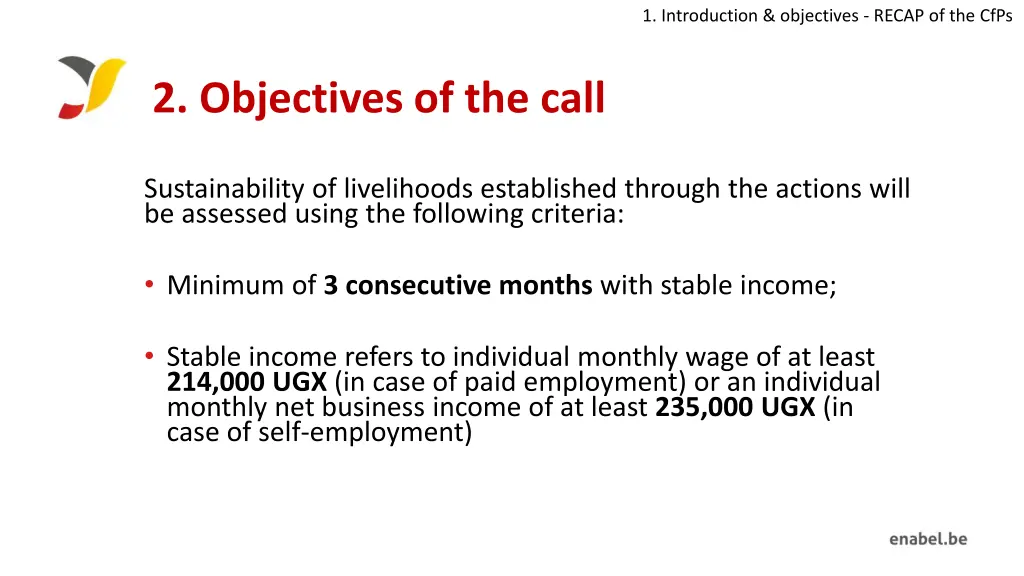
1. Introduction & objectives - RECAP of the CfPs 2. Objectives of the call Sustainability of livelihoods established through the actions will be assessed using the following criteria: Minimum of 3 consecutive months with stable income; Stable income refers to individual monthly wage of at least 214,000 UGX (in case of paid employment) or an individual monthly net business income of at least 235,000 UGX (in case of self-employment)
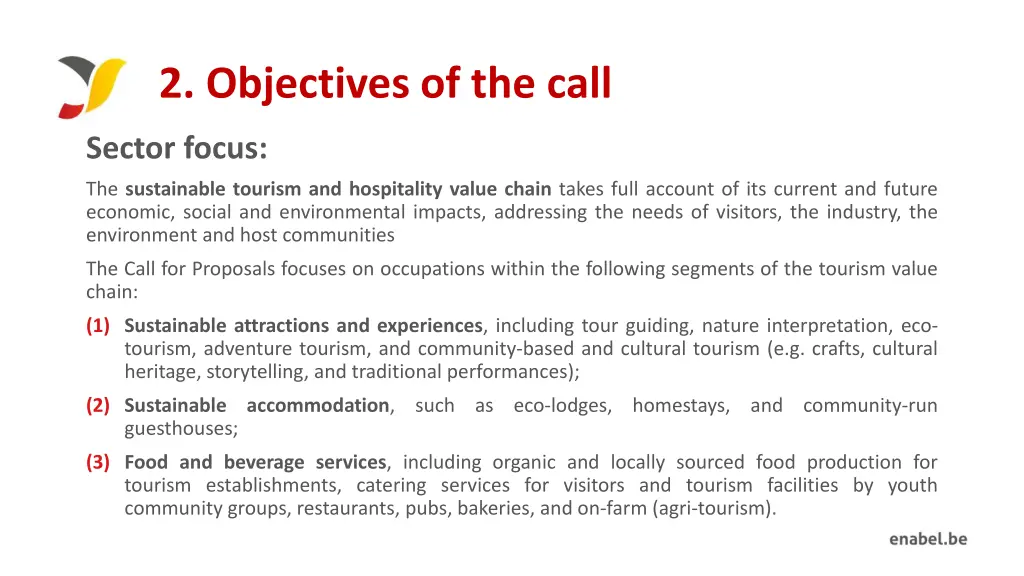
2. Objectives of the call Sector focus: The sustainable tourism and hospitality value chain takes full account of its current and future economic, social and environmental impacts, addressing the needs of visitors, the industry, the environment and host communities The Call for Proposals focuses on occupations within the following segments of the tourism value chain: (1) Sustainable attractions and experiences, including tour guiding, nature interpretation, eco- tourism, adventure tourism, and community-based and cultural tourism (e.g. crafts, cultural heritage, storytelling, and traditional performances); (2) Sustainable guesthouses; accommodation, such as eco-lodges, homestays, and community-run (3) Food and beverage services, including organic and locally sourced food production for tourism establishments, catering services for visitors and tourism facilities by youth community groups, restaurants, pubs, bakeries, and on-farm (agri-tourism).
2. Objectives of the call Target groups: Vulnerable youth refers to (a combination of) different categories of youth (young women, youth with disabilities, youth with chronic diseases, youth in poverty, youth Not in Employment, Education or Training, etc.) Low or non-skilled and face barriers to access employment and socio- economic integration. At least 80% of the targeted beneficiaries must be youth between the ages of 15 and 35 years. At least 50% of the targeted beneficiaries must be women and girls.
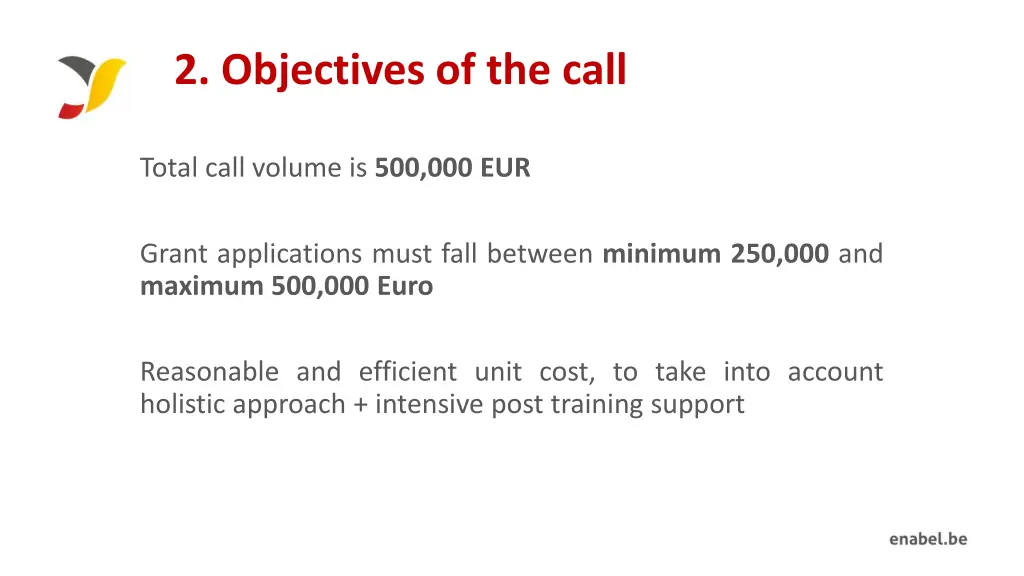
2. Objectives of the call Total call volume is 500,000 EUR Grant applications must fall between minimum 250,000 and maximum 500,000 Euro Reasonable and efficient unit cost, to take into account holistic approach + intensive post training support
3. Admissibility criteria A) The actors: Eligible applicants B) The actions: Admissible actions for grants C) The costs: Acceptable types of costs that may be included in grants
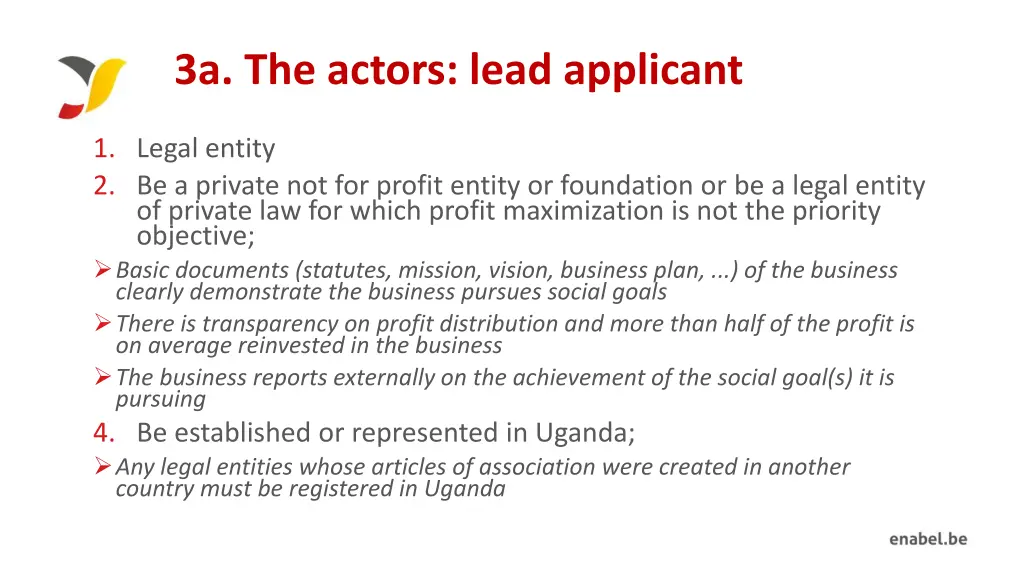
3a. The actors: lead applicant 1. Legal entity 2. Be a private not for profit entity or foundation or be a legal entity of private law for which profit maximization is not the priority objective; Basic documents (statutes, mission, vision, business plan, ...) of the business clearly demonstrate the business pursues social goals There is transparency on profit distribution and more than half of the profit is on average reinvested in the business The business reports externally on the achievement of the social goal(s) it is pursuing 4. Be established or represented in Uganda; Any legal entities whose articles of association were created in another country must be registered in Uganda
3a. The actors: lead applicant 5. National or international NGO, Civil Society or Community-Based Organization, Foundation, Business Membership organisation or a non-profit business development demonstrated experience in managing quality skills development initiatives and economic empowerment of vulnerable youth and women in the sustainable tourism and hospitality sector 6. 2 years experience in skills development, employment promotion, business development support services, social and economic empowerment of vulnerable youth and women, and community integration with a focus on the sustainable tourism and hospitality sector 7. Active Bank Account for the past 12 months 8. In-house financial management capacity service provider with
3a. The actors: lead applicant Exclusion grounds: Annex VII grant agreement Applicant s declaration in application form completed and signed (Annex A guidelines) Supporting documents (upon preselection 2ndstage): Criminal record clearances from Interpol NSSF clearance certificate Tax clearance certificate
3a. The actors: the applicant and co- applicant(s) The applicant may act with maximum two co-applicant(s) in accordance with the requirements below The partnership between Lead and co-applicants is to optimize cumulation of complementary expertise. The selected applicant becomes the contracting-beneficiary and is the main point of contact for the contracting authority. It shall represent its co-applicant and act in their name. It shall design and coordinate implementation of the action. The co-applicant shall participate in the implementation of the action and the costs that they incur shall be eligible in the same way as those incurred by the lead applicant.
3a. The actors: co-applicants (if applicable) Legal entity Be a public entity or private not for profit or legal entity of private law for which profit maximization is not the priority objective Established or represented in Uganda Be any of the following types of organization: Accredited public or private non-profit technical and/or vocational skills training provider Business Membership Organisation/Association Non-profit Business Development Services (BDS) provider A cooperative or social enterprise for which profit maximization is not the priority objective; NGO, Civil Society or Community-Based Organization, Foundation Have 2 years demonstrated work experience in participating in quality skills development and/or employment promotion initiatives within the sustainable tourism and hospitality sector. Be registered with relevant authorities and comply with Ugandan legal regulations Have an operational governance structure and an active bank account for the past 12 months
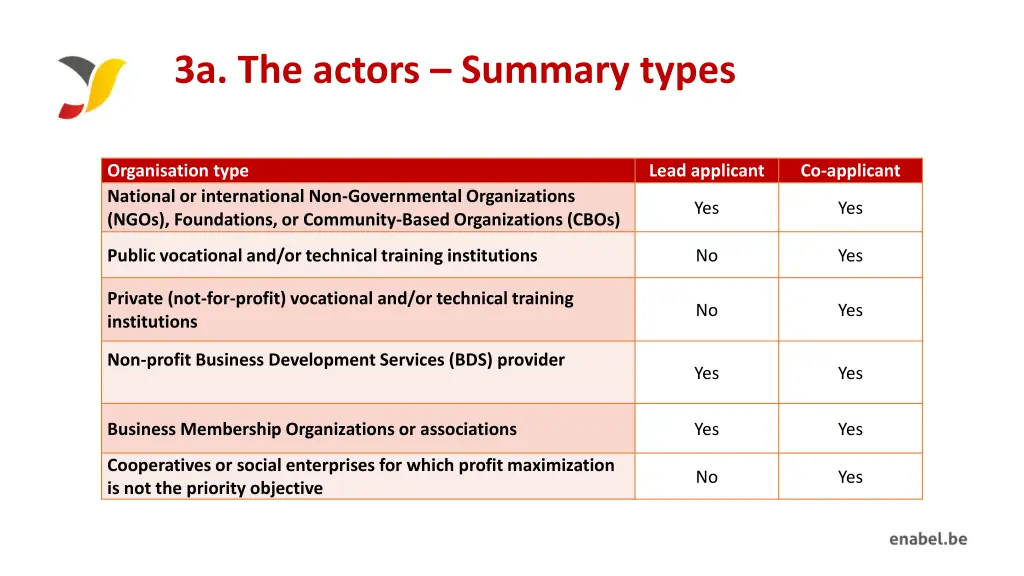
3a. The actors Summary types Organisation type National or international Non-Governmental Organizations (NGOs), Foundations, or Community-Based Organizations (CBOs) Lead applicant Co-applicant Yes Yes Public vocational and/or technical training institutions No Yes Private (not-for-profit) vocational and/or technical training institutions No Yes Non-profit Business Development Services (BDS) provider Yes Yes Business Membership Organizations or associations Yes Yes Cooperatives or social enterprises for which profit maximization is not the priority objective No Yes
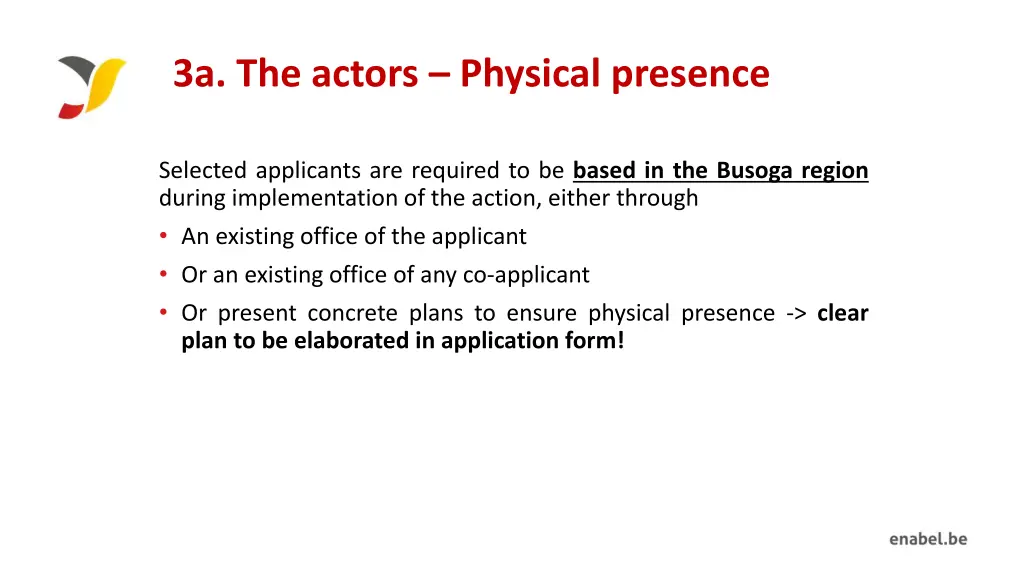
3a. The actors Physical presence Selected applicants are required to be based in the Busoga region during implementation of the action, either through An existing office of the applicant Or an existing office of any co-applicant Or present concrete plans to ensure physical presence -> clear plan to be elaborated in application form!
3a. The actors: Associates Participate actively in the action but are not eligible for grants and only qualify to receive daily allowances and travelling expenses. To be specified in part B of the application form. They need not to sign the mandate in proposal stage.
3a. The actors: Contractors These are contractors for services, works and equipment. These must be sourced through a procurement process using relevant procedures i.e. PPDA (public procurement law) for public entities and annex VIII of the Grant Agreement for private entities
3b. The actions 1. Duration 2. Location 3. Target beneficiaries 4. Priority sectors and themes 5. Type of action and eligible activities
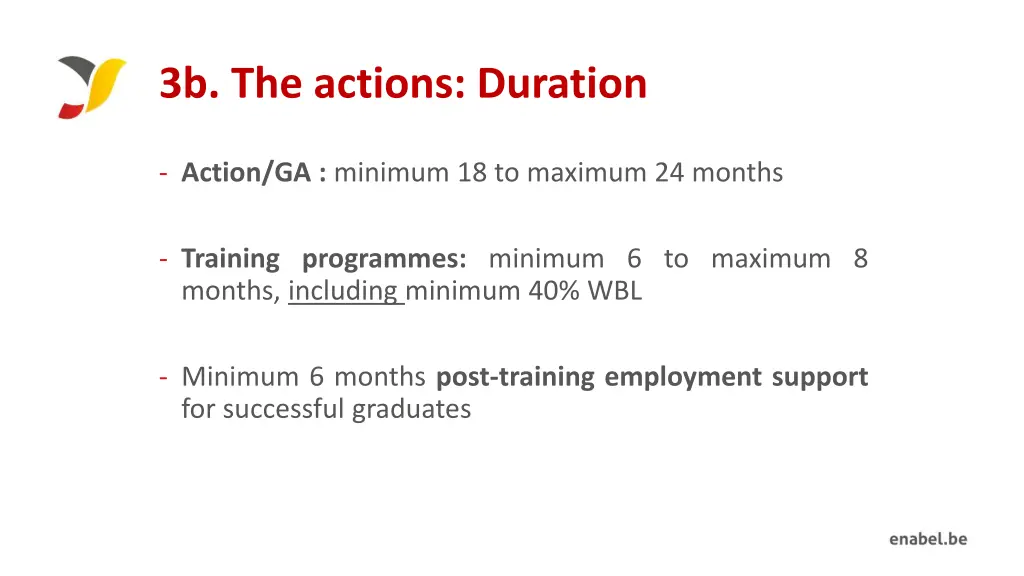
3b. The actions: Duration - Action/GA : minimum 18 to maximum 24 months - Training programmes: minimum 6 to maximum 8 months, including minimum 40% WBL - Minimum 6 months post-training employment support for successful graduates
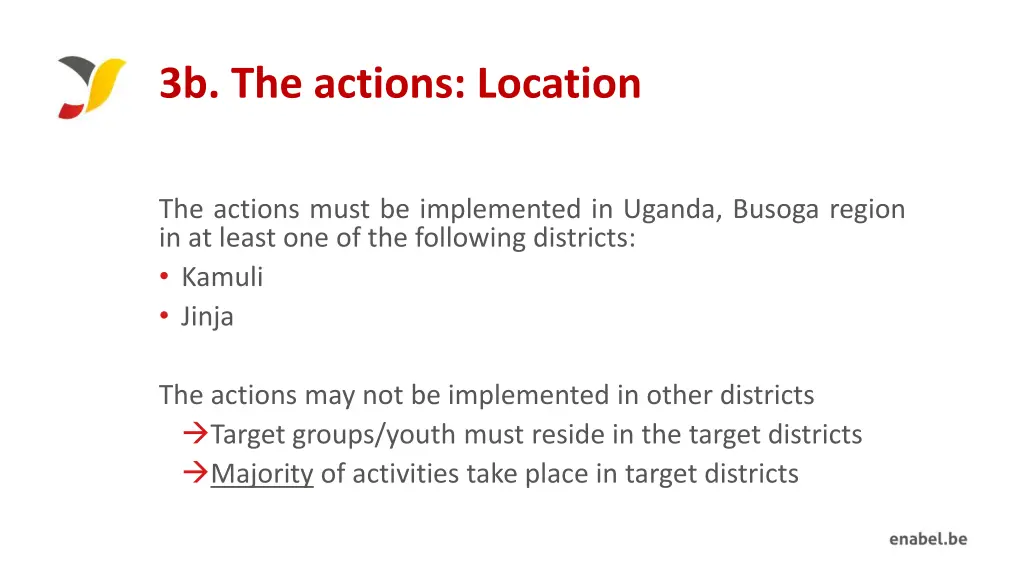
3b. The actions: Location The actions must be implemented in Uganda, Busoga region in at least one of the following districts: Kamuli Jinja The actions may not be implemented in other districts Target groups/youth must reside in the target districts Majority of activities take place in target districts
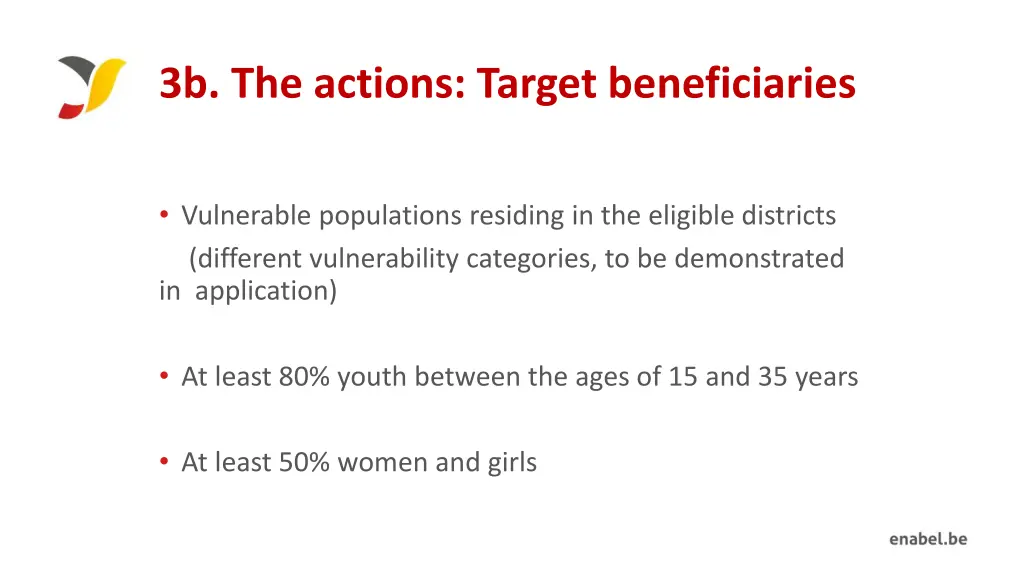
3b. The actions: Target beneficiaries Vulnerable populations residing in the eligible districts (different vulnerability categories, to be demonstrated in application) At least 80% youth between the ages of 15 and 35 years At least 50% women and girls
3b. The actions: Sustainable tourism and hospitality value chain Sustainable tourism and hospitality = taking into account of its current and future economic, social and environmental impacts Actions address skill gaps and promote employment opportunities for youth in leisure and business tourism, while contributing to the conservation and restoration of the natural environment and cultural heritage, and inclusion of the local community
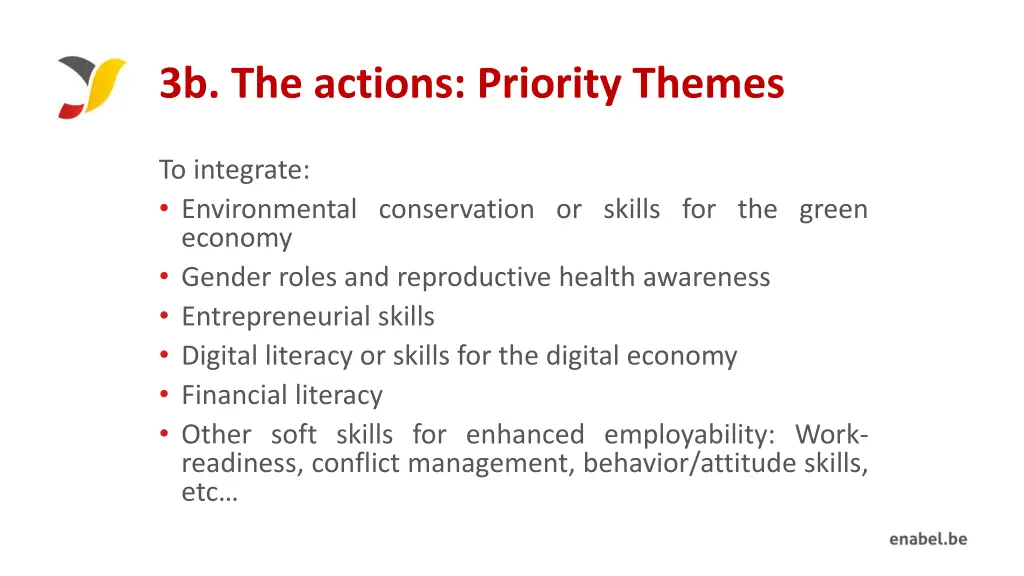
3b. The actions: Priority Themes To integrate: Environmental conservation or skills for the green economy Gender roles and reproductive health awareness Entrepreneurial skills Digital literacy or skills for the digital economy Financial literacy Other soft skills for enhanced employability: Work- readiness, conflict management, behavior/attitude skills, etc
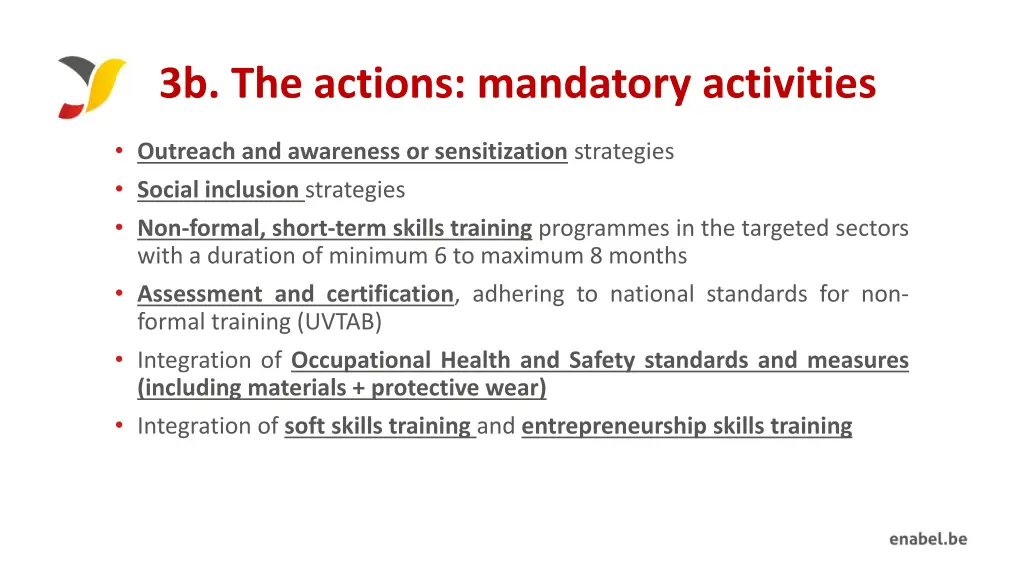
3b. The actions: mandatory activities Outreach and awareness or sensitization strategies Social inclusion strategies Non-formal, short-term skills training programmes in the targeted sectors with a duration of minimum 6 to maximum 8 months Assessment and certification, adhering to national standards for non- formal training (UVTAB) Integration of Occupational Health and Safety standards and measures (including materials + protective wear) Integration of soft skills training and entrepreneurship skills training
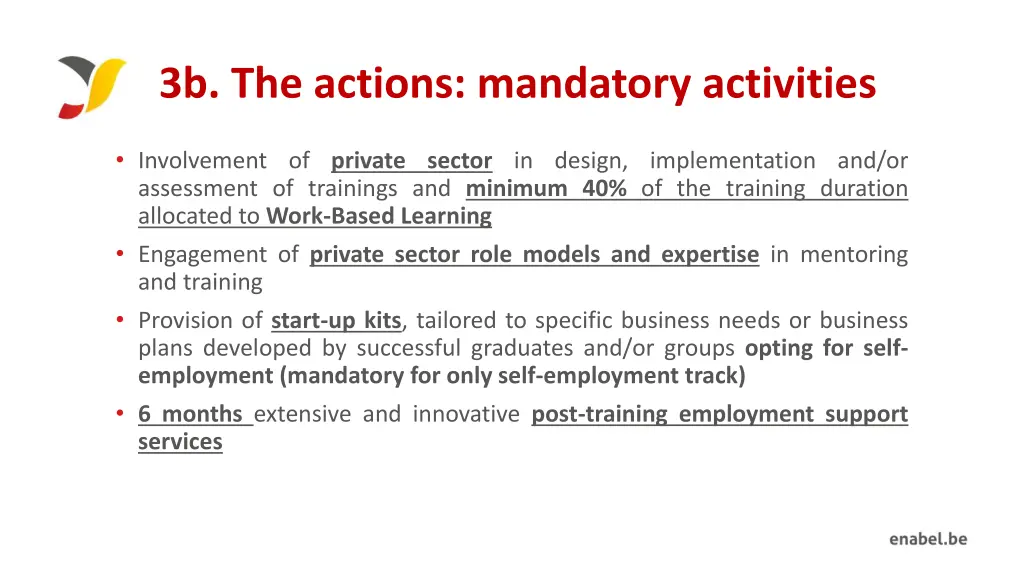
3b. The actions: mandatory activities Involvement of private sector in design, implementation and/or assessment of trainings and minimum 40% of the training duration allocated to Work-Based Learning Engagement of private sector role models and expertise in mentoring and training Provision of start-up kits, tailored to specific business needs or business plans developed by successful graduates and/or groups opting for self- employment (mandatory for only self-employment track) 6 months extensive and innovative post-training employment support services
3b. The actions: Admissible activities See guidelines, non-exhaustive Provision of start-up kits, tailored to specific business needs or business plans developed by targeted youth Maximum 15% of the budget to provide a strategy on how the kits will effectively promote sustainable business development and not distort the local ecosystem and market
3b. The actions: Other admissible actions Training, studies, workshops, etc Training materials Promotion of social or gender inclusion (e.g., transport arrangements, facilities and procedures that constitute safe learning and work environments, day-care services, counselling or psychosocial support, ) Capacity building local partners (Pre-training) career guidance, coaching Toolkits for WBL Job fairs, networking or matchmaking activities
3b. Number of applications The applicant may not submit more than one (1) application per lot under this Call for Proposals. The applicant may not be awarded more than one (1) Grant Agreement per lot under this Call for Proposals. The applicant may not be at the same time a co-applicant in another application A co-applicant may not be awarded more than one (1) Grant Agreement under this Call for Proposals
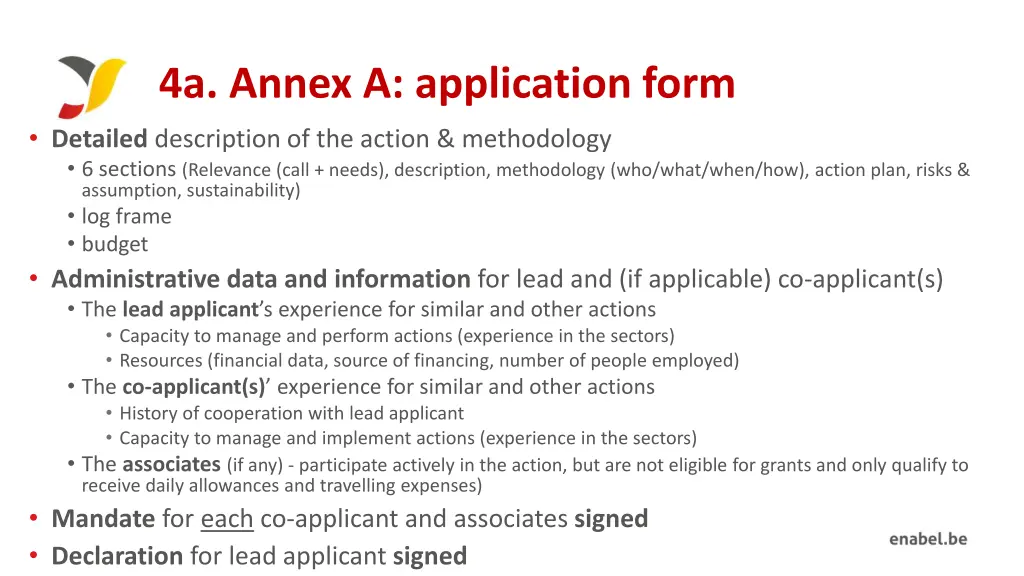
4a. Annex A: application form Detailed description of the action & methodology 6 sections (Relevance (call + needs), description, methodology (who/what/when/how), action plan, risks & assumption, sustainability) log frame budget Administrative data and information for lead and (if applicable) co-applicant(s) The lead applicant s experience for similar and other actions Capacity to manage and perform actions (experience in the sectors) Resources (financial data, source of financing, number of people employed) The co-applicant(s) experience for similar and other actions History of cooperation with lead applicant Capacity to manage and implement actions (experience in the sectors) The associates (if any) - participate actively in the action, but are not eligible for grants and only qualify to receive daily allowances and travelling expenses) Mandate for each co-applicant and associates signed Declaration for lead applicant signed
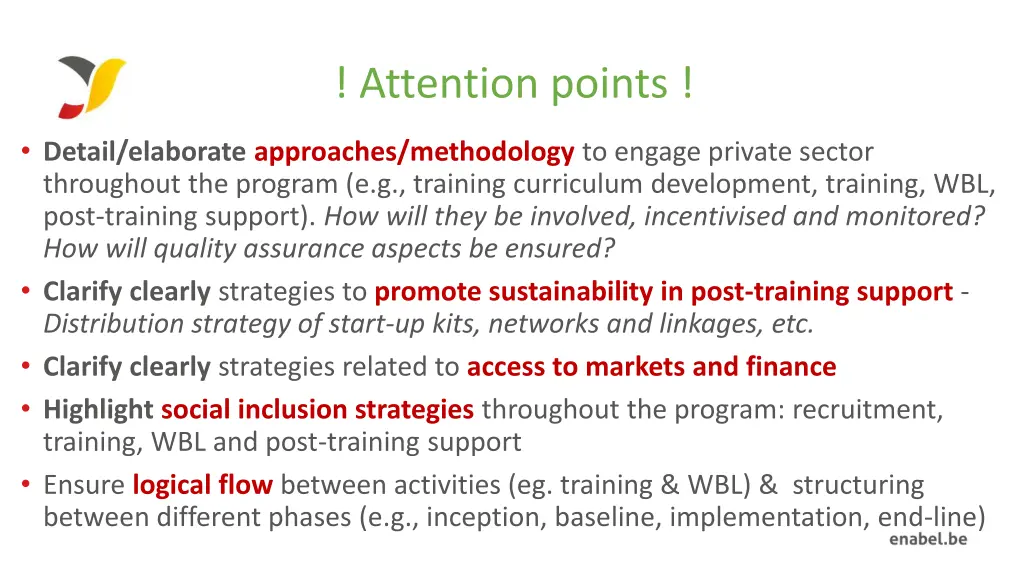
! Attention points ! Detail/elaborate approaches/methodology to engage private sector throughout the program (e.g., training curriculum development, training, WBL, post-training support). How will they be involved, incentivised and monitored? How will quality assurance aspects be ensured? Clarify clearly strategies to promote sustainability in post-training support - Distribution strategy of start-up kits, networks and linkages, etc. Clarify clearly strategies related to access to markets and finance Highlight social inclusion strategies throughout the program: recruitment, training, WBL and post-training support Ensure logical flow between activities (eg. training & WBL) & structuring between different phases (e.g., inception, baseline, implementation, end-line)
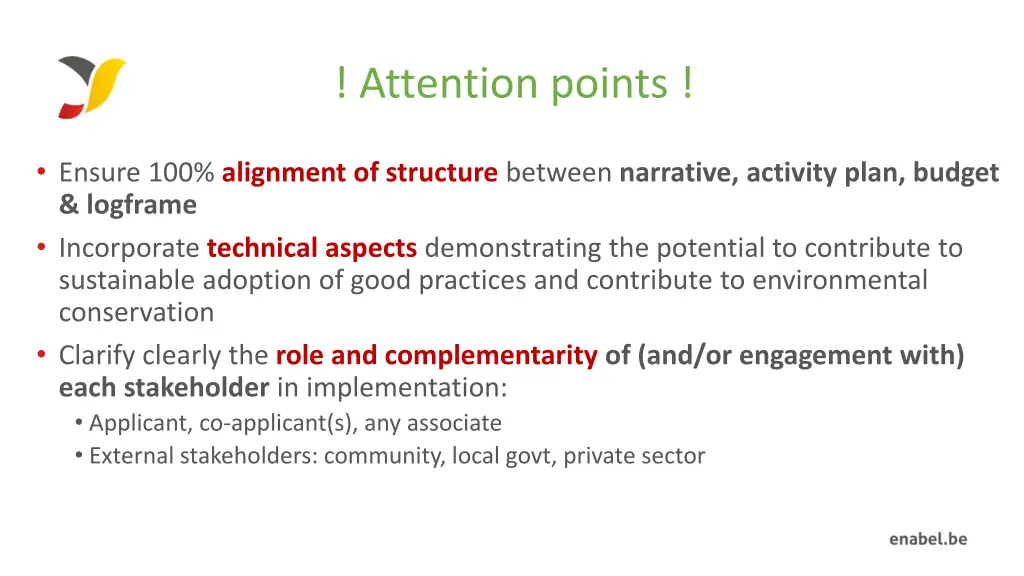
! Attention points ! Ensure 100% alignment of structure between narrative, activity plan, budget & logframe Incorporate technical aspects demonstrating the potential to contribute to sustainable adoption of good practices and contribute to environmental conservation Clarify clearly the role and complementarity of (and/or engagement with) each stakeholder in implementation: Applicant, co-applicant(s), any associate External stakeholders: community, local govt, private sector
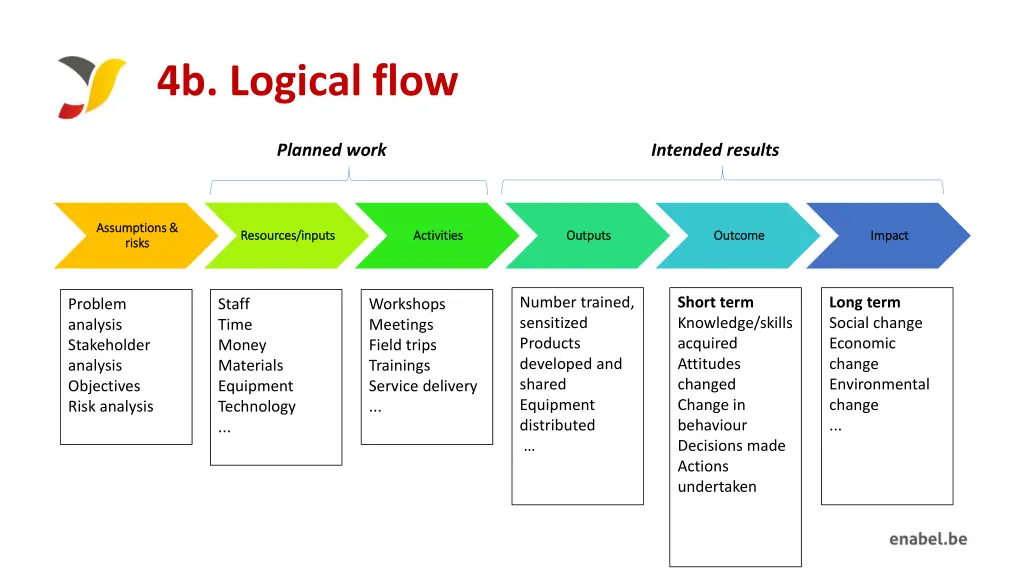
4b. Logical flow Planned work Intended results Assumptions Assumptions& & risks risks Resources/ Resources/inputs inputs Activities Activities Outputs Outputs Outcome Outcome Impact Impact Number trained, sensitized Products developed and shared Equipment distributed Short term Knowledge/skills acquired Attitudes changed Change in behaviour Decisions made Actions undertaken Long term Social change Economic change Environmental change ... Problem analysis Stakeholder analysis Objectives Risk analysis Staff Time Money Materials Equipment Technology ... Workshops Meetings Field trips Trainings Service delivery ...
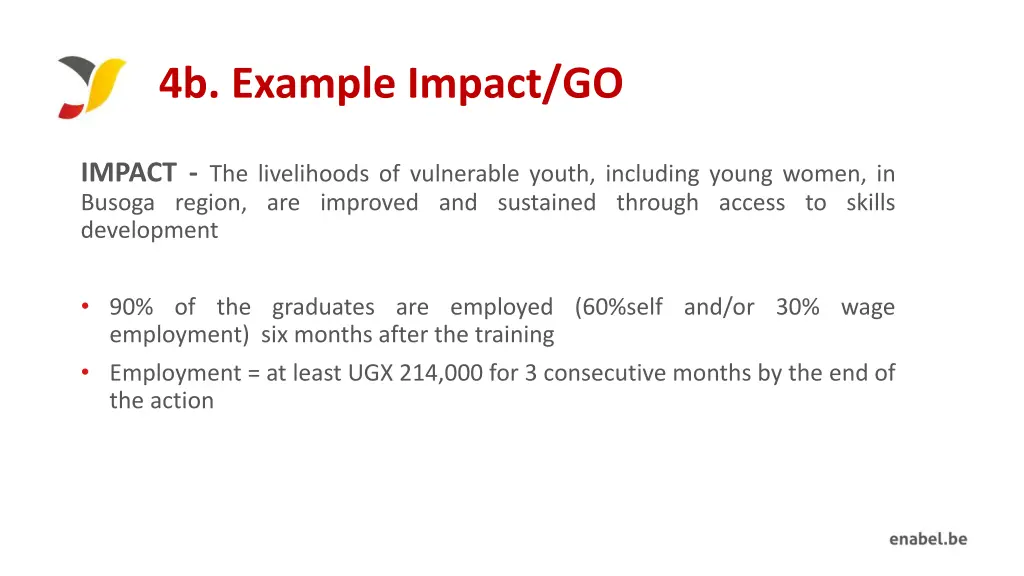
4b. Example Impact/GO IMPACT - The livelihoods of vulnerable youth, including young women, in Busoga region, are improved and sustained through access to skills development 90% of the graduates are employed (60%self and/or 30% wage employment) six months after the training Employment = at least UGX 214,000 for 3 consecutive months by the end of the action
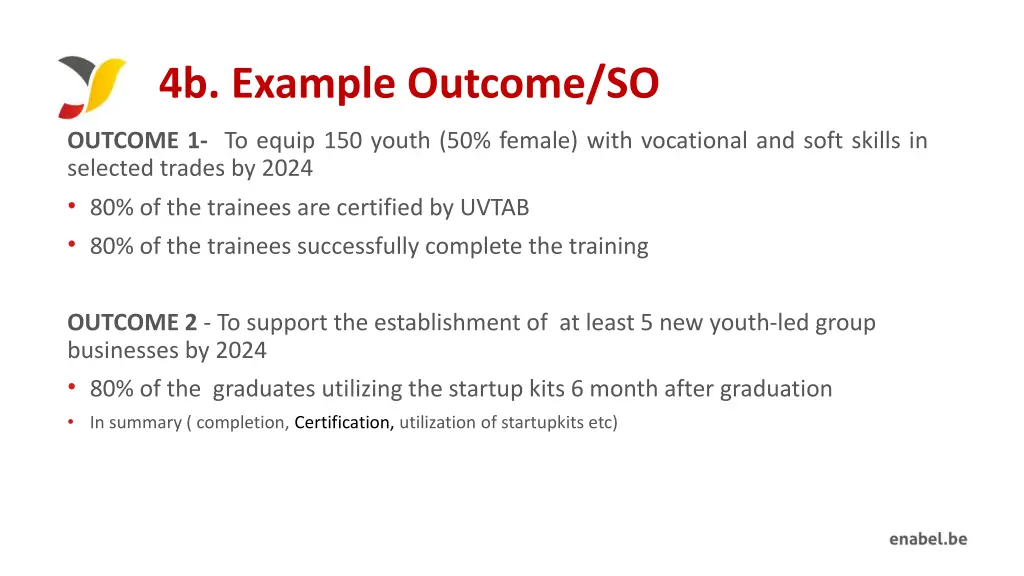
4b. Example Outcome/SO OUTCOME 1- To equip 150 youth (50% female) with vocational and soft skills in selected trades by 2024 80% of the trainees are certified by UVTAB 80% of the trainees successfully complete the training OUTCOME 2 - To support the establishment of at least 5 new youth-led group businesses by 2024 80% of the graduates utilizing the startup kits 6 month after graduation In summary ( completion, Certification, utilization of startupkits etc)
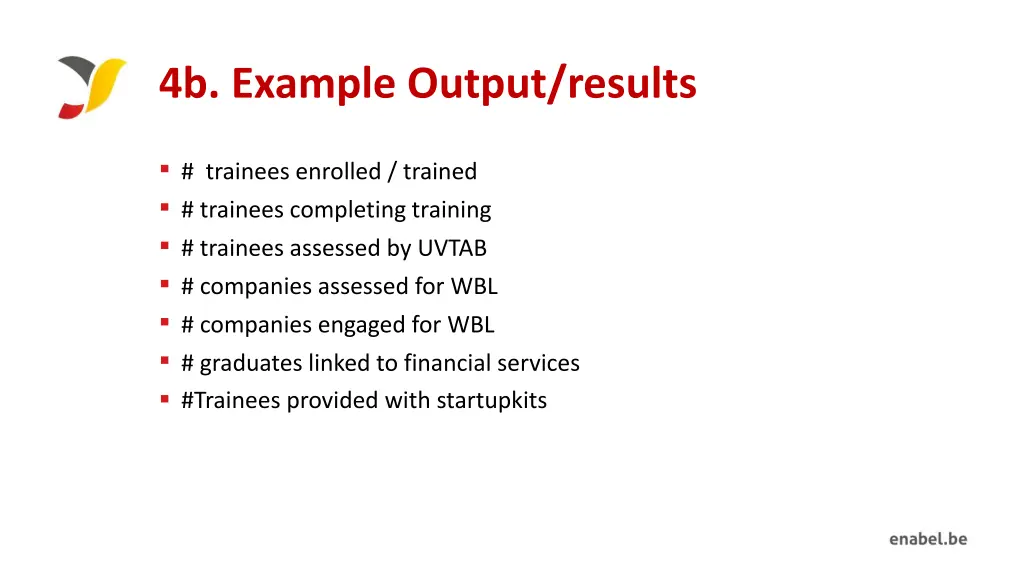
4b. Example Output/results # trainees enrolled / trained # trainees completing training # trainees assessed by UVTAB # companies assessed for WBL # companies engaged for WBL # graduates linked to financial services #Trainees provided with startupkits
4c. Proposal template budget The budget need to be coherent with the activities in the narrative & action plan NUMBERING: Activity 1 in the narrative planning need to be transferred to a budget line for activity 1 TIMING: if you plan activity 1 in quarter 1 only, then you will only foresee a budget in quarter 1 for that activity CODING: Codes correspond with the Logframe: Specific Objective, 01 Result number one,01 Activity Number one under result no One.A0101.3rd level relates to sub activities e.g A010101,A010102 Budget min 250,000 max 500,000 euro
4c. Proposal template budget On a daily basis you will work with UGX, but the official max grant amount is in euro which you cannot exceed, so follow up of execution in euro is needed. FX rate: grantees can use their own exchange rate (based on a reliable source) to estimate the budget Exchange rate losses are ineligible costs and should be covered by the grantees themselves (e.g. through structure costs). Additionally, since the purpose of the grant is not to make money, any gains (exchange or interest) made on the funds received from Enabel must be re-used for the activities after Enabel approval.