The Essence of Time: Types, Origins, Pathology, and Techniques

Time is a multifaceted concept explored through various lenses such as types, origins, pathology, and techniques. From the interplay between subjective and objective time to the impact of life stages like adolescence and aging, time influences our experiences and perceptions. This presentation delves into the complexities of time, from its roots in maternal response to its manifestations in behavior and mental health.

Download Presentation

Please find below an Image/Link to download the presentation.
The content on the website is provided AS IS for your information and personal use only. It may not be sold, licensed, or shared on other websites without obtaining consent from the author.If you encounter any issues during the download, it is possible that the publisher has removed the file from their server.
You are allowed to download the files provided on this website for personal or commercial use, subject to the condition that they are used lawfully. All files are the property of their respective owners.
The content on the website is provided AS IS for your information and personal use only. It may not be sold, licensed, or shared on other websites without obtaining consent from the author.
E N D
Presentation Transcript
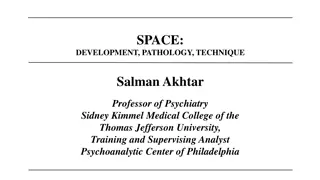
TIME: TYPES, ORIGINS, PATHOLOGY, AND TECHNIQUE Salman Akhtar Professor of Psychiatry Sidney Kimmel Medical College of the Thomas Jefferson University, Training and Supervising Analyst Psychoanalytic Center of Philadelphia
TIME Time is kept going by the mother, and this is one aspect of her auxiliary ego-functioning; but the infant comes to have a personal time sense, one that lasts at first only over a short span. Donald Winnicott
TIME TYPES Time of God vs time of man Subjective time vs objective time Time of mind vs time of heart
TIME ORIGINS Intrauterine pulsations Circadian rhythms Maternal response to appeal cycle
TIME ORIGINS (continued) Oedipus complex Adolescent passage Midlife changes Aging and facing death
TIME PATHOLOGY Chronic hurrying Chronic waiting Timelessness
TIME TECHNIQUE Unhurried attitude Beginning and ending sessions in time Frequency of sessions Duration of sessions
TIME TECHNIQUE (continued) Handling door-knob comments Managing sticky patients Understanding and handling chronic lateness