The Industrial Sector
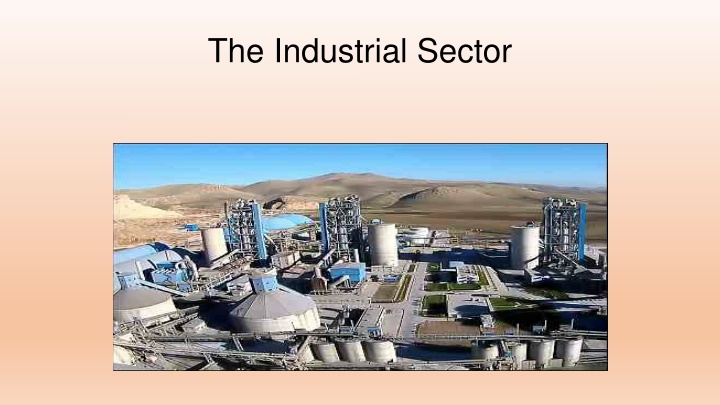
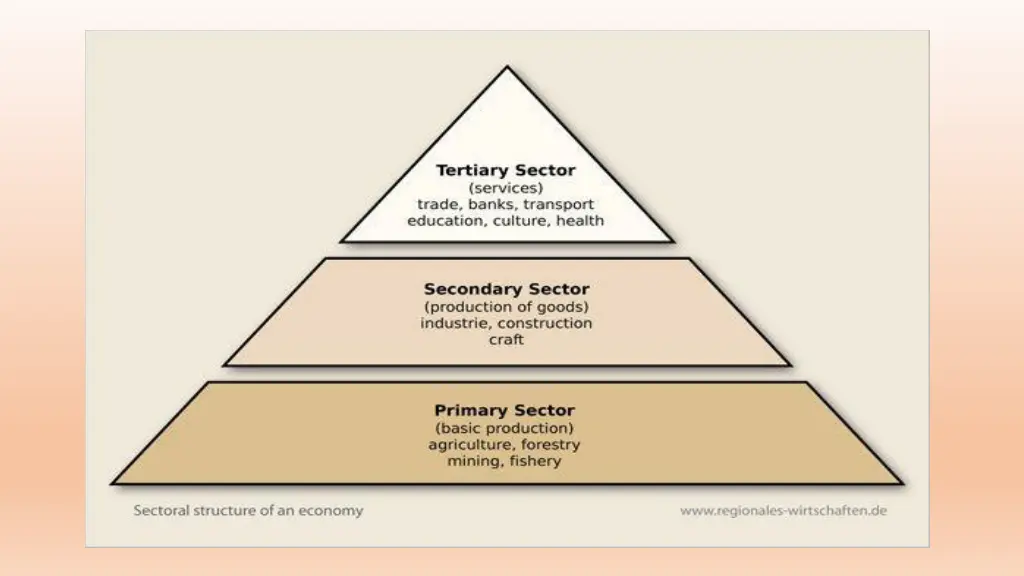
Industrialization involves the large-scale introduction of manufacturing, shifting economies from agriculture to industry. The Three-Sector Model categorizes economic activities into primary, secondary, and tertiary sectors. Industrialization is important as it creates employment, stimulates market growth, and provides essential inputs across sectors.

Download Presentation

Please find below an Image/Link to download the presentation.
The content on the website is provided AS IS for your information and personal use only. It may not be sold, licensed, or shared on other websites without obtaining consent from the author.If you encounter any issues during the download, it is possible that the publisher has removed the file from their server.
You are allowed to download the files provided on this website for personal or commercial use, subject to the condition that they are used lawfully. All files are the property of their respective owners.
The content on the website is provided AS IS for your information and personal use only. It may not be sold, licensed, or shared on other websites without obtaining consent from the author.
E N D
Presentation Transcript
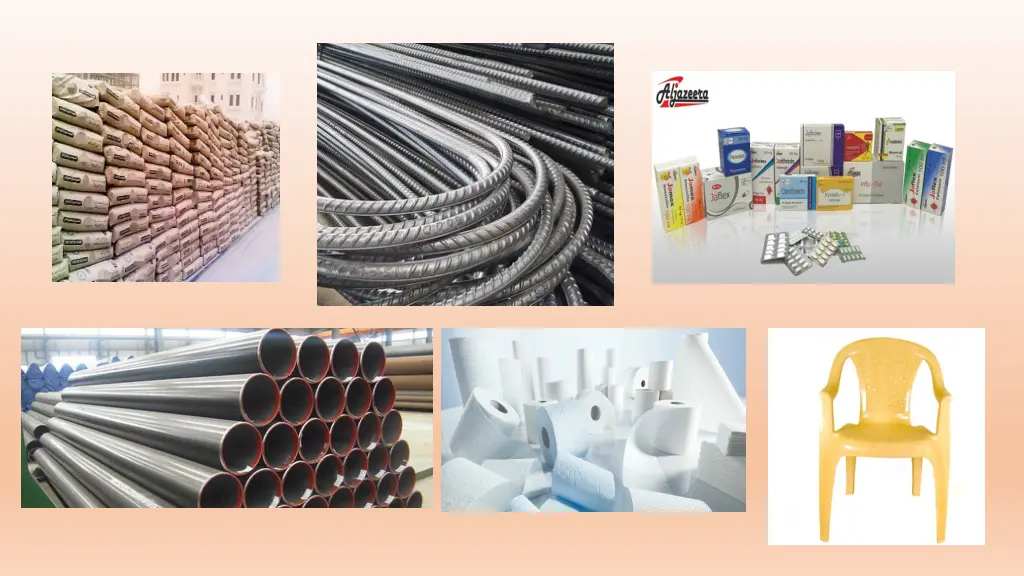
Industrialization Do you know anyone who has or works in a factory in Kurdistan? What is produced? Cement, bricks, steel, plastic chairs, plastic bins, recycling, packaging, plastic bags, glass, iron bars, pharmaceuticals, chips, fizzy drinks, salt, spices, juice, jam, yogurt, cheese, chocolate, delights, baklava, chicken, flour, pickles, tomato sauce, date syrup, sesame paste.
Industrialization Industrialization is defined as the large-scale introduction of manufacturing into a society. It shifts an underdeveloped agricultural economy focused on human labor to an industrial economy based on machine labor. It's a process whereby individual labor is replaced by mechanized mass production and specialized laborers, which boosts productivity.
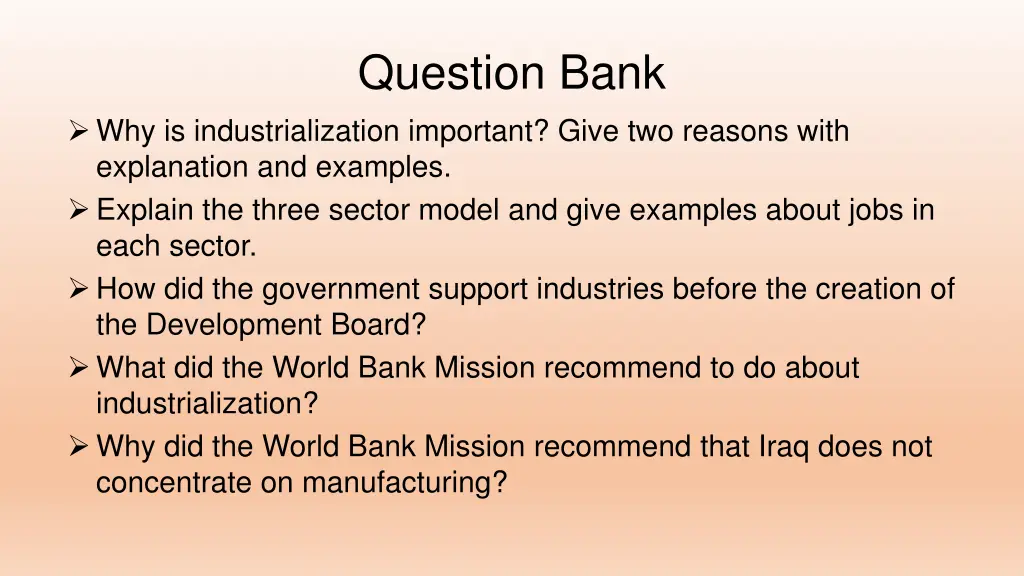
The three-sector model in economics divides economies into three sectors of activity: extraction of raw materials (primary), manufacturing (secondary), and services (tertiary). There are primary, secondary, tertiary jobs. Primary jobs involve getting raw materials from the natural environment e.g. Mining, farming and fishing. Secondary jobs involve making things (manufacturing) e.g. making cars and steel. Tertiary jobs involve providing a service e.g. teaching and nursing.
Why is Industrialization Important? Provides market to other sectors: industries buy raw materials from the primary sector, e. g. cotton from agriculture. The industrial sector also buys services from the tertiary sector, e. g. banking, insurance, transport and communication. Provides inputs to other sectors: the industrial sector provides the necessary inputs to other sectors of the economy. For instance, it provides agriculture with farm inputs such as tractors, fertilizers, chemicals and drugs.
Why is Industrialization Important? Creates employment opportunities: The industrial sector is an important employer for both skilled and unskilled labor. Agriculture and other sectors cannot absorb all the labor force. As industries expand, they account for a much share of employment.
Why is Industrialization Important? Conserves and earns foreign exchange: Through industrialization, a country is able to conserve foreign exchange by reducing on imports. This is particularly so when industries are established to produce goods that were previously imported. At the same time, where a country manufactures goods for export, it earns foreign exchange. This foreign exchange can be used to import essential capital goods and stimulate capital formation.
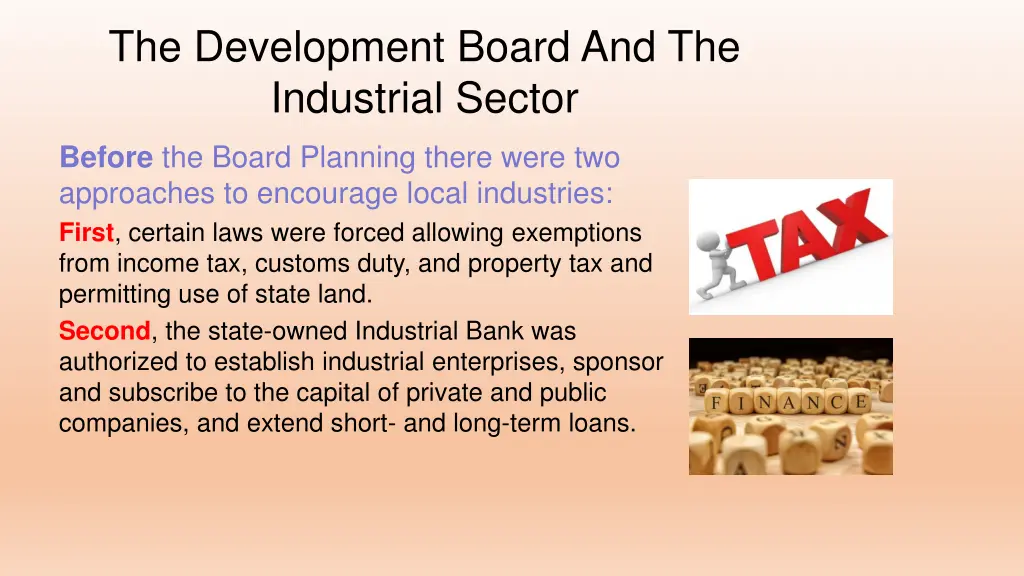
The Development Board And The Industrial Sector Before the Board Planning there were two approaches to encourage local industries: First, certain laws were forced allowing exemptions from income tax, customs duty, and property tax and permitting use of state land. Second, the state-owned Industrial Bank was authorized to establish industrial enterprises, sponsor and subscribe to the capital of private and public companies, and extend short- and long-term loans.
The Industrial Sector in the Development Programs With the flow of oil revenue and the creation of the Development Board, the question of industrial development should have taken a lot of attention; but this was not the case, especially in the early years of development planning: The first program did not allocate any funds for this sector. The second allocated 20 percent of its total budget. The third and fourth programs allocated 14 percent and 13 percent respectively.
World Bank's Mission Report 1. You should NOT encourage low quality industries. You should only help the industries that compete with imports. 2. You have too much protection. In a limited market (Iraq) that affords opportunity for only one or two plants in each field and where the entrepreneurial class is small there is an acute danger of monopoly and attendant high prices.
World Bank's Mission Report 3. it seems to be in the best interest of Iraq to concentrate on raising the efficiency of agricultural production. 4. forced industrialization with the aid of tariff protection or government subsidy might lead to inefficiency and waste of economic resources.
Reasons for These Recommendations? The first is that since Iraq is an agricultural country with a relative abundance of water and cultivable land, it has a comparative advantage in developing its agriculture. Iraq could then sell its agricultural products abroad.
Reasons for These Recommendations? Another reason behind these recommendations was the fact that Iraq did not have the skilled labor force necessary for a broad program of industrialization. Don t Jump stages! (Lord Salter)
Reasons for These Recommendations? A third explanation is that an accelerated program of industrialization will raise the prices of the domestically produced manufactured products which will have effect of lowering rural real incomes relative to urban earnings. Imbalance in the distribution of income.
Do you think industrialization is profitable for Kurdistan or Iraq? Should the government give more financial support to industries?
Question Bank Why is industrialization important? Give two reasons with explanation and examples. Explain the three sector model and give examples about jobs in each sector. How did the government support industries before the creation of the Development Board? What did the World Bank Mission recommend to do about industrialization? Why did the World Bank Mission recommend that Iraq does not concentrate on manufacturing?