The Partisan Sort: How Voters Sort and the Impact on Ideology Alignment
The chapter delves into the two primary sorting methods in politics: party-driven and ideology-driven sorting. It discusses how individuals adjust their beliefs to match their partisanship or change their partisanship to align with their ideological beliefs. The concept of party identification as a powerful heuristic for understanding politics is explored, along with the hypothesis that only a coherent belief system leads to ideology-driven partisan change. The overall impact of alignment between party identification and ideology on shaping individual political views is analyzed.

Download Presentation

Please find below an Image/Link to download the presentation.
The content on the website is provided AS IS for your information and personal use only. It may not be sold, licensed, or shared on other websites without obtaining consent from the author.If you encounter any issues during the download, it is possible that the publisher has removed the file from their server.
You are allowed to download the files provided on this website for personal or commercial use, subject to the condition that they are used lawfully. All files are the property of their respective owners.
The content on the website is provided AS IS for your information and personal use only. It may not be sold, licensed, or shared on other websites without obtaining consent from the author.
E N D
Presentation Transcript
The Partisan Sort Chapter 6 How Voters Sort
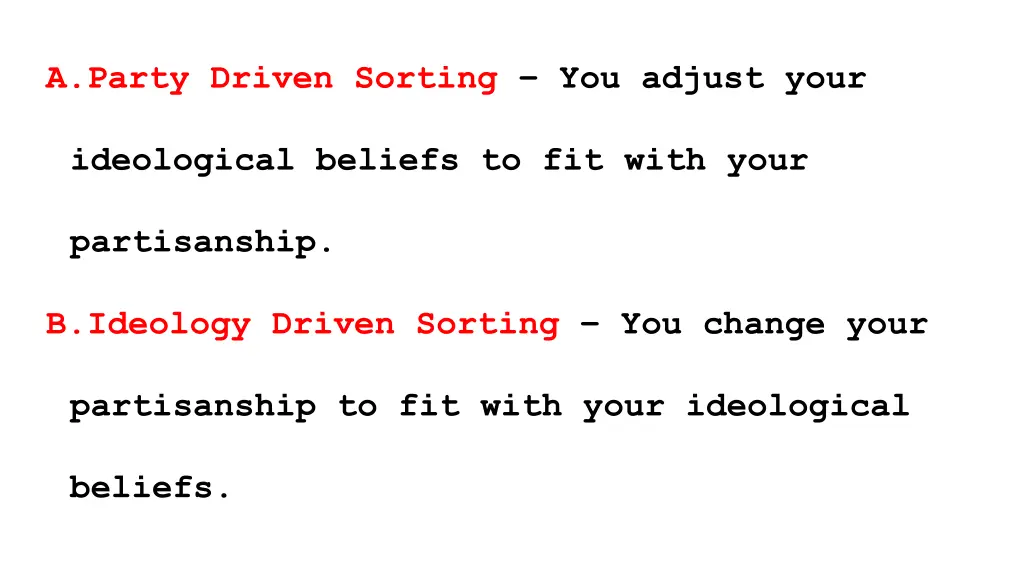
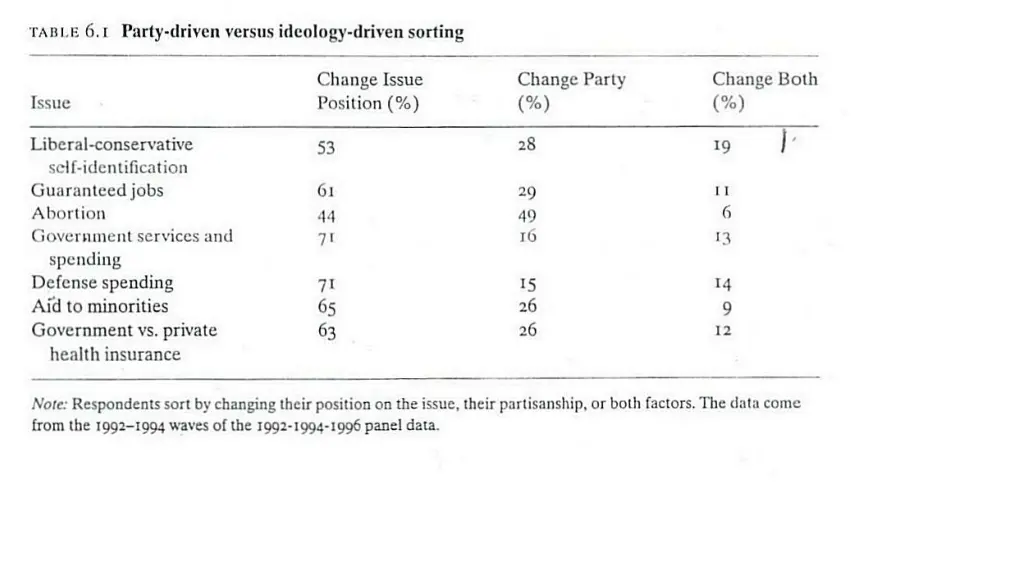
A.Party Driven Sorting You adjust your ideological beliefs to fit with your partisanship. B.Ideology Driven Sorting You change your partisanship to fit with your ideological beliefs.
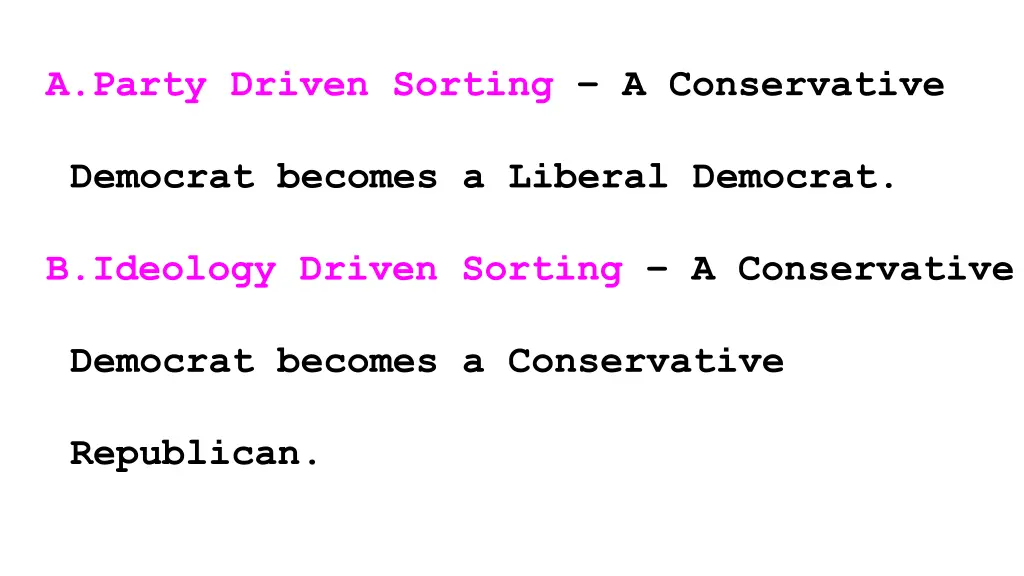
A.Party Driven Sorting A Conservative Democrat becomes a Liberal Democrat. B.Ideology Driven Sorting A Conservative Democrat becomes a Conservative Republican.
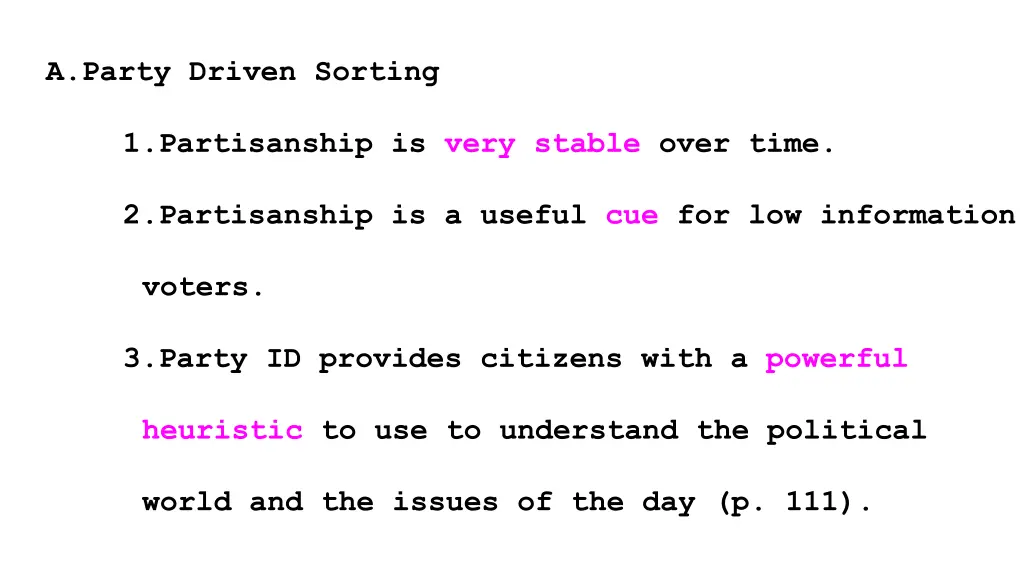
A.Party Driven Sorting 1.Partisanship is very stable over time. 2.Partisanship is a useful cue for low information voters. 3.Party ID provides citizens with a powerful heuristic to use to understand the political world and the issues of the day (p. 111).
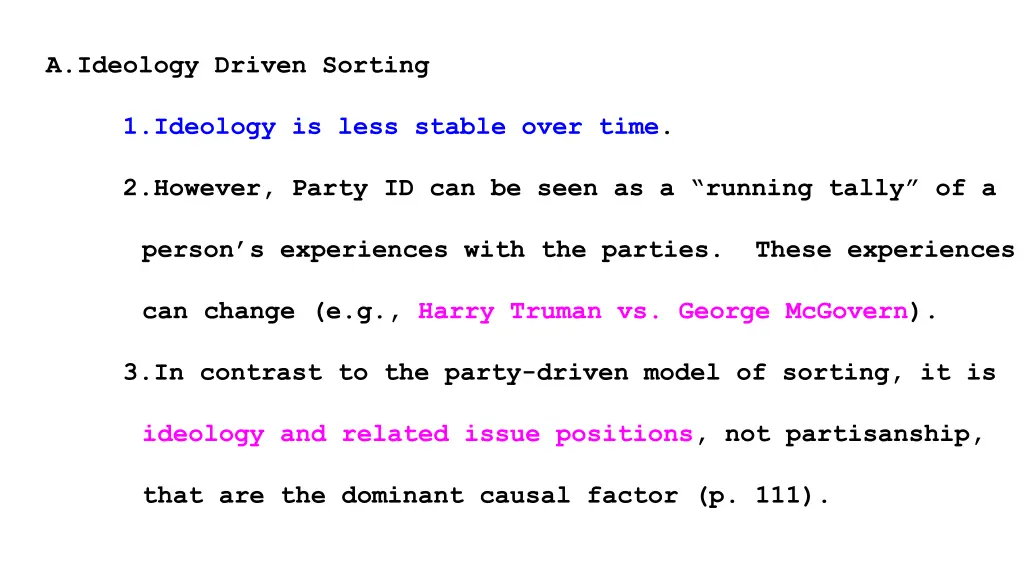
A.Ideology Driven Sorting 1.Ideology is less stable over time. 2.However, Party ID can be seen as a running tally of a person s experiences with the parties. These experiences can change (e.g., Harry Truman vs. George McGovern). 3.In contrast to the party-driven model of sorting, it is ideology and related issue positions, not partisanship, that are the dominant causal factor (p. 111).
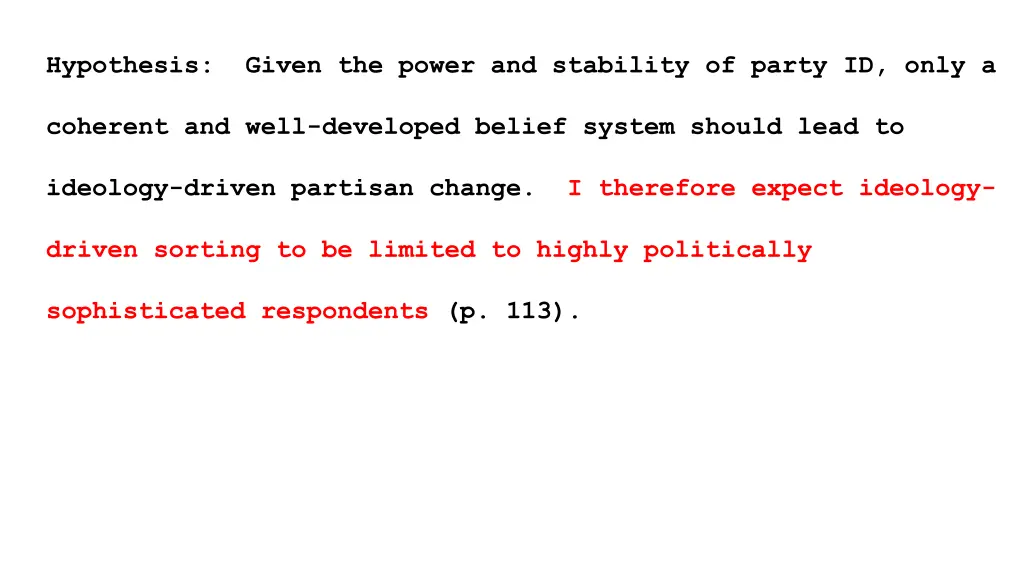
Hypothesis: Given the power and stability of party ID, only a coherent and well-developed belief system should lead to ideology-driven partisan change. I therefore expect ideology- driven sorting to be limited to highly politically sophisticated respondents (p. 113).
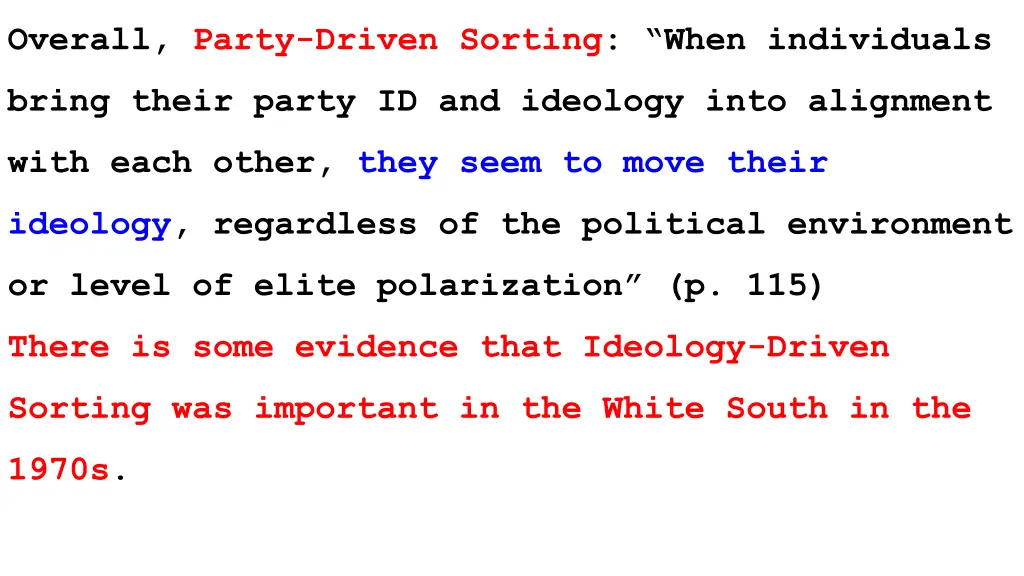
Overall, Party-Driven Sorting: When individuals bring their party ID and ideology into alignment with each other, they seem to move their ideology, regardless of the political environment or level of elite polarization (p. 115) There is some evidence that Ideology-Driven Sorting was important in the White South in the 1970s.