The Role of Hypothalamus in Regulating Vital Functions
The hypothalamus, located at the base of the brain, plays a crucial role in regulating various bodily functions such as blood pressure, heart rate, temperature, hunger, and sleep. It also influences emotions like pleasure, fear, and anger. Learn about the hormones produced by the hypothalamus and their impact on different physiological processes.

Download Presentation

Please find below an Image/Link to download the presentation.
The content on the website is provided AS IS for your information and personal use only. It may not be sold, licensed, or shared on other websites without obtaining consent from the author.If you encounter any issues during the download, it is possible that the publisher has removed the file from their server.
You are allowed to download the files provided on this website for personal or commercial use, subject to the condition that they are used lawfully. All files are the property of their respective owners.
The content on the website is provided AS IS for your information and personal use only. It may not be sold, licensed, or shared on other websites without obtaining consent from the author.
E N D
Presentation Transcript
AL-Mustansiriyah University College of science Biology Dept. Zoology 4thclass ENOCRINOLOGY LAB. (2) NAME : 1
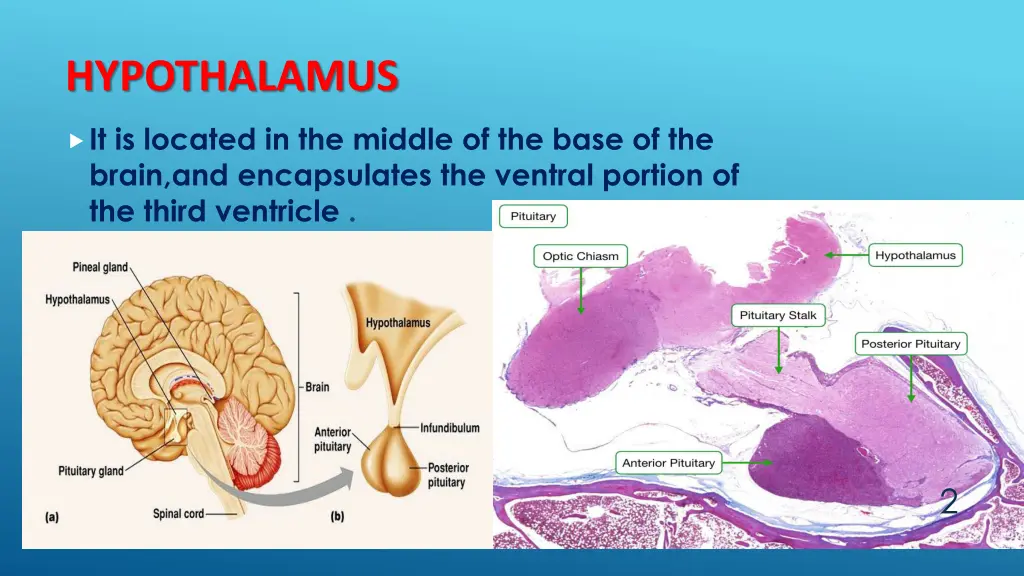
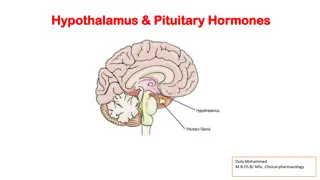
HYPOTHALAMUS It is located in the middle of the base of the brain,and encapsulates the ventral portion of the third ventricle . 2
Hypothalamic Function : 1-Regulates blood pressure, rate and force of heartbeats , digestive tract motility, rate and depth of breathing, and many other visceral .activities 2-Is involved with perception of pleasure, fear, and anger. 3- Controls mechanisms needed to maintain normal body temperature . 4-Regulates feelings of hunger and satiety . 5- Regulates sleep and the sleep cycle .
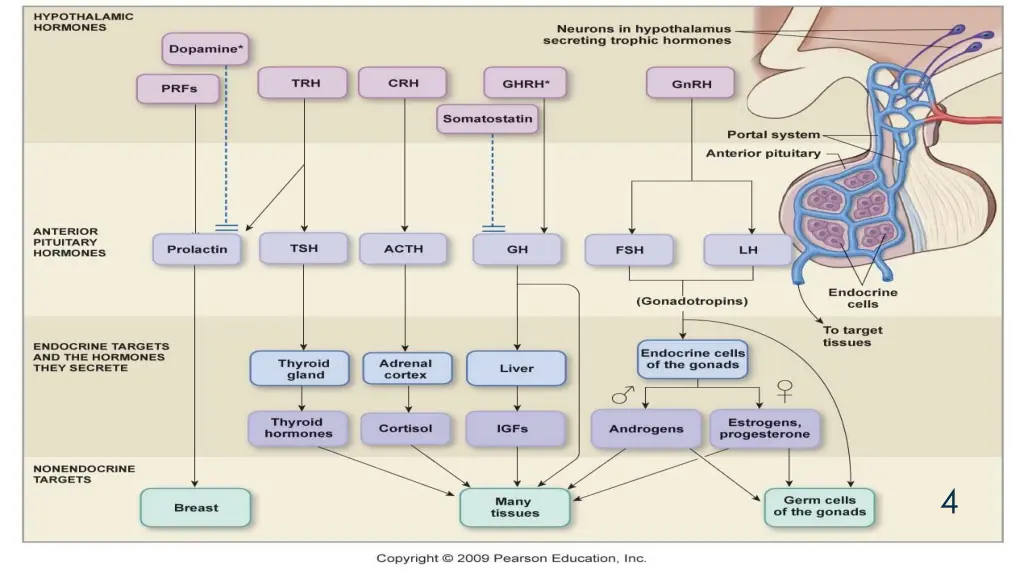
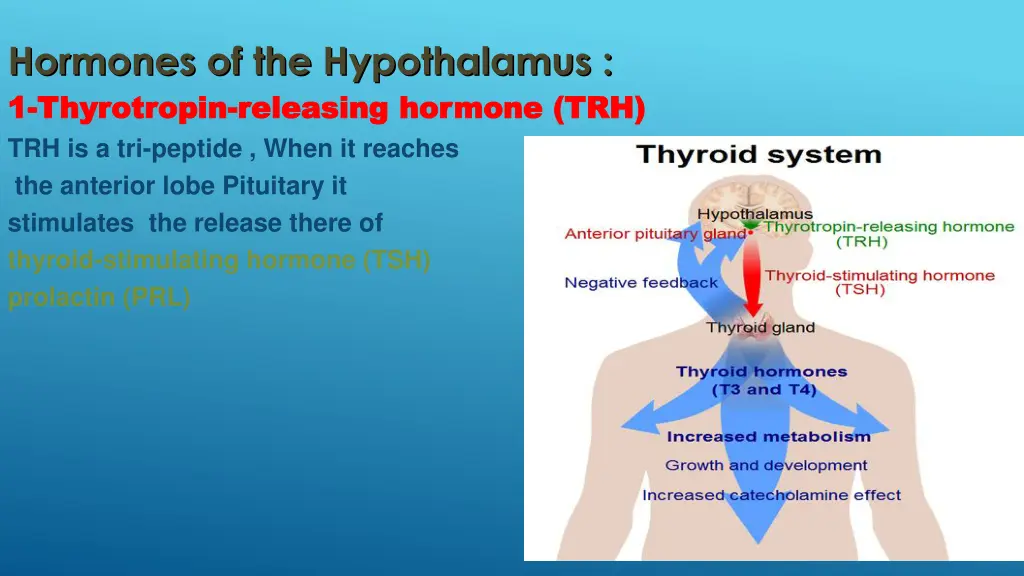
Hormones of the Hypothalamus : 1 1- -Thyrotropin Thyrotropin- -releasing hormone (TRH) releasing hormone (TRH) TRH is a tri-peptide , When it reaches the anterior lobe Pituitary it stimulates the release there of thyroid-stimulating hormone (TSH) prolactin (PRL) File:Thyroid system.png
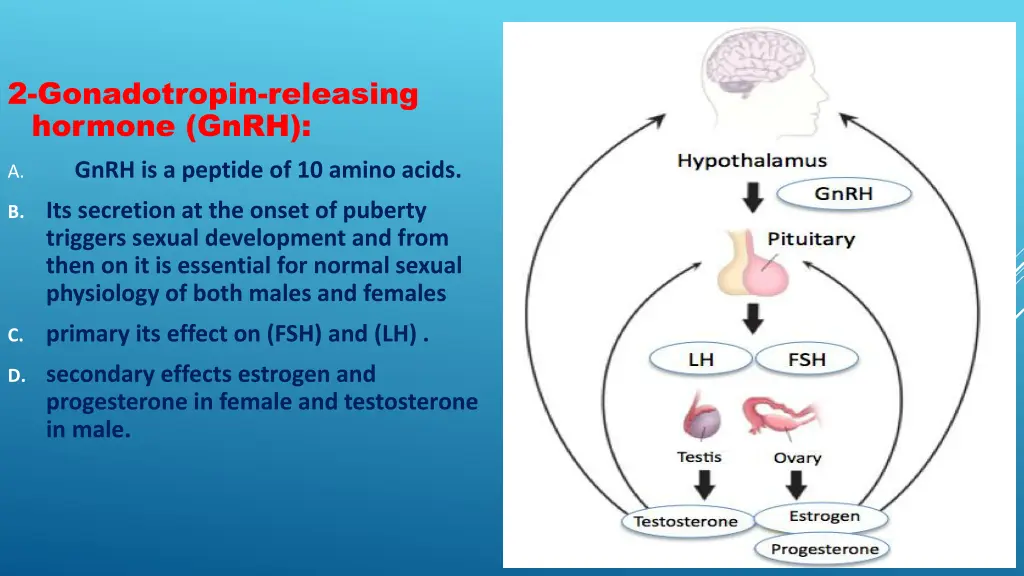
2-Gonadotropin-releasing hormone (GnRH): A.GnRH is a peptide of 10 amino acids. B. Its secretion at the onset of puberty triggers sexual development and from then on it is essential for normal sexual physiology of both males and females C. primary its effect on (FSH) and (LH) . D. secondary effects estrogen and progesterone in female and testosterone in male.
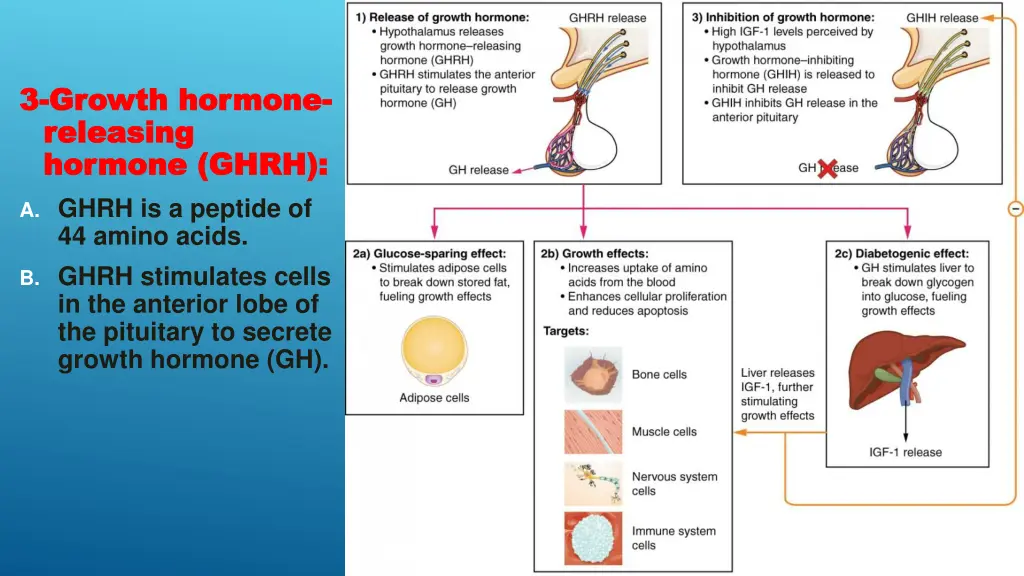
3 3- -Growth hormone Growth hormone- - releasing releasing hormone (GHRH): hormone (GHRH): A. GHRH is a peptide of 44 amino acids. B. GHRH stimulates cells in the anterior lobe of the pituitary to secrete growth hormone (GH).
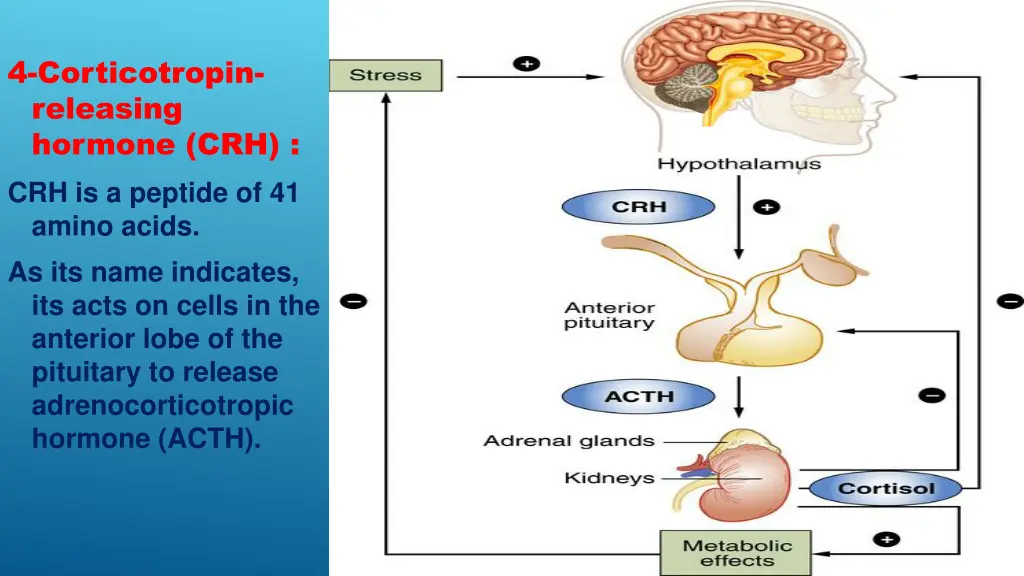
4-Corticotropin- releasing hormone (CRH) : CRH is a peptide of 41 amino acids. As its name indicates, its acts on cells in the anterior lobe of the pituitary to release adrenocorticotropic hormone (ACTH).
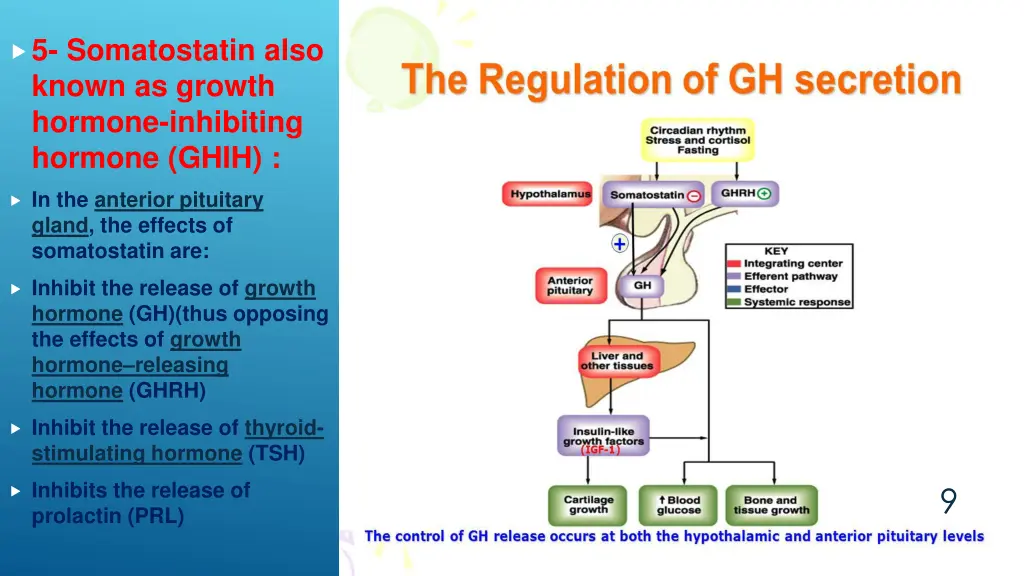
5- Somatostatin also known as growth hormone-inhibiting hormone (GHIH) : In the anterior pituitary gland, the effects of somatostatin are: Inhibit the release of growth hormone (GH)(thus opposing the effects of growth hormone releasing hormone (GHRH) Inhibit the release of thyroid- stimulating hormone (TSH) Inhibits the release of prolactin (PRL) 9
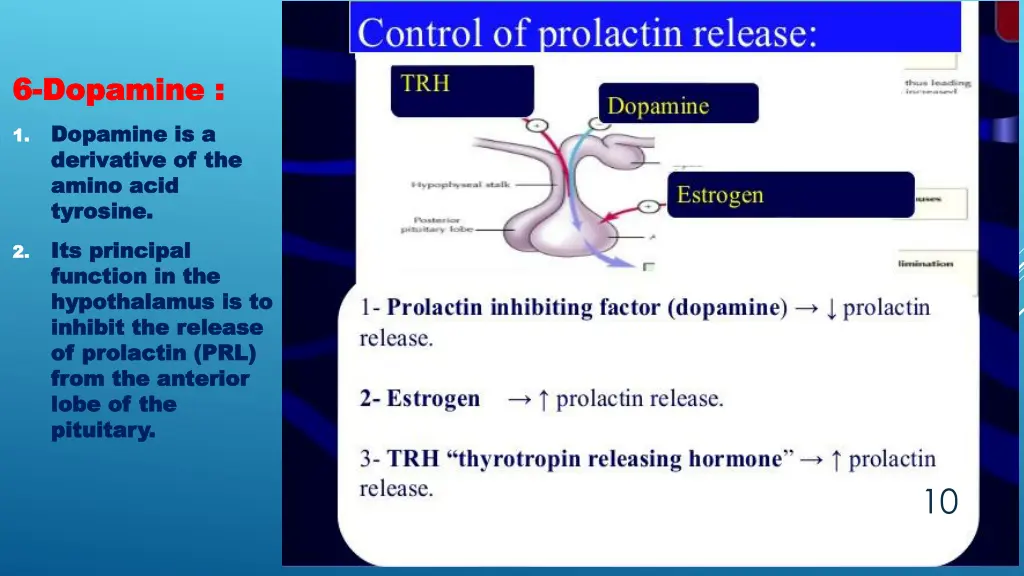
6 6- -Dopamine : Dopamine : Dopamine is a Dopamine is a derivative of the derivative of the amino acid amino acid tyrosine. tyrosine. Its principal Its principal function in the function in the hypothalamus is to hypothalamus is to inhibit the release inhibit the release of prolactin (PRL) of prolactin (PRL) from the anterior from the anterior lobe of the lobe of the pituitary. pituitary. 1. 1. 2. 2. 10
Two other hypothalamic hormones: Vasopressin and Oxytocin Causes of Hypothalamic Disorders 1-Malnutrition When the body is deprived of essential nutrients, it can interfere with the normal functioning of the hypothalamus. Poor nutrition can certainly put a person in the risk zone of hypothalamic disorders. 2-Trauma A trauma such as an accident that affects the head can also lead to hypothalamic dysfunction. A traumatic brain injury from an external force causes too much bleeding and can eventually lead to hypothalamic disorders. 3-Anorexia Anorexia is a eating disorder in which the person consumes very less amount of food. People with anorexia are obsessed about losing weight and adopt extreme measures to stay thin. This can cause malnourishment and eventually lead to anorexia nervosa and hypothalamic dysfunction 4-Tumors Hypothalamic disorders can also occur as a consequence of tumors occurring inside the hypothalamus. Also, referred as hypothalamic tumor, the unwanted growth can decrease blood flow to the hypothalamus. 11