Theories of Long-Term Memory Storage and Schema Theory

How information is stored in long-term memory and the role of schemas in comprehension processes for learners engaging with new material. Uncover the concept of schema, its characteristics, and its significance in interpreting information efficiently.

Download Presentation

Please find below an Image/Link to download the presentation.
The content on the website is provided AS IS for your information and personal use only. It may not be sold, licensed, or shared on other websites without obtaining consent from the author.If you encounter any issues during the download, it is possible that the publisher has removed the file from their server.
You are allowed to download the files provided on this website for personal or commercial use, subject to the condition that they are used lawfully. All files are the property of their respective owners.
The content on the website is provided AS IS for your information and personal use only. It may not be sold, licensed, or shared on other websites without obtaining consent from the author.
E N D
Presentation Transcript
Theories of Long Term Storage Neil H. Schwartz, Ph.D. Psych 605
How is information stored in long-term memory? And, what relevance does storage have on the processes of comprehension --when learners are listening to a lecture, participating in a class discussion, reading a text chapter, or participating in lab?
Theories of information storage explain why learners interact the way they do in the presence of new material. Schema Theory
Schema are: Data structures for representing generic concepts. Made up of images and propositions (ideas). Hierarchical frameworks of generalised categories of information with variable slots containing default values that become instantiated with specific instances of things.
Schema: Summarize the redundancy in our experiences. Represent what is generally true about things. Allow us to store information efficiently. Provide contexts for interpretation. Allow us to comprehend unfamiliar information. Are generic abstractions about the world. Are idiosyncratic, experience-based, and personal.
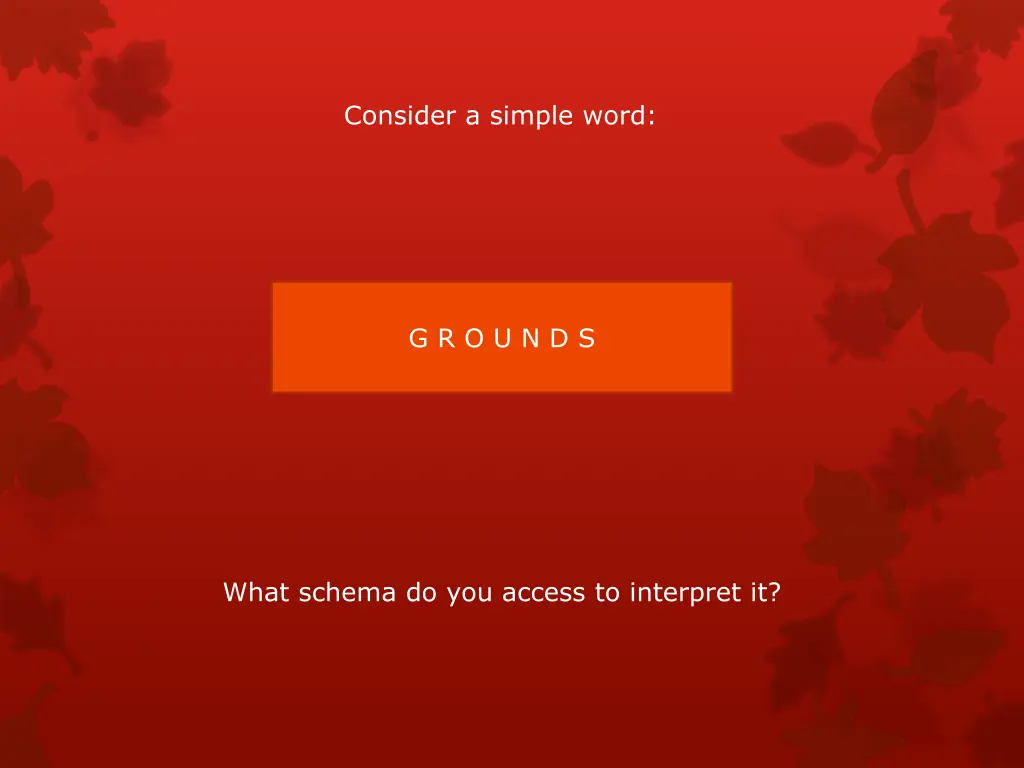
Consider a simple word: G R O U N D S What schema do you access to interpret it?
A beautiful estate
Your morning coffee
How about the 9th Circuit Court of Appeals?
Schema provides learners with context for interpreting new information. Schema also provides learners with the information they will need to make new information comprehensible.
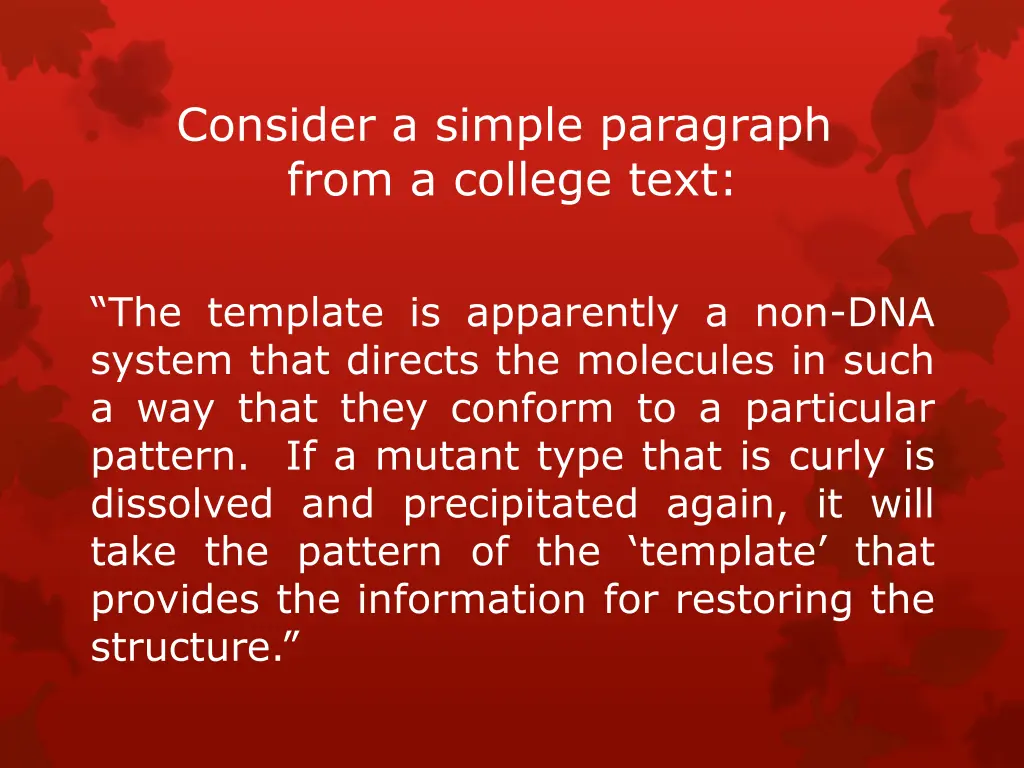
Consider a simple paragraph from a college text: The template is apparently a non-DNA system that directs the molecules in such a way that they conform to a particular pattern. If a mutant type that is curly is dissolved and precipitated again, it will take the pattern of the template that provides the information for restoring the structure.
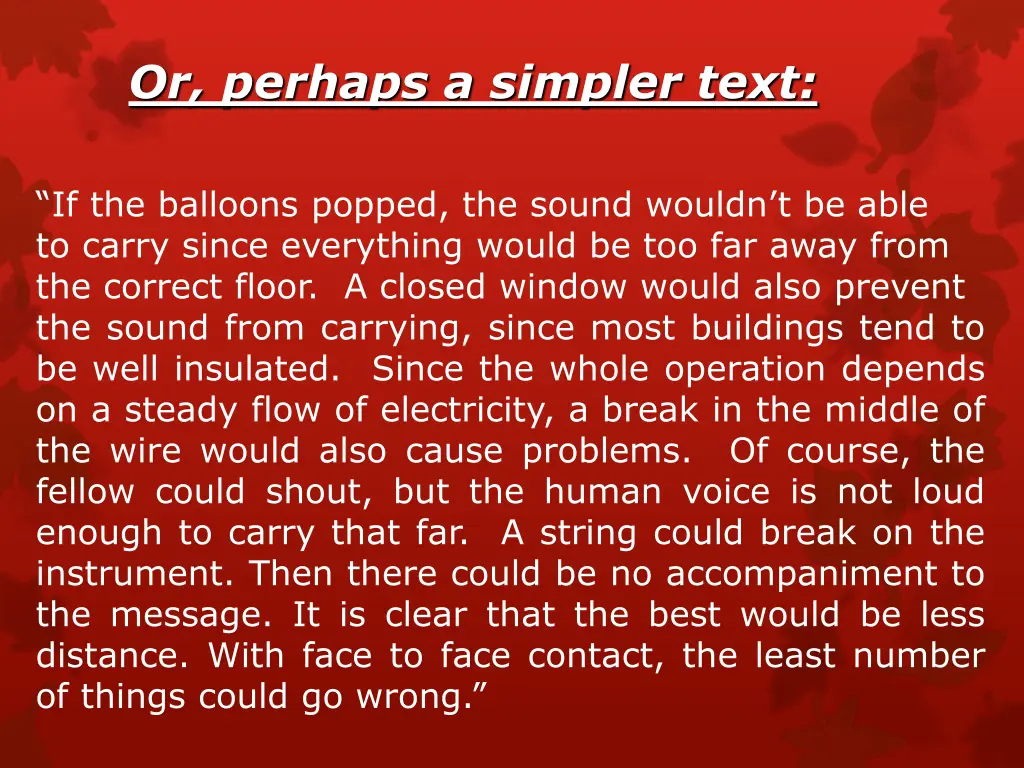
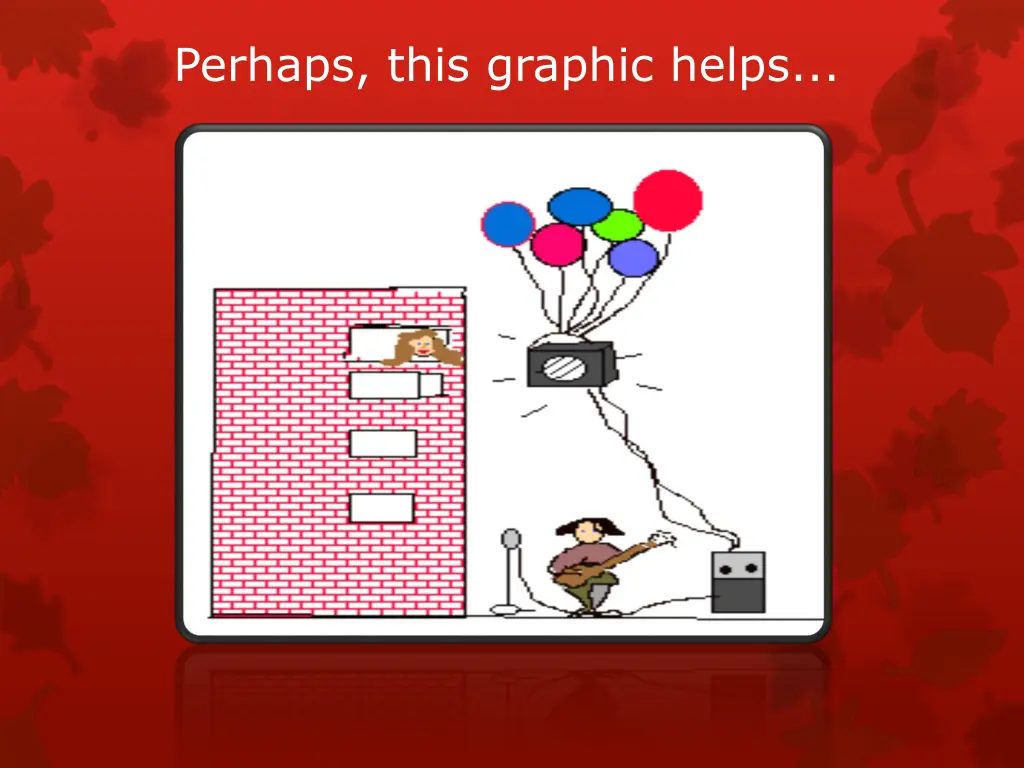
Or, perhaps a simpler text: If the balloons popped, the sound wouldn t be able to carry since everything would be too far away from the correct floor. A closed window would also prevent the sound from carrying, since most buildings tend to be well insulated. Since the whole operation depends on a steady flow of electricity, a break in the middle of the wire would also cause problems. Of course, the fellow could shout, but the human voice is not loud enough to carry that far. A string could break on the instrument. Then there could be no accompaniment to the message. It is clear that the best would be less distance. With face to face contact, the least number of things could go wrong.
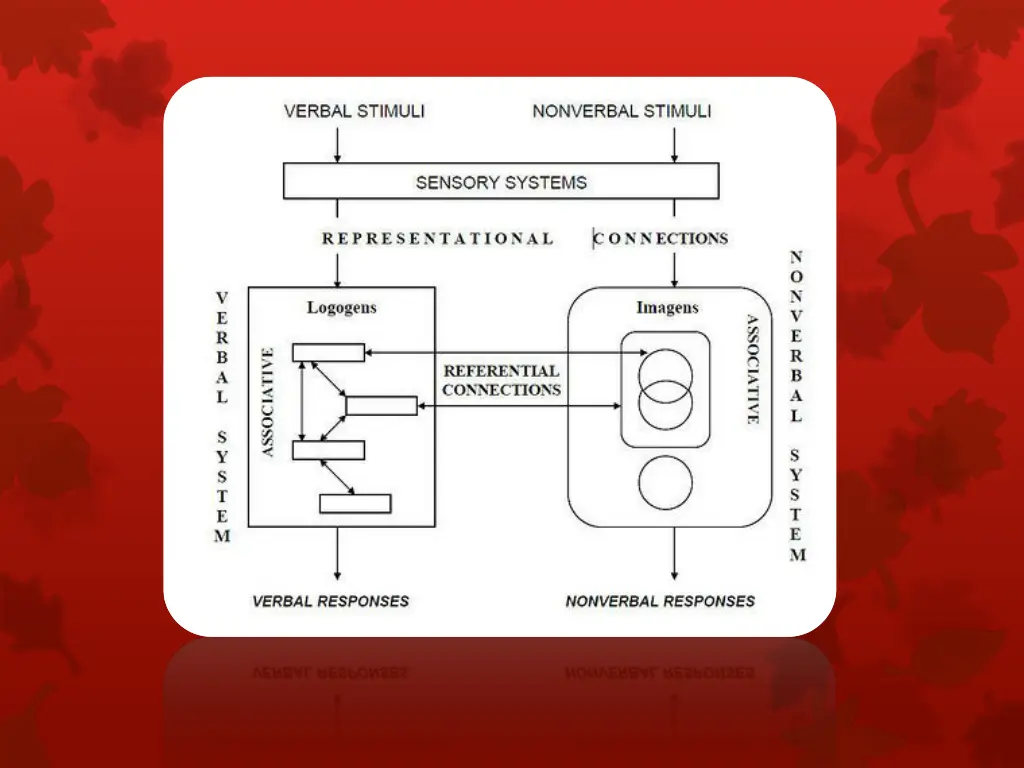
Theories of information storage explain why learners interact the way they do in the presence of new material. Dual Coding Theory
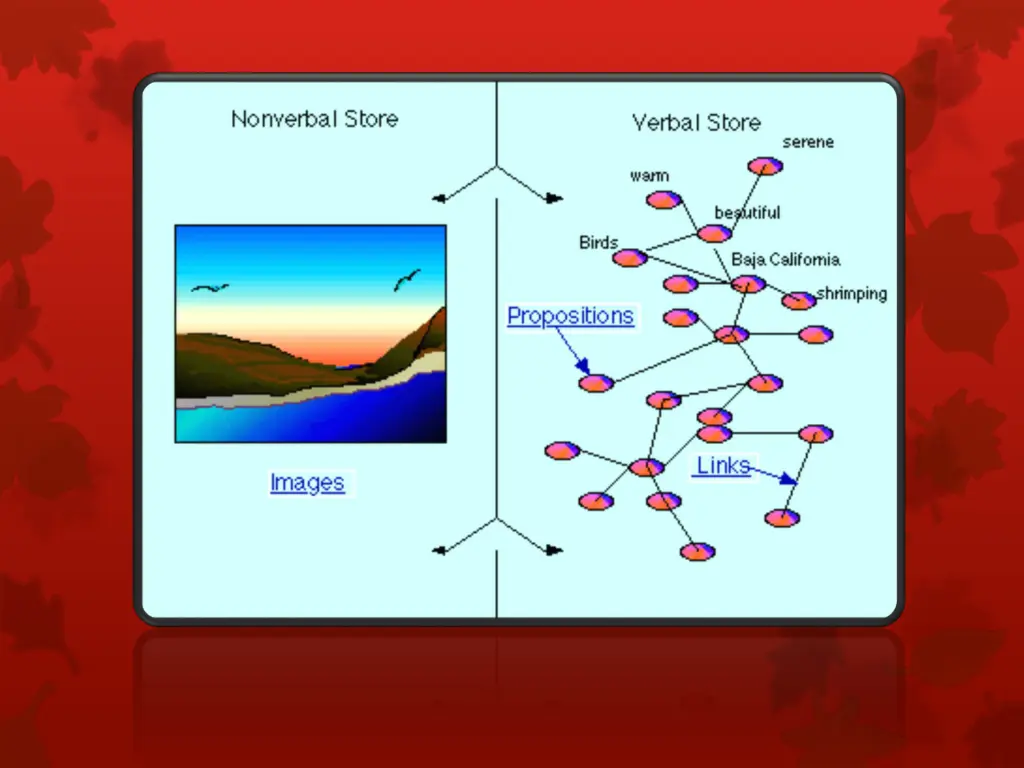
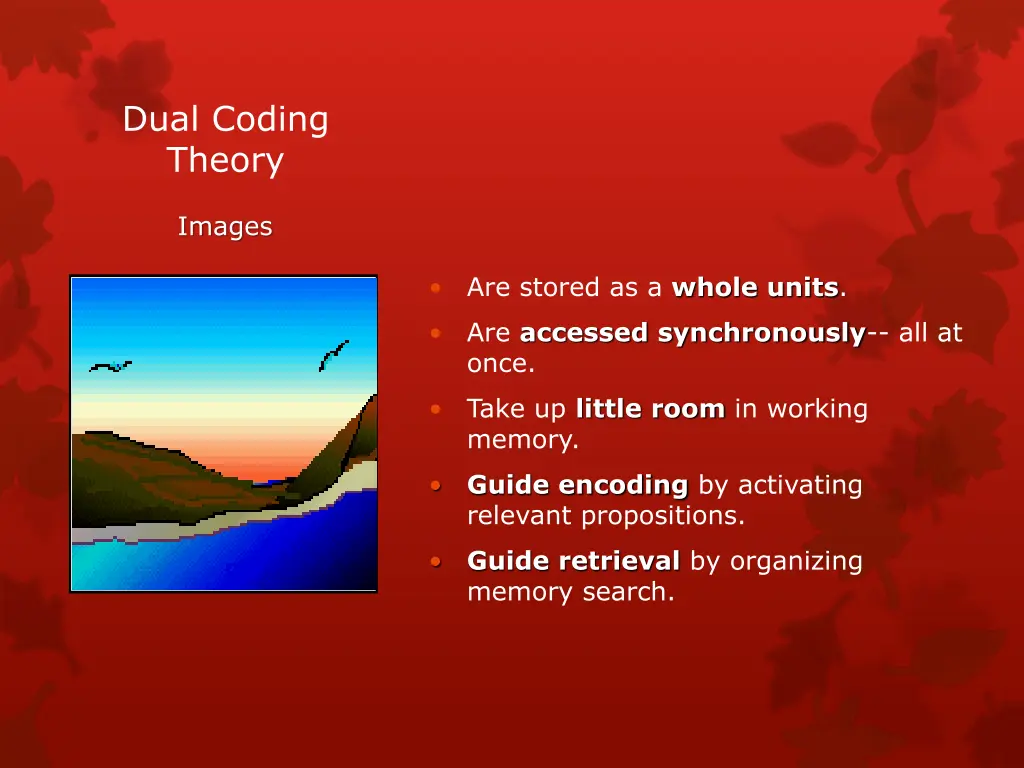
Dual Coding Theory Images Are stored as a whole units. Are accessed synchronously-- all at once. Take up little room in working memory. Guide encoding by activating relevant propositions. Guide retrieval by organizing memory search.
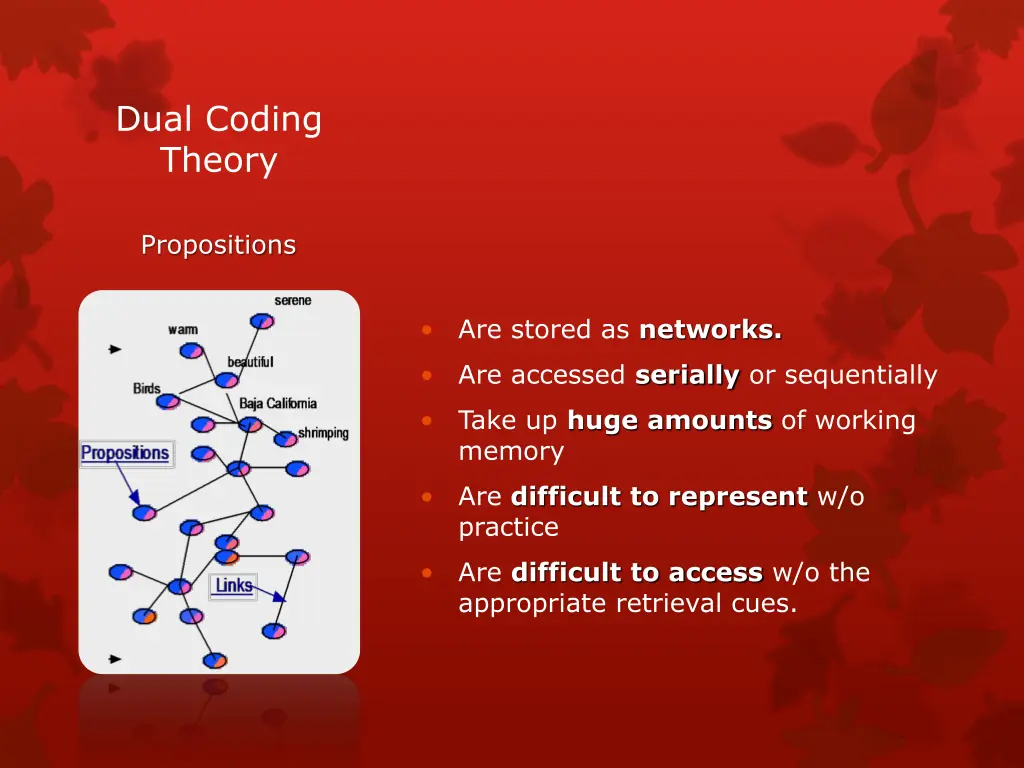
Dual Coding Theory Propositions Are stored as networks. Are accessed serially or sequentially Take up huge amounts of working memory Are difficult to represent w/o practice Are difficult to access w/o the appropriate retrieval cues.