Theory, Technology, and Education: Reflections and Challenges
Delve into the complex interplay between theory, technology, and education as discussed in a engaging seminar. Explore the nuances of theorising in social science, the significance of theory in understanding social phenomena, dimensions of theory, practical applications, and the inherent difficulties. Unpack the reasons for embracing theory, its impact on research, and the evolving landscape within technology research. Navigate through insightful discussions on the role of theory in shaping our perspectives and driving intellectual discourse.

Download Presentation

Please find below an Image/Link to download the presentation.
The content on the website is provided AS IS for your information and personal use only. It may not be sold, licensed, or shared on other websites without obtaining consent from the author.If you encounter any issues during the download, it is possible that the publisher has removed the file from their server.
You are allowed to download the files provided on this website for personal or commercial use, subject to the condition that they are used lawfully. All files are the property of their respective owners.
The content on the website is provided AS IS for your information and personal use only. It may not be sold, licensed, or shared on other websites without obtaining consent from the author.
E N D
Presentation Transcript
Theory, technology and education Cristina Costa Michael Hammond Sarah Younie
What we are doing today Morning Theory in educational technology: picking it up again Reflections on preparing a special edition on theory Neil and Robert and their use of theory Your use of theory After Lunch Theory and theorising in social science: Mark Murphy Panel discussion
What did we decide before? Many different associations with theory The are several dimensions to theory Theory comes with opportunities and difficulties Theory and technology
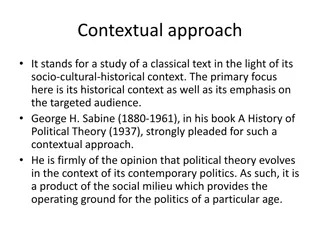
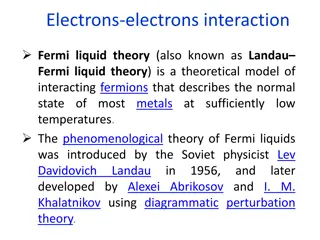
What is Theory? Many different associations (eg Abend, 2008) exploring the meaning of a particular social phenomenon; the study of key thinkers; and how to look at, grasp, and represent the world; can be normative and have a meta dimension. Core to theorising is explanation (Martindale, 1960) based on abstracting key issues and how things fit together
Dimensions to theory Theory on a spectrum with dimensions including: prescriptive - descriptive agency - structure top down - bottom up sensitising predictive parsimony - fidelity local (substantive) formal small grand
Why Theory? Practical ( nothing so practical as a good theory ) generalisable / transferable / appliable Ways of seeing / unsettling a view of the world Natural step in research / interesting in its own right Creates the conversation in the discipline and between disciplines Supports higher order thinking (Vygotsky)
But difficulties Theory as a fetish Theory games and discipline games Biased: white men with beards Theory as distant Theory as an identity for life
Within technology research Pluses Links well with practice Rich and diverse tradition Pragmatic Action oriented Problems Overly descriptive eg case studies Surface Interdisciplinarity Distortion by Big Data Reductionist Excessive optimism as a stance Evaluation dominating over theorisation Disassociation of pedagogical belief from research practice
Theory: a special edition in TPE Theory and theorising: A call for papers Addressing a general concern Identifying theorising as a distinctive step in the research process Identifying shifts in the use of theoretical frameworks Evaluating different kinds of theoretical contribution in the field. Where next?
What we found We could have filled several editions (47) Some inconsistency in our reviews but around half would have been workable, other were too descriptive, framework heavy in uncritical way Eclectic approaches
These offered A mix so some very good ones missed out Two broadly interested in narrative Two very theoretical Rest more standard social science eg critical application of ANT, Bourdieu, identity, CHAT
Reflections on the process Stronger interest in theory than anticipated but we can all have good careers without theorising that much Eclecticism where will this lead? Researchers find it difficult to say how or why they went for one framework over another The value of theory needs to be made and remade
How does theory work for me Using Bernstein s pedagogic discourse to throw light on ipad lessons Neil Ingram A framework for looking at technology adoption Robert O Toole
Me and theory What for you is theory? In your work how and where do you use theory? Where did this theory come from? What does it allow? What does it constrain? (How has your work moved on from last time) Where is theory going?
Mark Murphy Theory and theorising in the Social Science: the value of the bigger picture
Final points What is next for theory? How does theory move us on? What are implications of Big Data for theory? What about Interdisciplinarity? How do we describe theorising? Are we as untheoretical as we are sometimes painted? How do we join the research up?
One we went with covered: Algorithmic Culture, Networked Learning Engaging with Bourdieu s theory practice: An empirical tool for understanding inequality in children and young peoples technology practice Internet of Toys in early childhood education: A social ecological exploration When theories fail: applying Valsiner s Zones to adolescent girls use of digital technologies Re-theorizing effective use of digital technology with activity theory Breaking out, finding information and making presentations: theorising learner identities in assemblages of teaching and learning with technology Critical Interaction: Toward a New Theoretical Approach to Writerly Online Instruction Does technology flatten authenticity? Exploring the effective use of narratology in digital mediums.