Tips on Green Computing by Sumit Shinde

Green computing focuses on using computer resources efficiently and sustainably. It involves designing, manufacturing, and properly disposing of computer devices to minimize environmental impact. Key aspects include reducing energy consumption, avoiding resource wastage, and managing hazardous materials. Recommendations for individuals include utilizing power-saving modes, avoiding unnecessary printing, and utilizing energy-efficient hardware. Furthermore, promoting green design, manufacturing, and disposal through recycling, donating, and refurbishing old devices can significantly contribute to sustainability efforts in the tech industry.

Download Presentation

Please find below an Image/Link to download the presentation.
The content on the website is provided AS IS for your information and personal use only. It may not be sold, licensed, or shared on other websites without obtaining consent from the author.If you encounter any issues during the download, it is possible that the publisher has removed the file from their server.
You are allowed to download the files provided on this website for personal or commercial use, subject to the condition that they are used lawfully. All files are the property of their respective owners.
The content on the website is provided AS IS for your information and personal use only. It may not be sold, licensed, or shared on other websites without obtaining consent from the author.
E N D
Presentation Transcript
Tips On Green Computing By Sumit Shinde (B.Tech IT) Prob. Deputy Collector Batch D Roll no. 1 (CPTP-6)
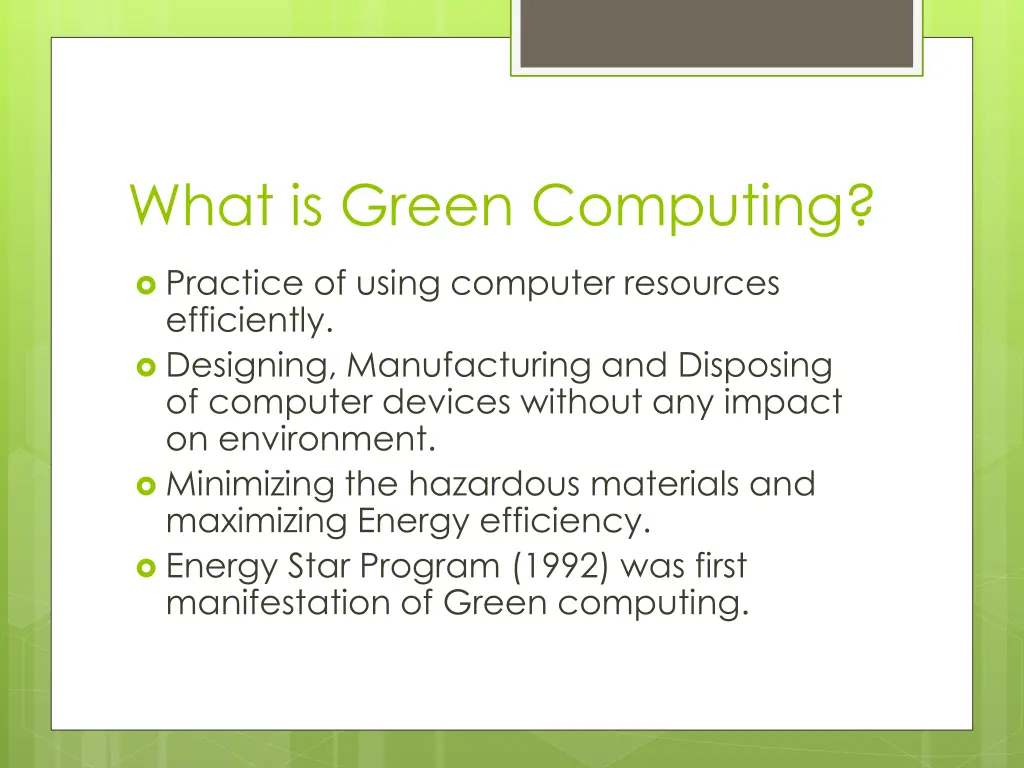
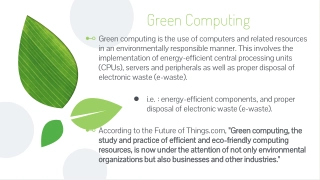
What is Green Computing? Practice of using computer resources efficiently. Designing, Manufacturing and Disposing of computer devices without any impact on environment. Minimizing the hazardous materials and maximizing Energy efficiency. Energy Star Program (1992) was first manifestation of Green computing.
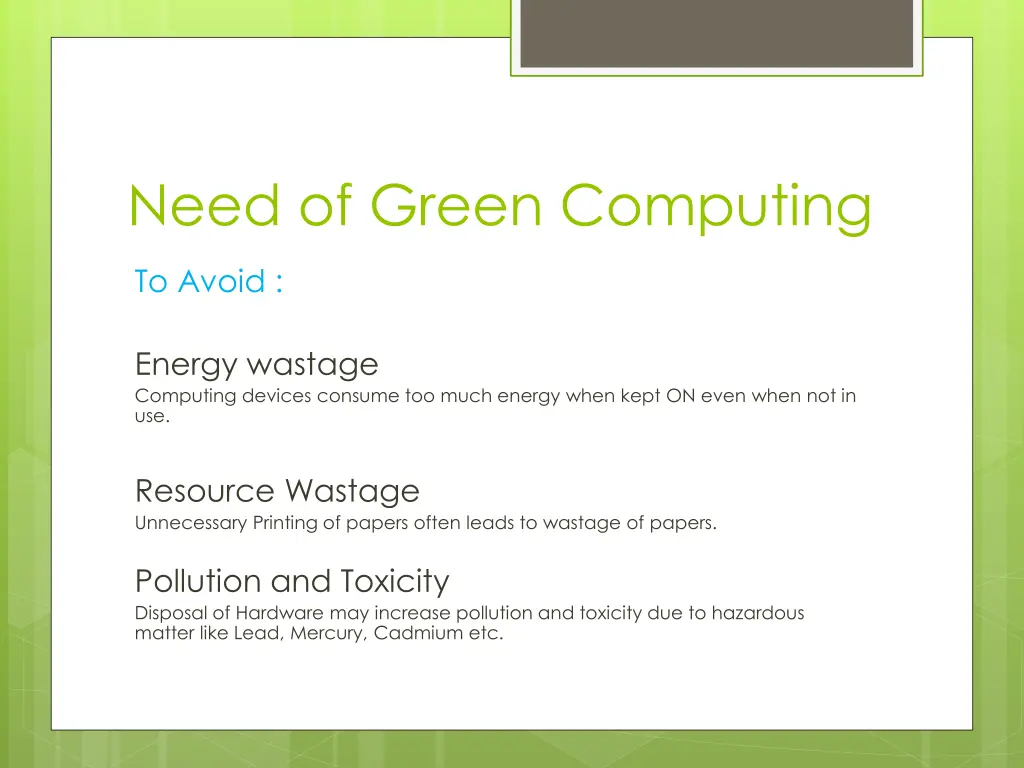
Need of Green Computing To Avoid : Energy wastage Computing devices consume too much energy when kept ON even when not in use. Resource Wastage Unnecessary Printing of papers often leads to wastage of papers. Pollution and Toxicity Disposal of Hardware may increase pollution and toxicity due to hazardous matter like Lead, Mercury, Cadmium etc.
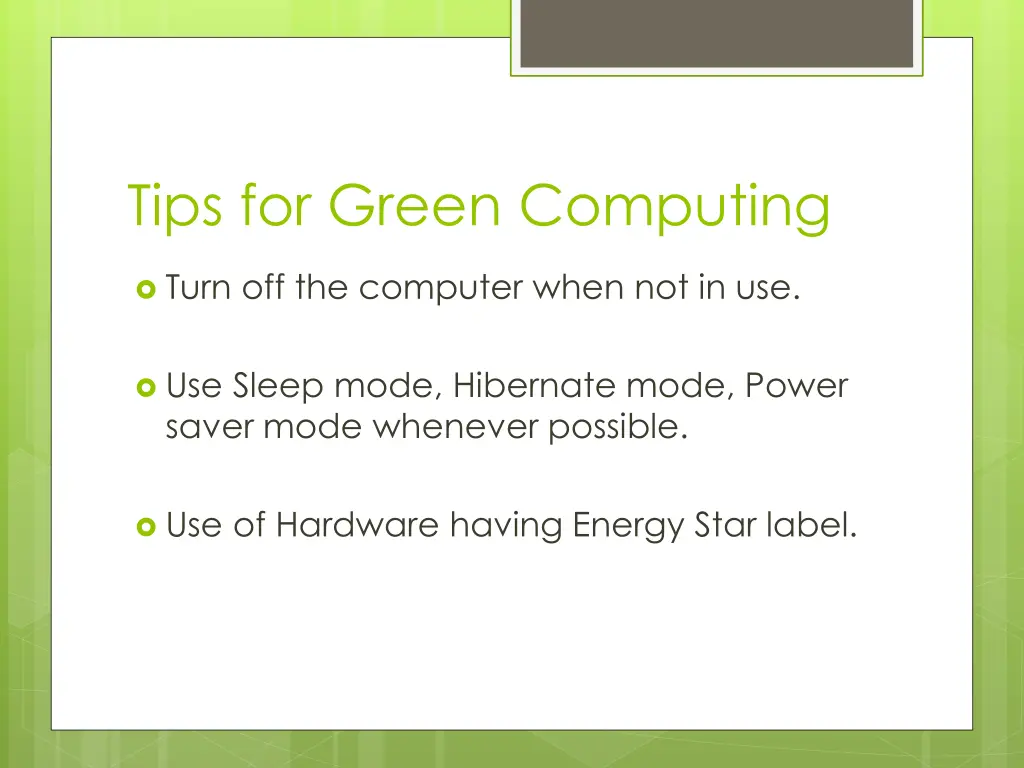
Tips for Green Computing Turn off the computer when not in use. Use Sleep mode, Hibernate mode, Power saver mode whenever possible. Use of Hardware having Energy Star label.
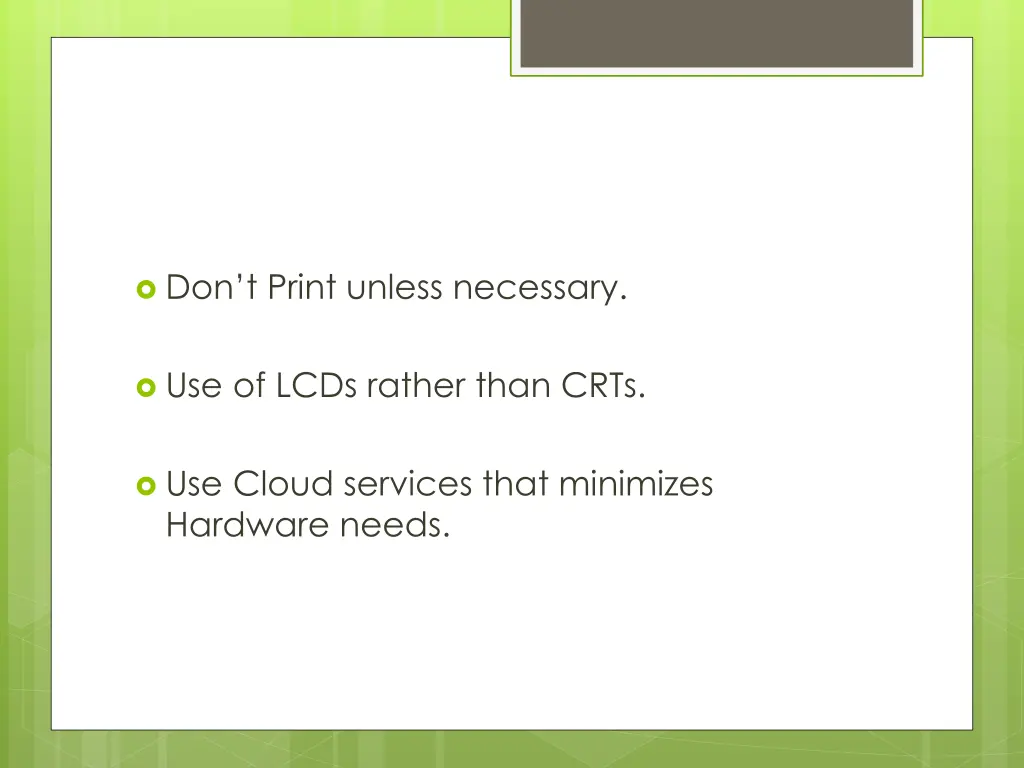
Dont Print unless necessary. Use of LCDs rather than CRTs. Use Cloud services that minimizes Hardware needs.
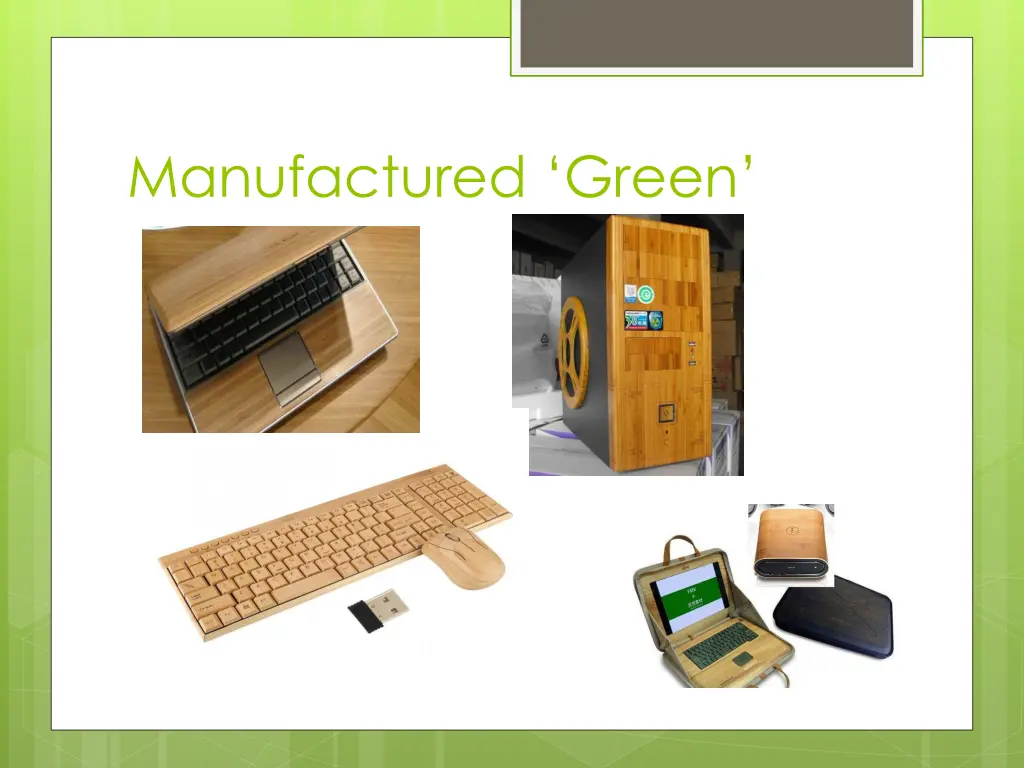
Green Design, Green Manufacturing and Green Disposal Green Design: Designing the Energy efficient Computer equipments. Green Manufacturing: Manufacturing of computer devices keeping environment in mind. Examples: Bamboo casings, recyclable plastics etc.
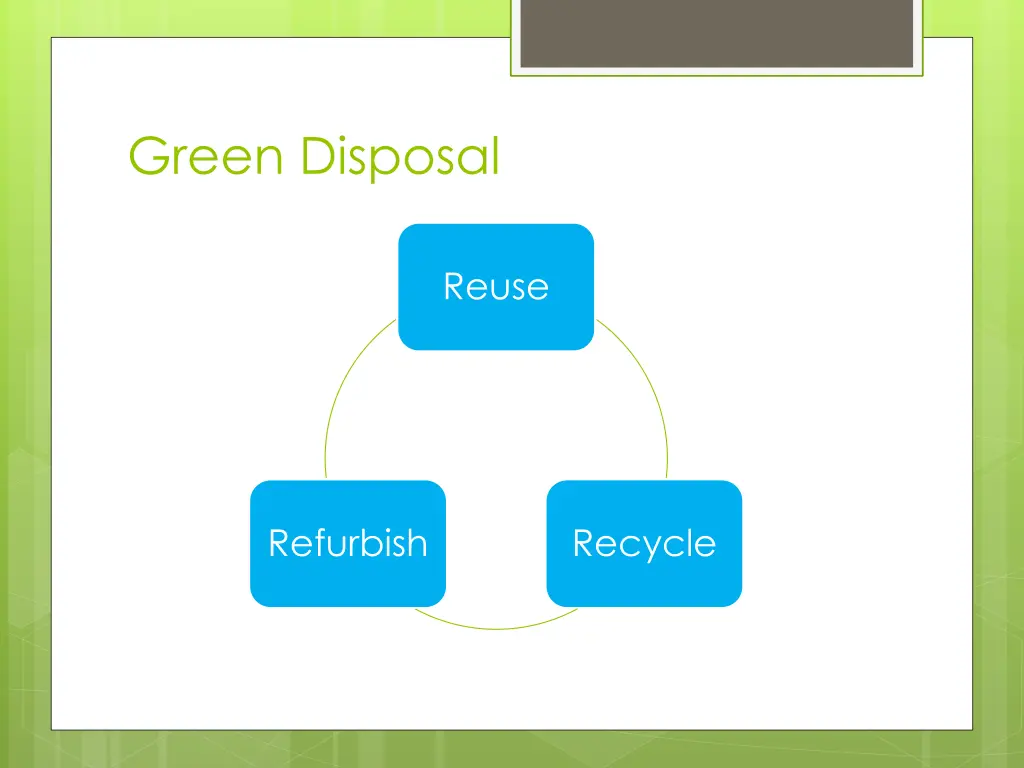
Green Disposal Reuse Refurbish Recycle
Reuse : Donate the old computers to the people with less hardware requirements. Refurbish : Replace the hardware component rather than replacing the whole computer device Eg. RAM update Recycle : The correct way to dispose of old and used computer materials is to recycle them. If you recycle them, they can be broken down into new materials. Computers contain many useful materials such as Copper, Gold, Silver, Iron etc. which can be used again.
THANK YOU ! Go Green, Save Earth