Title IX Athletics: The Three-Part Test Explained
Learn about the Three-Part Test for Title IX Athletics compliance, including equal program opportunities, the criteria for the test, and which sports are considered. Discover what constitutes an "opportunity" in the context of athletic participation and program structure.

Uploaded on | 0 Views
Download Presentation

Please find below an Image/Link to download the presentation.
The content on the website is provided AS IS for your information and personal use only. It may not be sold, licensed, or shared on other websites without obtaining consent from the author. If you encounter any issues during the download, it is possible that the publisher has removed the file from their server.
You are allowed to download the files provided on this website for personal or commercial use, subject to the condition that they are used lawfully. All files are the property of their respective owners.
The content on the website is provided AS IS for your information and personal use only. It may not be sold, licensed, or shared on other websites without obtaining consent from the author.
E N D
Presentation Transcript
Title IX Athletics: The Three-Part Test Presented By: Kate Hildebrandt Civil Rights and Title IX Specialist, ODE K.T. Emerson Assistant Executive Director, OSAA Kelly Foster Assistant Executive Director, OSAA
This presentation is part of a series that discusses short, specific aspects of Title IX compliance for Oregon K-12 schools. It does not discuss the entirety of requirements for Title IX compliance. This session is intended to provide general information. The contents do not constitute legal advice and should not be relied upon as such. This video is being recorded on May 11, 2022. Subsequent legislation or guidance may change the applicability of content in this video.
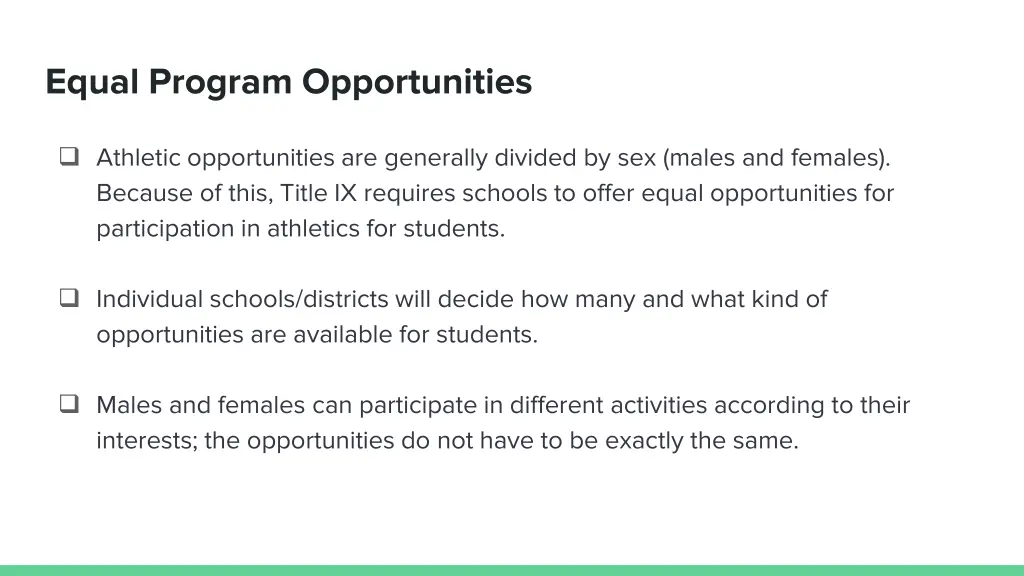
Equal Program Opportunities Athletic opportunities are generally divided by sex (males and females). Because of this, Title IX requires schools to offer equal opportunities for participation in athletics for students. Individual schools/districts will decide how many and what kind of opportunities are available for students. Males and females can participate in different activities according to their interests; the opportunities do not have to be exactly the same.
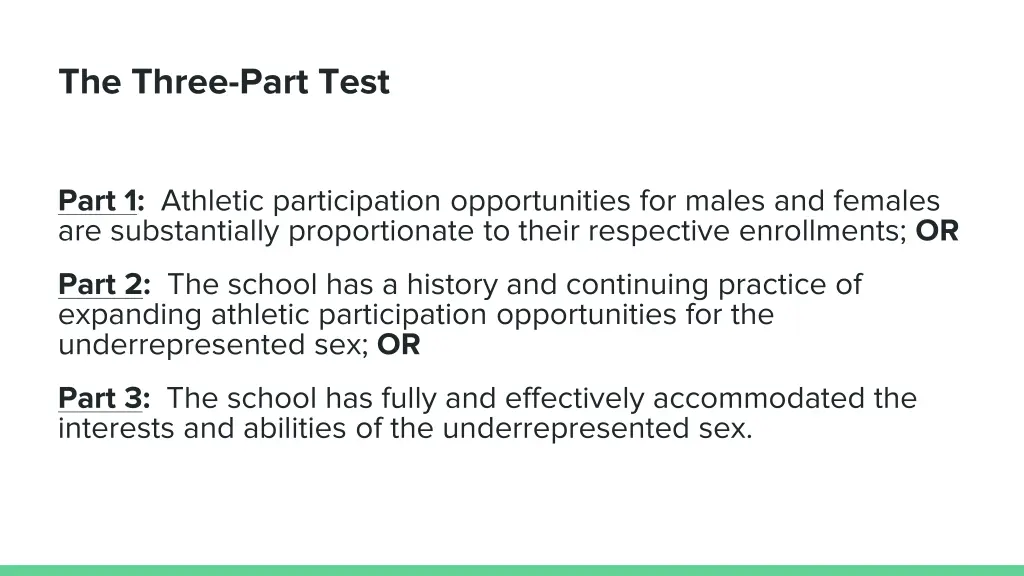
The Three-Part Test Part 1: Athletic participation opportunities for males and females are substantially proportionate to their respective enrollments; OR Part 2: The school has a history and continuing practice of expanding athletic participation opportunities for the underrepresented sex; OR Part 3: The school has fully and effectively accommodated the interests and abilities of the underrepresented sex.
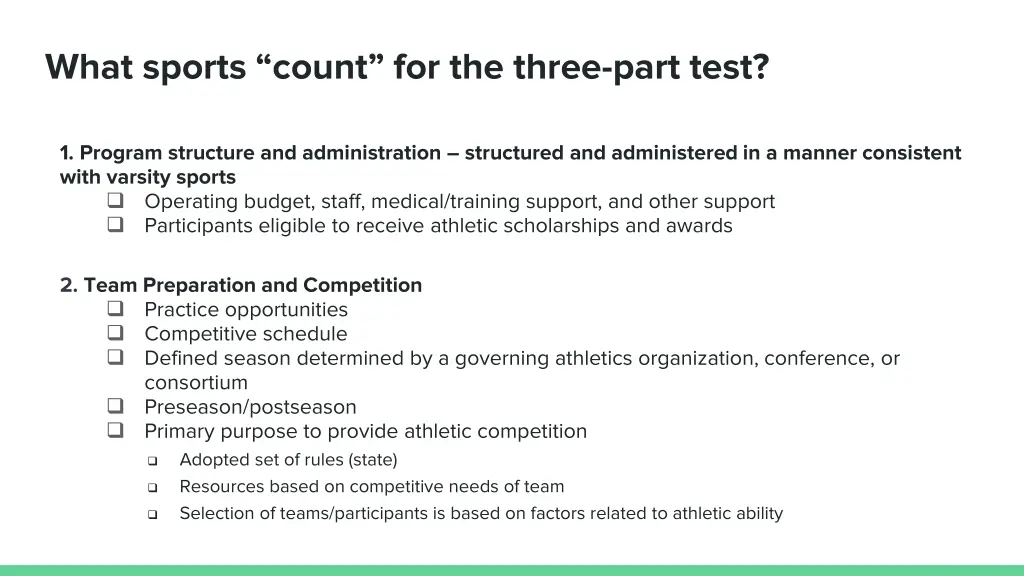
What sports count for the three-part test? 1. Program structure and administration structured and administered in a manner consistent with varsity sports Operating budget, staff, medical/training support, and other support Participants eligible to receive athletic scholarships and awards 2. Team Preparation and Competition Practice opportunities Competitive schedule Defined season determined by a governing athletics organization, conference, or consortium Preseason/postseason Primary purpose to provide athletic competition Adopted set of rules (state) Resources based on competitive needs of team Selection of teams/participants is based on factors related to athletic ability
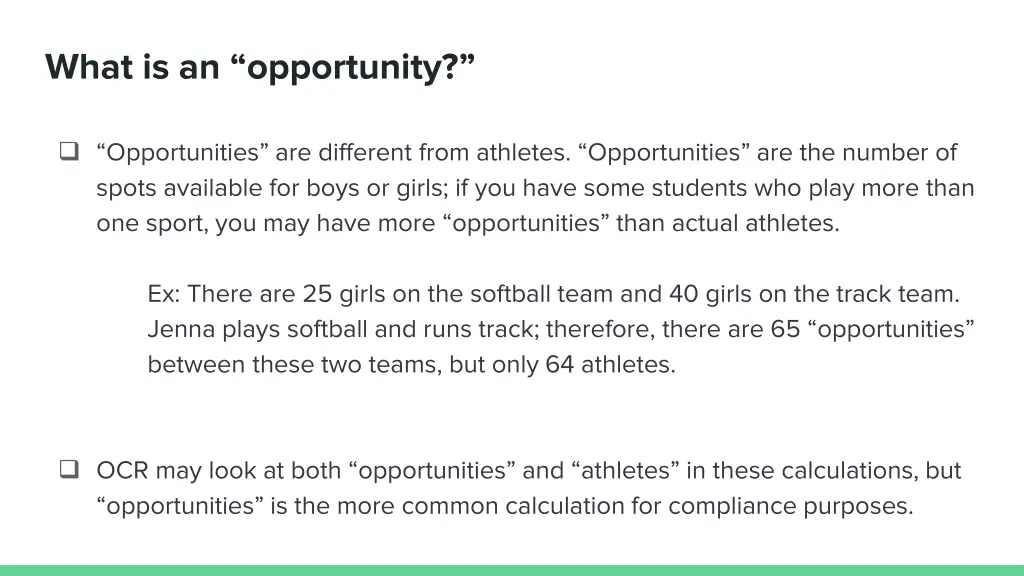
What is an opportunity? Opportunities are different from athletes. Opportunities are the number of spots available for boys or girls; if you have some students who play more than one sport, you may have more opportunities than actual athletes. Ex: There are 25 girls on the softball team and 40 girls on the track team. Jenna plays softball and runs track; therefore, there are 65 opportunities between these two teams, but only 64 athletes. OCR may look at both opportunities and athletes in these calculations, but opportunities is the more common calculation for compliance purposes.
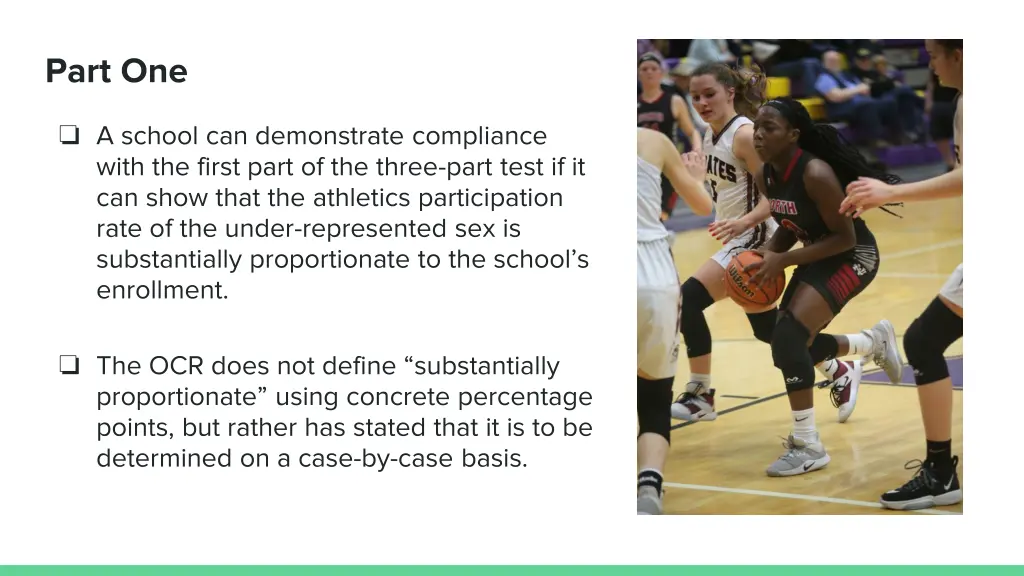
Part One A school can demonstrate compliance with the first part of the three-part test if it can show that the athletics participation rate of the under-represented sex is substantially proportionate to the school s enrollment. The OCR does not define substantially proportionate using concrete percentage points, but rather has stated that it is to be determined on a case-by-case basis.
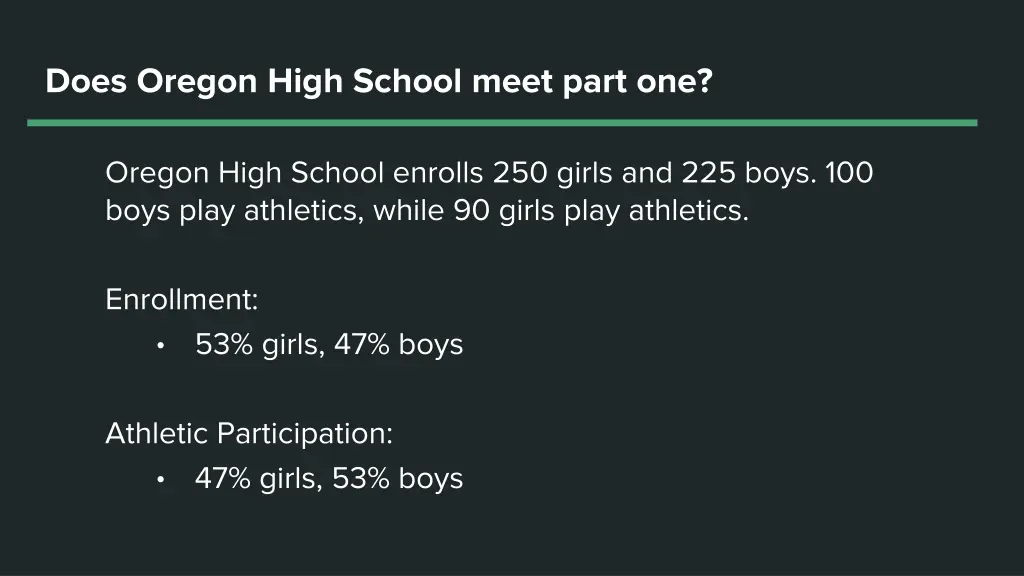
Does Oregon High School meet part one? Oregon High School enrolls 250 girls and 225 boys. 100 boys play athletics, while 90 girls play athletics. Enrollment: 53% girls, 47% boys Athletic Participation: 47% girls, 53% boys
Part Two The institution has a history and continuing practice of expanding participation opportunities responsive to the developing interests and abilities of the underrepresented sex.
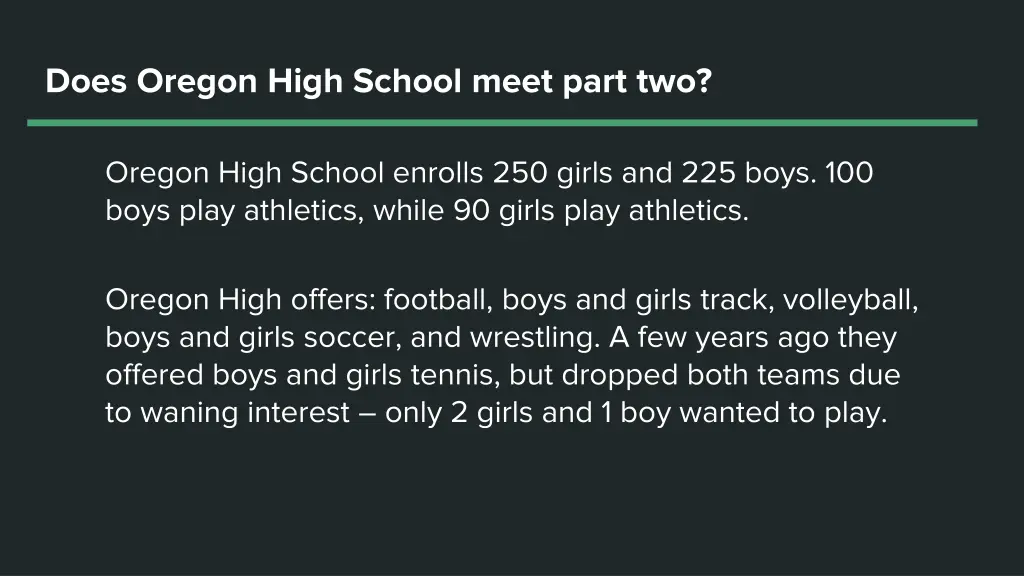
Does Oregon High School meet part two? Oregon High School enrolls 250 girls and 225 boys. 100 boys play athletics, while 90 girls play athletics. Oregon High offers: football, boys and girls track, volleyball, boys and girls soccer, and wrestling. A few years ago they offered boys and girls tennis, but dropped both teams due to waning interest only 2 girls and 1 boy wanted to play.
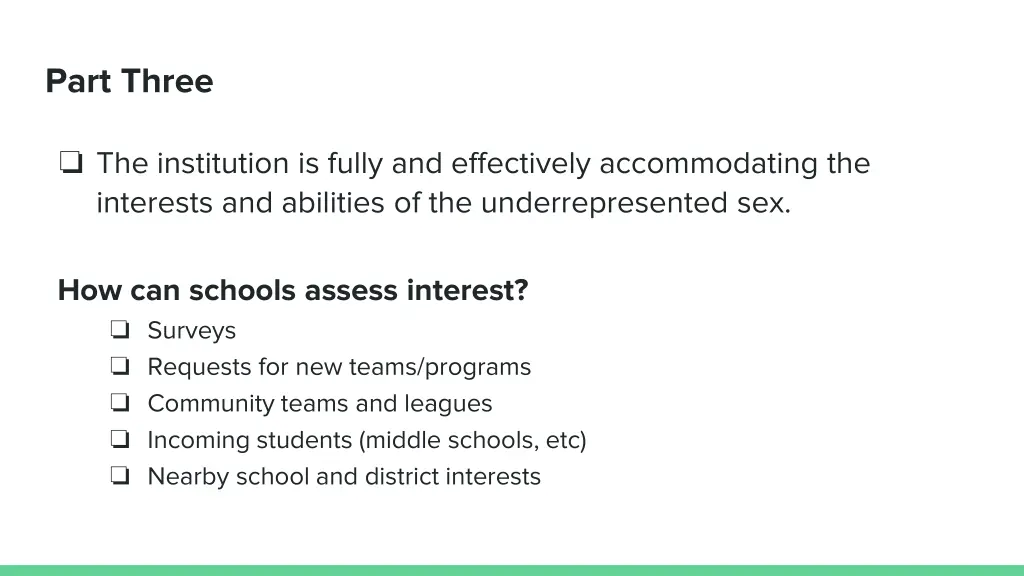
Part Three The institution is fully and effectively accommodating the interests and abilities of the underrepresented sex. How can schools assess interest? Surveys Requests for new teams/programs Community teams and leagues Incoming students (middle schools, etc) Nearby school and district interests
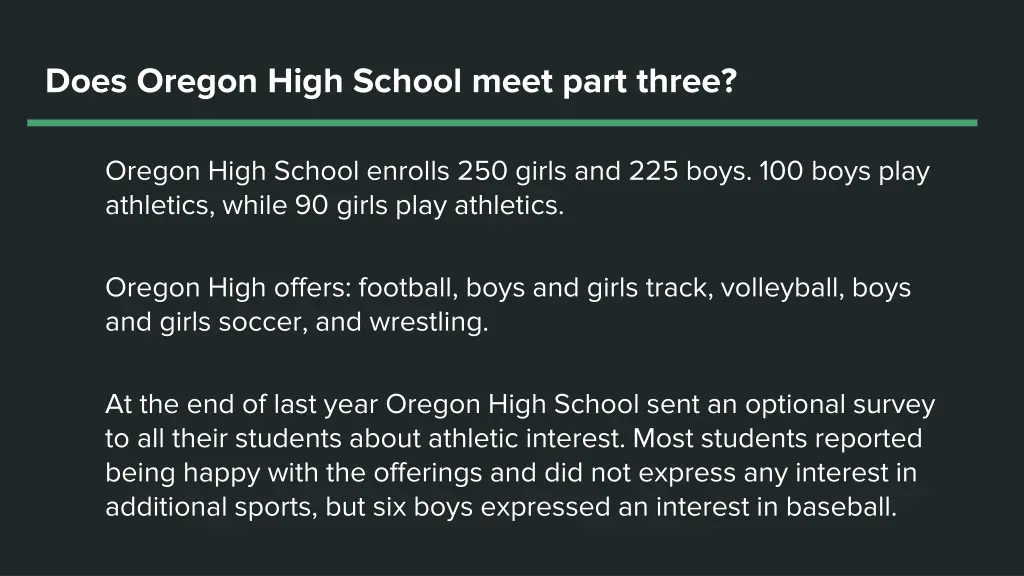
Does Oregon High School meet part three? Oregon High School enrolls 250 girls and 225 boys. 100 boys play athletics, while 90 girls play athletics. Oregon High offers: football, boys and girls track, volleyball, boys and girls soccer, and wrestling. At the end of last year Oregon High School sent an optional survey to all their students about athletic interest. Most students reported being happy with the offerings and did not express any interest in additional sports, but six boys expressed an interest in baseball.
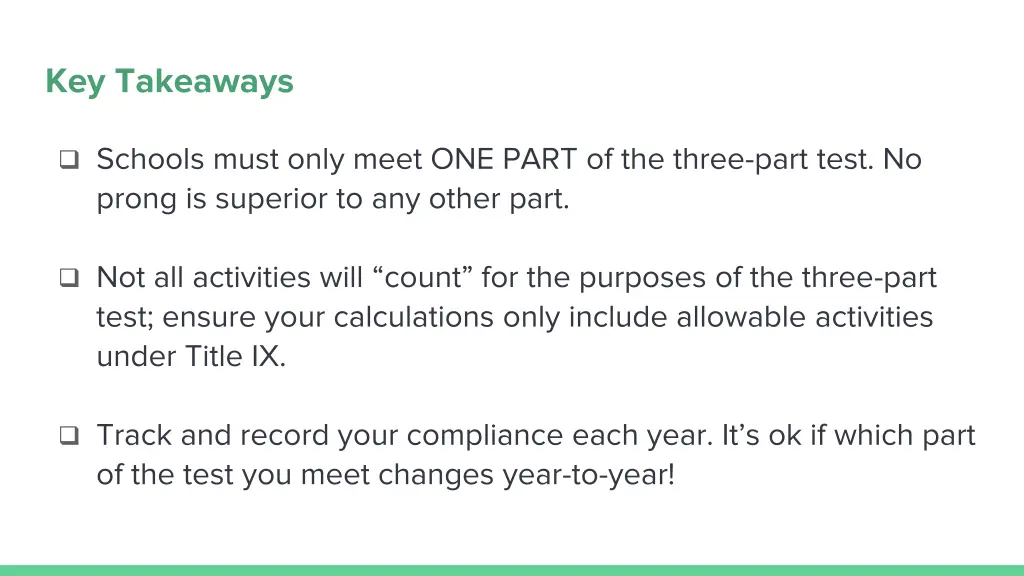
Key Takeaways Schools must only meet ONE PART of the three-part test. No prong is superior to any other part. Not all activities will count for the purposes of the three-part test; ensure your calculations only include allowable activities under Title IX. Track and record your compliance each year. It s ok if which part of the test you meet changes year-to-year!
Questions? Connect with us! K.T. Emerson kte@osaa.org Kelly Foster kellyf@osaa.org Kate Hildebrandt katherine.hildebrandt@ode.oregon.gov