Toxidromes and Drug Ingestions
Toxidromes are combinations of clinical signs that can indicate the type of drug ingestion a patient has experienced. Common toxidromes include anticholinergic, cholinergic, sympathomimetic, sedative, hallucinogenic, and serotonergic presentations. This guide explores the key features, causes, and management of anticholinergic and cholinergic toxidromes, providing valuable insights for healthcare professionals managing drug ingestions.

Download Presentation

Please find below an Image/Link to download the presentation.
The content on the website is provided AS IS for your information and personal use only. It may not be sold, licensed, or shared on other websites without obtaining consent from the author.If you encounter any issues during the download, it is possible that the publisher has removed the file from their server.
You are allowed to download the files provided on this website for personal or commercial use, subject to the condition that they are used lawfully. All files are the property of their respective owners.
The content on the website is provided AS IS for your information and personal use only. It may not be sold, licensed, or shared on other websites without obtaining consent from the author.
E N D
Presentation Transcript
Toxidromes and Drug Ingestions
Toxidromes What is a Toxidrome? A constellation of clinical signs that may suggest a particular type of ingestion Toxidromes may indicate what type of drugs a patient has taken if they are unable or unwilling to tell you
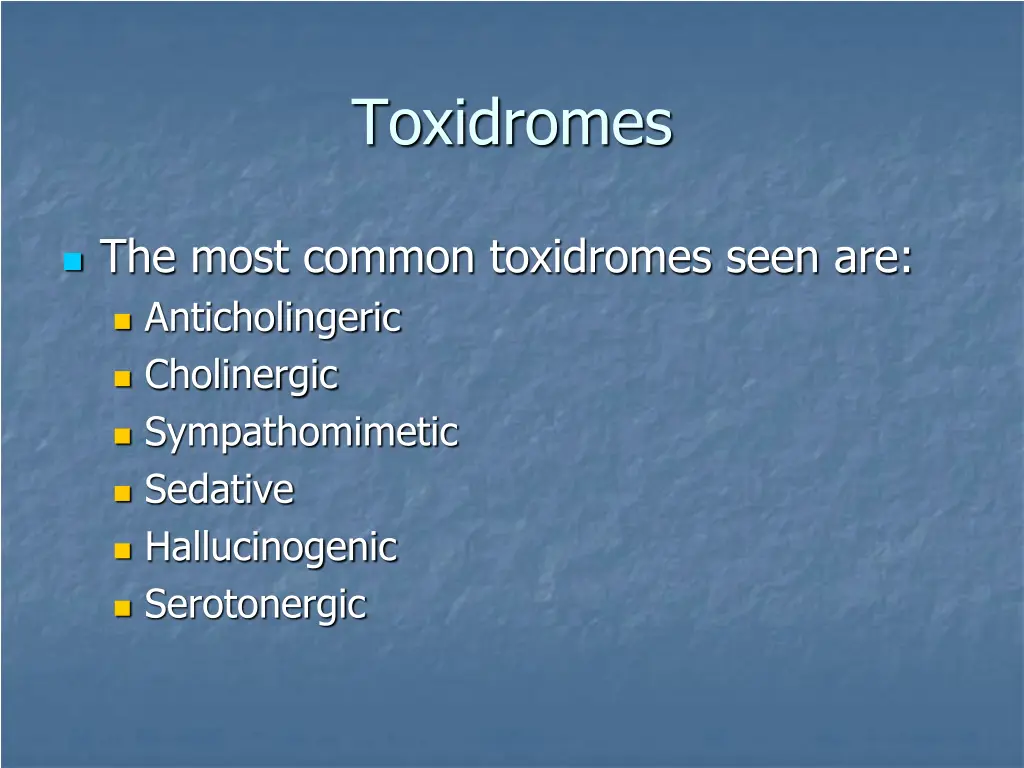
Toxidromes The most common toxidromes seen are: Anticholingeric Cholinergic Sympathomimetic Sedative Hallucinogenic Serotonergic
Anticholinergic Toxidromes
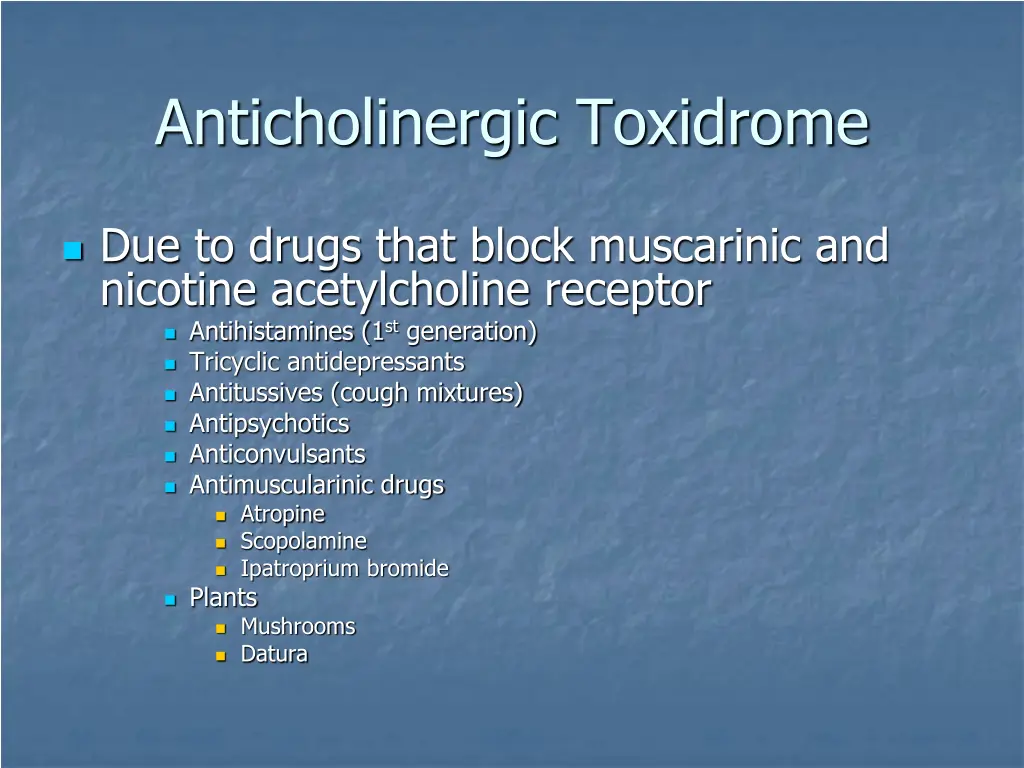
Anticholinergic Toxidrome Due to drugs that block muscarinic and nicotine acetylcholine receptor Antihistamines (1stgeneration) Tricyclic antidepressants Antitussives (cough mixtures) Antipsychotics Anticonvulsants Antimuscularinic drugs Atropine Scopolamine Ipatroprium bromide Plants Mushrooms Datura
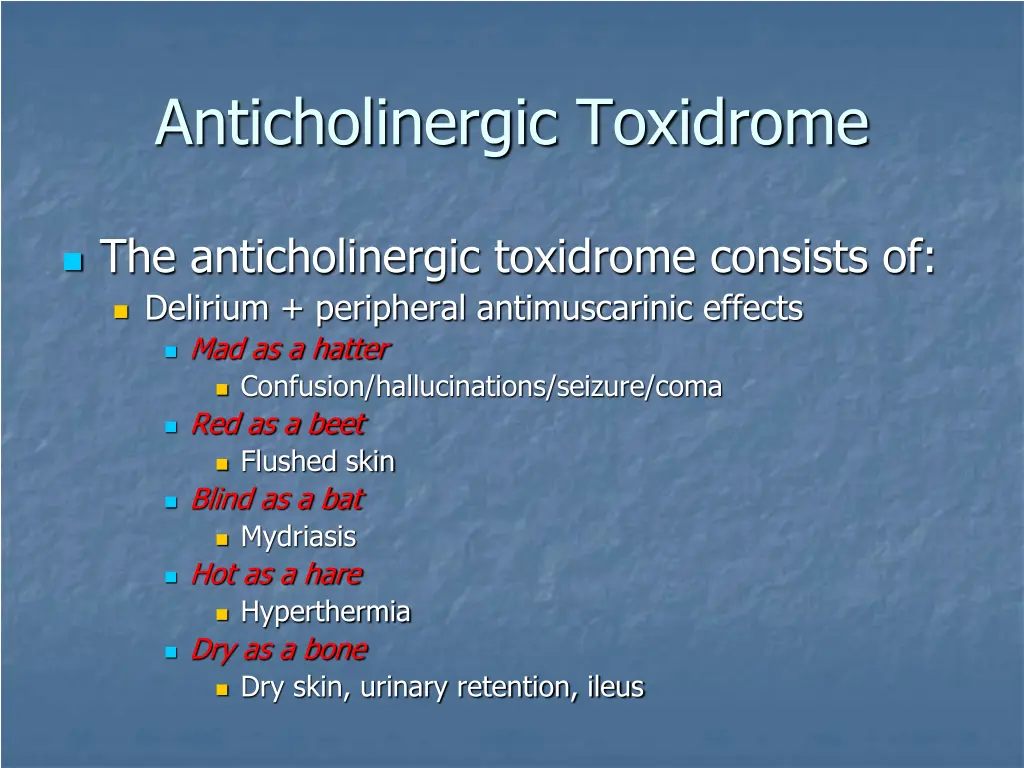
Anticholinergic Toxidrome The anticholinergic toxidrome consists of: Delirium + peripheral antimuscarinic effects Mad as a hatter Confusion/hallucinations/seizure/coma Red as a beet Flushed skin Blind as a bat Mydriasis Hot as a hare Hyperthermia Dry as a bone Dry skin, urinary retention, ileus
Cholinergic Toxidromes
Cholinergic Toxidrome Due to drugs that activate acetylcholine receptor ie the opposite of anticholinegric toxidromes
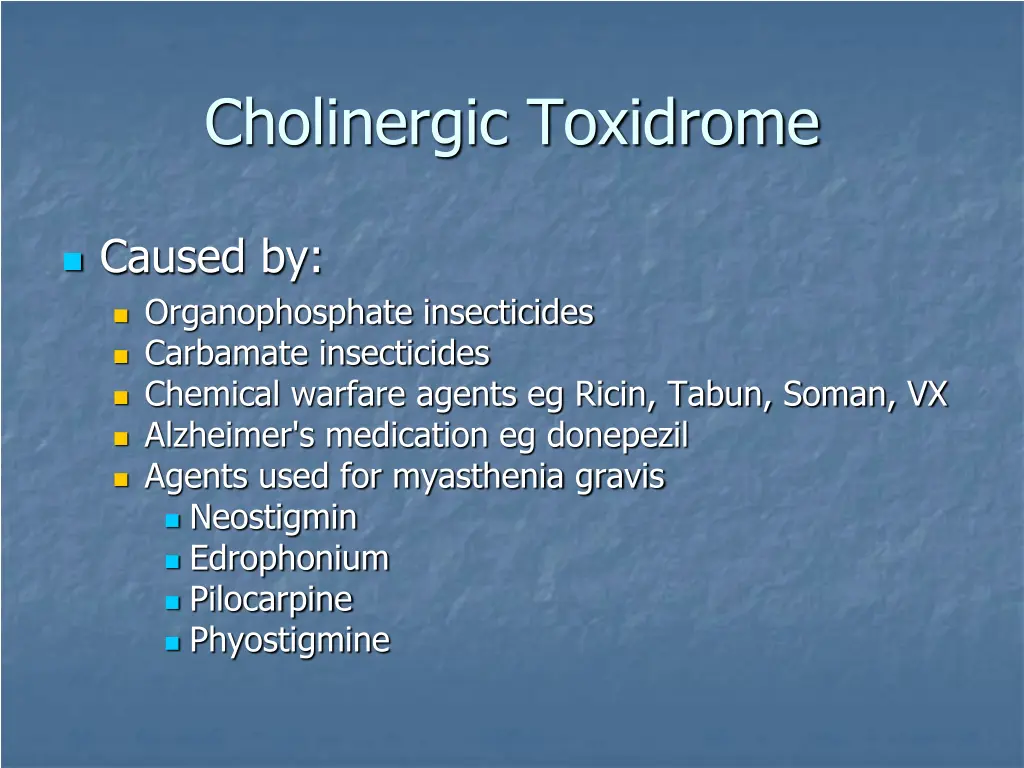
Cholinergic Toxidrome Caused by: Organophosphate insecticides Carbamate insecticides Chemical warfare agents eg Ricin, Tabun, Soman, VX Alzheimer's medication eg donepezil Agents used for myasthenia gravis Neostigmin Edrophonium Pilocarpine Phyostigmine
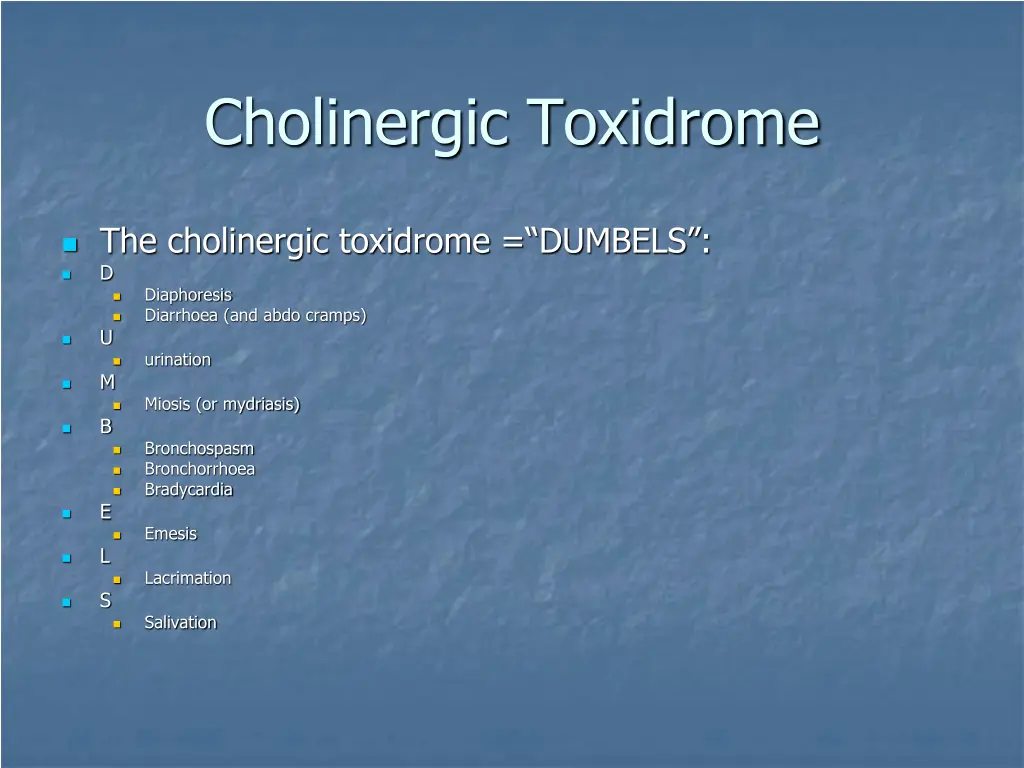
Cholinergic Toxidrome The cholinergic toxidrome = DUMBELS : D Diaphoresis Diarrhoea (and abdo cramps) U urination M Miosis (or mydriasis) B Bronchospasm Bronchorrhoea Bradycardia E Emesis L Lacrimation S Salivation
Sympathomimetic Toxidromes
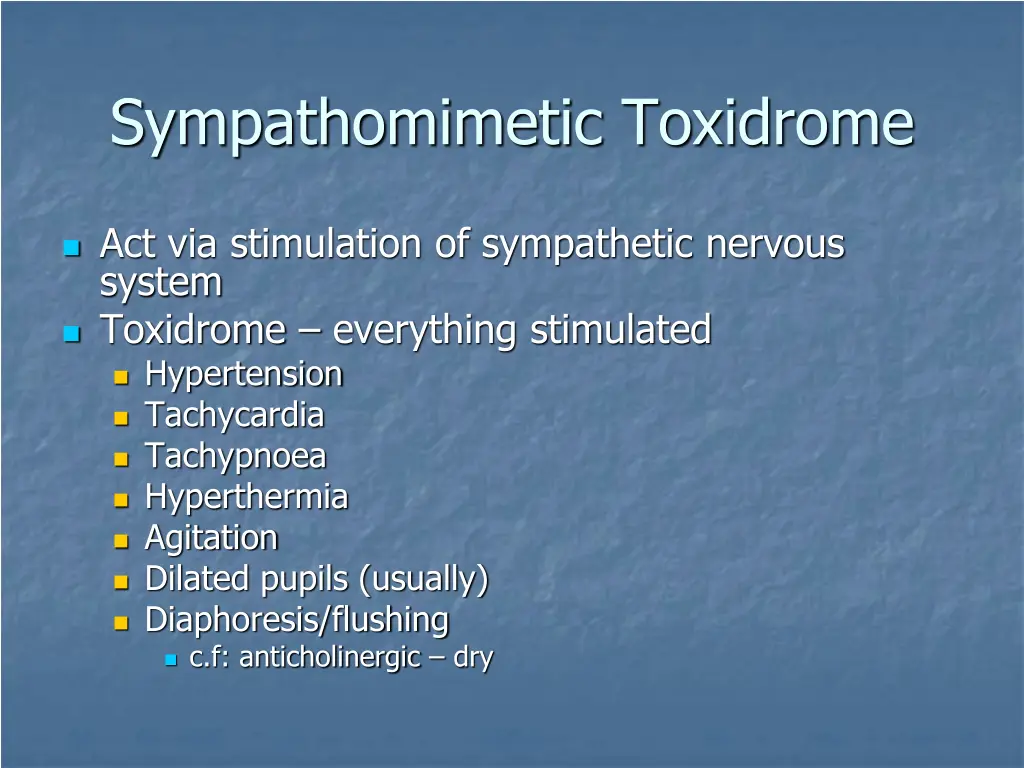
Sympathomimetic Toxidrome Act via stimulation of sympathetic nervous system Toxidrome everything stimulated Hypertension Tachycardia Tachypnoea Hyperthermia Agitation Dilated pupils (usually) Diaphoresis/flushing c.f: anticholinergic dry
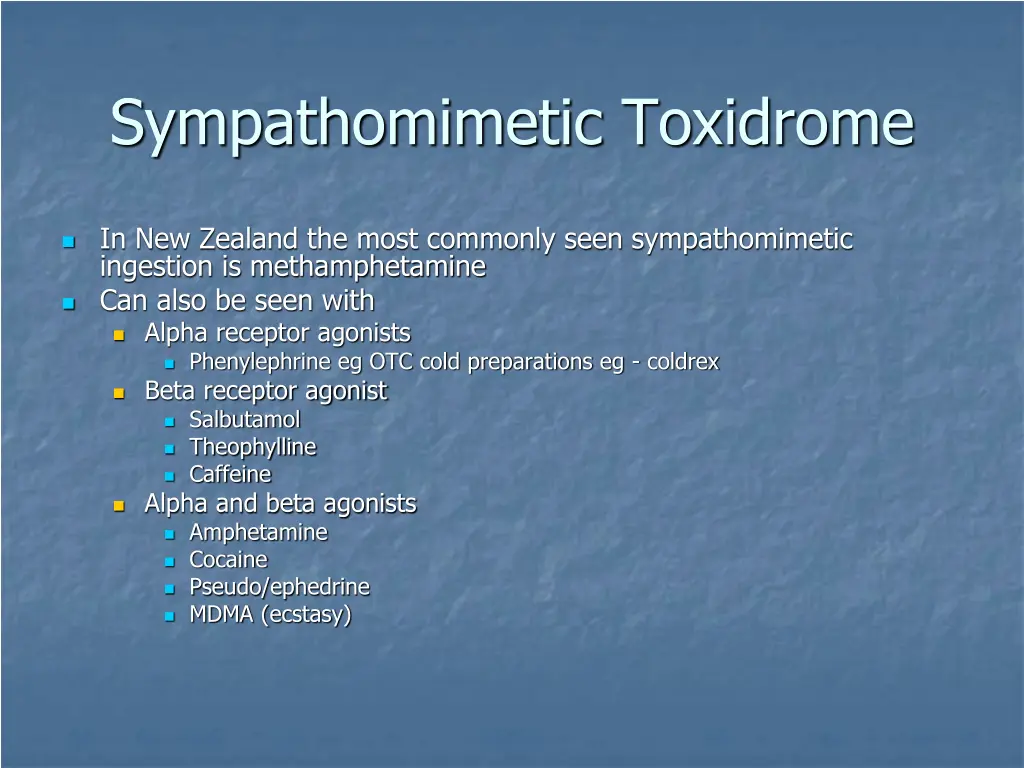
Sympathomimetic Toxidrome In New Zealand the most commonly seen sympathomimetic ingestion is methamphetamine Can also be seen with Alpha receptor agonists Phenylephrine eg OTC cold preparations eg - coldrex Beta receptor agonist Salbutamol Theophylline Caffeine Alpha and beta agonists Amphetamine Cocaine Pseudo/ephedrine MDMA (ecstasy)
Sedative or Hypnotic Toxidromes
Sedative or Hypnotic Toxidrome Caused by any medication that causes CNS depression, such as: Benzodiazepines Barbiturates Alcohols Opioids Anticonvulsants Antipsychotics
Sedative or Hypnotic Toxidrome Toxidrome Decreased Level of consciousness Hypoventilation Hypotension Bradycardia Opioids + barbiturates also cause Miosis Hypothermia
Hallucinogenic Toxidromes
Hallucinogenic Toxidrome As it sounds, this is caused by drugs and agents that cause hallucinations Amphetamine Cannaboids Cocaine LSD PCP Magic mushrooms (Psilocybin spp.)
Hallucinogenic Toxidrome Primarily presents with hallucination Also can present with: Frank psychosis Panic attacks and anxiety Sympathomimetic symptoms esp. tachycardia, hypertension and fever
Serotonergic Toxidromes
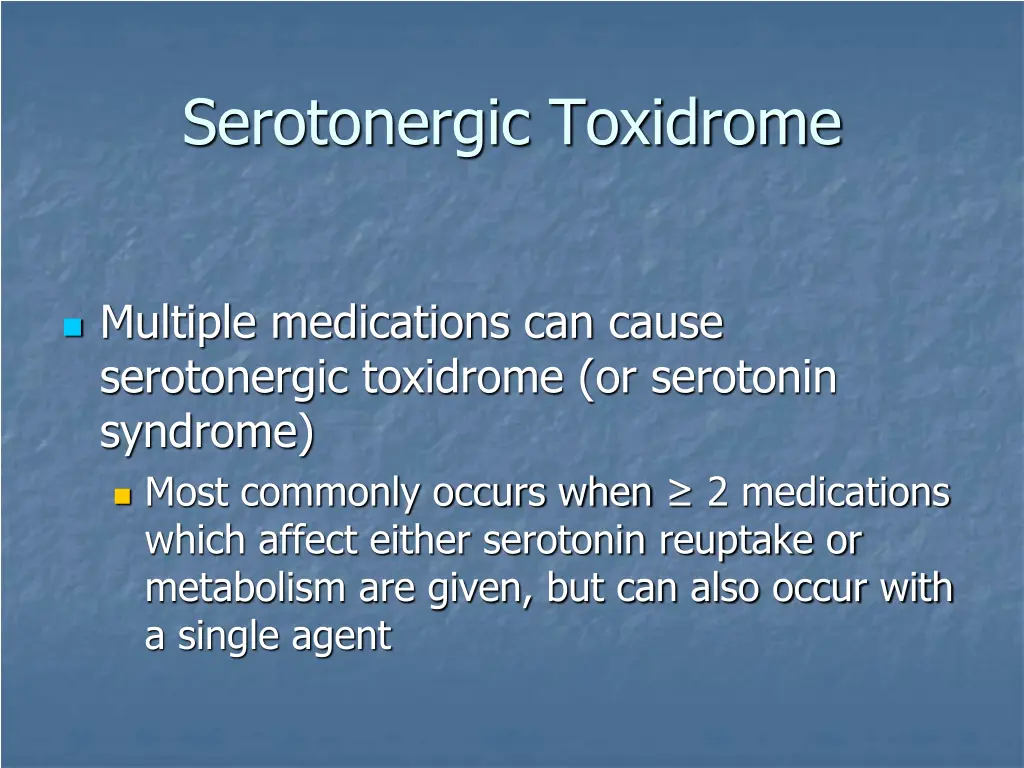
Serotonergic Toxidrome A collection of signs and symptoms produced by excess serotonin in the central, peripheral and autonomic nervous systems
Serotonergic Toxidrome Multiple medications can cause serotonergic toxidrome (or serotonin syndrome) Most commonly occurs when 2 medications which affect either serotonin reuptake or metabolism are given, but can also occur with a single agent
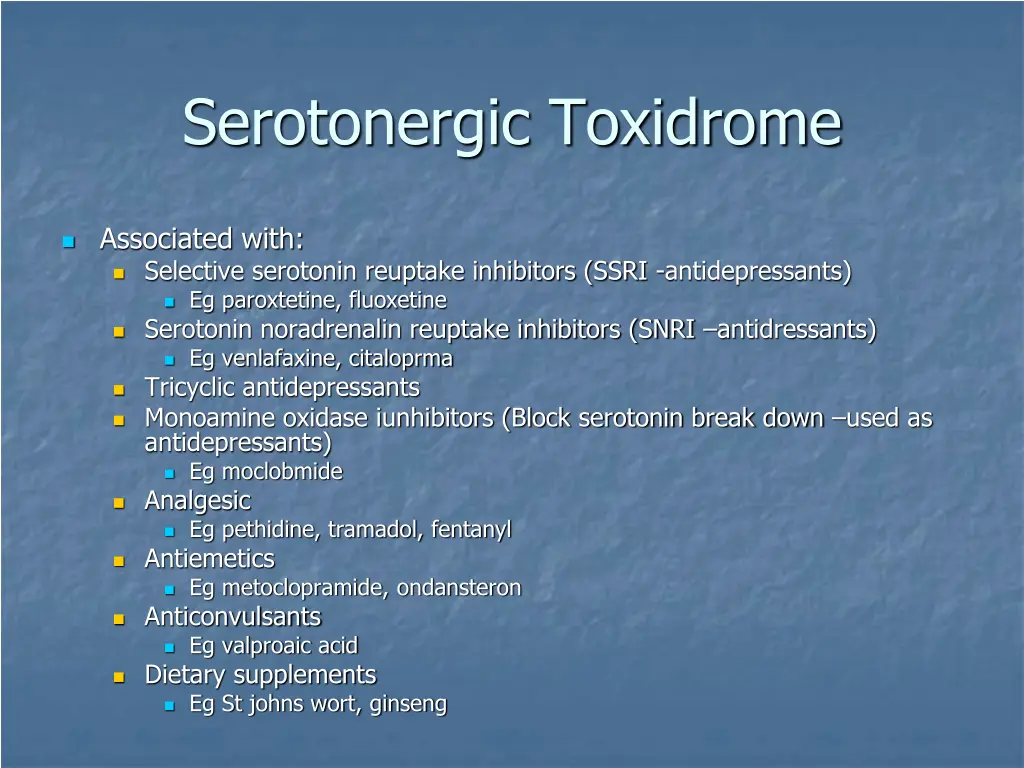
Serotonergic Toxidrome Associated with: Selective serotonin reuptake inhibitors (SSRI -antidepressants) Eg paroxtetine, fluoxetine Serotonin noradrenalin reuptake inhibitors (SNRI antidressants) Eg venlafaxine, citaloprma Tricyclic antidepressants Monoamine oxidase iunhibitors (Block serotonin break down used as antidepressants) Eg moclobmide Analgesic Eg pethidine, tramadol, fentanyl Antiemetics Eg metoclopramide, ondansteron Anticonvulsants Eg valproaic acid Dietary supplements Eg St johns wort, ginseng
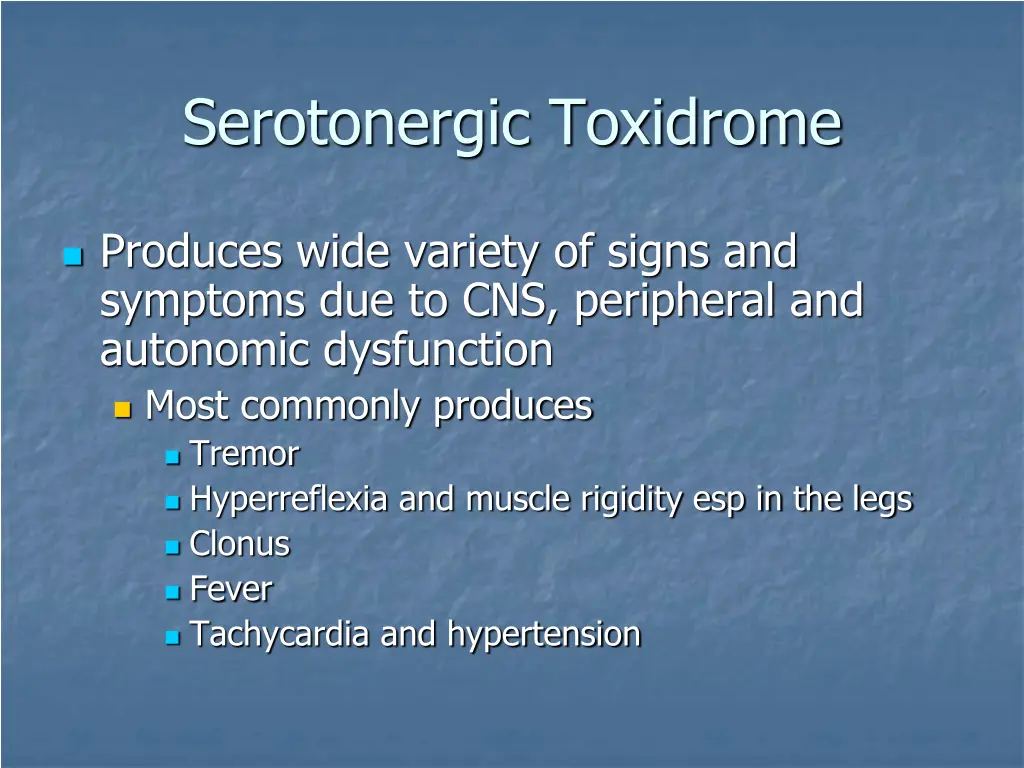
Serotonergic Toxidrome Produces wide variety of signs and symptoms due to CNS, peripheral and autonomic dysfunction Most commonly produces Tremor Hyperreflexia and muscle rigidity esp in the legs Clonus Fever Tachycardia and hypertension