Tuning Surface Tension in SPH Independently of Fluid Rheology
Explore the independent tuning of surface tension in Smoothed Particle Hydrodynamics (SPH) through particle interaction forces. Investigate the impact on fluid rheology using numerical experiments and rheological properties.

Download Presentation

Please find below an Image/Link to download the presentation.
The content on the website is provided AS IS for your information and personal use only. It may not be sold, licensed, or shared on other websites without obtaining consent from the author. If you encounter any issues during the download, it is possible that the publisher has removed the file from their server.
You are allowed to download the files provided on this website for personal or commercial use, subject to the condition that they are used lawfully. All files are the property of their respective owners.
The content on the website is provided AS IS for your information and personal use only. It may not be sold, licensed, or shared on other websites without obtaining consent from the author.
E N D
Presentation Transcript
Tuning the surface tension in SPH independently of the fluid rheology Made by: Kjeld Broekema Supervisors: Prof.dr.ir. K. Vuik Prof.dr.ir. J.T. Padding Ir. S. Sneijders 1
Overview Motivation Rheology SPH: Smoothed Particle Hydrodynamics Tuning methods Numerical experiments Research questions Motivation Rheology SPH Methods Numerical experiments Research questions 2
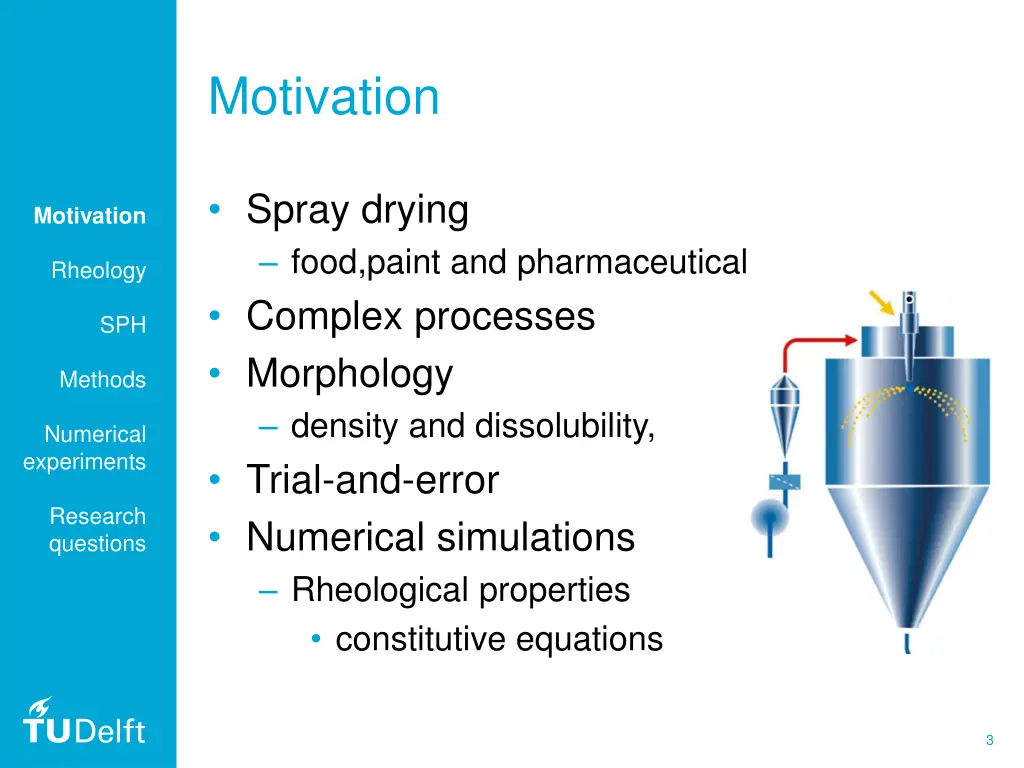
Motivation Spray drying food,paint and pharmaceutical Complex processes Morphology density and dissolubility, Trial-and-error Numerical simulations Rheological properties constitutive equations Motivation Rheology SPH Methods Numerical experiments Research questions 3
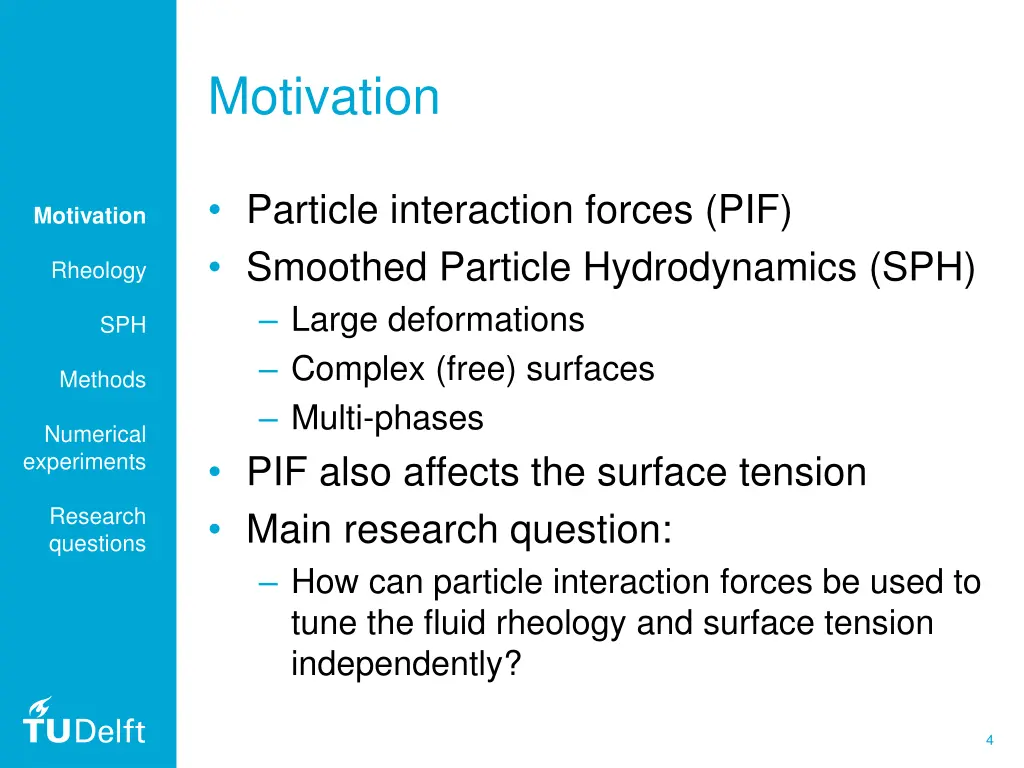
Motivation Particle interaction forces (PIF) Smoothed Particle Hydrodynamics (SPH) Large deformations Complex (free) surfaces Multi-phases PIF also affects the surface tension Main research question: How can particle interaction forces be used to tune the fluid rheology and surface tension independently? Motivation Rheology SPH Methods Numerical experiments Research questions 4
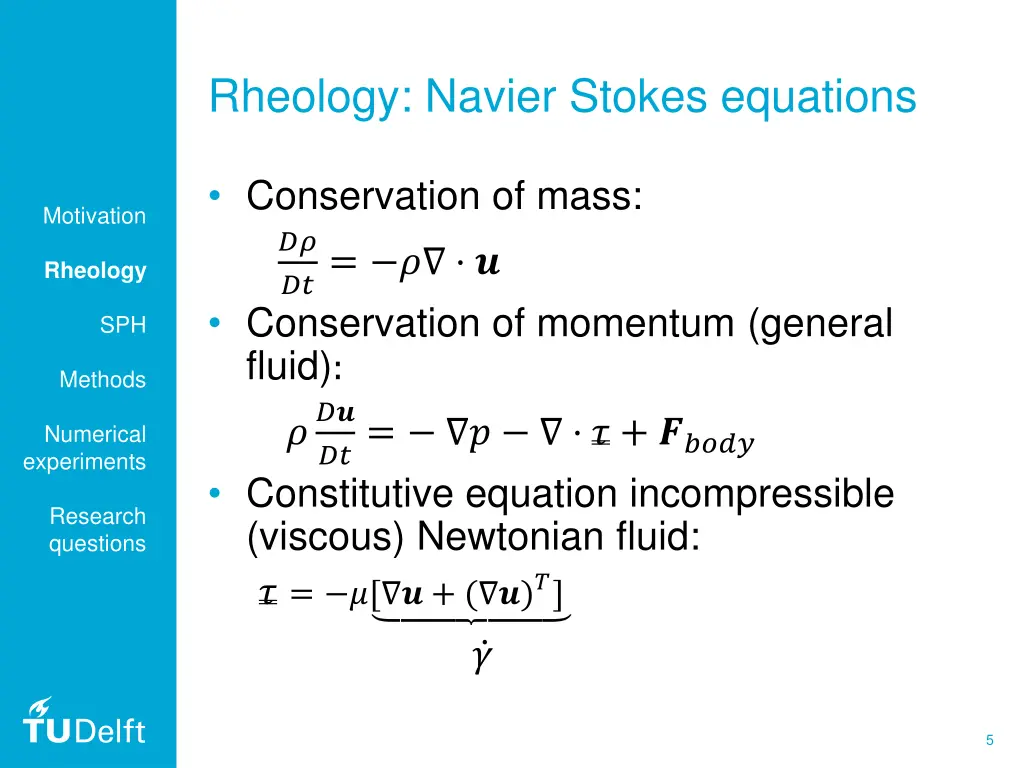
Rheology: Navier Stokes equations Conservation of mass: ?? ??= ? ? Conservation of momentum (general fluid): ??? ??= ? ? + ????? Constitutive equation incompressible (viscous) Newtonian fluid: ? = ?[ ? + ( ?)?] Motivation Rheology SPH Methods Numerical experiments Research questions ? 5
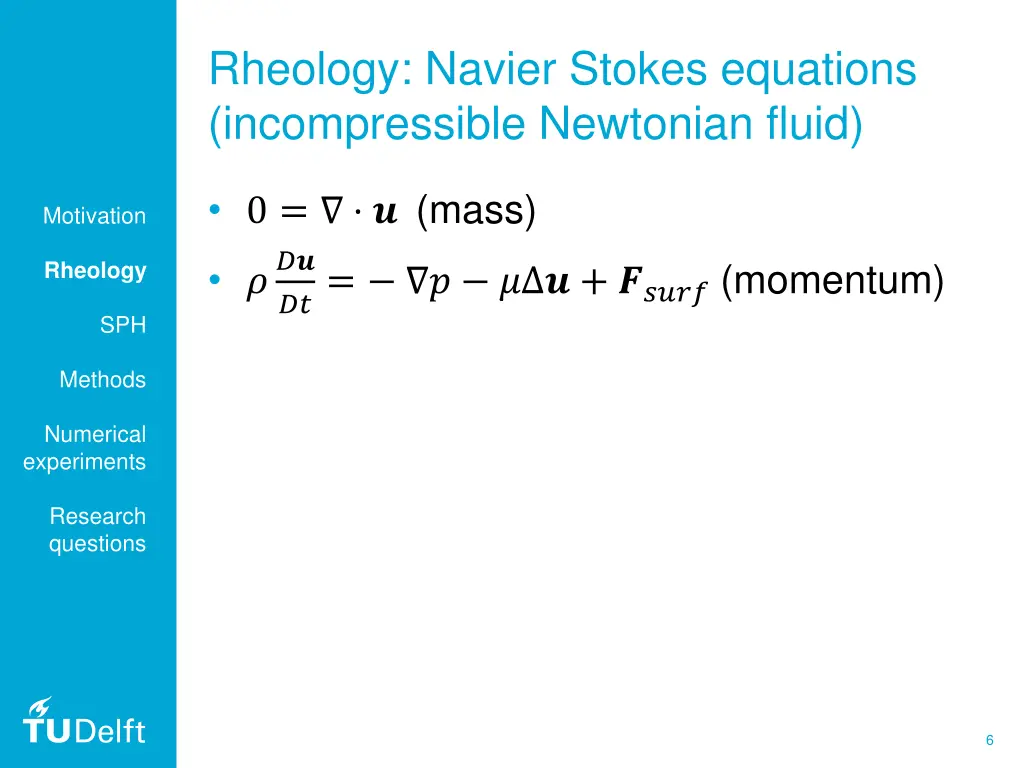
Rheology: Navier Stokes equations (incompressible Newtonian fluid) 0 = ? (mass) ??? Motivation ??= ? ? ? + ?????(momentum) Rheology SPH Methods Numerical experiments Research questions 6
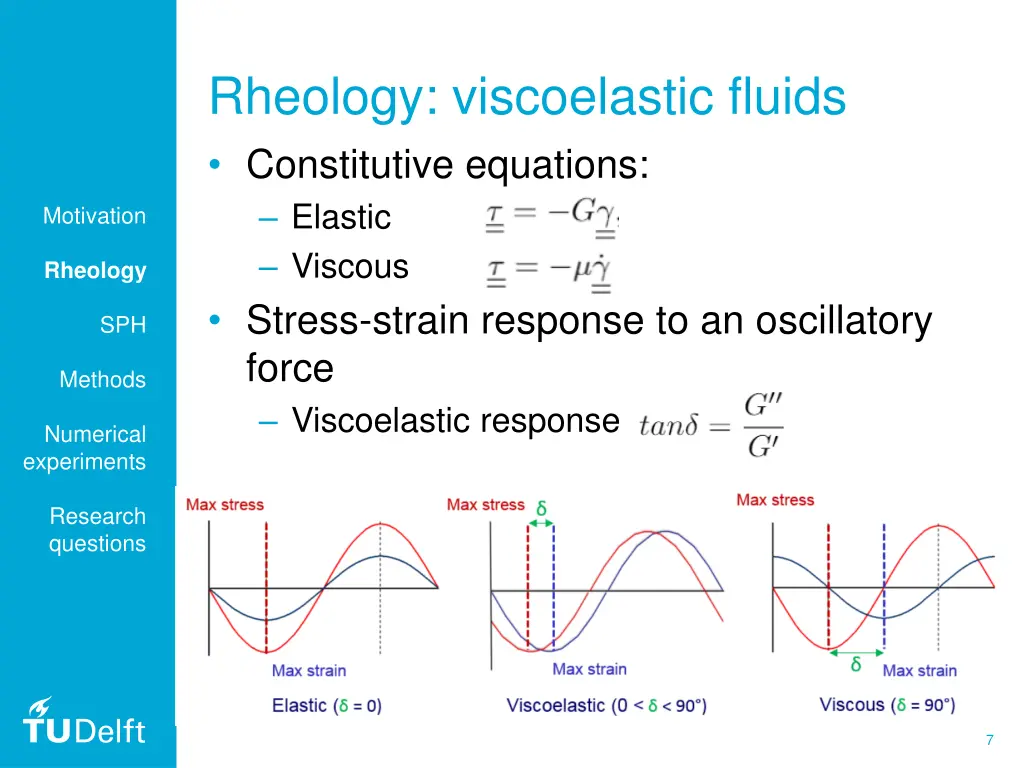
Rheology: viscoelastic fluids Constitutive equations: Elastic Viscous Stress-strain response to an oscillatory force Viscoelastic response Motivation Rheology SPH Methods Numerical experiments Research questions 7
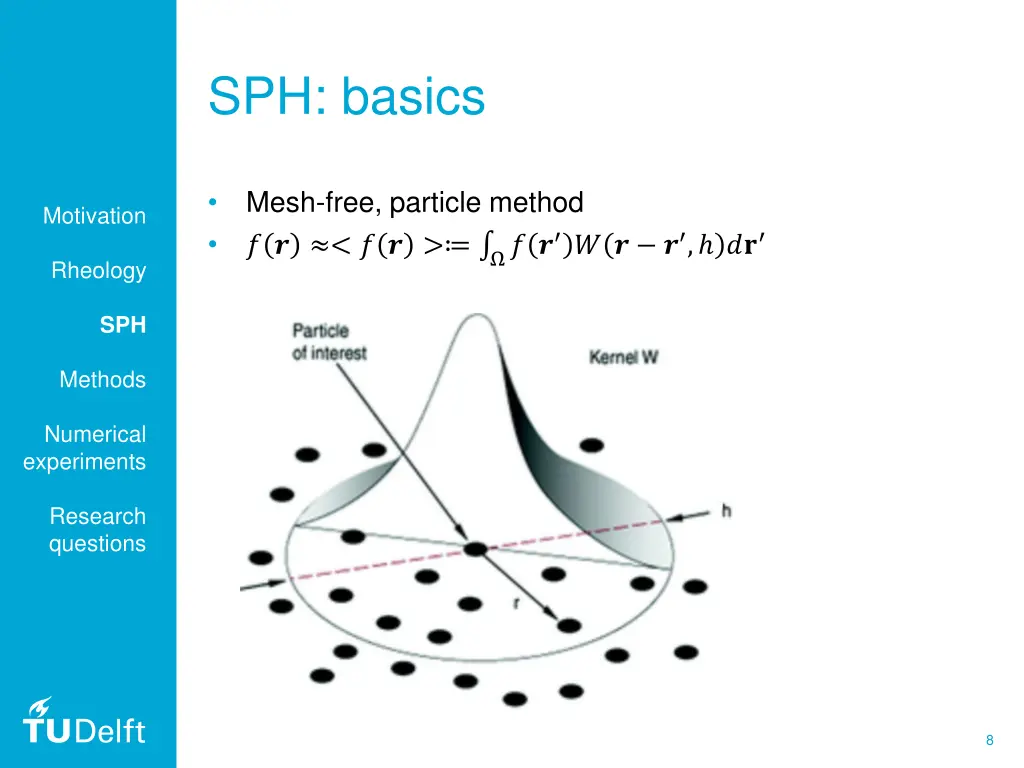
SPH: basics Mesh-free, particle method ? ? < ? ? > ? ? ? ? ? , ?? Motivation Rheology SPH Methods Numerical experiments Research questions 8
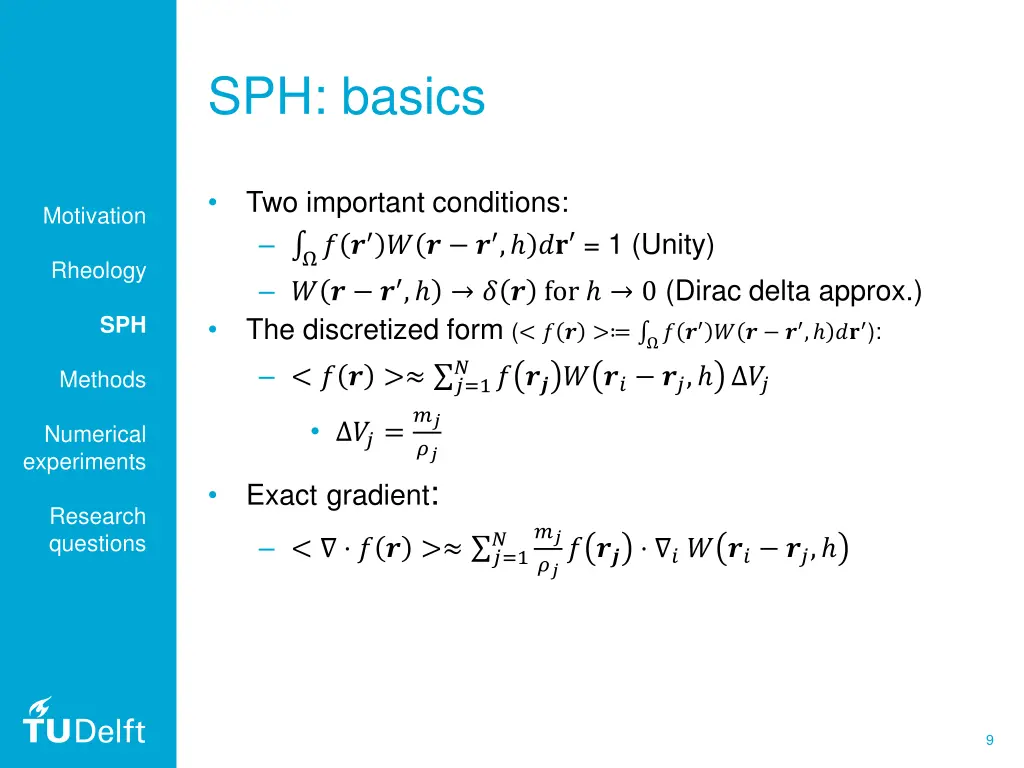
SPH: basics Two important conditions: ? ? ? ? ? , ?? = 1 (Unity) ? ? ? , ? ? for 0(Dirac delta approx.) The discretized form (< ? ? > ? ? ? ? ? , ?? ): < ? ? > ?=1 ? ??? ?? ??, ?? ?? ?? Exact gradient: ?? ??? ?? ?? ?? ??, Motivation Rheology SPH ? Methods ??= Numerical experiments Research questions ? < ? ? > ?=1 9
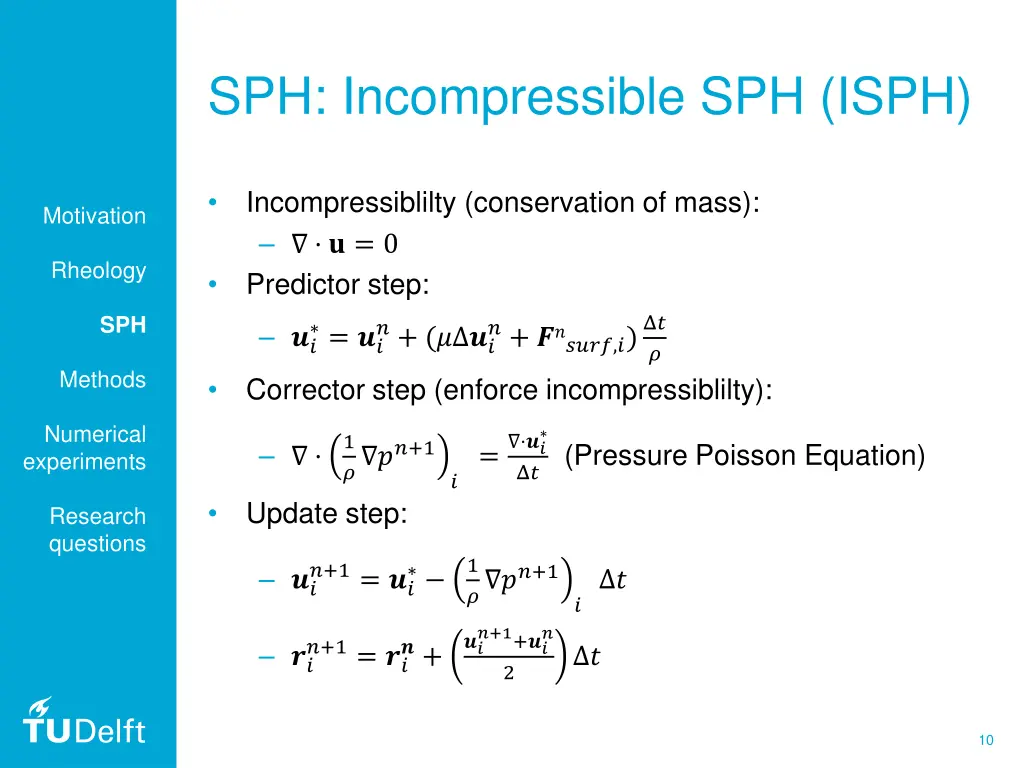
SPH: Incompressible SPH (ISPH) Incompressiblilty (conservation of mass): ? = 0 Predictor step: Motivation Rheology SPH ?+ ??????,?) ? ?+ (? ?? = ?? ?? ? Methods Corrector step (enforce incompressiblilty): Numerical experiments ?? ? 1 ? ??+1 (Pressure Poisson Equation) = ? Update step: Research questions 1 ? ??+1 ?+1= ?? ?? ? ? ?+1+?? 2 ? ?? ?+1= ?? ?+ ?? ? 10
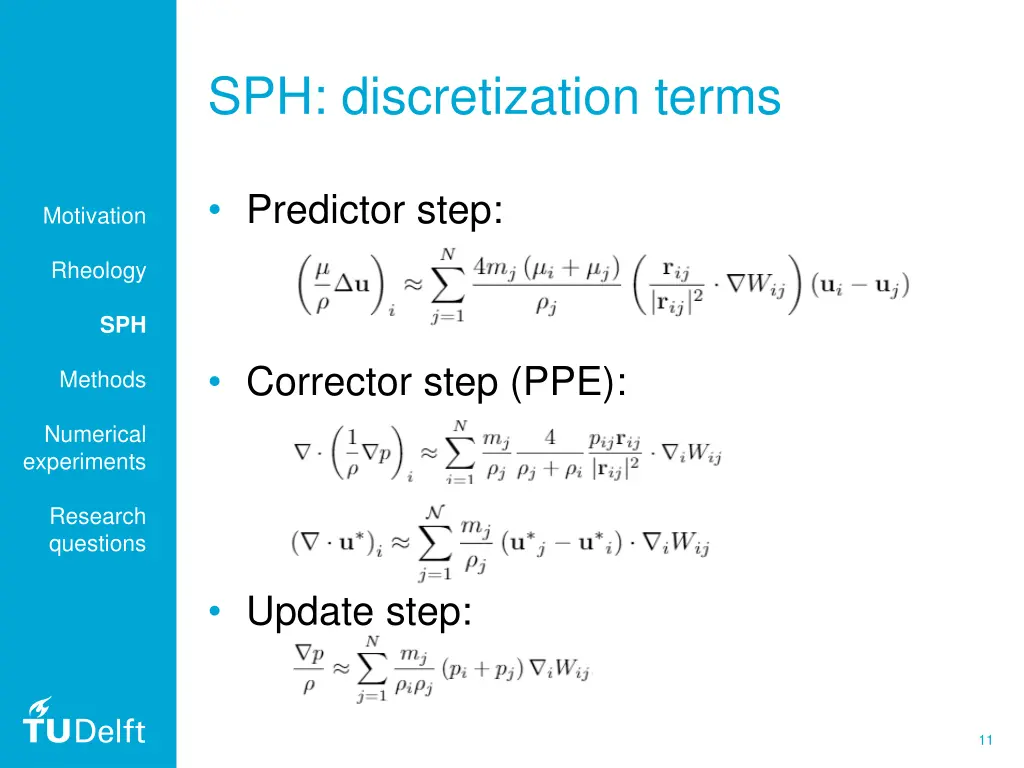
SPH: discretization terms Predictor step: Motivation Rheology SPH Corrector step (PPE): Methods Numerical experiments Research questions Update step: 11
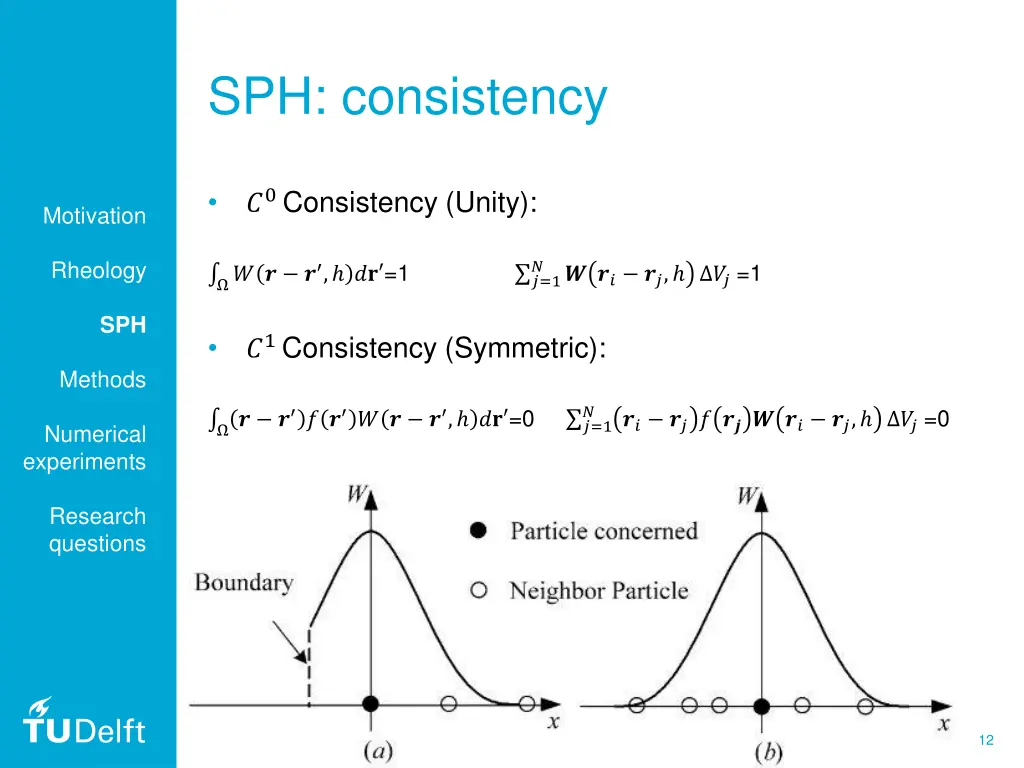
SPH: consistency ?0Consistency (Unity): Motivation Rheology ? ? ? ? , ?? =1 ? ?? ??, ??=1 ?=1 SPH ?1Consistency (Symmetric): Methods ? ? ? ? ? ? ? ? , ?? =0 ?=1 ?? ??? ??? ?? ??, ??=0 Numerical experiments Research questions 12
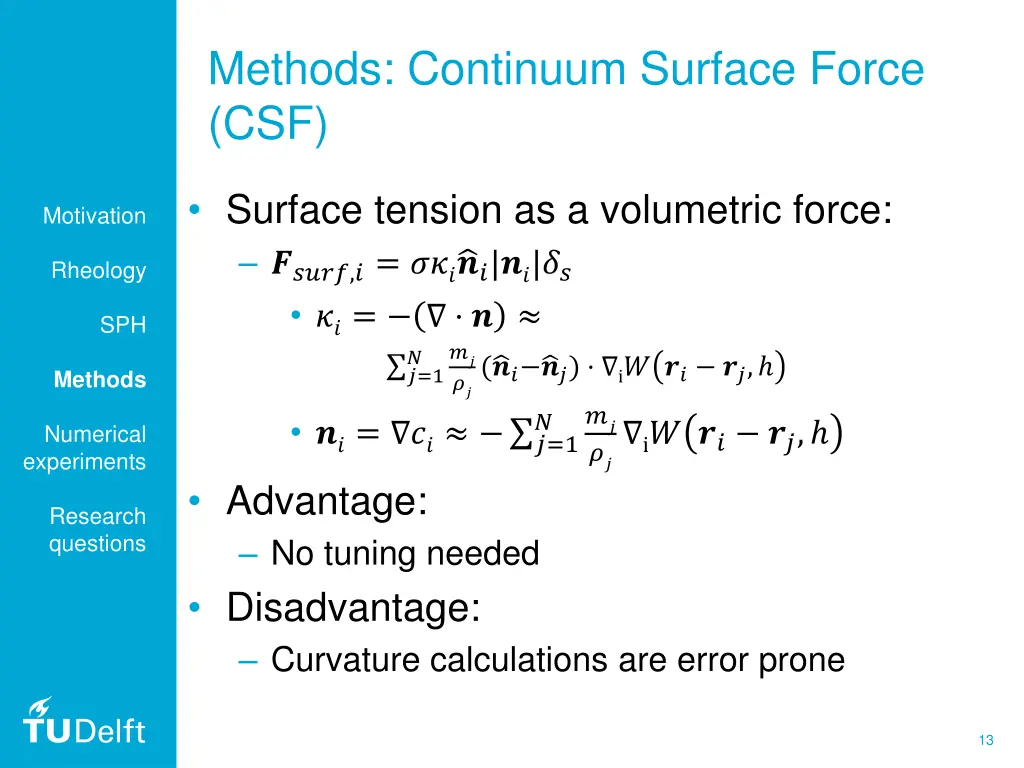
Methods: Continuum Surface Force (CSF) Surface tension as a volumetric force: ?????,?= ??? ??|??|?? ??= ? ?=1 Motivation Rheology SPH ?? ??( ?? ??) i? ?? ??, ??= ?? ?=1 Advantage: No tuning needed Disadvantage: Curvature calculations are error prone ? Methods ?? ?? i? ?? ??, ? Numerical experiments Research questions 13
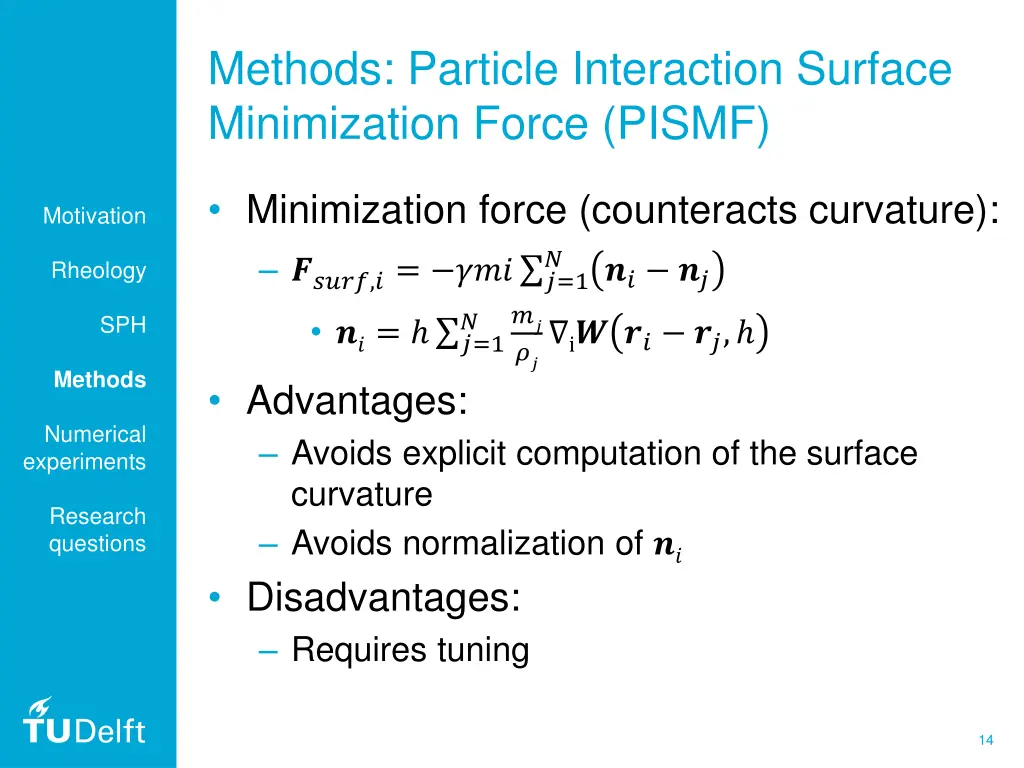
Methods: Particle Interaction Surface Minimization Force (PISMF) Minimization force (counteracts curvature): Motivation ? ?????,?= ??? ?=1 ?? ?? Rheology ?? ?? i? ?? ??, ? SPH ??= ?=1 Methods Advantages: Avoids explicit computation of the surface curvature Avoids normalization of ?? Disadvantages: Requires tuning Numerical experiments Research questions 14
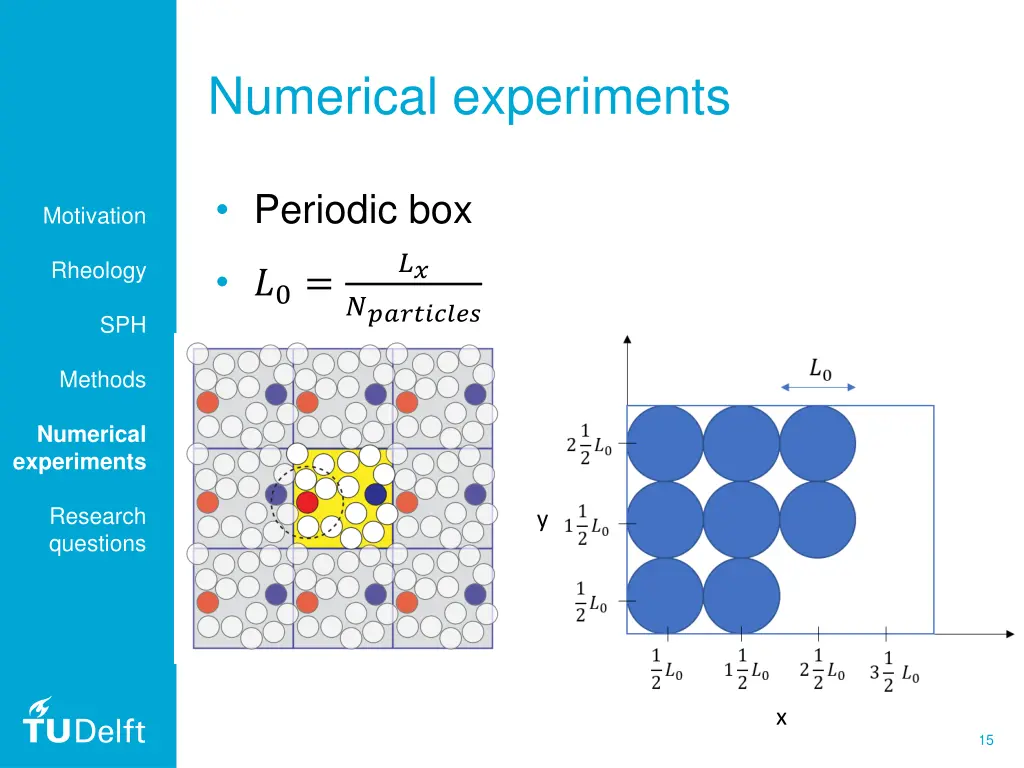
Numerical experiments Periodic box Motivation ?? Rheology ?0= ?????????? SPH Methods Numerical experiments Research questions y x 15
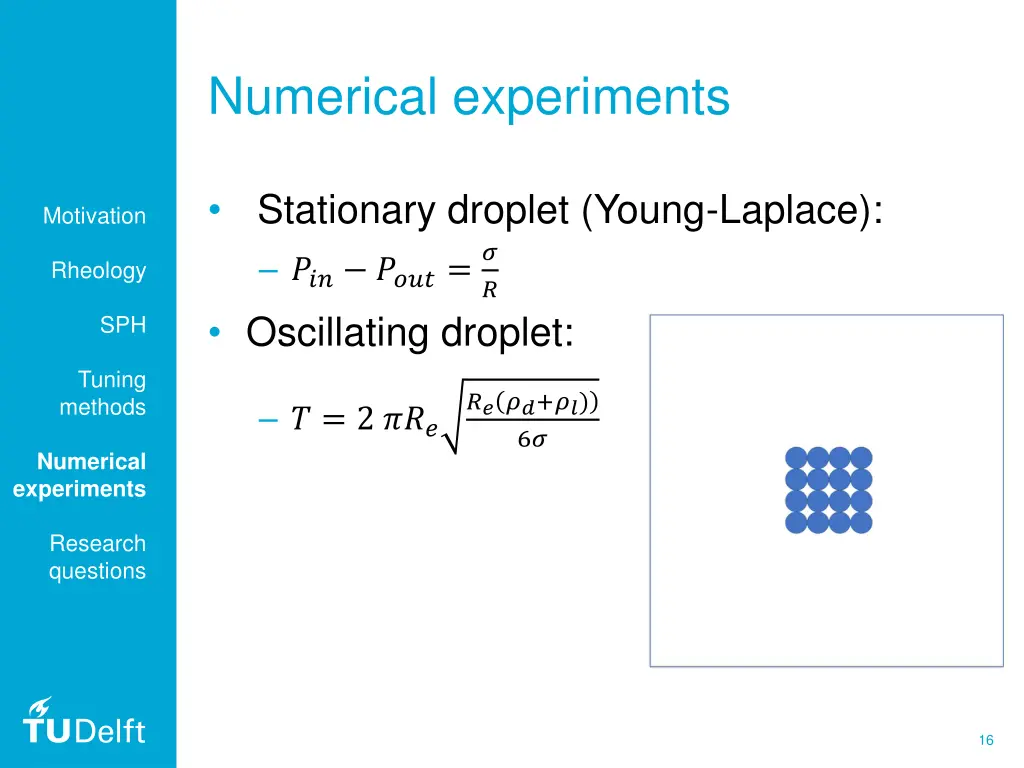
Numerical experiments Stationary droplet (Young-Laplace): ??? ????=? ? Oscillating droplet: Motivation Rheology SPH Tuning methods ????+??) 6? ? = 2 ??? Numerical experiments Research questions 16
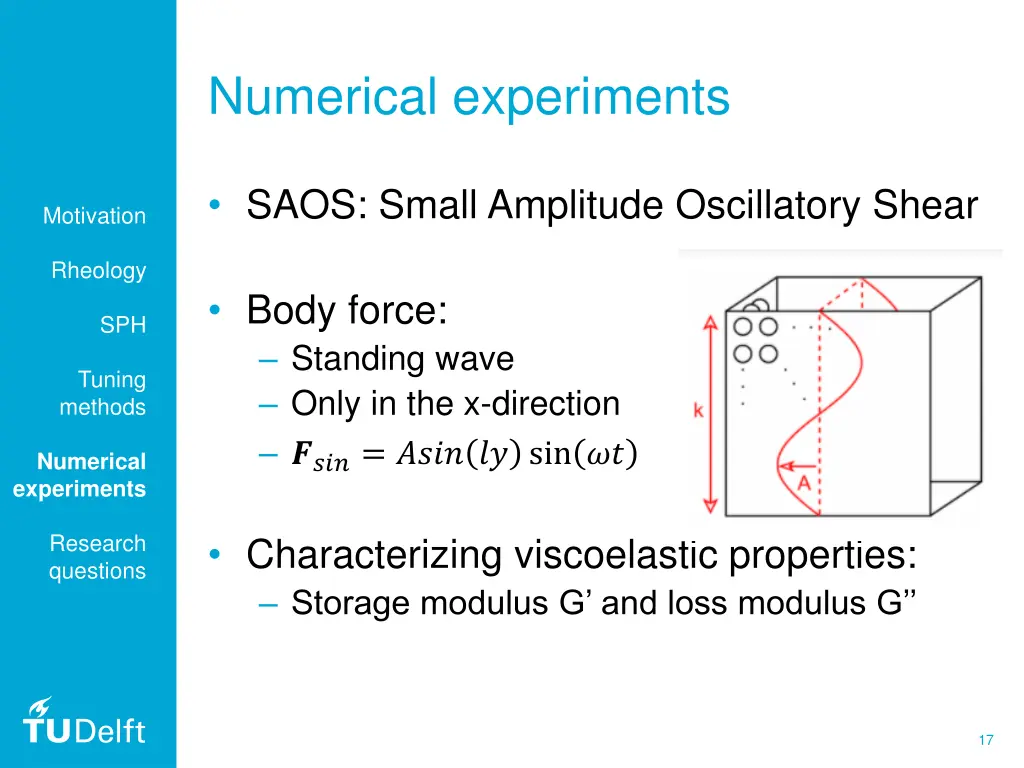
Numerical experiments SAOS: Small Amplitude Oscillatory Shear Motivation Rheology Body force: Standing wave Only in the x-direction ????= ???? ?? sin ?? SPH Tuning methods Numerical experiments Research questions Characterizing viscoelastic properties: Storage modulus G and loss modulus G 17
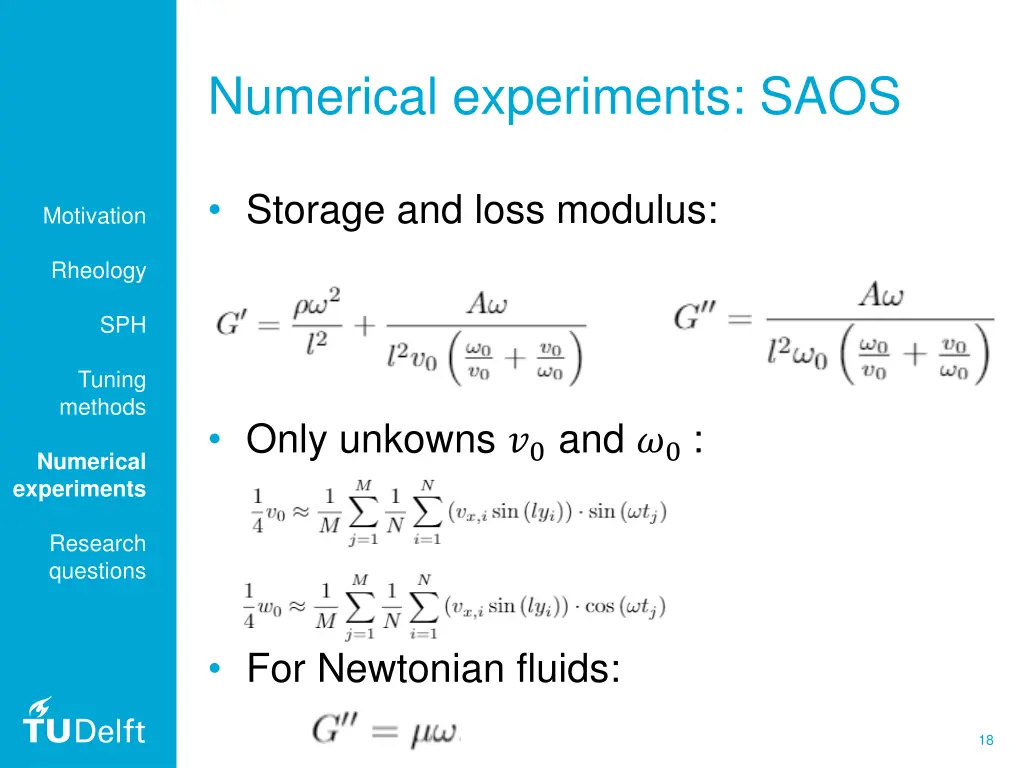
Numerical experiments: SAOS Storage and loss modulus: Motivation Rheology SPH Tuning methods Only unkowns ?0and ?0: Numerical experiments Research questions For Newtonian fluids: 18
Research questions How can pairwise interaction forces be used to tune the fluid rheology and surface tension independently? What are advantage and disadvantage of SPH and what is SPH? What is the influence of using different discrete expressions for the pressure force? Which methods can be used to tune the surface tension? What is the effect of particle interaction forces on the surface tension? How can the surface tension be measured? Which (analytical) methods can be used to verify the numerical implementations? For the Newtonian case. For the viscoelastic case. What numerical and/or experimental results can be used to test/compare the implementations? Motivation Rheology SPH Tuning methods Numerical experiments Research questions 19