UML - Types of Diagrams, Notations, and Hierarchies
Learn about UML (Universal Modeling Language) and its significance in software design. Explore different types of diagrams such as class, object, use case, and more. Gain insights into notations for classes, objects, inheritance, and states in UML. Understand the hierarchy of UML elements and discover the V Model and RUP 4+1 view in software architecture.

Uploaded on | 1 Views
Download Presentation

Please find below an Image/Link to download the presentation.
The content on the website is provided AS IS for your information and personal use only. It may not be sold, licensed, or shared on other websites without obtaining consent from the author. If you encounter any issues during the download, it is possible that the publisher has removed the file from their server.
You are allowed to download the files provided on this website for personal or commercial use, subject to the condition that they are used lawfully. All files are the property of their respective owners.
The content on the website is provided AS IS for your information and personal use only. It may not be sold, licensed, or shared on other websites without obtaining consent from the author.
E N D
Presentation Transcript
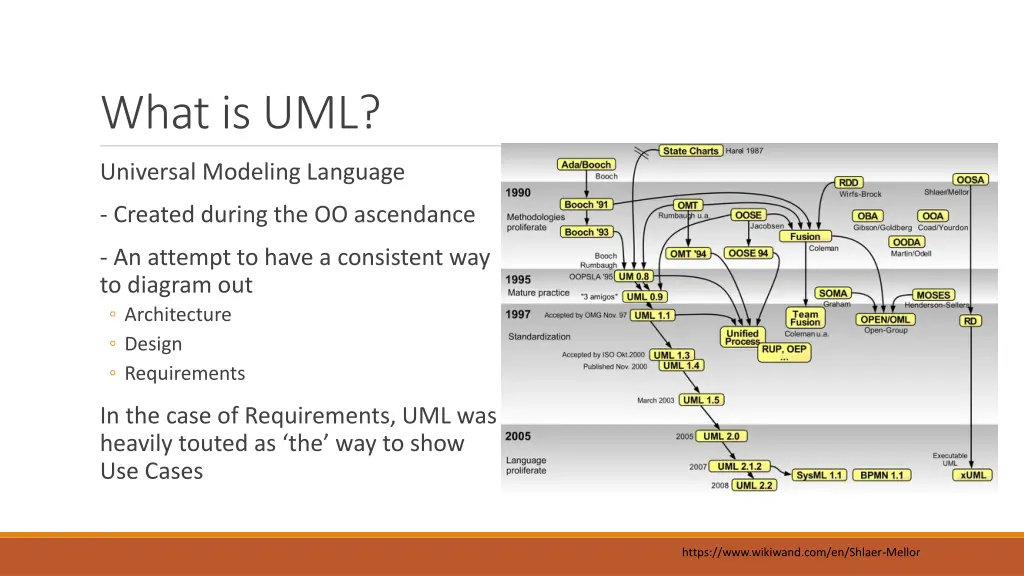
What is UML? Universal Modeling Language - Created during the OO ascendance - An attempt to have a consistent way to diagram out Architecture Design Requirements In the case of Requirements, UML was heavily touted as the way to show Use Cases https://www.wikiwand.com/en/Shlaer-Mellor
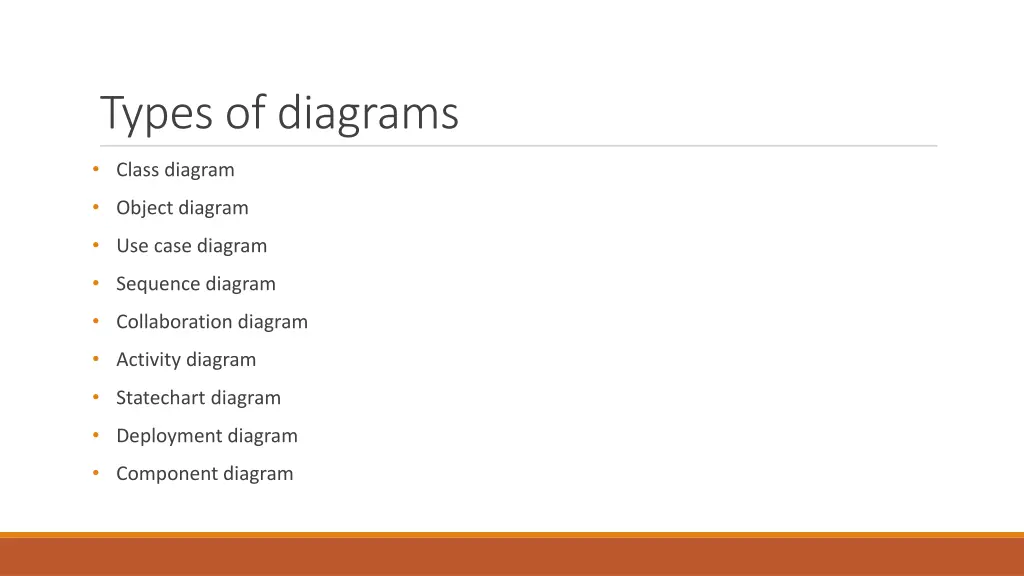
Types of diagrams Class diagram Object diagram Use case diagram Sequence diagram Collaboration diagram Activity diagram Statechart diagram Deployment diagram Component diagram
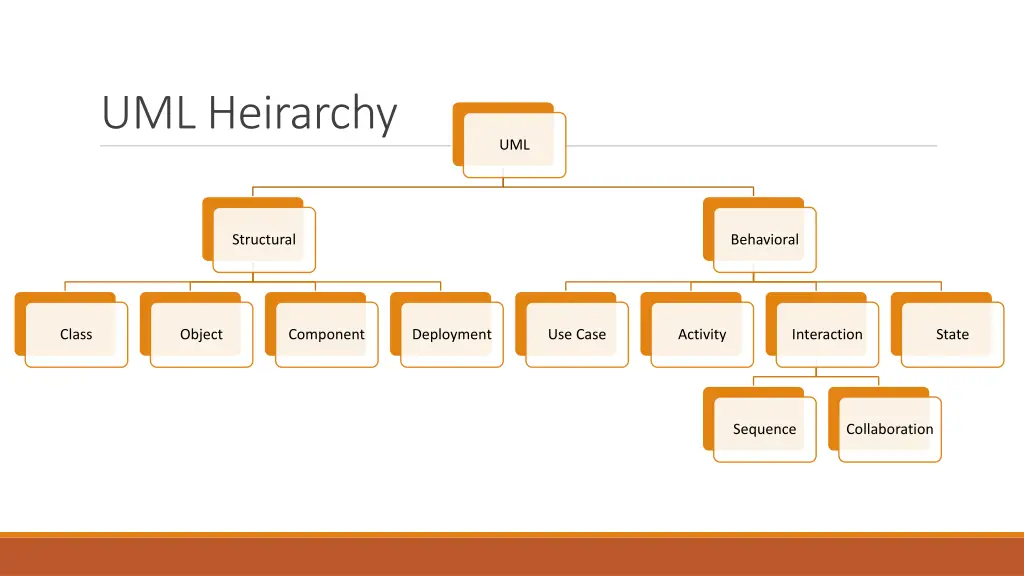
UML Heirarchy UML Structural Behavioral Class Object Component Deployment Use Case Activity Interaction State Sequence Collaboration
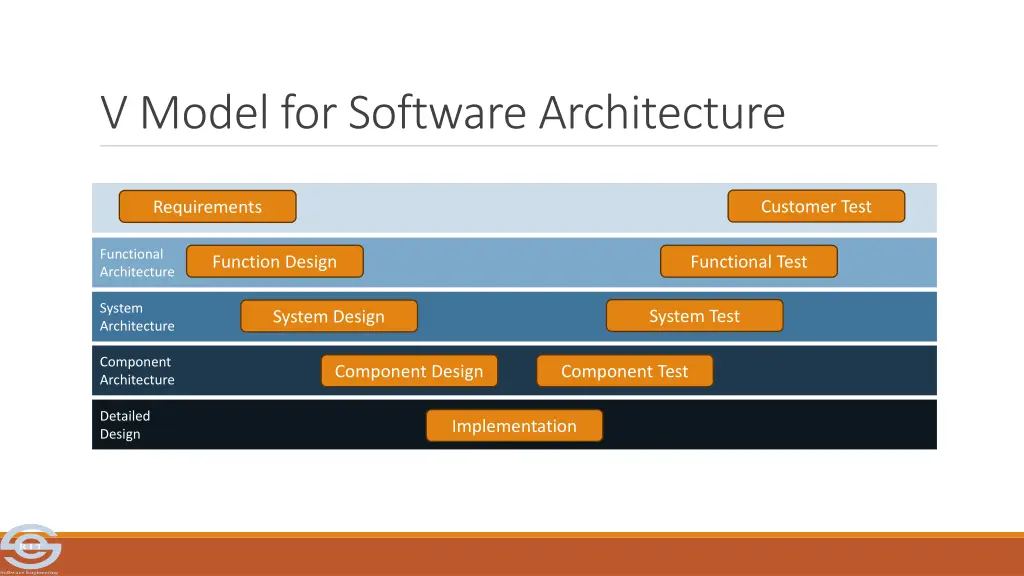
V Model for Software Architecture Customer Test Requirements Functional Architecture Function Design Functional Test System Architecture System Test System Design Component Architecture Component Design Component Test Detailed Design Implementation R I T Software Engineering
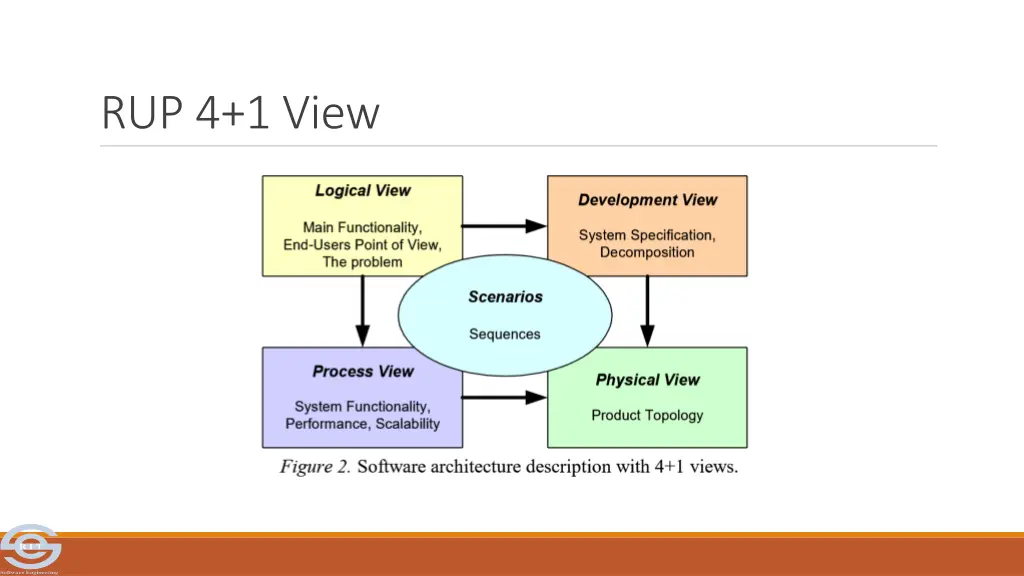
RUP 4+1 View R I T Software Engineering
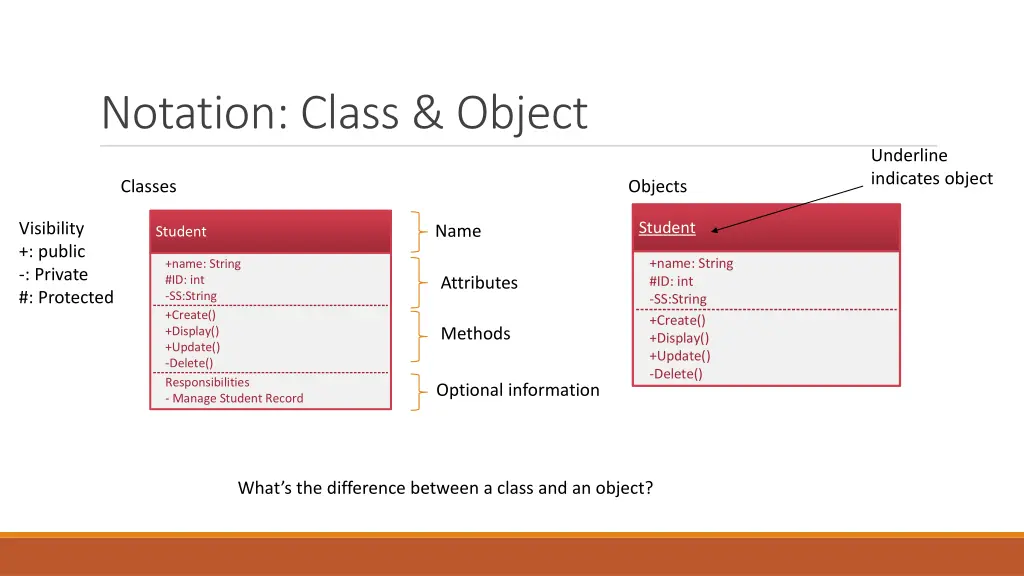
Notation: Class & Object Underline indicates object Classes Objects Student Visibility +: public -: Private #: Protected Name Student +name: String #ID: int -SS:String +Create() +Display() +Update() -Delete() +name: String #ID: int -SS:String +Create() +Display() +Update() -Delete() Responsibilities - Manage Student Record Attributes Methods Optional information What s the difference between a class and an object?
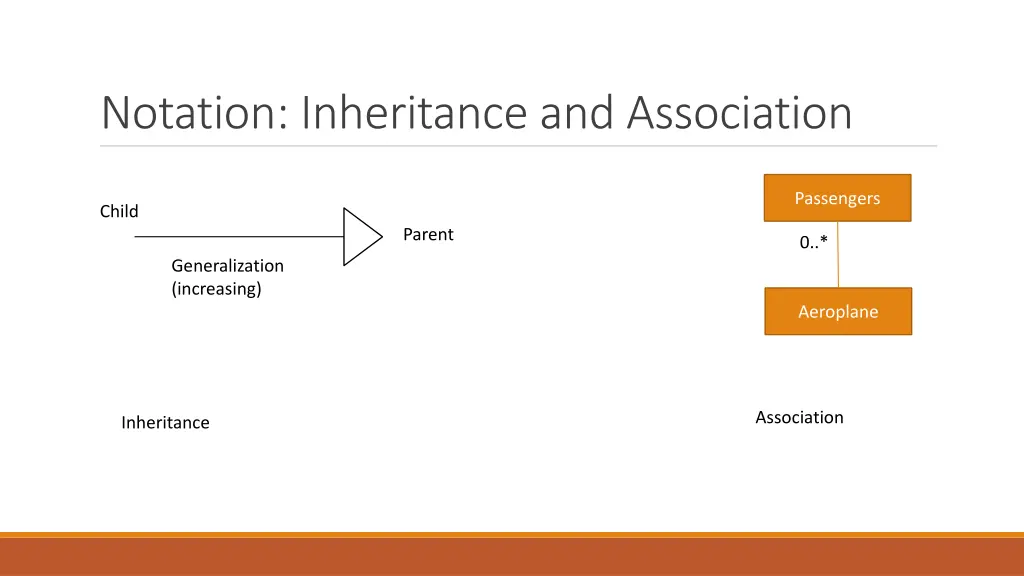
Notation: Inheritance and Association Passengers Child Parent 0..* Generalization (increasing) Aeroplane Association Inheritance
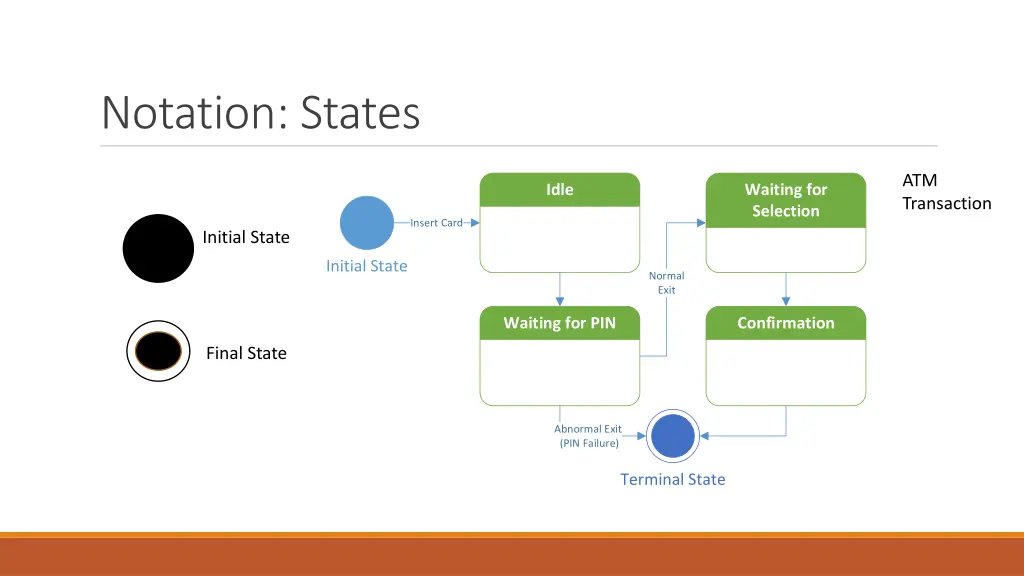
Notation: States ATM Transaction Idle Waiting for Selection Insert Card Initial State Initial State Normal Exit Waiting for PIN Confirmation Final State Abnormal Exit (PIN Failure) Terminal State
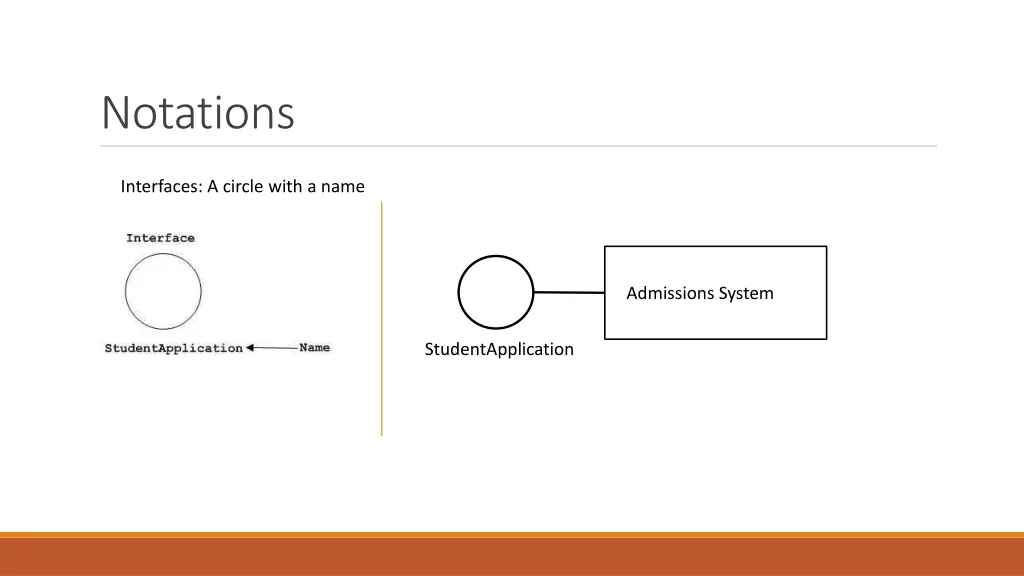
Notations Interfaces: A circle with a name Admissions System StudentApplication
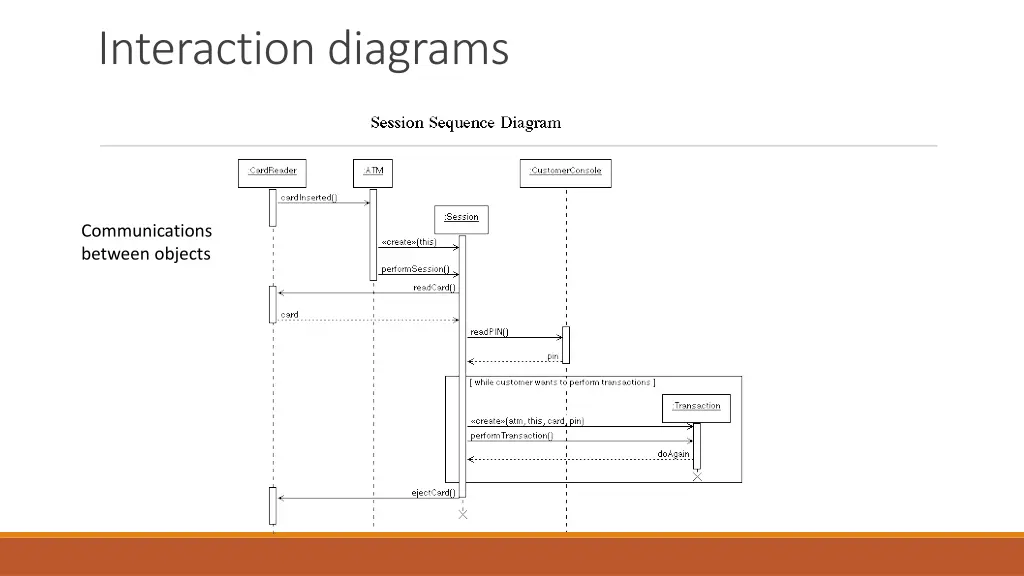
Interaction diagrams Communications between objects
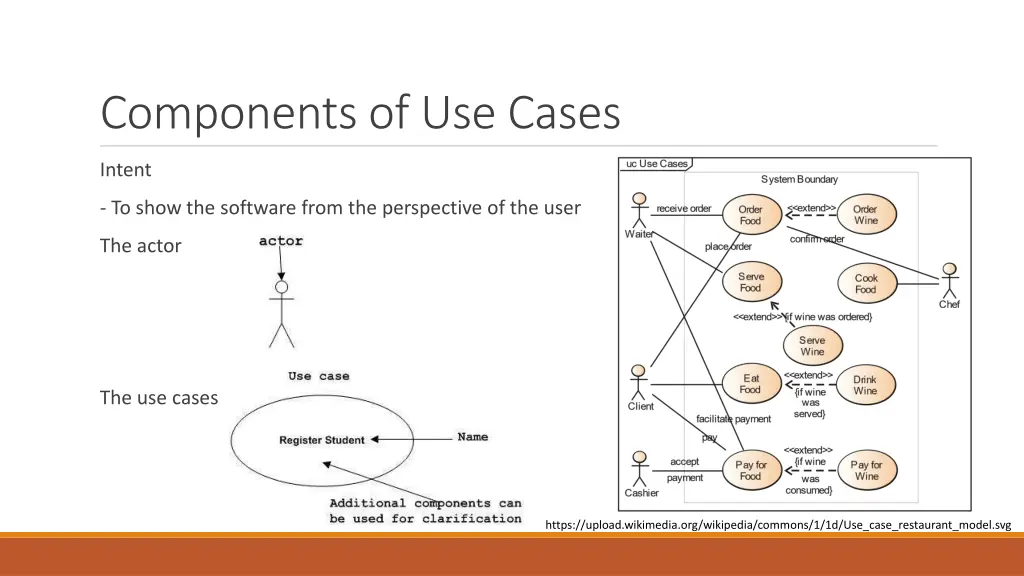
Components of Use Cases Intent - To show the software from the perspective of the user The actor The use cases https://upload.wikimedia.org/wikipedia/commons/1/1d/Use_case_restaurant_model.svg
The fall from grace Once the gold standard, UML has been criticized for: - Complexity in notation - Time to create - Lack of clarity So why talk about it? - Some parts are still very relevant - Sequence diagrams, Swim Lanes, - You may run into this in interviews or on the job (UML has been around, and legacy lives on!)
References https://www.tutorialspoint.com/uml/uml_basic_notations.htm http://empirical-software.engineering/assets/pdf/fse14-sketches-slides.pdf