Delve into the world of character input/output (I/O) and file handling in C++ with Delroy A. Brinkerhoff. Learn about reading and writing files one character at a time, streams and functions, one-read patterns, two-read patterns, computer data storage, character data input, and the intricacies of the get functions.
Please find below an Image/Link to download the presentation.
The content on the website is provided AS IS for your information and personal use only. It may not be sold, licensed, or shared on other websites without obtaining consent from the author. If you encounter any issues during the download, it is possible that the publisher has removed the file from their server.
You are allowed to download the files provided on this website for personal or commercial use, subject to the condition that they are used lawfully. All files are the property of their respective owners.
The content on the website is provided AS IS for your information and personal use only. It may not be sold, licensed, or shared on other websites without obtaining consent from the author.
E N D
Presentation Transcript
CHARACTER I/O Reading and writing files one character at a time Delroy A. Brinkerhoff
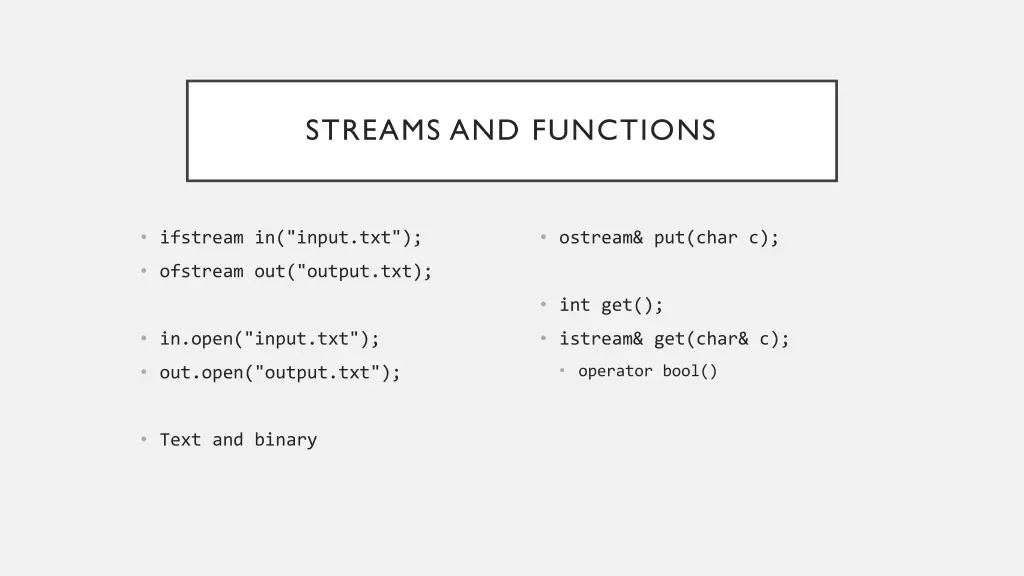
STREAMS AND FUNCTIONS ifstream in("input.txt"); ostream& put(char c); ofstream out("output.txt); int get(); in.open("input.txt"); istream& get(char& c); operator bool() out.open("output.txt"); Text and binary
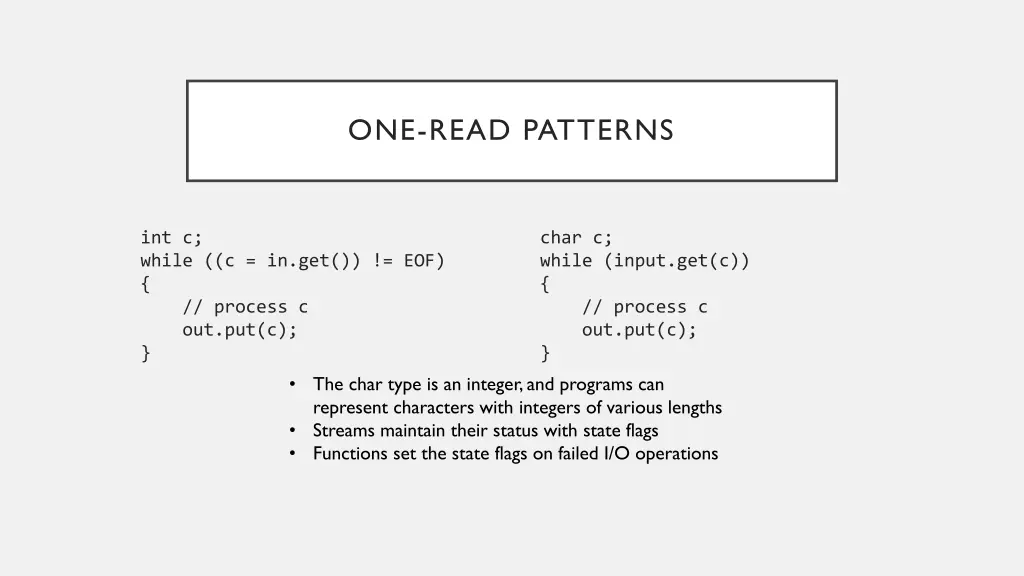
ONE-READ PATTERNS int c; while ((c = in.get()) != EOF) { // process c out.put(c); } char c; while (input.get(c)) { // process c out.put(c); } The char type is an integer, and programs can represent characters with integers of various lengths Streams maintain their status with state flags Functions set the state flags on failed I/O operations
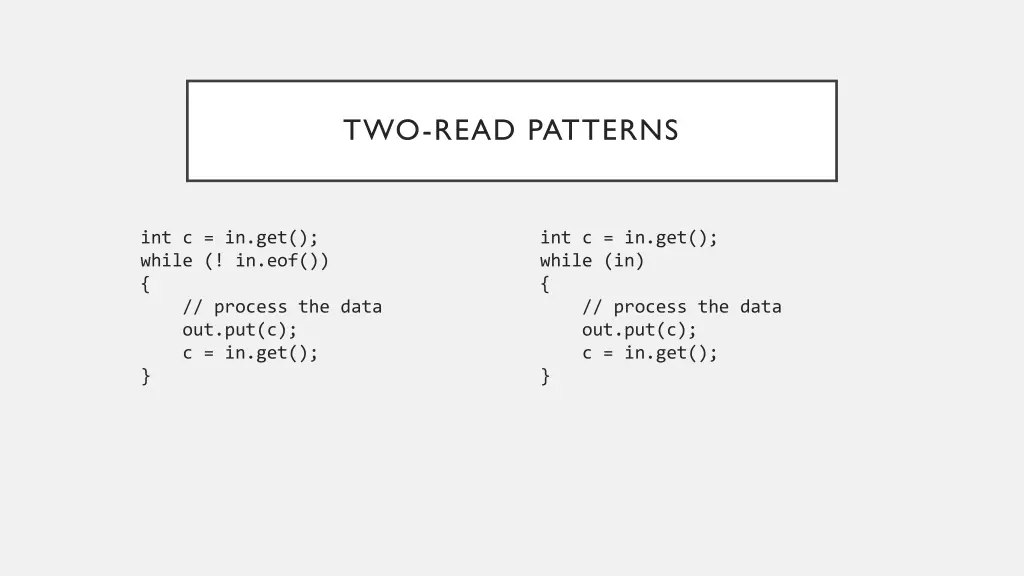
TWO-READ PATTERNS int c = in.get(); while (! in.eof()) { // process the data out.put(c); c = in.get(); } int c = in.get(); while (in) { // process the data out.put(c); c = in.get(); }
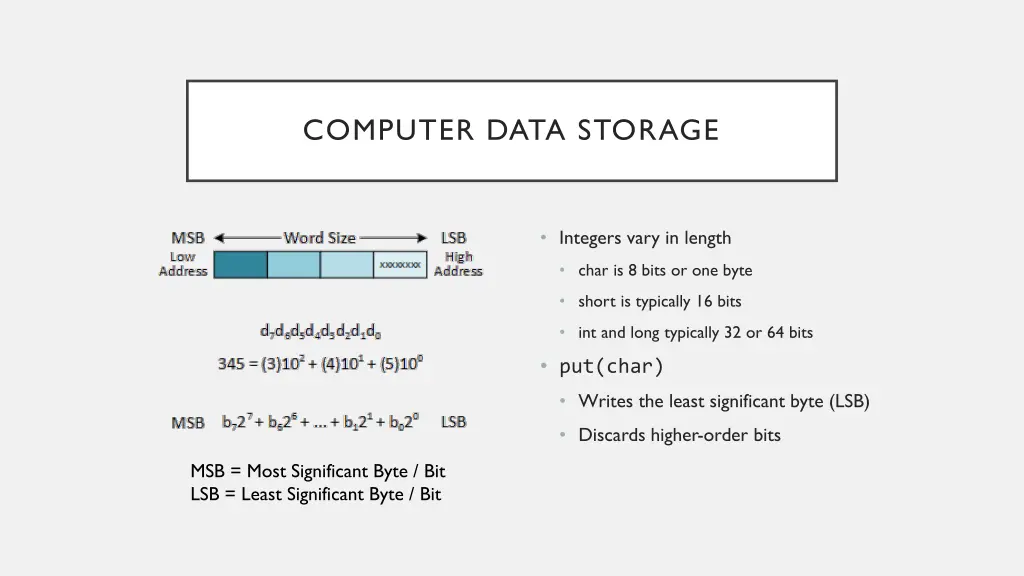
COMPUTER DATA STORAGE Integers vary in length char is 8 bits or one byte short is typically 16 bits int and long typically 32 or 64 bits put(char) Writes the least significant byte (LSB) Discards higher-order bits MSB = Most Significant Byte / Bit LSB = Least Significant Byte / Bit
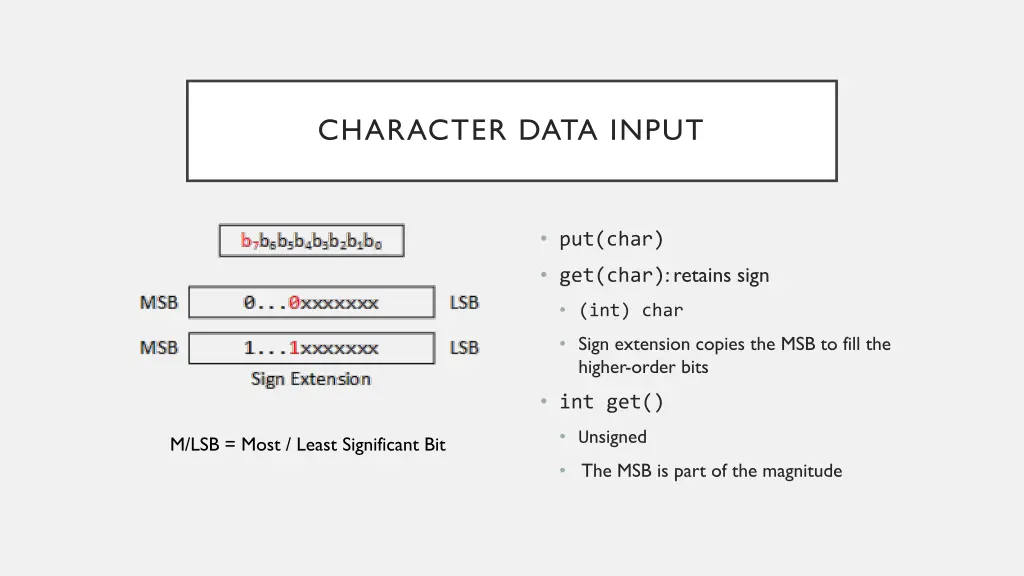
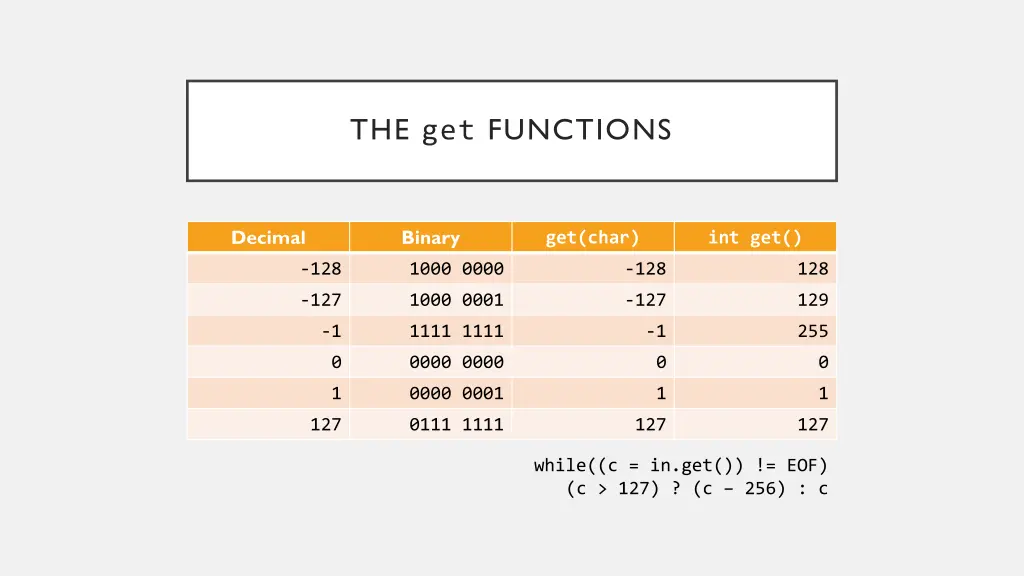
CHARACTER DATA INPUT put(char) get(char): retains sign (int) char Sign extension copies the MSB to fill the higher-order bits int get() Unsigned M/LSB = Most / Least Significant Bit The MSB is part of the magnitude