Understanding Chicken Infectious Anemia: Causes, Transmission, and Pathogenesis
Learn about Chicken Infectious Anemia (CIA), a disease affecting young chickens caused by the Chicken Anemia Virus (CAV). Explore the etiology, transmission methods, and pathogenesis of CIA, shedding light on its impact on chicken health and immunity.

Download Presentation

Please find below an Image/Link to download the presentation.
The content on the website is provided AS IS for your information and personal use only. It may not be sold, licensed, or shared on other websites without obtaining consent from the author. If you encounter any issues during the download, it is possible that the publisher has removed the file from their server.
You are allowed to download the files provided on this website for personal or commercial use, subject to the condition that they are used lawfully. All files are the property of their respective owners.
The content on the website is provided AS IS for your information and personal use only. It may not be sold, licensed, or shared on other websites without obtaining consent from the author.
E N D
Presentation Transcript
CHICKEN INFECTIOUS CHICKEN INFECTIOUS ANEMIA ANEMIA ( (CIA) CIA) Dr. Ravi Shankar Kr Mandal Assistant Professor Veterinary Medicine BVC, Patna
CHICKEN INFECTIOUS ANEMIA (CIA) CHICKEN INFECTIOUS ANEMIA (CIA) CIA is a disease of young chickens caused by a virus. First described in 1979 by Yausa et al. (1979) from contaminated vaccine in Japan and was called Chicken Anemia Agent(CAA) when inoculated into 1-dayold specific-pathogen-free (SPF) chicks produces a severe aplastic anemia (Yuasa et al., 1979) It has immunosuppressive property and invade by multiple secondary bacterial invaders Commonly found in commercially produced chickens and has a worldwide distribution The chicken appears to be the only recognized natural host
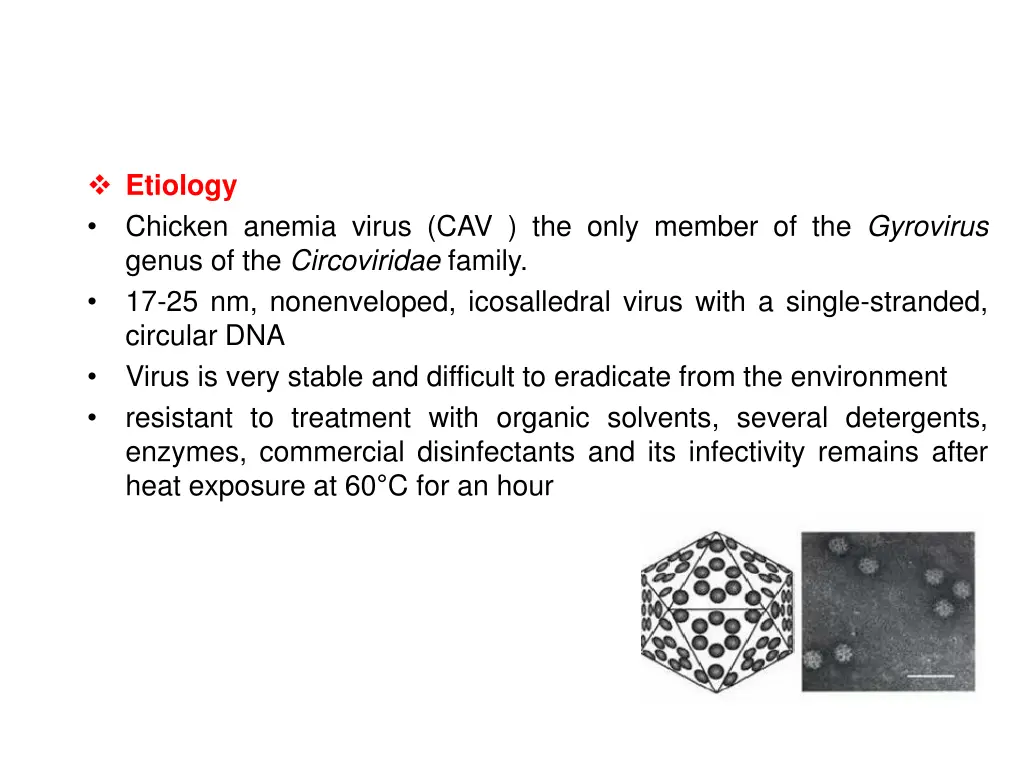
Etiology Chicken anemia virus (CAV ) the only member of the Gyrovirus genus of the Circoviridae family. 17-25 nm, nonenveloped, icosalledral virus with a single-stranded, circular DNA Virus is very stable and difficult to eradicate from the environment resistant to treatment with organic solvents, several detergents, enzymes, commercial disinfectants and its infectivity remains after heat exposure at 60 C for an hour
Transmission Horizontal transmission fecal-oral route, perhaps by the respiratory route, and through infected feather follicle epithelium Vertical transmission Chicks hatched from the eggs of CAV infected hens, and CAV can rapidly spread horizontally from these chicks to susceptible, maternal antibody-negative hatchmates Roosters shedding CAV in semen are another source of vertical transmission Spread of infection by CAV-contaminated embryo- or cell-culture derived vaccines is possible
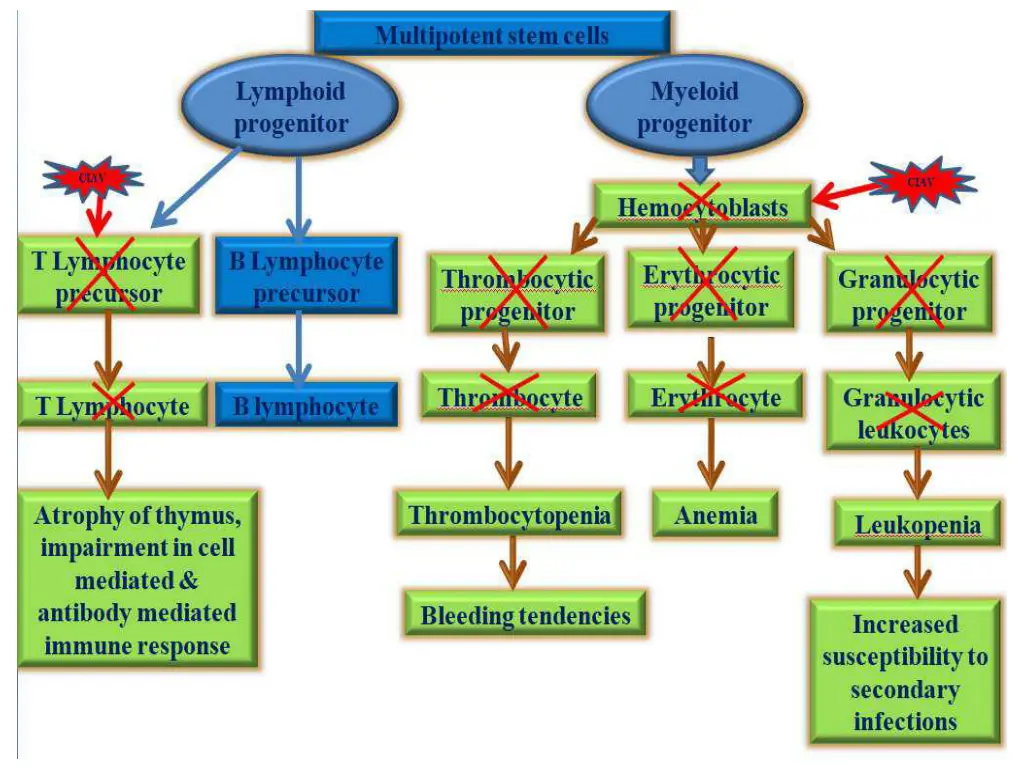
Pathogenesis Entry of virus: viremia occurs within 24 hr Principal sites of CAV replication Hemocytoblasts in the bone marrow : Anemia Precursor T cells in the cortex of the thymus Dividing CD4 and CD8 cells in the spleen Due to severe destruction of bone marrow stem cells chicks develop severe aplastic anemia. Neutralizing antibodies are detectable 21 days after infection, and clinical, hematologic, and pathologic parameters return to normal ~35 days after infection. In addition to T-cell defects, macrophage functions such as Fc-receptor expression, phagocytosis, and antimicrobial activity may be impaired. Immunosuppression.
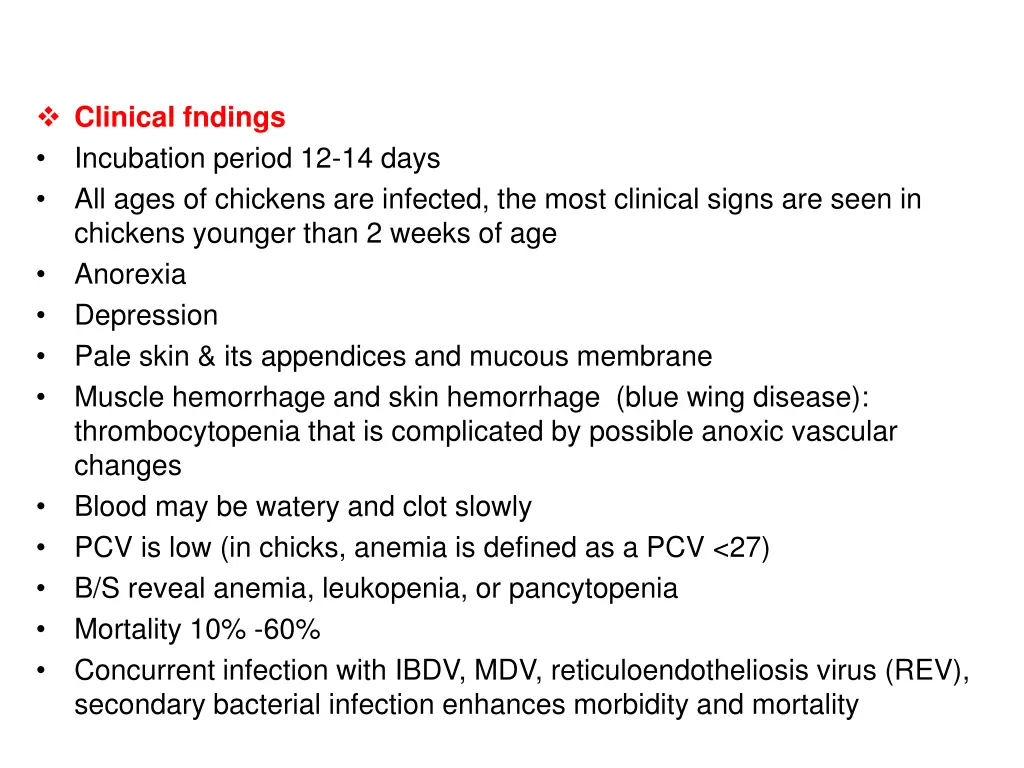
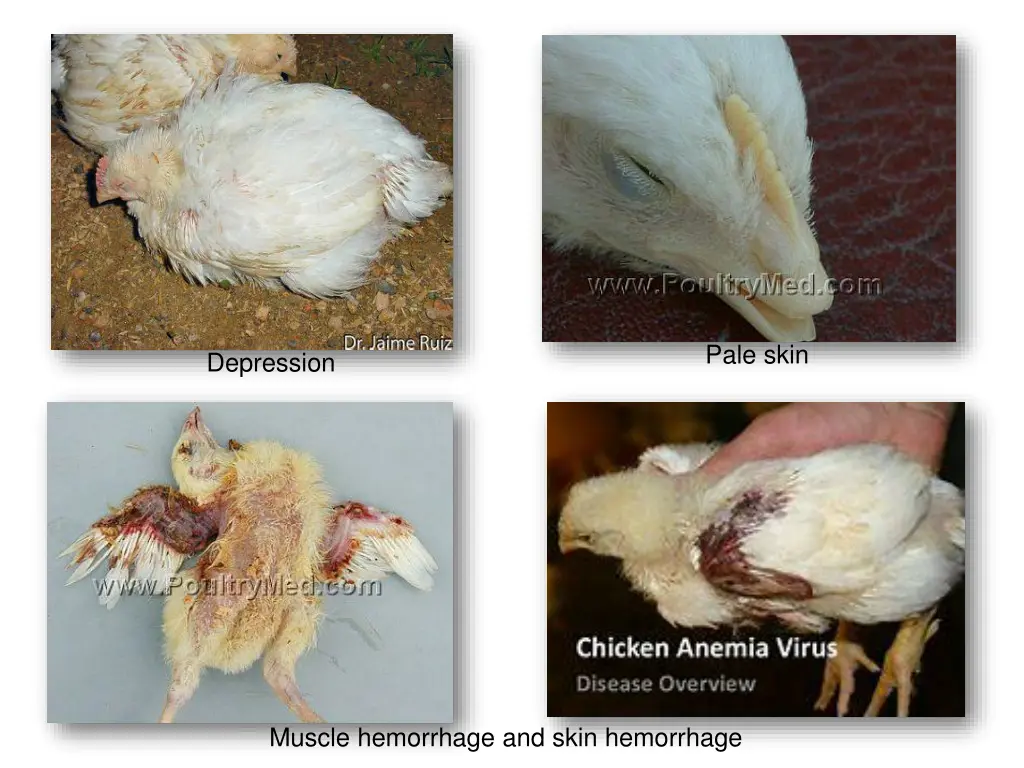
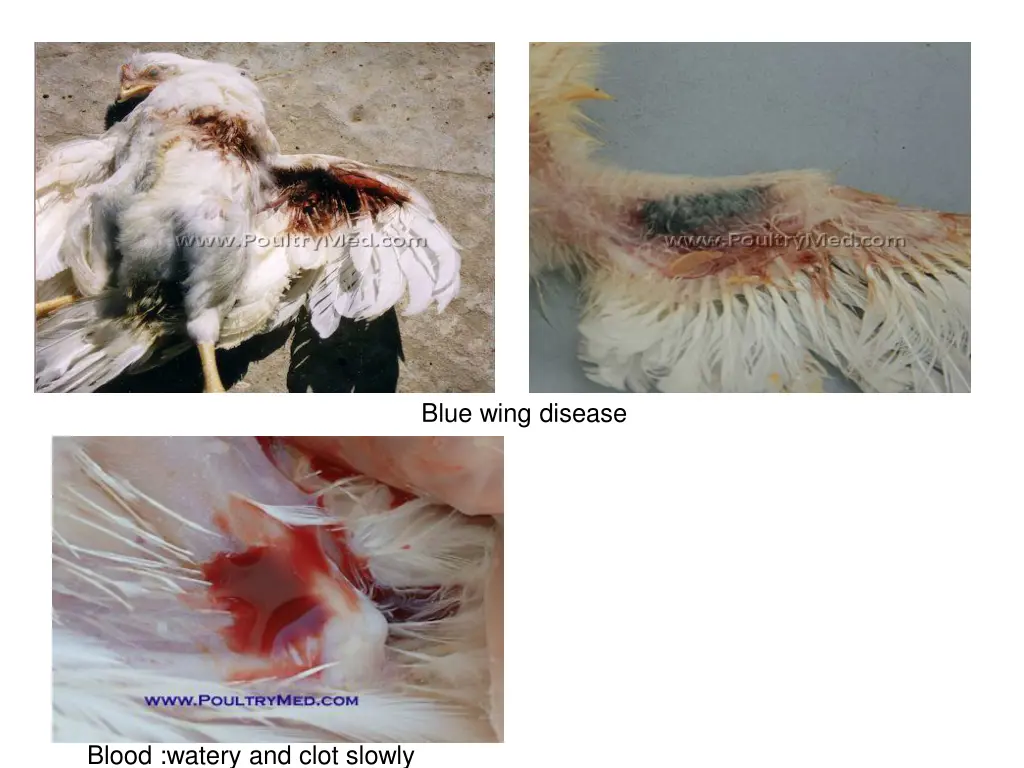
Clinical fndings Incubation period 12-14 days All ages of chickens are infected, the most clinical signs are seen in chickens younger than 2 weeks of age Anorexia Depression Pale skin & its appendices and mucous membrane Muscle hemorrhage and skin hemorrhage (blue wing disease): thrombocytopenia that is complicated by possible anoxic vascular changes Blood may be watery and clot slowly PCV is low (in chicks, anemia is defined as a PCV <27) B/S reveal anemia, leukopenia, or pancytopenia Mortality 10% -60% Concurrent infection with IBDV, MDV, reticuloendotheliosis virus (REV), secondary bacterial infection enhances morbidity and mortality
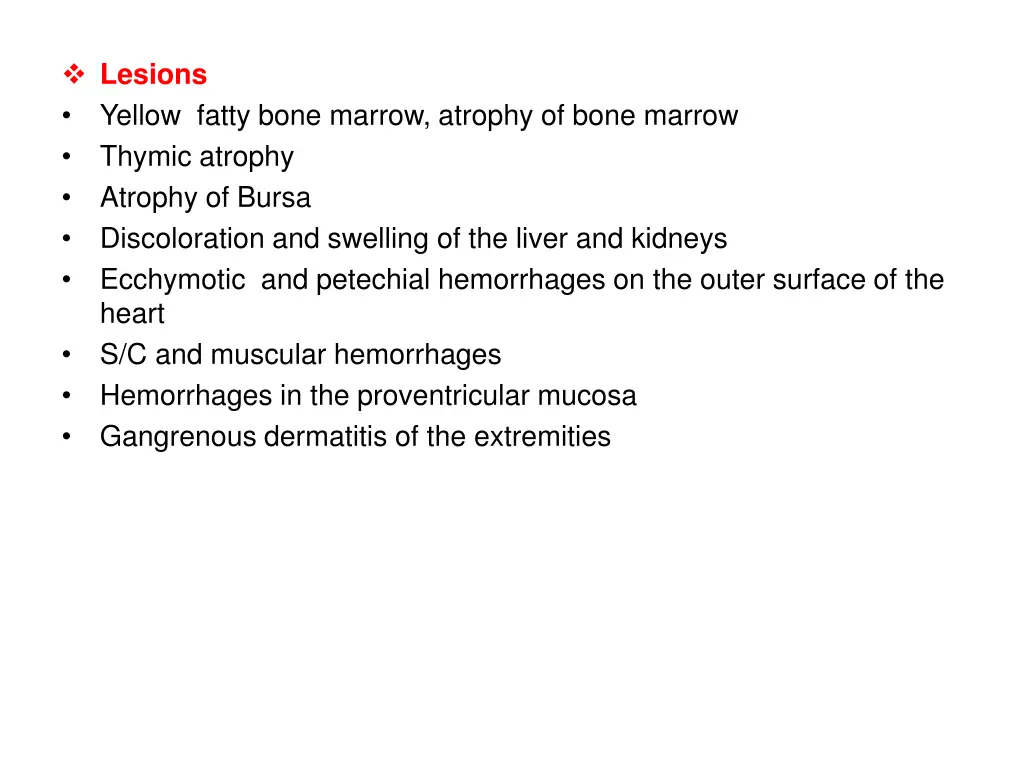
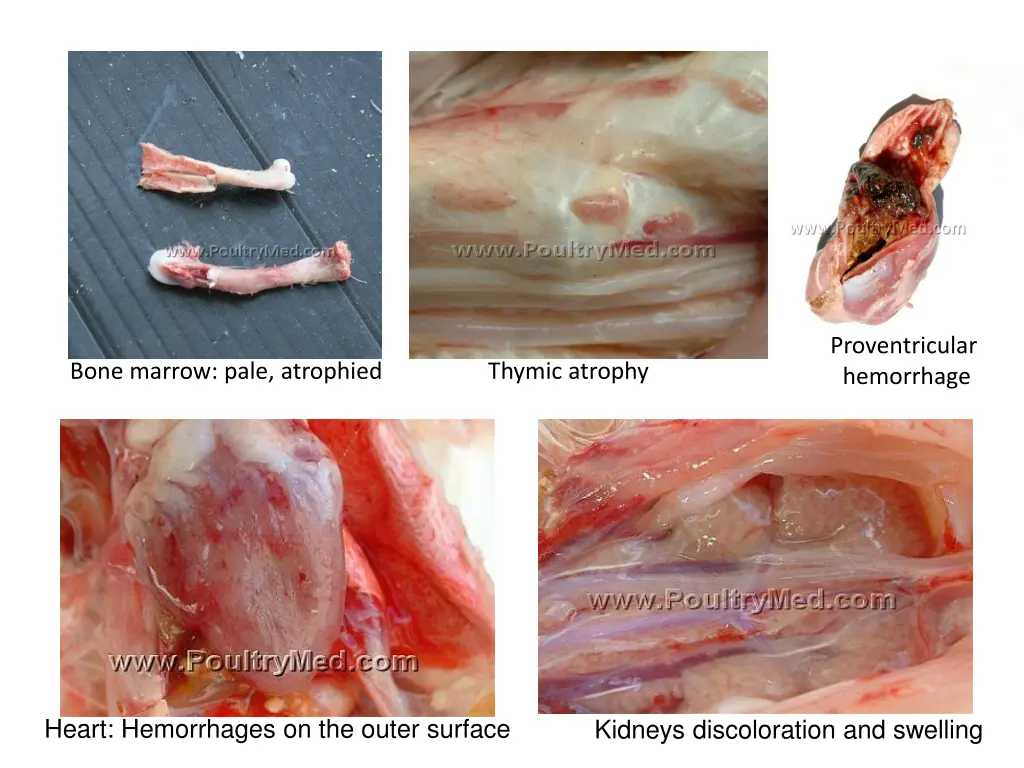
Lesions Yellow fatty bone marrow, atrophy of bone marrow Thymic atrophy Atrophy of Bursa Discoloration and swelling of the liver and kidneys Ecchymotic and petechial hemorrhages on the outer surface of the heart S/C and muscular hemorrhages Hemorrhages in the proventricular mucosa Gangrenous dermatitis of the extremities
Pale skin Depression Muscle hemorrhage and skin hemorrhage
Blue wing disease Blood :watery and clot slowly
Proventricular hemorrhage Bone marrow: pale, atrophied Thymic atrophy Heart: Hemorrhages on the outer surface Kidneys discoloration and swelling
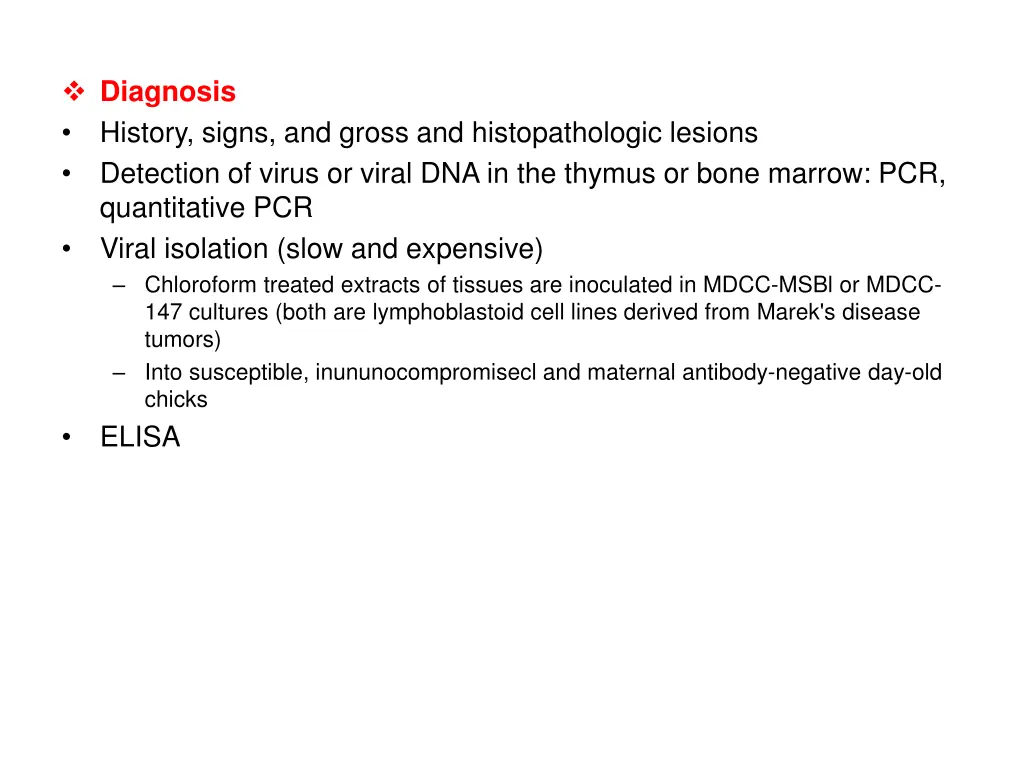
Diagnosis History, signs, and gross and histopathologic lesions Detection of virus or viral DNA in the thymus or bone marrow: PCR, quantitative PCR Viral isolation (slow and expensive) Chloroform treated extracts of tissues are inoculated in MDCC-MSBl or MDCC- 147 cultures (both are lymphoblastoid cell lines derived from Marek's disease tumors) Into susceptible, inununocompromisecl and maternal antibody-negative day-old chicks ELISA
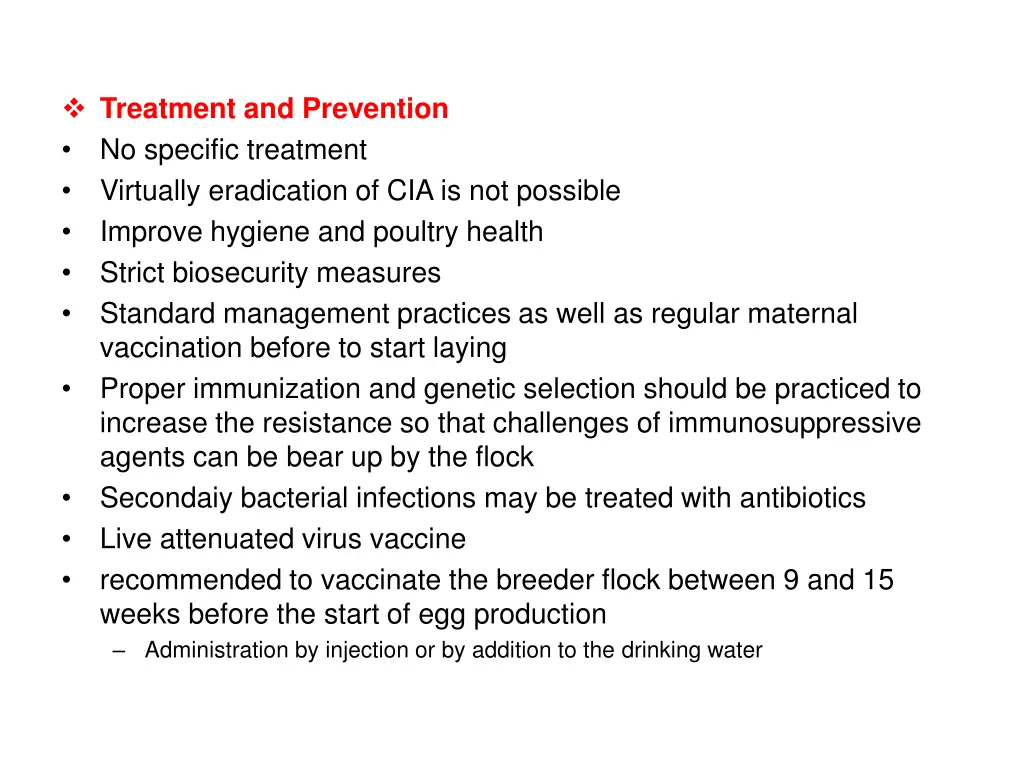
Treatment and Prevention No specific treatment Virtually eradication of CIA is not possible Improve hygiene and poultry health Strict biosecurity measures Standard management practices as well as regular maternal vaccination before to start laying Proper immunization and genetic selection should be practiced to increase the resistance so that challenges of immunosuppressive agents can be bear up by the flock Secondaiy bacterial infections may be treated with antibiotics Live attenuated virus vaccine recommended to vaccinate the breeder flock between 9 and 15 weeks before the start of egg production Administration by injection or by addition to the drinking water


![Halal_Chicken_from_Brazil-_Ensuring_Quality_and_Authenticity[1]](/thumb/86918/halal-chicken-from-brazil-ensuring-quality-and-authenticity-1.jpg)