Explore the concept of motivation in consumer behavior, where needs lead to specific behaviors driven by goals and desires. Motivation is influenced by personal and cultural factors, and marketers aim to identify and satisfy consumer needs for business success.
Please find below an Image/Link to download the presentation.
The content on the website is provided AS IS for your information and personal use only. It may not be sold, licensed, or shared on other websites without obtaining consent from the author. If you encounter any issues during the download, it is possible that the publisher has removed the file from their server.
You are allowed to download the files provided on this website for personal or commercial use, subject to the condition that they are used lawfully. All files are the property of their respective owners.
The content on the website is provided AS IS for your information and personal use only. It may not be sold, licensed, or shared on other websites without obtaining consent from the author.
E N D
Presentation Transcript
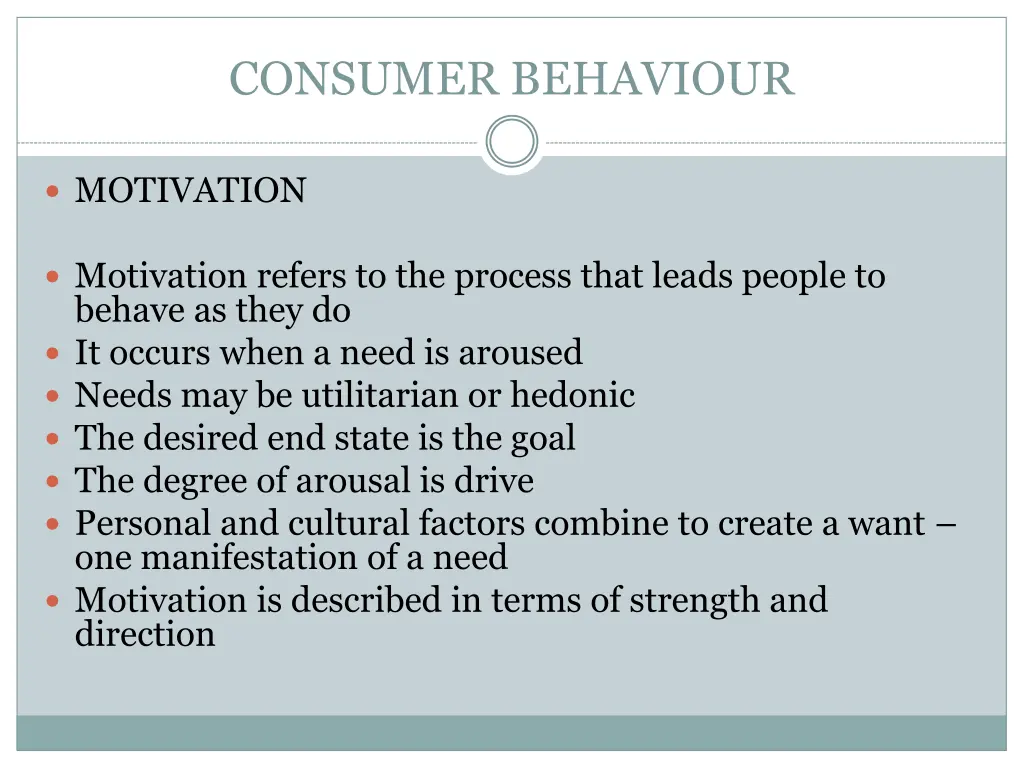
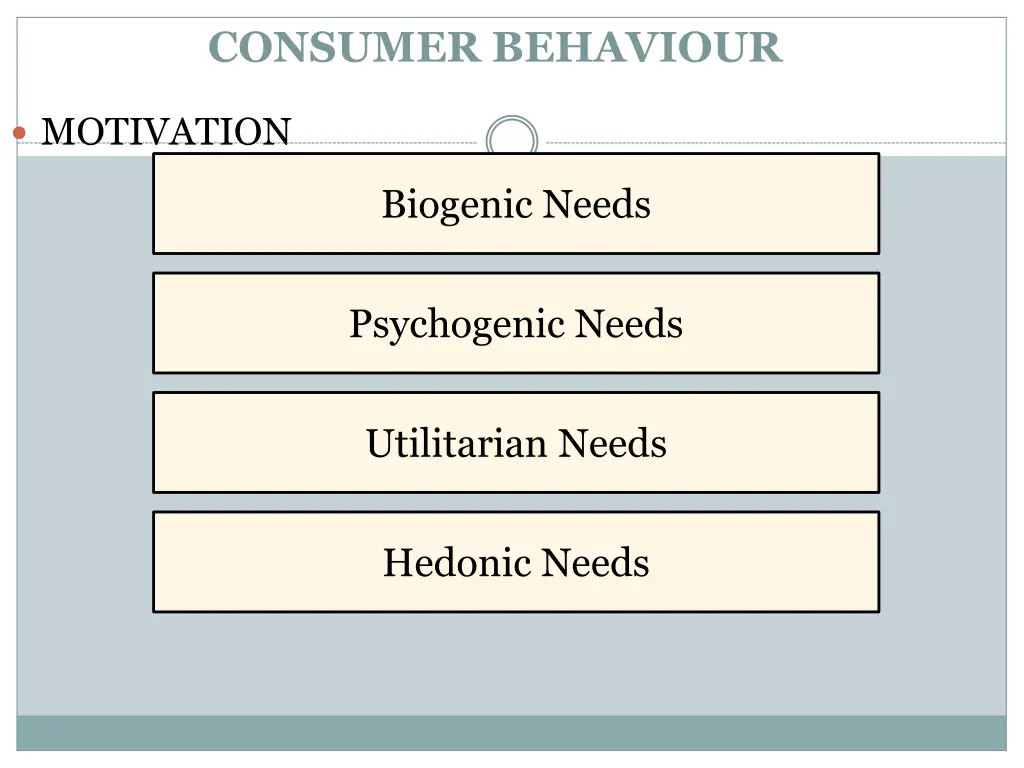
CONSUMER BEHAVIOUR MOTIVATION Motivation refers to the process that leads people to behave as they do It occurs when a need is aroused Needs may be utilitarian or hedonic The desired end state is the goal The degree of arousal is drive Personal and cultural factors combine to create a want one manifestation of a need Motivation is described in terms of strength and direction
CONSUMER AS AN INDIVIDUAL NEEDS AND MOTIVATION CONSUMER NEEDS ARE THE BASICS OF MODERN MARKETING THE SURVIVAL, PROFITABILITY AND GROWTH OF A COMPANY IN A HIGHLY COMPETITIVE ENVIRONMENT IS depending on its ability to identify and satisfy unfulfilled needs better/sooner than competition.
NEEDS AND MOTIVATION Marketing orientation focuses on the needs of the customers Production orientation focuses on the need of the seller
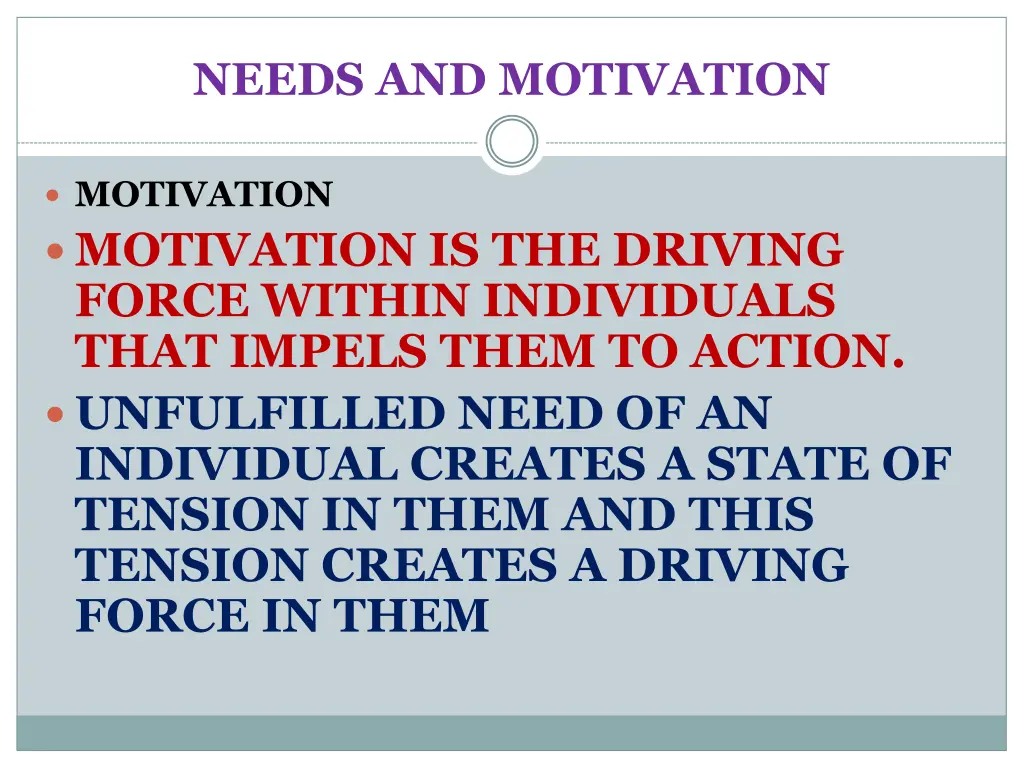
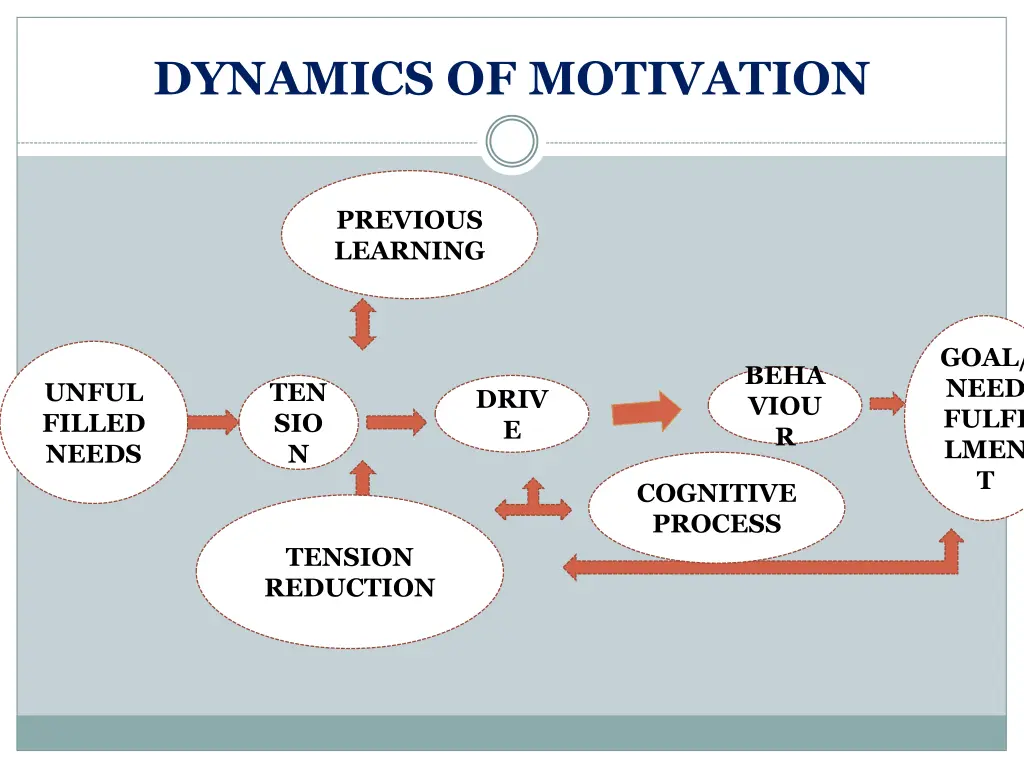
NEEDS AND MOTIVATION MOTIVATION MOTIVATION IS THE DRIVING FORCE WITHIN INDIVIDUALS THAT IMPELS THEM TO ACTION. UNFULFILLED NEED OF AN INDIVIDUAL CREATES A STATE OF TENSION IN THEM AND THIS TENSION CREATES A DRIVING FORCE IN THEM
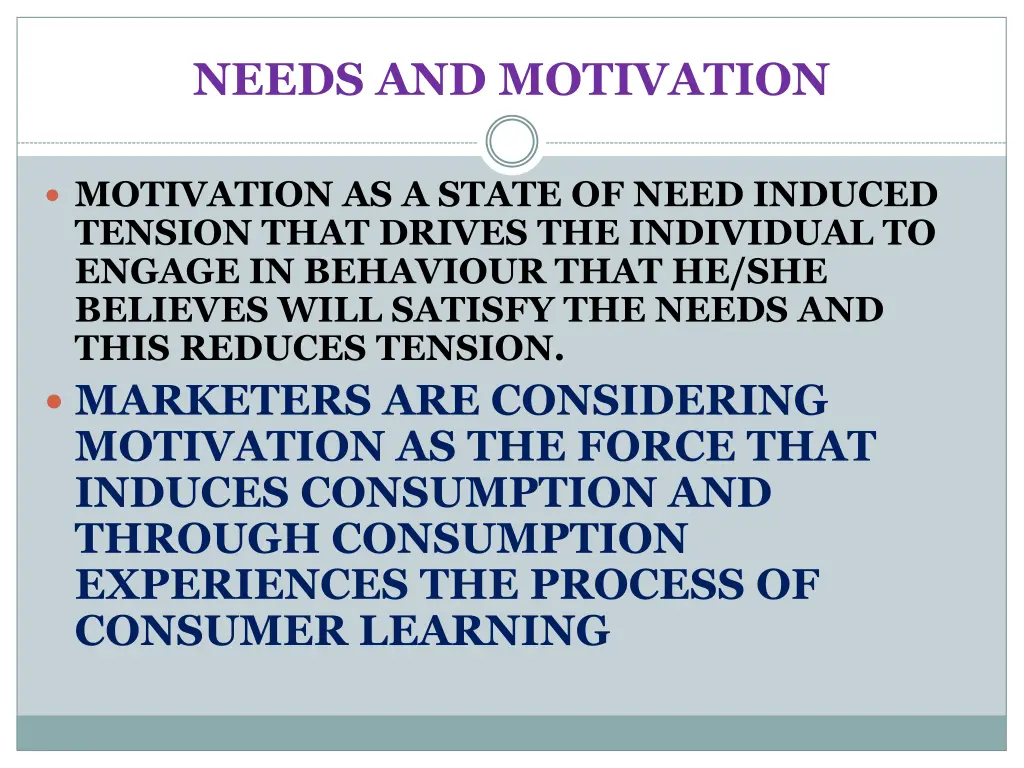
NEEDS AND MOTIVATION MOTIVATION AS A STATE OF NEED INDUCED TENSION THAT DRIVES THE INDIVIDUAL TO ENGAGE IN BEHAVIOUR THAT HE/SHE BELIEVES WILL SATISFY THE NEEDS AND THIS REDUCES TENSION. MARKETERS ARE CONSIDERING MOTIVATION AS THE FORCE THAT INDUCES CONSUMPTION AND THROUGH CONSUMPTION EXPERIENCES THE PROCESS OF CONSUMER LEARNING
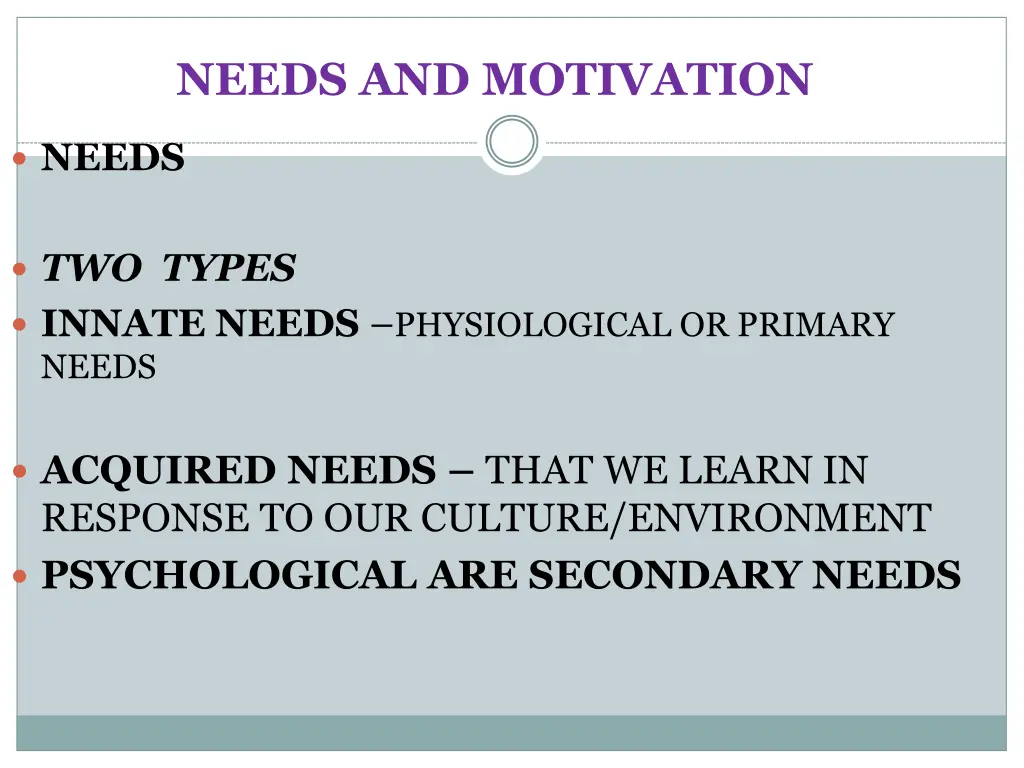
NEEDS AND MOTIVATION NEEDS TWO TYPES INNATE NEEDS PHYSIOLOGICAL OR PRIMARY NEEDS ACQUIRED NEEDS THAT WE LEARN IN RESPONSE TO OUR CULTURE/ENVIRONMENT PSYCHOLOGICAL ARE SECONDARY NEEDS
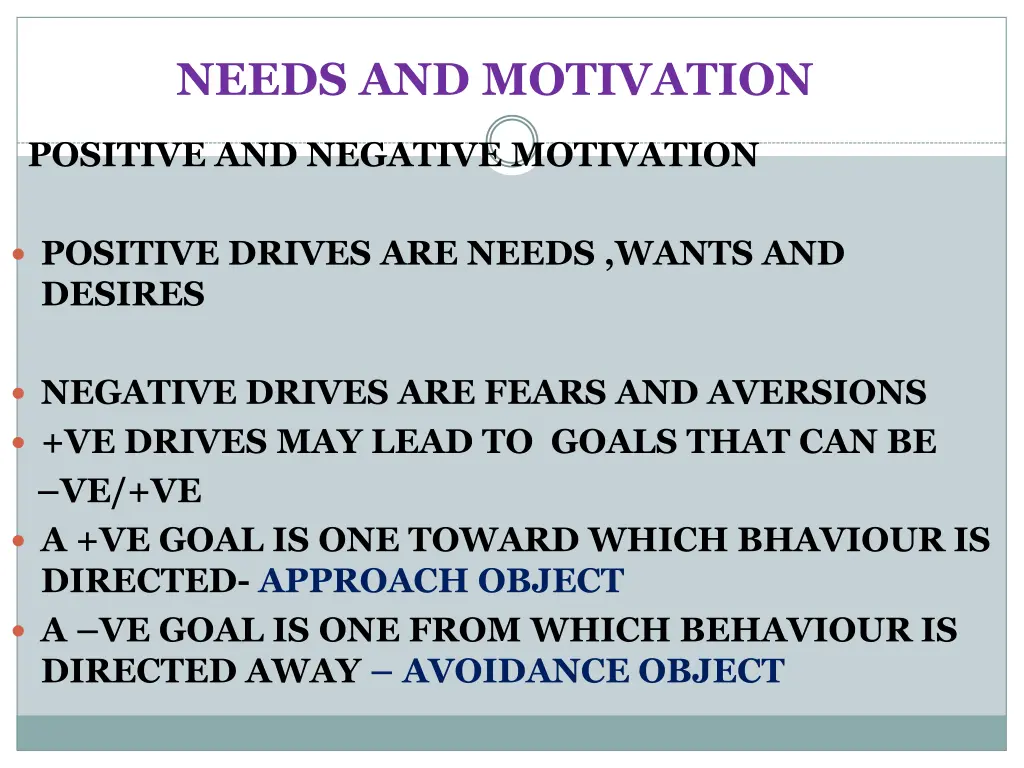
NEEDS AND MOTIVATION POSITIVE AND NEGATIVE MOTIVATION POSITIVE DRIVES ARE NEEDS ,WANTS AND DESIRES NEGATIVE DRIVES ARE FEARS AND AVERSIONS +VE DRIVES MAY LEAD TO GOALS THAT CAN BE VE/+VE A +VE GOAL IS ONE TOWARD WHICH BHAVIOUR IS DIRECTED- APPROACH OBJECT A VE GOAL IS ONE FROM WHICH BEHAVIOUR IS DIRECTED AWAY AVOIDANCE OBJECT
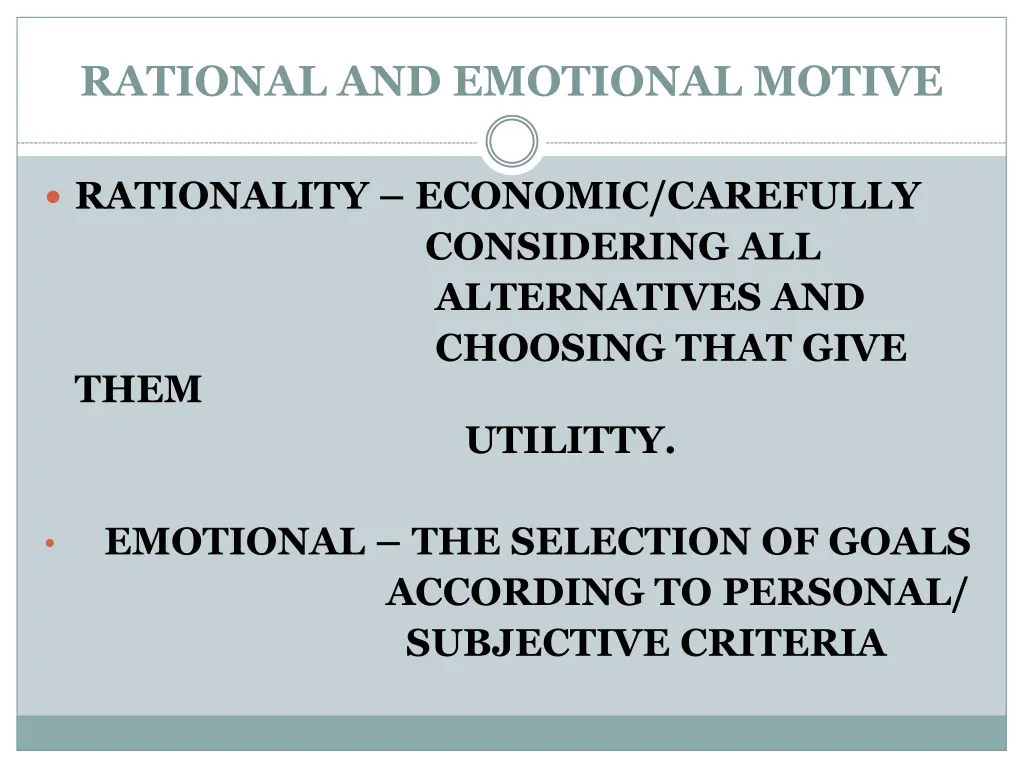
RATIONAL AND EMOTIONAL MOTIVE RATIONALITY ECONOMIC/CAREFULLY CONSIDERING ALL ALTERNATIVES AND CHOOSING THAT GIVE THEM UTILITTY. EMOTIONAL THE SELECTION OF GOALS ACCORDING TO PERSONAL/ SUBJECTIVE CRITERIA
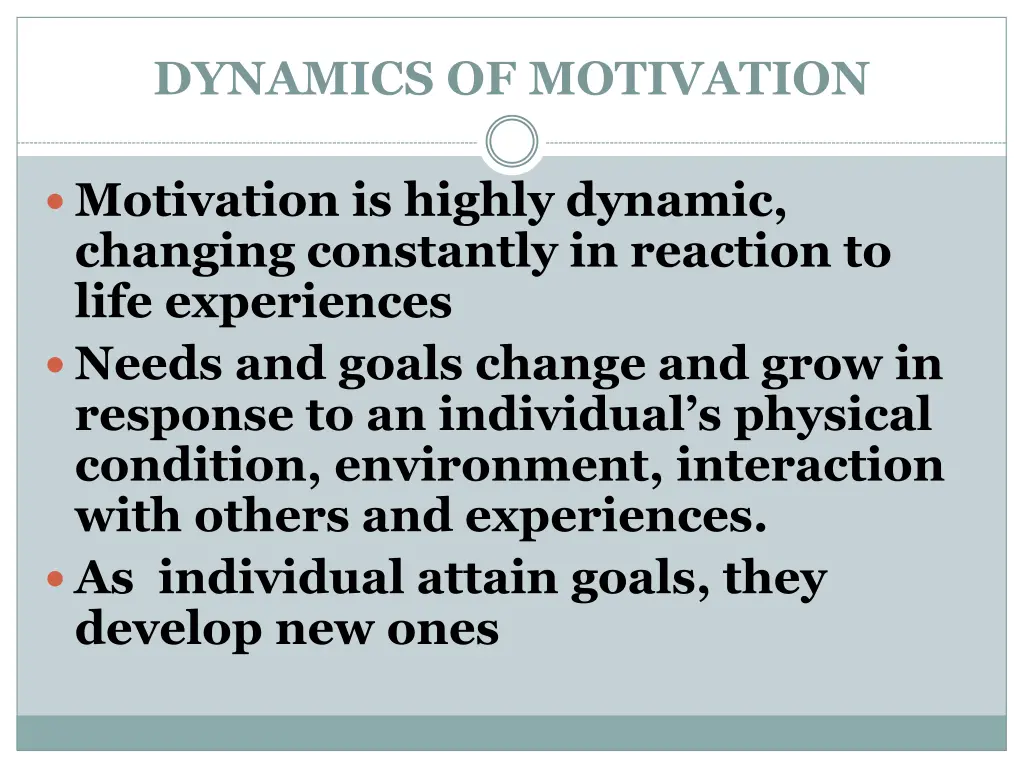
DYNAMICS OF MOTIVATION Motivation is highly dynamic, changing constantly in reaction to life experiences Needs and goals change and grow in response to an individual s physical condition, environment, interaction with others and experiences. As individual attain goals, they develop new ones
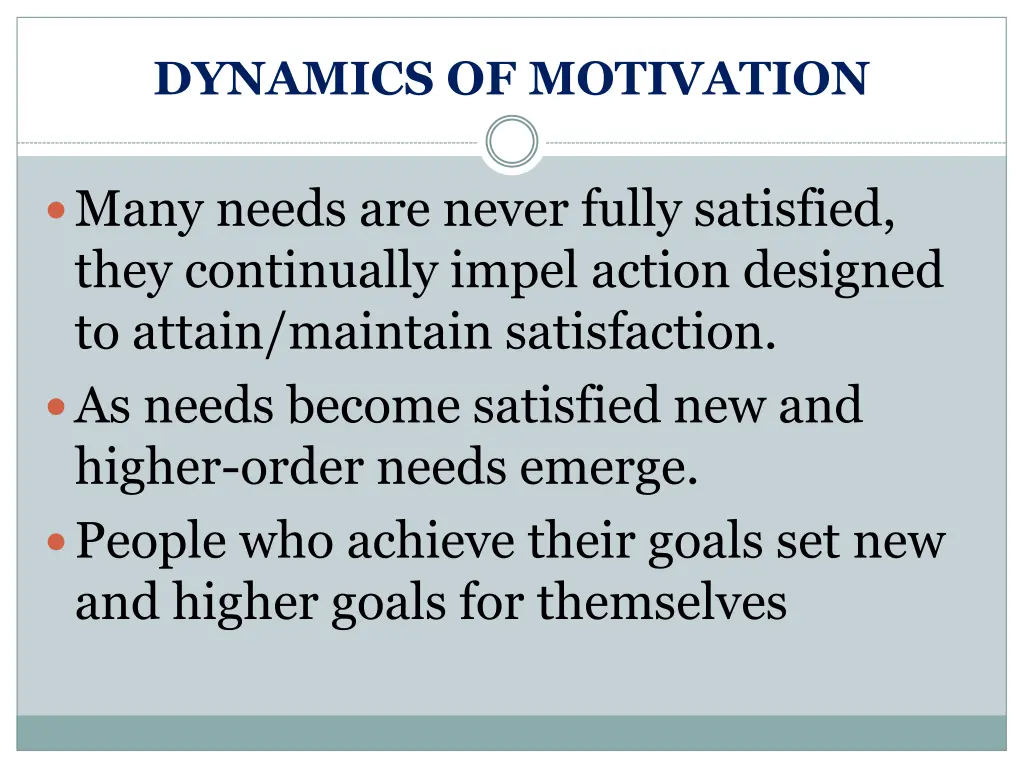
DYNAMICS OF MOTIVATION Many needs are never fully satisfied, they continually impel action designed to attain/maintain satisfaction. As needs become satisfied new and higher-order needs emerge. People who achieve their goals set new and higher goals for themselves
DYNAMICS OF MOTIVATION PREVIOUS LEARNING GOAL/ NEED FULFI LMEN T BEHA VIOU R UNFUL FILLED NEEDS TEN SIO N DRIV E COGNITIVE PROCESS TENSION REDUCTION
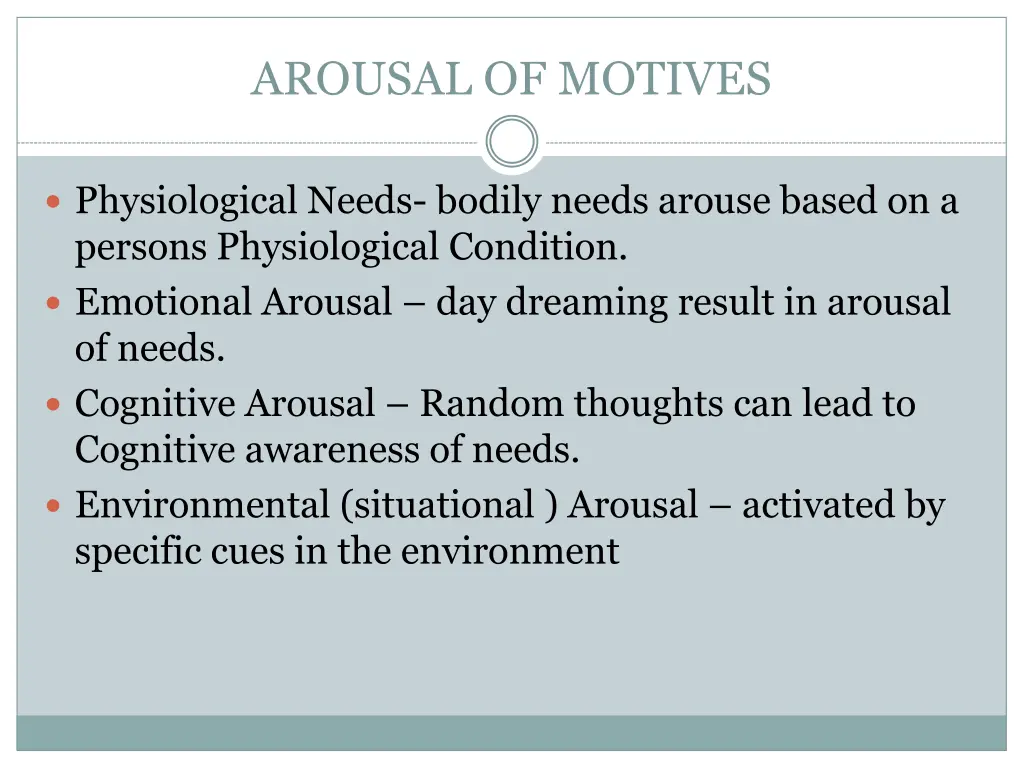
AROUSAL OF MOTIVES Physiological Needs- bodily needs arouse based on a persons Physiological Condition. Emotional Arousal day dreaming result in arousal of needs. Cognitive Arousal Random thoughts can lead to Cognitive awareness of needs. Environmental (situational ) Arousal activated by specific cues in the environment
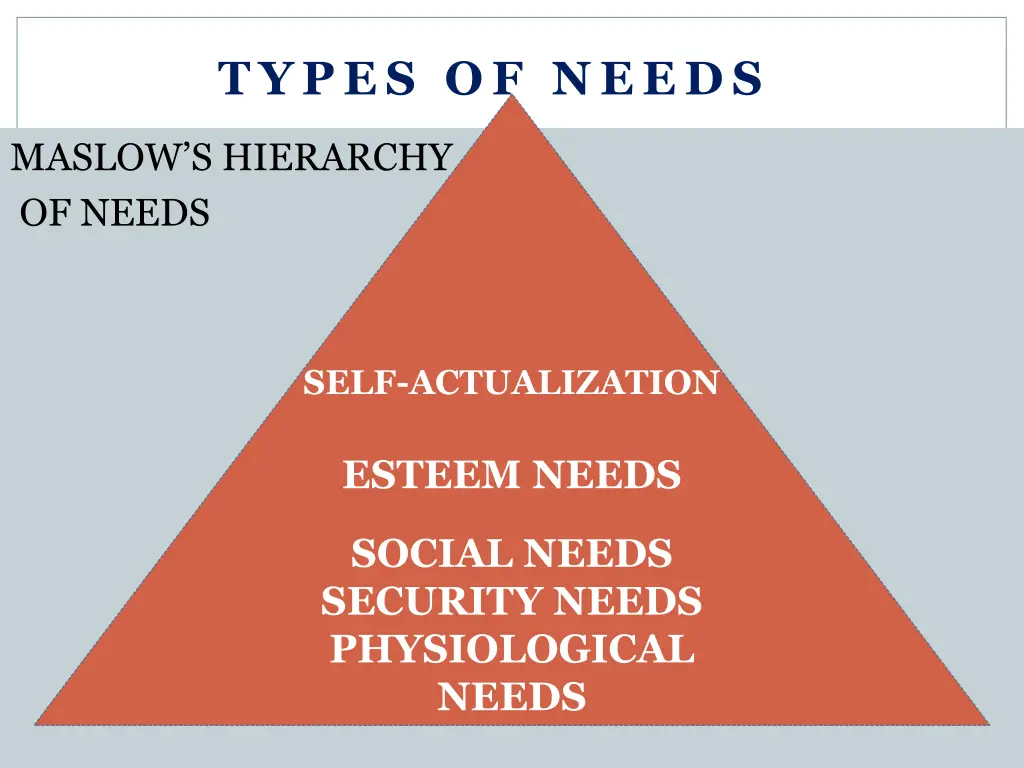
TYPES OF NEEDS MASLOW S HIERARCHY OF NEEDS SELF-ACTUALIZATION ESTEEM NEEDS SOCIAL NEEDS SECURITY NEEDS PHYSIOLOGICAL NEEDS
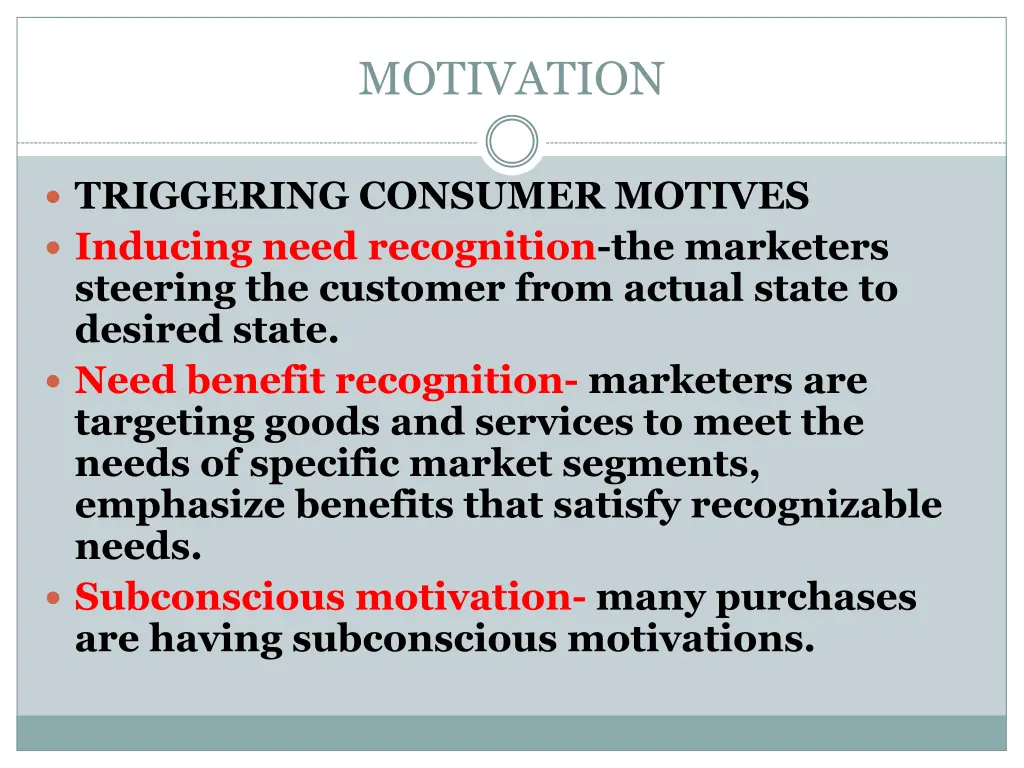
MOTIVATION TRIGGERING CONSUMER MOTIVES Inducing need recognition-the marketers steering the customer from actual state to desired state. Need benefit recognition- marketers are targeting goods and services to meet the needs of specific market segments, emphasize benefits that satisfy recognizable needs. Subconscious motivation- many purchases are having subconscious motivations.
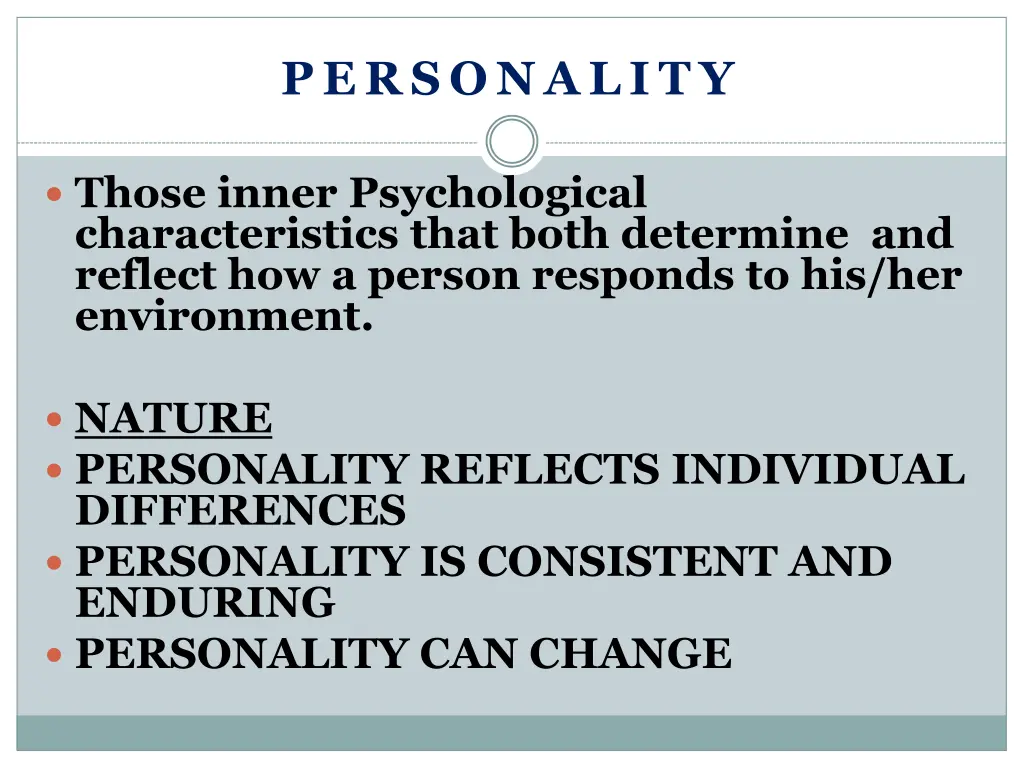
PERSONALITY Those inner Psychological characteristics that both determine and reflect how a person responds to his/her environment. NATURE PERSONALITY REFLECTS INDIVIDUAL DIFFERENCES PERSONALITY IS CONSISTENT AND ENDURING PERSONALITY CAN CHANGE
PERSONALITY THEORIES THREE MAJOR THEORIES 1. FREUDIAN THEORY 2. NEO FREUDIAN THEORY 3. TRAIT THEORY
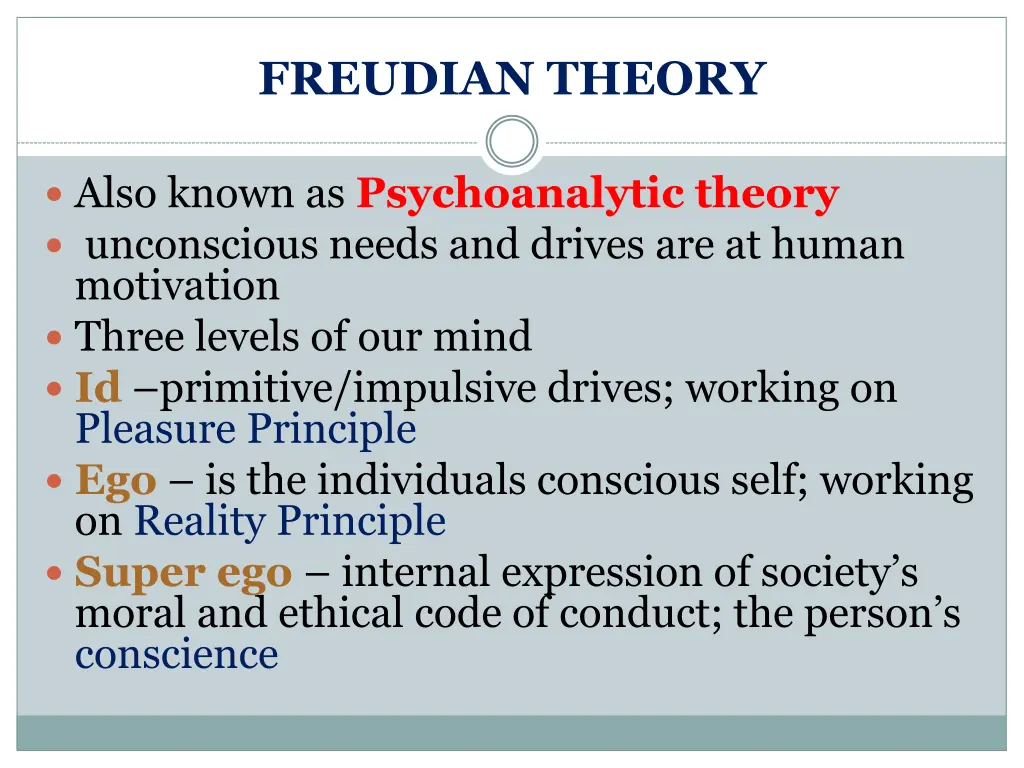
FREUDIAN THEORY Also known as Psychoanalytic theory unconscious needs and drives are at human motivation Three levels of our mind Id primitive/impulsive drives; working on Pleasure Principle Ego is the individuals conscious self; working on Reality Principle Super ego internal expression of society s moral and ethical code of conduct; the person s conscience
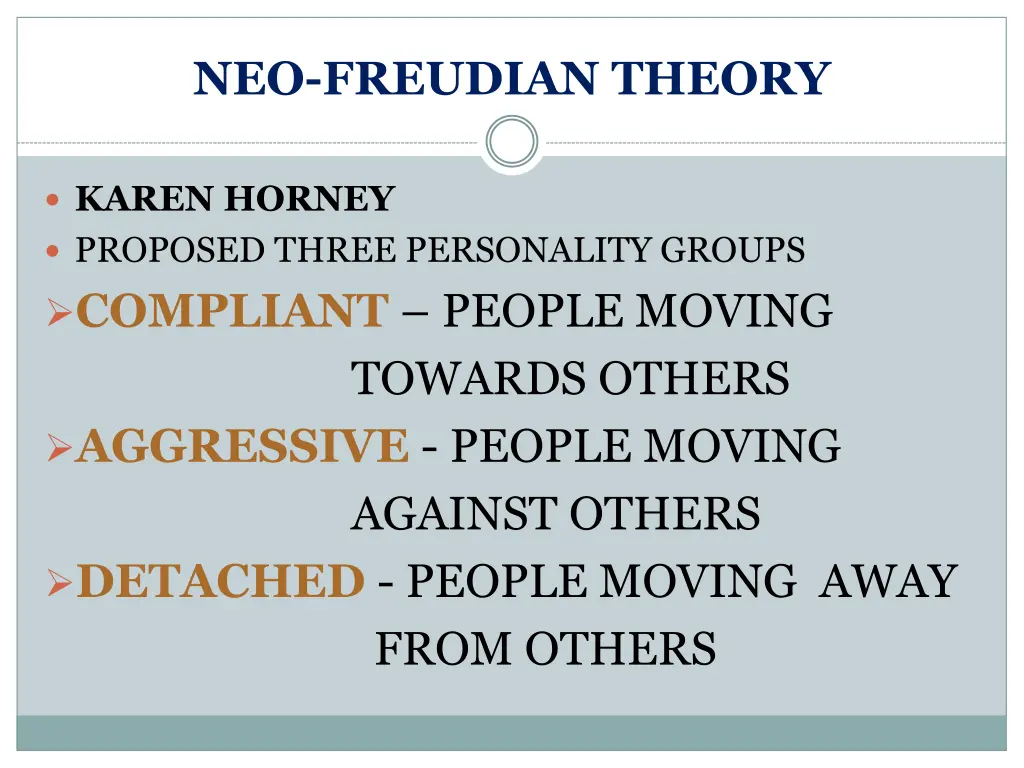
NEO-FREUDIAN THEORY KAREN HORNEY PROPOSED THREE PERSONALITY GROUPS COMPLIANT PEOPLE MOVING TOWARDS OTHERS AGGRESSIVE - PEOPLE MOVING AGAINST OTHERS DETACHED - PEOPLE MOVING AWAY FROM OTHERS
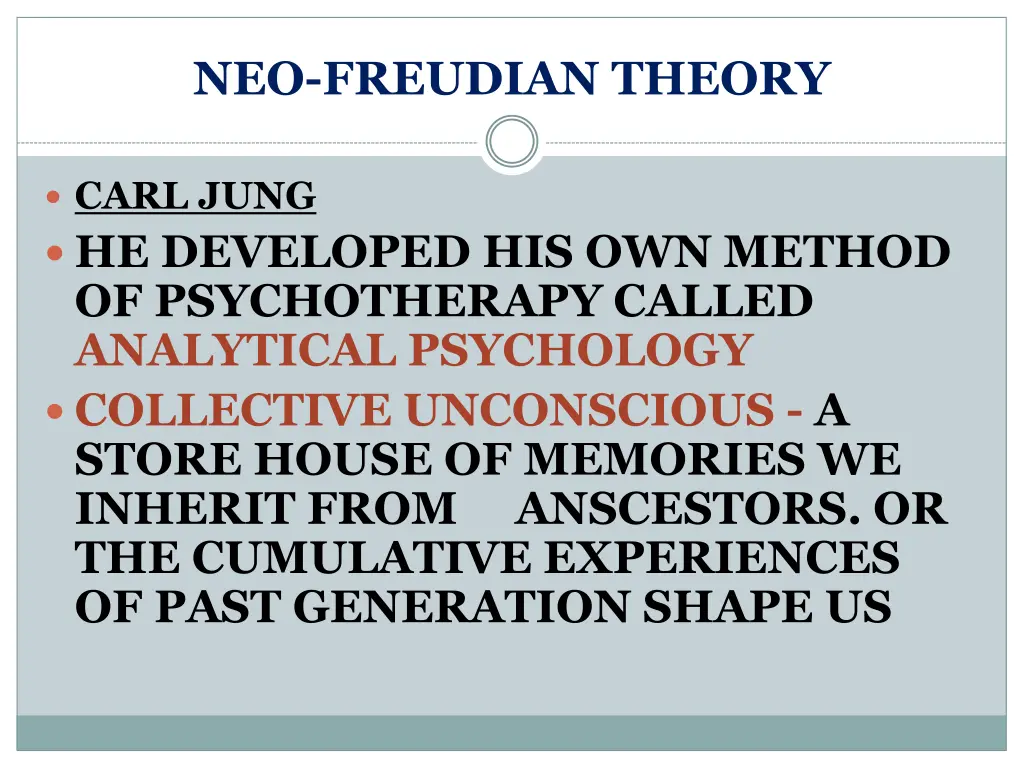
NEO-FREUDIAN THEORY CARL JUNG HE DEVELOPED HIS OWN METHOD OF PSYCHOTHERAPY CALLED ANALYTICAL PSYCHOLOGY COLLECTIVE UNCONSCIOUS - A STORE HOUSE OF MEMORIES WE INHERIT FROM ANSCESTORS. OR THE CUMULATIVE EXPERIENCES OF PAST GENERATION SHAPE US
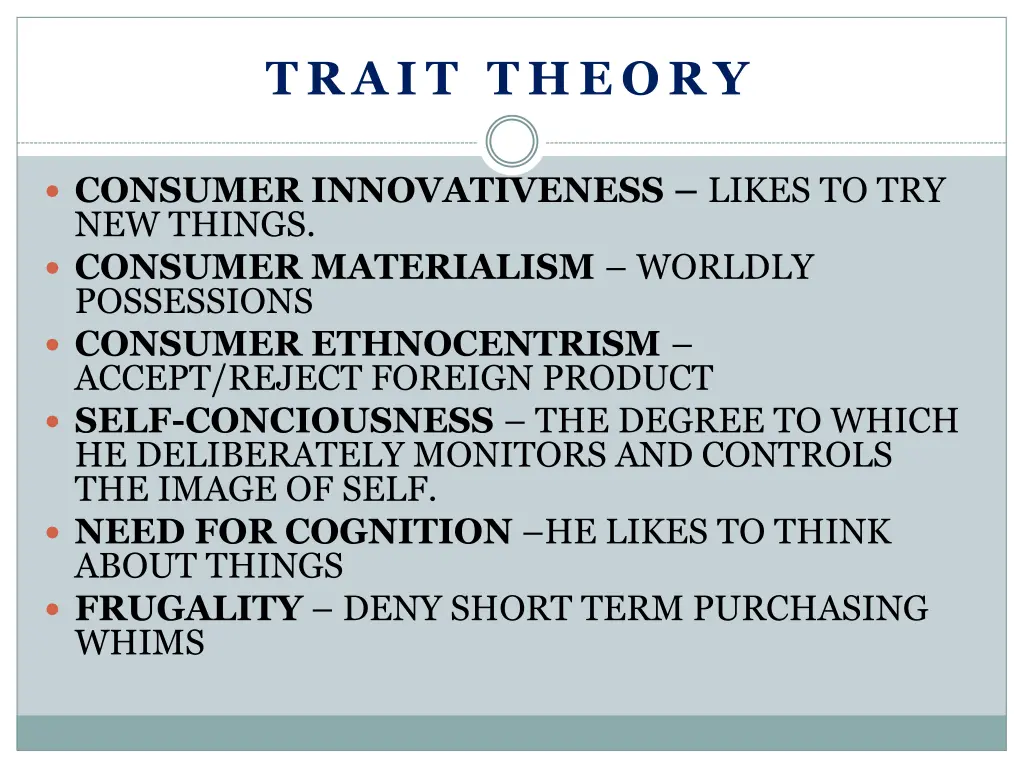
TRAIT THEORY CONSUMER INNOVATIVENESS LIKES TO TRY NEW THINGS. CONSUMER MATERIALISM WORLDLY POSSESSIONS CONSUMER ETHNOCENTRISM ACCEPT/REJECT FOREIGN PRODUCT SELF-CONCIOUSNESS THE DEGREE TO WHICH HE DELIBERATELY MONITORS AND CONTROLS THE IMAGE OF SELF. NEED FOR COGNITION HE LIKES TO THINK ABOUT THINGS FRUGALITY DENY SHORT TERM PURCHASING WHIMS
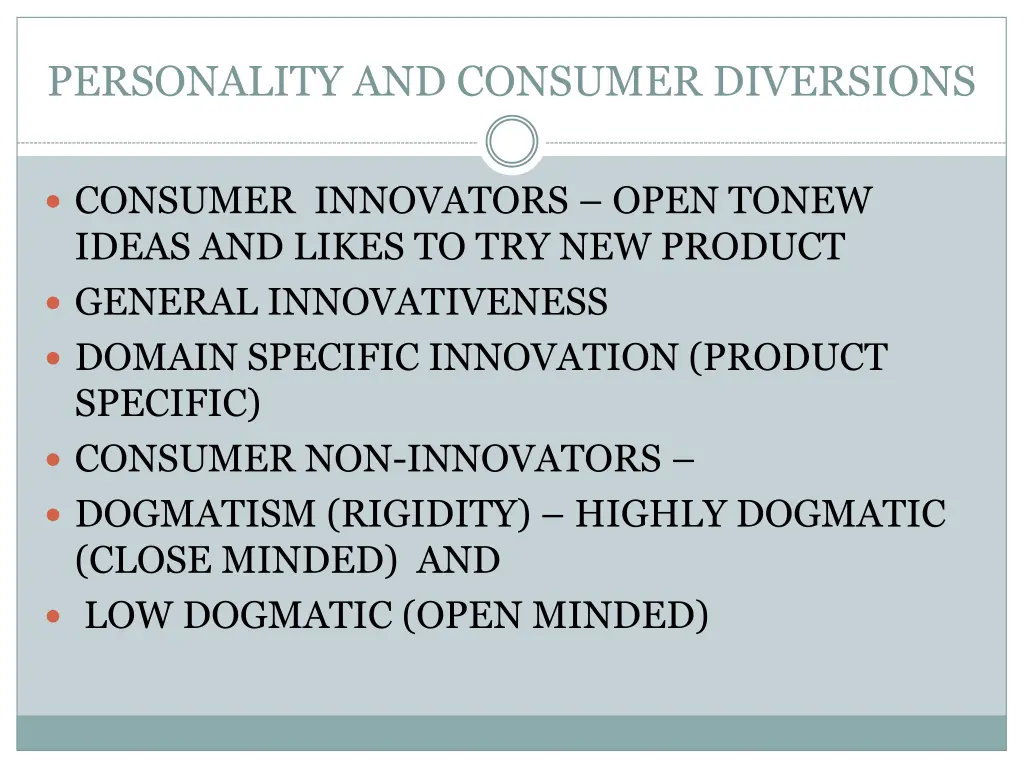
PERSONALITY AND CONSUMER DIVERSIONS CONSUMER INNOVATORS OPEN TONEW IDEAS AND LIKES TO TRY NEW PRODUCT GENERAL INNOVATIVENESS DOMAIN SPECIFIC INNOVATION (PRODUCT SPECIFIC) CONSUMER NON-INNOVATORS DOGMATISM (RIGIDITY) HIGHLY DOGMATIC (CLOSE MINDED) AND LOW DOGMATIC (OPEN MINDED)
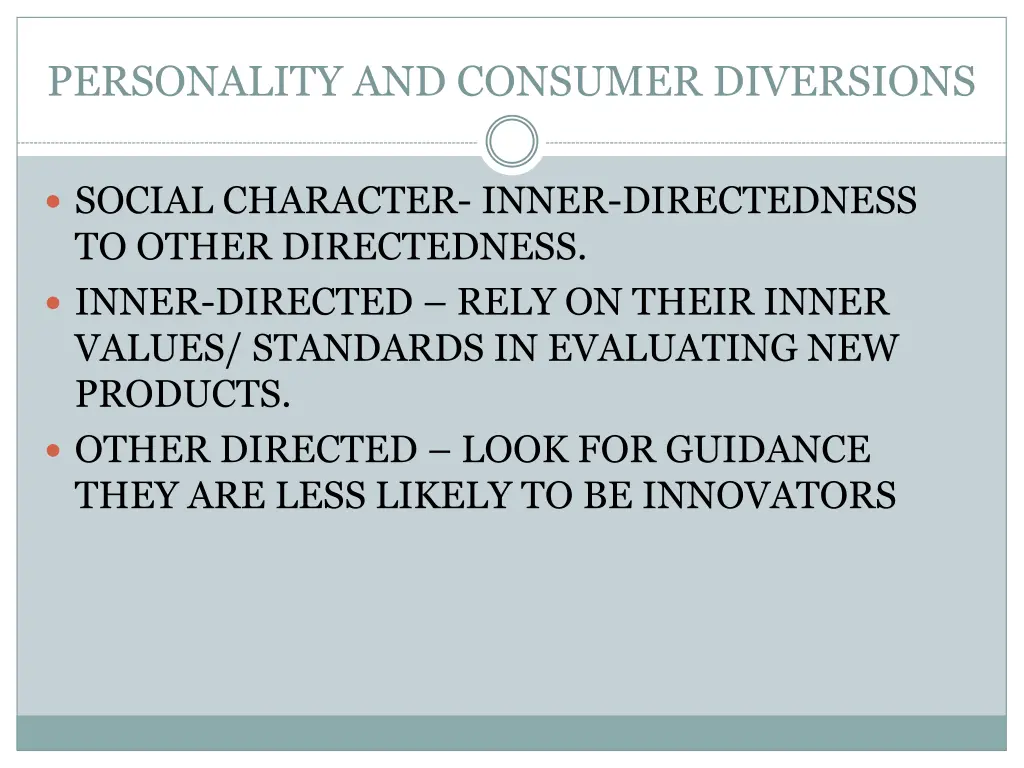
PERSONALITY AND CONSUMER DIVERSIONS SOCIAL CHARACTER- INNER-DIRECTEDNESS TO OTHER DIRECTEDNESS. INNER-DIRECTED RELY ON THEIR INNER VALUES/ STANDARDS IN EVALUATING NEW PRODUCTS. OTHER DIRECTED LOOK FOR GUIDANCE THEY ARE LESS LIKELY TO BE INNOVATORS
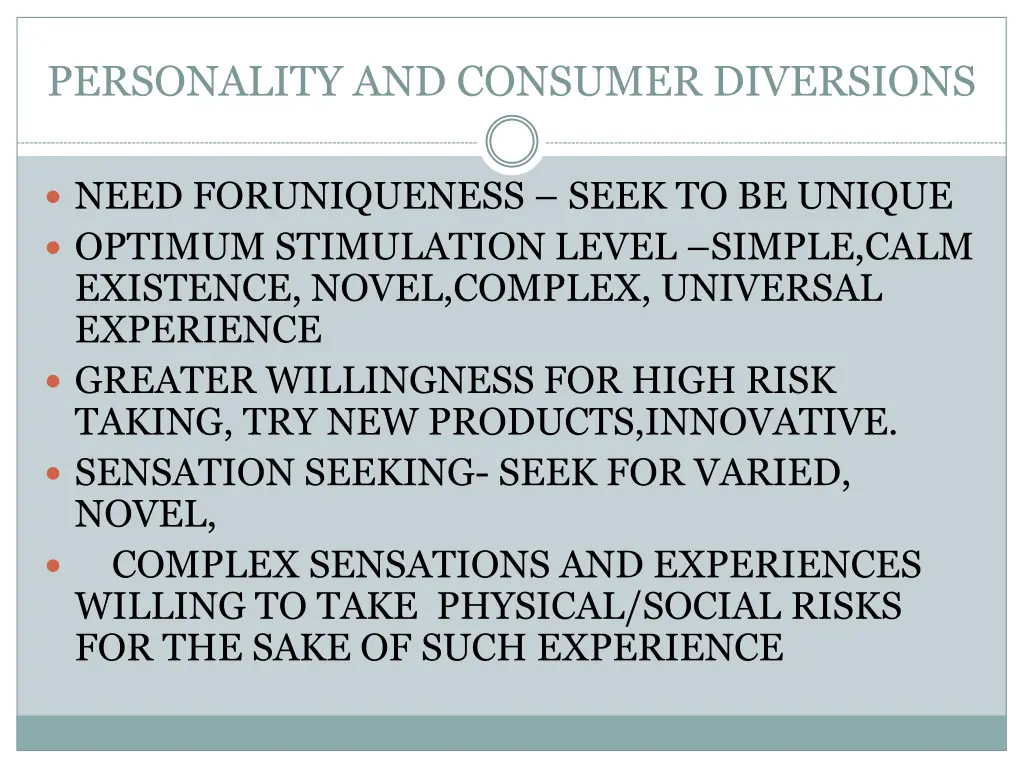
PERSONALITY AND CONSUMER DIVERSIONS NEED FORUNIQUENESS SEEK TO BE UNIQUE OPTIMUM STIMULATION LEVEL SIMPLE,CALM EXISTENCE, NOVEL,COMPLEX, UNIVERSAL EXPERIENCE GREATER WILLINGNESS FOR HIGH RISK TAKING, TRY NEW PRODUCTS,INNOVATIVE. SENSATION SEEKING- SEEK FOR VARIED, NOVEL, COMPLEX SENSATIONS AND EXPERIENCES WILLING TO TAKE PHYSICAL/SOCIAL RISKS FOR THE SAKE OF SUCH EXPERIENCE
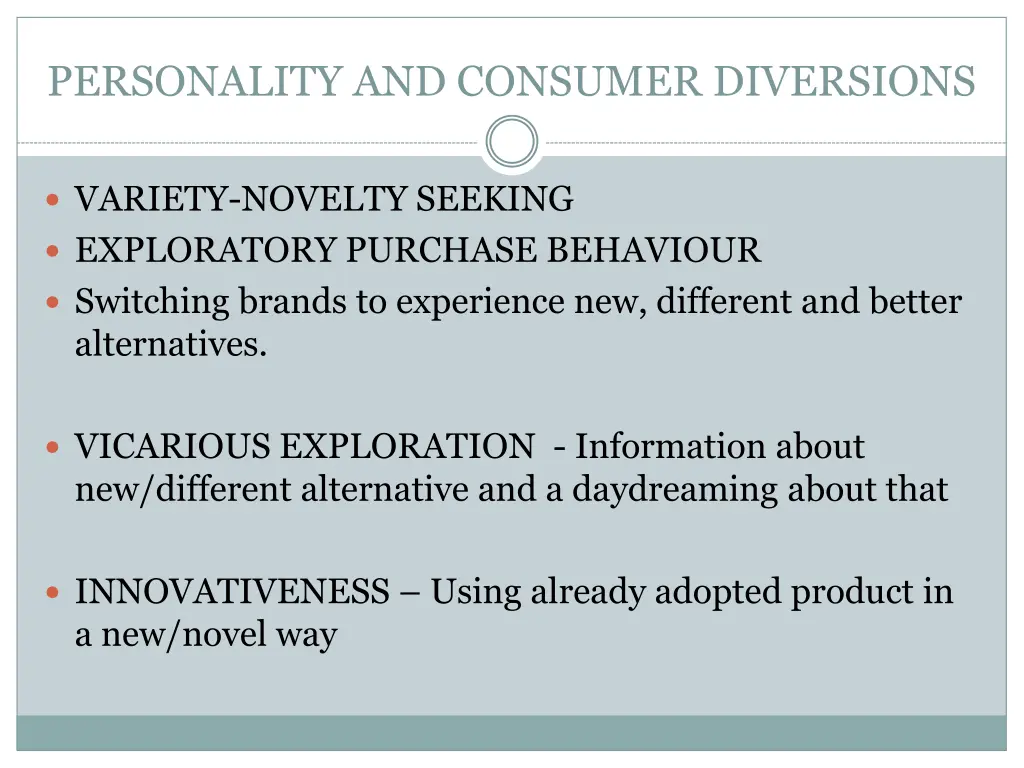
PERSONALITY AND CONSUMER DIVERSIONS VARIETY-NOVELTY SEEKING EXPLORATORY PURCHASE BEHAVIOUR Switching brands to experience new, different and better alternatives. VICARIOUS EXPLORATION - Information about new/different alternative and a daydreaming about that INNOVATIVENESS Using already adopted product in a new/novel way
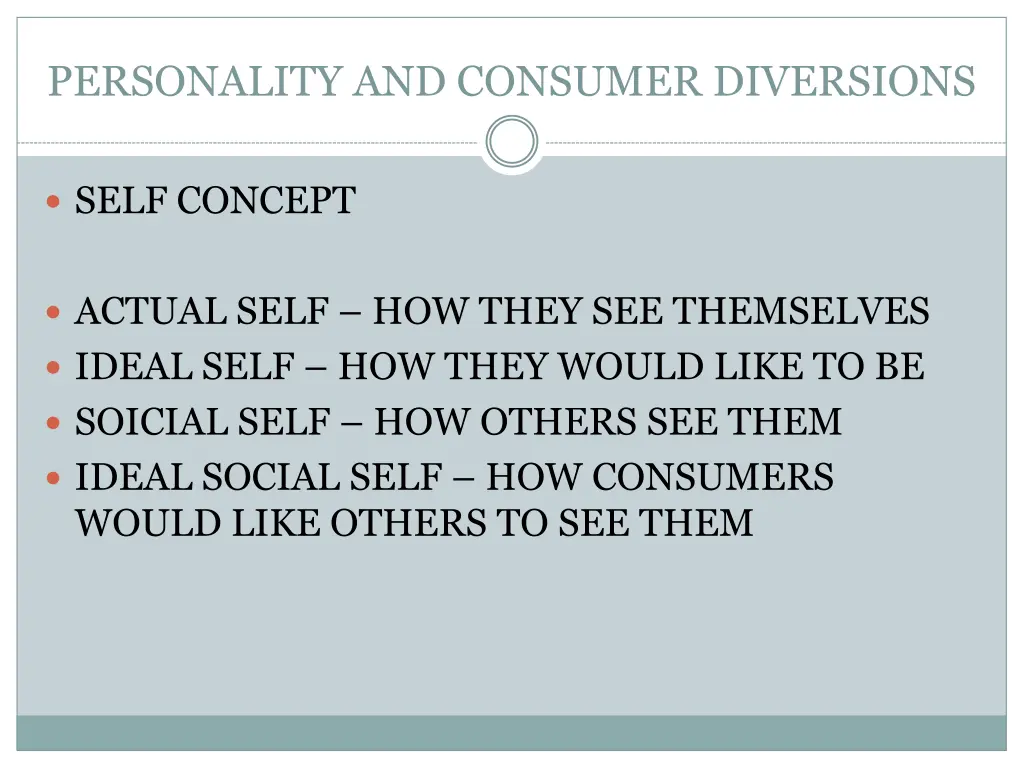
PERSONALITY AND CONSUMER DIVERSIONS SELF CONCEPT ACTUAL SELF HOW THEY SEE THEMSELVES IDEAL SELF HOW THEY WOULD LIKE TO BE SOICIAL SELF HOW OTHERS SEE THEM IDEAL SOCIAL SELF HOW CONSUMERS WOULD LIKE OTHERS TO SEE THEM
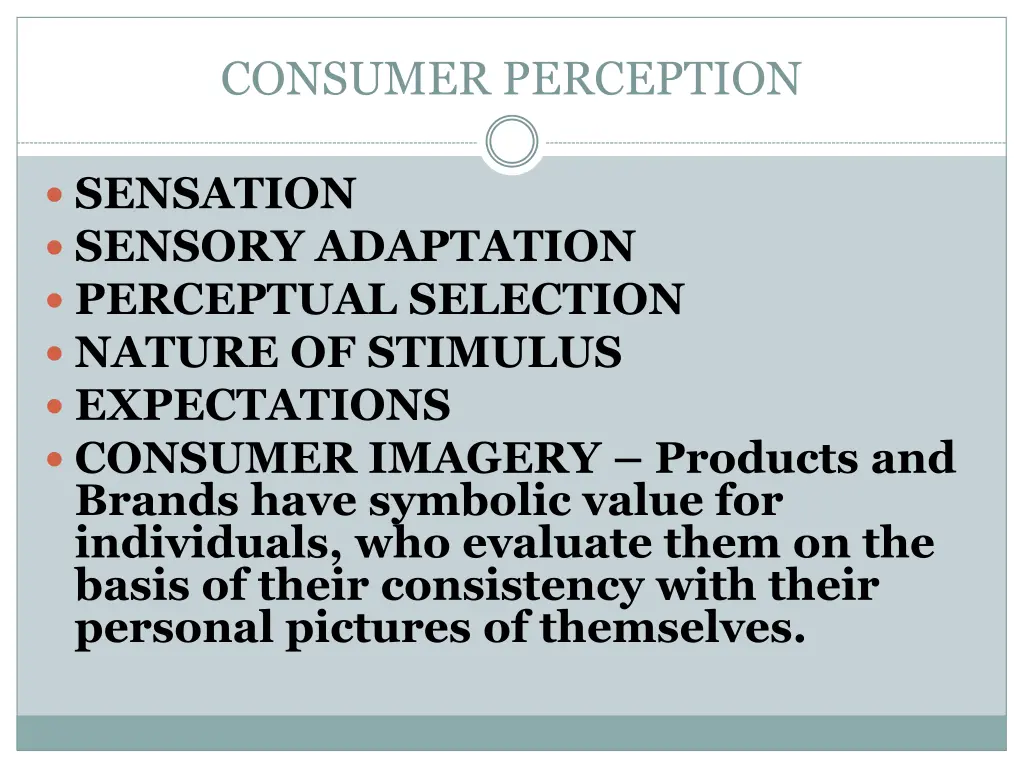
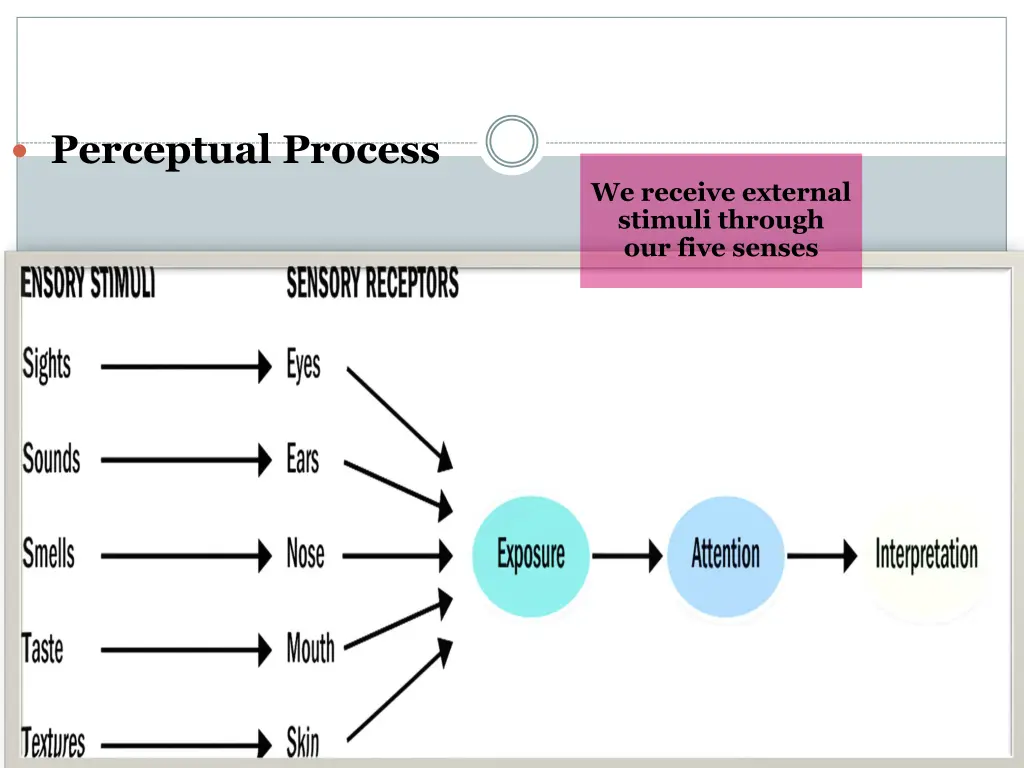
CONSUMER PERCEPTION SENSATION SENSORY ADAPTATION PERCEPTUAL SELECTION NATURE OF STIMULUS EXPECTATIONS CONSUMER IMAGERY Products and Brands have symbolic value for individuals, who evaluate them on the basis of their consistency with their personal pictures of themselves.
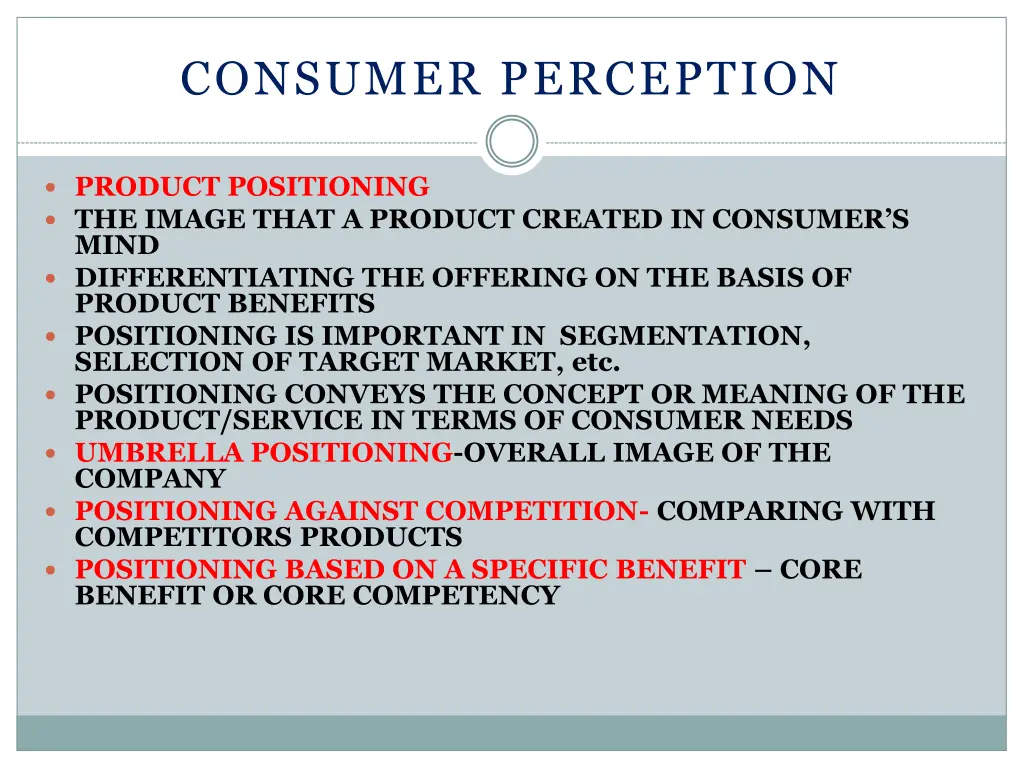
CONSUMER PERCEPTION PRODUCT POSITIONING THE IMAGE THAT A PRODUCT CREATED IN CONSUMER S MIND DIFFERENTIATING THE OFFERING ON THE BASIS OF PRODUCT BENEFITS POSITIONING IS IMPORTANT IN SEGMENTATION, SELECTION OF TARGET MARKET, etc. POSITIONING CONVEYS THE CONCEPT OR MEANING OF THE PRODUCT/SERVICE IN TERMS OF CONSUMER NEEDS UMBRELLA POSITIONING-OVERALL IMAGE OF THE COMPANY POSITIONING AGAINST COMPETITION- COMPARING WITH COMPETITORS PRODUCTS POSITIONING BASED ON A SPECIFIC BENEFIT CORE BENEFIT OR CORE COMPETENCY
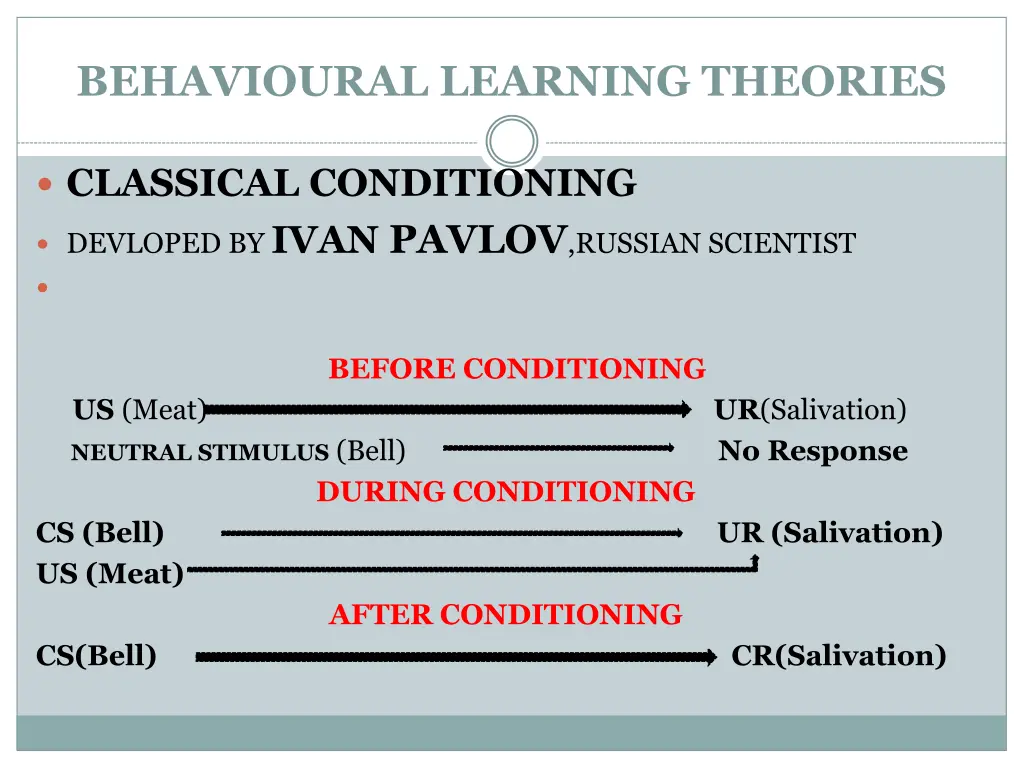
BEHAVIOURAL LEARNING THEORIES CLASSICAL CONDITIONING DEVLOPED BY IVAN PAVLOV,RUSSIAN SCIENTIST BEFORE CONDITIONING US (Meat) UR(Salivation) NEUTRAL STIMULUS (Bell) No Response DURING CONDITIONING CS (Bell) UR (Salivation) US (Meat) AFTER CONDITIONING CS(Bell) CR(Salivation)
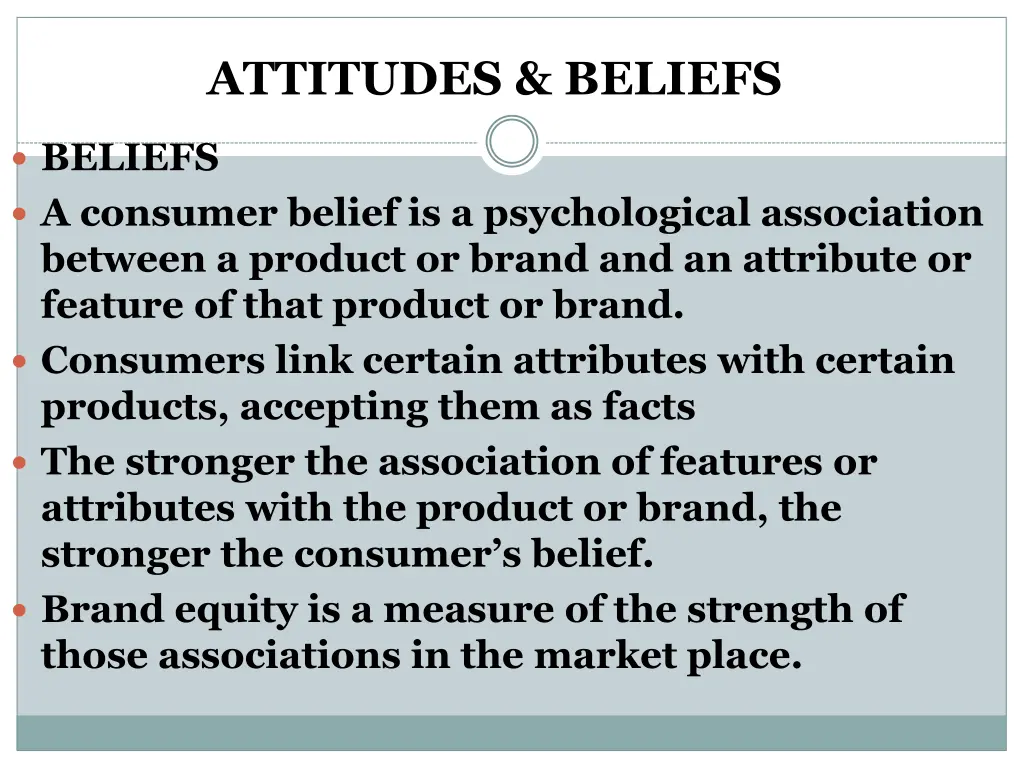
ATTITUDES & BELIEFS BELIEFS A consumer belief is a psychological association between a product or brand and an attribute or feature of that product or brand. Consumers link certain attributes with certain products, accepting them as facts The stronger the association of features or attributes with the product or brand, the stronger the consumer s belief. Brand equity is a measure of the strength of those associations in the market place.
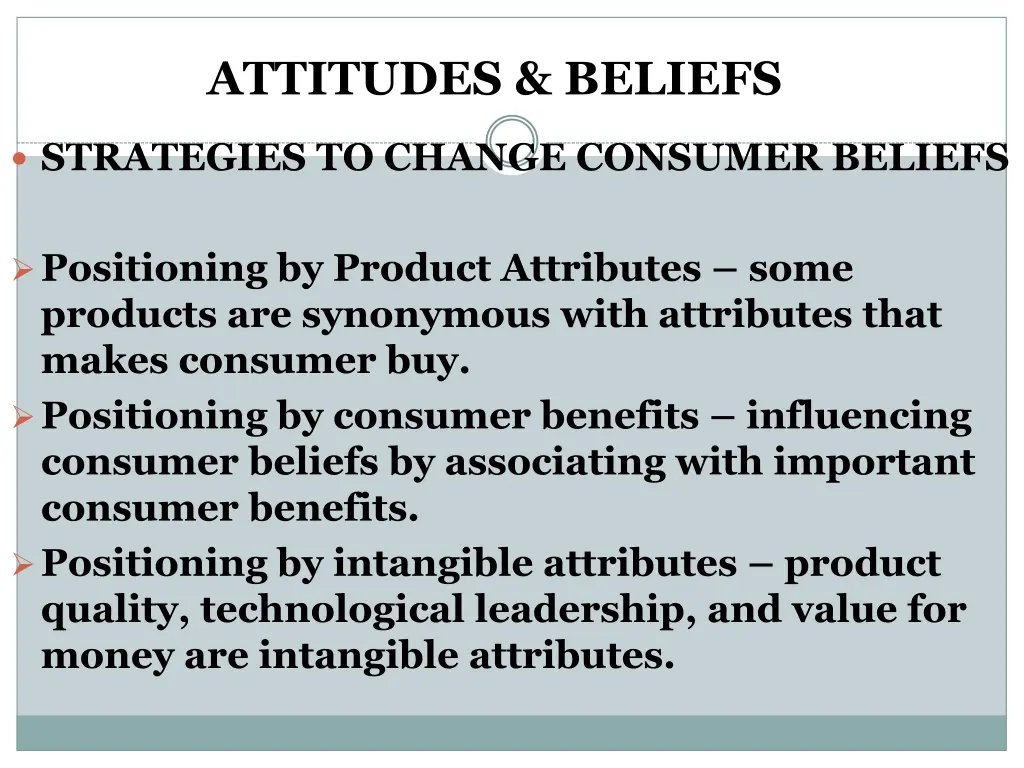
ATTITUDES & BELIEFS STRATEGIES TO CHANGE CONSUMER BELIEFS Positioning by Product Attributes some products are synonymous with attributes that makes consumer buy. Positioning by consumer benefits influencing consumer beliefs by associating with important consumer benefits. Positioning by intangible attributes product quality, technological leadership, and value for money are intangible attributes.
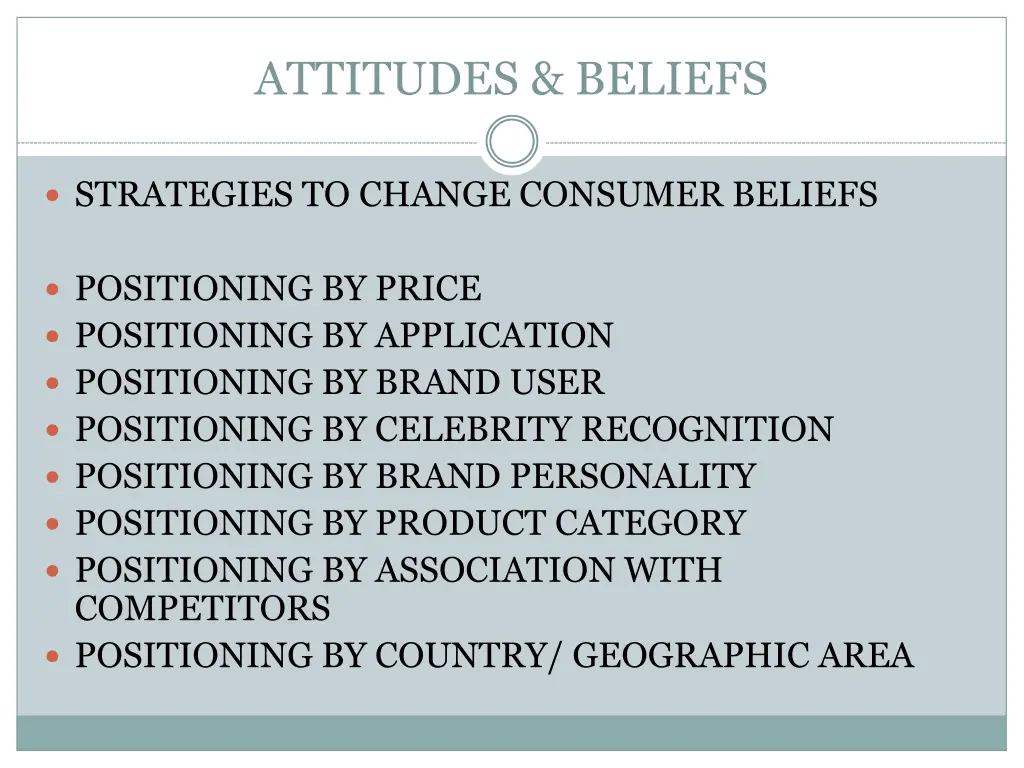
ATTITUDES & BELIEFS STRATEGIES TO CHANGE CONSUMER BELIEFS POSITIONING BY PRICE POSITIONING BY APPLICATION POSITIONING BY BRAND USER POSITIONING BY CELEBRITY RECOGNITION POSITIONING BY BRAND PERSONALITY POSITIONING BY PRODUCT CATEGORY POSITIONING BY ASSOCIATION WITH COMPETITORS POSITIONING BY COUNTRY/ GEOGRAPHIC AREA
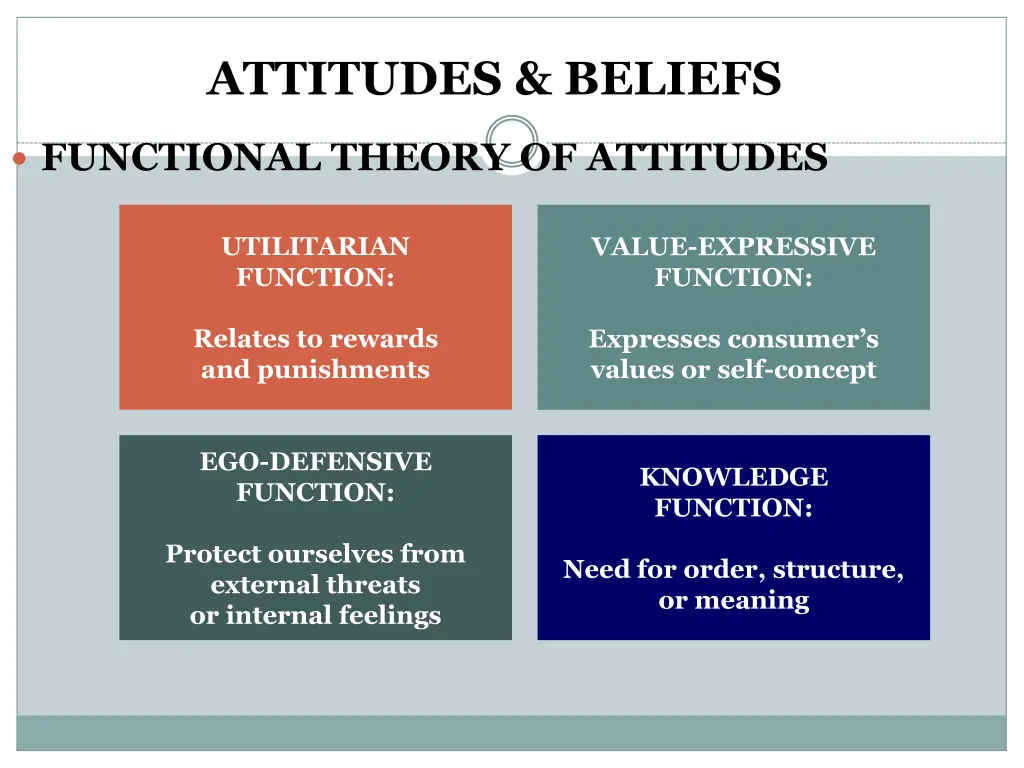
ATTITUDES & BELIEFS FUNCTIONAL THEORY OF ATTITUDES UTILITARIAN FUNCTION: VALUE-EXPRESSIVE FUNCTION: Relates to rewards and punishments Expresses consumer s values or self-concept EGO-DEFENSIVE FUNCTION: KNOWLEDGE FUNCTION: Protect ourselves from external threats or internal feelings Need for order, structure, or meaning
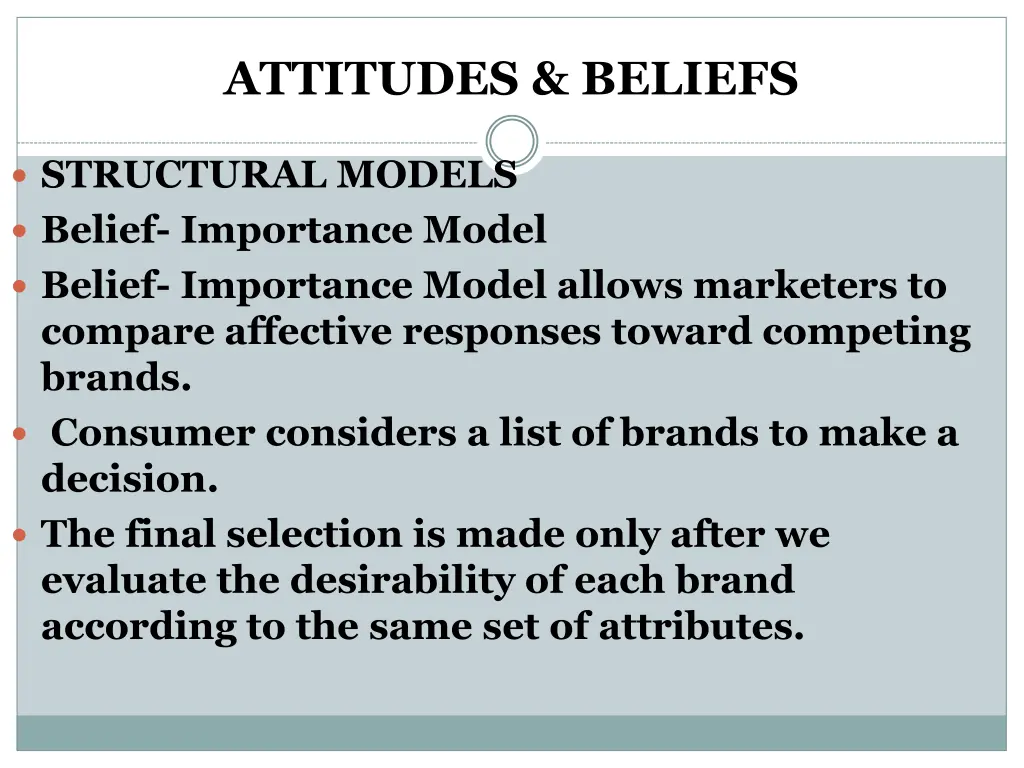
ATTITUDES & BELIEFS STRUCTURAL MODELS Belief- Importance Model Belief- Importance Model allows marketers to compare affective responses toward competing brands. Consumer considers a list of brands to make a decision. The final selection is made only after we evaluate the desirability of each brand according to the same set of attributes.
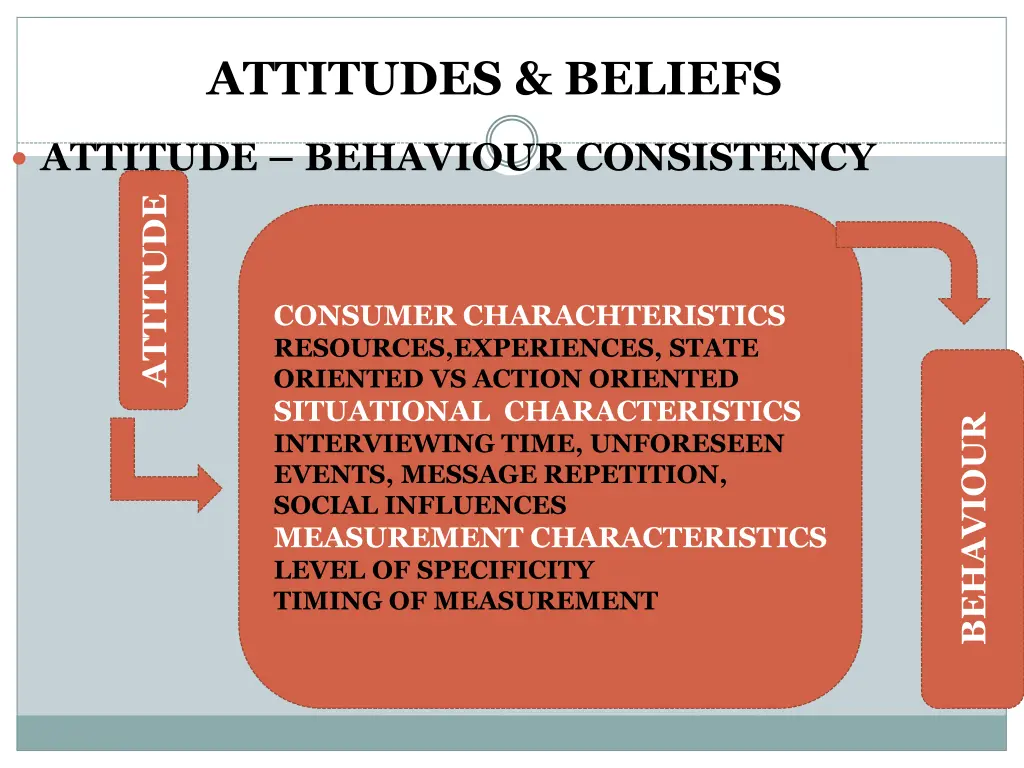
ATTITUDES & BELIEFS ATTITUDE BEHAVIOUR CONSISTENCY ATTITUDE ORIENTED VS ACTION ORIENTED SITUATIONAL CHARACTERISTICS INTERVIEWING TIME, UNFORESEEN EVENTS, MESSAGE REPETITION, SOCIAL INFLUENCES MEASUREMENT CHARACTERISTICS LEVEL OF SPECIFICITY TIMING OF MEASUREMENT CONSUMER CHARACHTERISTICS RESOURCES,EXPERIENCES, STATE BEHAVIOUR