Understanding Different Types of Teeth in Your Mouth
Explore the anatomy of teeth with this informative guide. Learn about incisors, cuspids, bicuspids, and molars, their functions, and locations in the mouth. Discover the significance of each type of tooth and how they work together to aid in chewing and digestion. Watch a video, draw and label teeth, and test your knowledge with interactive content.

Download Presentation

Please find below an Image/Link to download the presentation.
The content on the website is provided AS IS for your information and personal use only. It may not be sold, licensed, or shared on other websites without obtaining consent from the author. If you encounter any issues during the download, it is possible that the publisher has removed the file from their server.
You are allowed to download the files provided on this website for personal or commercial use, subject to the condition that they are used lawfully. All files are the property of their respective owners.
The content on the website is provided AS IS for your information and personal use only. It may not be sold, licensed, or shared on other websites without obtaining consent from the author.
E N D
Presentation Transcript
TEETH HEALTH 10 MS.CROSSLEY
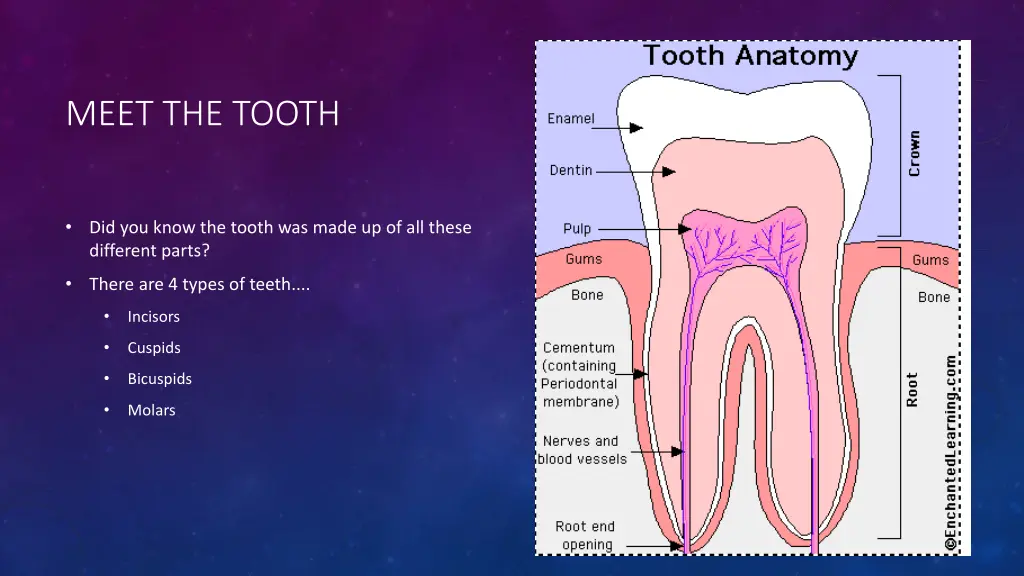
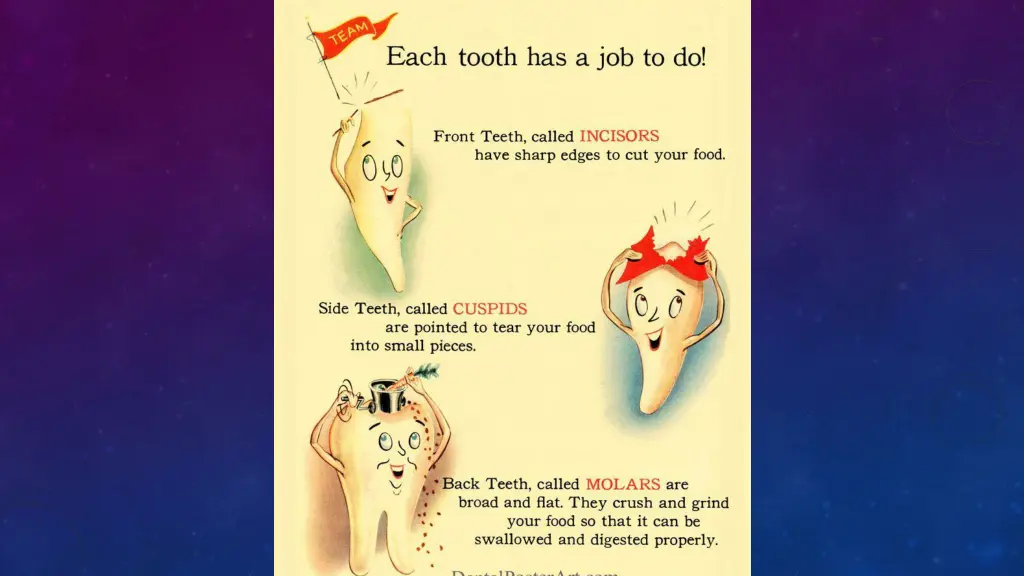
MEET THE TOOTH Did you know the tooth was made up of all these different parts? There are 4 types of teeth.... Incisors Cuspids Bicuspids Molars
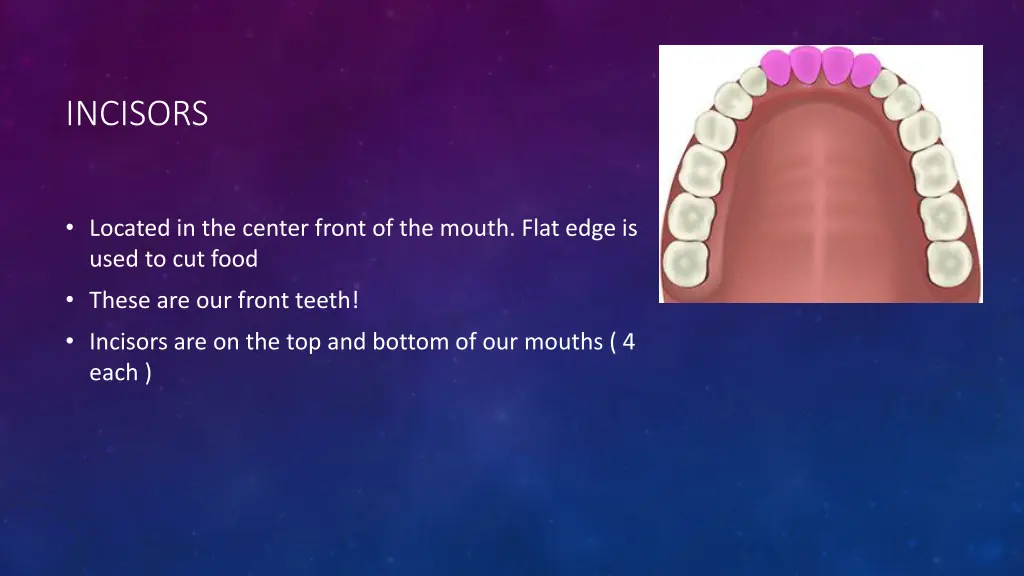
INCISORS Located in the center front of the mouth. Flat edge is used to cut food These are our front teeth! Incisors are on the top and bottom of our mouths ( 4 each )
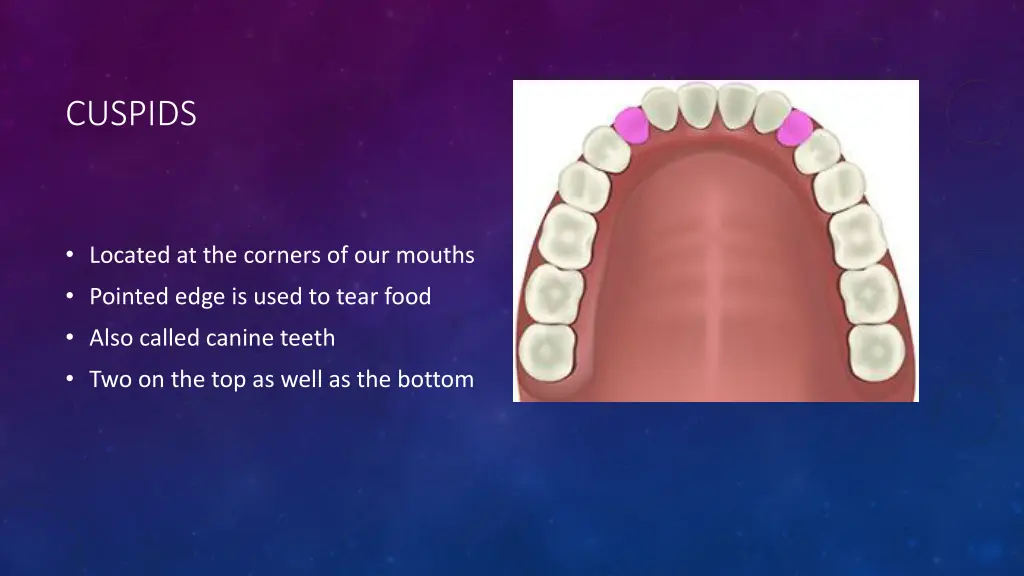
CUSPIDS Located at the corners of our mouths Pointed edge is used to tear food Also called canine teeth Two on the top as well as the bottom
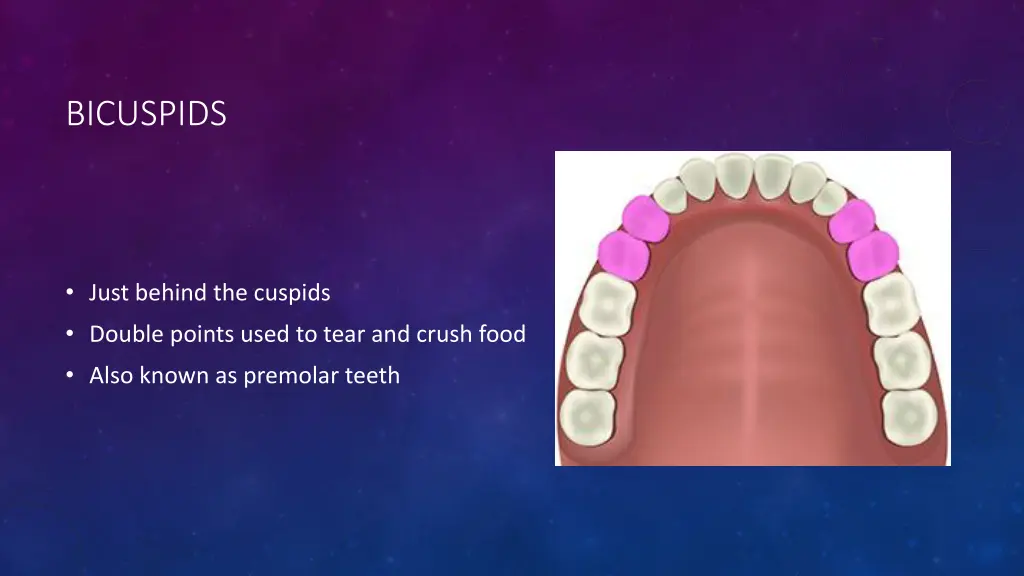
BICUSPIDS Just behind the cuspids Double points used to tear and crush food Also known as premolar teeth
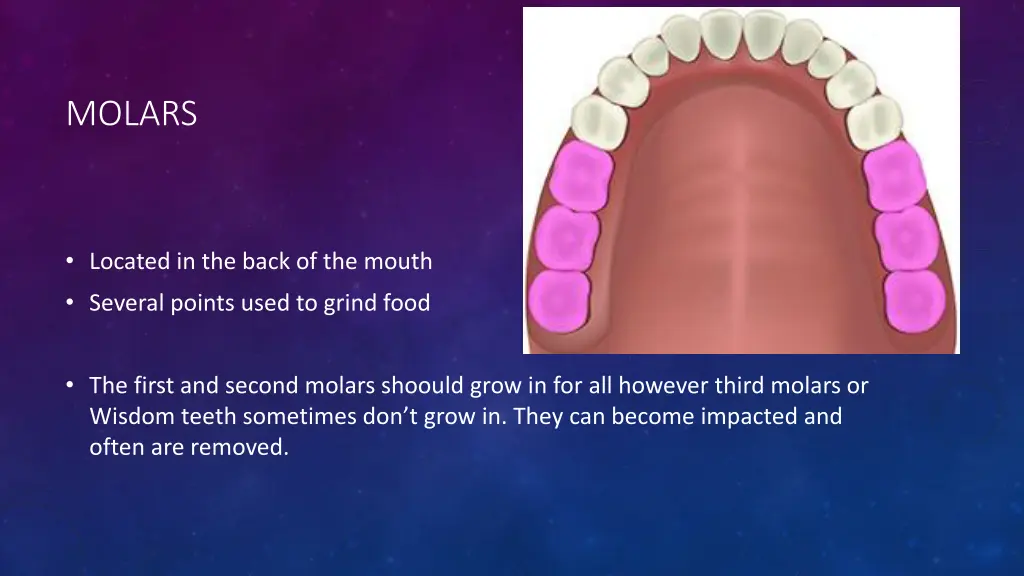
MOLARS Located in the back of the mouth Several points used to grind food The first and second molars shoould grow in for all however third molars or Wisdom teeth sometimes don t grow in. They can become impacted and often are removed.
HTTPS://WWW.YOUTUBE.COM/WATCH?V=RHO_KBO GFCW Tooth Video
LETS SEE WHAT WE HAVE LEARNED... On a blank piece of paper, try to draw the teeth Labeling the teeth (incisors, cuspids, bicuspids, molars ) When you are finished, compare with someone to check if you missed anything
WHICH TOOTH AM I? I have a flat edge that helps cut into food Incisors I have multiple points that help grind up food Molar I am in the front of the mouth Incisor I am next to the molars and i have double points that tear up food Bicuspids I am sharp and tear up food Cuspids I am the third molars Wisdom teeth I am behind the canine teeth Bicuspids
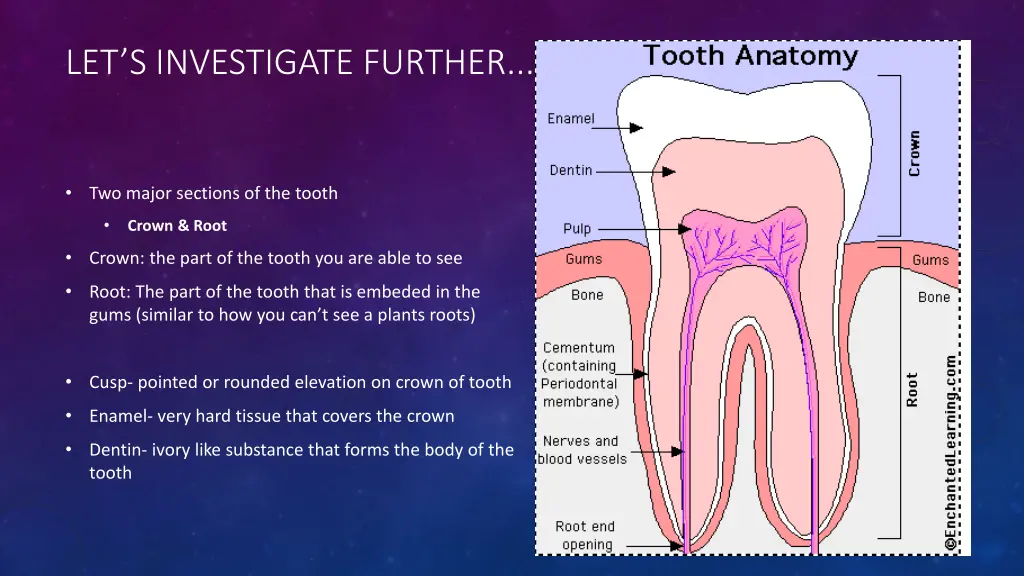
LETS INVESTIGATE FURTHER.... Two major sections of the tooth Crown & Root Crown: the part of the tooth you are able to see Root: The part of the tooth that is embeded in the gums (similar to how you can t see a plants roots) Cusp- pointed or rounded elevation on crown of tooth Enamel- very hard tissue that covers the crown Dentin- ivory like substance that forms the body of the tooth
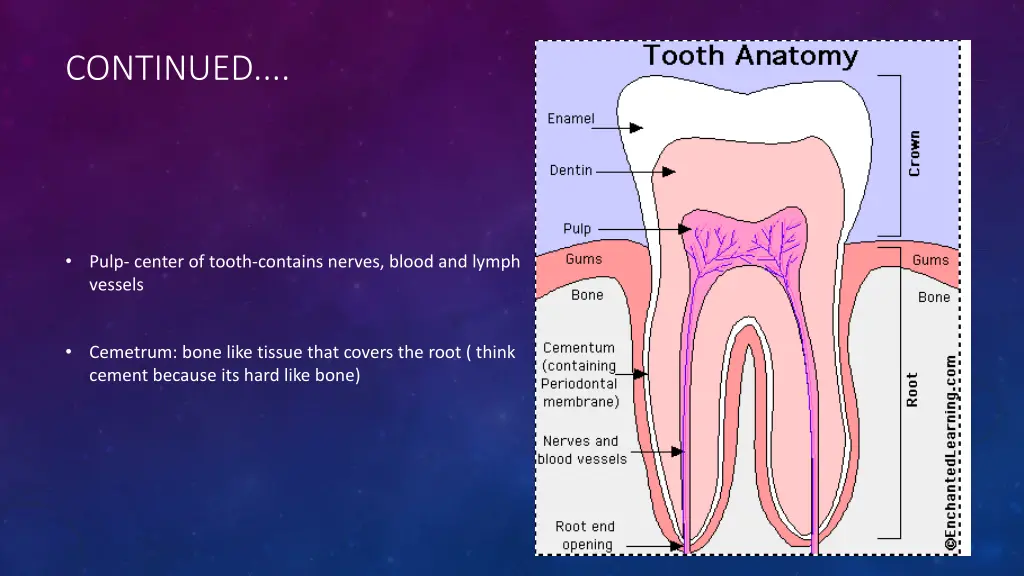
CONTINUED.... Pulp- center of tooth-contains nerves, blood and lymph vessels Cemetrum: bone like tissue that covers the root ( think cement because its hard like bone)
FLASH CARDS Using a blank sheet of paper you are going to create flash cards with the terms we have learned today in class. When writing out the flash cards, try to use different colors or types of handwriting to help associate the terms with their definition. Go through your set of flash cards a few times then work with someone to quiz them on these terms.
RECAP 4 main types of teeth 32 permanent teeth in adults Two major parts of the tooth are the crown and the root
TOOTH DECAY When bacteria decays or breaks away the outer surface of the tooth Tooth decay and diseases of the gums are the most widespread diseases in the world and can result in . Pain Bad breath Loss of teeth Unclear speech Faulty chewing
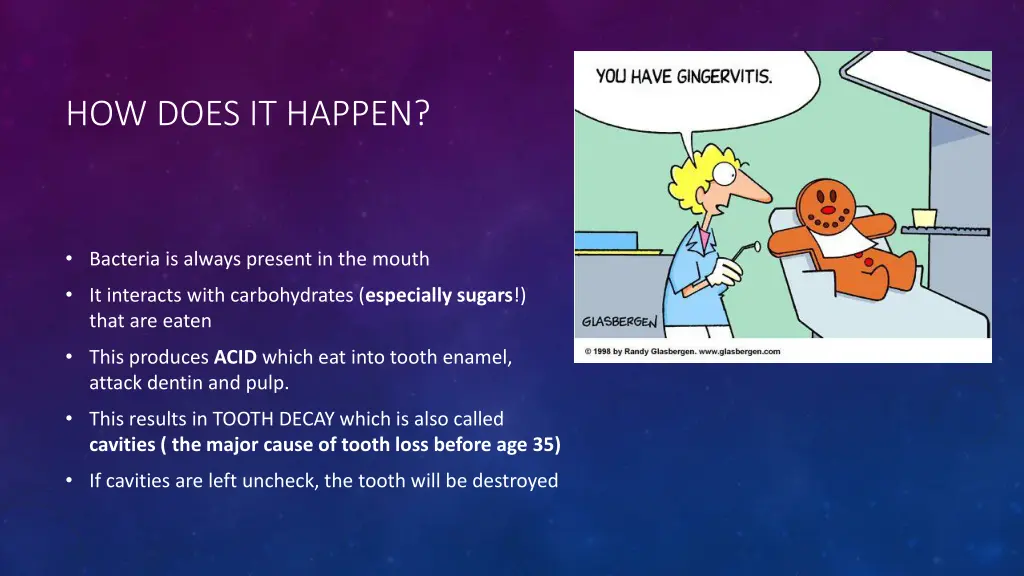
HOW DOES IT HAPPEN? Bacteria is always present in the mouth It interacts with carbohydrates (especially sugars!) that are eaten This produces ACID which eat into tooth enamel, attack dentin and pulp. This results in TOOTH DECAY which is also called cavities ( the major cause of tooth loss before age 35) If cavities are left uncheck, the tooth will be destroyed
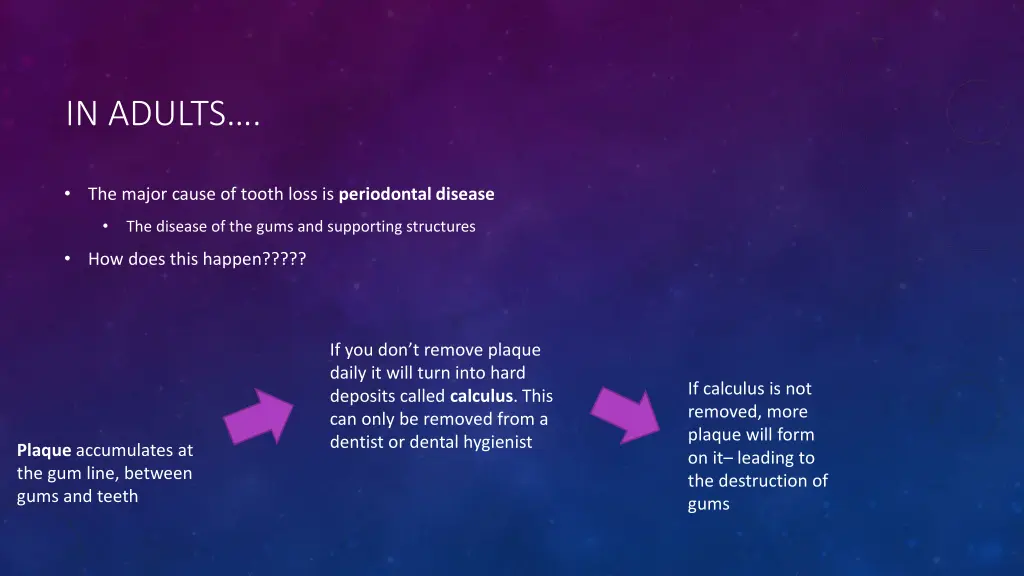
IN ADULTS. The major cause of tooth loss is periodontal disease The disease of the gums and supporting structures How does this happen????? If you don t remove plaque daily it will turn into hard deposits called calculus. This can only be removed from a dentist or dental hygienist If calculus is not removed, more plaque will form on it leading to the destruction of gums Plaque accumulates at the gum line, between gums and teeth
WHAT IS PLAQUE? A thin colorless film of living bacteria that sticks to teeth and gums.
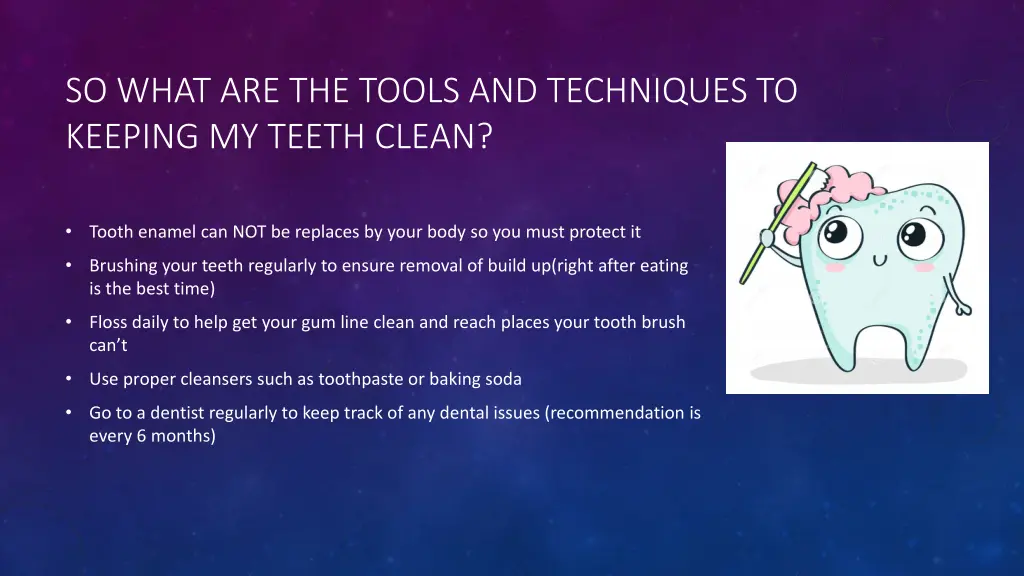
SO WHAT ARE THE TOOLS AND TECHNIQUES TO KEEPING MY TEETH CLEAN? Tooth enamel can NOT be replaces by your body so you must protect it Brushing your teeth regularly to ensure removal of build up(right after eating is the best time) Floss daily to help get your gum line clean and reach places your tooth brush can t Use proper cleansers such as toothpaste or baking soda Go to a dentist regularly to keep track of any dental issues (recommendation is every 6 months)
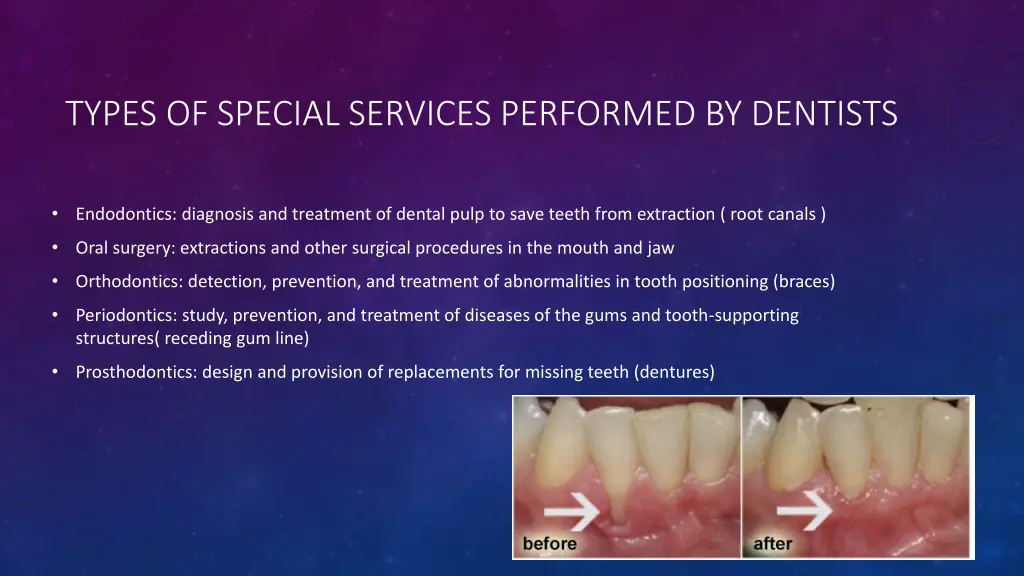
TYPES OF SPECIAL SERVICES PERFORMED BY DENTISTS Endodontics: diagnosis and treatment of dental pulp to save teeth from extraction ( root canals ) Oral surgery: extractions and other surgical procedures in the mouth and jaw Orthodontics: detection, prevention, and treatment of abnormalities in tooth positioning (braces) Periodontics: study, prevention, and treatment of diseases of the gums and tooth-supporting structures( receding gum line) Prosthodontics: design and provision of replacements for missing teeth (dentures)
DENTISTS SEE MORE THAN PROBLEMS WITH TEETH Read the article independently You may work with one person or alone to answer the following questions ( turned in and graded ) What are some ways a dentist might be able to tell there is something more going on in the body? What are some of the diseases a dentist could possibly detect from a check up? Do you feel going to the dentist regularly is important? Does this article impact your opinion? Why might an individual not realize they have a dental issue? How can you help improve your dental hygiene and health? Give 5 ways