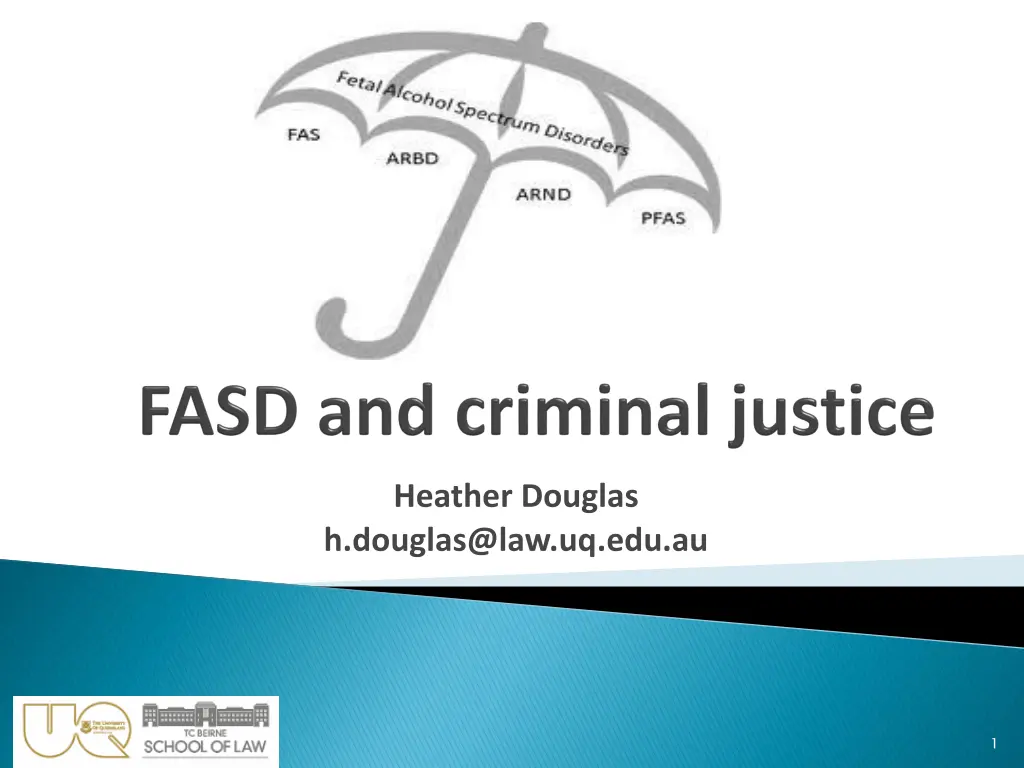
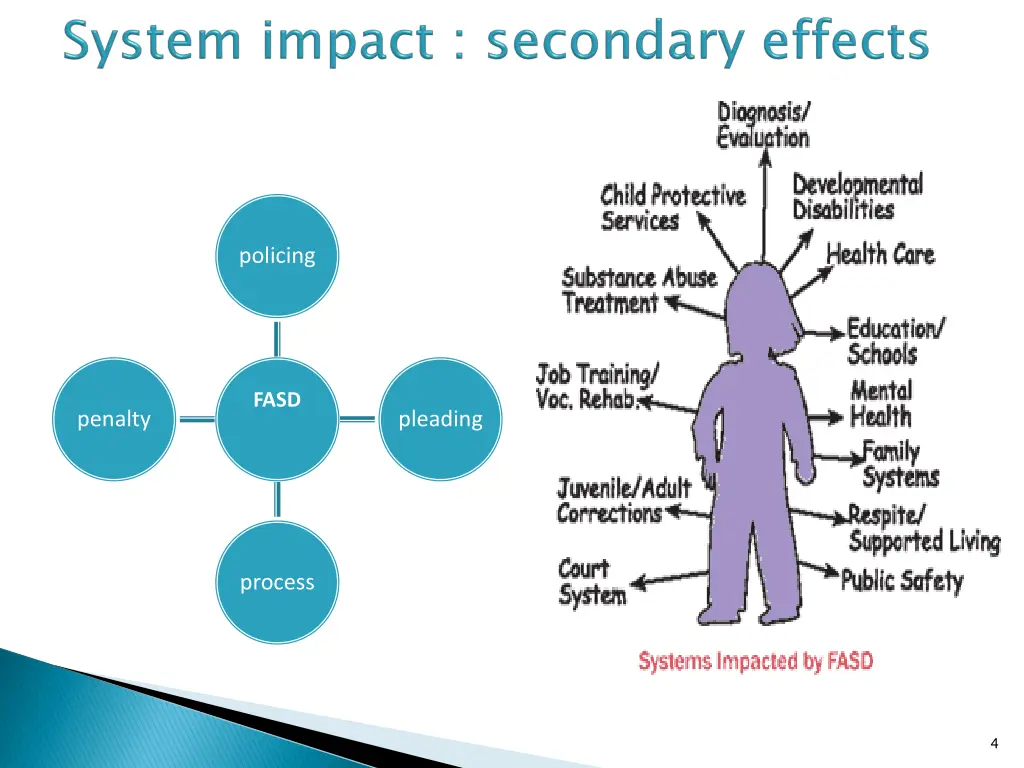
Discover insights from a survey where 49 members of the Queensland judiciary completed a study on Fetal Alcohol Spectrum Disorder (FASD). Find out about the challenges faced in identifying and addressing FASD in the legal system, and the importance of recognition and appropriate interventions.
Please find below an Image/Link to download the presentation.
The content on the website is provided AS IS for your information and personal use only. It may not be sold, licensed, or shared on other websites without obtaining consent from the author. If you encounter any issues during the download, it is possible that the publisher has removed the file from their server.
You are allowed to download the files provided on this website for personal or commercial use, subject to the condition that they are used lawfully. All files are the property of their respective owners.
The content on the website is provided AS IS for your information and personal use only. It may not be sold, licensed, or shared on other websites without obtaining consent from the author.
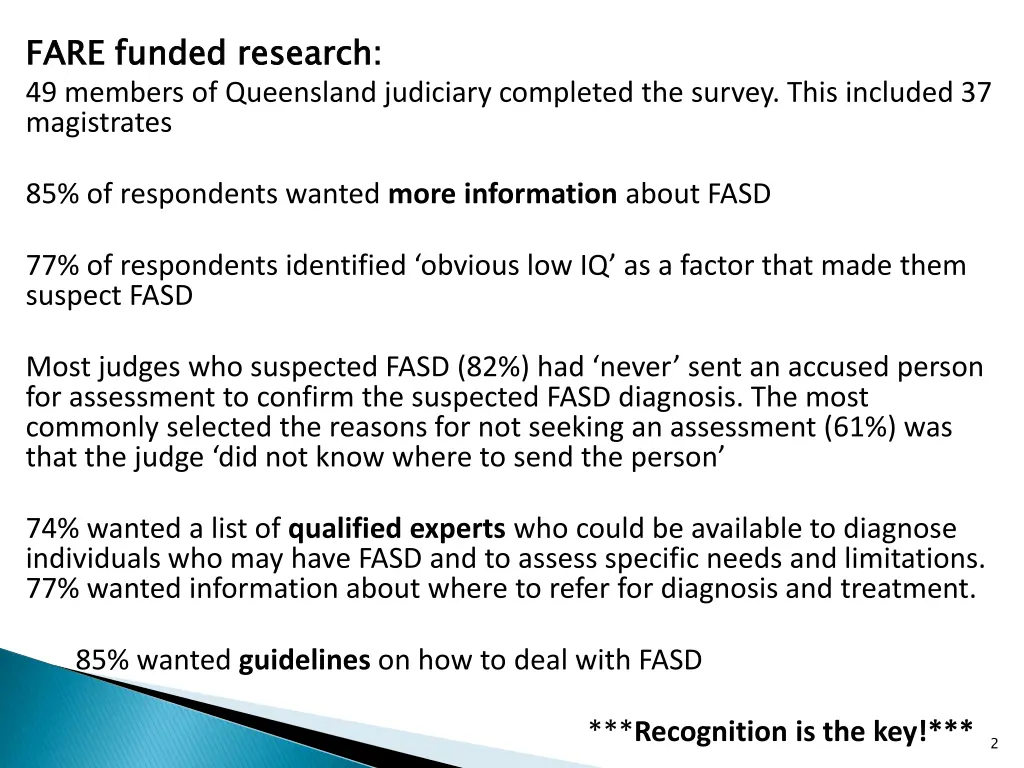
FARE 49 members of Queensland judiciary completed the survey. This included 37 magistrates FARE funded research: funded research: 85% of respondents wanted more information about FASD 77% of respondents identified obvious low IQ as a factor that made them suspect FASD Most judges who suspected FASD (82%) had never sent an accused person for assessment to confirm the suspected FASD diagnosis. The most commonly selected the reasons for not seeking an assessment (61%) was that the judge did not know where to send the person 74% wanted a list of qualified experts who could be available to diagnose individuals who may have FASD and to assess specific needs and limitations. 77% wanted information about where to refer for diagnosis and treatment. 85% wanted guidelines on how to deal with FASD ***Recognition is the key!*** 2
The non-responsivity of defendants to opportunities that were offered to them was no doubt related to the disorder. It was never, ever identified. It was never, ever suggested. When I say this I don't mean the solicitors were considering it. I firmly believe that they - that it's not on the radar. (Magistrate) I think that it would be really potentially really valuable for it to be identified so that judicial officers can start to realise - and everyone that's working with people who suffer from the disorder - can start to realise that, as Di Malbin says, the approach needs to be different rather than trying harder. (Magistrate) I think it's important as any - with any kind of disability to find out as best you can just what the cause is. Apart from anything else, as I understand it, really the situation is that with foetal alcohol syndrome the client's pretty much stuck in terms of any real improvement. That's different from a lot of things. For example some brain injuries and so forth where there can be improvement. (Barrister) The more appropriate interventions the better. Because sometimes kids with difficulties like that don't respond positively to supervision where they're required to report in or anything like that, and then they're breached, and then that puts them back in the system.(Magistrate) 3
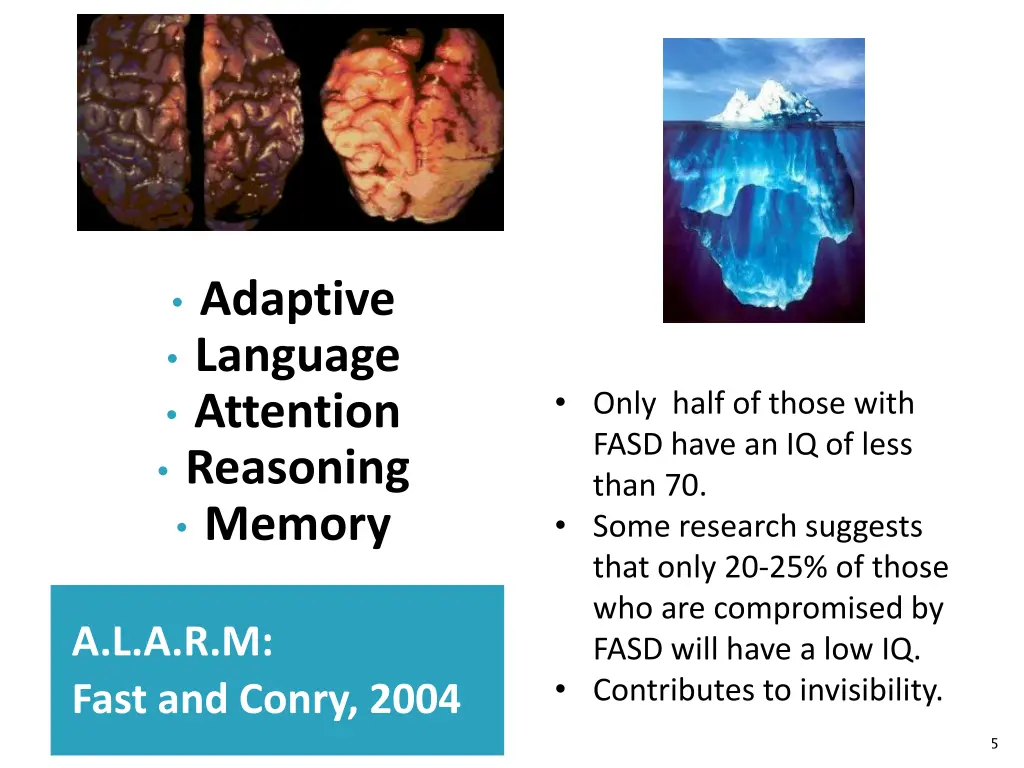
Adaptive Language Attention Reasoning Memory Only half of those with FASD have an IQ of less than 70. Some research suggests that only 20-25% of those who are compromised by FASD will have a low IQ. Contributes to invisibility. A.L.A.R.M: Fast and Conry, 2004 5
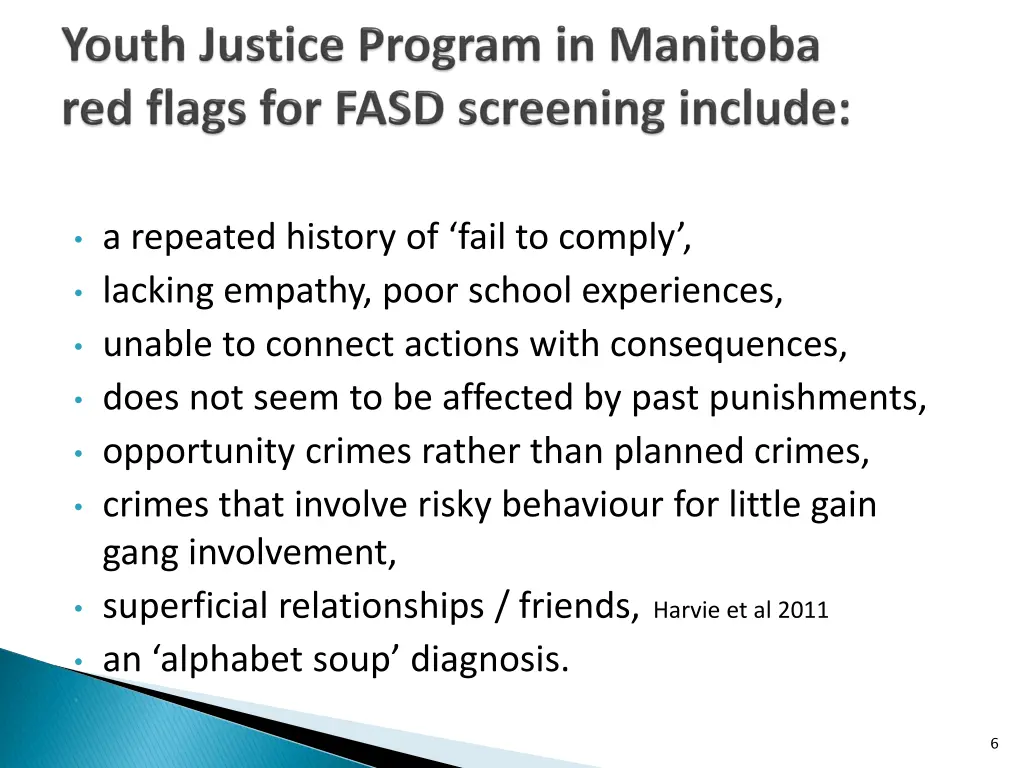
a repeated history of fail to comply, lacking empathy, poor school experiences, unable to connect actions with consequences, does not seem to be affected by past punishments, opportunity crimes rather than planned crimes, crimes that involve risky behaviour for little gain gang involvement, superficial relationships / friends,Harvie et al 2011 an alphabet soup diagnosis. 6
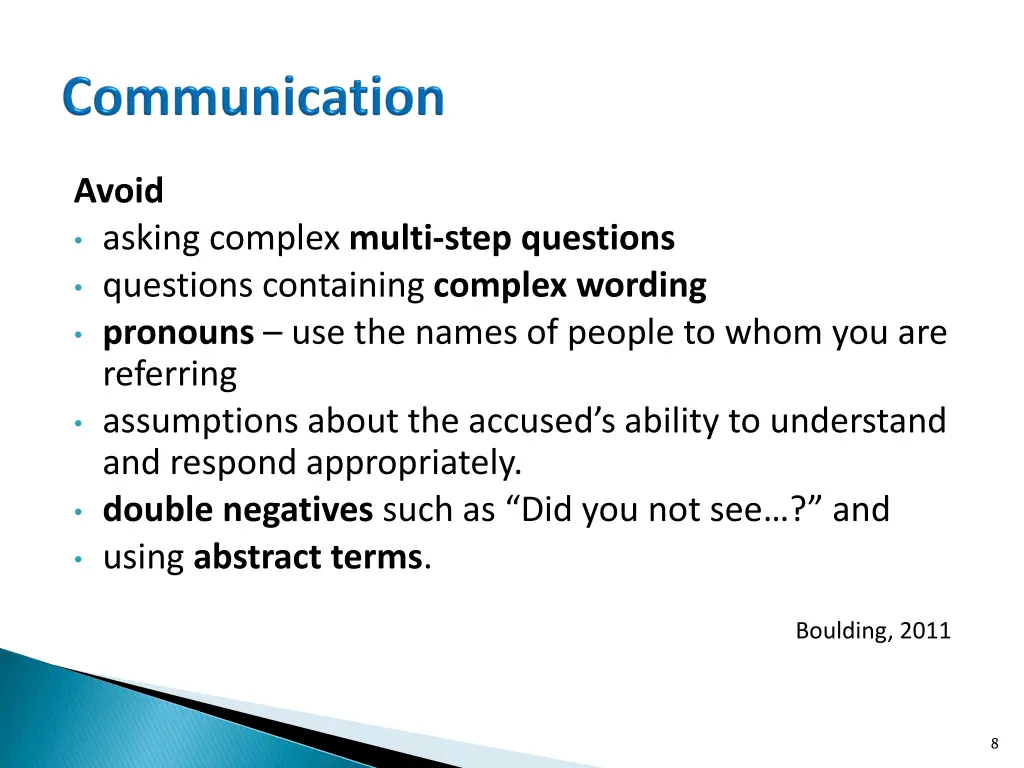
Avoid asking complex multi-step questions questions containing complex wording pronouns use the names of people to whom you are referring assumptions about the accused s ability to understand and respond appropriately. double negatives such as Did you not see ? and using abstract terms. Boulding, 2011 8
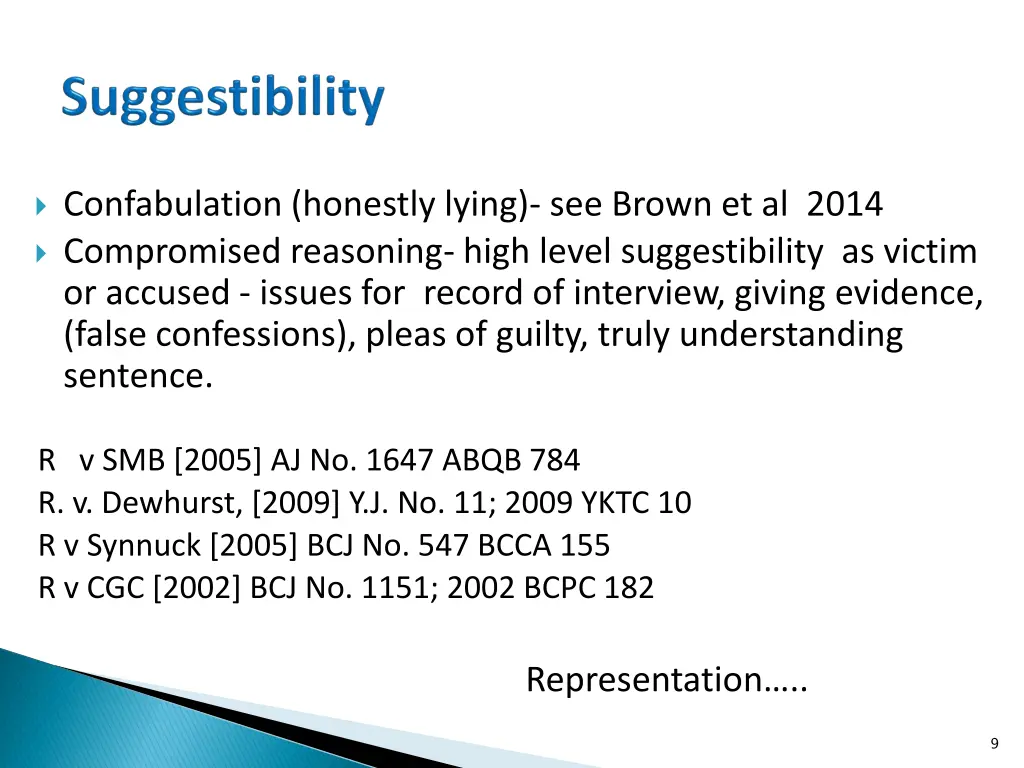
Confabulation (honestly lying)- see Brown et al 2014 Compromised reasoning- high level suggestibility as victim or accused - issues for record of interview, giving evidence, (false confessions), pleas of guilty, truly understanding sentence. R v SMB [2005] AJ No. 1647 ABQB 784 R. v. Dewhurst, [2009] Y.J. No. 11; 2009 YKTC 10 R v Synnuck [2005] BCJ No. 547 BCCA 155 R v CGC [2002] BCJ No. 1151; 2002 BCPC 182 Representation .. 9
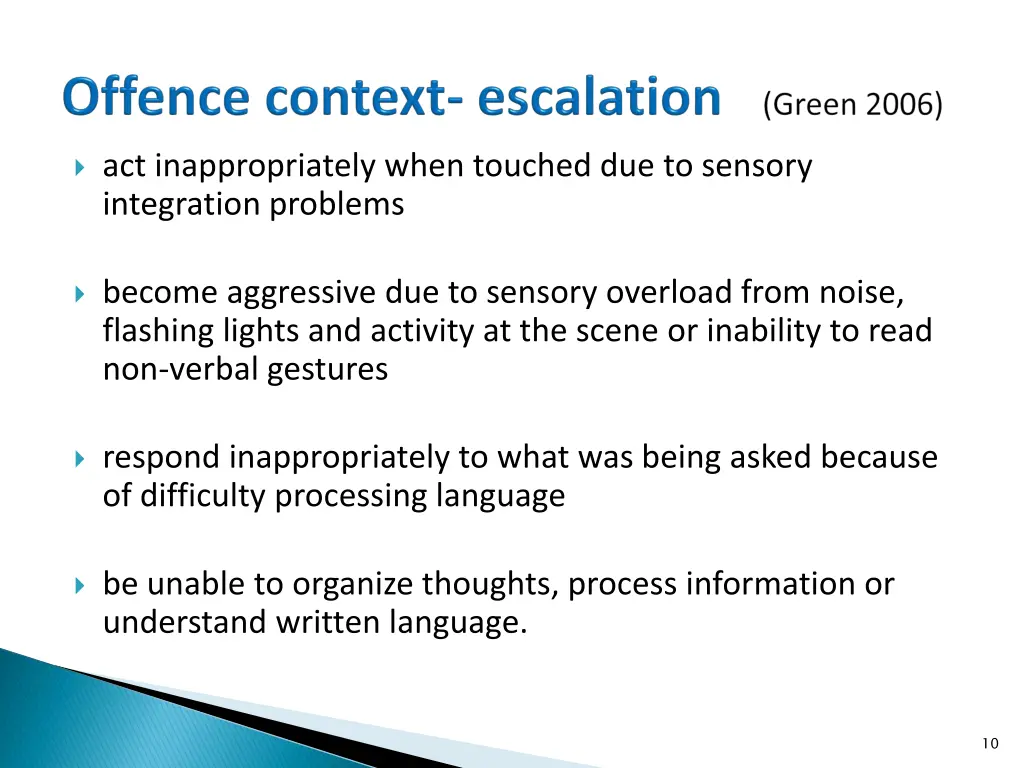
act inappropriately when touched due to sensory integration problems become aggressive due to sensory overload from noise, flashing lights and activity at the scene or inability to read non-verbal gestures respond inappropriately to what was being asked because of difficulty processing language be unable to organize thoughts, process information or understand written language. 10
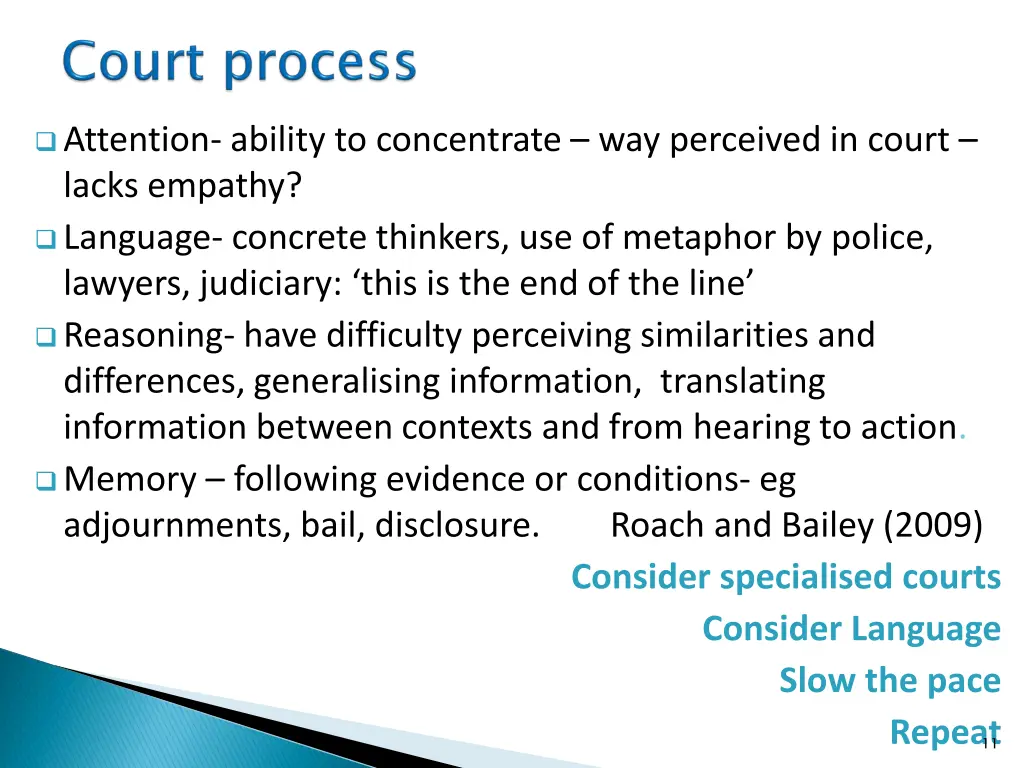
Attention- ability to concentrate way perceived in court lacks empathy? Language- concrete thinkers, use of metaphor by police, lawyers, judiciary: this is the end of the line Reasoning- have difficulty perceiving similarities and differences, generalising information, translating information between contexts and from hearing to action. Memory following evidence or conditions- eg adjournments, bail, disclosure. Roach and Bailey (2009) Consider specialised courts Consider Language Slow the pace Repeat 11
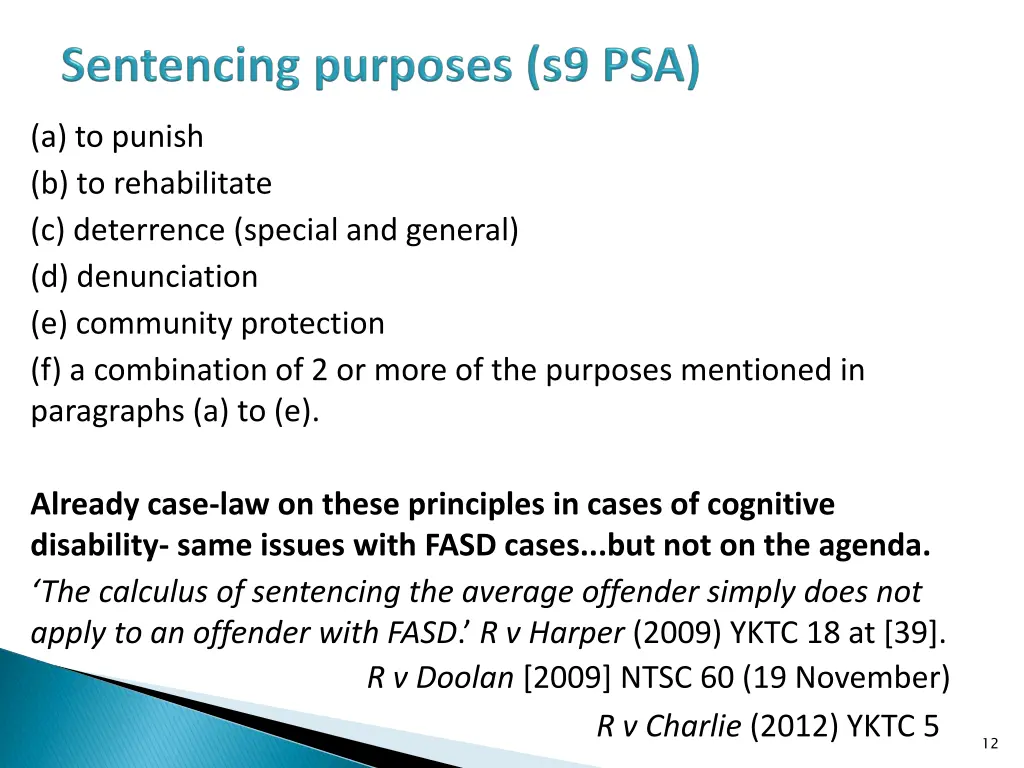
(a) to punish (b) to rehabilitate (c) deterrence (special and general) (d) denunciation (e) community protection (f) a combination of 2 or more of the purposes mentioned in paragraphs (a) to (e). Already case-law on these principles in cases of cognitive disability- same issues with FASD cases...but not on the agenda. The calculus of sentencing the average offender simply does not apply to an offender with FASD. R v Harper (2009) YKTC 18 at [39]. R v Doolan [2009] NTSC 60 (19 November) R v Charlie (2012) YKTC 5 12
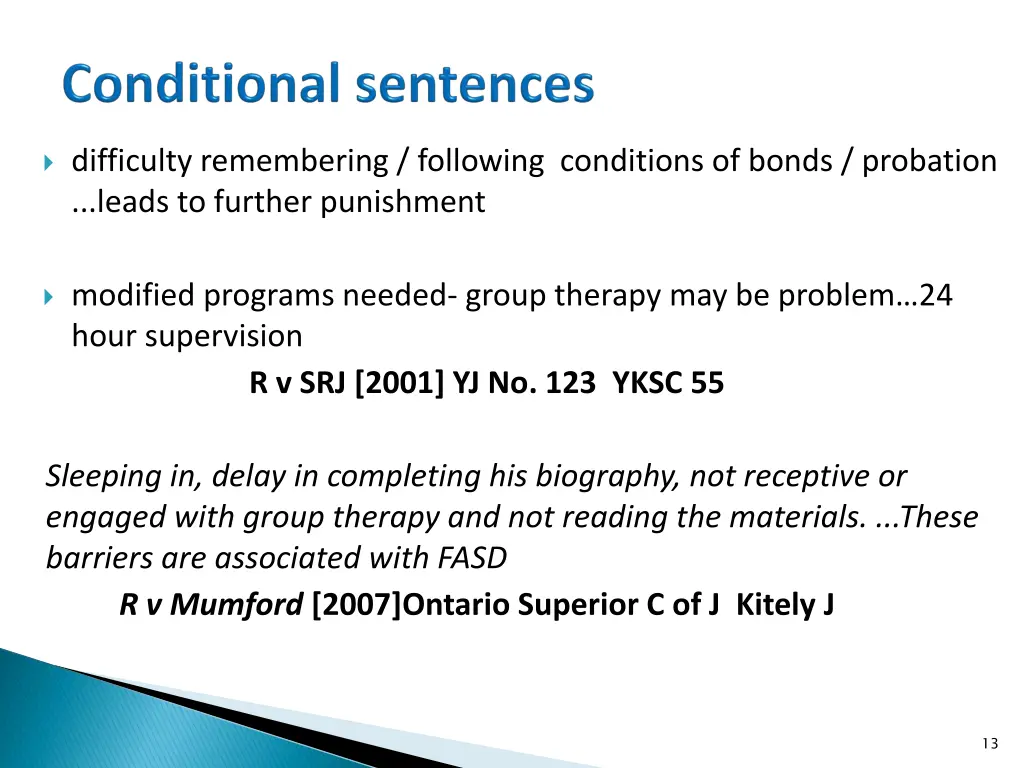
difficulty remembering / following conditions of bonds / probation ...leads to further punishment modified programs needed- group therapy may be problem 24 hour supervision R v SRJ [2001] YJ No. 123 YKSC 55 Sleeping in, delay in completing his biography, not receptive or engaged with group therapy and not reading the materials. ...These barriers are associated with FASD R v Mumford [2007]Ontario Superior C of J Kitely J 13
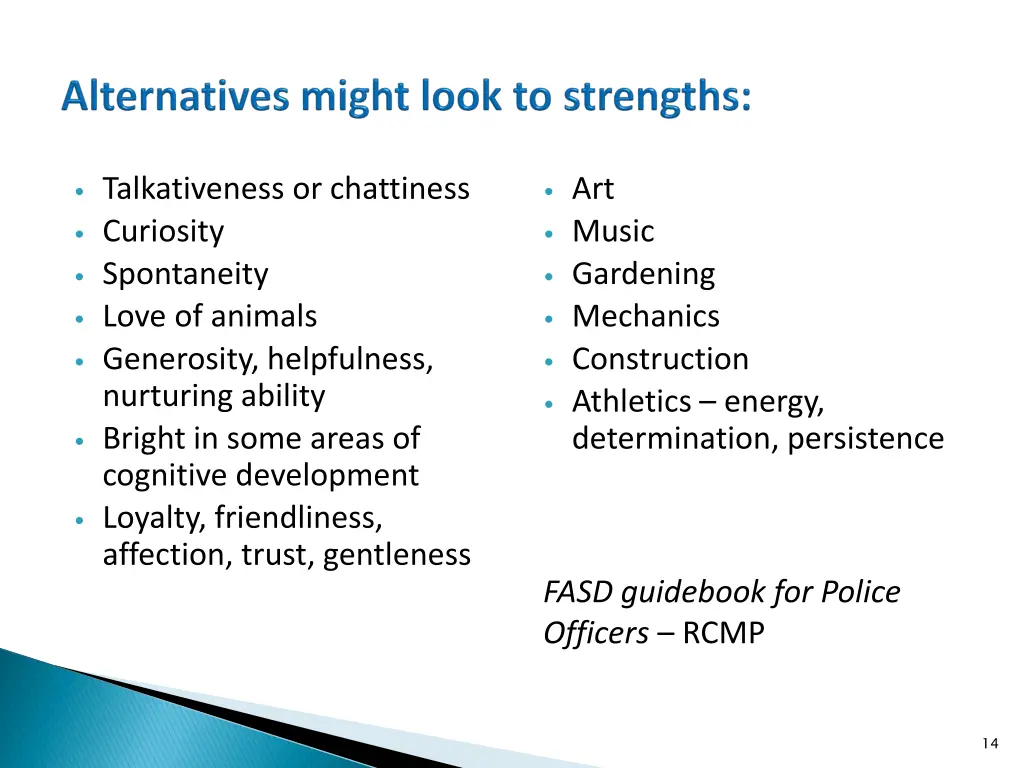
Talkativeness or chattiness Curiosity Spontaneity Love of animals Generosity, helpfulness, nurturing ability Bright in some areas of cognitive development Loyalty, friendliness, affection, trust, gentleness Art Music Gardening Mechanics Construction Athletics energy, determination, persistence FASD guidebook for Police Officers RCMP 14
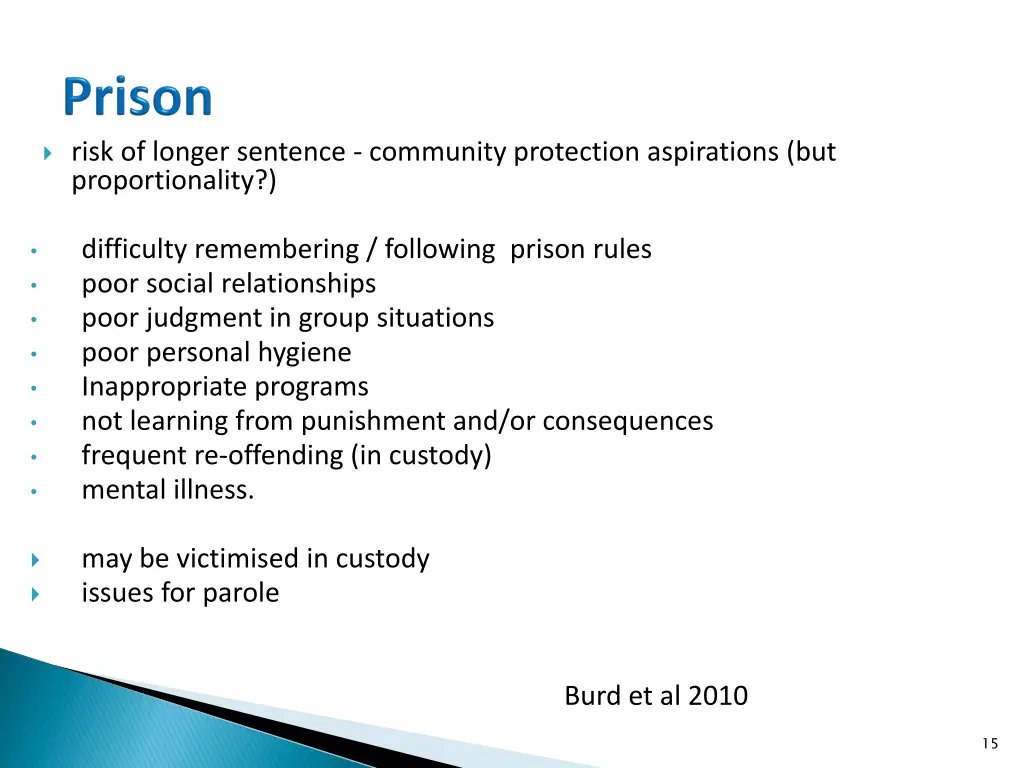
risk of longer sentence - community protection aspirations (but proportionality?) difficulty remembering / following prison rules poor social relationships poor judgment in group situations poor personal hygiene Inappropriate programs not learning from punishment and/or consequences frequent re-offending (in custody) mental illness. may be victimised in custody issues for parole Burd et al 2010 15
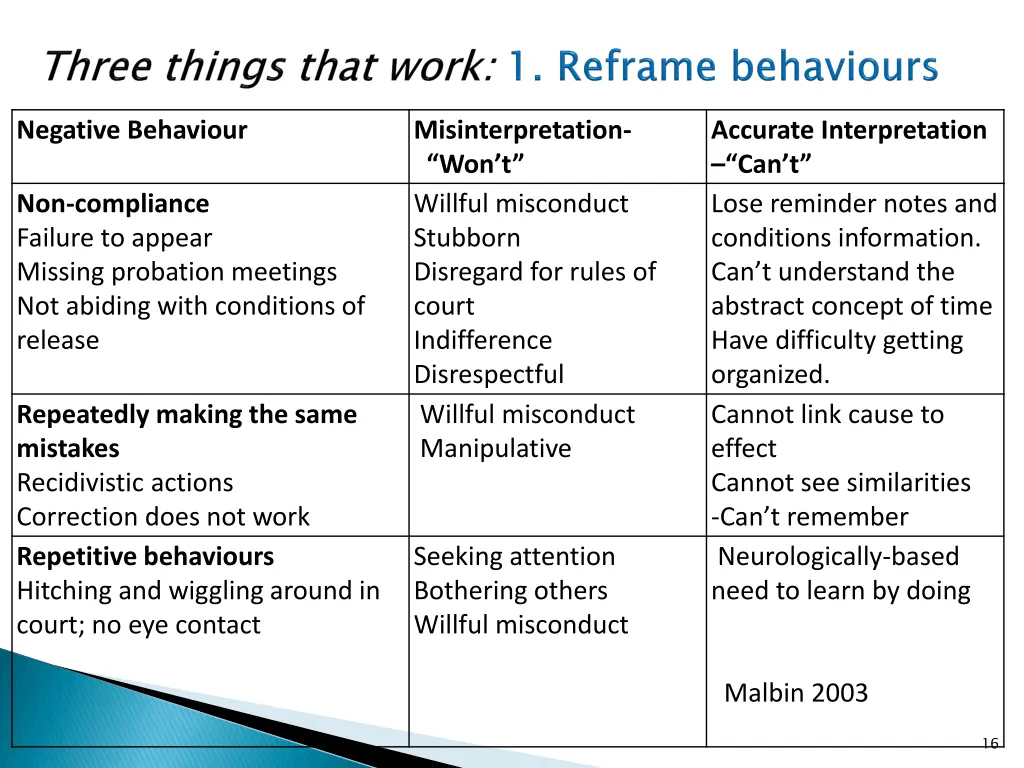
Negative Behaviour Misinterpretation- Won t Willful misconduct Stubborn Disregard for rules of court Indifference Disrespectful Willful misconduct Manipulative Accurate Interpretation Can t Lose reminder notes and conditions information. Can t understand the abstract concept of time Have difficulty getting organized. Cannot link cause to effect Cannot see similarities -Can t remember Neurologically-based need to learn by doing Non-compliance Failure to appear Missing probation meetings Not abiding with conditions of release Repeatedly making the same mistakes Recidivistic actions Correction does not work Repetitive behaviours Hitching and wiggling around in court; no eye contact Seeking attention Bothering others Willful misconduct Malbin 2003 16
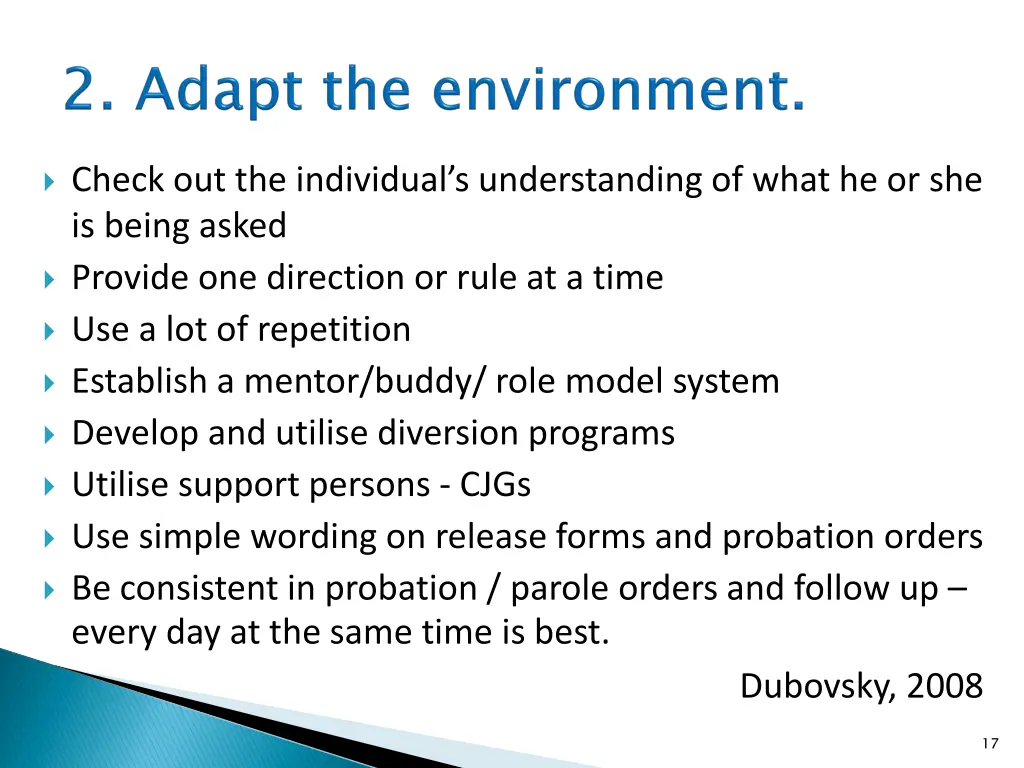
Check out the individuals understanding of what he or she is being asked Provide one direction or rule at a time Use a lot of repetition Establish a mentor/buddy/ role model system Develop and utilise diversion programs Utilise support persons - CJGs Use simple wording on release forms and probation orders Be consistent in probation / parole orders and follow up every day at the same time is best. Dubovsky, 2008 17
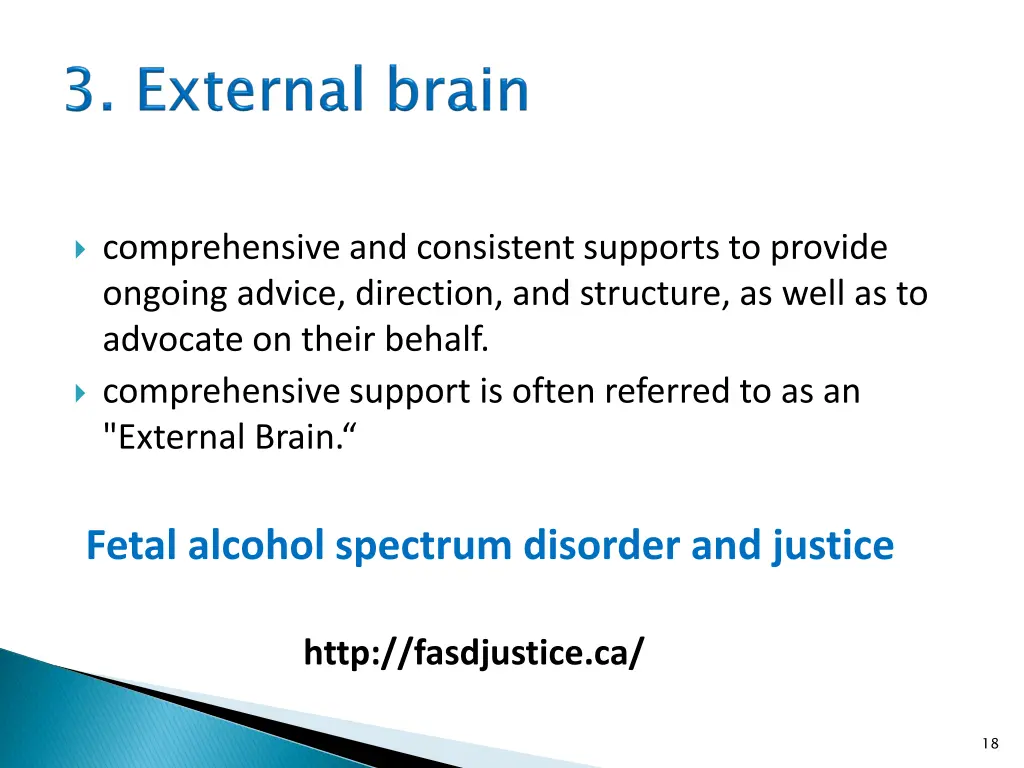
comprehensive and consistent supports to provide ongoing advice, direction, and structure, as well as to advocate on their behalf. comprehensive support is often referred to as an "External Brain. Fetal alcohol spectrum disorder and justice http://fasdjustice.ca/ 18
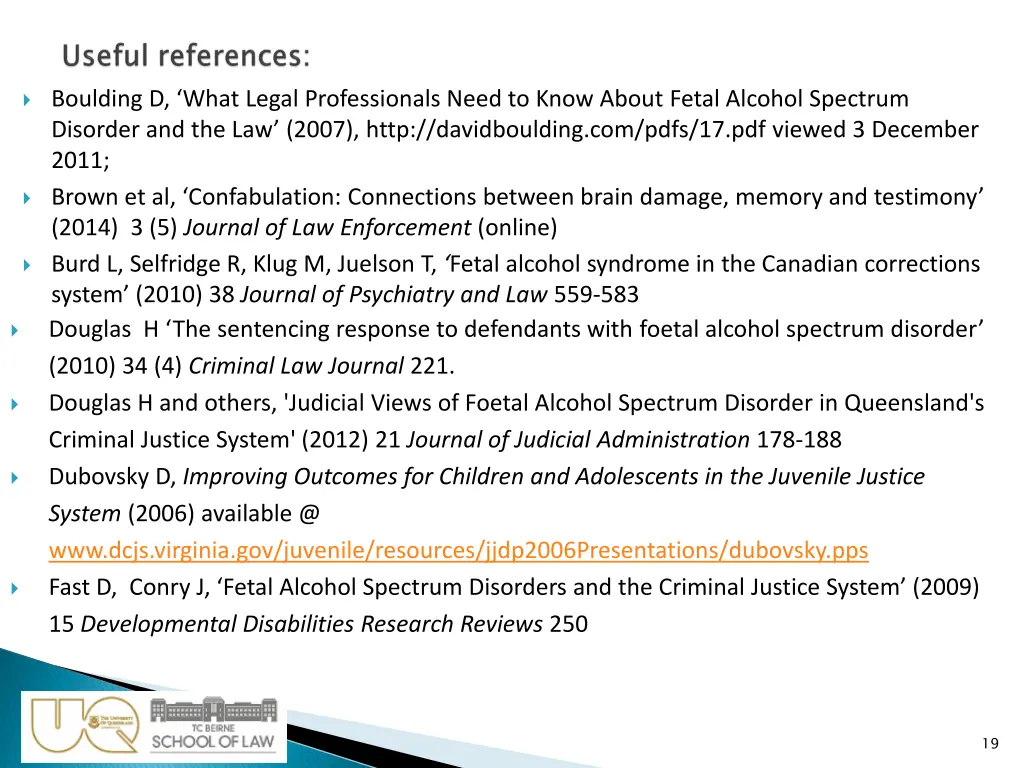
Boulding D, What Legal Professionals Need to Know About Fetal Alcohol Spectrum Disorder and the Law (2007), http://davidboulding.com/pdfs/17.pdf viewed 3 December 2011; Brown et al, Confabulation: Connections between brain damage, memory and testimony (2014) 3 (5) Journal of Law Enforcement (online) Burd L, Selfridge R, Klug M, Juelson T, Fetal alcohol syndrome in the Canadian corrections system (2010) 38 Journal of Psychiatry and Law 559-583 Douglas H The sentencing response to defendants with foetal alcohol spectrum disorder (2010) 34 (4) Criminal Law Journal 221. Douglas H and others, 'Judicial Views of Foetal Alcohol Spectrum Disorder in Queensland's Criminal Justice System' (2012) 21 Journal of Judicial Administration 178-188 Dubovsky D, Improving Outcomes for Children and Adolescents in the Juvenile Justice System (2006) available @ www.dcjs.virginia.gov/juvenile/resources/jjdp2006Presentations/dubovsky.pps Fast D, Conry J, Fetal Alcohol Spectrum Disorders and the Criminal Justice System (2009) 15 Developmental Disabilities Research Reviews 250 19
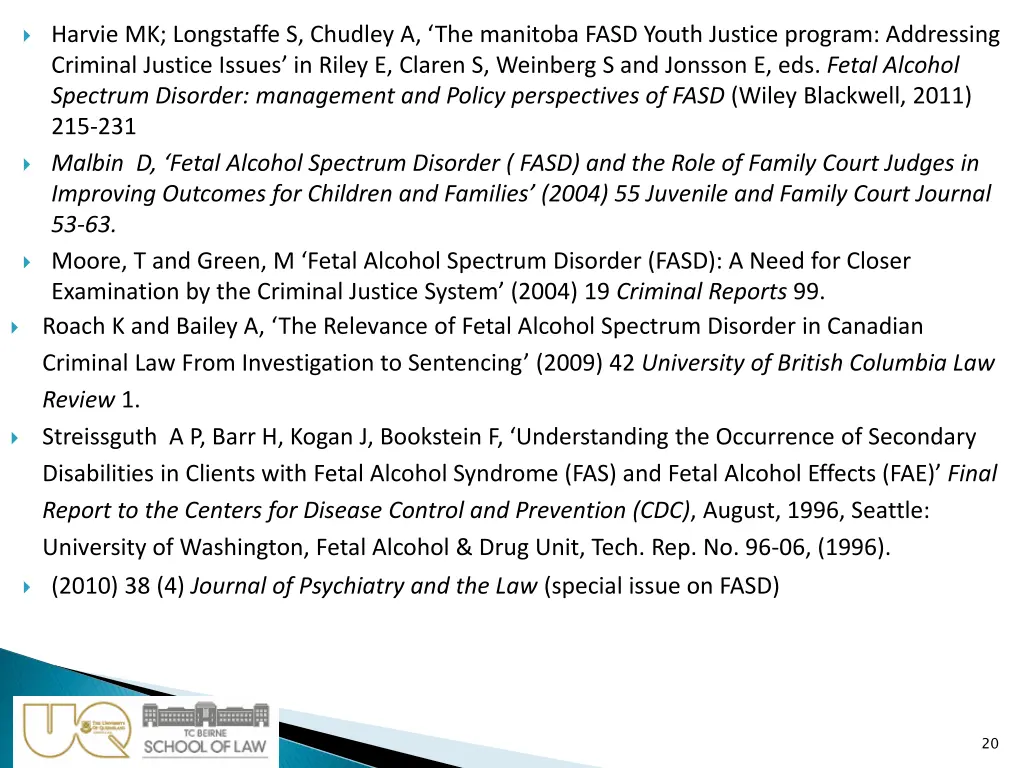
Harvie MK; Longstaffe S, Chudley A, The manitoba FASD Youth Justice program: Addressing Criminal Justice Issues in Riley E, Claren S, Weinberg S and Jonsson E, eds. Fetal Alcohol Spectrum Disorder: management and Policy perspectives of FASD (Wiley Blackwell, 2011) 215-231 Malbin D, Fetal Alcohol Spectrum Disorder ( FASD) and the Role of Family Court Judges in Improving Outcomes for Children and Families (2004) 55 Juvenile and Family Court Journal 53-63. Moore, T and Green, M Fetal Alcohol Spectrum Disorder (FASD): A Need for Closer Examination by the Criminal Justice System (2004) 19 Criminal Reports 99. Roach K and Bailey A, The Relevance of Fetal Alcohol Spectrum Disorder in Canadian Criminal Law From Investigation to Sentencing (2009) 42 University of British Columbia Law Review 1. Streissguth A P, Barr H, Kogan J, Bookstein F, Understanding the Occurrence of Secondary Disabilities in Clients with Fetal Alcohol Syndrome (FAS) and Fetal Alcohol Effects (FAE) Final Report to the Centers for Disease Control and Prevention (CDC), August, 1996, Seattle: University of Washington, Fetal Alcohol & Drug Unit, Tech. Rep. No. 96-06, (1996). (2010) 38 (4) Journal of Psychiatry and the Law (special issue on FASD) 20