Understanding GenAI Technology: Agency, Value, and Perspectives
Explore the concept of agency and value in GenAI technology through various perspectives from industry, academia, and literacy. Discover the implications of technological agency, human-machine interactions, and the role of AI in social interactions.

Download Presentation

Please find below an Image/Link to download the presentation.
The content on the website is provided AS IS for your information and personal use only. It may not be sold, licensed, or shared on other websites without obtaining consent from the author. If you encounter any issues during the download, it is possible that the publisher has removed the file from their server.
You are allowed to download the files provided on this website for personal or commercial use, subject to the condition that they are used lawfully. All files are the property of their respective owners.
The content on the website is provided AS IS for your information and personal use only. It may not be sold, licensed, or shared on other websites without obtaining consent from the author.
E N D
Presentation Transcript
Overview Agency and value(s) GenAI Technological agency Perspectives Industry Academic Literacy and learning
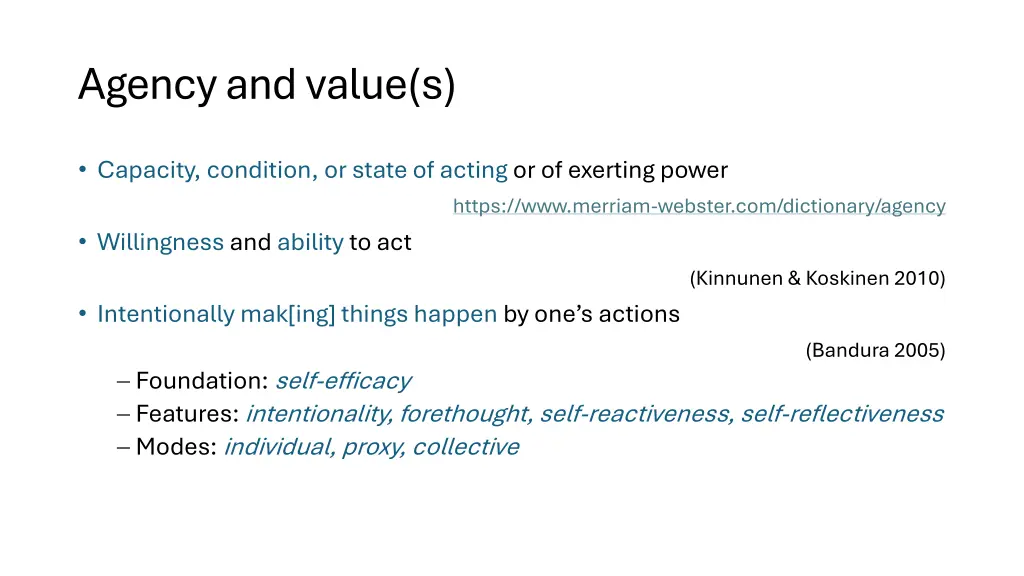
Agency and value(s) Capacity, condition, or state of acting or of exerting power https://www.merriam-webster.com/dictionary/agency Willingness and ability to act (Kinnunen & Koskinen 2010) Intentionally mak[ing] things happen by one s actions (Bandura 2005) Foundation: self-efficacy Features: intentionality, forethought, self-reactiveness, self-reflectiveness Modes: individual, proxy, collective
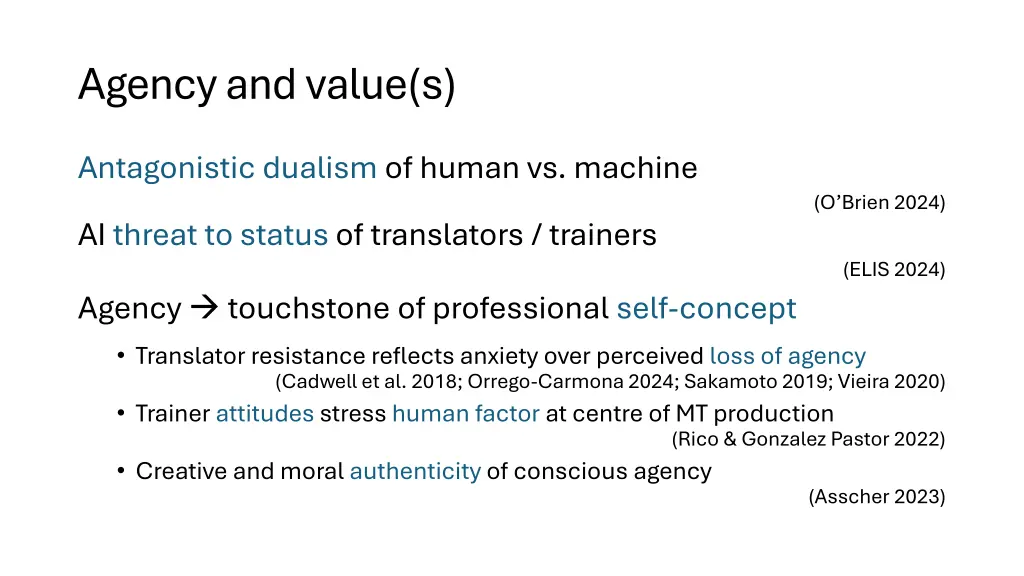
Agency and value(s) Antagonistic dualism of human vs. machine (O Brien 2024) AI threat to status of translators / trainers (ELIS 2024) Agency touchstone of professional self-concept Translator resistance reflects anxiety over perceived loss of agency (Cadwell et al. 2018; Orrego-Carmona 2024; Sakamoto 2019; Vieira 2020) Trainer attitudesstress human factor at centre of MT production (Rico & Gonzalez Pastor 2022) Creative and moral authenticity of conscious agency (Asscher 2023)
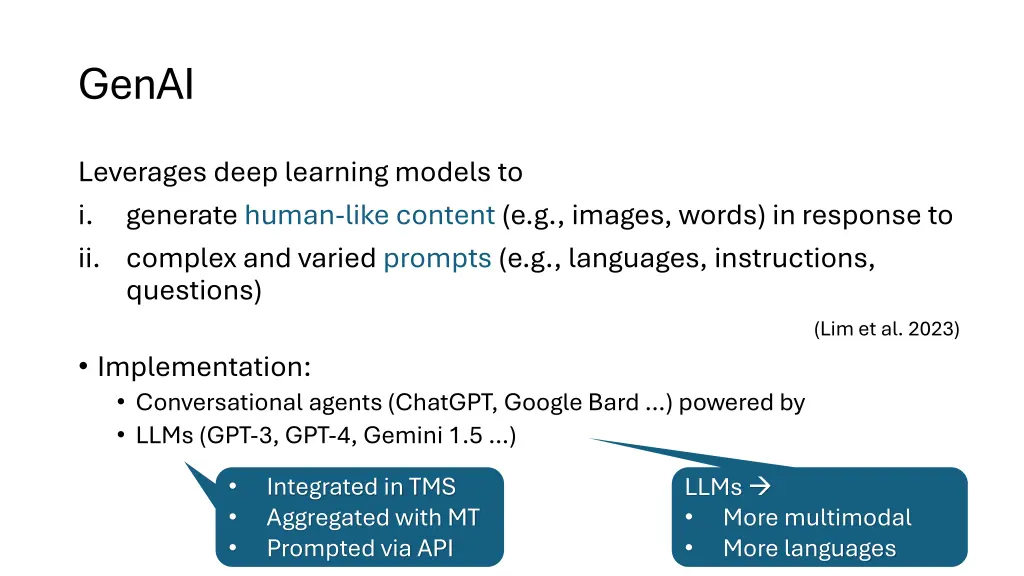
GenAI Leverages deep learning models to i. generate human-like content (e.g., images, words) in response to ii. complex and varied prompts (e.g., languages, instructions, questions) (Lim et al. 2023) Implementation: Conversational agents (ChatGPT, Google Bard ) powered by LLMs (GPT-3, GPT-4, Gemini 1.5 ) Integrated in TMS Aggregated with MT Prompted via API LLMs More multimodal More languages
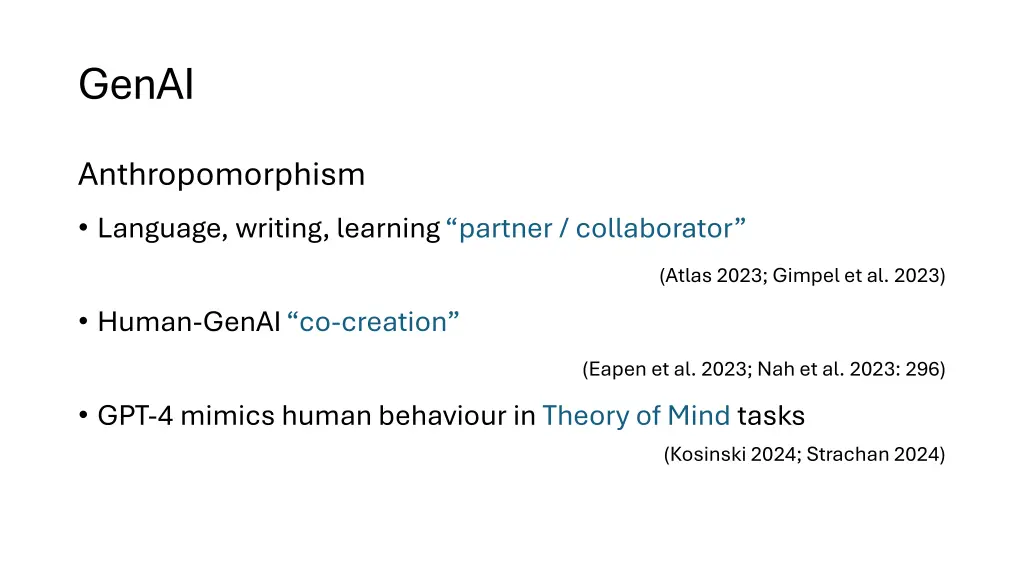
GenAI Anthropomorphism Language, writing, learning partner / collaborator (Atlas 2023; Gimpel et al. 2023) Human-GenAI co-creation (Eapenet al. 2023; Nah et al. 2023: 296) GPT-4 mimics human behaviour in Theory of Mind tasks (Kosinski 2024; Strachan 2024)
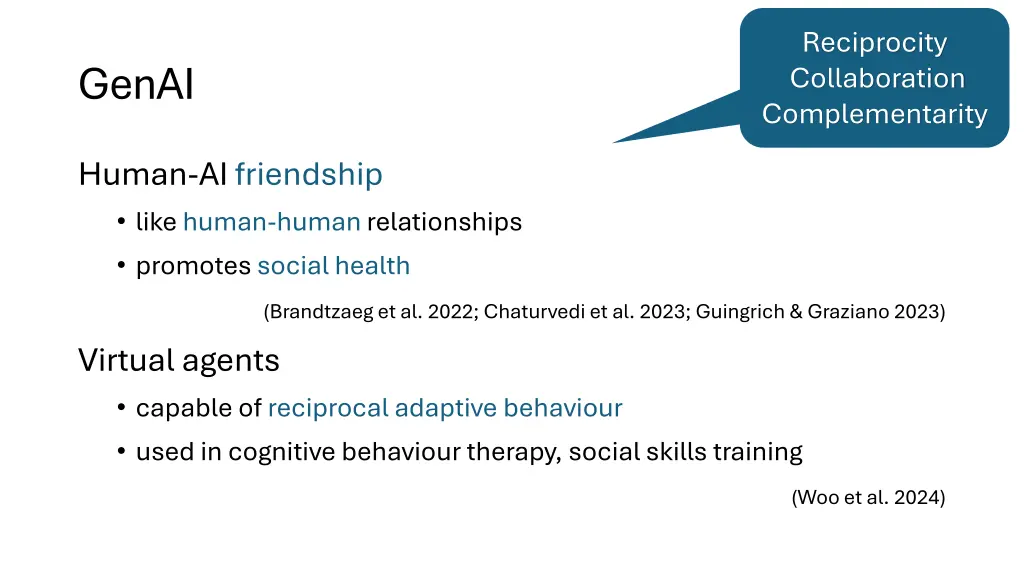
Reciprocity Collaboration Complementarity GenAI Human-AI friendship like human-humanrelationships promotes social health (Brandtzaeg et al. 2022; Chaturvedi et al. 2023; Guingrich& Graziano 2023) Virtual agents capable of reciprocal adaptive behaviour used in cognitive behaviour therapy, social skills training (Woo et al. 2024)
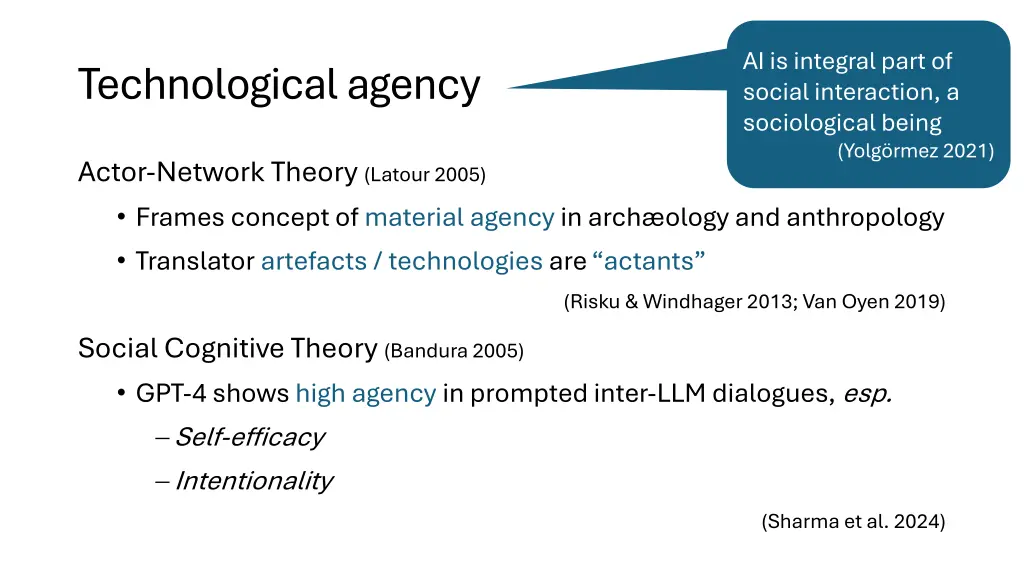
AI is integral part of social interaction, a sociological being (Yolg rmez2021) Technological agency Actor-Network Theory (Latour 2005) Frames concept of material agency in arch ology and anthropology Translator artefacts / technologies are actants (Risku & Windhager2013; Van Oyen 2019) Social Cognitive Theory (Bandura 2005) GPT-4 shows high agency in prompted inter-LLM dialogues, esp. Self-efficacy Intentionality (Sharma et al. 2024)
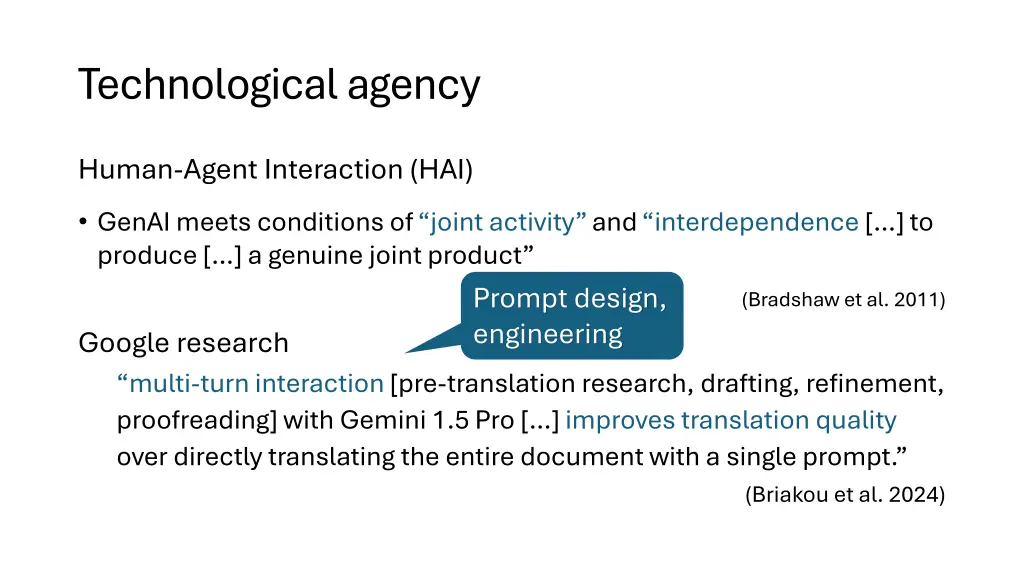
Technological agency Human-Agent Interaction (HAI) GenAI meets conditions of joint activity and interdependence [ ] to produce [ ] a genuine joint product Prompt design, engineering (Bradshaw et al. 2011) Google research multi-turn interaction [pre-translation research, drafting, refinement, proofreading] with Gemini 1.5 Pro [ ] improves translation quality over directly translating the entire document with a single prompt. (Briakou et al. 2024)
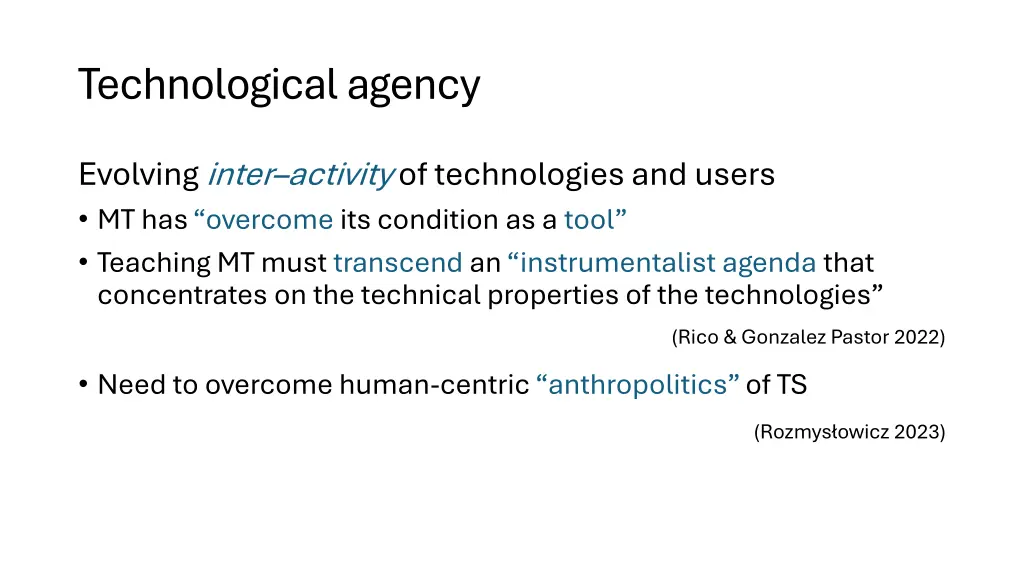
Technological agency Evolving inter activity of technologies and users MT has overcome its condition as a tool Teaching MT must transcend an instrumentalist agenda that concentrates on the technical properties of the technologies (Rico & Gonzalez Pastor 2022) Need to overcome human-centric anthropolitics of TS (Rozmys owicz 2023)
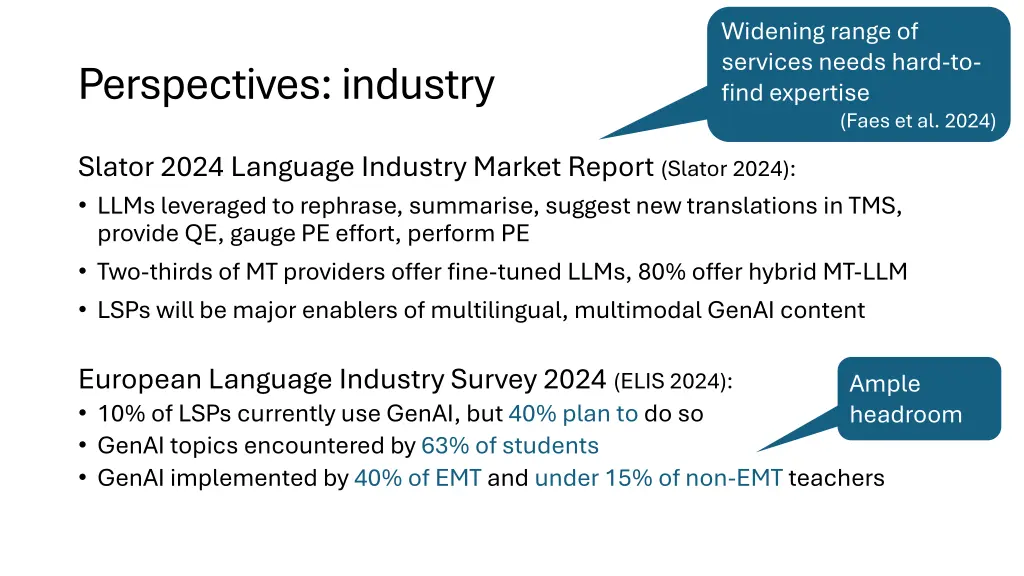
Widening range of services needs hard-to- find expertise (Faeset al. 2024) Perspectives: industry Slator 2024 Language Industry Market Report (Slator 2024): LLMs leveraged to rephrase, summarise, suggest new translations in TMS, provide QE, gauge PE effort, perform PE Two-thirds of MT providers offer fine-tuned LLMs, 80% offer hybrid MT-LLM LSPs will be major enablers of multilingual, multimodal GenAI content European Language Industry Survey 2024 (ELIS 2024): 10% of LSPs currently use GenAI, but 40% plan to do so GenAI topics encountered by 63% of students GenAI implemented by 40% of EMT and under 15% of non-EMT teachers Ample headroom
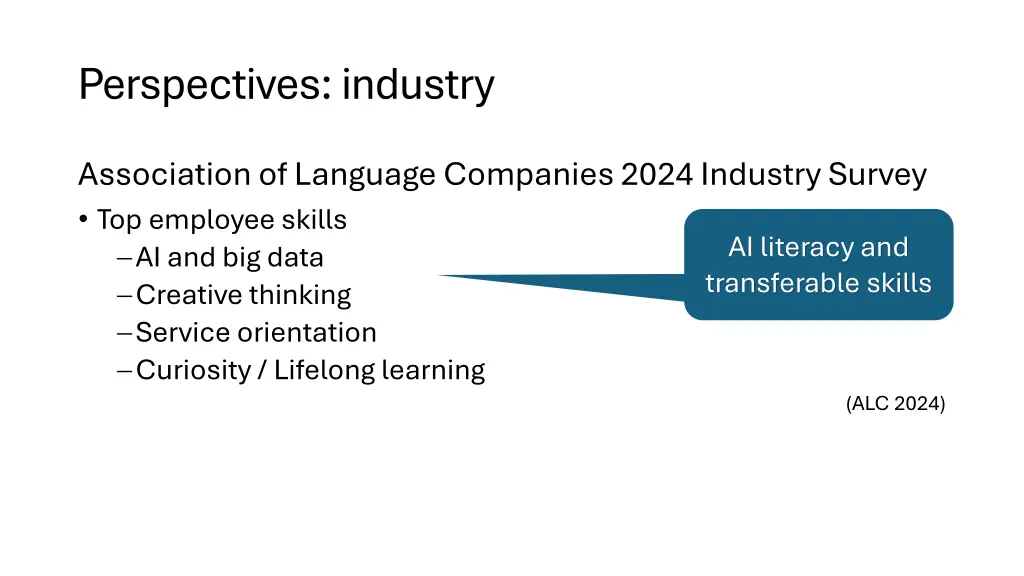
Perspectives: industry Association of Language Companies 2024 Industry Survey Top employee skills AI and big data Creative thinking Service orientation Curiosity / Lifelong learning AI literacy and transferable skills (ALC 2024)
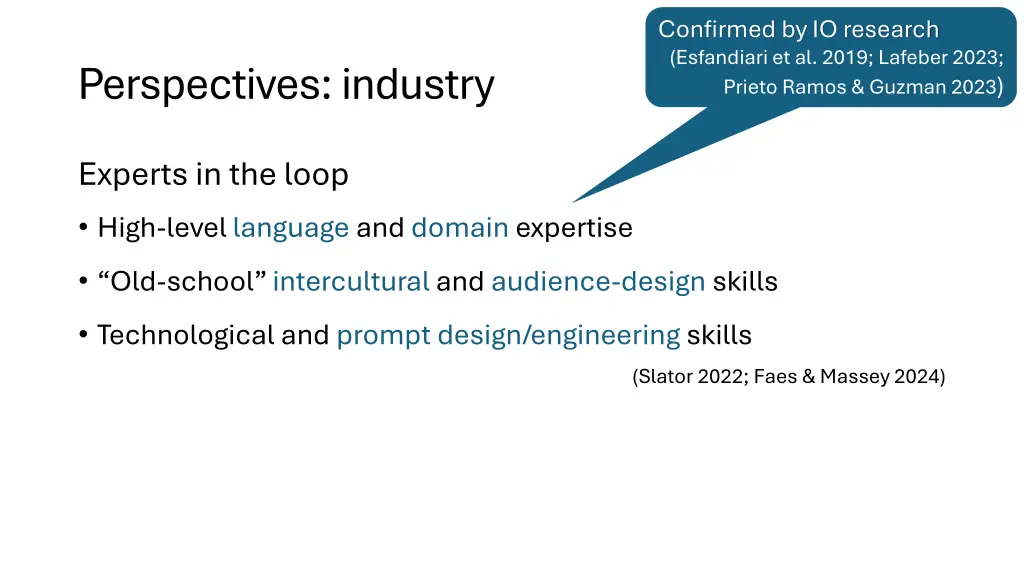
Confirmed by IO research (Esfandiari et al. 2019; Lafeber 2023; Prieto Ramos& Guzman 2023) Perspectives: industry Experts in the loop High-level language and domain expertise Old-school intercultural and audience-design skills Technological and prompt design/engineering skills (Slator 2022; Faes& Massey 2024)
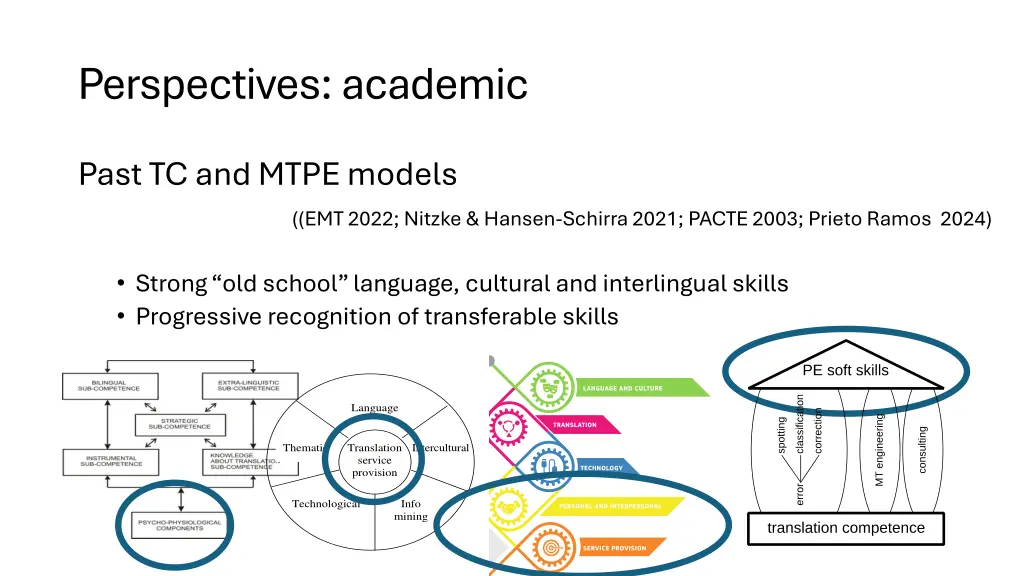
Perspectives: academic Past TC and MTPE models ((EMT2022;Nitzke& Hansen-Schirra2021;PACTE 2003; Prieto Ramos 2024) Strong old school language, cultural and interlingual skills Progressive recognition of transferable skills Language Thematic Translation service provision Intercultural Technological Info mining TYPE OF COMPETENCE DEFINITIONS / COMPONENTS INTERPERSONAL dimension TRANSLATION SERVICE PROVISION COMPETENCE - Being aware of the social role of the translator - Knowing how to follow market requirements and job profiles (knowing how to remain aware of developments in demand) - Knowing how to organise approaches to clients/ potential clients (marketing) - Knowing how to negotiate with the client (to define deadlines, tariffs/invoicing, working conditions, access to information, contract, rights, responsibilities, translation specifications, tender specifications, etc.) - Knowing how to clarify the requirements, objectives and purposes of the client, recipients of the translation and other stakeholders - Knowing how to plan and manage one's time, stress, work, budget and ongoing training (upgrading various competences) - Knowing how to specify and calculate the services offered and their added value - Knowing how to comply with instructions, deadlines, commitments, interpersonal competences, team organisation - Knowing the standards applicable to the provision of a translation service - Knowing how to comply with professional ethics - Knowing how to work under pressure and with other 4
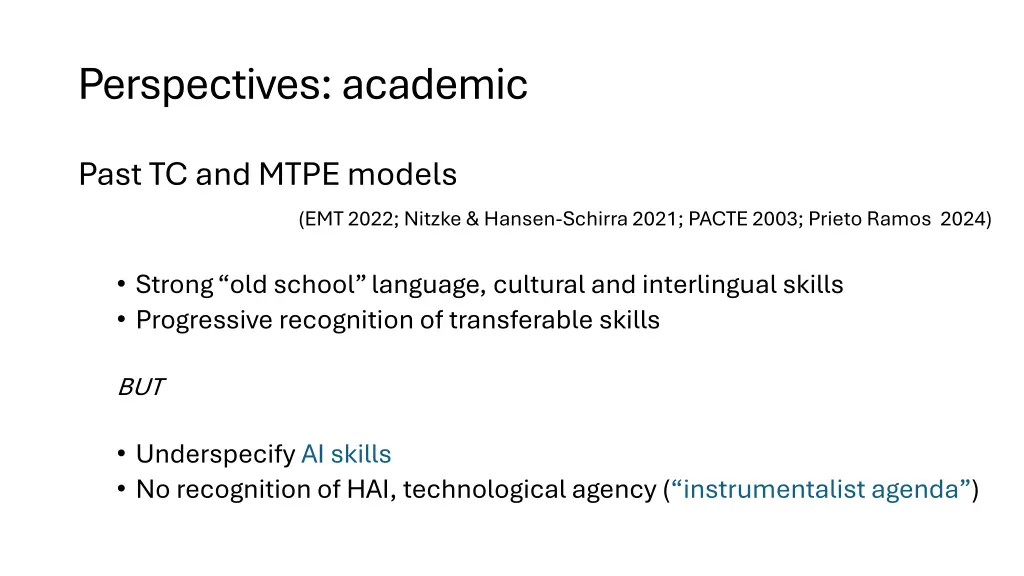
Perspectives: academic Past TC and MTPE models (EMT2022;Nitzke& Hansen-Schirra2021;PACTE 2003; Prieto Ramos 2024) Strong old school language, cultural and interlingual skills Progressive recognition of transferable skills BUT Underspecify AI skills No recognition of HAI, technological agency ( instrumentalist agenda )
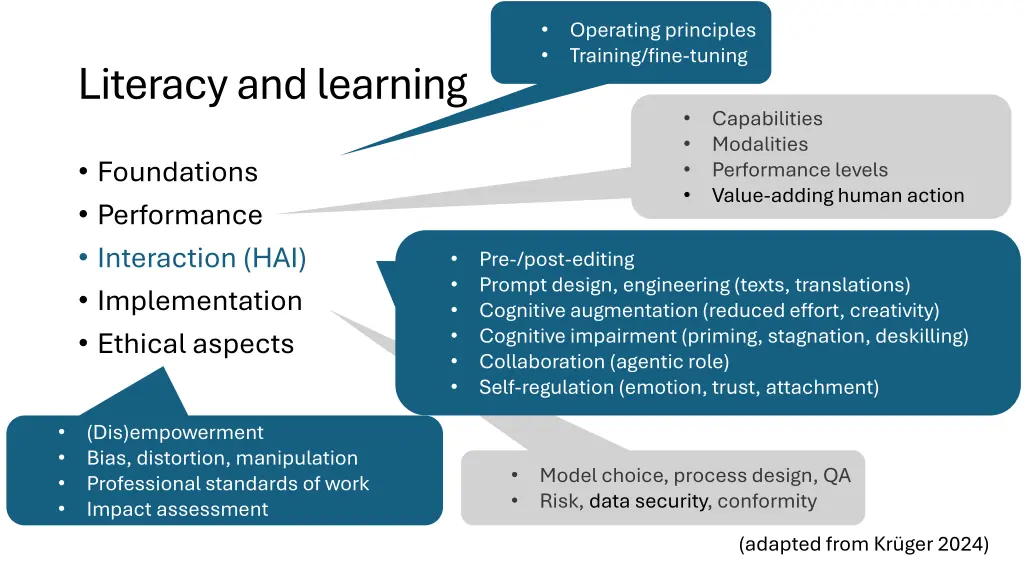
Operating principles Training/fine-tuning Literacy and learning Capabilities Modalities Performance levels Value-adding human action Foundations Performance Interaction (HAI) Implementation Ethical aspects Pre-/post-editing Prompt design, engineering (texts, translations) Cognitive augmentation (reduced effort, creativity) Cognitive impairment (priming, stagnation, deskilling) Collaboration (agentic role) Self-regulation (emotion, trust, attachment) (Dis)empowerment Bias, distortion, manipulation Professional standards of work Impact assessment Model choice, process design, QA Risk, data security, conformity (adapted from Kr ger 2024)
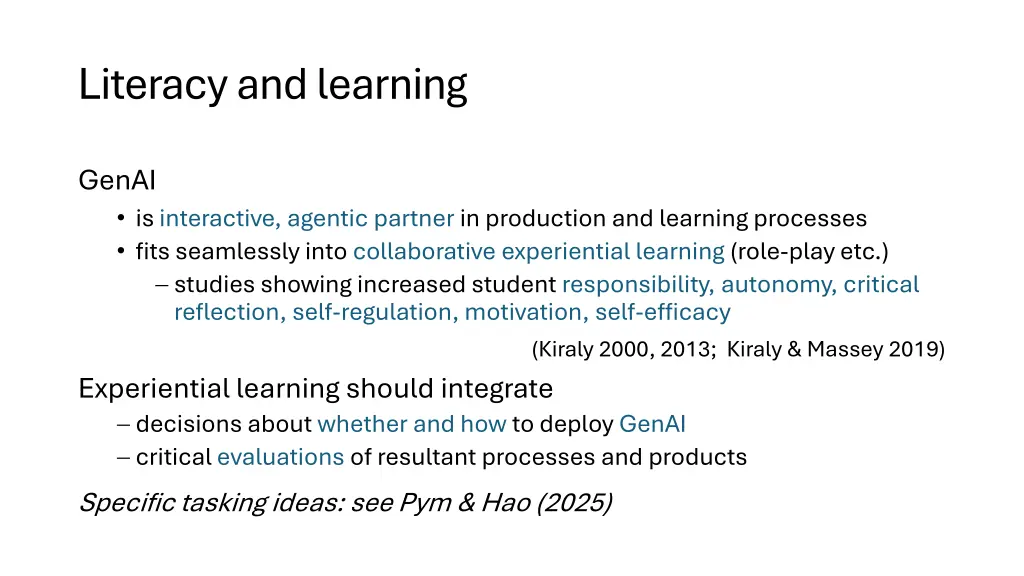
Literacy and learning GenAI is interactive, agentic partner in production and learning processes fits seamlessly into collaborative experiential learning (role-play etc.) studies showing increased student responsibility, autonomy, critical reflection, self-regulation, motivation, self-efficacy (Kiraly 2000, 2013; Kiraly & Massey 2019) Experiential learning should integrate decisions about whether and how to deploy GenAI critical evaluations of resultant processes and products Specific tasking ideas: see Pym & Hao (2025)
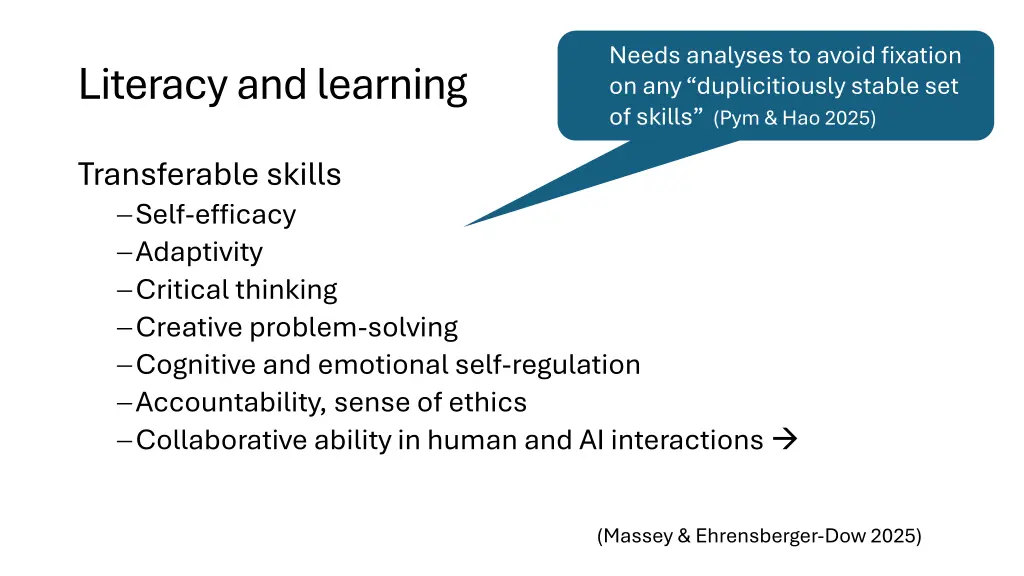
Needs analyses to avoid fixation on any duplicitiously stable set of skills (Pym & Hao 2025) Literacy and learning Transferable skills Self-efficacy Adaptivity Critical thinking Creative problem-solving Cognitive and emotional self-regulation Accountability, sense of ethics Collaborative ability in human and AI interactions (Massey & Ehrensberger-Dow 2025)
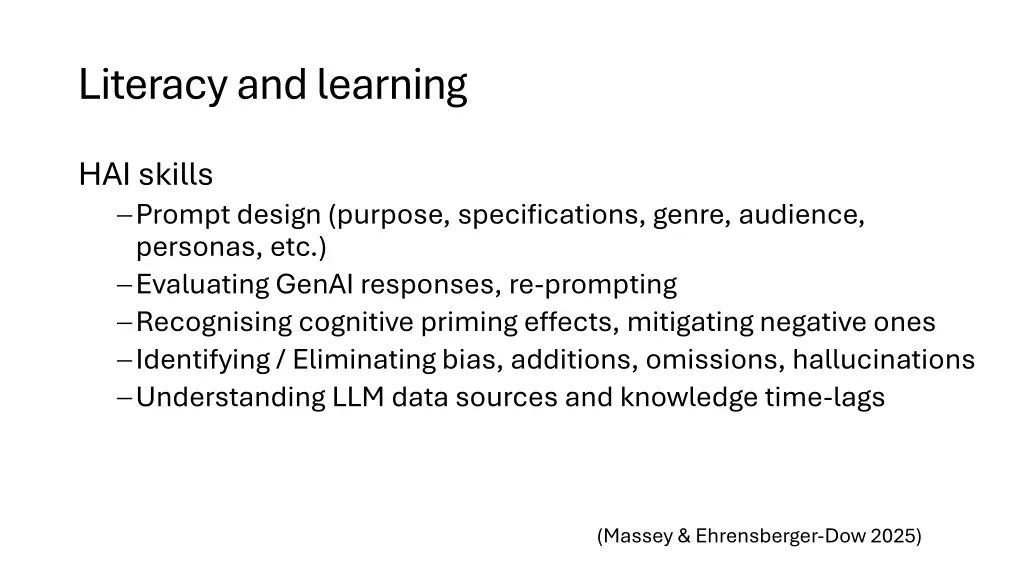
Literacy and learning HAI skills Prompt design (purpose, specifications, genre, audience, personas, etc.) Evaluating GenAI responses, re-prompting Recognising cognitive priming effects, mitigating negative ones Identifying / Eliminating bias, additions, omissions, hallucinations Understanding LLM data sources and knowledge time-lags (Massey & Ehrensberger-Dow 2025)
Thank you gary@massey.lu
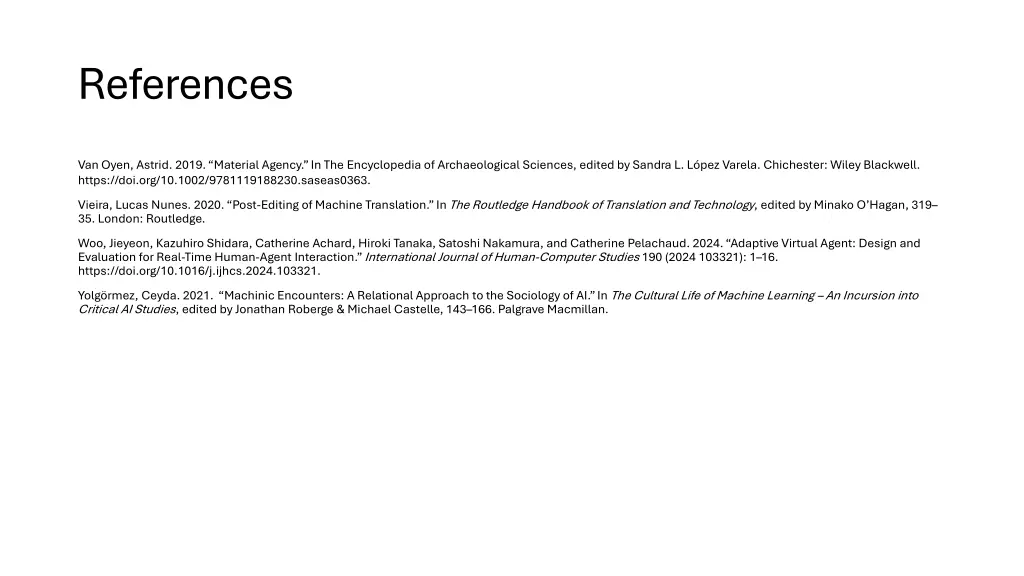
References ALC. 2024. Association of Language Companies 2024 Industry Survey. alcus.org: https://www.alcus.org/page/2024IndustrySurvey Asscher, Omri. 2023. The Position of Machine Translation in Translation Studies: A Definitional Perspective. Translation Spaces 12 (1): 1 20. https://doi.org/10.1075/ts.22035.ass. Atlas, Stephan. 2023. ChatGPT for Higher Education and Professional Development: A Guide to Conversational AI. Kingston: University of Rhode Island. https://digitalcommons.uri.edu/cba_facpubs/548. Bandura, Albert. 2005. Social Cognitive Theory: An Agentic Perspective. Psychology: The Journal of the Hellenic Psychological Society 12 (3): 313 333. https://doi.org/10.12681/psy_hps.23964. Bradshaw, Jeffrey M., Paul J. Feltovich, and Matthew Johnson. 2011. Human-Agent Interaction. In The Handbook of Human-Machine Interaction, edited by Guy A. Boy, 283 300. Boca Raton, FL: CRC Press. https://www.taylorfrancis.com/chapters/edit/10.1201/9781315557380-14/human%E2%80%93agent- interaction-jeffrey-bradshaw-paul-feltovich-matthew-johnson. Brandtzaeg, Petter Bae, Marita Skjuve, and Asbj rn F lstad. 2022. My AI Friend: How Users of a Social Chatbot Understand Their Human AI Friendship. Human Communication Research 48:404 29. https://doi.org/doi.org/10.1093/hcr/hqac008. Briakou, Eleftheria, Jiaming Luo, Colin Cherry, and Markus Freitag. 2024. Translating Step-by-Step: Decomposing the Translation Process for Improved Translation Quality of Long-Form Texts. arXiv:2409.06790 [cs.CL]. https://doi.org/10.48550/arXiv.2409.06790. Cadwell, Patrick, Sharon O Brien, and Carlos S. C. Teixeira. 2018. Resistance and Accommodation: Factors for the (Non-) Adoption of Machine Translation among Professional Translators. Perspectives: Studies in Translation Theory and Practice 26 (3): 301 21. https://doi.org/10.1080/0907676X.2017.1337210. Chaturvedi, Rkjul, Sanjeev Verma, Ronnie Das, and Yogesh K. Dwivedi. 2023. Social Companionship with Artificial Intelligence: Recent Trends and Future Avenues. Technological Forecasting & Social Change 193:122634. https://doi.org/10.1016/j.techfore.2023.122634.
References Eapen, Tojin T., Daniel J. Finkenstadt, Josh Folk, and Lokesh Venkataswamy. 2023. How Generative AI Can Augment Human Creativity. Harvard Business Review, no. July-August. https://hbr.org/2023/07/how-generative-ai-can-augment-human-creativity. ELIS. 2024. ELIS 2024 European Language Industry Survey. Trends, Expectations and Concerns of the European Language Industry. ELIS Research. https://elis-survey.org/. EMT. 2022. European Master sin Translation Competence Framework 2022. Brussels: European Commission. https://commission.europa.eu/system/files/2022-11/emt_competence_fwk_2022_en.pdf. Esfandiari, Mohammad Reza, Nasrin Shokrpour, and Forough Rahimi. 2019. An Evaluation of the EMT: Compatibility with the Professional Translator sNeeds. Cogent Arts & Humanities 6 (1: 1601055): 1 17. https://doi.org/10.1080/23311983.2019.1601055. Faes, Florian, Alex Edwards, and Anna Wyndham. 2024. Slator Q1 2024 Research Briefing. online, December 1. https://slator.com/event/slator-q1-2024- research-briefing/. Faes, Florian, and Gary Massey. 2024. Charting the Language Industry: Interview with an Industry Observer. In Handbook of the Language Industry, 17 31. Berlin: De Gruyter Mouton. https://doi.org/10.1515/9783110716047-002. Gimpel, Henner, Caroline Ruiner, Manfred Schoch, Mareike Schoop, Luis L mmermann, Nils Urbach, Kristina Hall, et al. 2023. Unlocking the Power of Generative AI Models and Systems Such as GPT-4 and ChatGPT for Higher Education: A Guide for Students and Lecturers. Working paper 02 2023. Hohenheim Discussion Papers in Business, Economics and Social Sciences. Hohenheim: University of Hohenheim. https://hdl.handle.net/10419/270970. Guingrich, Rose, and Michael S. A. Graziano. 2023. Chatbots as Social Companions: How People Perceive Consciousness, Human Likeness, and Social Health Benefits in Machines. arXiv:2311.10599v2 [Cs.HC], 1 14. Kiraly, Don. 2013. Towards a View of Translator Competence as an Emergent Phenomenon: Thinking Outside the Box(Es) in Translator Education. In New Prospects and Perspectives for Educating Language Mediators, edited by Don Kiraly, Silvia Hansen-Schirra, and Karin Maksymski, 197 224. T bingen: Narr Verlag.
References Kinnunen, Tuija, and Kaisa Koskinen (eds.). 2010. Translators Agency. Tampere: Tampere University Press. https://urn.fi/urn:isbn:978-951-44-8082-9 Kiraly, Don, and Gary Massey, eds. 2019. Towards Authentic Experiential Learning in Translator Education. 2nd ed. Newcastle upon Tyne: Cambridge Scholars. Kiraly, Don. 2000. A Social Constructivist Approach to Translator Education. Empowerment from Theory to Practice. London: Routledge. Kosinski, Michal. 2024 Evaluating Large Language Models in Theory of Mind Tasks. arXiv:2302.02083v6 [cs.CL]. https://doi.org/10.48550/arXiv.2302.02083. Kr ger, Ralph. 2024. Outline of an Artificial Intelligence Literacy Framework for Translation, Interpreting and Specialised Communication. Lublin Studies in Modern Languages and Literature 48 (3): 11 23. https://journals.umcs.pl/lsmll/article/view/17329/11839. Lafeber, Anne. 2023. Skills and Knowledge Required of Translators in Institutional Settings. In Institutional Translator Training, edited by Tom Svoboda, Lucja Biel, and Vilelmini Sosoni, 30 48. London: Routledge. Latour, Bruno. 2005. Reassembling the Social - An Introduction to Actor-Network-Theory. Oxford: Oxford University Press. Lim, Weng Marc, Asanka Gunasekara, Jessica Leigh Pallant, Jason Ian Pallant, and Ekaterina Pechenkina. 2023. Generative AI and the future of education: Ragnar k or reformation? A paradoxical perspective from management educators. The International Journal of Management Education 21 (2): 100790, https://doi.org/10.1016/j.ijme.2023.100790. Massey, Gary, and Maureen Ehrensberger-Dow. 2025. Translation competence in the age of generative AI: Debates, dilemmas, directions. In Teaching Translation in the Age of GenAI, edited by J. C. Penet, Joss Moorkens and Masaru Yamada. Berlin: Language Science Press. Nah, Fiona Fui-Hoon, Ruilin Zheng, Keng Siau, and Langtao Chen. 2023. Generative AI and ChatGPT: Applications, Challenges, and AI-Human Collaboration. Journal of Information Technology Case and Application Research 25 (3): 277 304. https://doi.org/10.1080/15228053.2023.2233814. Nitzke, Jean, and Silvia Hansen-Schirra. 2021. A Short Guide to Post-Editing. Berlin: Language Science Press.
References O Brien, Sharon. 2024. Human-Centered Augmented Translation: Against Antagonistic Dualisms. Perspectives 32(3): 391-406. https://doi.org/10.1080/0907676X.2023.2247423. Orrego-Carmona, David. 2024. Placing Human Agency in the AI-powered Media Localisation Industry. Journal of Audiovisual Translation 7(2): 1 21. https://doi.org/10.47476/jat.v7i2.2024.306 PACTE. 2003. Building a Translation Competence Model. In Triangulating Translation: Perspectives in Process-oriented Research, edited by Fabio Alves, 43 66. Amsterdam: John Benjamins. Prieto Ramos, Fernando. 2024. Revisiting Translator Competence in the Age of Artificial Intelligence: The Case of Legal and Institutional Translation. The Interpreter and Translator Trainer 18 (2): 148 73. https://doi.org/10.1080/1750399X.2024.2344942. Prieto Ramos, Fernando, and Diego Guzm n. 2023. Institutional Translation Profiles: A Comparative Analysis of Descriptors and Requirements. In Institutional Translator Training, edited by Tom Svoboda, Lucja Biel, and Vilelmini Sosoni, 49 72. London: Routledge. Pym, Anthony, and Yu Hao. 2025. How to Augment Language Skills. Generative AI and Machine Translation in Language Learning and Translator Training. London: Routledge. Rico, Celia, and Diana Gonz lez Pastor. 2022. The Role of Machine Translation in Translation Education: A Thematic Analysis of Translator Educators Beliefs. The International Journal for Translation and Interpreting Research 14 (1): 177 97. https://doi.org/10.12807/ti.114201.2022.a010. Risku, Hanna, and Florian Windhager. 2013. Extended Translation: A Sociocognitive Research Agenda. Target 25 (1): 33 45. https://doi.org/10.1075/target.25.1.04ris. Rozmys owicz, Tomasz. 2023. The Politics of Machine Translation. Reprogramming Translation Studies. Perspectives 32(3): 493 507. https://doi.org/10.1080/0907676X.2023.2292571.
References Sakamoto, Akiko. 2019. Why Do Many Translators Resist Post-Editing? A Sociological Analysis Using Bourdieu s Concepts. The Journal of Specialised Translation 31:201 16. Sharma, Ashish, Sudha Rao, Chris Brockett, Akanksha Malhotra, Nebojsa Jojic, and Bill Dolan. 2024. Investigating Agency of LLMs in Human-AI Collaboration Tasks. arXiv:2305.12815v2 [cs.CL]. https://doi.org/10.48550/arXiv.2305.12815. Strachan, James W.A., Dalila Albergo, D., Giulia Borghini, et al. 2024. Testing theory of mind in large language models and humans. Nature Human Behaviour 8: 1285 1295. https://doi.org/10.1038/s41562-024-01882-z. Slator. 2022. Slator 2022 Language Industry Market Report. https://slator.com/slator-2022-language-industry-market-report/. Slator. 2024. Slator 2024 Language Industry Market Report. Language AI Edition. https://slator.com/2024-language-industry-market-report-language-ai- edition/.
References Van Oyen, Astrid. 2019. Material Agency. In The Encyclopedia of Archaeological Sciences, edited by Sandra L. L pez Varela. Chichester: Wiley Blackwell. https://doi.org/10.1002/9781119188230.saseas0363. Vieira, Lucas Nunes. 2020. Post-Editing of Machine Translation. In The Routledge Handbook of Translation and Technology, edited by Minako O Hagan, 319 35. London: Routledge. Woo, Jieyeon, Kazuhiro Shidara, Catherine Achard, Hiroki Tanaka, Satoshi Nakamura, and Catherine Pelachaud. 2024. Adaptive Virtual Agent: Design and Evaluation for Real-Time Human-Agent Interaction. International Journal of Human-Computer Studies 190 (2024 103321): 1 16. https://doi.org/10.1016/j.ijhcs.2024.103321. Yolg rmez, Ceyda. 2021. Machinic Encounters: A Relational Approach to the Sociology of AI. In The Cultural Life of Machine Learning An Incursion into Critical AI Studies, edited by Jonathan Roberge & Michael Castelle, 143 166. Palgrave Macmillan.