Understanding K-Means Clustering: A Comprehensive Guide
Learn about K-means clustering, a popular partitional clustering approach that groups data points into clusters based on centroids. Explore the K-means clustering problem, common definitions, complexity, algorithm, initialization, and more. Discover how K-means clustering works and its applications in data analysis and machine learning.

Download Presentation

Please find below an Image/Link to download the presentation.
The content on the website is provided AS IS for your information and personal use only. It may not be sold, licensed, or shared on other websites without obtaining consent from the author. If you encounter any issues during the download, it is possible that the publisher has removed the file from their server.
You are allowed to download the files provided on this website for personal or commercial use, subject to the condition that they are used lawfully. All files are the property of their respective owners.
The content on the website is provided AS IS for your information and personal use only. It may not be sold, licensed, or shared on other websites without obtaining consent from the author.
E N D
Presentation Transcript
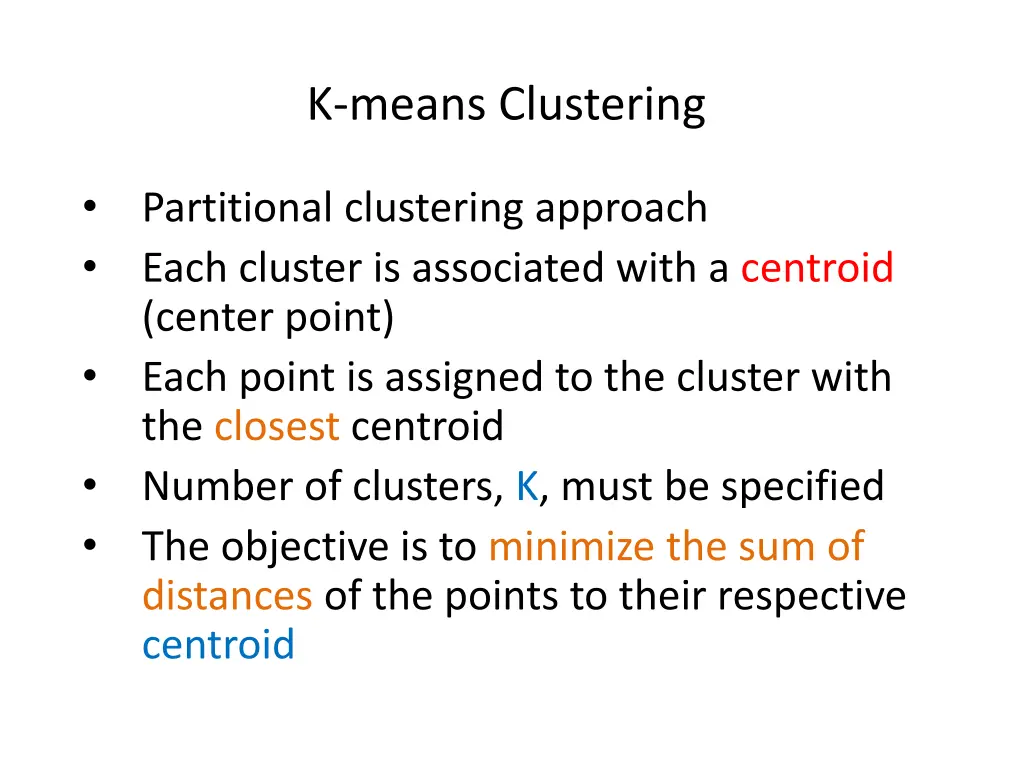
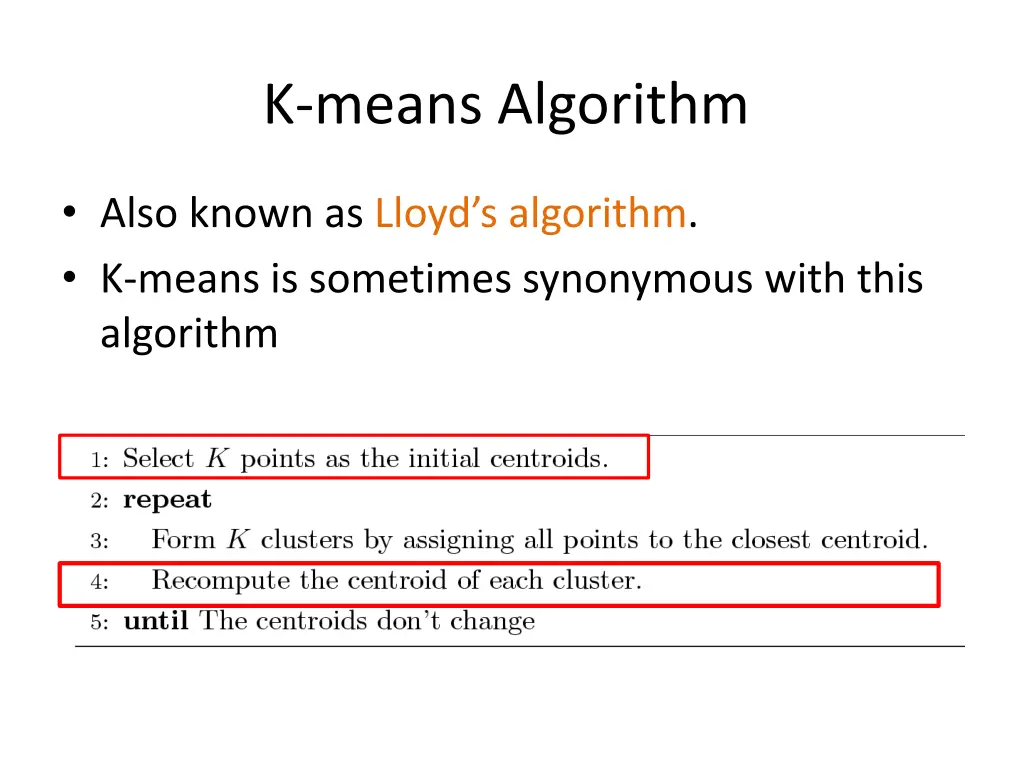
K-means Clustering Partitional clustering approach Each cluster is associated with a centroid (center point) Each point is assigned to the cluster with the closest centroid Number of clusters, K, must be specified The objective is to minimize the sum of distances of the points to their respective centroid
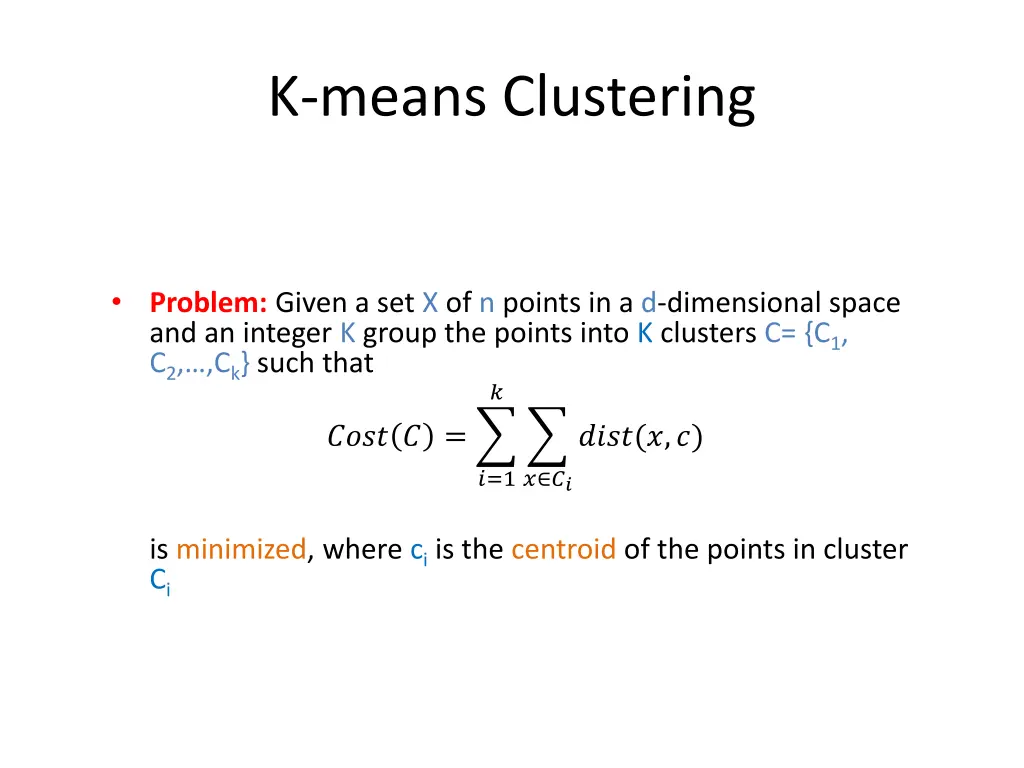
K-means Clustering Problem: Given a set X of n points in a d-dimensional space and an integer K group the points into K clusters C= {C1, C2, ,Ck} such that ? ???? ? = ????(?,?) ?=1 ? ?? is minimized, where ciis the centroid of the points in cluster Ci
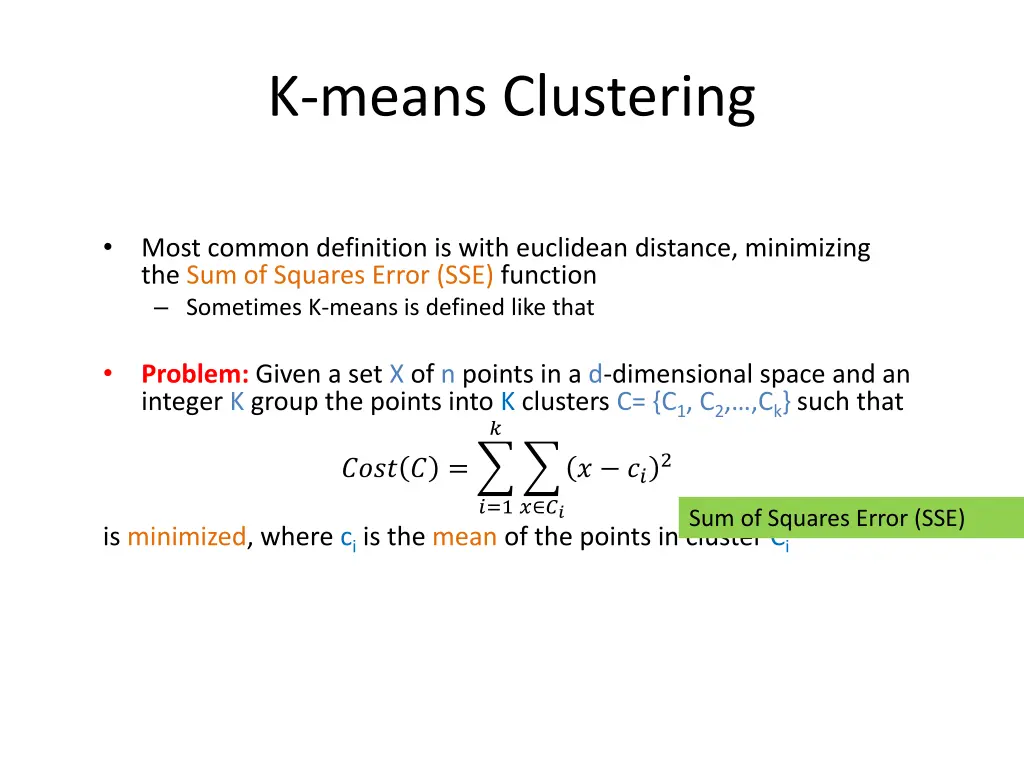
K-means Clustering Most common definition is with euclidean distance, minimizing the Sum of Squares Error (SSE) function Sometimes K-means is defined like that Problem: Given a set X of n points in a d-dimensional space and an integer K group the points into K clusters C= {C1, C2, ,Ck} such that ? 2 ???? ? = ? ?? ?=1 ? ?? Sum of Squares Error (SSE) is minimized, where ciis the mean of the points in cluster Ci
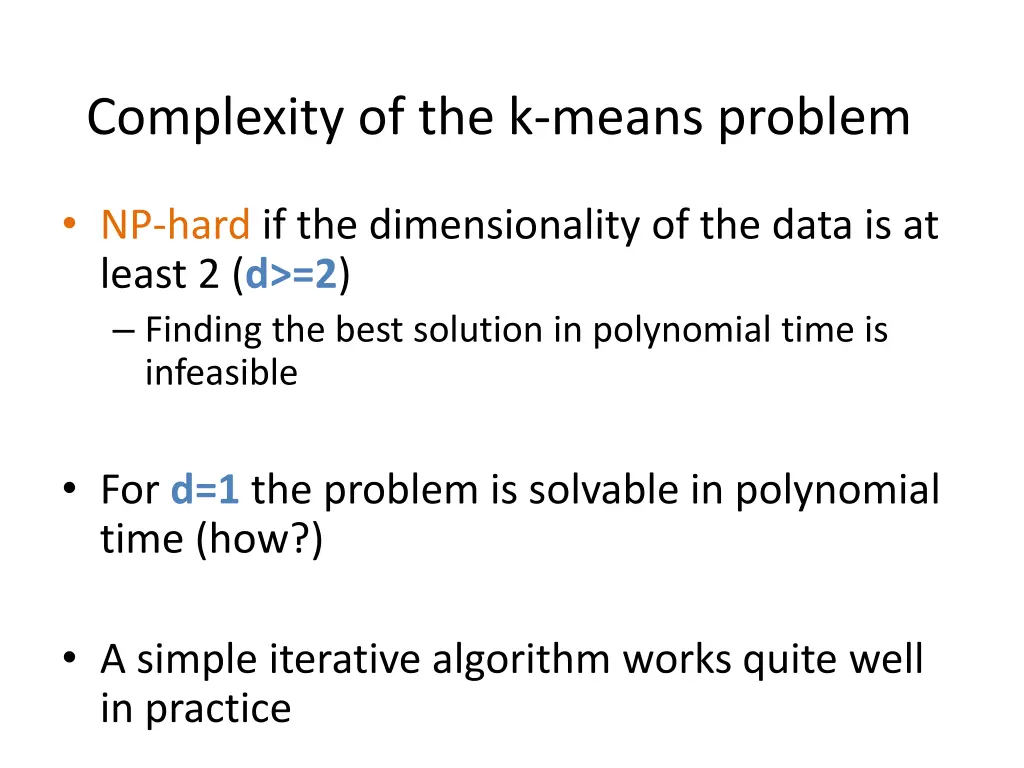
Complexity of the k-means problem NP-hard if the dimensionality of the data is at least 2 (d>=2) Finding the best solution in polynomial time is infeasible For d=1 the problem is solvable in polynomial time (how?) A simple iterative algorithm works quite well in practice
K-means Algorithm Also known as Lloyd s algorithm. K-means is sometimes synonymous with this algorithm
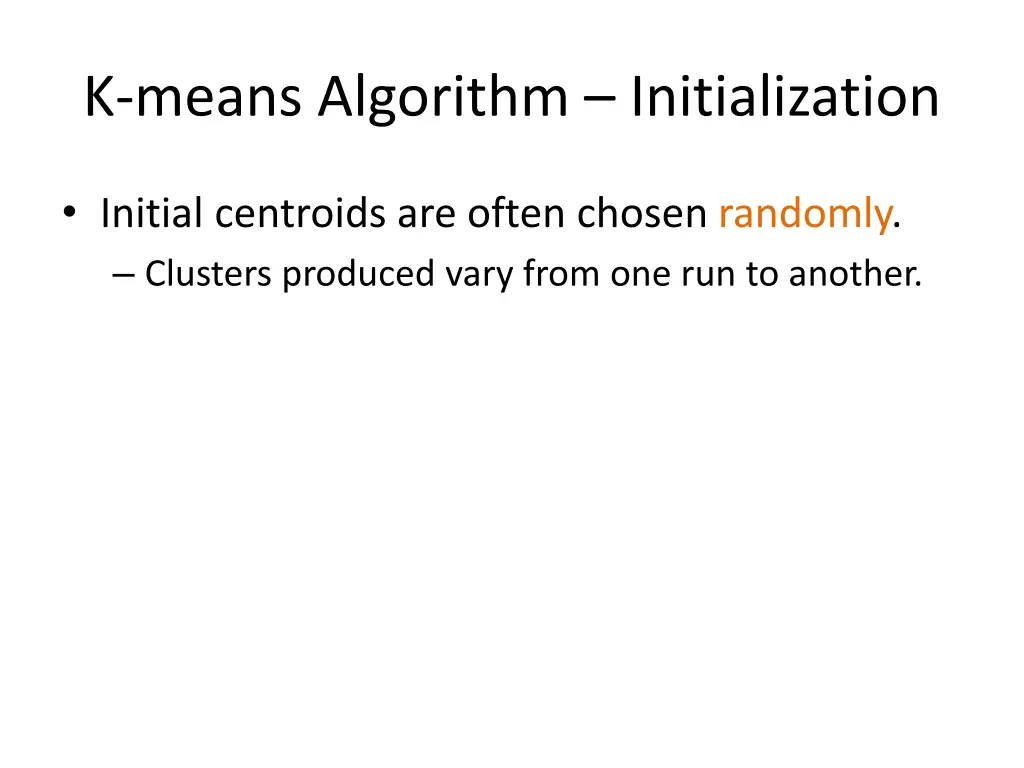
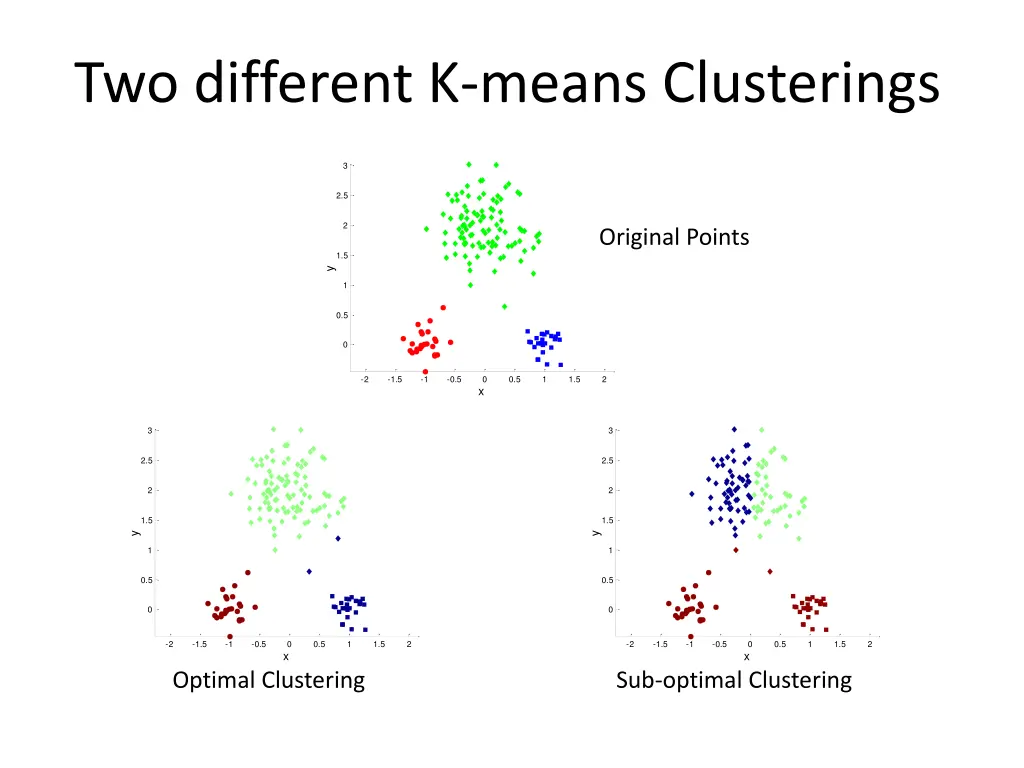
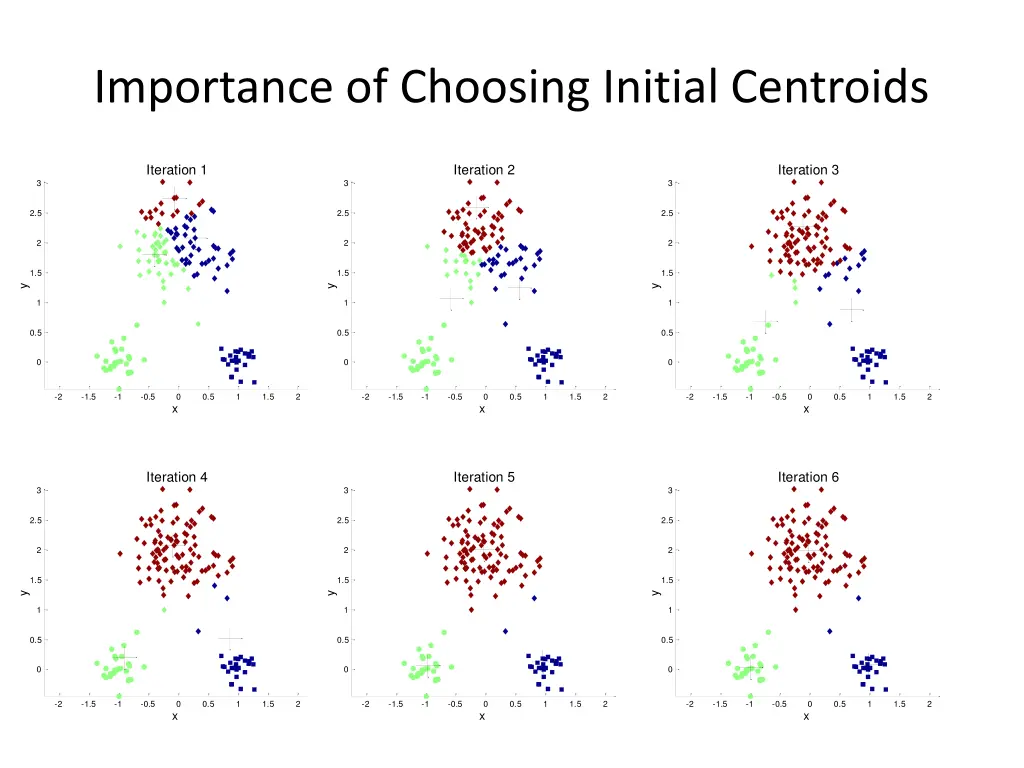
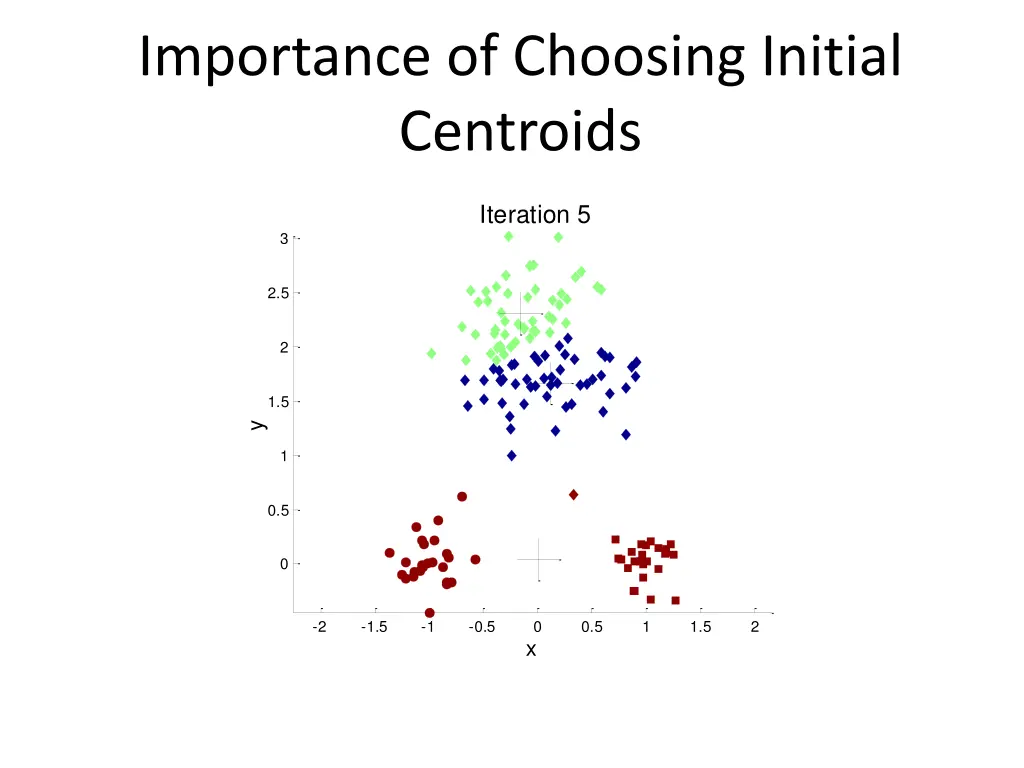
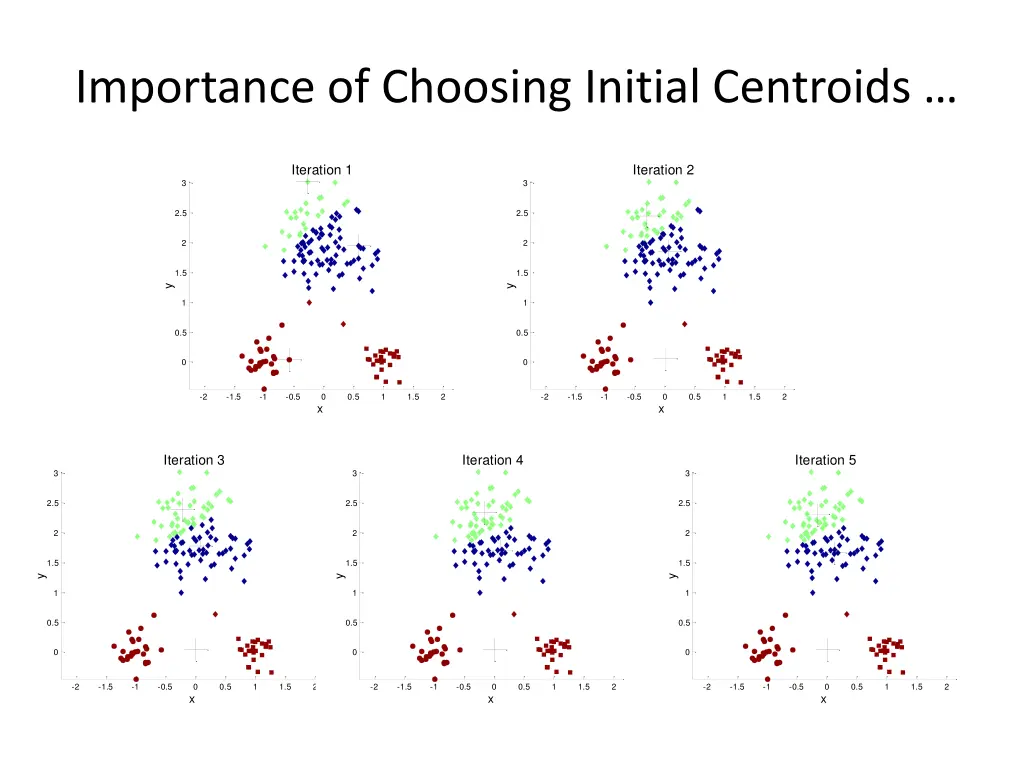
K-means Algorithm Initialization Initial centroids are often chosen randomly. Clusters produced vary from one run to another.
Two different K-means Clusterings 3 2.5 2 Original Points 1.5 y 1 0.5 0 -2 -1.5 -1 -0.5 0 0.5 1 1.5 2 x 3 3 2.5 2.5 2 2 1.5 1.5 y y 1 1 0.5 0.5 0 0 -2 -1.5 -1 -0.5 0 0.5 1 1.5 2 -2 -1.5 -1 -0.5 0 0.5 1 1.5 2 x x Optimal Clustering Sub-optimal Clustering
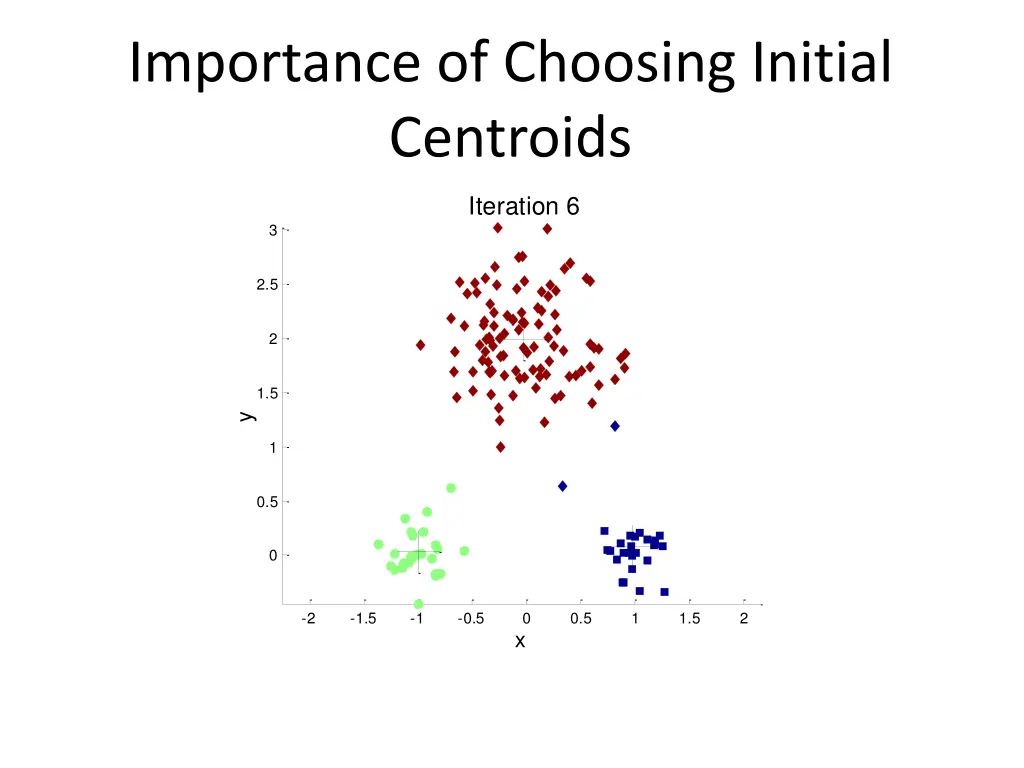
Importance of Choosing Initial Centroids Iteration 1 Iteration 2 Iteration 3 Iteration 4 Iteration 5 Iteration 6 3 3 3 3 3 3 2.5 2.5 2.5 2.5 2.5 2.5 2 2 2 2 2 2 1.5 1.5 1.5 1.5 1.5 1.5 y y y y y y 1 1 1 1 1 1 0.5 0.5 0.5 0.5 0.5 0.5 0 0 0 0 0 0 -2 -2 -2 -2 -2 -2 -1.5 -1.5 -1.5 -1.5 -1.5 -1.5 -1 -1 -1 -1 -1 -1 -0.5 -0.5 -0.5 -0.5 -0.5 -0.5 0 0 0 0 0 0 0.5 0.5 0.5 0.5 0.5 0.5 1 1 1 1 1 1 1.5 1.5 1.5 1.5 1.5 1.5 2 2 2 2 2 2 x x x x x x
Importance of Choosing Initial Centroids Iteration 1 Iteration 2 Iteration 3 3 3 3 2.5 2.5 2.5 2 2 2 1.5 1.5 1.5 y y y 1 1 1 0.5 0.5 0.5 0 0 0 -2 -1.5 -1 -0.5 0 0.5 1 1.5 2 -2 -1.5 -1 -0.5 0 0.5 1 1.5 2 -2 -1.5 -1 -0.5 0 0.5 1 1.5 2 x x x Iteration 4 Iteration 5 Iteration 6 3 3 3 2.5 2.5 2.5 2 2 2 1.5 1.5 1.5 y y y 1 1 1 0.5 0.5 0.5 0 0 0 -2 -1.5 -1 -0.5 0 0.5 1 1.5 2 -2 -1.5 -1 -0.5 0 0.5 1 1.5 2 -2 -1.5 -1 -0.5 0 0.5 1 1.5 2 x x x
Importance of Choosing Initial Centroids Iteration 1 Iteration 2 Iteration 3 Iteration 4 Iteration 5 3 3 3 3 3 2.5 2.5 2.5 2.5 2.5 2 2 2 2 2 1.5 1.5 1.5 1.5 1.5 y y y y y 1 1 1 1 1 0.5 0.5 0.5 0.5 0.5 0 0 0 0 0 -2 -2 -2 -2 -2 -1.5 -1.5 -1.5 -1.5 -1.5 -1 -1 -1 -1 -1 -0.5 -0.5 -0.5 -0.5 -0.5 0 0 0 0 0 0.5 0.5 0.5 0.5 0.5 1 1 1 1 1 1.5 1.5 1.5 1.5 1.5 2 2 2 2 2 x x x x x
Importance of Choosing Initial Centroids Iteration 1 Iteration 2 3 3 2.5 2.5 2 2 1.5 1.5 y y 1 1 0.5 0.5 0 0 -2 -1.5 -1 -0.5 0 0.5 1 1.5 2 -2 -1.5 -1 -0.5 0 0.5 1 1.5 2 x x Iteration 3 Iteration 4 Iteration 5 3 3 3 2.5 2.5 2.5 2 2 2 1.5 1.5 1.5 y y y 1 1 1 0.5 0.5 0.5 0 0 0 -2 -1.5 -1 -0.5 0 0.5 1 1.5 2 -2 -1.5 -1 -0.5 0 0.5 1 1.5 2 -2 -1.5 -1 -0.5 0 0.5 1 1.5 2 x x x
Dealing with Initialization Do multiple runs and select the clustering with the smallest error Select original set of points by methods other than random . E.g., pick the most distant (from each other) points as cluster centers (K- means++ algorithm)
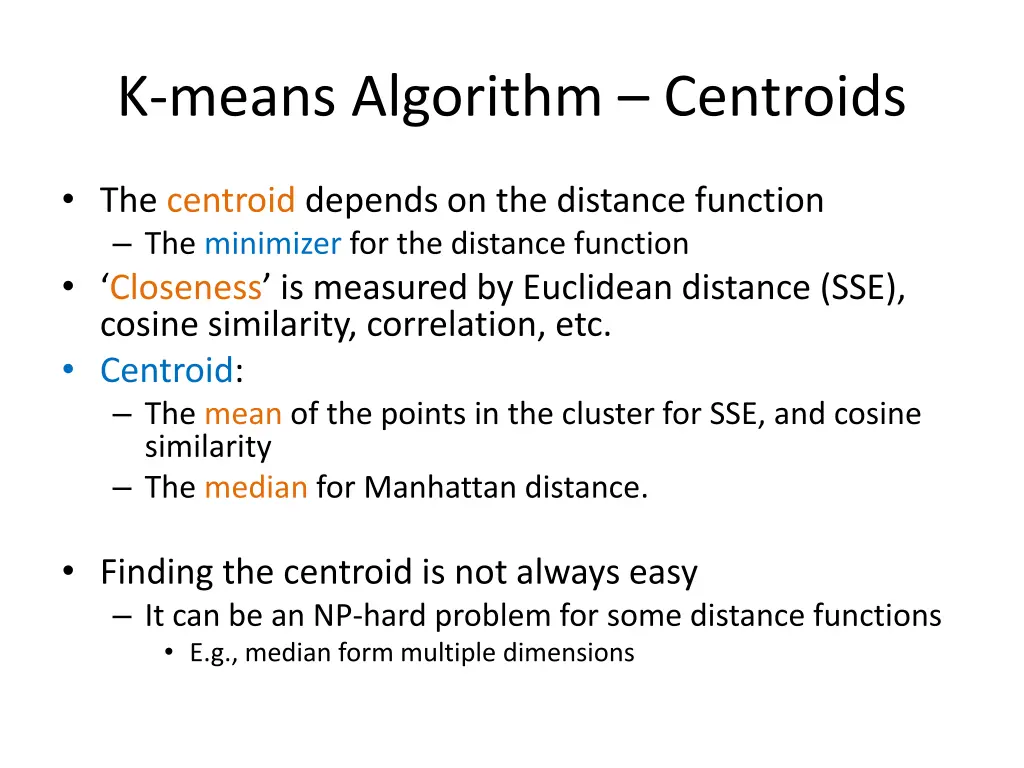
K-means Algorithm Centroids The centroid depends on the distance function The minimizer for the distance function Closeness is measured by Euclidean distance (SSE), cosine similarity, correlation, etc. Centroid: The mean of the points in the cluster for SSE, and cosine similarity The median for Manhattan distance. Finding the centroid is not always easy It can be an NP-hard problem for some distance functions E.g., median form multiple dimensions
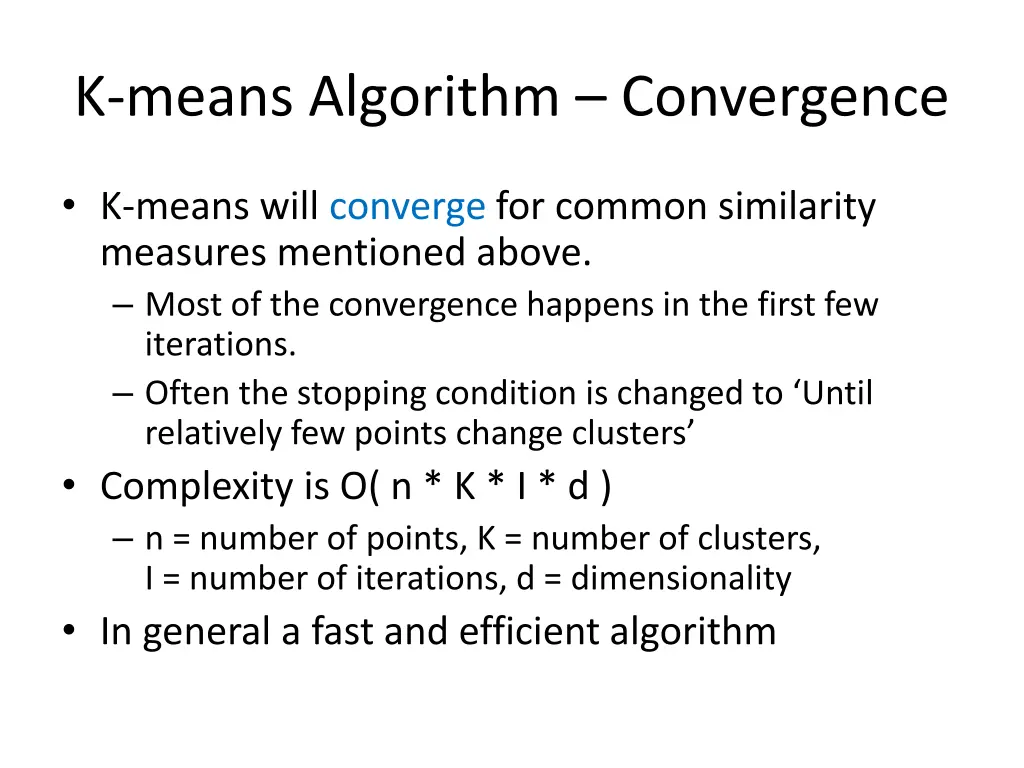
K-means Algorithm Convergence K-means will converge for common similarity measures mentioned above. Most of the convergence happens in the first few iterations. Often the stopping condition is changed to Until relatively few points change clusters Complexity is O( n * K * I * d ) n = number of points, K = number of clusters, I = number of iterations, d = dimensionality In general a fast and efficient algorithm
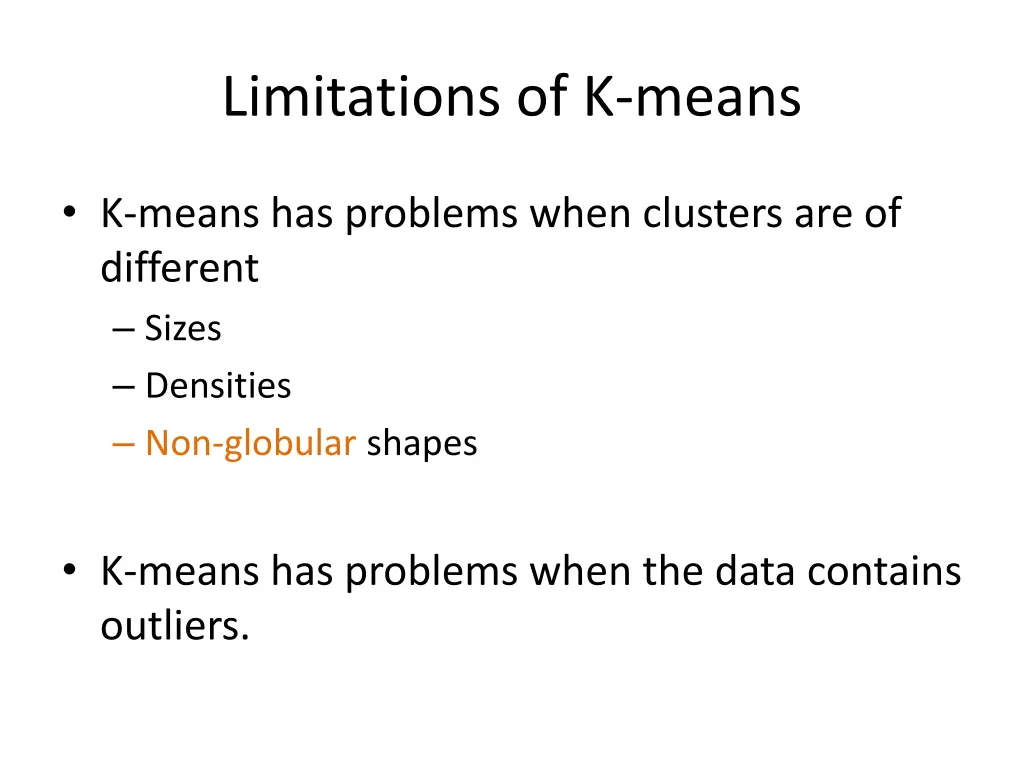
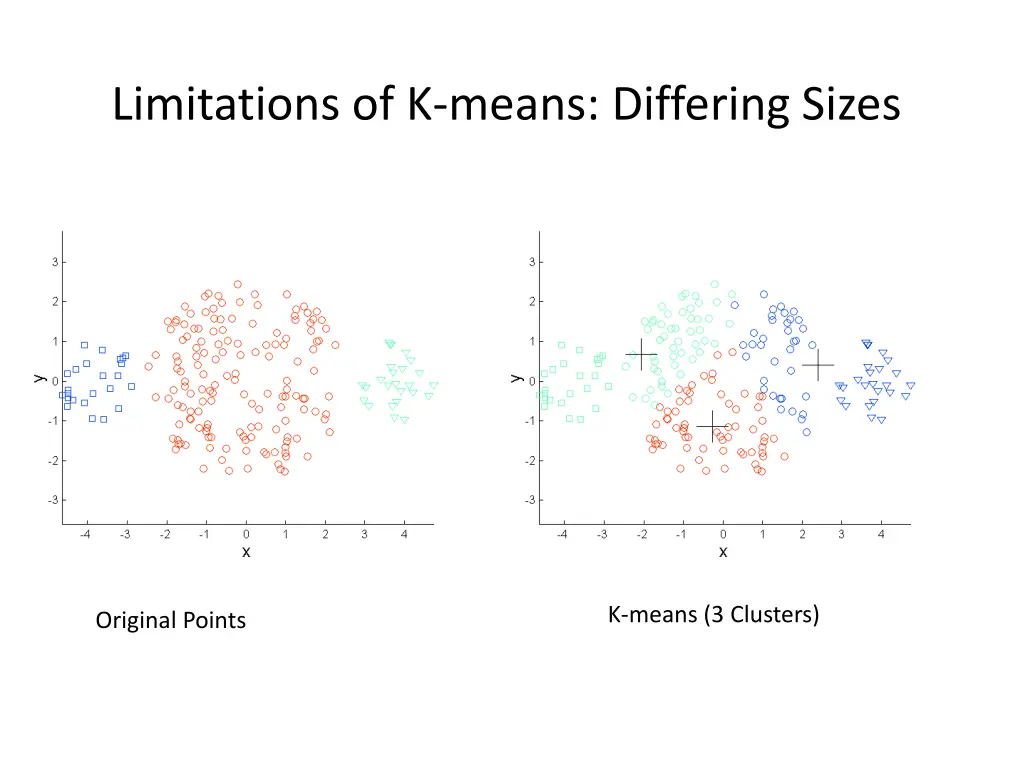
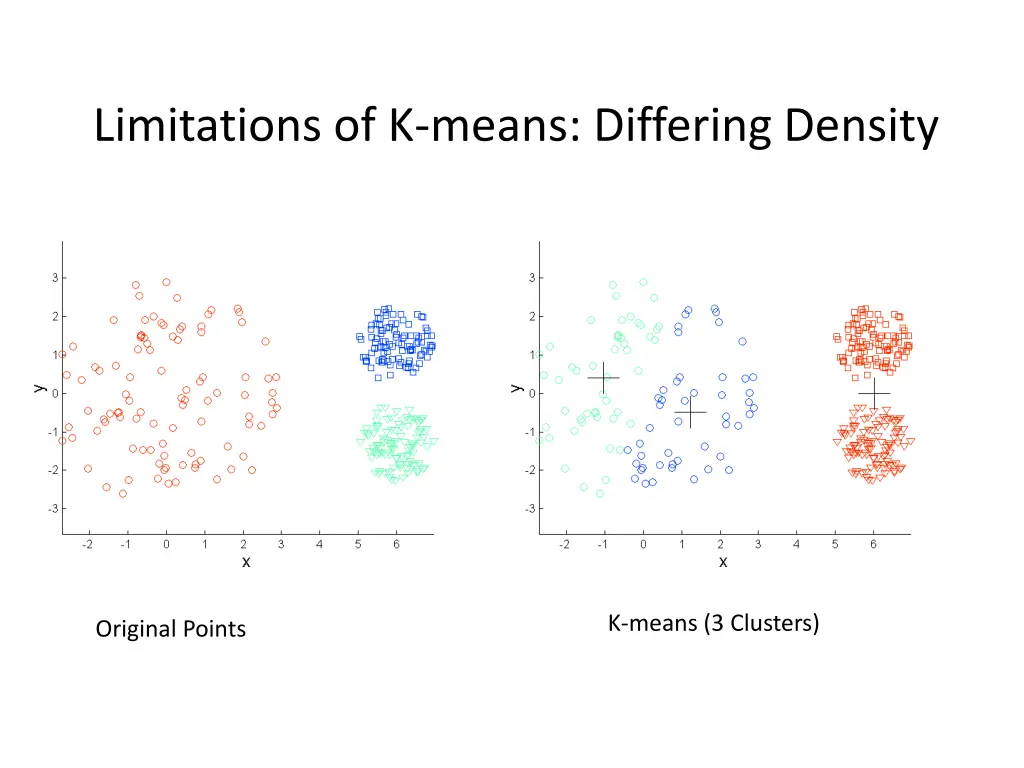
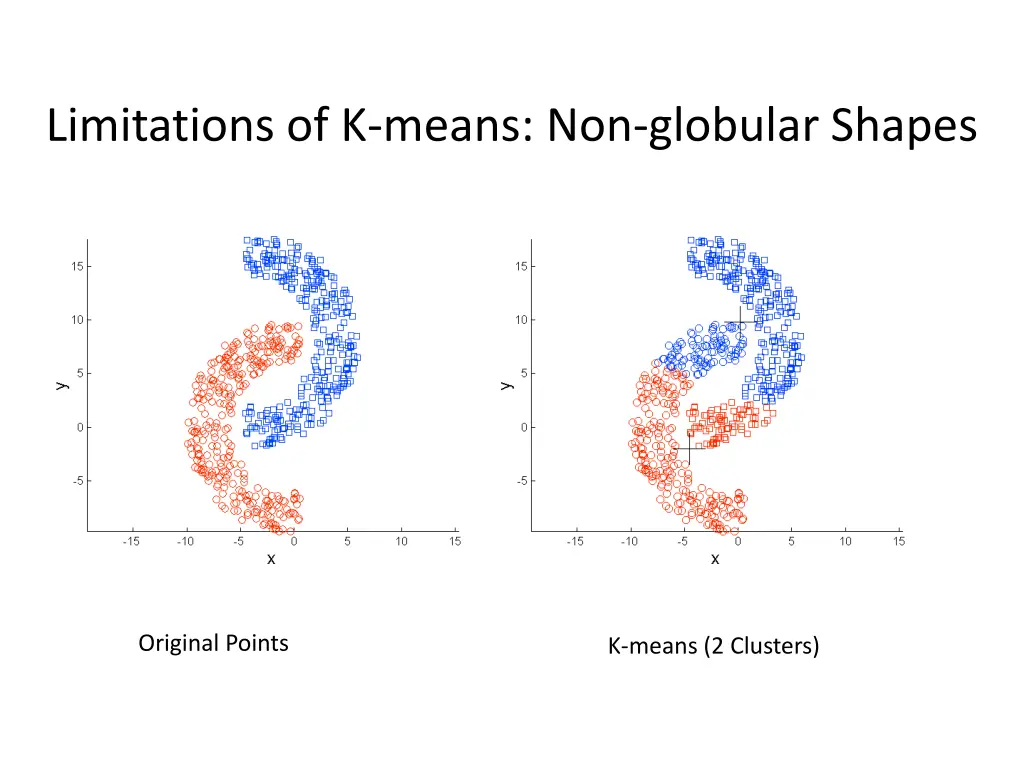
Limitations of K-means K-means has problems when clusters are of different Sizes Densities Non-globular shapes K-means has problems when the data contains outliers.
Limitations of K-means: Differing Sizes K-means (3 Clusters) Original Points
Limitations of K-means: Differing Density K-means (3 Clusters) Original Points
Limitations of K-means: Non-globular Shapes Original Points K-means (2 Clusters)
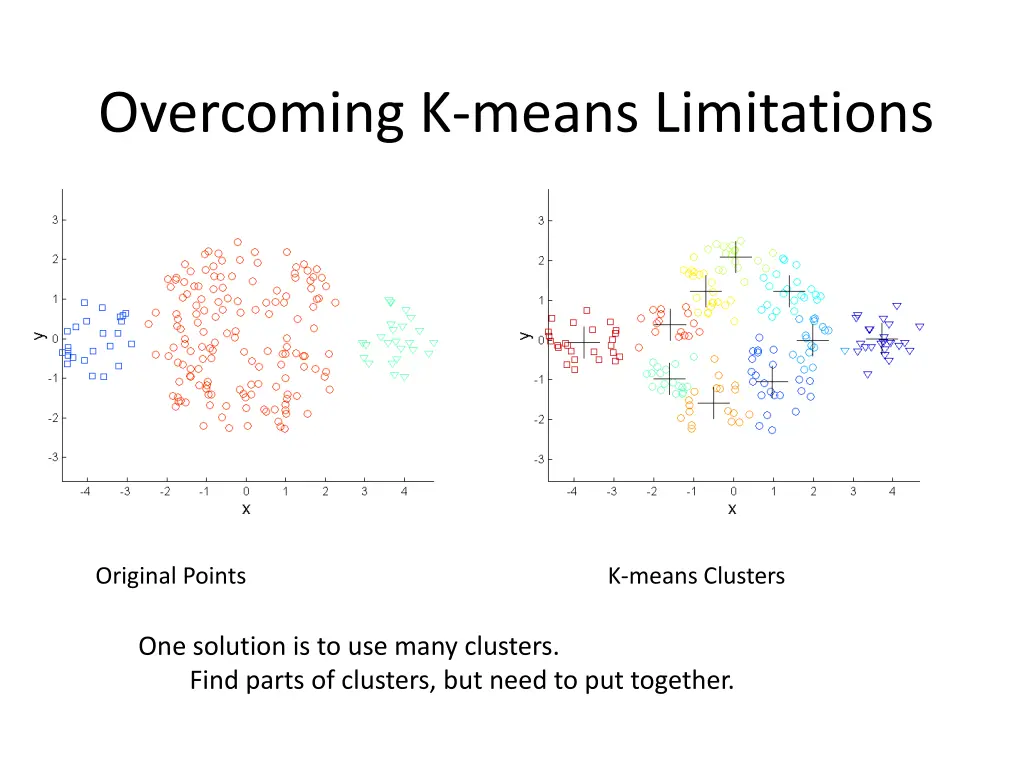
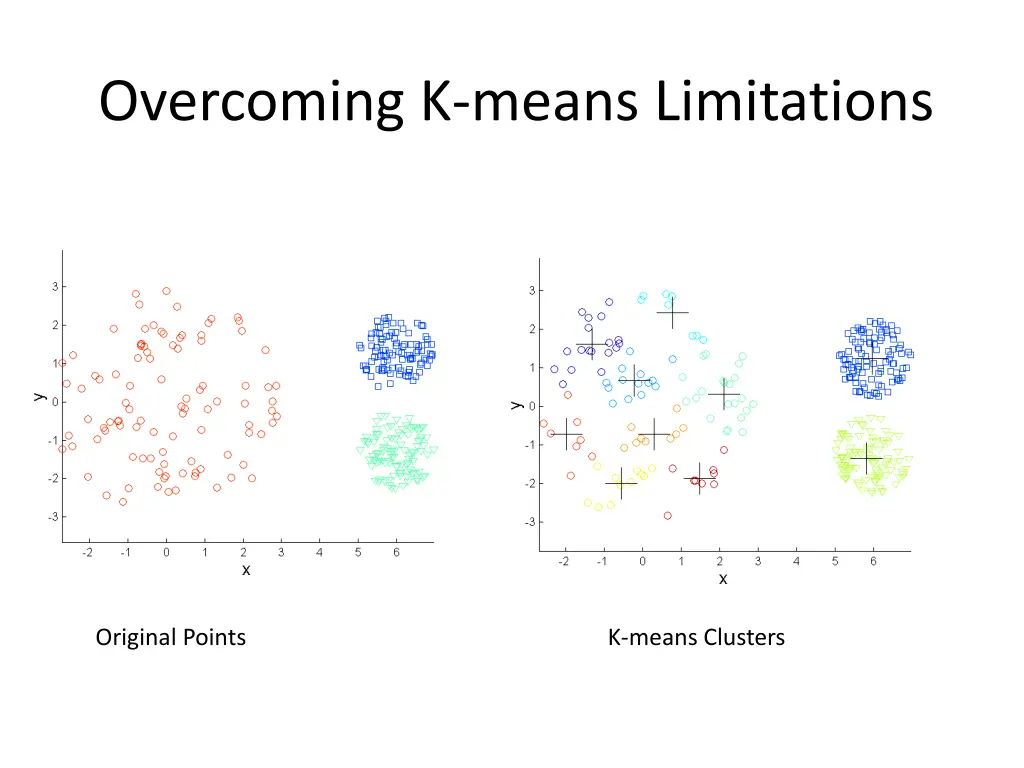
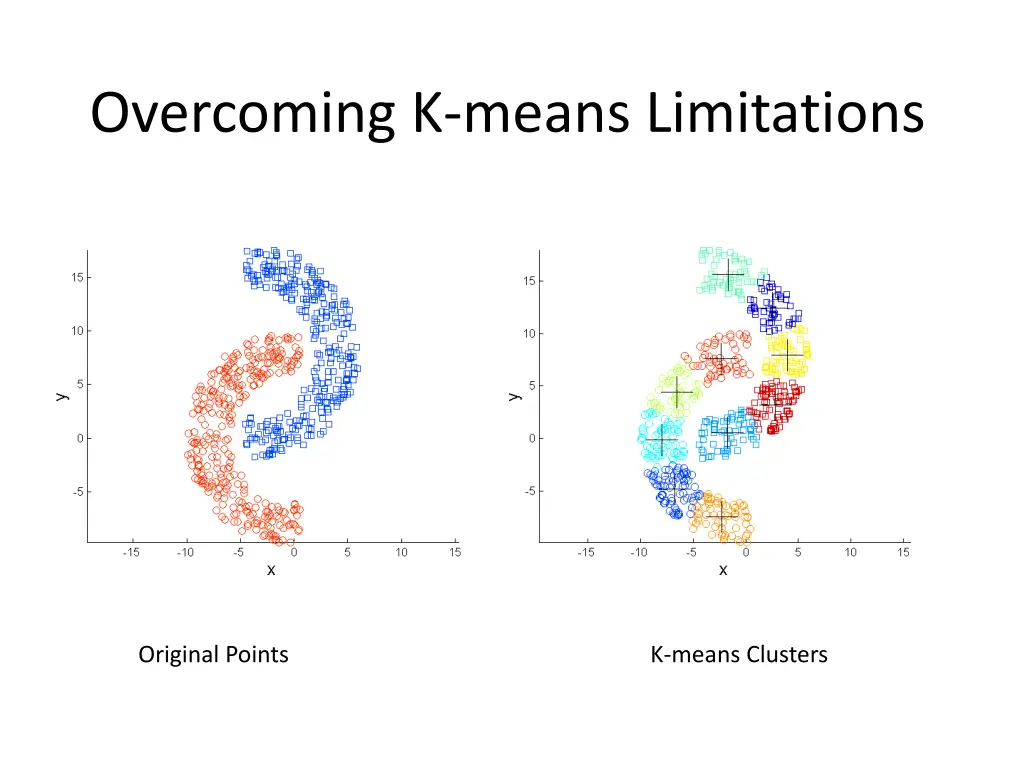
Overcoming K-means Limitations Original Points K-means Clusters One solution is to use many clusters. Find parts of clusters, but need to put together.
Overcoming K-means Limitations Original Points K-means Clusters
Overcoming K-means Limitations Original Points K-means Clusters
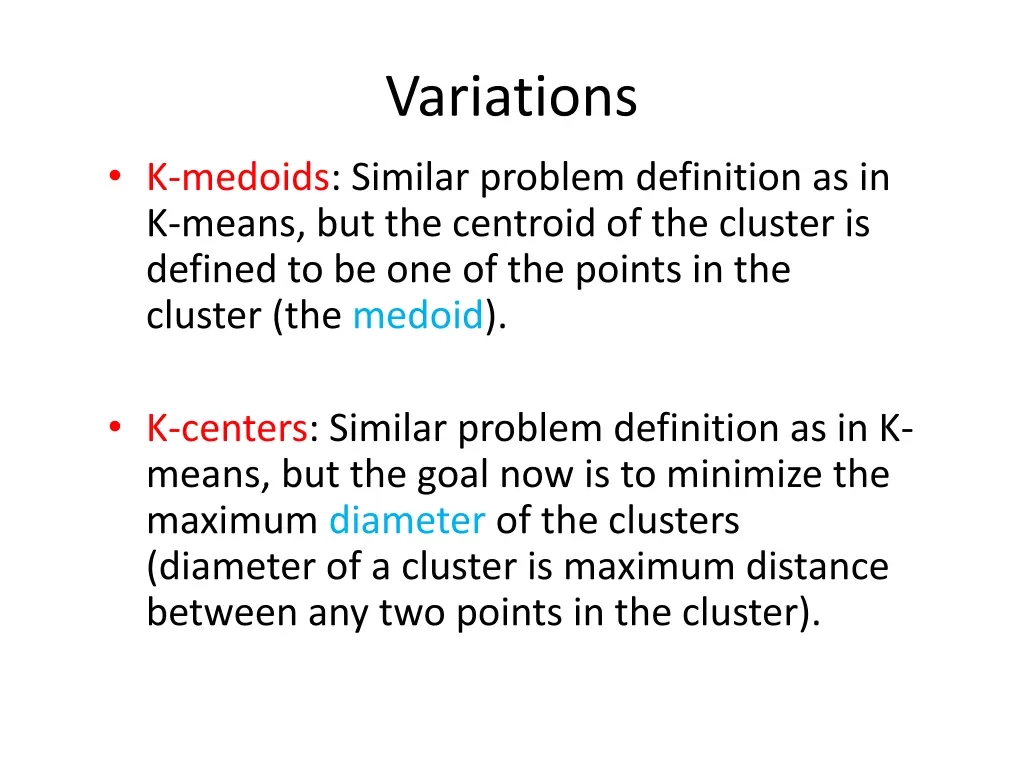
Variations K-medoids: Similar problem definition as in K-means, but the centroid of the cluster is defined to be one of the points in the cluster (the medoid). K-centers: Similar problem definition as in K- means, but the goal now is to minimize the maximum diameter of the clusters (diameter of a cluster is maximum distance between any two points in the cluster).