Understanding Labour Market Trends in the West of England
Explore the current and future labour market trends in the West of England, including insights on industry-specific impacts, workforce furlough statistics, and unemployment-related benefits. Gain valuable intelligence to respond effectively to the evolving economic landscape.

Download Presentation

Please find below an Image/Link to download the presentation.
The content on the website is provided AS IS for your information and personal use only. It may not be sold, licensed, or shared on other websites without obtaining consent from the author. If you encounter any issues during the download, it is possible that the publisher has removed the file from their server.
You are allowed to download the files provided on this website for personal or commercial use, subject to the condition that they are used lawfully. All files are the property of their respective owners.
The content on the website is provided AS IS for your information and personal use only. It may not be sold, licensed, or shared on other websites without obtaining consent from the author.
E N D
Presentation Transcript
Labour Market Intelligence for the West of England Charlotte Hopley, Senior Economic Officer June 2020
Contents 1. Current Context 2. Future trends? 3. Responding to the current changes 4. Useful Resources 2
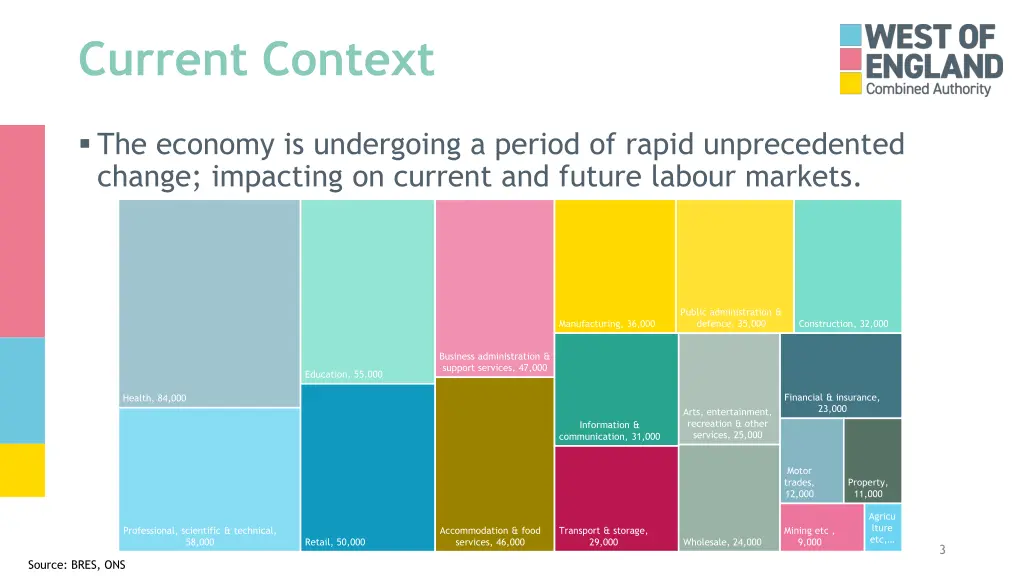
Current Context The economy is undergoing a period of rapid unprecedented change; impacting on current and future labour markets. Public administration & defence, 35,000 Manufacturing, 36,000 Construction, 32,000 Business administration & support services, 47,000 Education, 55,000 Financial & insurance, 23,000 Health, 84,000 Arts, entertainment, recreation & other services, 25,000 Information & communication, 31,000 Motor trades, 12,000 Property, 11,000 Agricu lture etc, Professional, scientific & technical, 58,000 Accommodation & food services, 46,000 Transport & storage, 29,000 Mining etc , 9,000 Retail, 50,000 Wholesale, 24,000 3 Source: BRES, ONS
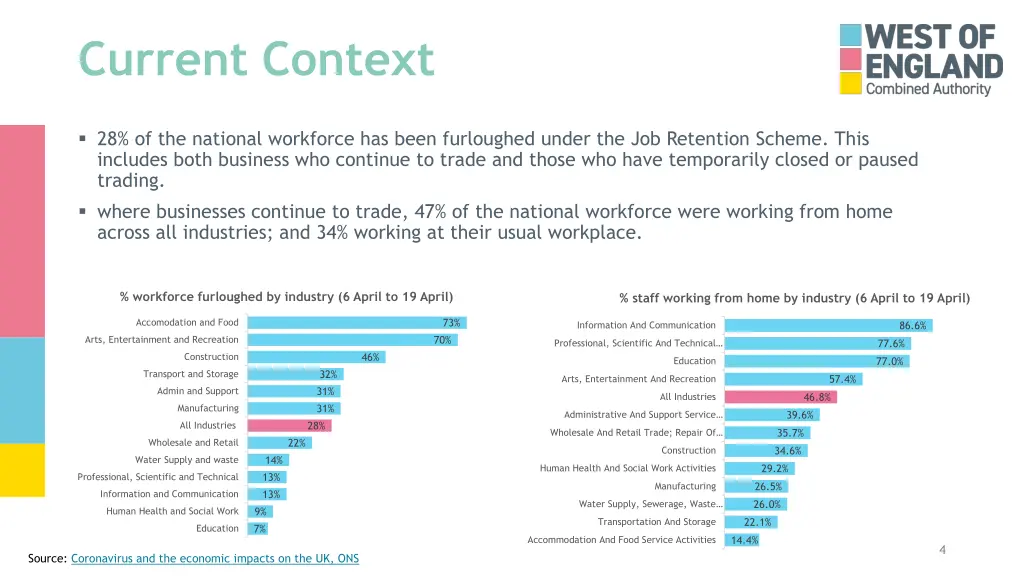
Current Context 28% of the national workforce has been furloughed under the Job Retention Scheme. This includes both business who continue to trade and those who have temporarily closed or paused trading. where businesses continue to trade, 47% of the national workforce were working from home across all industries; and 34% working at their usual workplace. % workforce furloughed by industry (6 April to 19 April) % staff working from home by industry (6 April to 19 April) 73% Accomodation and Food 86.6% Information And Communication 70% Arts, Entertainment and Recreation 77.6% Professional, Scientific And Technical 46% Construction 77.0% Education 32% Transport and Storage 57.4% Arts, Entertainment And Recreation 31% Admin and Support 46.8% All Industries 31% Manufacturing 39.6% Administrative And Support Service 28% All Industries 35.7% Wholesale And Retail Trade; Repair Of 22% Wholesale and Retail 34.6% Construction 14% Water Supply and waste 29.2% Human Health And Social Work Activities 13% Professional, Scientific and Technical 26.5% Manufacturing 13% Information and Communication 26.0% Water Supply, Sewerage, Waste 9% Human Health and Social Work 22.1% Transportation And Storage 7% Education 14.4% Accommodation And Food Service Activities 4 Source: Coronavirus and the economic impacts on the UK, ONS
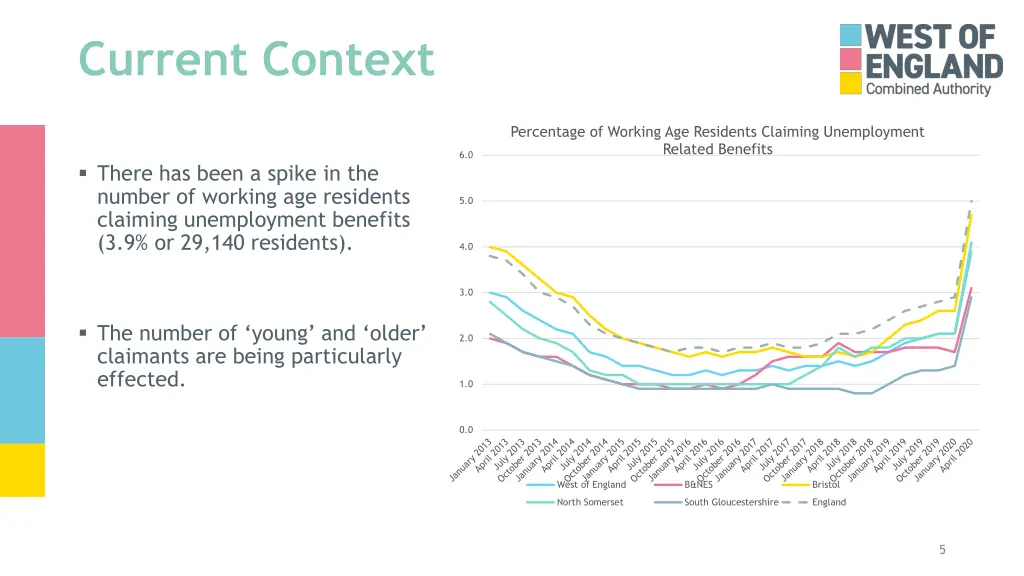
Current Context Percentage of Working Age Residents Claiming Unemployment Related Benefits 6.0 There has been a spike in the number of working age residents claiming unemployment benefits (3.9% or 29,140 residents). 5.0 4.0 3.0 The number of young and older claimants are being particularly effected. 2.0 1.0 0.0 West of England B&NES Bristol North Somerset South Gloucestershire England 5
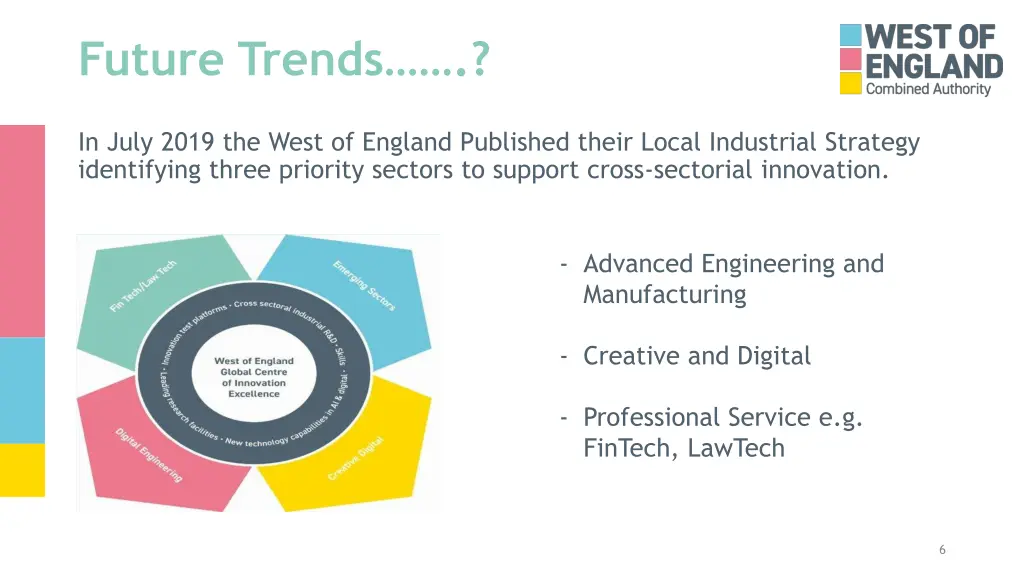
Future Trends.? In July 2019 the West of England Published their Local Industrial Strategy identifying three priority sectors to support cross-sectorial innovation. - Advanced Engineering and Manufacturing - Creative and Digital - Professional Service e.g. FinTech, LawTech 6
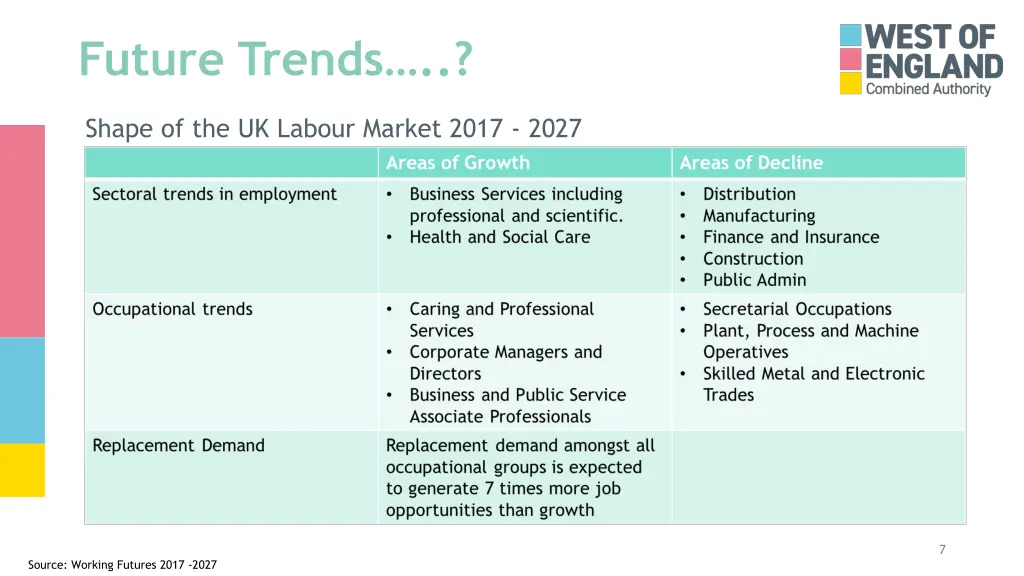
Future Trends..? Shape of the UK Labour Market 2017 - 2027 7 Source: Working Futures 2017 -2027
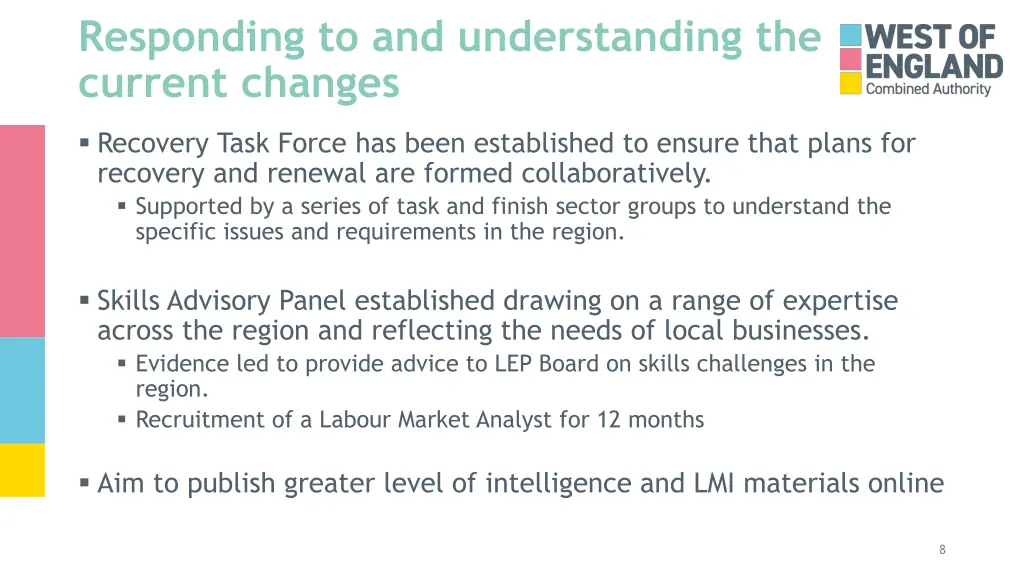
Responding to and understanding the current changes Recovery Task Force has been established to ensure that plans for recovery and renewal are formed collaboratively. Supported by a series of task and finish sector groups to understand the specific issues and requirements in the region. Skills Advisory Panel established drawing on a range of expertise across the region and reflecting the needs of local businesses. Evidence led to provide advice to LEP Board on skills challenges in the region. Recruitment of a Labour Market Analyst for 12 months Aim to publish greater level of intelligence and LMI materials online 8
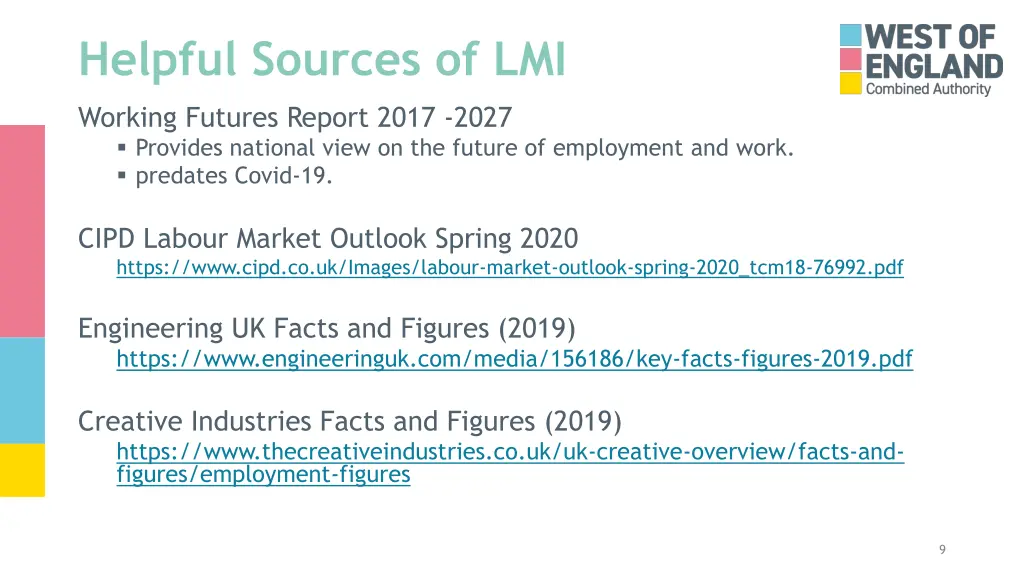
Helpful Sources of LMI Working Futures Report 2017 -2027 Provides national view on the future of employment and work. predates Covid-19. CIPD Labour Market Outlook Spring 2020 https://www.cipd.co.uk/Images/labour-market-outlook-spring-2020_tcm18-76992.pdf Engineering UK Facts and Figures (2019) https://www.engineeringuk.com/media/156186/key-facts-figures-2019.pdf Creative Industries Facts and Figures (2019) https://www.thecreativeindustries.co.uk/uk-creative-overview/facts-and- figures/employment-figures 9