Understanding Ocean Acidification: Causes and Effects
Learn about the mechanisms of ocean acidification caused by anthropogenic greenhouse gas emissions. Explore the potential consequences of increasing oceanic acidity on marine life, focusing on shell formation and dissolution in pteropods. Discover how current emission rates may impact ocean pH levels and the health of marine ecosystems.

Download Presentation

Please find below an Image/Link to download the presentation.
The content on the website is provided AS IS for your information and personal use only. It may not be sold, licensed, or shared on other websites without obtaining consent from the author. If you encounter any issues during the download, it is possible that the publisher has removed the file from their server.
You are allowed to download the files provided on this website for personal or commercial use, subject to the condition that they are used lawfully. All files are the property of their respective owners.
The content on the website is provided AS IS for your information and personal use only. It may not be sold, licensed, or shared on other websites without obtaining consent from the author.
E N D
Presentation Transcript
Ocean Acidification Discussion Catherine Bacon 1.28.15
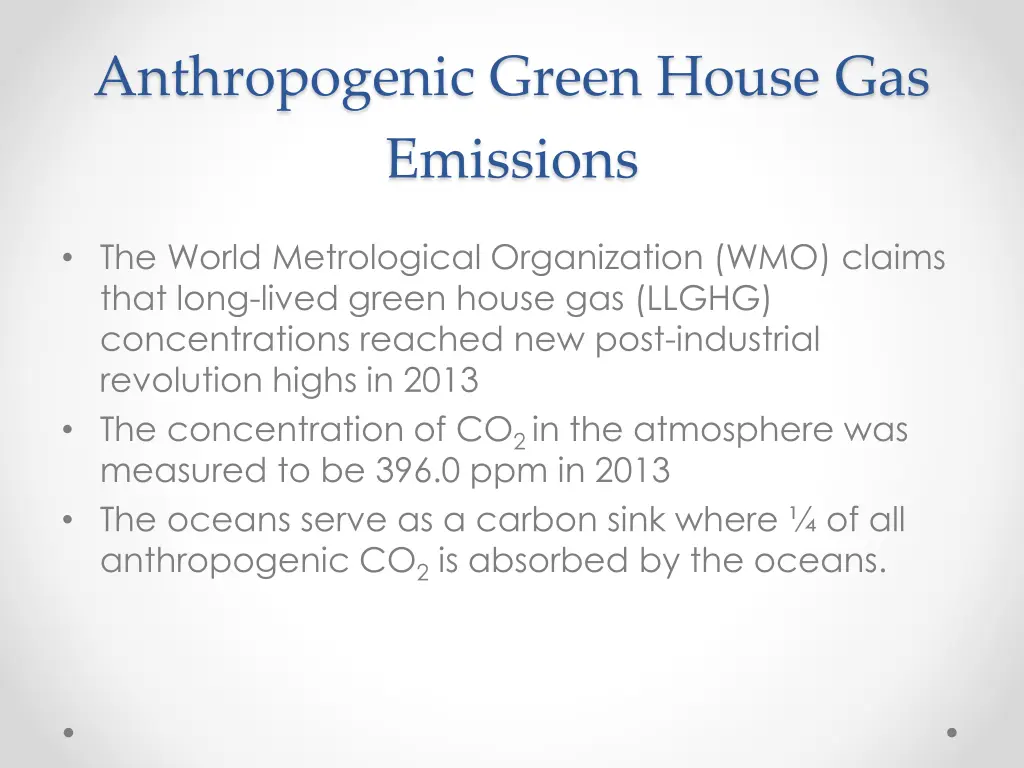
Anthropogenic Green House Gas Emissions The World Metrological Organization (WMO) claims that long-lived green house gas (LLGHG) concentrations reached new post-industrial revolution highs in 2013 The concentration of CO2 in the atmosphere was measured to be 396.0 ppm in 2013 The oceans serve as a carbon sink where of all anthropogenic CO2is absorbed by the oceans.
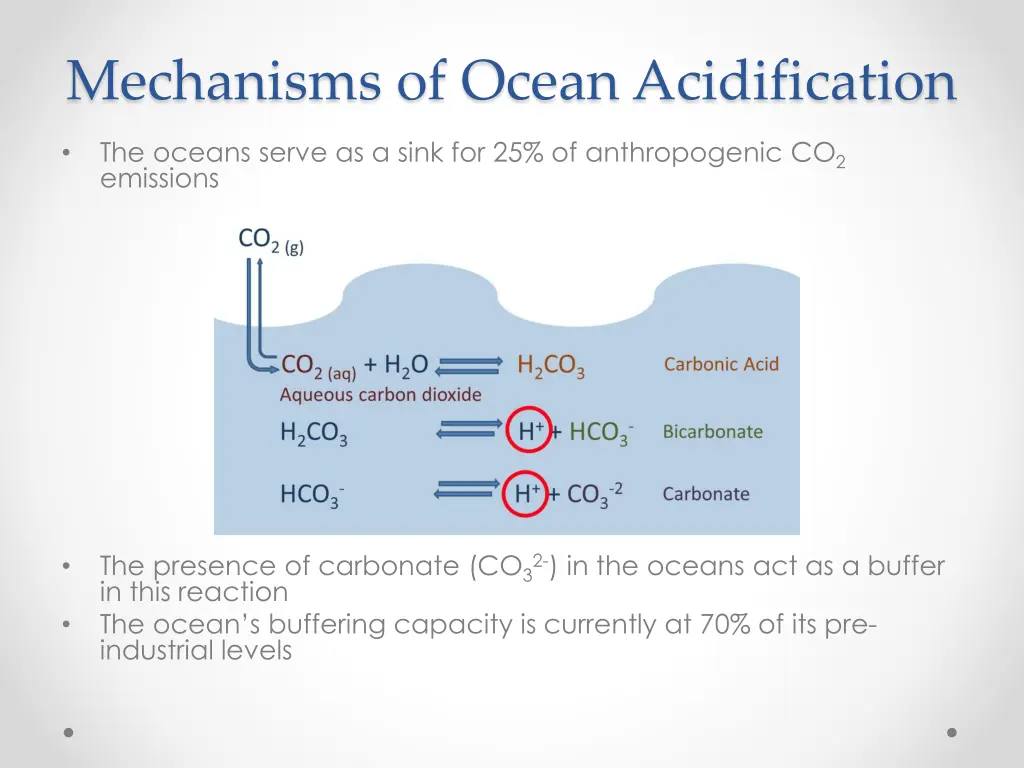
Mechanisms of Ocean Acidification The oceans serve as a sink for 25% of anthropogenic CO2 emissions The presence of carbonate (CO32-) in the oceans act as a buffer in this reaction The ocean s buffering capacity is currently at 70% of its pre- industrial levels
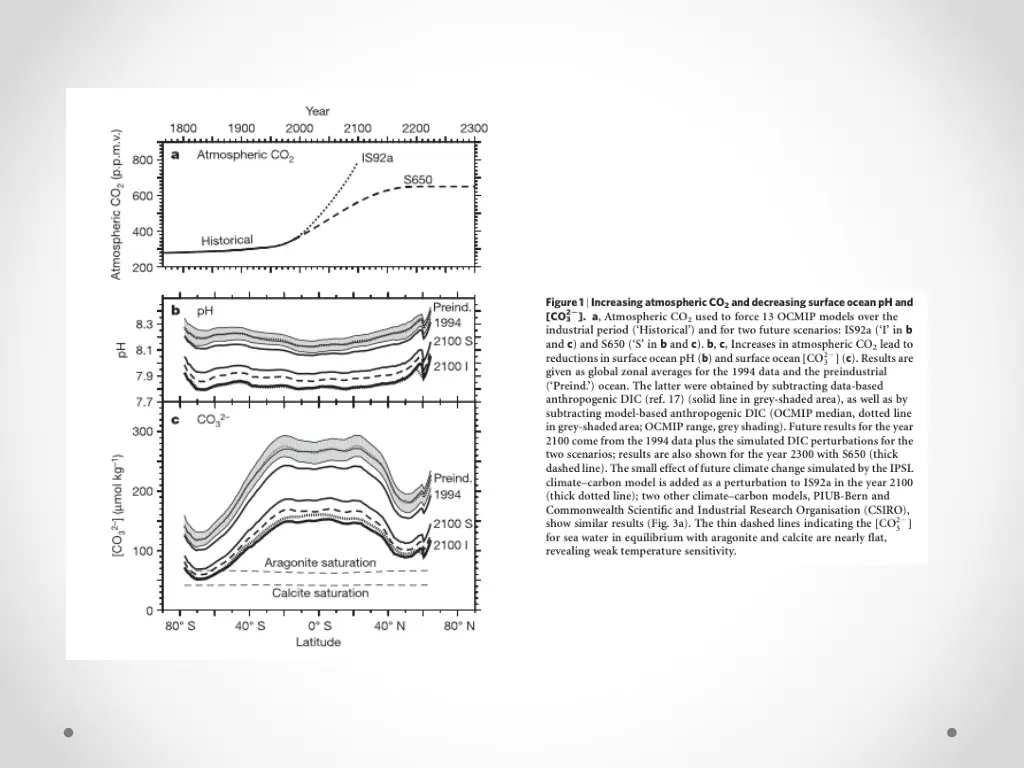
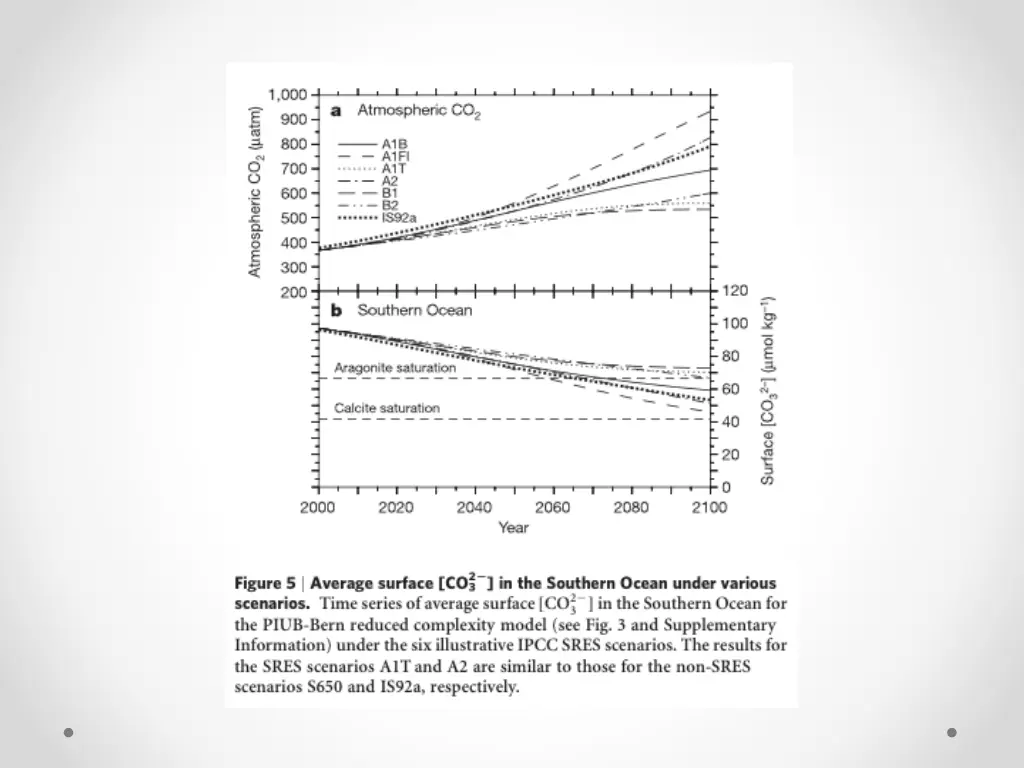
Effects of Ocean Acidification Measurable increase in oceanic acidity has already been recorded. (0.1 unit lower than pre-Industrial pH) If current emission rates are maintained, pH will be 0.3-0.4 units lower by the end of the century. Coral and some plankton will have difficulty forming and maintaining shells due to the decrease in carbonate ions. Plankton are used as indicators of overall ecosystem health in some artic regions and are the base of many oceanic food webs. If pteropods are excluded from their native regions, their predators will be immediately affected.
Shell Formation and Dissolution In pteropods, carbonate, specifically aragonite, plays an important role in shell formation which occurs via calcification. In water undersaturated with respect to aragonite, shell dissolution occurs in pteropods. Dissolution begins with the formations of pits in the pteropod s shell. 14 individuals tested in undersaturated water showed pits in their shells where the shell thickness was <1 m where it is typically ~7 m thick