Understanding Orthographic Projections
Explore the principles of orthographic projections in technical drawing, including different reference planes, views, and important terms. Learn about planes, methods of drawing, and first/second angle projections. Gain insights into patterns of planes and views in orthographic projections.

Download Presentation

Please find below an Image/Link to download the presentation.
The content on the website is provided AS IS for your information and personal use only. It may not be sold, licensed, or shared on other websites without obtaining consent from the author. If you encounter any issues during the download, it is possible that the publisher has removed the file from their server.
You are allowed to download the files provided on this website for personal or commercial use, subject to the condition that they are used lawfully. All files are the property of their respective owners.
The content on the website is provided AS IS for your information and personal use only. It may not be sold, licensed, or shared on other websites without obtaining consent from the author.
E N D
Presentation Transcript
Orthographic Projections Prof.Yogiraj Deshmukh Department of Engineering Sciences International Institute of Information Technology, I IT www.isquareit.edu.in
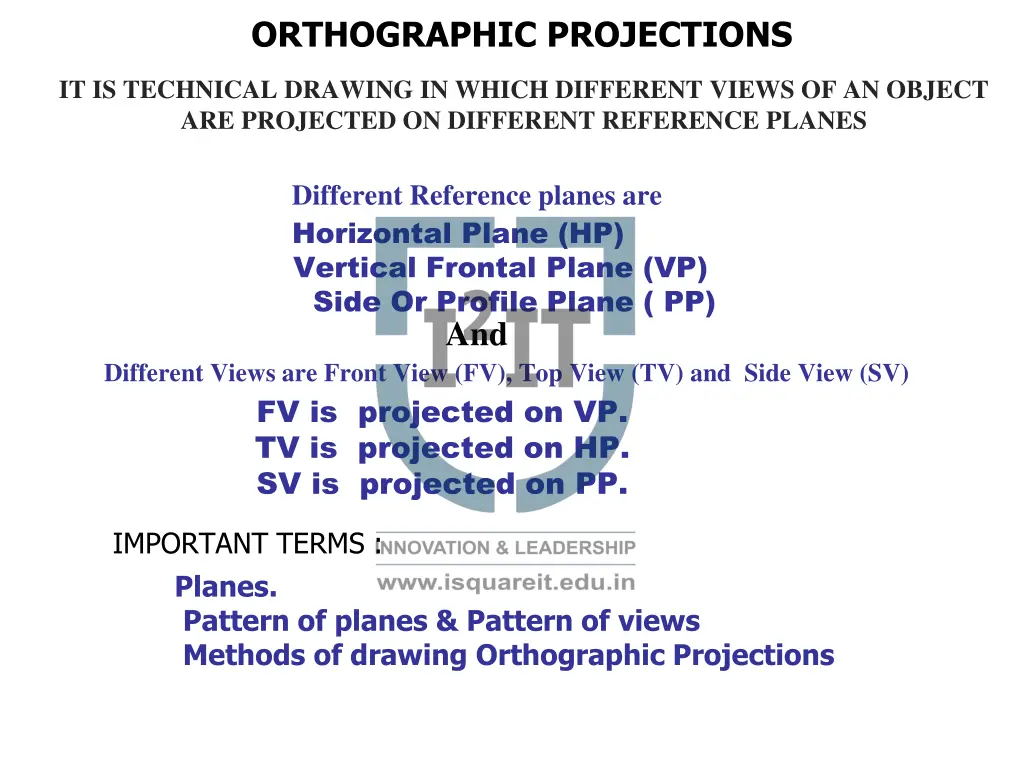
ORTHOGRAPHIC PROJECTIONS IT IS TECHNICAL DRAWING IN WHICH DIFFERENT VIEWS OF AN OBJECT ARE PROJECTED ON DIFFERENT REFERENCE PLANES Different Reference planes are Horizontal Plane (HP) Vertical Frontal Plane (VP) Side Or Profile Plane ( PP) And Different Views are Front View (FV), Top View (TV) and Side View (SV) FV is projected on VP. TV is projected on HP. SV is projected on PP. IMPORTANT TERMS : Planes. Pattern of planes & Pattern of views Methods of drawing Orthographic Projections
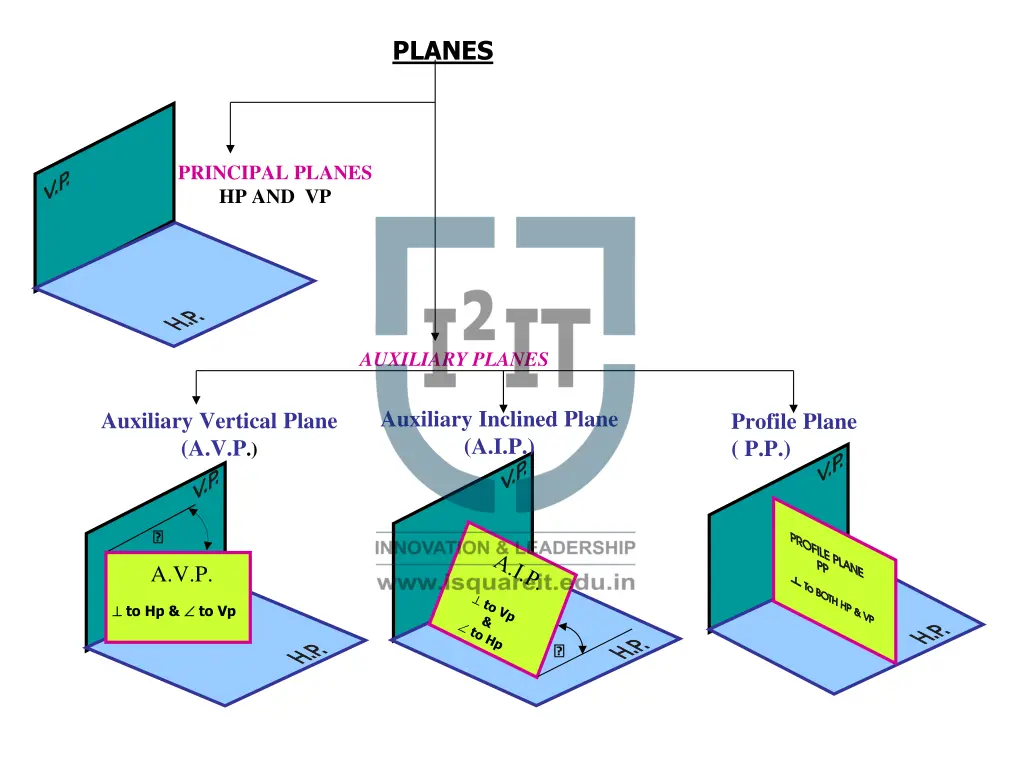
PLANES PRINCIPAL PLANES HP AND VP AUXILIARY PLANES Auxiliary Inclined Plane (A.I.P.) Auxiliary Vertical Plane (A.V.P.) Profile Plane ( P.P.) A.V.P. to Hp & to Vp
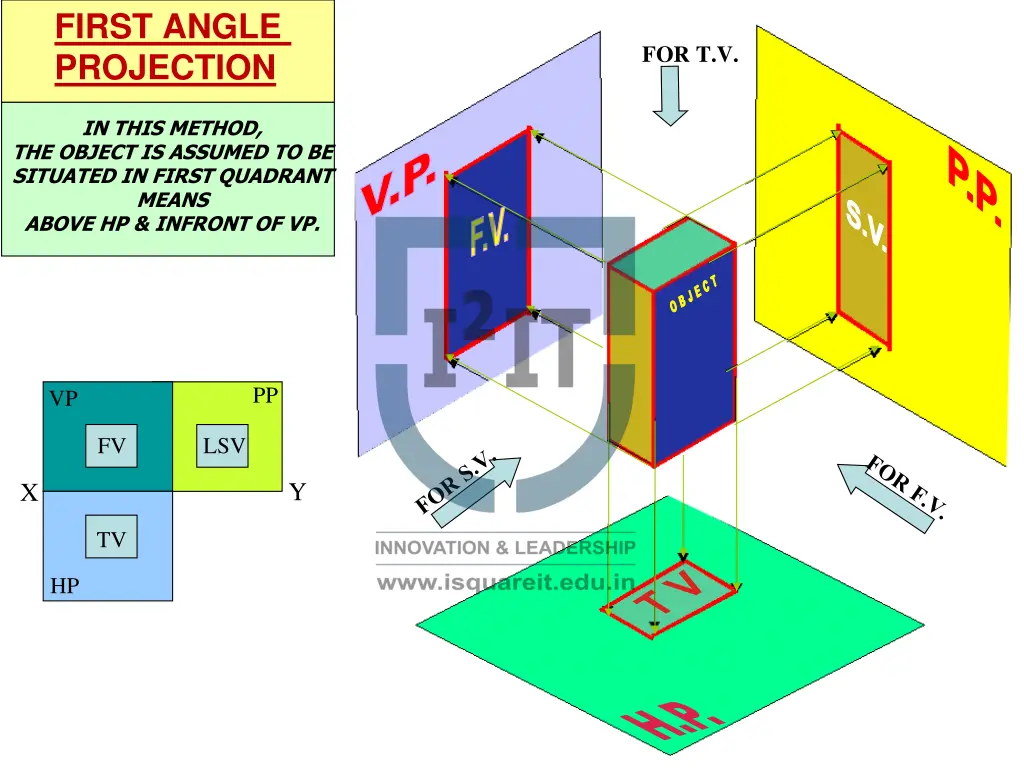
FIRST ANGLE PROJECTION FOR T.V. IN THIS METHOD, THE OBJECT IS ASSUMED TO BE SITUATED IN FIRST QUADRANT MEANS ABOVE HP & INFRONT OF VP. V.P. V.P. P.P. S.V. F.V. O B J E C T PP VP FV LSV Y X TV HP
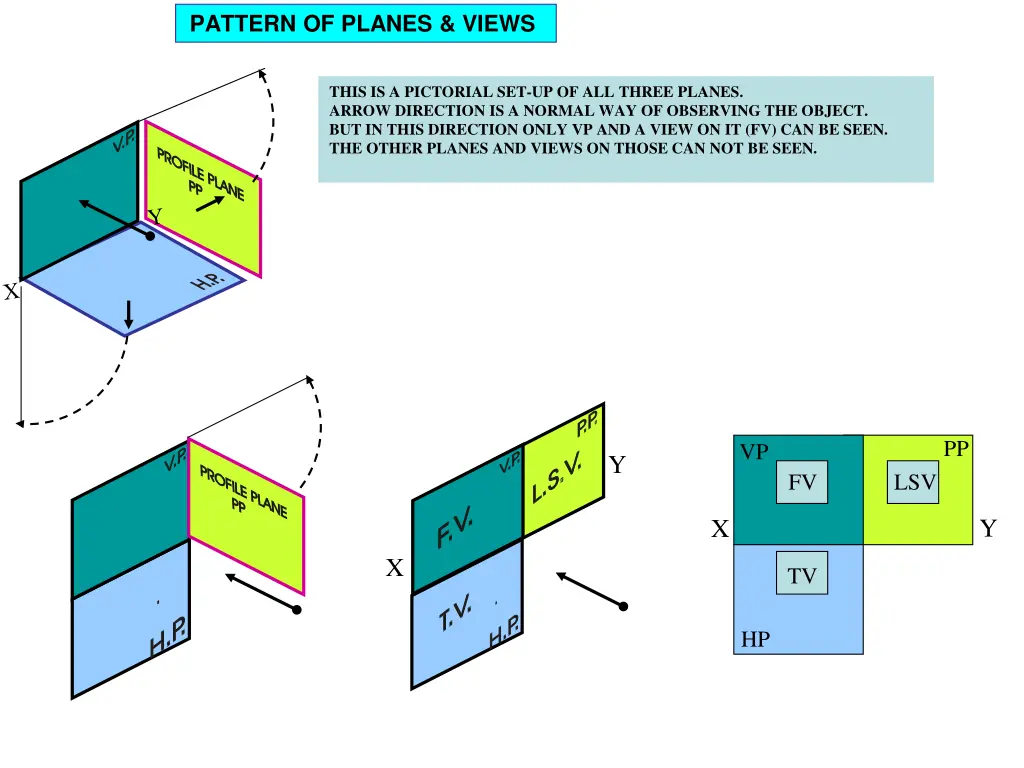
PATTERN OF PLANES & VIEWS THIS IS A PICTORIAL SET-UP OF ALL THREE PLANES. ARROW DIRECTION IS A NORMAL WAY OF OBSERVING THE OBJECT. BUT IN THIS DIRECTION ONLY VP AND A VIEW ON IT (FV) CAN BE SEEN. THE OTHER PLANES AND VIEWS ON THOSE CAN NOT BE SEEN. PP VP Y FV LSV Y X X TV HP
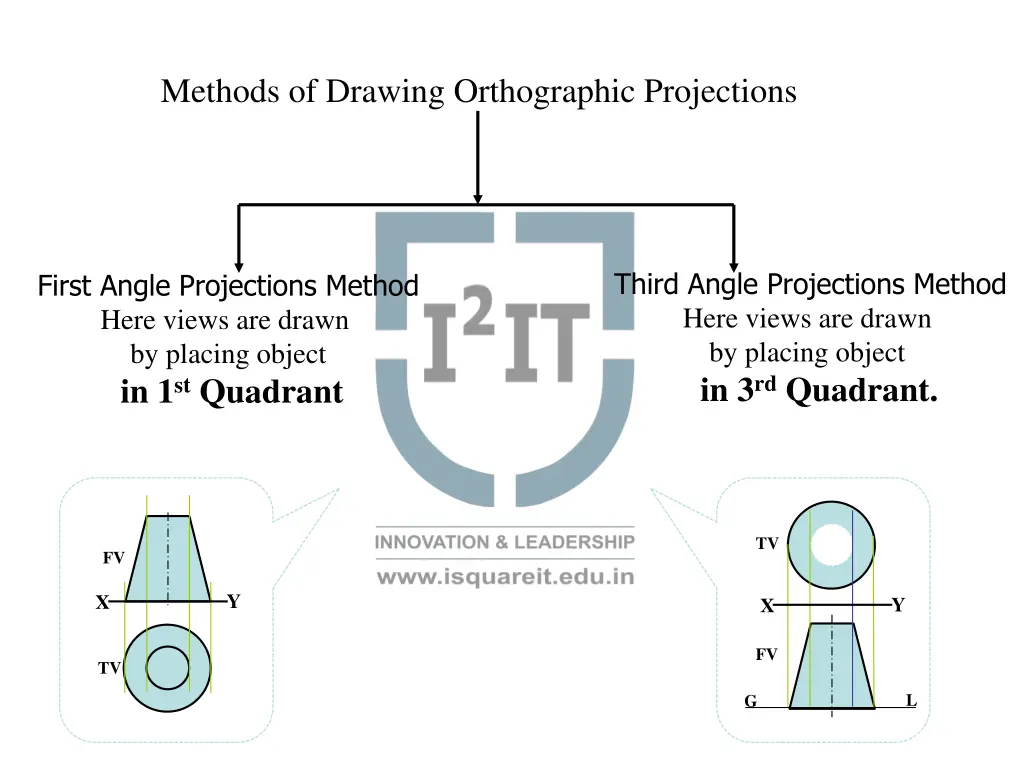
Methods of Drawing Orthographic Projections Third Angle Projections Method Here views are drawn by placing object in 3rdQuadrant. First Angle Projections Method Here views are drawn by placing object in 1stQuadrant TV FV Y X Y X FV TV L G
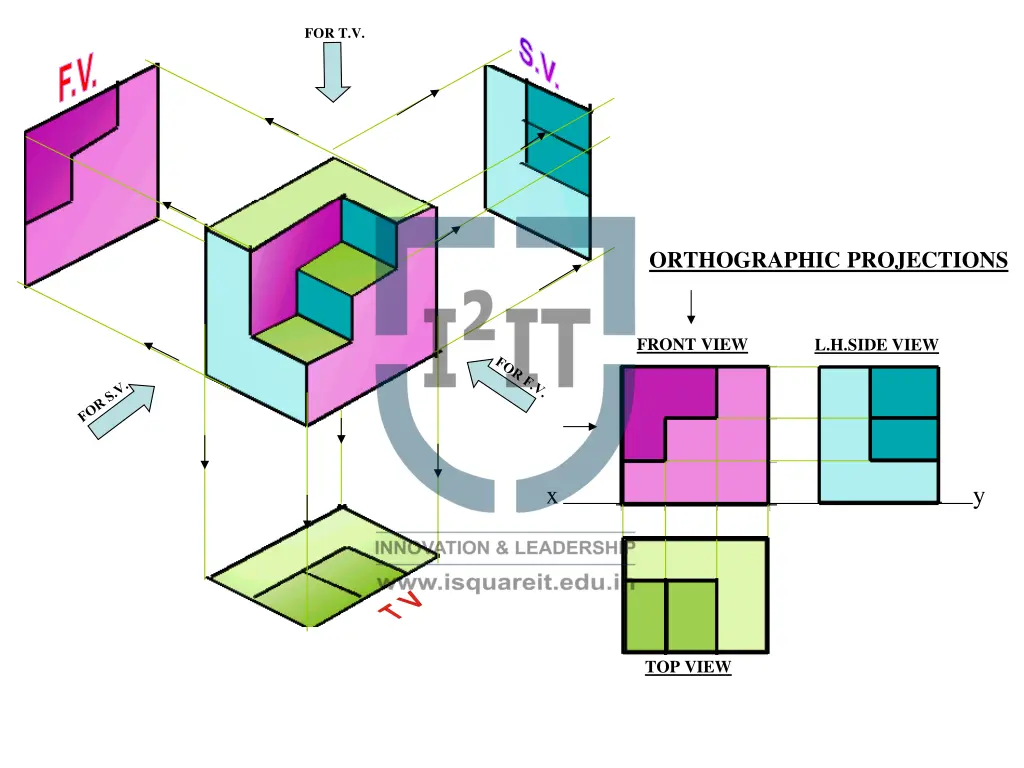
FOR T.V. S.V. F.V. ORTHOGRAPHIC PROJECTIONS FRONT VIEW L.H.SIDE VIEW x y TOP VIEW
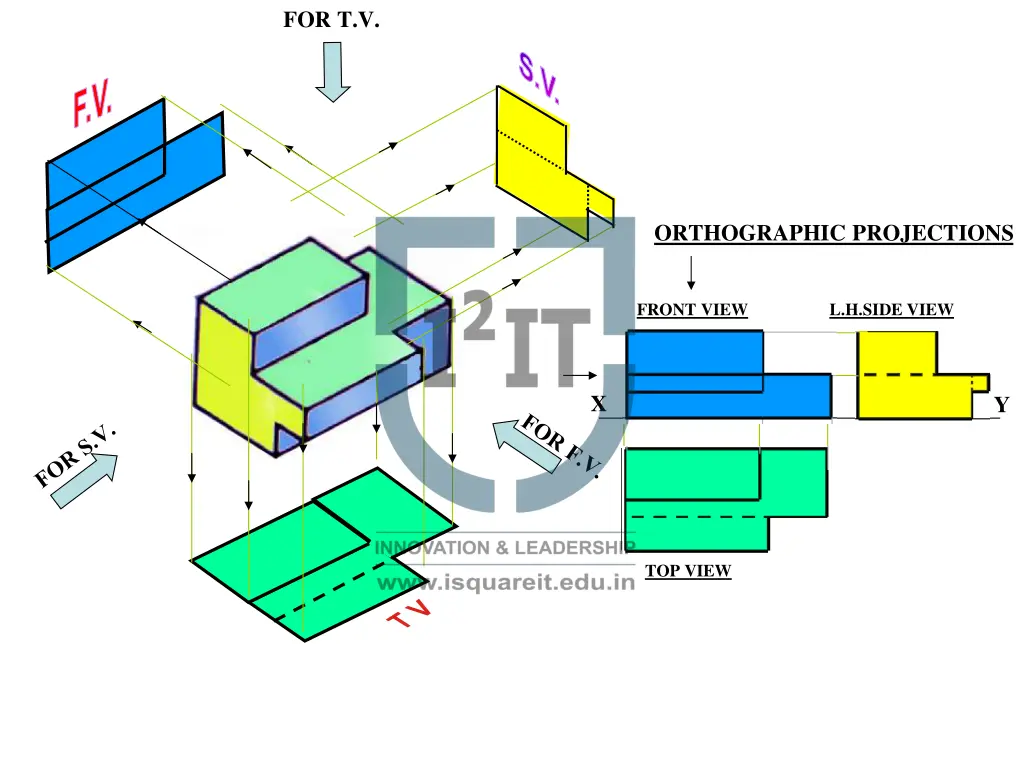
FOR T.V. S.V. F.V. ORTHOGRAPHIC PROJECTIONS FRONT VIEW L.H.SIDE VIEW X Y TOP VIEW
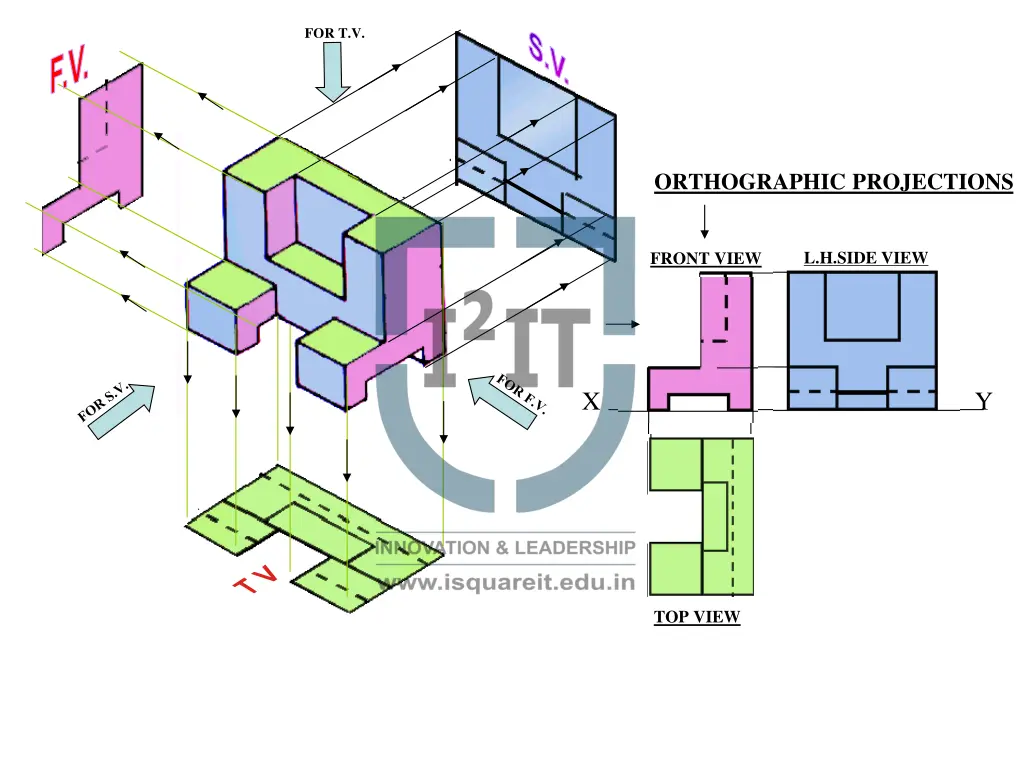
FOR T.V. S.V. F.V. ORTHOGRAPHIC PROJECTIONS L.H.SIDE VIEW FRONT VIEW X Y TOP VIEW
Thanks Wish you all the Best 10