Understanding Padding Oracle Attack in Block Cipher Mode
Explore the Padding Oracle Attack in block cipher mode, learn the process, and discover how padding is implemented in plaintext messages for secure encryption and decryption. Get insights into the principles, objectives, background, and scenarios of this cryptographic vulnerability.

Download Presentation

Please find below an Image/Link to download the presentation.
The content on the website is provided AS IS for your information and personal use only. It may not be sold, licensed, or shared on other websites without obtaining consent from the author. If you encounter any issues during the download, it is possible that the publisher has removed the file from their server.
You are allowed to download the files provided on this website for personal or commercial use, subject to the condition that they are used lawfully. All files are the property of their respective owners.
The content on the website is provided AS IS for your information and personal use only. It may not be sold, licensed, or shared on other websites without obtaining consent from the author.
E N D
Presentation Transcript
Workshop 1: Padding Oracle Attack Daoyuan Feb 28, 2014 1
Objectives Understand the principles and details of the padding oracle attack. Learn to use PadBuster to automate the padding oracle attack. 2
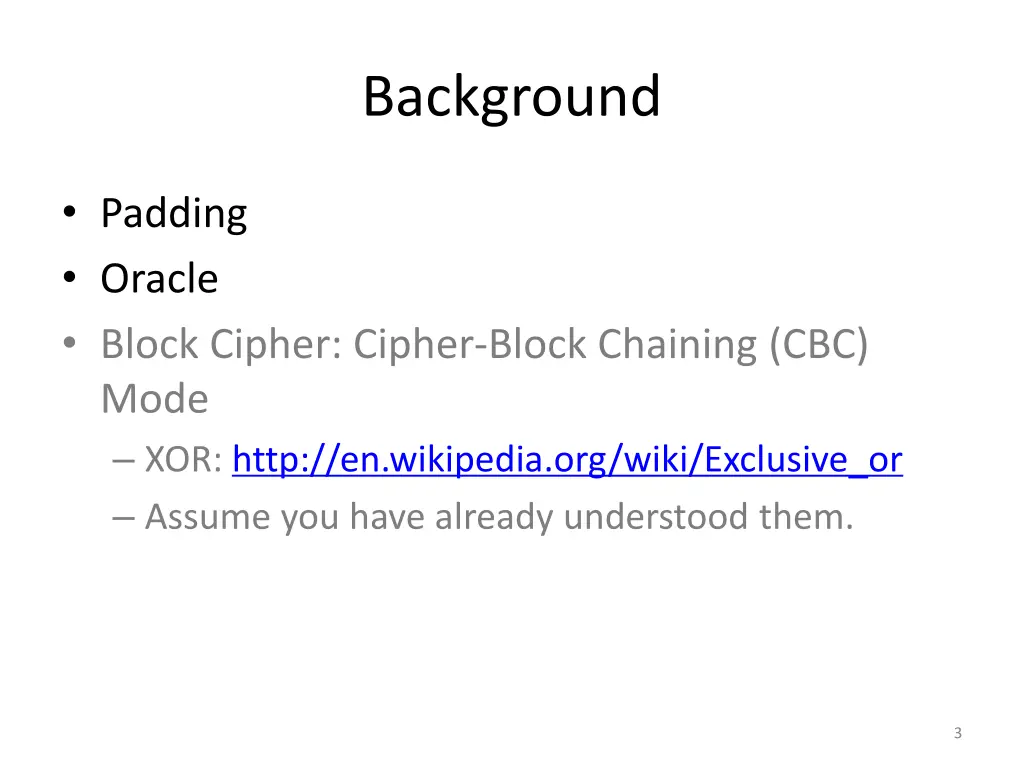
Background Padding Oracle Block Cipher: Cipher-Block Chaining (CBC) Mode XOR: http://en.wikipedia.org/wiki/Exclusive_or Assume you have already understood them. 3
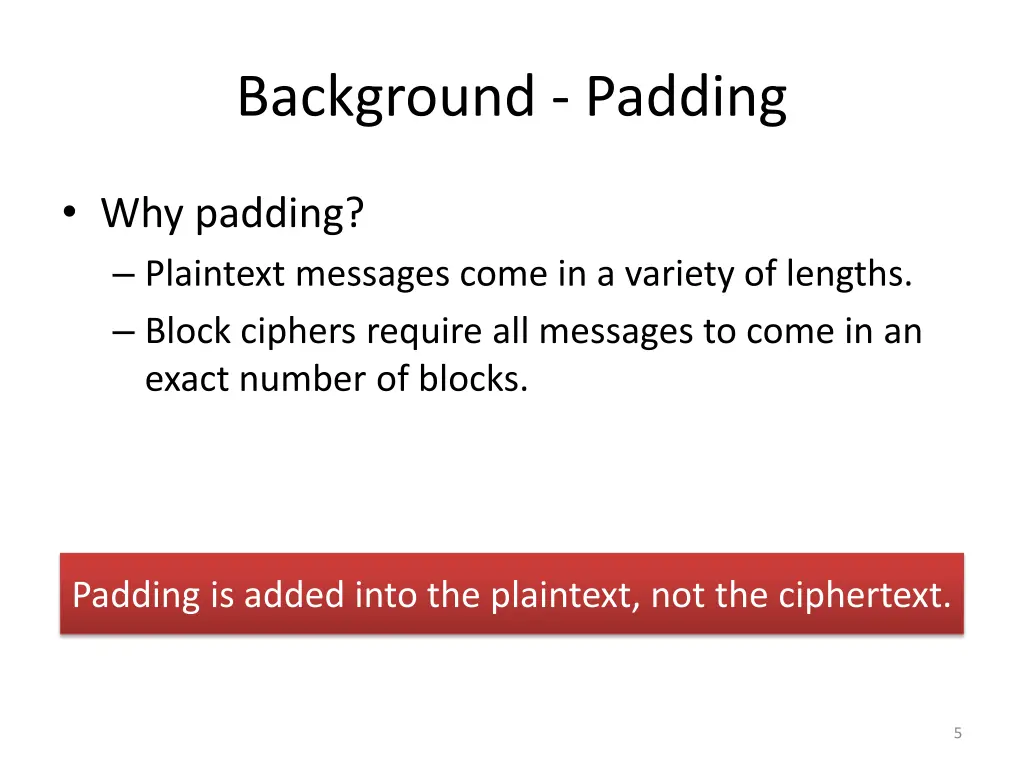
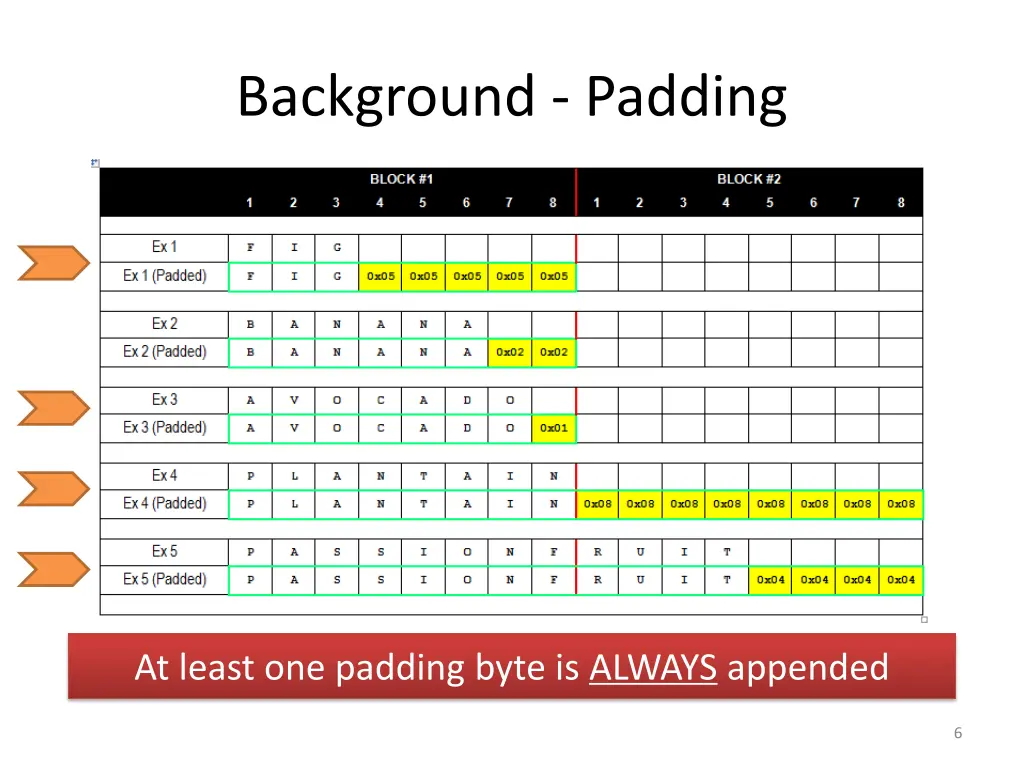
Background - Padding Why padding? Plaintext messages come in a variety of lengths. Block ciphers require all messages to come in an exact number of blocks. Padding is added into the plaintext, not the ciphertext. 5
Background - Padding At least one padding byte is ALWAYS appended 6
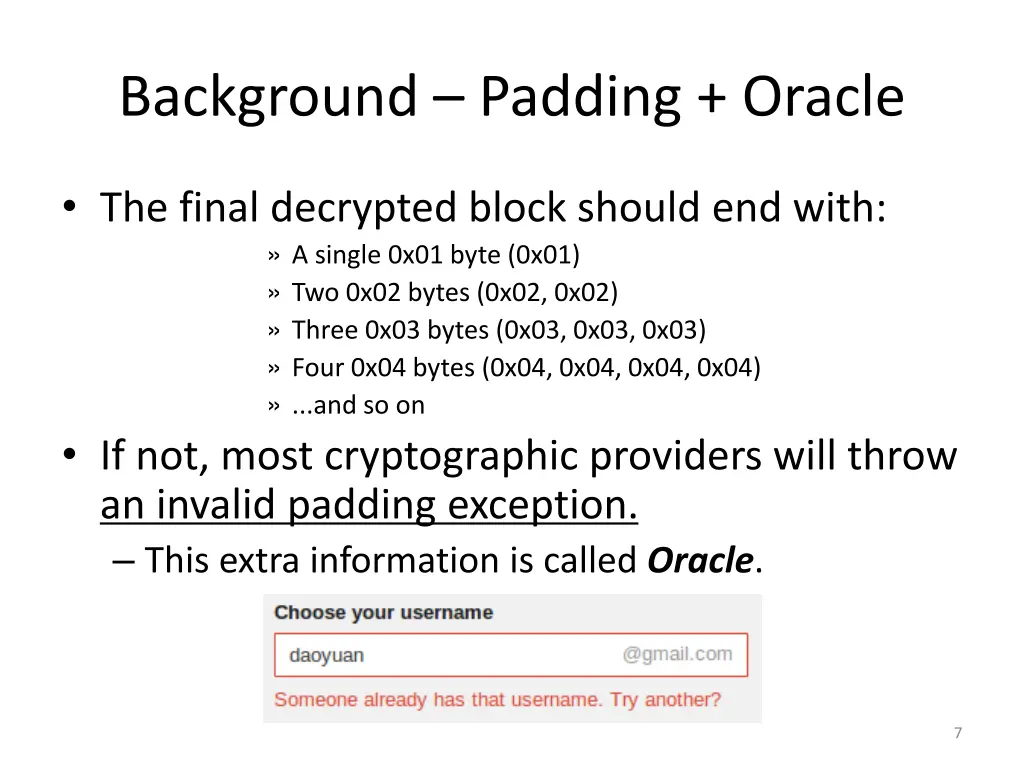
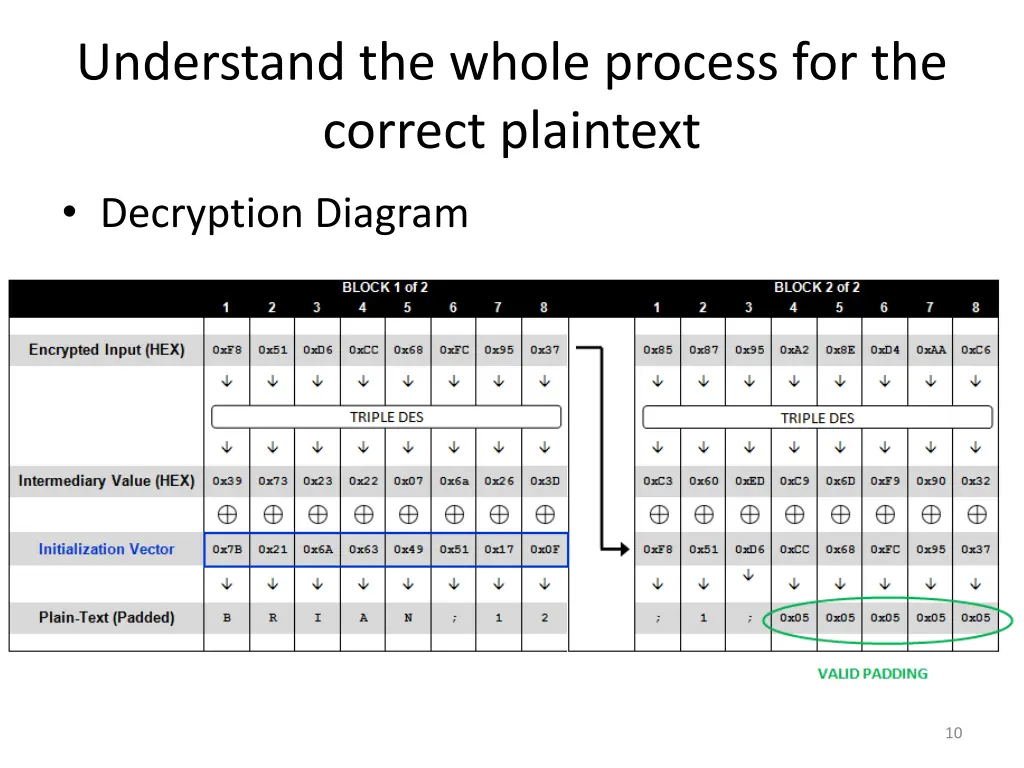
Background Padding + Oracle The final decrypted block should end with: A single 0x01 byte (0x01) Two 0x02 bytes (0x02, 0x02) Three 0x03 bytes (0x03, 0x03, 0x03) Four 0x04 bytes (0x04, 0x04, 0x04, 0x04) ...and so on If not, most cryptographic providers will throw an invalid padding exception. This extra information is called Oracle. 7
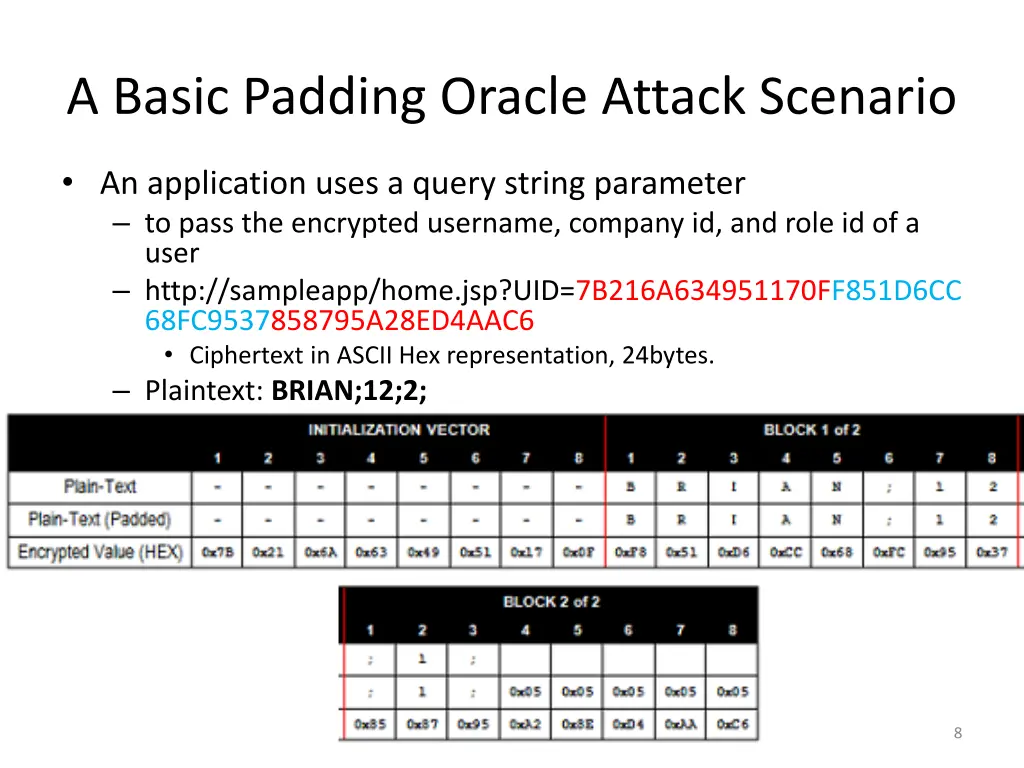
A Basic Padding Oracle Attack Scenario An application uses a query string parameter to pass the encrypted username, company id, and role id of a user http://sampleapp/home.jsp?UID=7B216A634951170FF851D6CC 68FC9537858795A28ED4AAC6 Ciphertext in ASCII Hex representation, 24bytes. Plaintext: BRIAN;12;2; 8
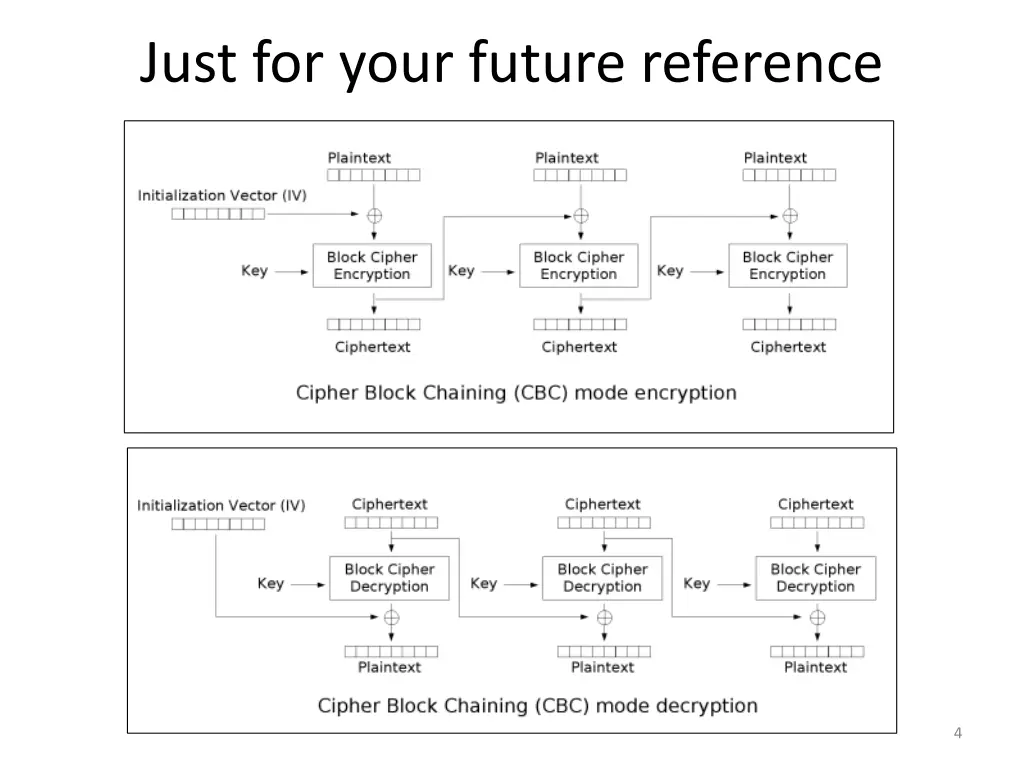
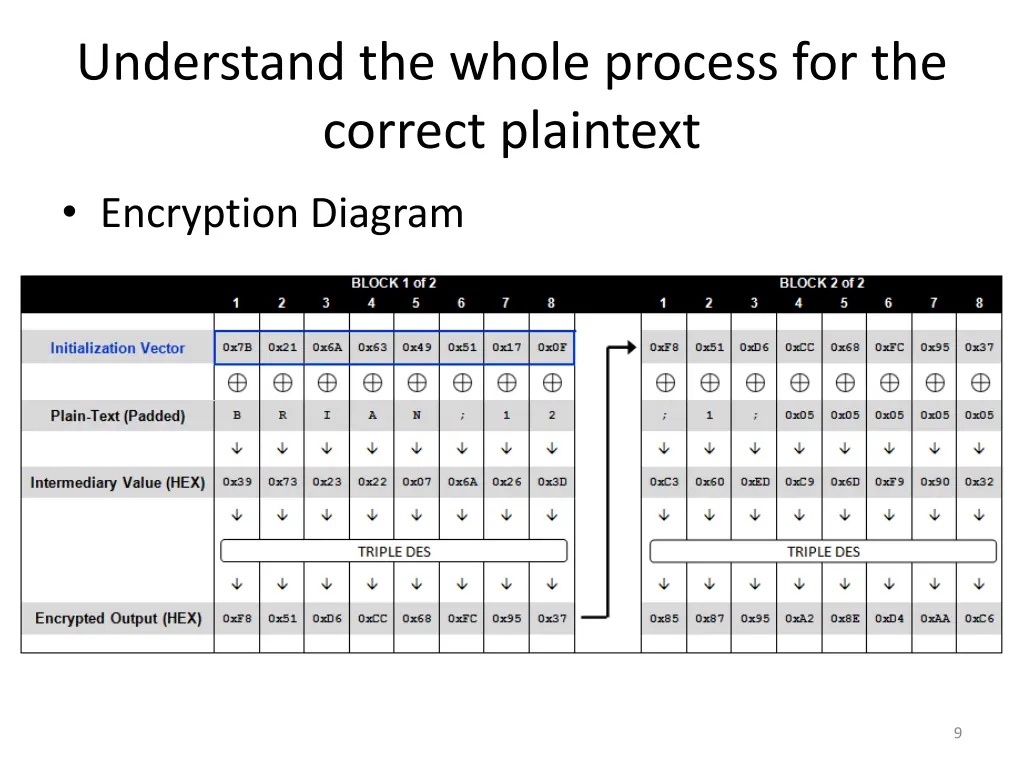
Understand the whole process for the correct plaintext Encryption Diagram 9
Understand the whole process for the correct plaintext Decryption Diagram 10
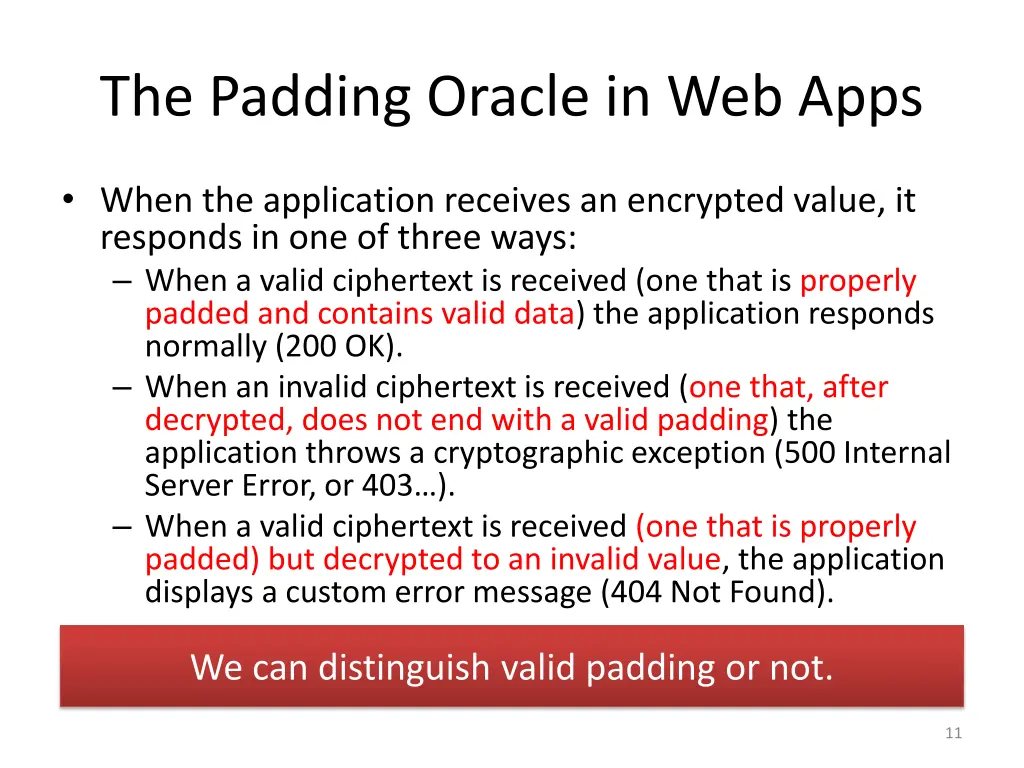
The Padding Oracle in Web Apps When the application receives an encrypted value, it responds in one of three ways: When a valid ciphertext is received (one that is properly padded and contains valid data) the application responds normally (200 OK). When an invalid ciphertext is received (one that, after decrypted, does not end with a valid padding) the application throws a cryptographic exception (500 Internal Server Error, or 403 ). When a valid ciphertext is received (one that is properly padded) but decrypted to an invalid value, the application displays a custom error message (404 Not Found). We can distinguish valid padding or not. 11
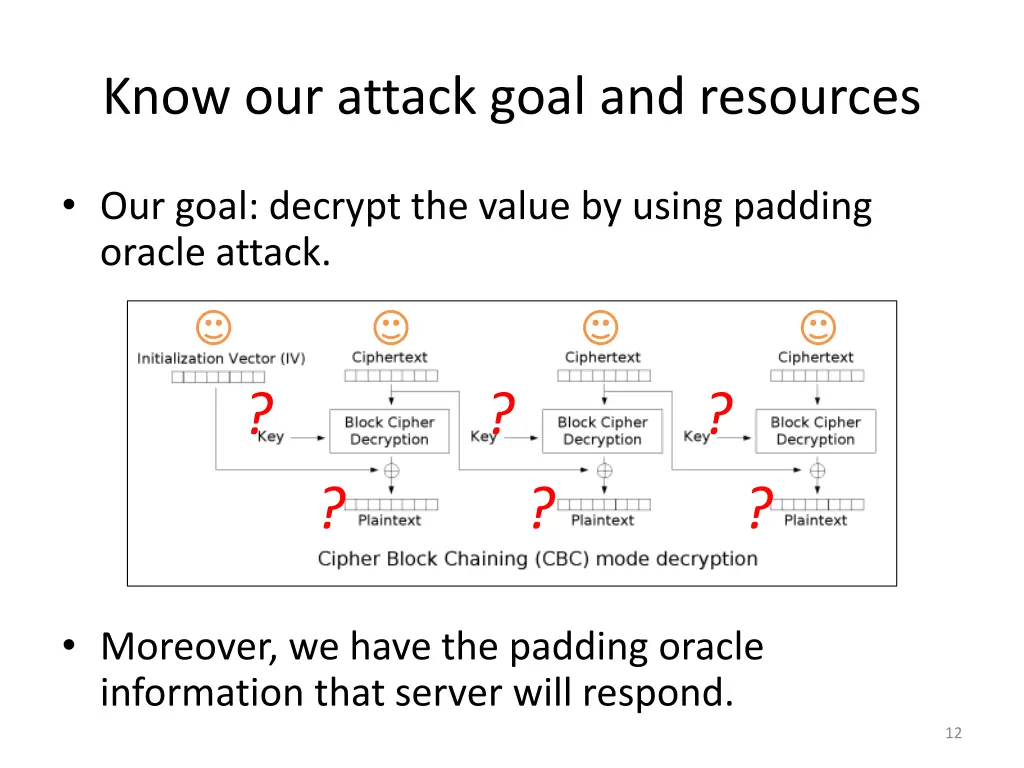
Know our attack goal and resources Our goal: decrypt the value by using padding oracle attack. ? ? ? ? ? ? Moreover, we have the padding oracle information that server will respond. 12
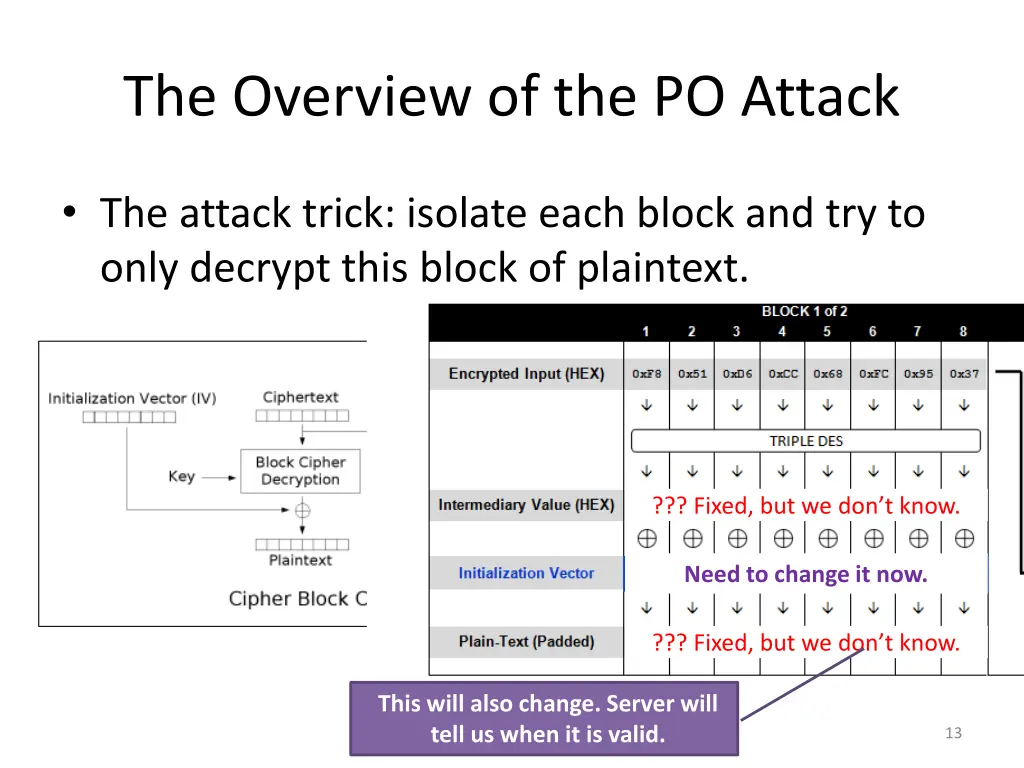
The Overview of the PO Attack The attack trick: isolate each block and try to only decrypt this block of plaintext. ??? Fixed, but we don t know. Need to change it now. ??? Fixed, but we don t know. This will also change. Server will tell us when it is valid. 13
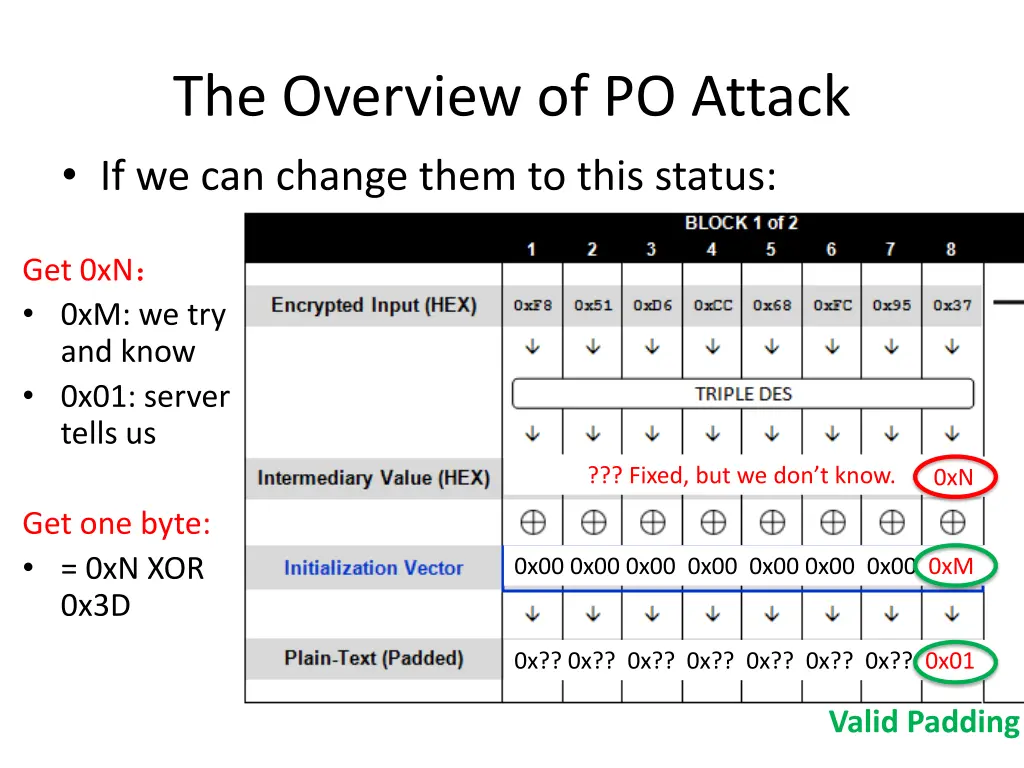
The Overview of PO Attack If we can change them to this status: Get 0xN 0xM: we try and know 0x01: server tells us ??? Fixed, but we don t know. 0xN Get one byte: = 0xN XOR 0x3D 0x00 0x00 0x00 0x00 0x00 0x00 0x00 0xM 0x?? 0x?? 0x?? 0x?? 0x?? 0x?? 0x?? 0x01 Valid Padding 14
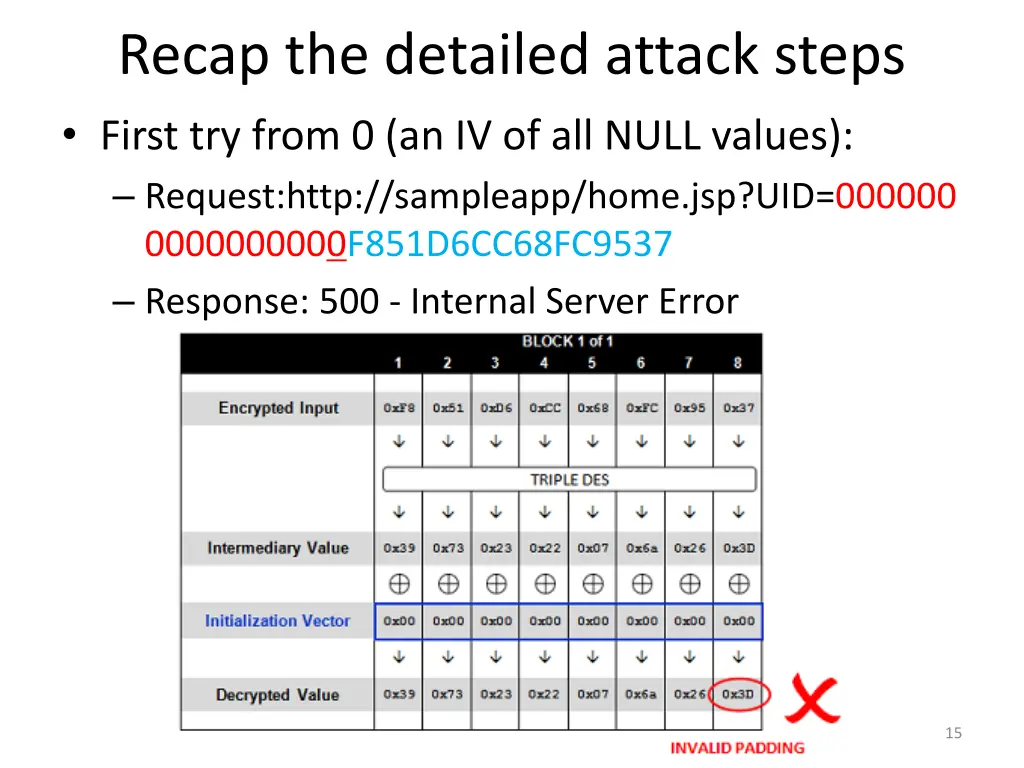
Recap the detailed attack steps First try from 0 (an IV of all NULL values): Request:http://sampleapp/home.jsp?UID=000000 0000000000F851D6CC68FC9537 Response: 500 - Internal Server Error 15
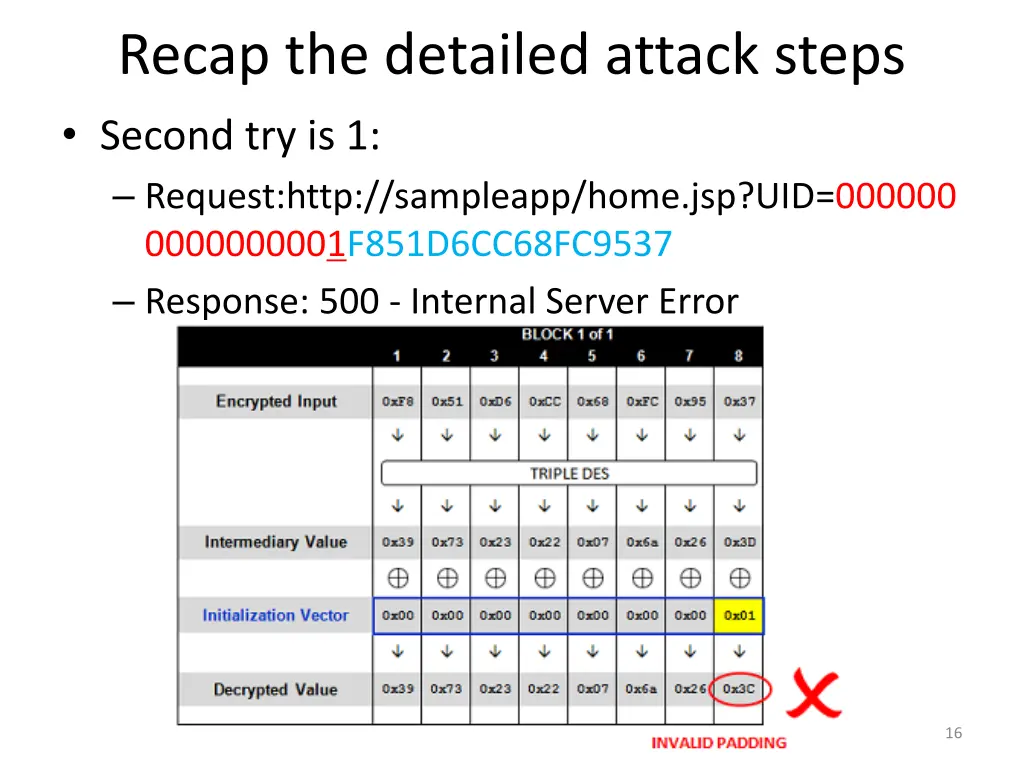
Recap the detailed attack steps Second try is 1: Request:http://sampleapp/home.jsp?UID=000000 0000000001F851D6CC68FC9537 Response: 500 - Internal Server Error 16
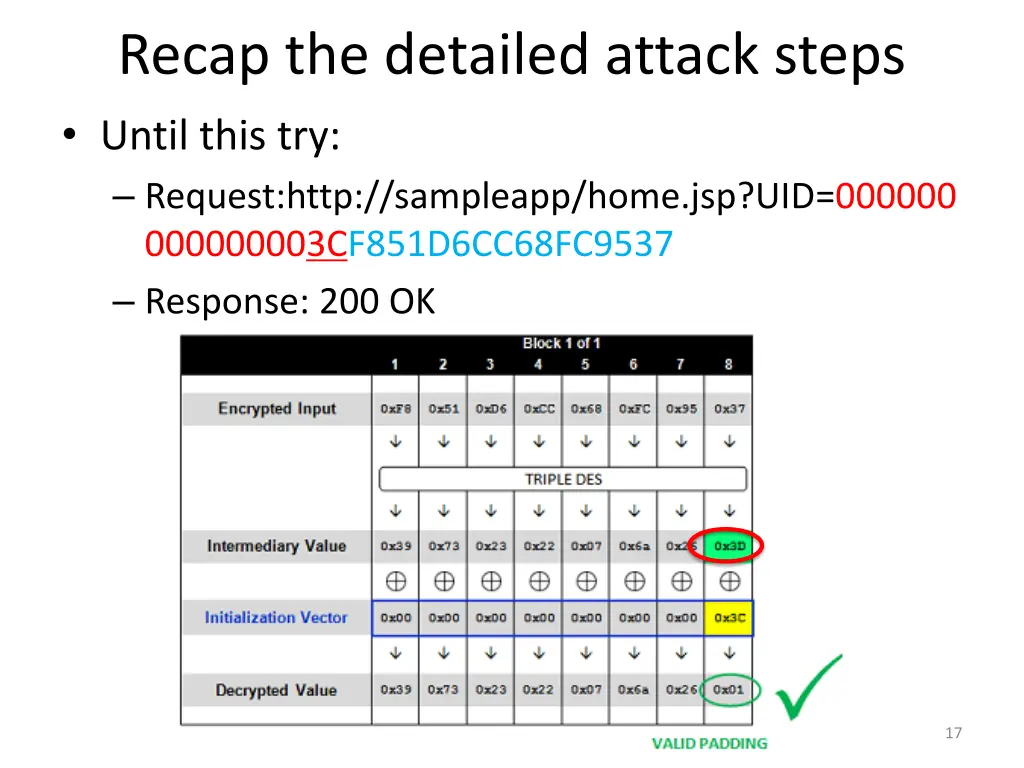
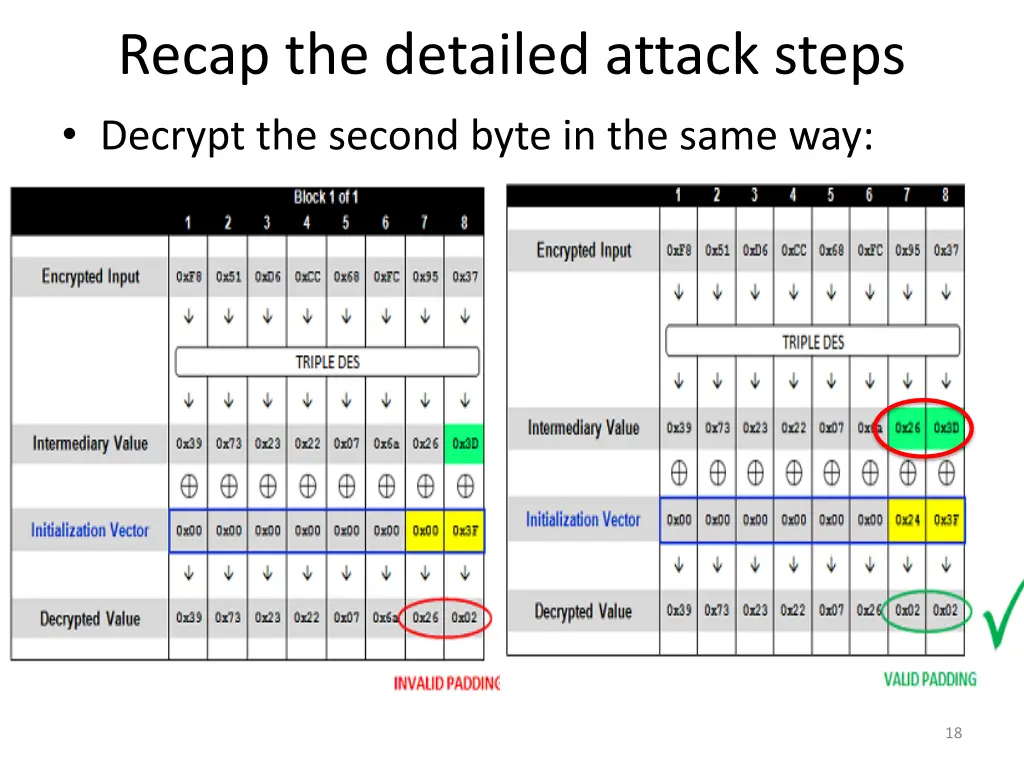
Recap the detailed attack steps Until this try: Request:http://sampleapp/home.jsp?UID=000000 000000003CF851D6CC68FC9537 Response: 200 OK 17
Recap the detailed attack steps Decrypt the second byte in the same way: 18
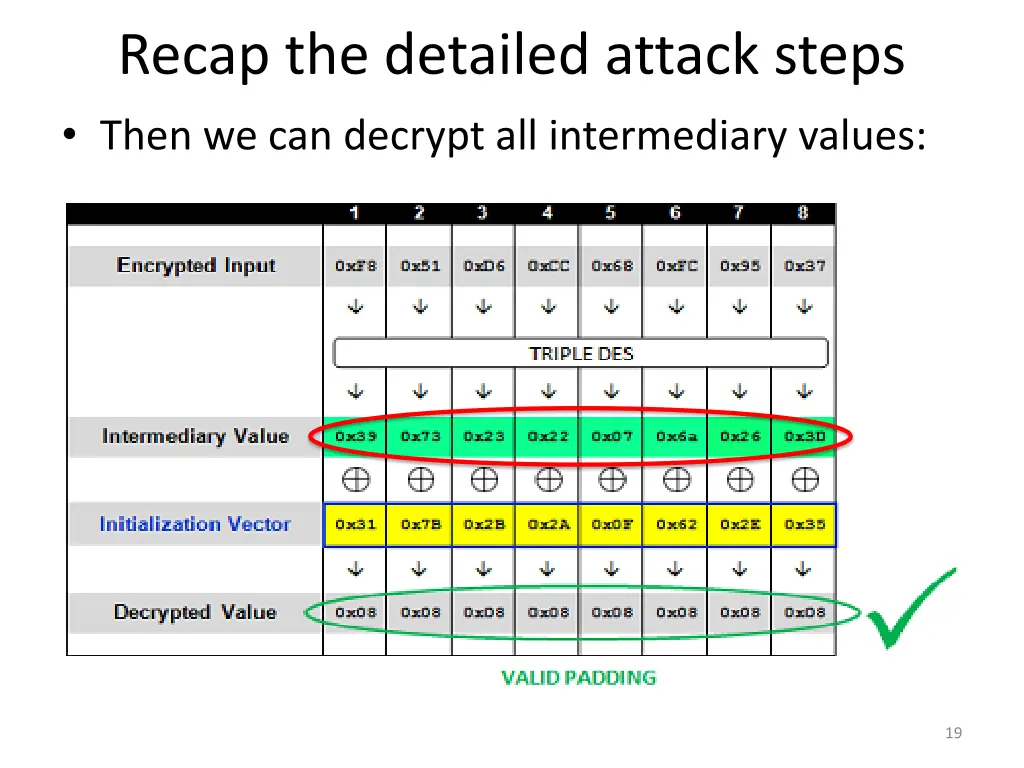
Recap the detailed attack steps Then we can decrypt all intermediary values: 19
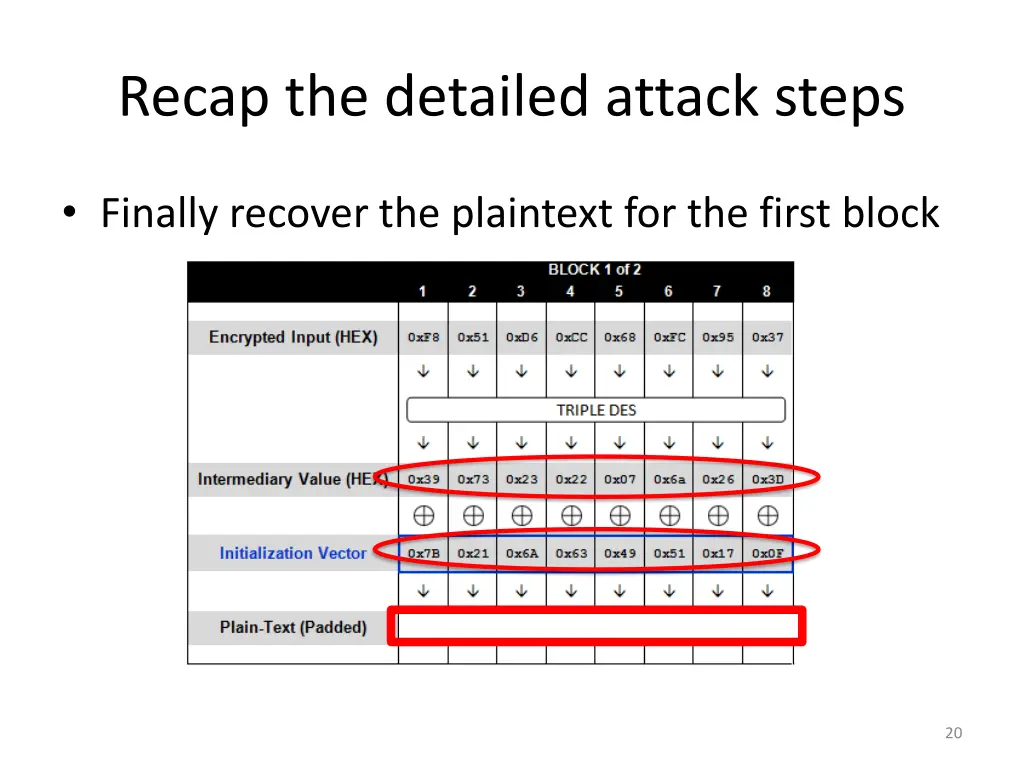
Recap the detailed attack steps Finally recover the plaintext for the first block 20
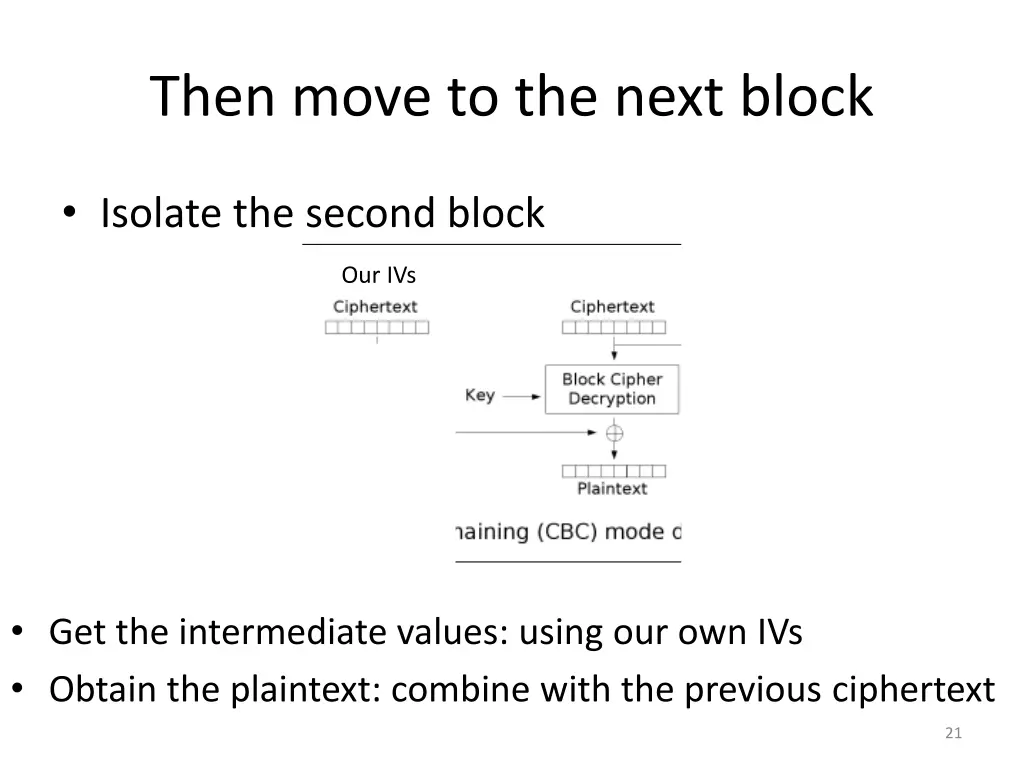
Then move to the next block Isolate the second block Our IVs Get the intermediate values: using our own IVs Obtain the plaintext: combine with the previous ciphertext 21
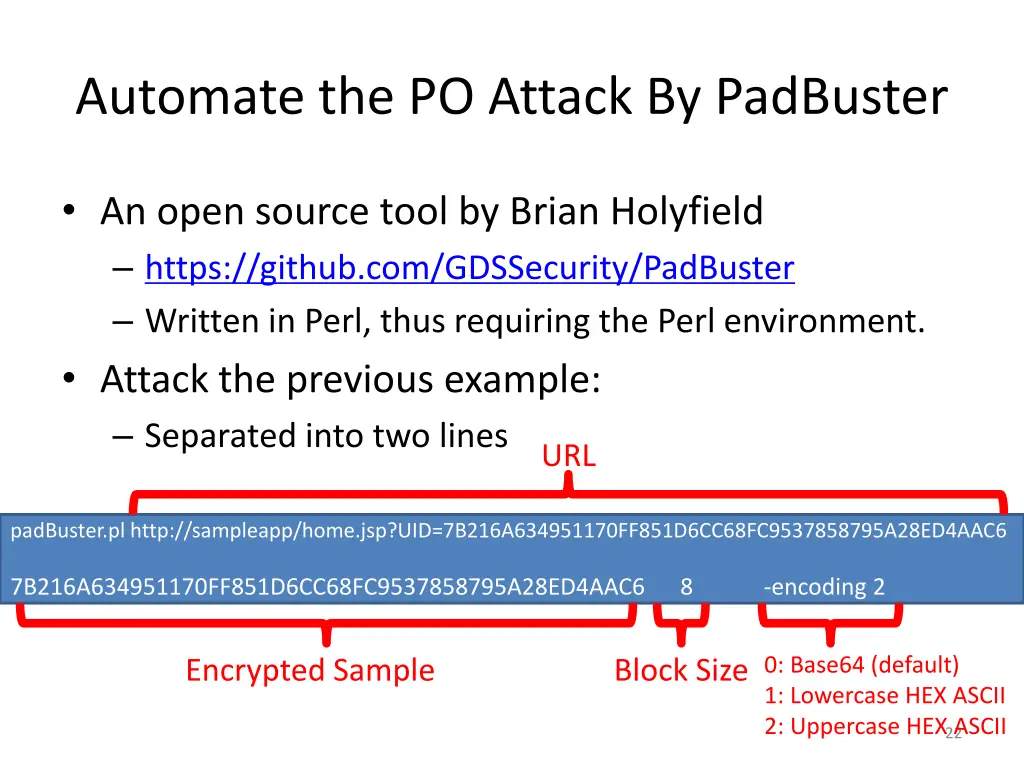
Automate the PO Attack By PadBuster An open source tool by Brian Holyfield https://github.com/GDSSecurity/PadBuster Written in Perl, thus requiring the Perl environment. Attack the previous example: Separated into two lines URL padBuster.pl http://sampleapp/home.jsp?UID=7B216A634951170FF851D6CC68FC9537858795A28ED4AAC6 7B216A634951170FF851D6CC68FC9537858795A28ED4AAC6 8 -encoding 2 Block Size0: Base64 (default) 1: Lowercase HEX ASCII 2: Uppercase HEX ASCII Encrypted Sample 22
Exercises Combine this PPT and a document: lab1_exercises.docx Write your answer into this document. Please hand in a hard copy of all exercise answers! 23
Exercise #1 Describe padding oracle attack in one sentence (5 marks). Use your own words to describe the essence of the attack. 24
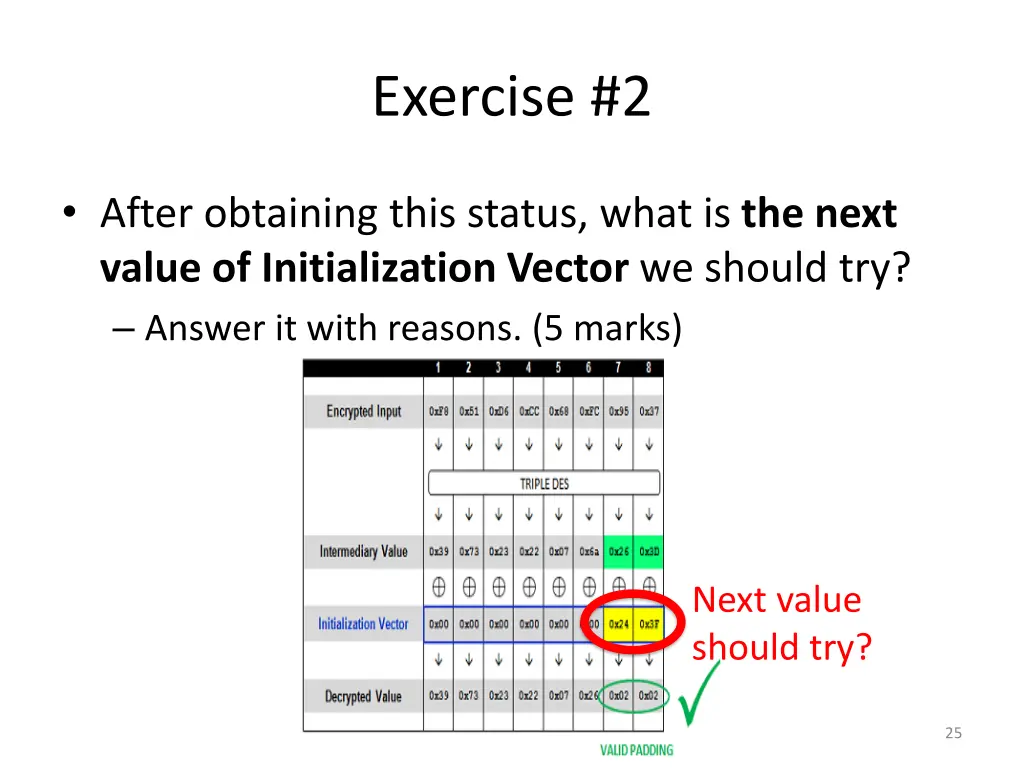
Exercise #2 After obtaining this status, what is the next value of Initialization Vector we should try? Answer it with reasons. (5 marks) Next value should try? 25
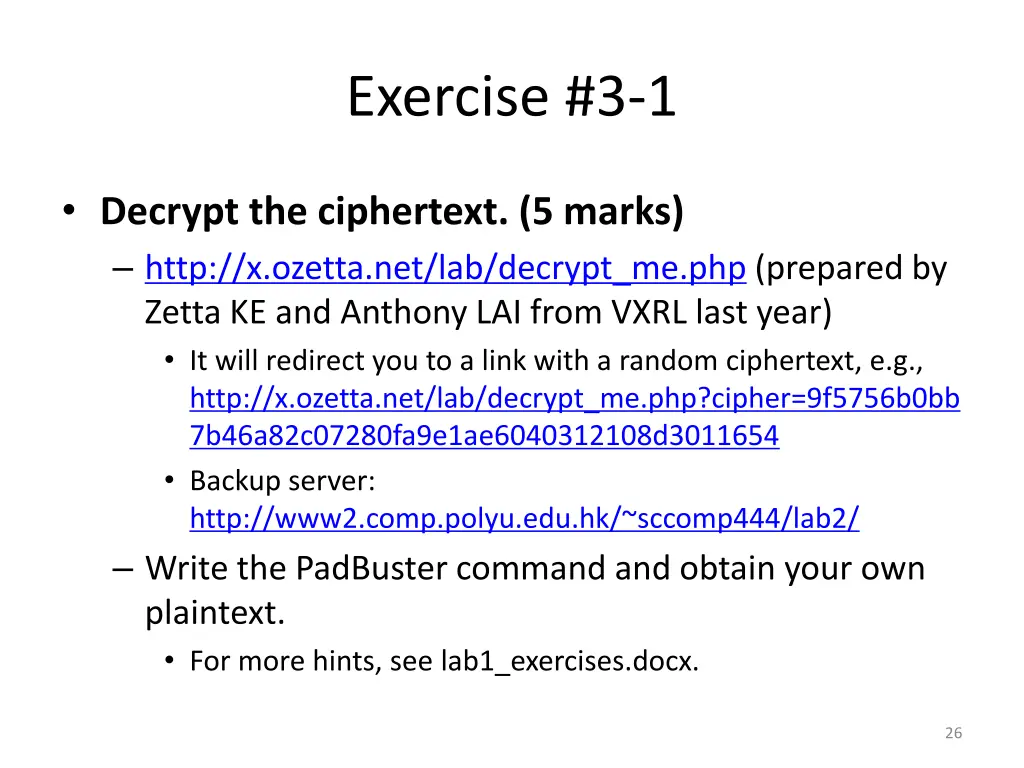
Exercise #3-1 Decrypt the ciphertext. (5 marks) http://x.ozetta.net/lab/decrypt_me.php (prepared by Zetta KE and Anthony LAI from VXRL last year) It will redirect you to a link with a random ciphertext, e.g., http://x.ozetta.net/lab/decrypt_me.php?cipher=9f5756b0bb 7b46a82c07280fa9e1ae6040312108d3011654 Backup server: http://www2.comp.polyu.edu.hk/~sccomp444/lab2/ Write the PadBuster command and obtain your own plaintext. For more hints, see lab1_exercises.docx. 26
For Exercise #3, you may choose either 3-1 or 3-2, the next one. 27
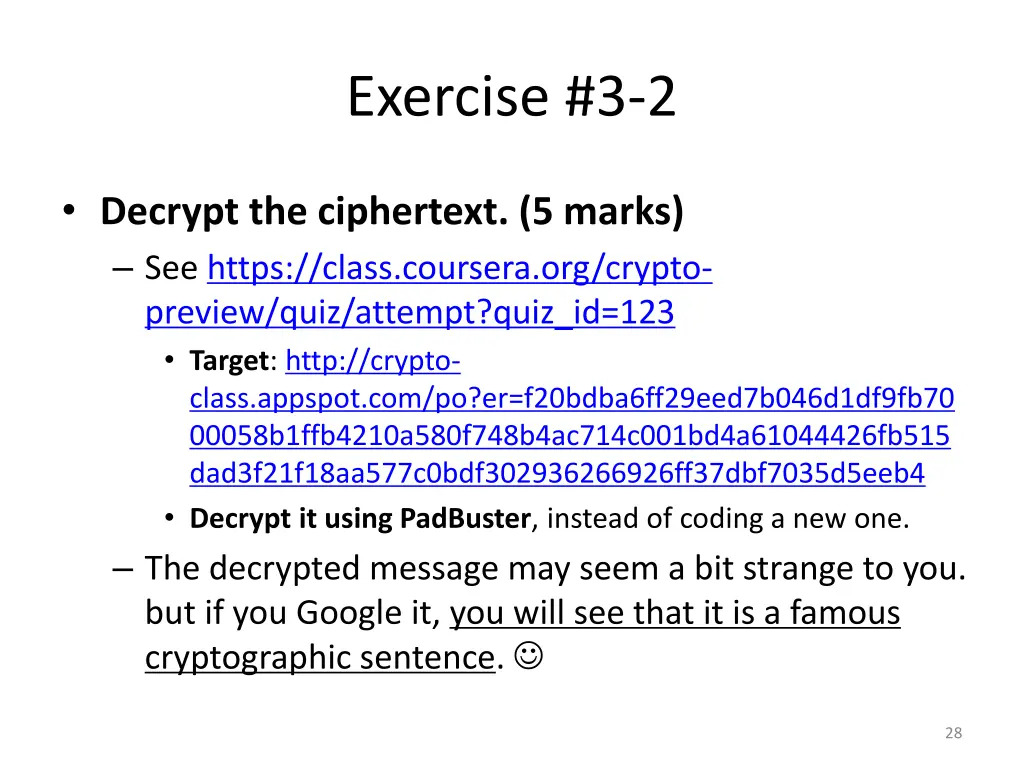
Exercise #3-2 Decrypt the ciphertext. (5 marks) See https://class.coursera.org/crypto- preview/quiz/attempt?quiz_id=123 Target: http://crypto- class.appspot.com/po?er=f20bdba6ff29eed7b046d1df9fb70 00058b1ffb4210a580f748b4ac714c001bd4a61044426fb515 dad3f21f18aa577c0bdf302936266926ff37dbf7035d5eeb4 Decrypt it using PadBuster, instead of coding a new one. The decrypted message may seem a bit strange to you. but if you Google it, you will see that it is a famous cryptographic sentence. 28
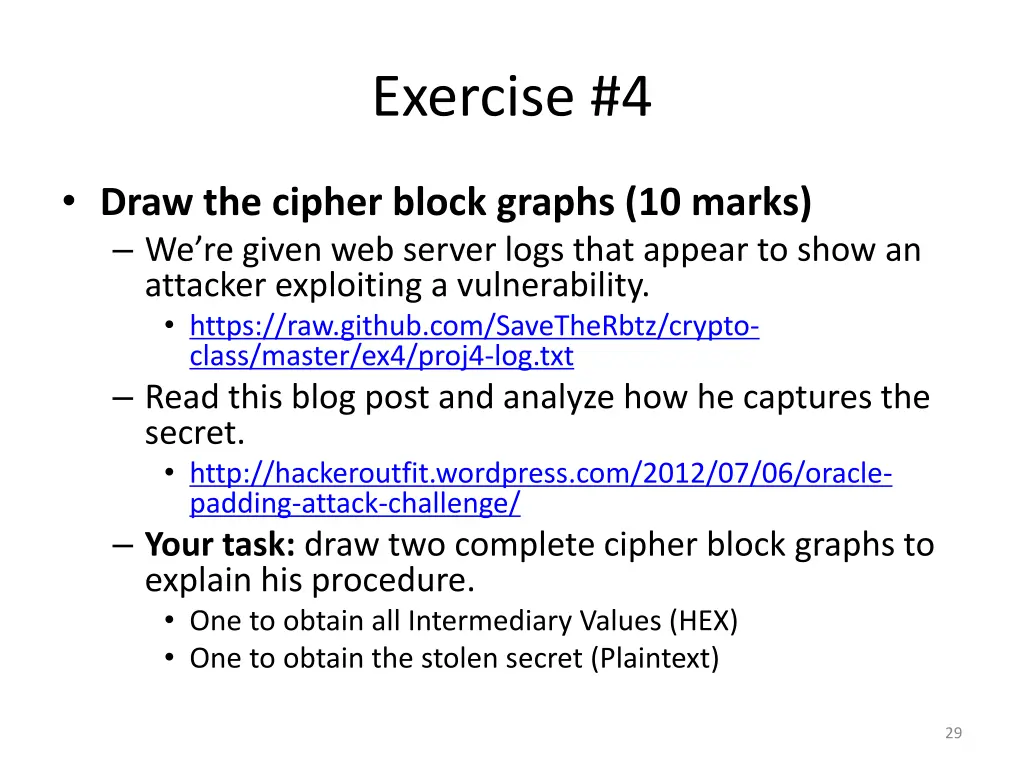
Exercise #4 Draw the cipher block graphs (10 marks) We re given web server logs that appear to show an attacker exploiting a vulnerability. https://raw.github.com/SaveTheRbtz/crypto- class/master/ex4/proj4-log.txt Read this blog post and analyze how he captures the secret. http://hackeroutfit.wordpress.com/2012/07/06/oracle- padding-attack-challenge/ Your task: draw two complete cipher block graphs to explain his procedure. One to obtain all Intermediary Values (HEX) One to obtain the stolen secret (Plaintext) 29
Thanks to: (References) http://blog.gdssecurity.com/labs/2010/9/14/auto mated-padding-oracle-attacks-with- padbuster.html Nearly all materials are based on it. I just organize them and sometimes add my own thoughts. The content, answer sheet of Exercise #3-1 and the decrypt_me.php script are prepared by Zetta KE (ozetta@vxrl.org) and Anthony LAI (darkfloyd@vxrl.org) from VXRL. 30