Explore a comprehensive typology of post-communist regimes, including categories like liberal democracy, dictatorship, and hybrid regimes. Discover the complexities and nuances of political systems in post-communist countries and the challenges in categorizing them effectively.
Please find below an Image/Link to download the presentation.
The content on the website is provided AS IS for your information and personal use only. It may not be sold, licensed, or shared on other websites without obtaining consent from the author. If you encounter any issues during the download, it is possible that the publisher has removed the file from their server.
You are allowed to download the files provided on this website for personal or commercial use, subject to the condition that they are used lawfully. All files are the property of their respective owners.
The content on the website is provided AS IS for your information and personal use only. It may not be sold, licensed, or shared on other websites without obtaining consent from the author.
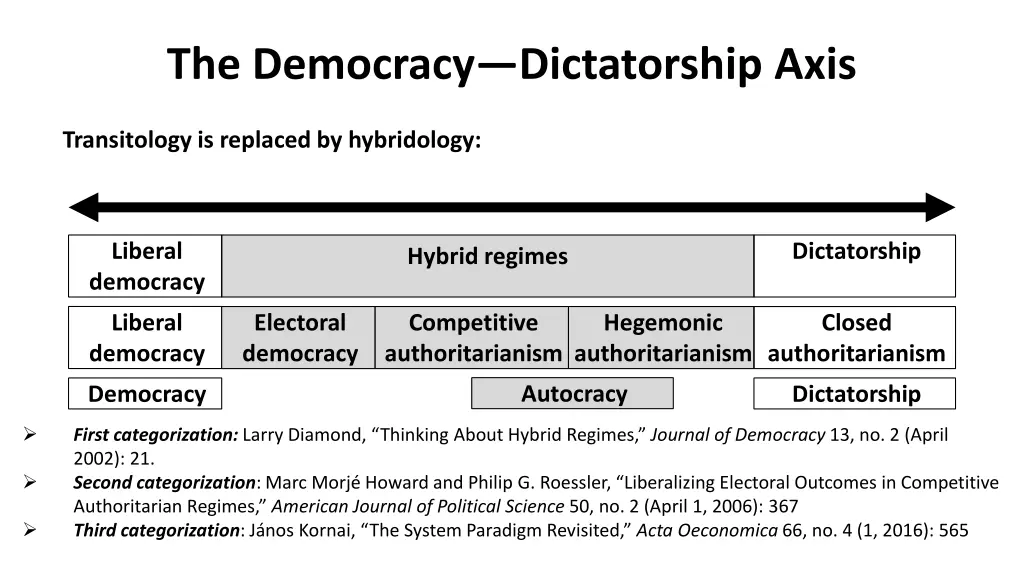
The DemocracyDictatorship Axis Transitology is replaced by hybridology: Liberal democracy Dictatorship Hybrid regimes Liberal democracy Electoral democracy Competitive authoritarianism Hegemonic authoritarianism Closed authoritarianism Autocracy Democracy Dictatorship First categorization: Larry Diamond, Thinking About Hybrid Regimes, Journal of Democracy 13, no. 2 (April 2002): 21. Second categorization: Marc Morj Howard and Philip G. Roessler, Liberalizing Electoral Outcomes in Competitive Authoritarian Regimes, American Journal of Political Science 50, no. 2 (April 1, 2006): 367 Third categorization: J nos Kornai, The System Paradigm Revisited, Acta Oeconomica66, no. 4 (1, 2016): 565
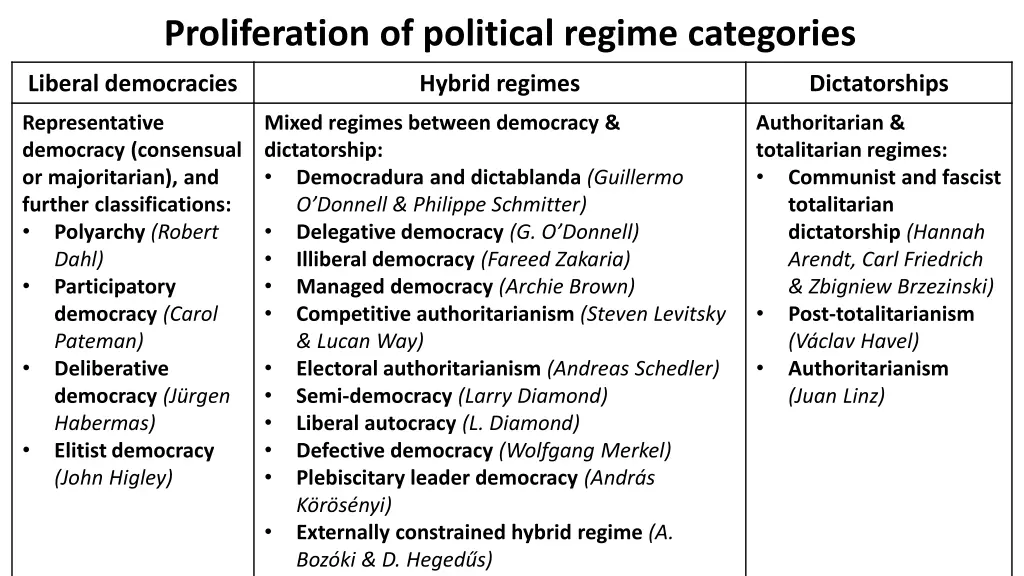
Proliferation of political regime categories Liberal democracies Hybrid regimes Dictatorships Representative democracy (consensual or majoritarian), and further classifications: Polyarchy (Robert Dahl) Participatory democracy (Carol Pateman) Deliberative democracy (J rgen Habermas) Elitist democracy (John Higley) Mixed regimes between democracy & dictatorship: Democradura and dictablanda (Guillermo O Donnell & Philippe Schmitter) Delegative democracy (G. O Donnell) Illiberal democracy (Fareed Zakaria) Managed democracy (Archie Brown) Competitive authoritarianism (Steven Levitsky & Lucan Way) Electoral authoritarianism (Andreas Schedler) Semi-democracy (Larry Diamond) Liberal autocracy (L. Diamond) Defective democracy (Wolfgang Merkel) Plebiscitary leader democracy (Andr s K r s nyi) Externally constrained hybrid regime (A. Boz ki & D. Heged s) Authoritarian & totalitarian regimes: Communist and fascist totalitarian dictatorship (Hannah Arendt, Carl Friedrich & Zbigniew Brzezinski) Post-totalitarianism (V clav Havel) Authoritarianism (Juan Linz)
Problems with mainstream hybridology 1. Spheres of social actions (political, economic, communal) are presumed to be separated; 2. It sticks to the political level, disregarding other spheres (like the economy) and the stubborn structures connected to it; 3. Post-communist systems are described with the language of liberal democracy, and handled as deviant forms of it.
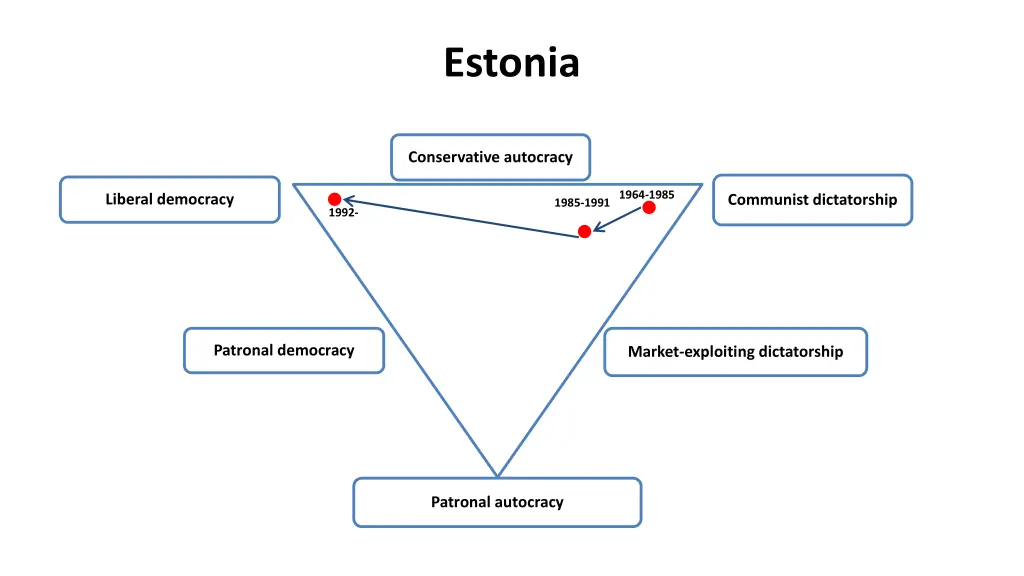
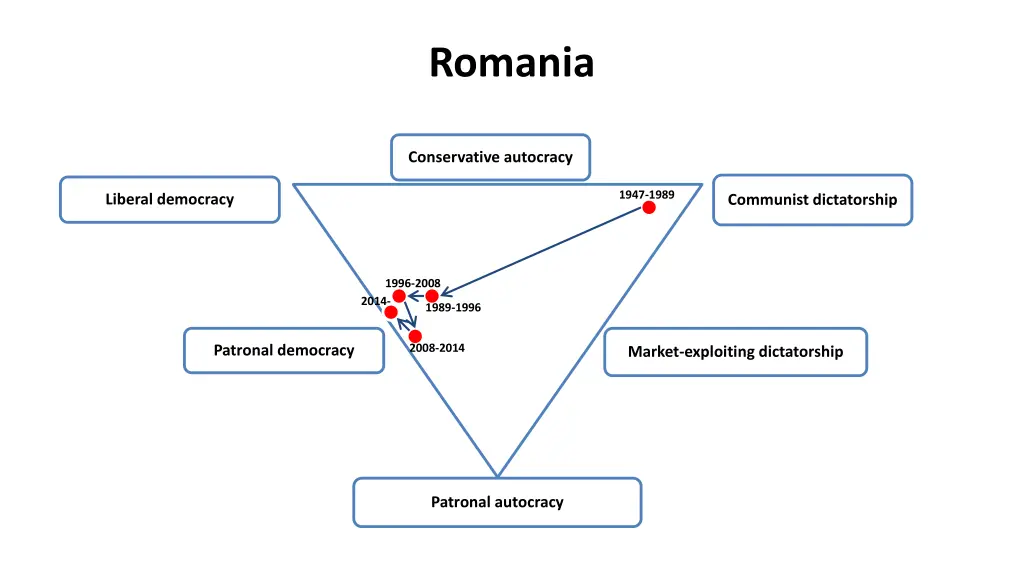
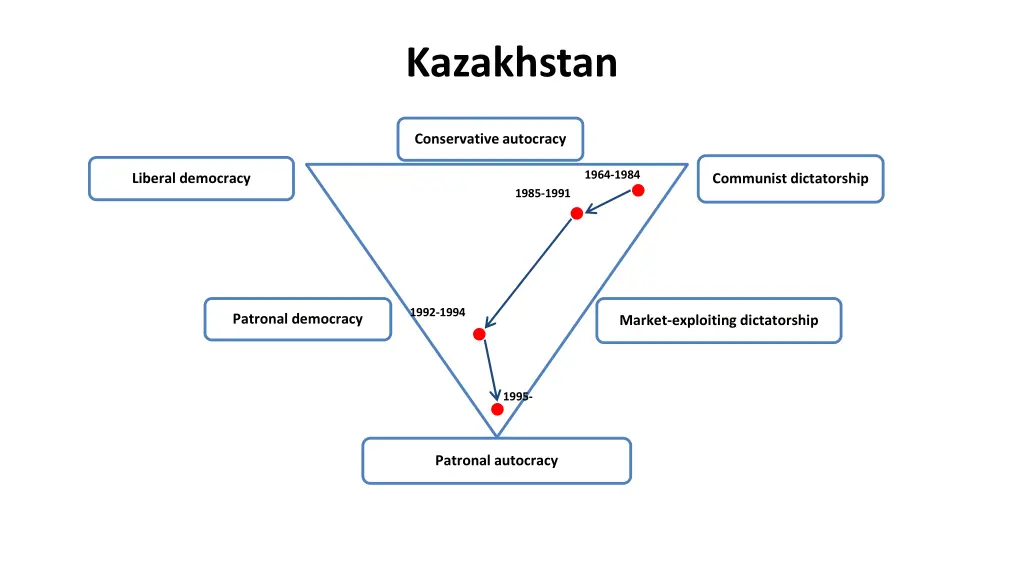
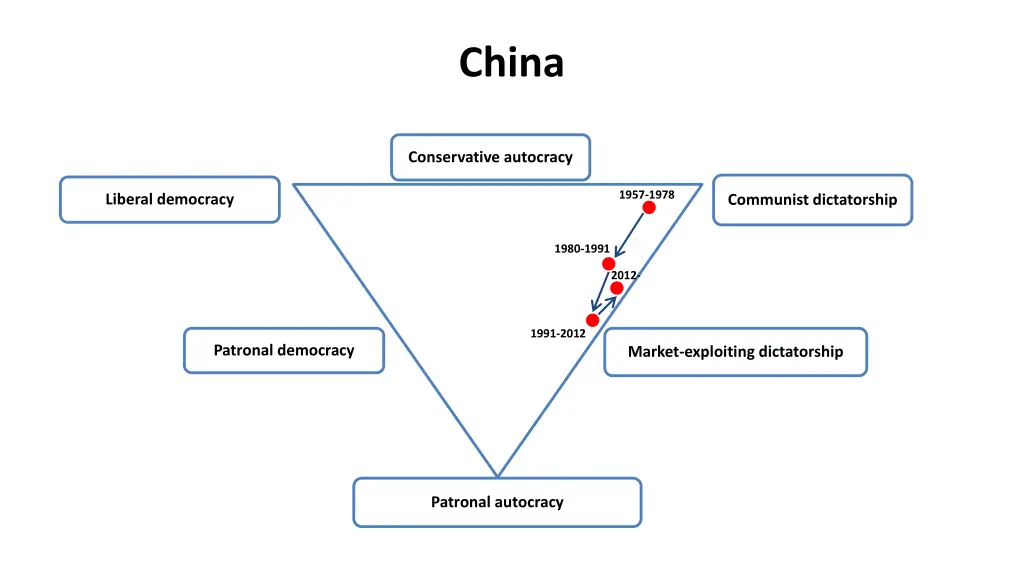
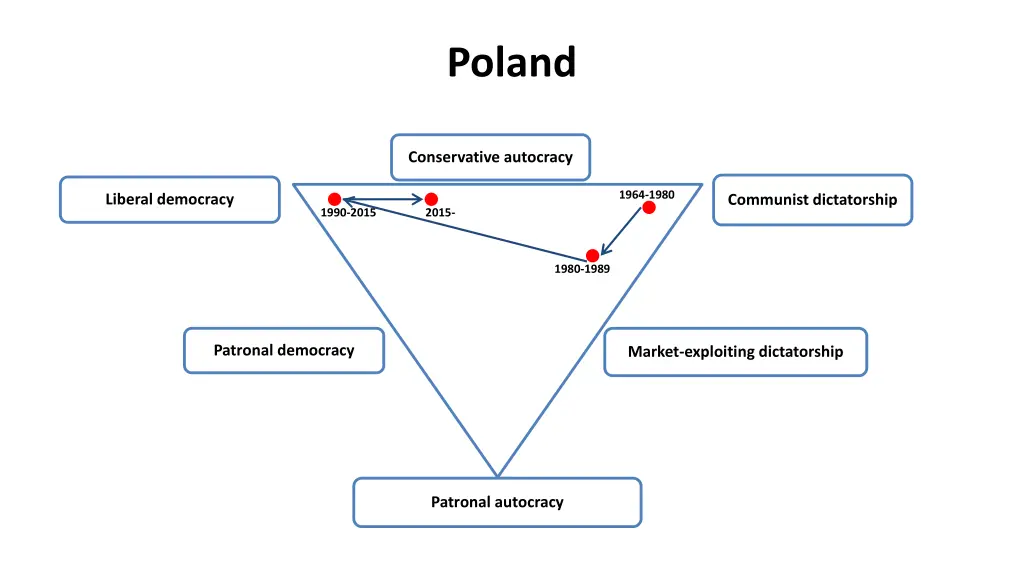
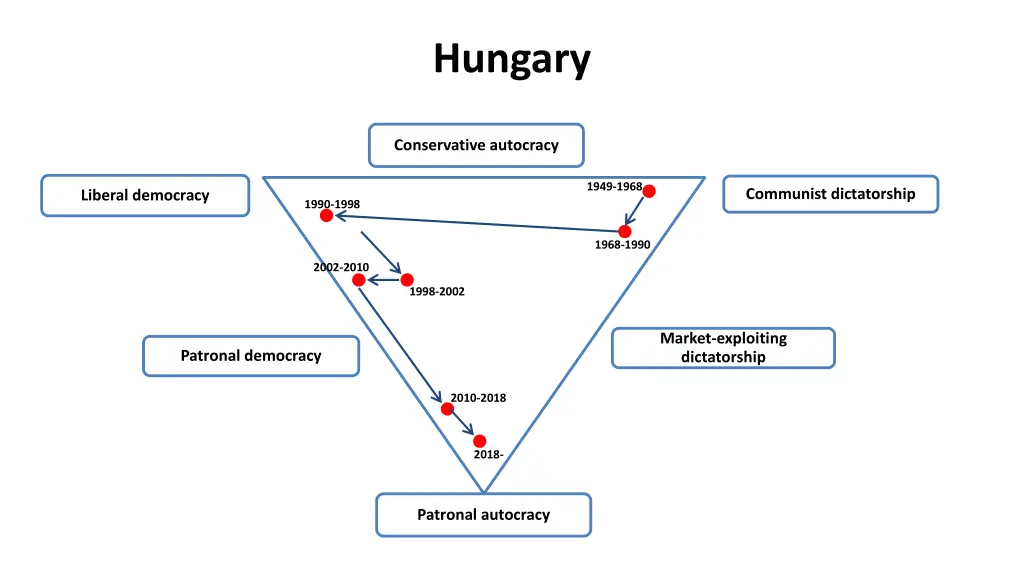
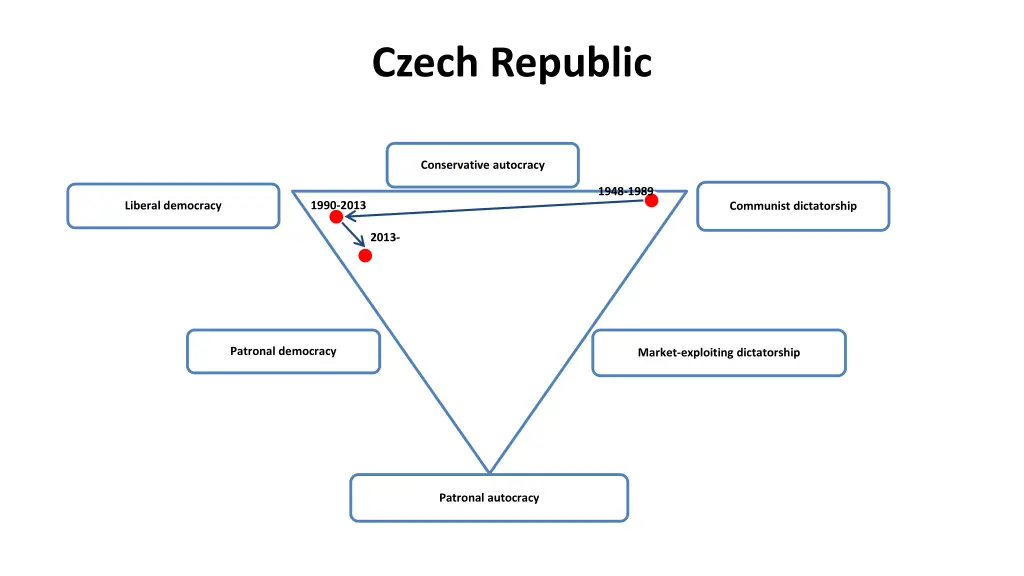
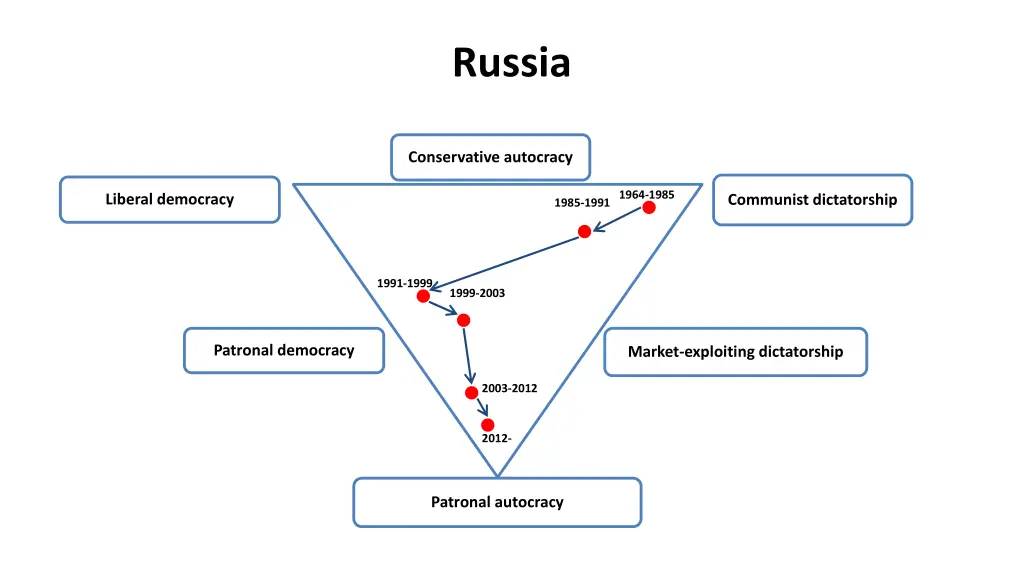
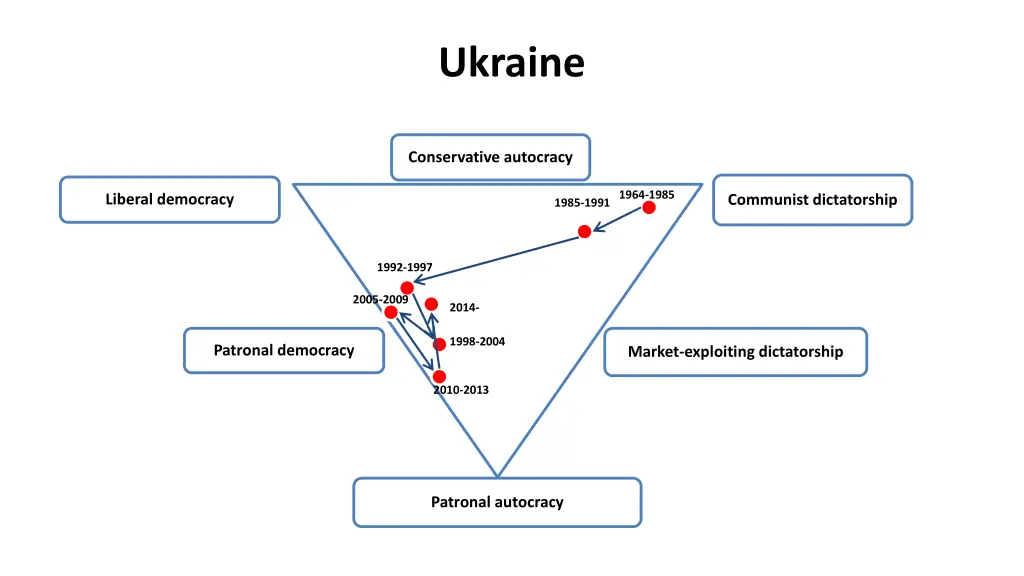
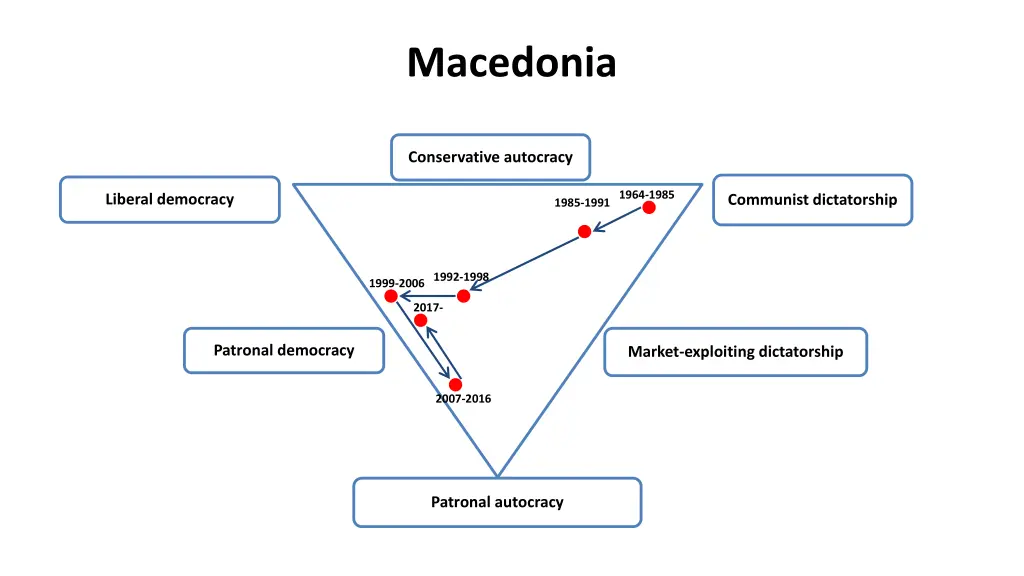
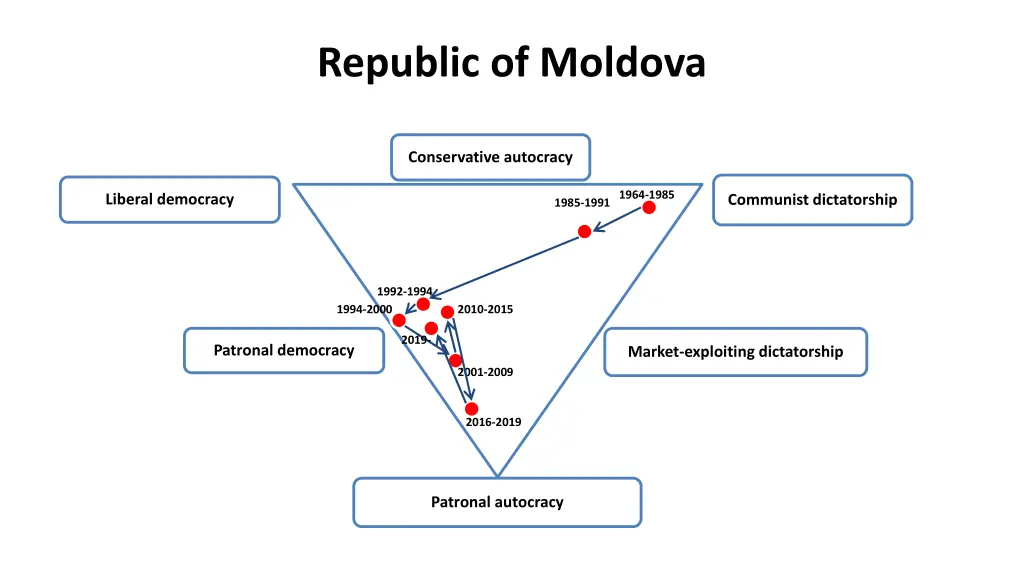
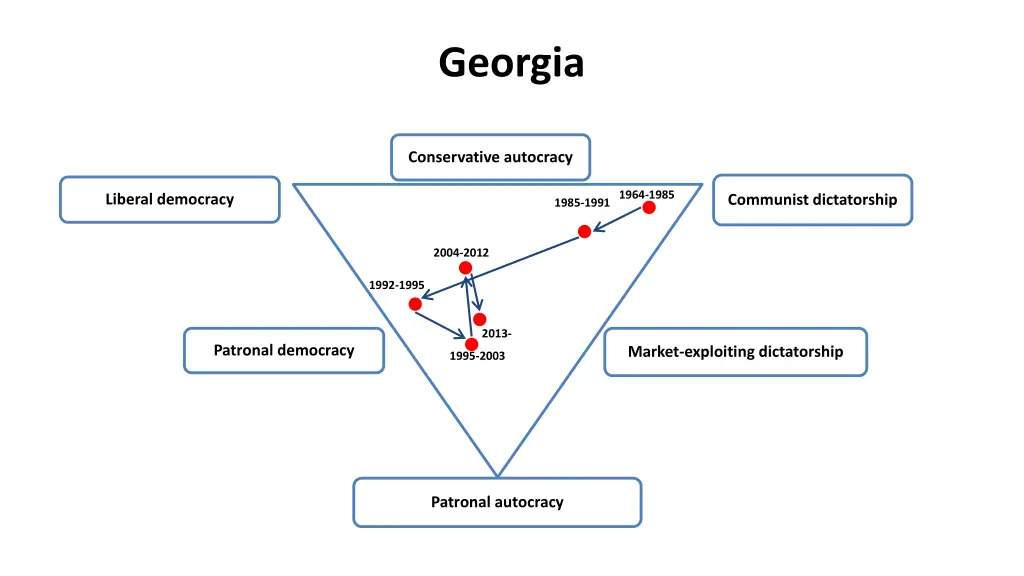
Interpretative Framework of Post-Communist Regimes (combining the political, economic and sociological dimensions) Estonia Poland Czech Republic China Georgia Romania Macedonia Ukraine Moldova Kazakhstan Hungary Russia (Countries depicted as of 2019.)
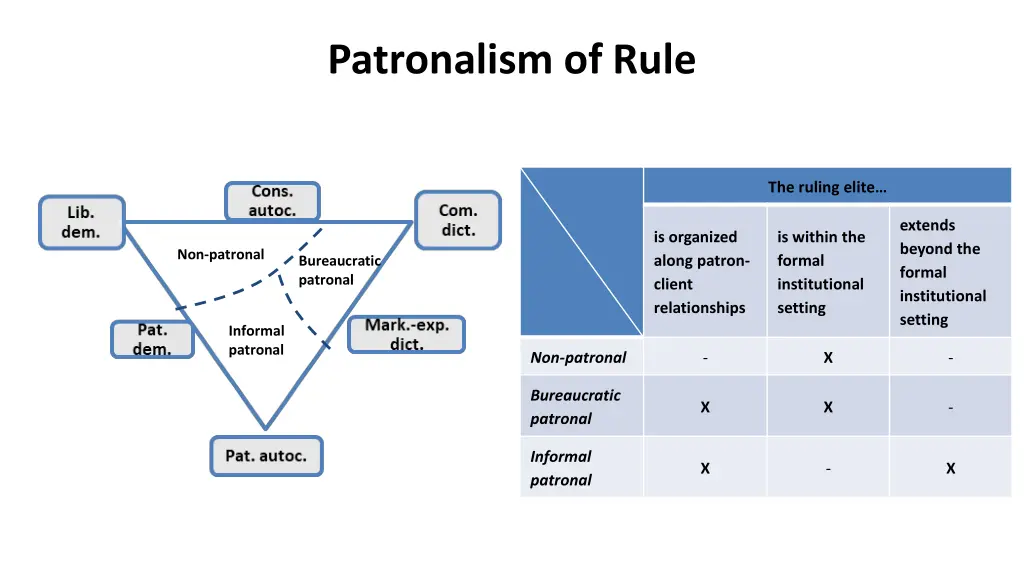
Patronalism of Rule The ruling elite extends beyond the formal institutional setting is organized along patron- client relationships is within the formal institutional setting Non-patronal Bureaucratic patronal Informal patronal Non-patronal - X - Bureaucratic patronal X X - Informal patronal X - X
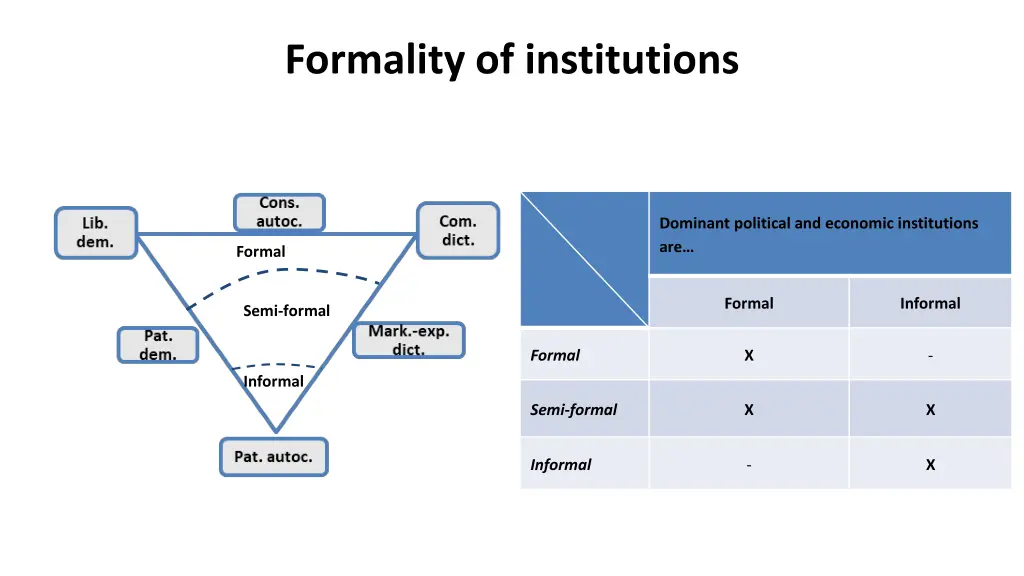
Formality of institutions Dominant political and economic institutions are Formal Formal Informal Semi-formal Formal X - Informal Semi-formal X X Informal - X
Plurality of power networks / legitimacy Presence of opposition elite with winning chances and/or influence on governance Multi-pyramid power network / Legal-rational legitimacy Single-pyramid power network / Substantive- rational legitimacy Multi-pyramid power network X Single-pyramid power network -
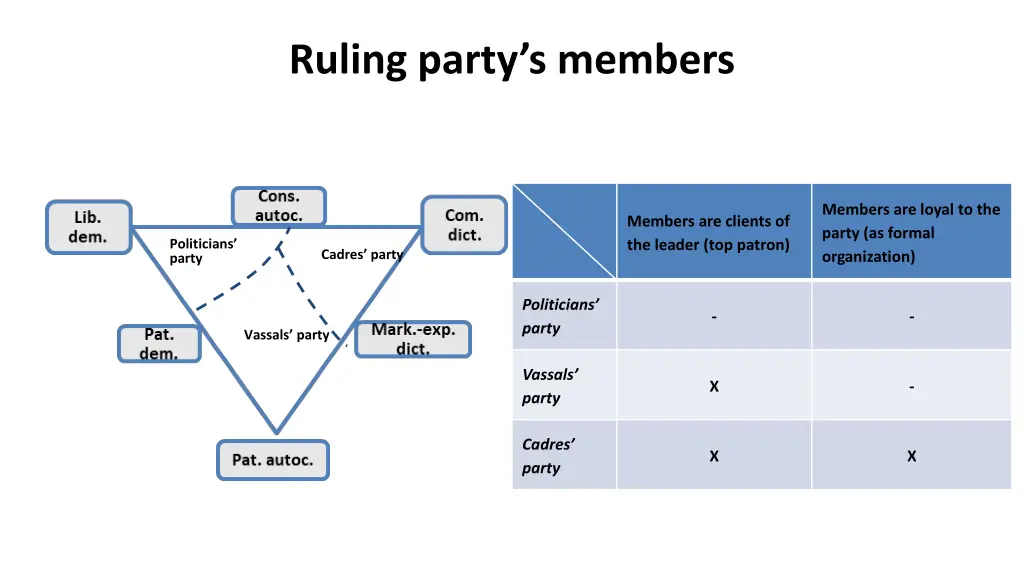
Ruling partys members Members are loyal to the party (as formal organization) Members are clients of the leader (top patron) Politicians party Cadres party Politicians party - - Vassals party Vassals party X - Cadres party X X
Ruling partys function Political decisions are made inside the party s formal decision-making bodies limited by checks and balances and/or competition for power State party Governing party Governing party X X Transm. belt party X - State party Transmission-belt party - -
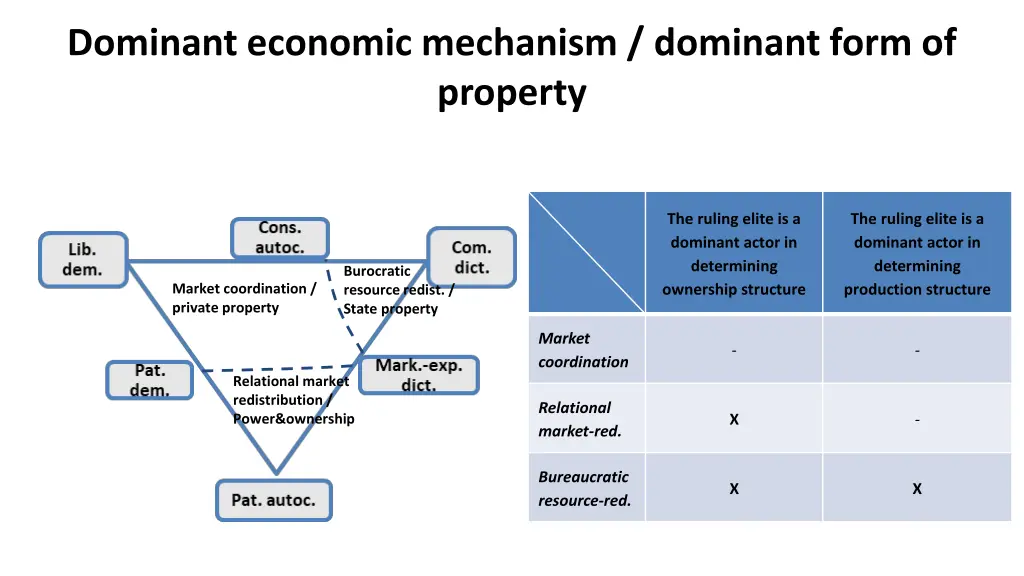
Dominant economic mechanism / dominant form of property The ruling elite is a dominant actor in determining ownership structure The ruling elite is a dominant actor in determining production structure Burocratic resource redist. / State property Market coordination / private property Market coordination - - Relational market redistribution / Power&ownership Relational market-red. X - Bureaucratic resource-red. X X
Corruption The functioning of the system is distorted by corruption is facilitated by corruption is based on corruption System- lubricating corruption System-destroying corruption System- destroying corruption X - - System- constituting corruption System- lubricating corruption - X - System- constituting corruption - - X
Ideology Basic features of the regime can be derived Ideology neutral Ideology driven from the ruling elite s ideology from the principle of elite interest from the principle of state Ideology applying neutrality Ideology neutral X - - Ideology driven - X - Ideology applying - - X
Autonomy of civil society Civil society exists, but its four autonomies are broken Non- existent Free cannot legally exist Subjugated Free - - Subjugated X - Non-existent - X