Understanding Research Paradigms in Nursing: A Comprehensive Overview
Explore the significance of research paradigms in nursing, including definitions of research, evidence-based practice, levels of evidence, and the distinction between research and evidence-based practice. Learn about the benefits of research, different levels of evidence, and the role of evidence-based practice in bridging research and clinical application. Delve into the concept of research paradigms, ontology, epistemology, and methodology in the context of nursing research.

Download Presentation

Please find below an Image/Link to download the presentation.
The content on the website is provided AS IS for your information and personal use only. It may not be sold, licensed, or shared on other websites without obtaining consent from the author. If you encounter any issues during the download, it is possible that the publisher has removed the file from their server.
You are allowed to download the files provided on this website for personal or commercial use, subject to the condition that they are used lawfully. All files are the property of their respective owners.
The content on the website is provided AS IS for your information and personal use only. It may not be sold, licensed, or shared on other websites without obtaining consent from the author.
E N D
Presentation Transcript
2ndClass Research & Evidence Based Practice NUR500 Latifah Almater RN, PhD 17.9.2018
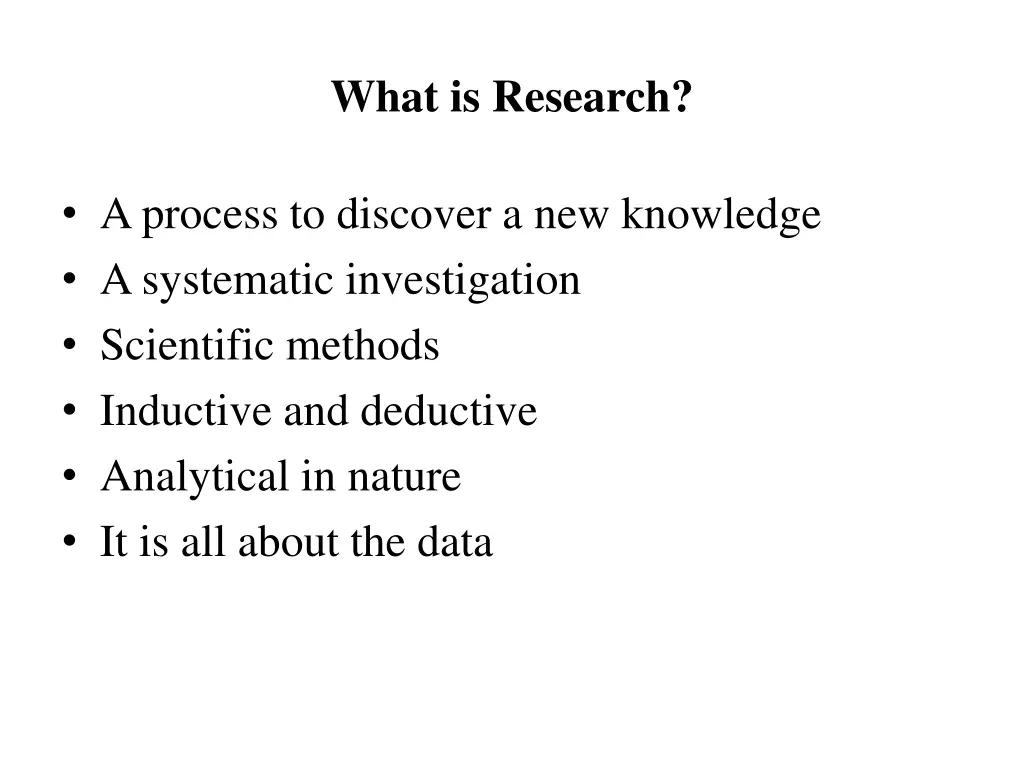
What is Research? A process to discover a new knowledge A systematic investigation Scientific methods Inductive and deductive Analytical in nature It is all about the data
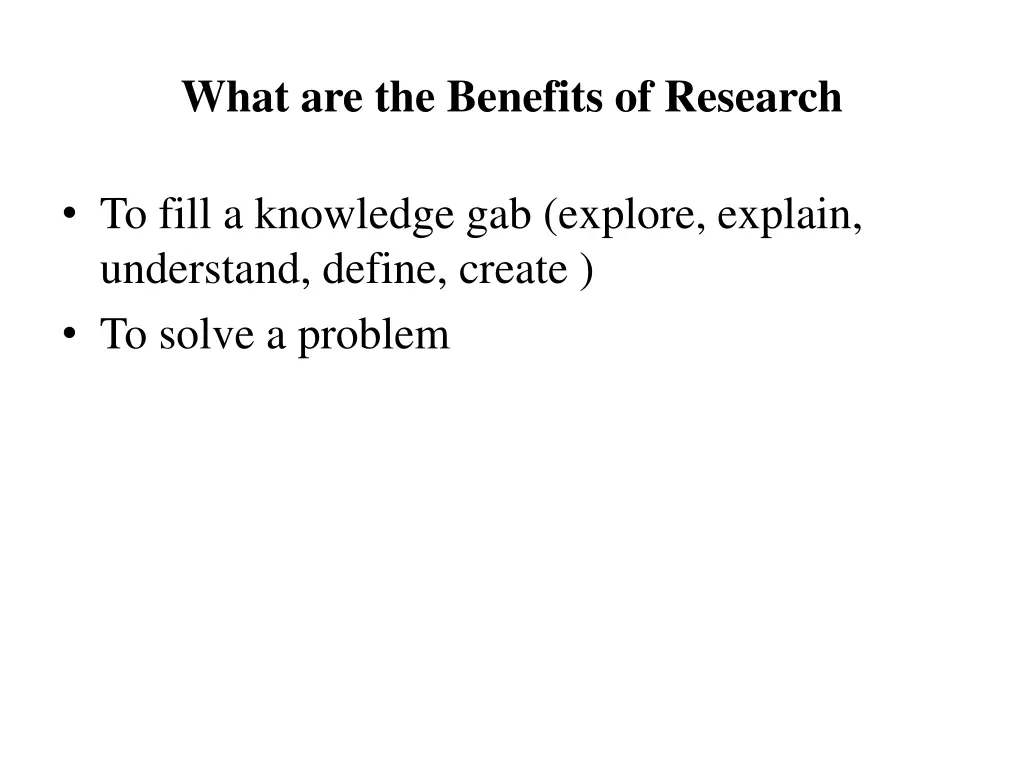
What are the Benefits of Research To fill a knowledge gab (explore, explain, understand, define, create ) To solve a problem
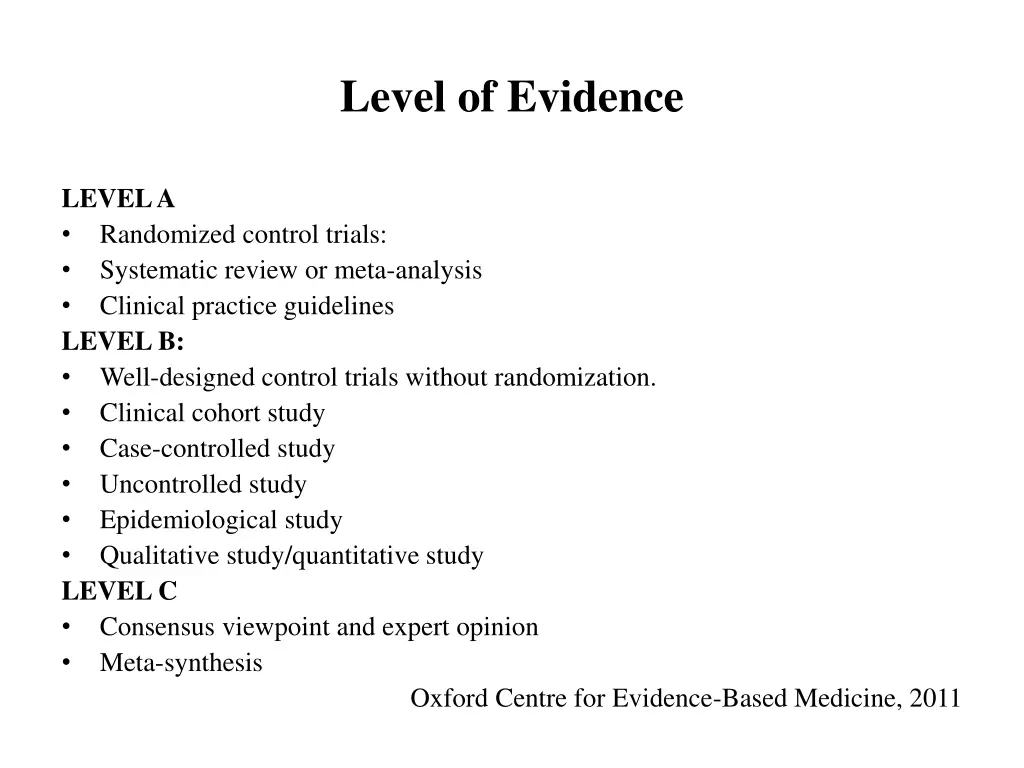
Level of Evidence LEVEL A Randomized control trials: Systematic review or meta-analysis Clinical practice guidelines LEVEL B: Well-designed control trials without randomization. Clinical cohort study Case-controlled study Uncontrolled study Epidemiological study Qualitative study/quantitative study LEVEL C Consensus viewpoint and expert opinion Meta-synthesis Oxford Centre for Evidence-Based Medicine, 2011
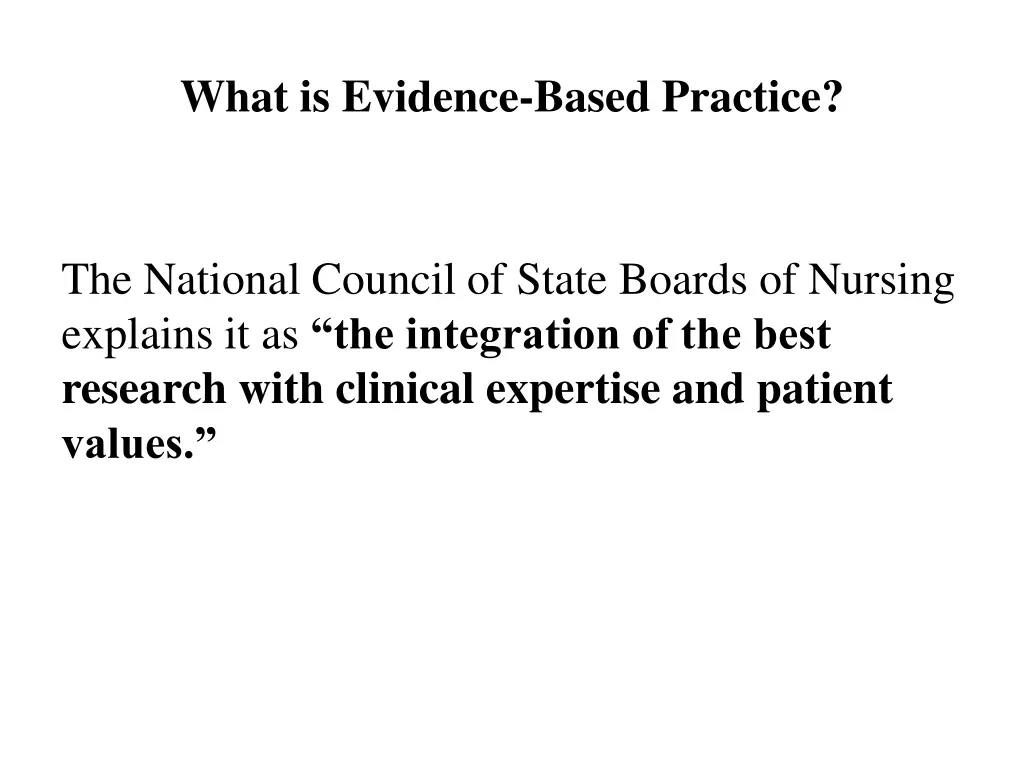
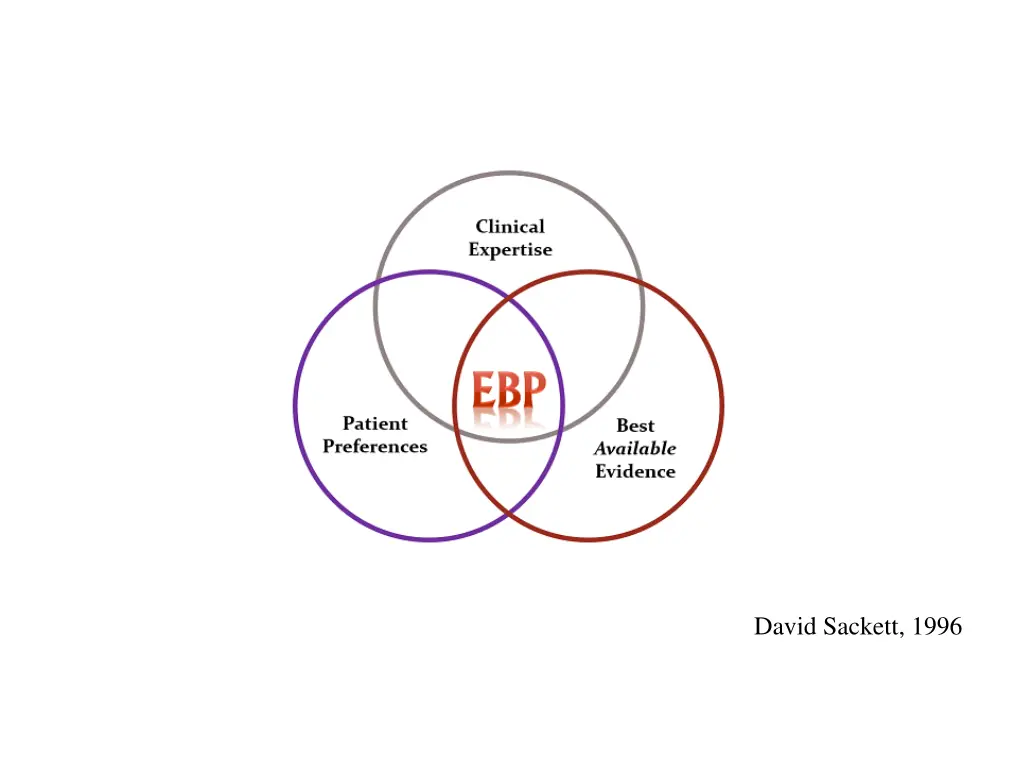
What is Evidence-Based Practice? The National Council of State Boards of Nursing explains it as the integration of the best research with clinical expertise and patient values.
Research vs Evidence Based Practice Why do we struggle to understand the difference between evidence-based practice and nursing research? It is often a matter of education and experience Research is a foreign language. You must be able to speak and understand it to truly do it Evidence-based practice is used to close the gap between the research being conducted and the practice the research/practice gap, A lot of nurses know research but haven t done research, If you don t understand the concepts and rules of research, there s potential for confusion. Flaugher 2010
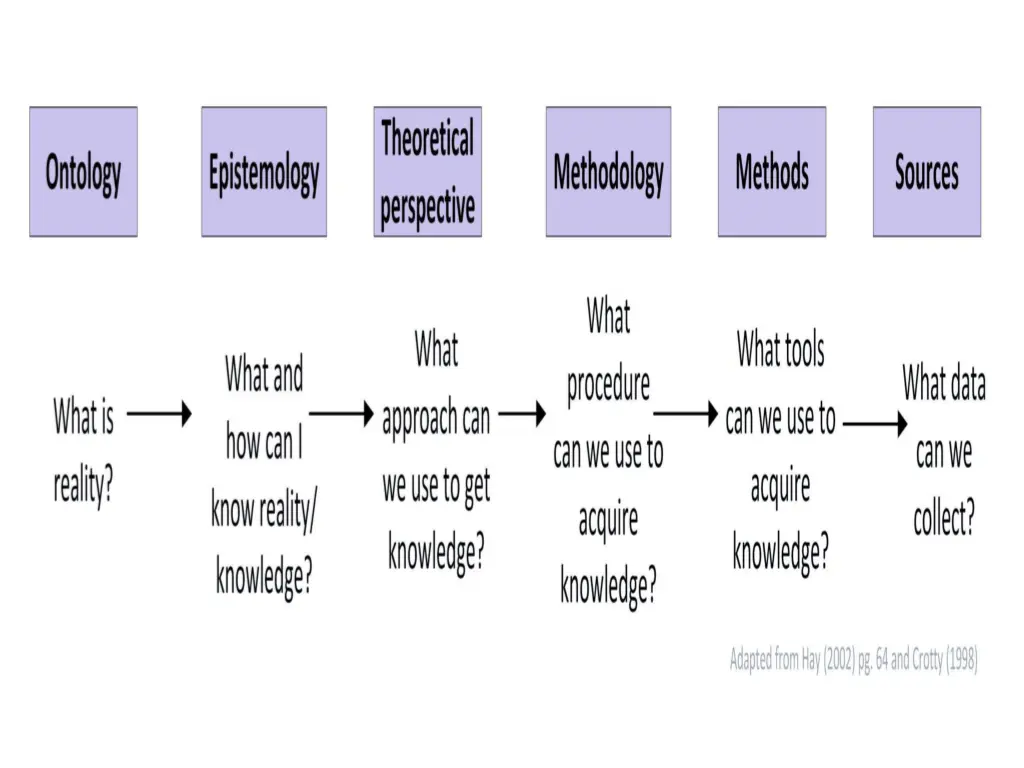
What is a Research Paradigm? A research paradigm is the set of common beliefs and agreements shared between scientists about how problems should be understood and addressed (Kuhn, 1962)
What is a Research Paradigm? According to Guba (1990), research paradigms can be characterised through their: Ontology What is reality? Epistemology How do you know something? Methodology How do you go about finding it out?
What is the Importance of Paradigm? Create a holistic view of how knowledge is viewed How we can see ourselves in relation to this knowledge, and the methodological strategies we use to un/discover it. Awareness of philosophical assumptions will increase quality of research and can contribute to the creativity of the researcher. You will be asked about it in your viva/thesis defence and are expected to narrate it when you write up your research findings.
Which Research Paradigm Does my Research Belong to? Positivists believe that there is a single reality, which can be measured and known, and therefore they are more likely to use quantitative methods to measure and this reality.
Which Research Paradigm Does my Research Belong to? Constructivists believe that there is no single reality or truth, and therefore reality needs to be interpreted, and therefore they are more likely to use qualitative methods to get those multiple realities.
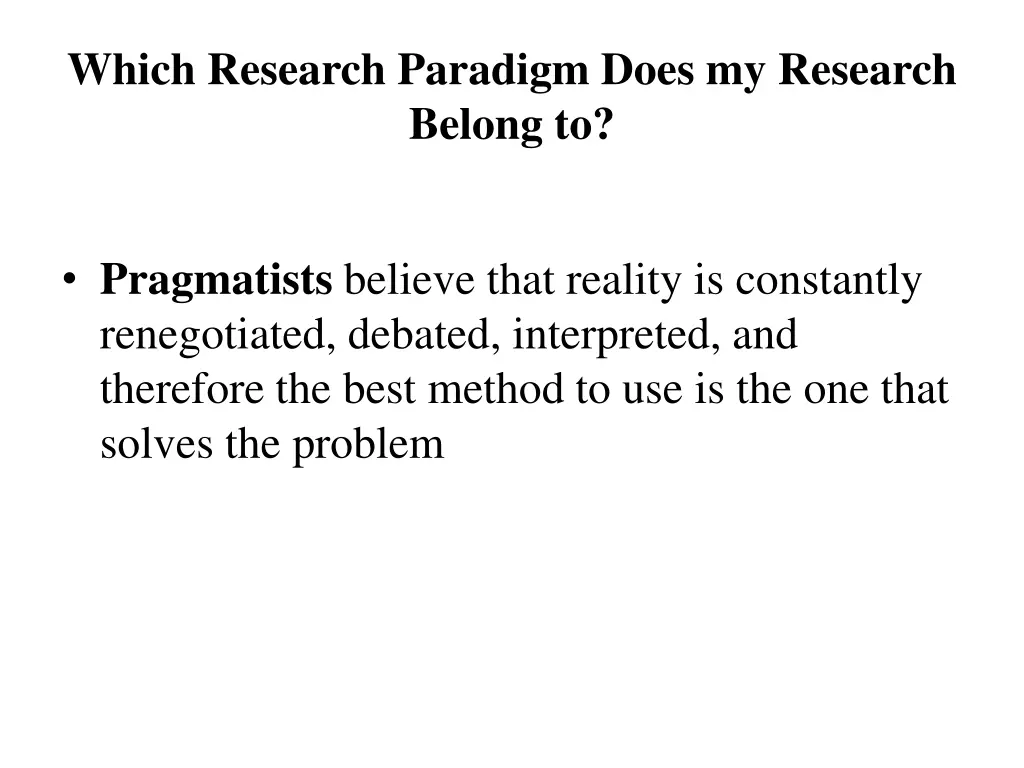
Which Research Paradigm Does my Research Belong to? Pragmatists believe that reality is constantly renegotiated, debated, interpreted, and therefore the best method to use is the one that solves the problem