Understanding Right Ventricular Involvement in Inferior MI Cases
Explore the importance of recognizing right ventricular involvement in inferior myocardial infarction cases, the rationale behind withholding nitroglycerin and morphine, and identification methods through ECG leads. Learn why specific caution is advised and how to view and confirm right ventricle conditions for proper management.

Download Presentation

Please find below an Image/Link to download the presentation.
The content on the website is provided AS IS for your information and personal use only. It may not be sold, licensed, or shared on other websites without obtaining consent from the author. If you encounter any issues during the download, it is possible that the publisher has removed the file from their server.
You are allowed to download the files provided on this website for personal or commercial use, subject to the condition that they are used lawfully. All files are the property of their respective owners.
The content on the website is provided AS IS for your information and personal use only. It may not be sold, licensed, or shared on other websites without obtaining consent from the author.
E N D
Presentation Transcript
SIREMS Chest Pain Protocol Update November 2013
Withholding NTG and Morphine With the availability of 12 lead ECG, we need to withhold nitroglycerin and morphine from our patients that are having a myocardial infarction involving the right ventricle.
Why not? Why not give nitroglycerin or morphine to a patient having an MI involving the right ventricle? Right ventricular involvement causes a compensatory increase in peripheral vascular resistance to compensate for a decrease in preload. AKA: The body vaso-constricts to compensate for the loss of right ventricular function due to the infarction. NTG and morphine will vasodilate causing a significant drop in blood pressure.
Why not? The right ventricle is involved in an inferior MI 50% of the time. Half of our patients with ST segment elevation in leads II, III, and aVF have right ventricular involvement (RVI). If an inferior MI with RVI is given NTG or morphine Be prepared for aggressive fluid resuscitation with the possibility of more than 1000mL!
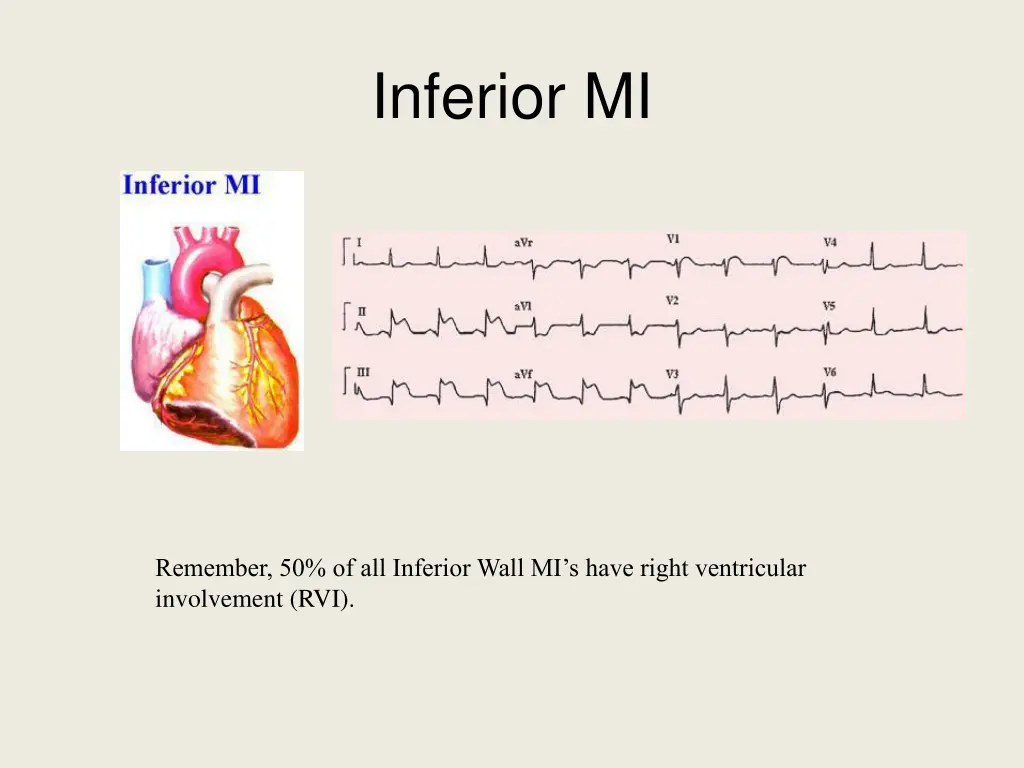
RVI, how do you know? Inferior wall MI Leads II, III, and aVF Right ventricular MI V4R Posterior MI V8 and V9 ST depression in V1 and V2
Inferior MI Remember, 50% of all Inferior Wall MI s have right ventricular involvement (RVI).
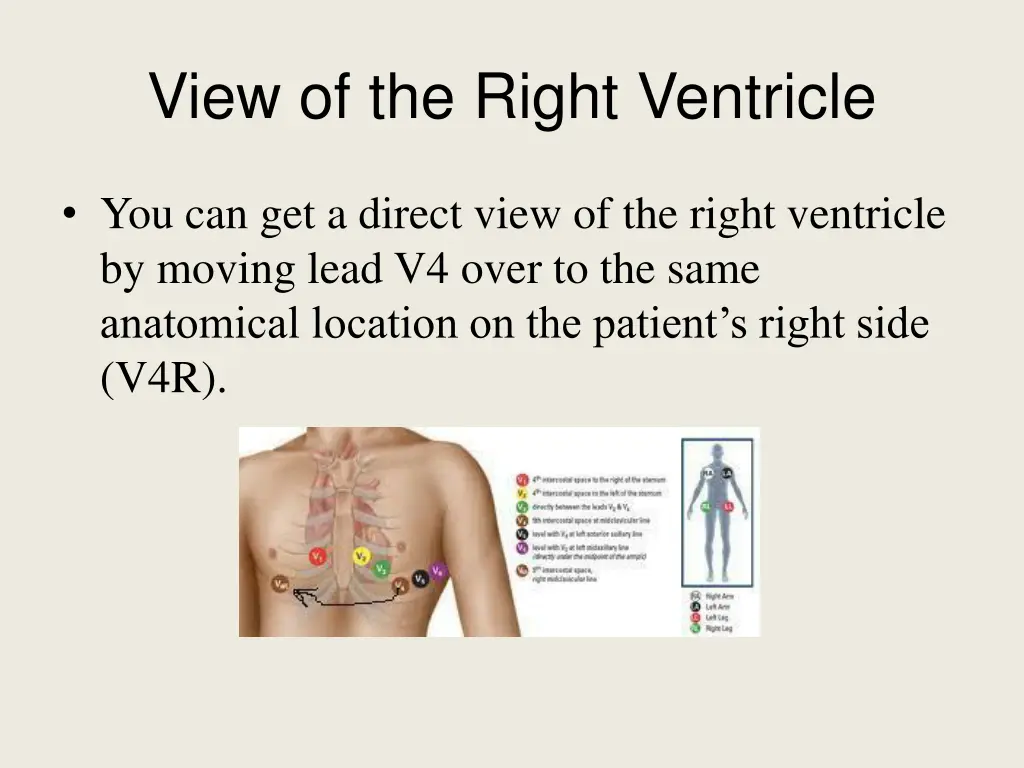
View of the Right Ventricle You can get a direct view of the right ventricle by moving lead V4 over to the same anatomical location on the patient s right side (V4R).
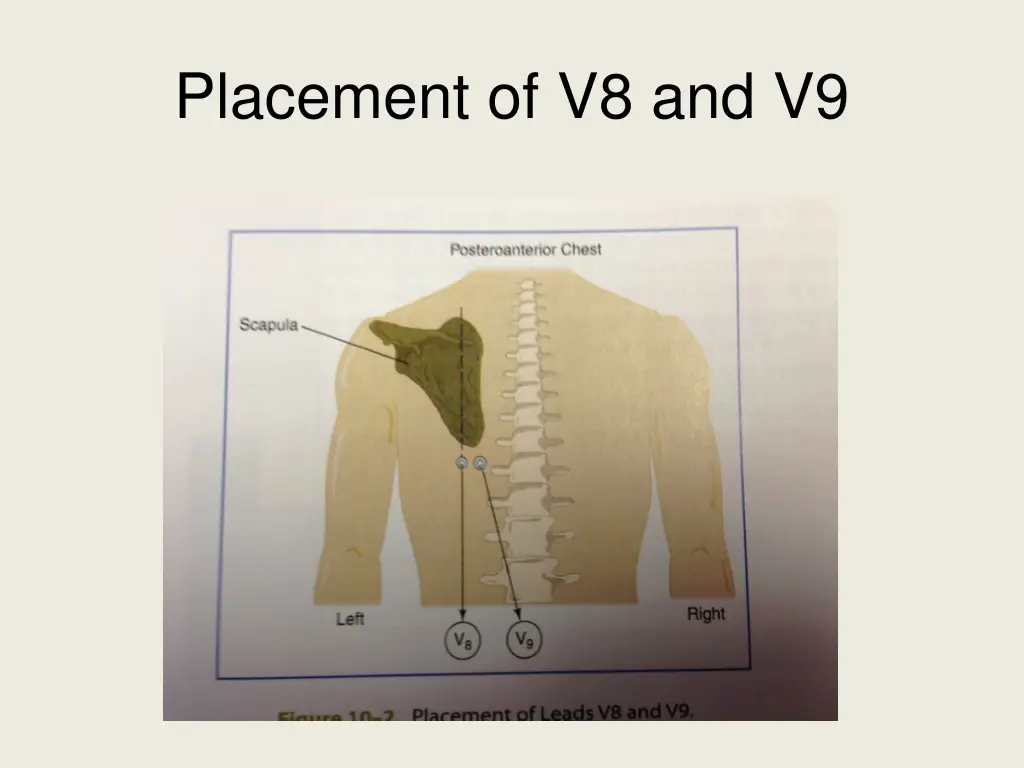
View of the Posterior Side You can move V5 and V6 to the patient s back Place V5 in the fifth intercostal space at the midscapular line (V8). Place V6 in the fifth intercostal space halfway between the spine and the eloectrode you just previously placed (V9).
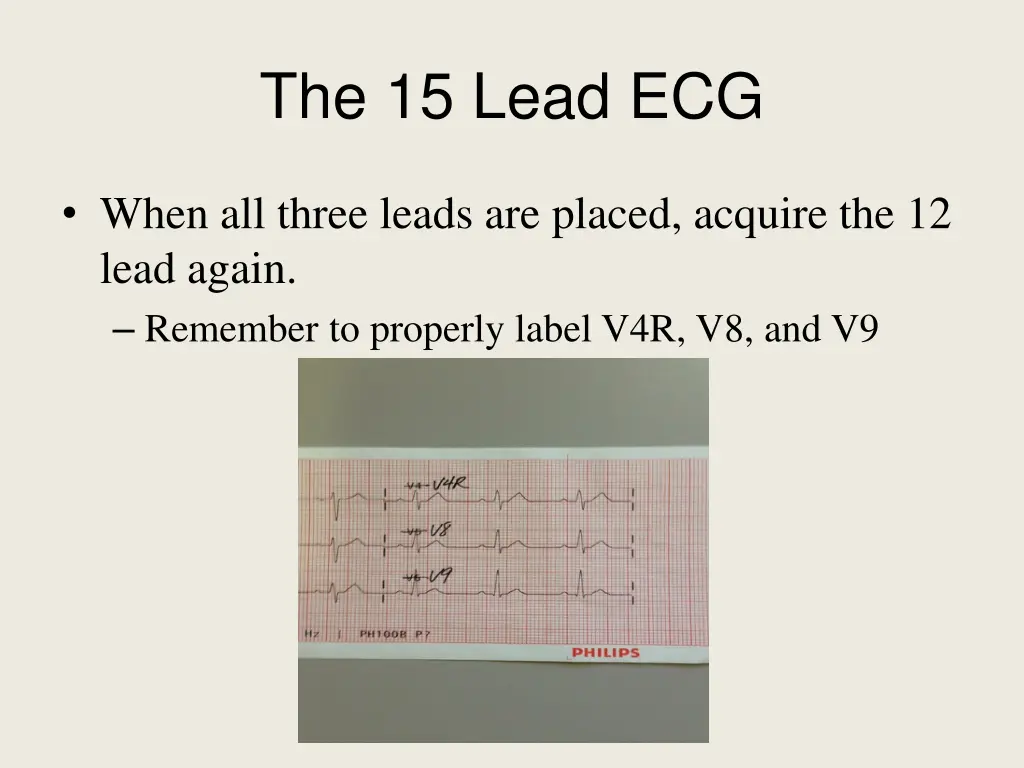
The 15 Lead ECG When all three leads are placed, acquire the 12 lead again. Remember to properly label V4R, V8, and V9
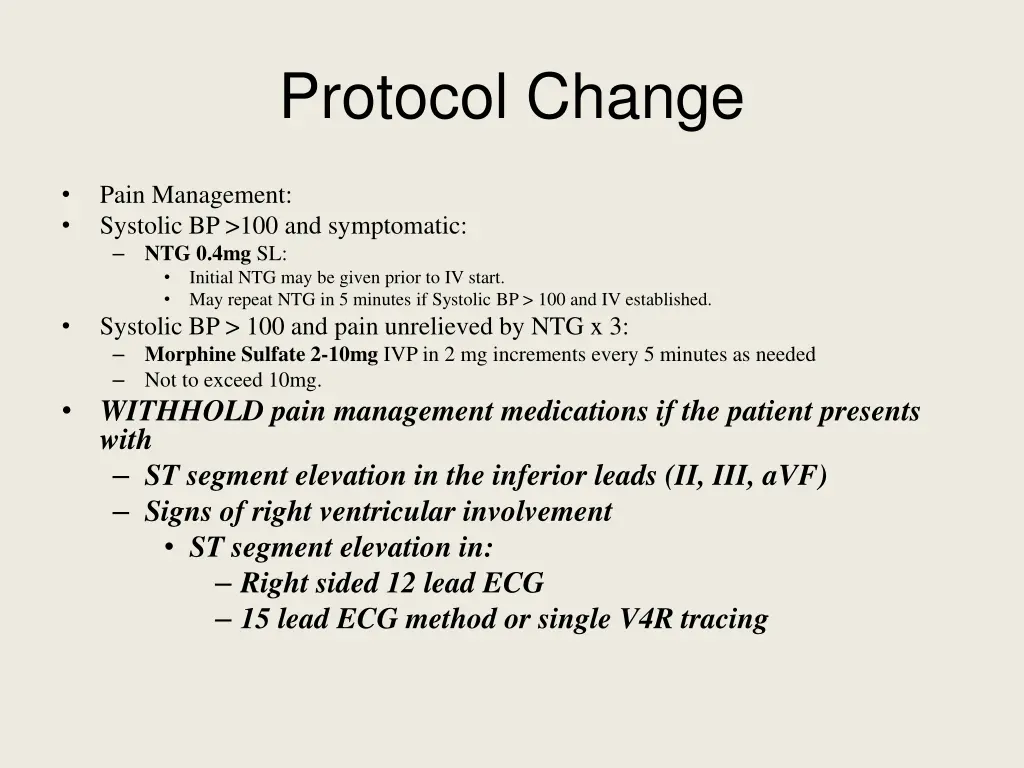
Protocol Change Pain Management: Systolic BP >100 and symptomatic: NTG 0.4mg SL: Initial NTG may be given prior to IV start. May repeat NTG in 5 minutes if Systolic BP > 100 and IV established. Systolic BP > 100 and pain unrelieved by NTG x 3: Morphine Sulfate 2-10mg IVP in 2 mg increments every 5 minutes as needed Not to exceed 10mg. WITHHOLD pain management medications if the patient presents with ST segment elevation in the inferior leads (II, III, aVF) Signs of right ventricular involvement ST segment elevation in: Right sided 12 lead ECG 15 lead ECG method or single V4R tracing
Summary Be suspicious of RVI in our MI patients. WITHHOLD nitroglycerin and morphine on patients with inferior wall MI (II, III, and aVF) 50% of Inferior MIs have RVI. Our patients may have symptoms of acute coronary syndrome, but an unremarkable 12 lead ECG. Consider a 15 Lead ECG to get a view of the right ventricle and the posterior side of the heart.