Understanding Student Mobility Research in Ohio
Explore the Ohio Student Mobility Project focusing on student mobility in grades K-12, its impacts, diverse funder support, data insights, school district profiles, and research questions addressing the magnitude of student mobility, patterns, and policy issues statewide.

Uploaded on | 0 Views
Download Presentation

Please find below an Image/Link to download the presentation.
The content on the website is provided AS IS for your information and personal use only. It may not be sold, licensed, or shared on other websites without obtaining consent from the author. If you encounter any issues during the download, it is possible that the publisher has removed the file from their server.
You are allowed to download the files provided on this website for personal or commercial use, subject to the condition that they are used lawfully. All files are the property of their respective owners.
The content on the website is provided AS IS for your information and personal use only. It may not be sold, licensed, or shared on other websites without obtaining consent from the author.
E N D
Presentation Transcript
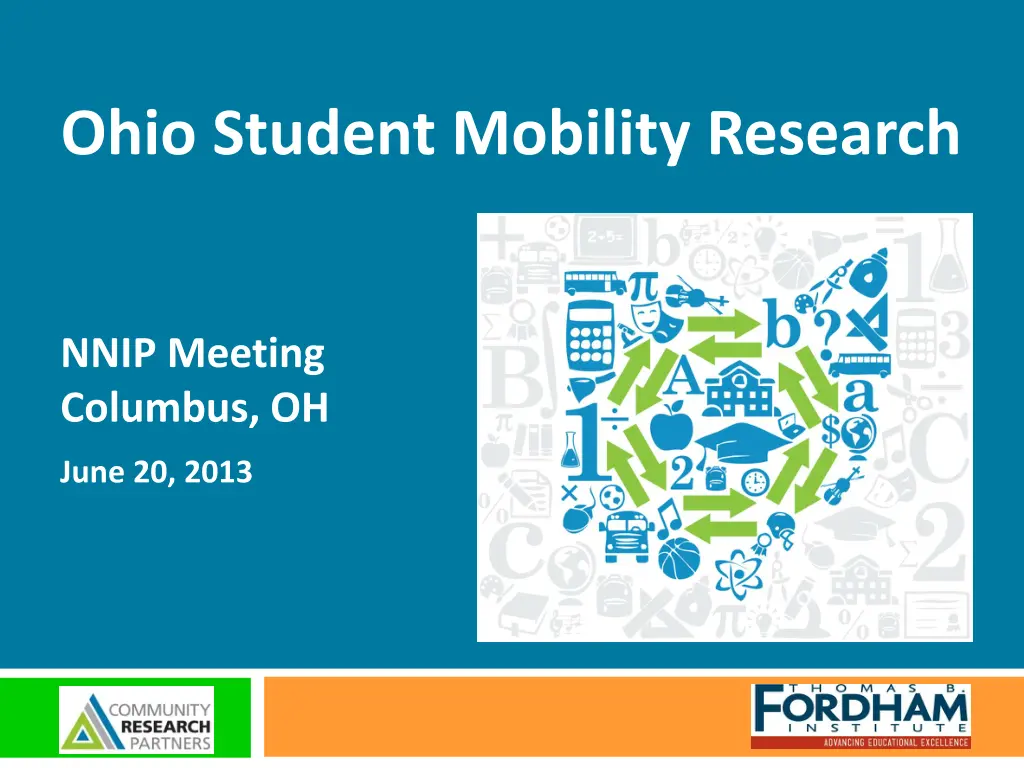
Ohio Student Mobility Research NNIP Meeting Columbus, OH June 20, 2013
The Ohio Student Mobility Project First things first: What is student mobility ? Students in grades K-12 changing schools for reasons other than customary promotion During school year or over summer break Positive/choice-based or unplanned/destabilizing Mobility impacts students, schools, communities, and public policy
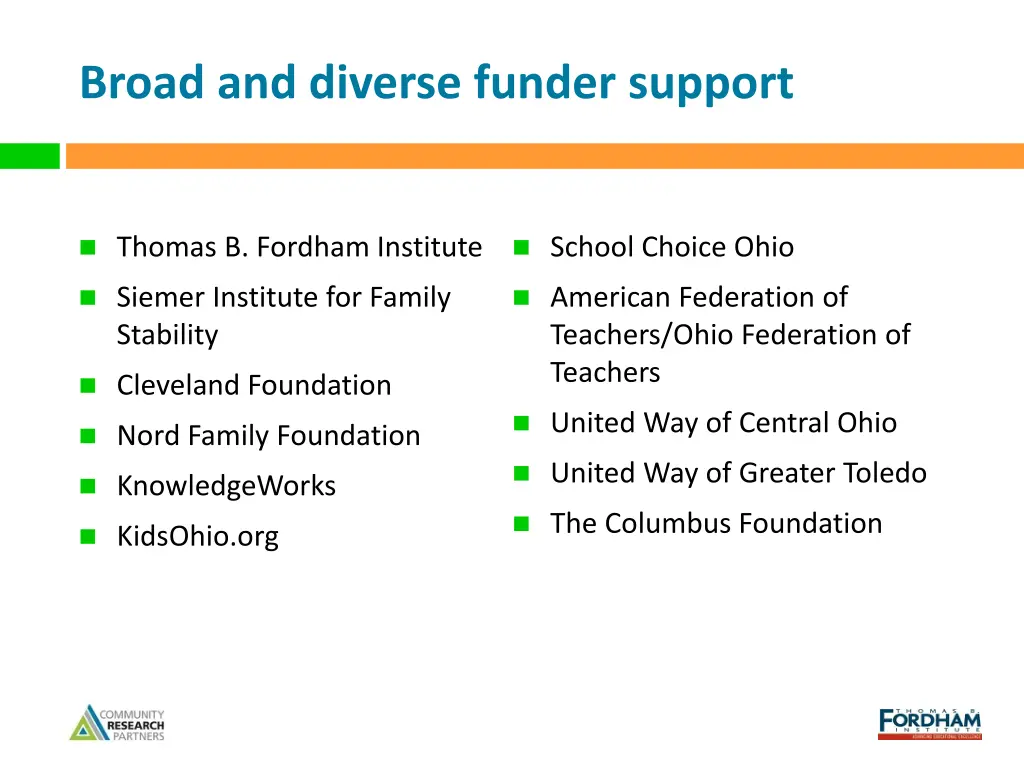
Broad and diverse funder support Thomas B. Fordham Institute School Choice Ohio Siemer Institute for Family Stability American Federation of Teachers/Ohio Federation of Teachers Cleveland Foundation United Way of Central Ohio Nord Family Foundation United Way of Greater Toledo KnowledgeWorks The Columbus Foundation KidsOhio.org
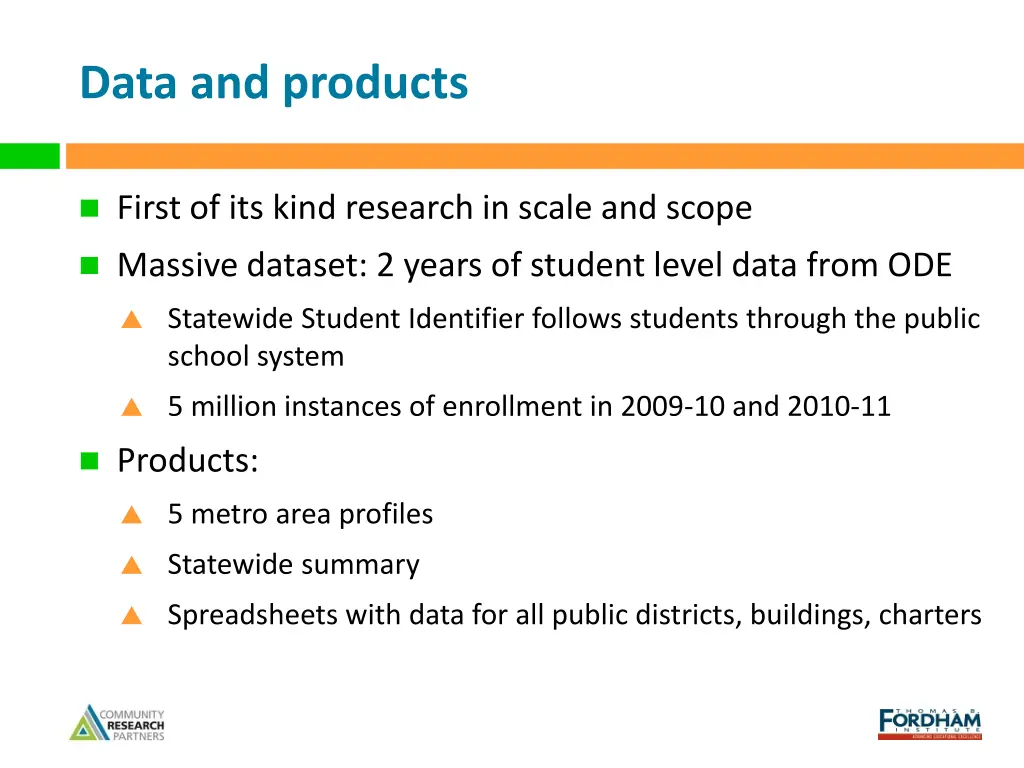
Data and products First of its kind research in scale and scope Massive dataset: 2 years of student level data from ODE Statewide Student Identifier follows students through the public school system 5 million instances of enrollment in 2009-10 and 2010-11 Products: 5 metro area profiles Statewide summary Spreadsheets with data for all public districts, buildings, charters
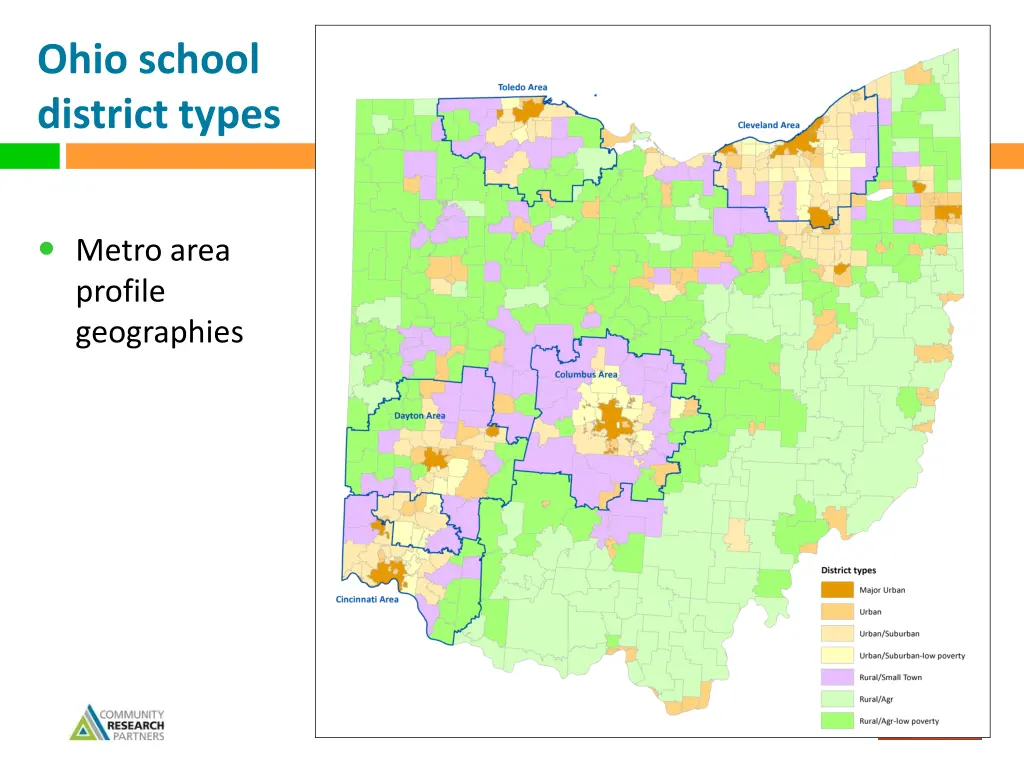
Ohio school district types Metro area profile geographies
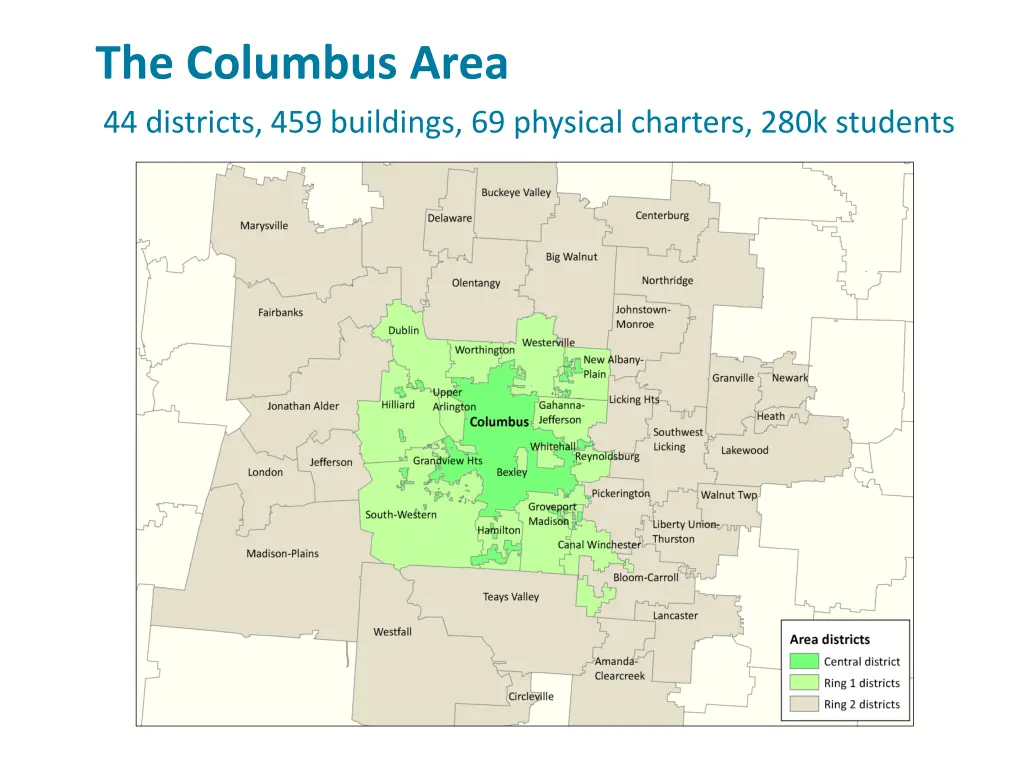
The Columbus Area 44 districts, 459 buildings, 69 physical charters, 280k students
Research questions Address the what questions but not the why . Magnitude of mobility Mobility patterns Mobility and students Statewide policy issues
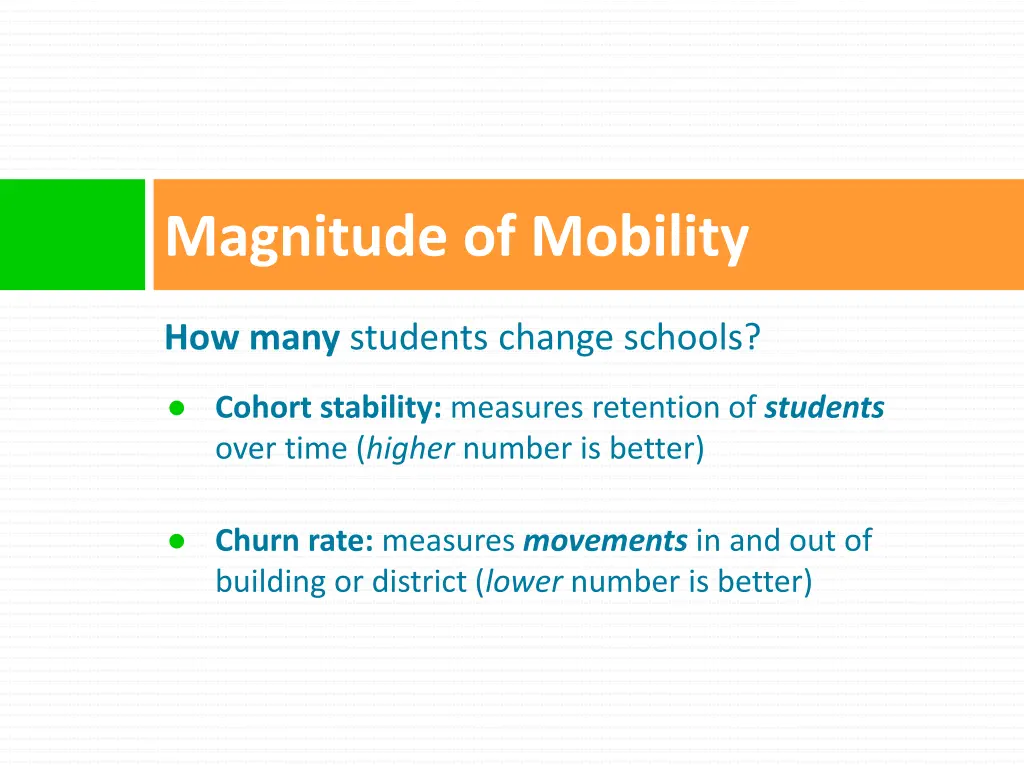
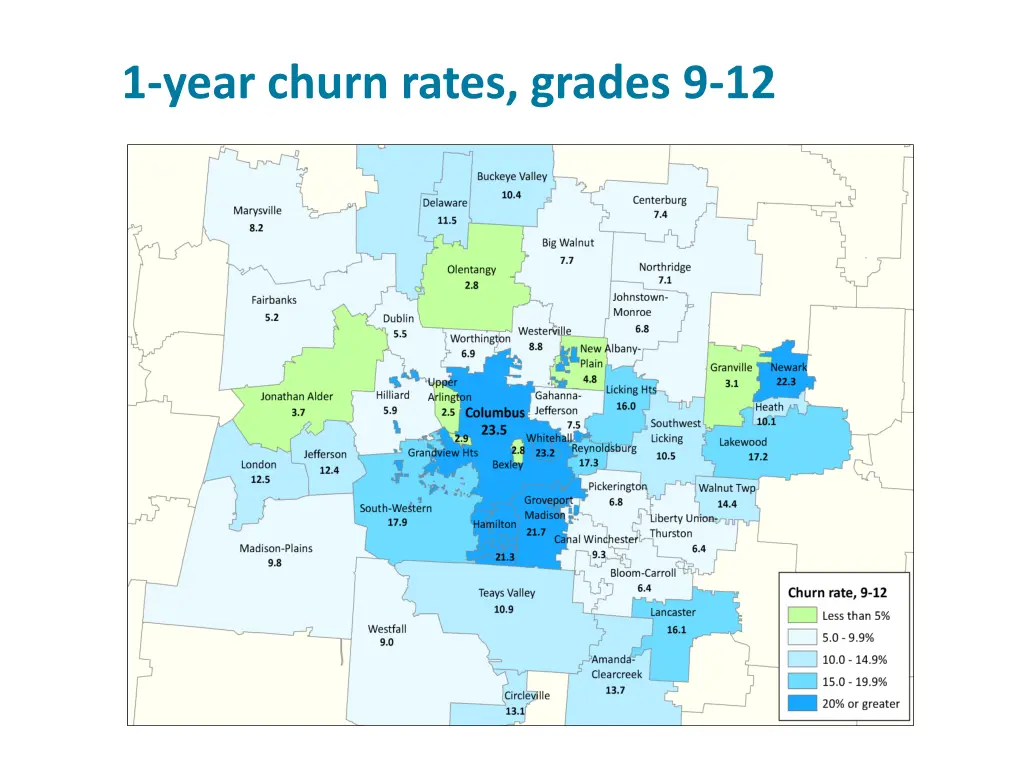
Magnitude of Mobility How many students change schools? Cohort stability: measures retention of students over time (higher number is better) Churn rate: measures movements in and out of building or district (lower number is better)
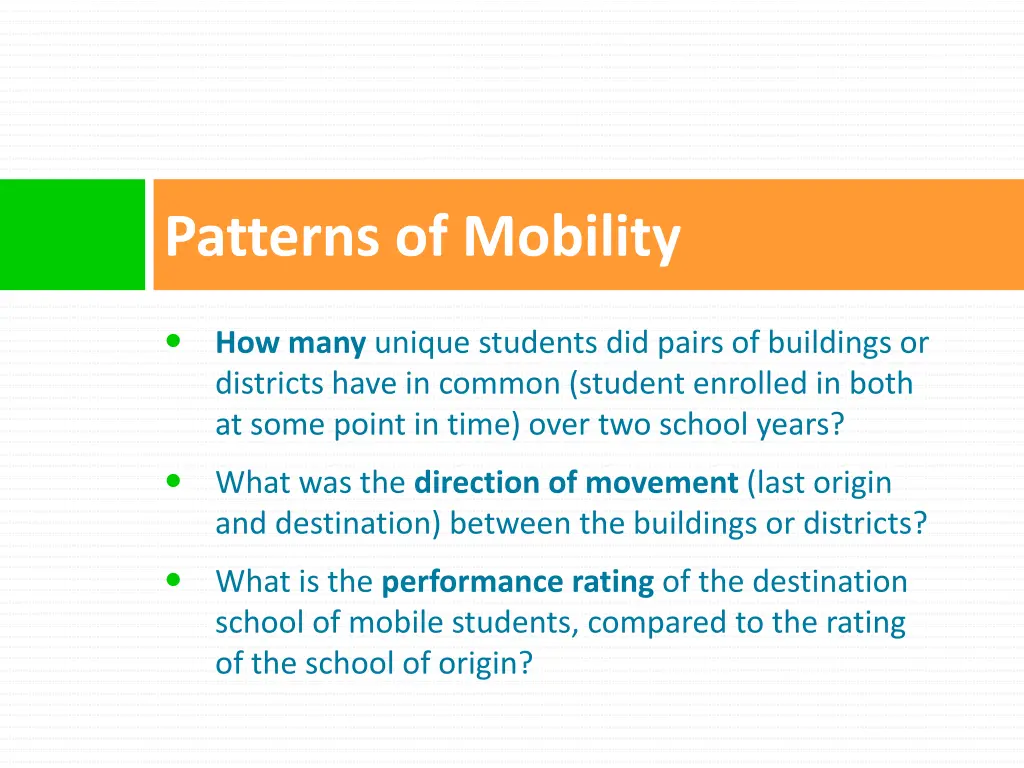
Patterns of Mobility How many unique students did pairs of buildings or districts have in common (student enrolled in both at some point in time) over two school years? What was the direction of movement (last origin and destination) between the buildings or districts? What is the performance rating of the destination school of mobile students, compared to the rating of the school of origin?
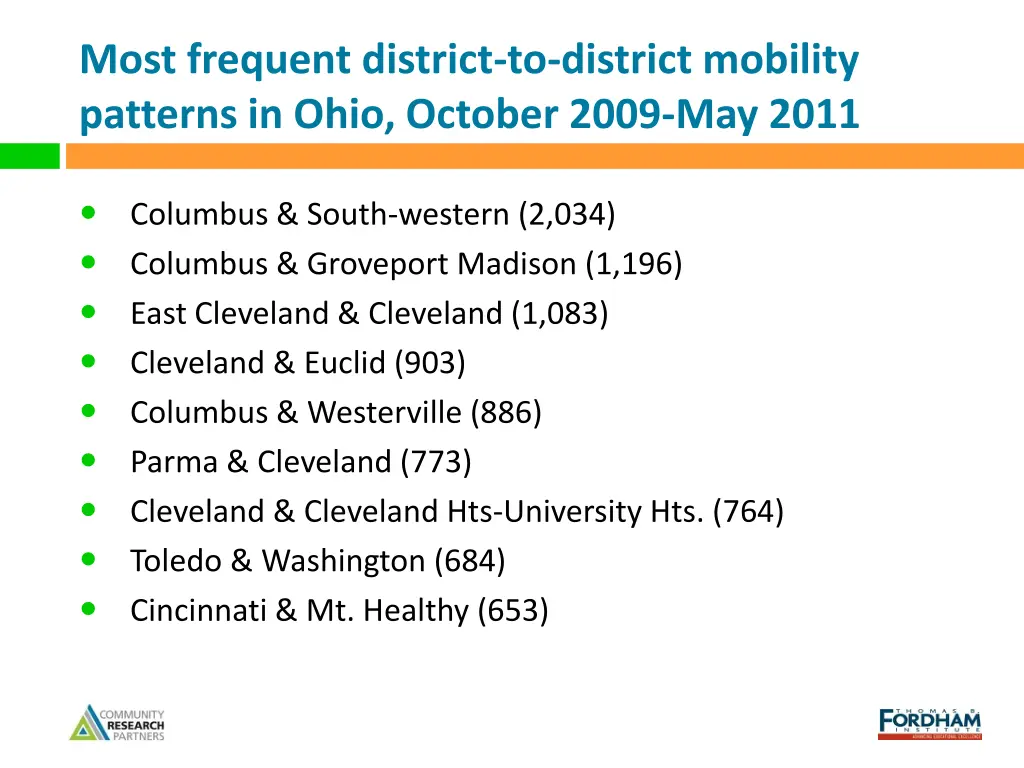
Most frequent district-to-district mobility patterns in Ohio, October 2009-May 2011 Columbus & South-western (2,034) Columbus & Groveport Madison (1,196) East Cleveland & Cleveland (1,083) Cleveland & Euclid (903) Columbus & Westerville (886) Parma & Cleveland (773) Cleveland & Cleveland Hts-University Hts. (764) Toledo & Washington (684) Cincinnati & Mt. Healthy (653)
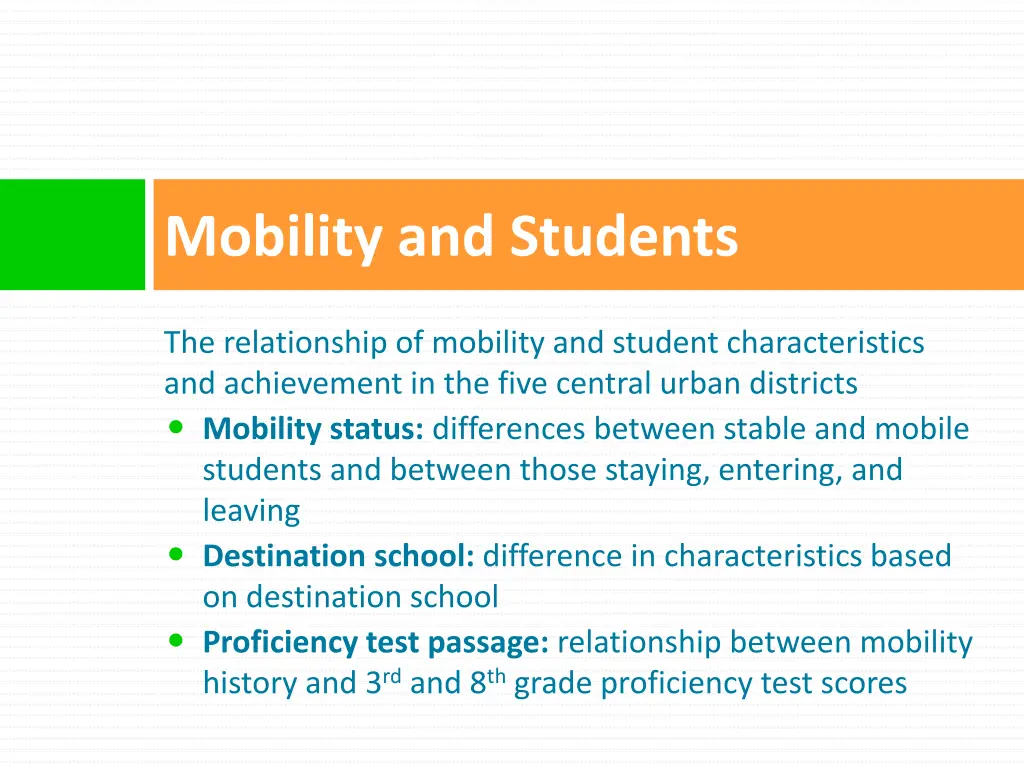
Mobility and Students The relationship of mobility and student characteristics and achievement in the five central urban districts Mobility status: differences between stable and mobile students and between those staying, entering, and leaving Destination school: difference in characteristics based on destination school Proficiency test passage: relationship between mobility history and 3rd and 8th grade proficiency test scores
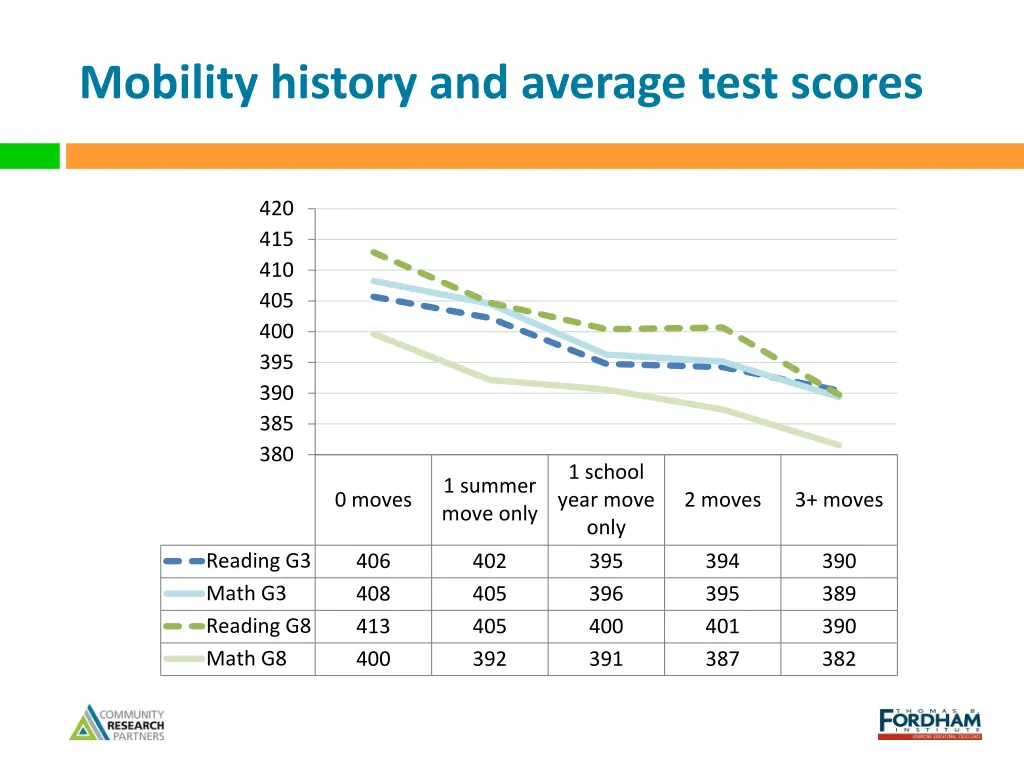
Mobility history and average test scores 420 415 410 405 400 395 390 385 380 1 school year move only 395 396 400 391 1 summer move only 0 moves 2 moves 3+ moves Reading G3 Math G3 Reading G8 Math G8 406 408 413 400 402 405 405 392 394 395 401 387 390 389 390 382
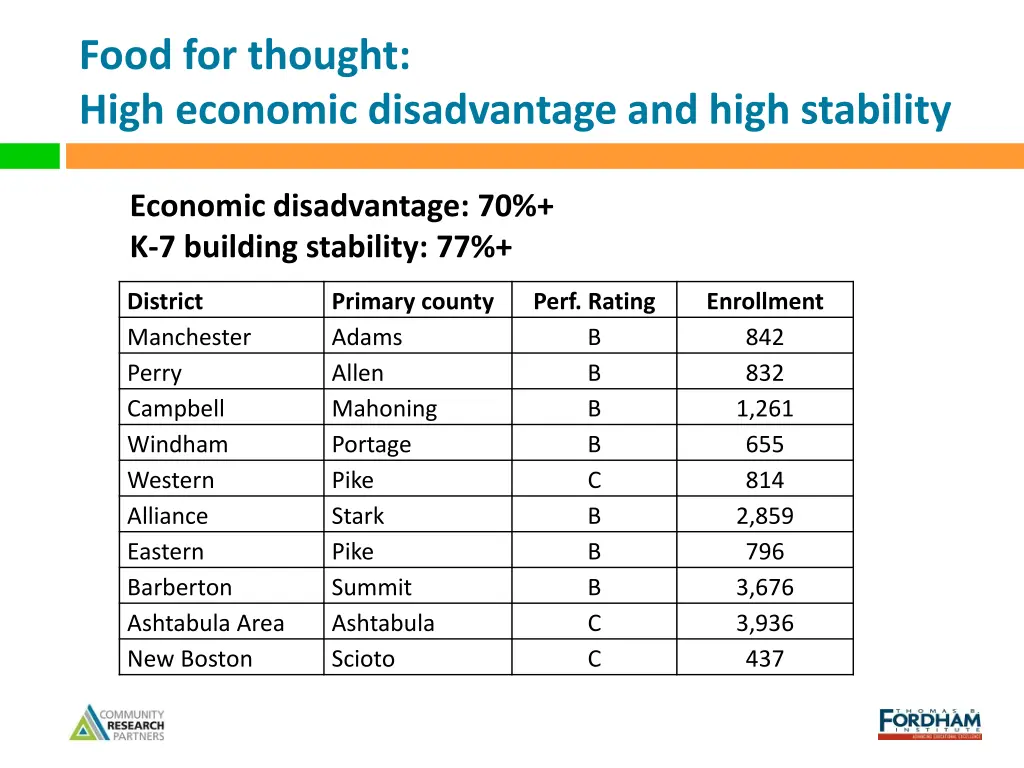
Food for thought: High economic disadvantage and high stability Economic disadvantage: 70%+ K-7 building stability: 77%+ District Manchester Perry Campbell Windham Western Alliance Eastern Barberton Ashtabula Area New Boston Primary county Adams Allen Mahoning Portage Pike Stark Pike Summit Ashtabula Scioto Perf. Rating B B B B C B B B C C Enrollment 842 832 1,261 655 814 2,859 796 3,676 3,936 437
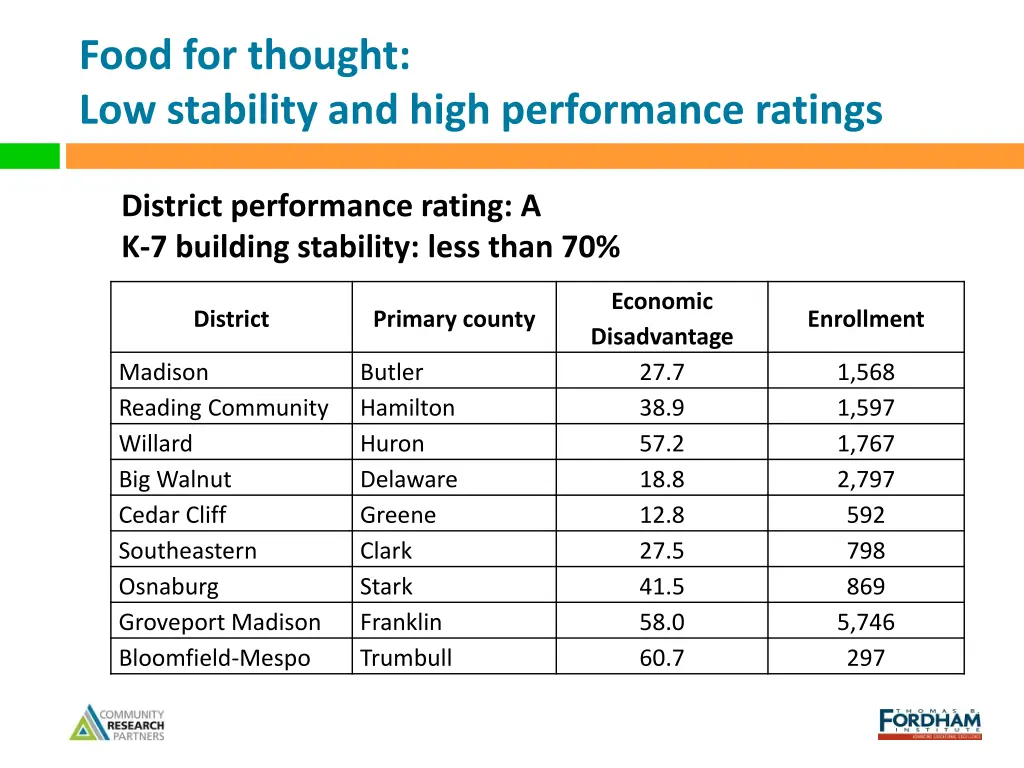
Food for thought: Low stability and high performance ratings District performance rating: A K-7 building stability: less than 70% Economic Disadvantage 27.7 38.9 57.2 18.8 12.8 27.5 41.5 58.0 60.7 District Primary county Enrollment Madison Reading Community Willard Big Walnut Cedar Cliff Southeastern Osnaburg Groveport Madison Bloomfield-Mespo Butler Hamilton Huron Delaware Greene Clark Stark Franklin Trumbull 1,568 1,597 1,767 2,797 592 798 869 5,746 297