Discover the significance of patient safety advocacy through real-life examples and reports highlighting the need for a culture of safety in healthcare. Learn about the critical role communication plays in ensuring patient well-being and the consequences of avoidable errors on both patients and healthcare professionals.
Please find below an Image/Link to download the presentation.
The content on the website is provided AS IS for your information and personal use only. It may not be sold, licensed, or shared on other websites without obtaining consent from the author. If you encounter any issues during the download, it is possible that the publisher has removed the file from their server.
You are allowed to download the files provided on this website for personal or commercial use, subject to the condition that they are used lawfully. All files are the property of their respective owners.
The content on the website is provided AS IS for your information and personal use only. It may not be sold, licensed, or shared on other websites without obtaining consent from the author.
E N D
Presentation Transcript
Patient Safety Patient Safety Advocacy: Advocacy: Safer Together Safer Together Deborah E. Prowse, Q.C. Patients for Patients Safety Canada Alberta Health Advocate
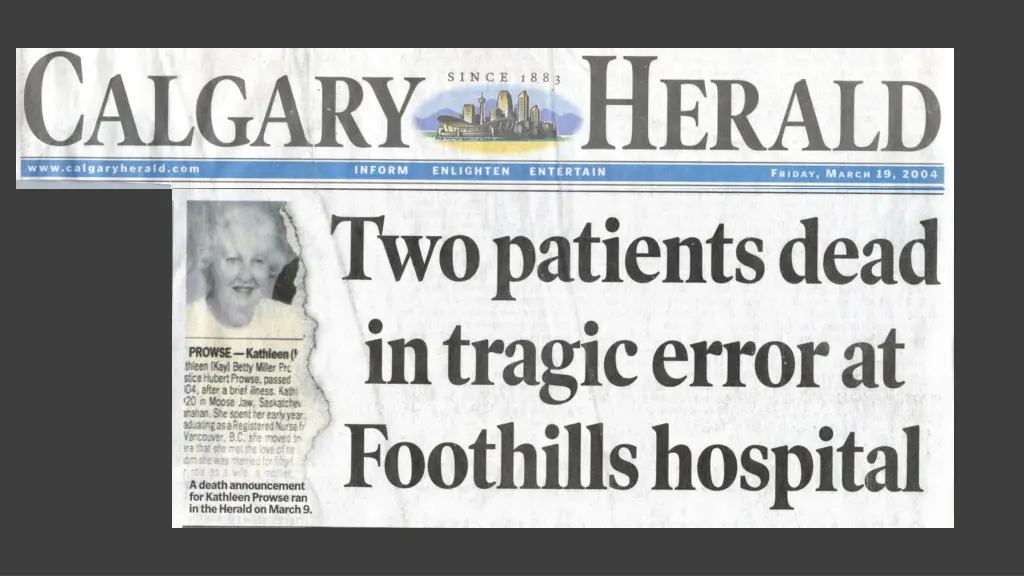
Patient Safety Matters Patient Safety Matters 2004 in Calgary, 2 patients died unnecessarily from a single adverse event A key contributor was a culture that did not support patient safety - Communication - Lack of priority - Complacency about safety
To Err is Human was a report released in the U.S. in 1995 What was the What was the Patient Safety Patient Safety awareness? awareness? Recognized that both individual dedication and collective contributions of those who give their all to improve and save lives of patient in our healthcare institutions Baker Norton study was released in Canada in 2004 Revealed thousands of patients are brought to harm in the course of their healing because of fundamental problems n the individual and collective behavior of caring professionals Shift from culture of blame to culture of patient safety
Contributors to adverse events are known and even talked about but not reported. Someone who cuts corners Let s talk Let s talk Someone who makes mistakes Hazards Someone who is a bully Someone who is incompetent This contributes to Avoidable errors Moral and ethical distress Burnout and decreased morale Reduced productivity
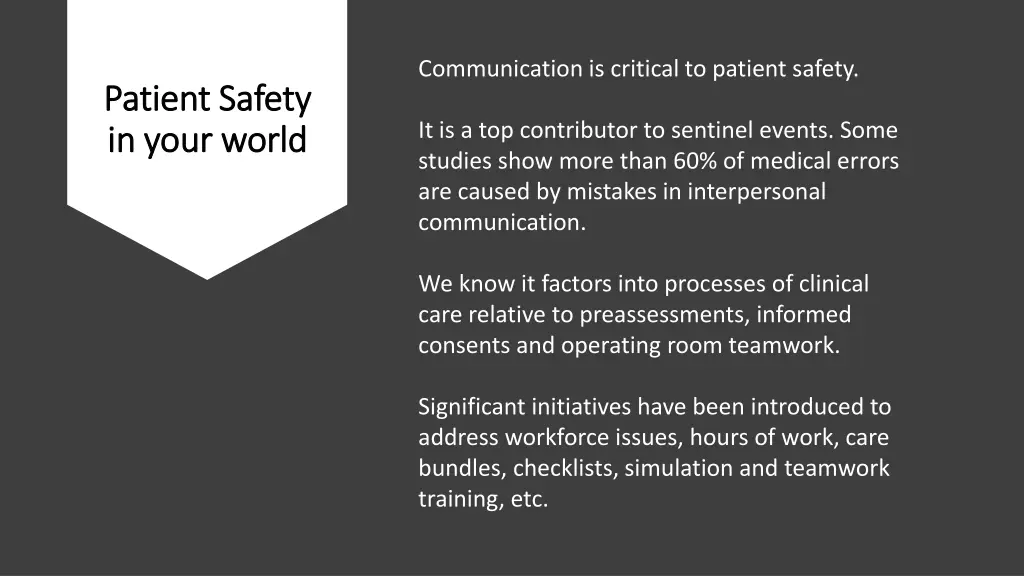
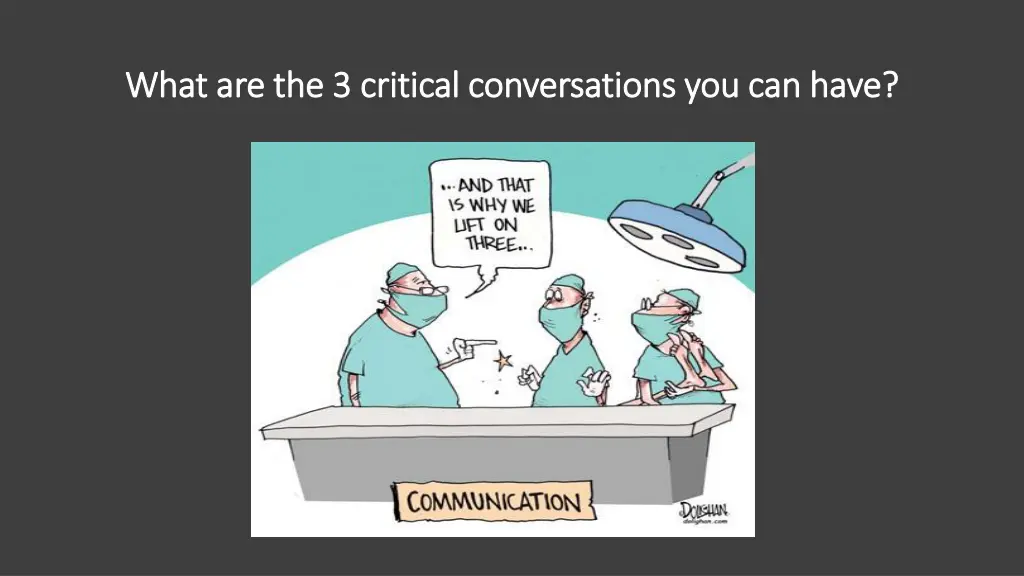
Communication is critical to patient safety. Patient Safety Patient Safety in your world in your world It is a top contributor to sentinel events. Some studies show more than 60% of medical errors are caused by mistakes in interpersonal communication. We know it factors into processes of clinical care relative to preassessments, informed consents and operating room teamwork. Significant initiatives have been introduced to address workforce issues, hours of work, care bundles, checklists, simulation and teamwork training, etc.
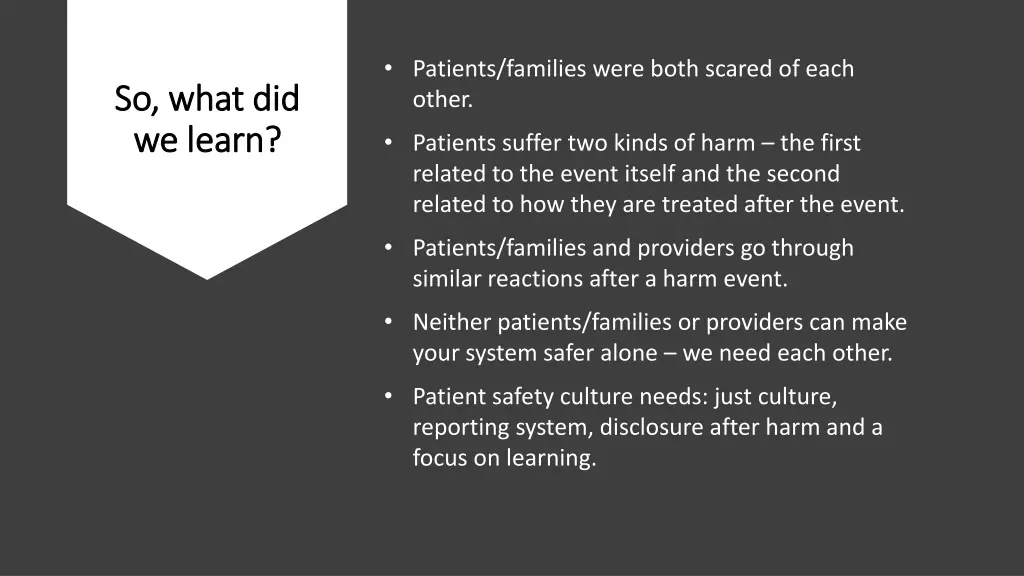
Patients/families were both scared of each other. So, what did So, what did we learn? we learn? Patients suffer two kinds of harm the first related to the event itself and the second related to how they are treated after the event. Patients/families and providers go through similar reactions after a harm event. Neither patients/families or providers can make your system safer alone we need each other. Patient safety culture needs: just culture, reporting system, disclosure after harm and a focus on learning.
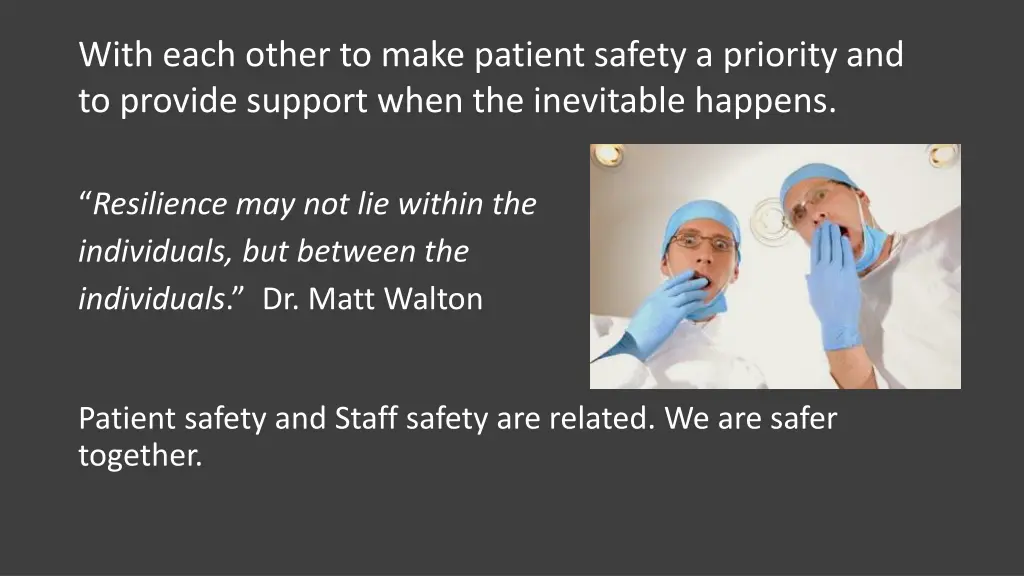
With each other to make patient safety a priority and to provide support when the inevitable happens. Resilience may not lie within the individuals, but between the individuals. Dr. Matt Walton Patient safety and Staff safety are related. We are safer together.
Thank you! Deborah E. Prowse, Q.C. deborah.prowse@gmail.com Telephone: (403) 650-5561