Understanding the Right to Information Act 2005: Objectives, Features, and Definitions
Explore the Meaning of Right to Information, Objectives of RTI Act, Salient Features, and Important Definitions according to the Right to Information Act of 2005. Discover the entitlements and provisions regarding access to information from public authorities.

Download Presentation

Please find below an Image/Link to download the presentation.
The content on the website is provided AS IS for your information and personal use only. It may not be sold, licensed, or shared on other websites without obtaining consent from the author. If you encounter any issues during the download, it is possible that the publisher has removed the file from their server.
You are allowed to download the files provided on this website for personal or commercial use, subject to the condition that they are used lawfully. All files are the property of their respective owners.
The content on the website is provided AS IS for your information and personal use only. It may not be sold, licensed, or shared on other websites without obtaining consent from the author.
E N D
Presentation Transcript
BUSINESS REGULATORY FRAMEWORK B.COM (TPP & CA) UNIT 4 CHAPTER 10 RIGHT TO INFORMATION ACT, 2005 DR. PRITI MALIK ASSISTANT PROFESSOR COMMERCE DEPT. (SFS)
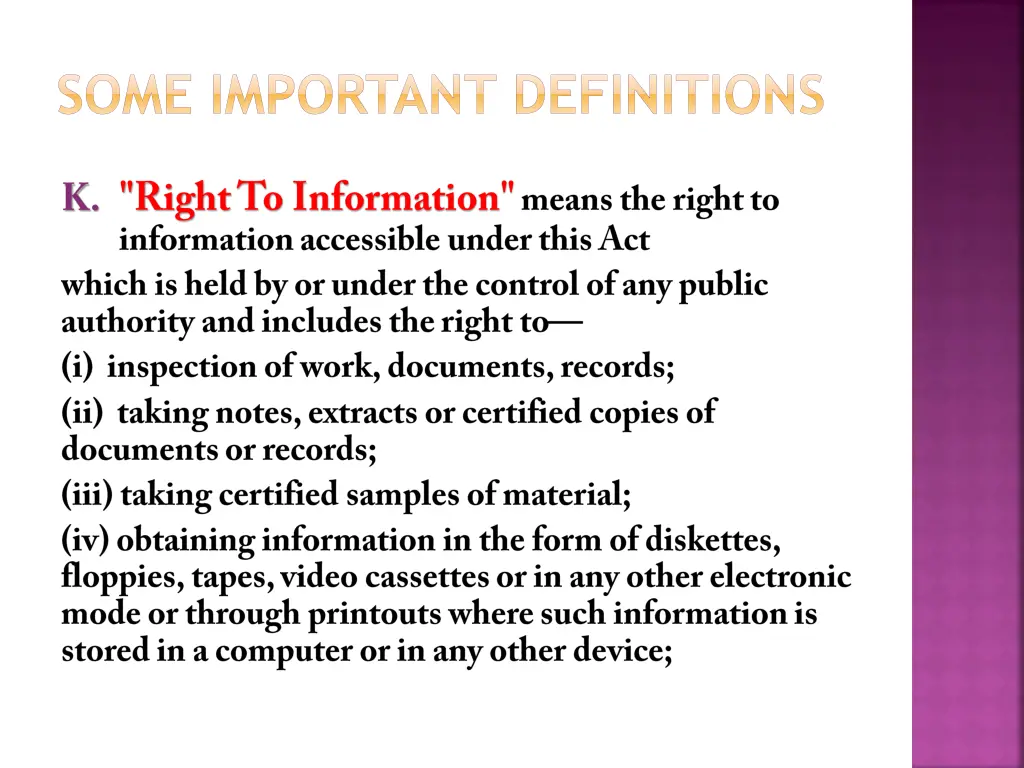
MEANING OF RIGHT TO MEANING OF RIGHT TO INFORMATION INFORMATION It also includes the right to - i. inspect works, documents, records. ii. take notes, extracts or certified copies of documents or records. iii. take certified samples of material. iv. obtain information in form of printouts, diskettes, floppies, tapes, video cassettes or in any other electronic mode or through printouts.[S.2(j)]
OBJECTIVES OF OBJECTIVES OF RTI RTI ACT ACT The objectives of the RTI Act are: 1) Provide for setting out practical regime of RTI for citizens to secure access to information under the control of public authorities. 2) To promote transparency and accountability. 3) To contain corruption and hold government authorities accountable. 4) To set up Central and State Information Commissions. 5) To harmonize revelation of information with public interests
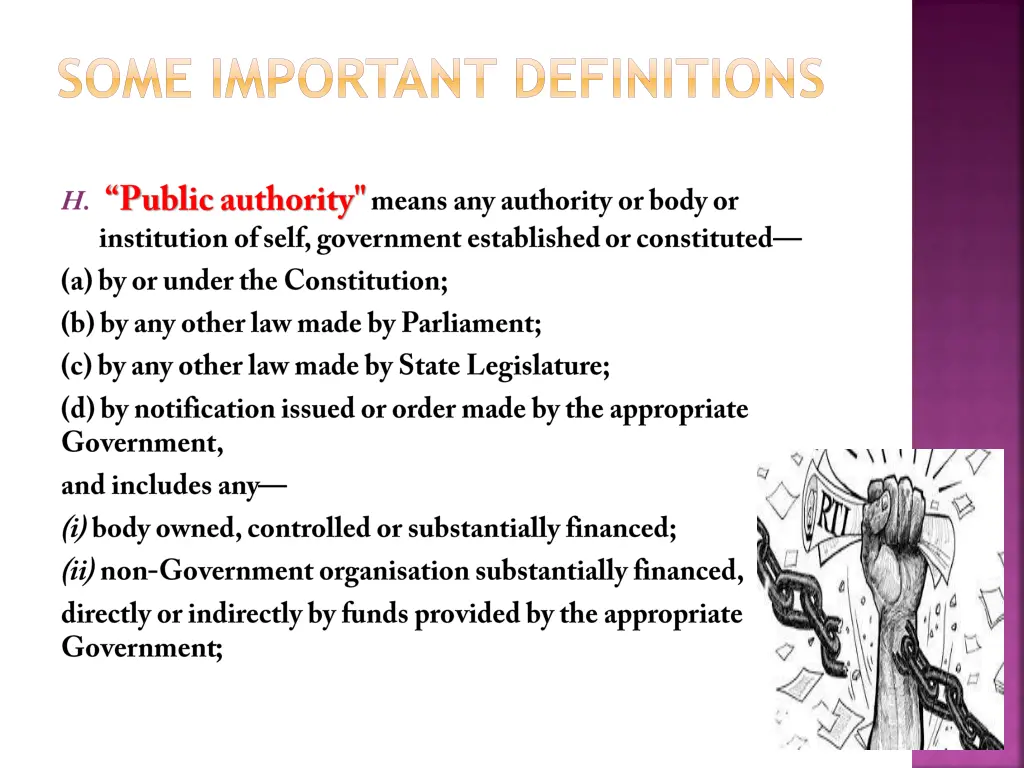
SALIENT FEATURES OF RTI ACT,2005 1. Came into effect from October 12, 2005 2. Covers Central, state and local governments, and all bodies owned, controlled or substantially financed; 3. Non-government organisation substantially financed, directly or indirectly by funds provided by the appropriate Government (2(h)) 4. Covers executive, judiciary and legislature (2(e)) 5. Includes information relating to private body which can be accessed by under any other law for the time being in force (2(f))
SOME IMPORTANT DEFINITIONS A. Appropriate Government" means in relation to a public authority which is established, constituted, owned, controlled or substantially financed by funds provided directly or indirectly by the Central Government or the Union territory administration, the Central Government; by the State Government, the State Government; i. ii. B. "Central Information Commission" means the Central Information Commission constituted under sub-section (1) of section 12; C. "Central Public Information Officer" means the Central Public Information Officer designated under sub-section (1) and includes a Central Assistant Public Information Officer designated as such under sub-section (2) of section 5;
SOME IMPORTANT DEFINITIONS D. "Chief Information Commissioner" and "Information Commissioner" mean the Chief Information Commissioner and Information Commissioner appointed under sub-section (3) of section 12; E. Competent authority" means i. the Speaker in the case of the House of the People or the Legislative Assembly of a State or a Union territory having such Assembly and the Chairman in the case of the Council of States or Legislative Council of a State; ii. the Chief Justice of India in the case of the Supreme Court; iii. the Chief Justice of the High Court in the case of a High Court; iv. the President or the Governor, as the case may be, in the case of other authorities established or constituted by or under the Constitution; v. the administrator appointed under article 239 of the Constitution;
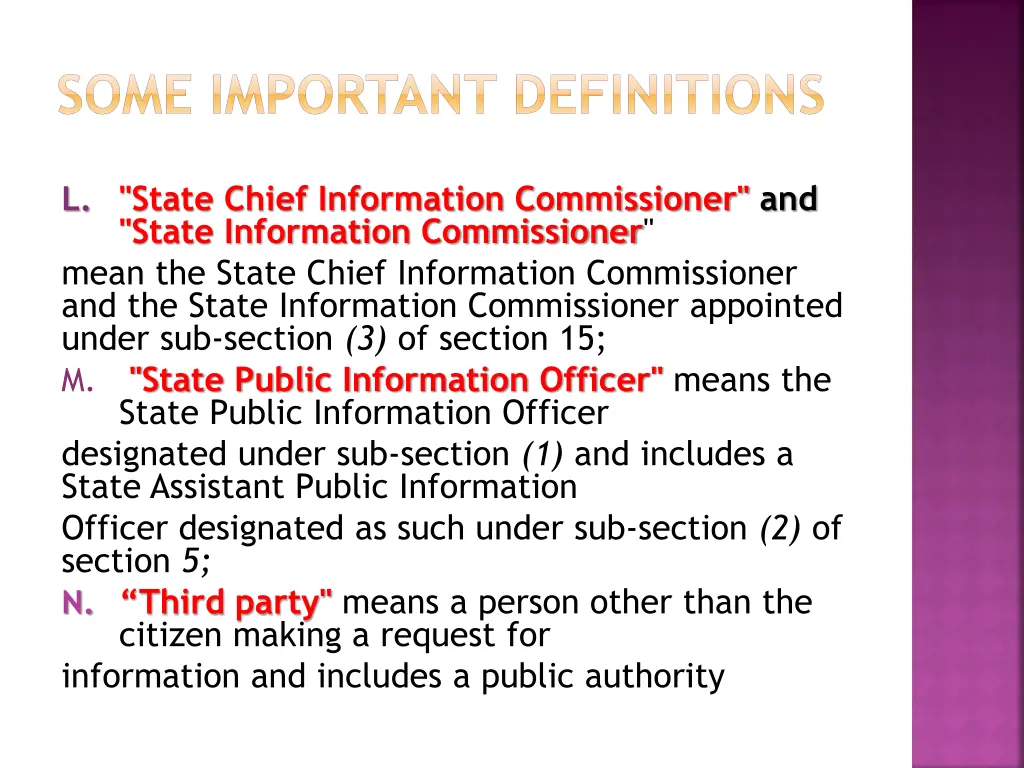
SOME IMPORTANT DEFINITIONS L. "State Chief Information Commissioner" and "State Information Commissioner" mean the State Chief Information Commissioner and the State Information Commissioner appointed under sub-section (3) of section 15; M. "State Public Information Officer" means the State Public Information Officer designated under sub-section (1) and includes a State Assistant Public Information Officer designated as such under sub-section (2) of section 5; N. Third party" means a person other than the citizen making a request for information and includes a public authority
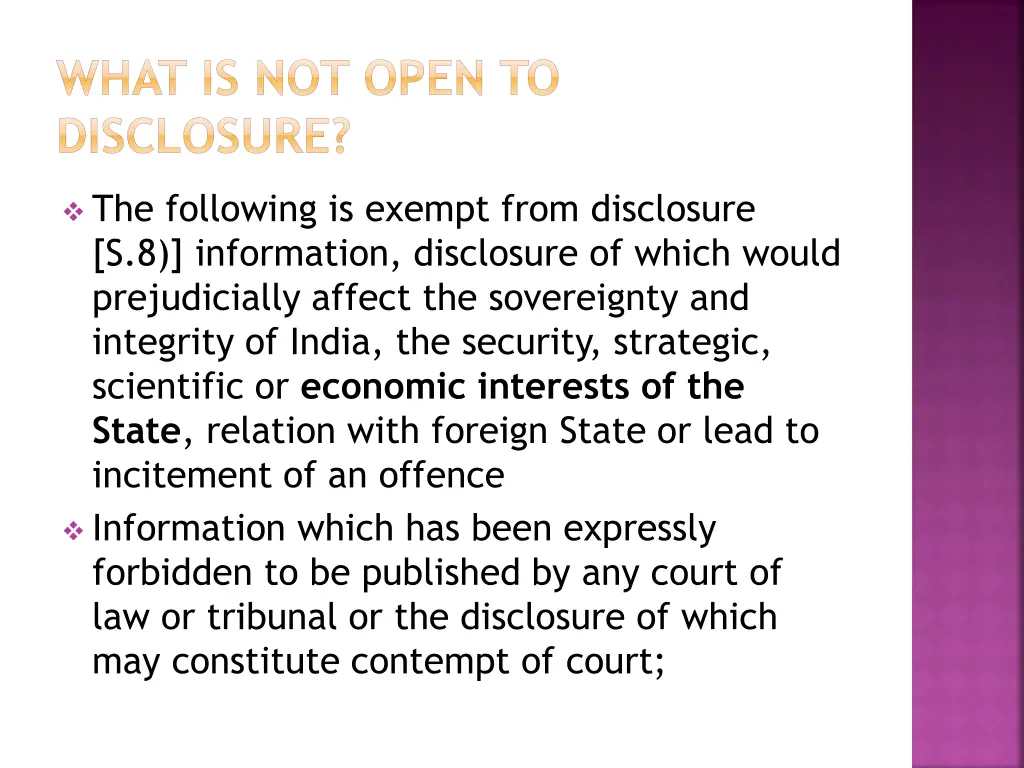
WHAT IS NOT OPEN TO DISCLOSURE? The following is exempt from disclosure [S.8)] information, disclosure of which would prejudicially affect the sovereignty and integrity of India, the security, strategic, scientific or economic interests of the State, relation with foreign State or lead to incitement of an offence Information which has been expressly forbidden to be published by any court of law or tribunal or the disclosure of which may constitute contempt of court;
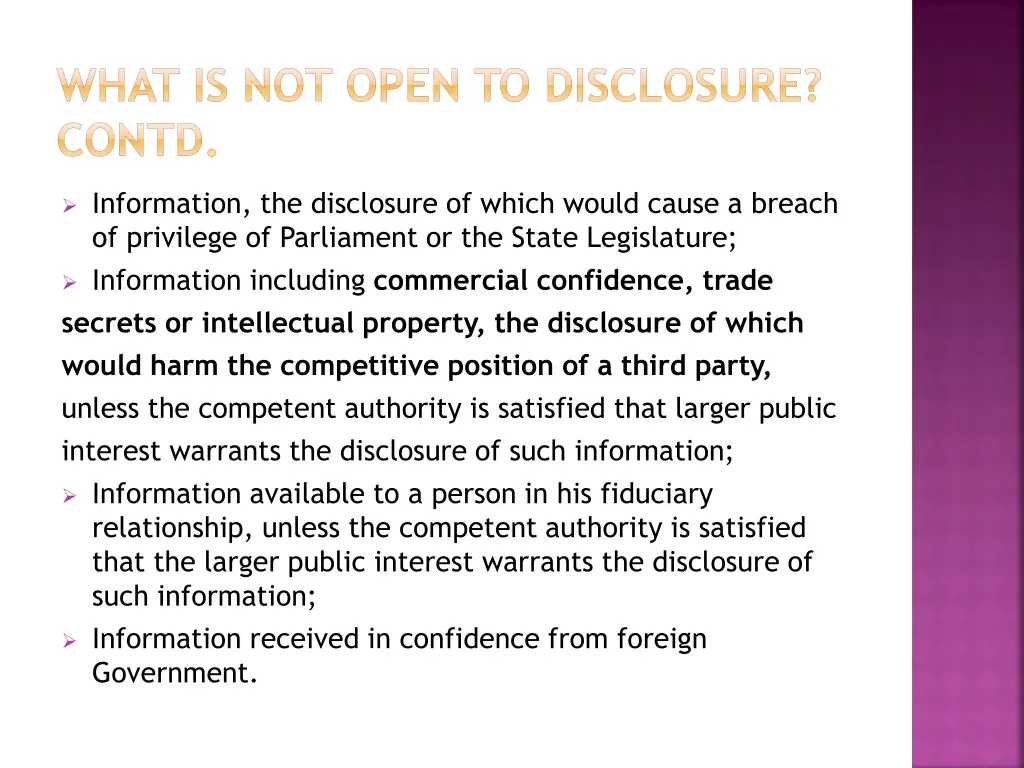
WHAT IS NOT OPEN TO DISCLOSURE? CONTD. Information, the disclosure of which would cause a breach of privilege of Parliament or the State Legislature; Information including commercial confidence, trade secrets or intellectual property, the disclosure of which would harm the competitive position of a third party, unless the competent authority is satisfied that larger public interest warrants the disclosure of such information; Information available to a person in his fiduciary relationship, unless the competent authority is satisfied that the larger public interest warrants the disclosure of such information; Information received in confidence from foreign Government.
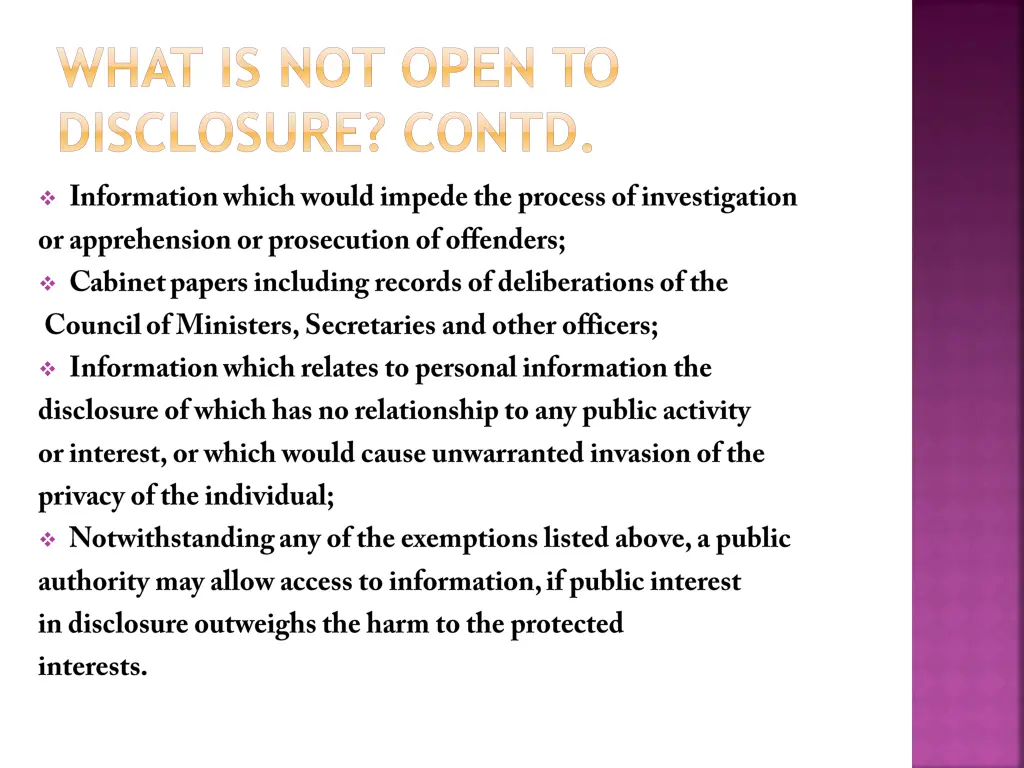
WHAT IS NOT OPEN TO DISCLOSURE? CONTD.
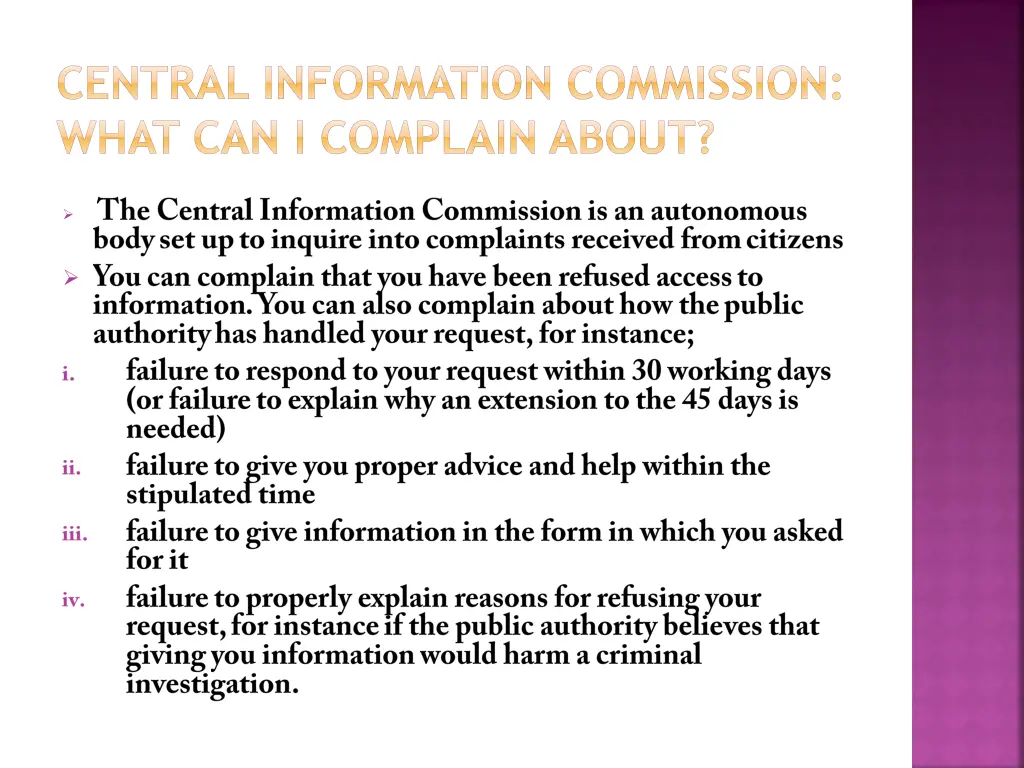
CENTRAL INFORMATION COMMISSION: WHAT CAN I COMPLAIN ABOUT?
WHAT INFORMATION DOES THE CIC NEED? CONTD.
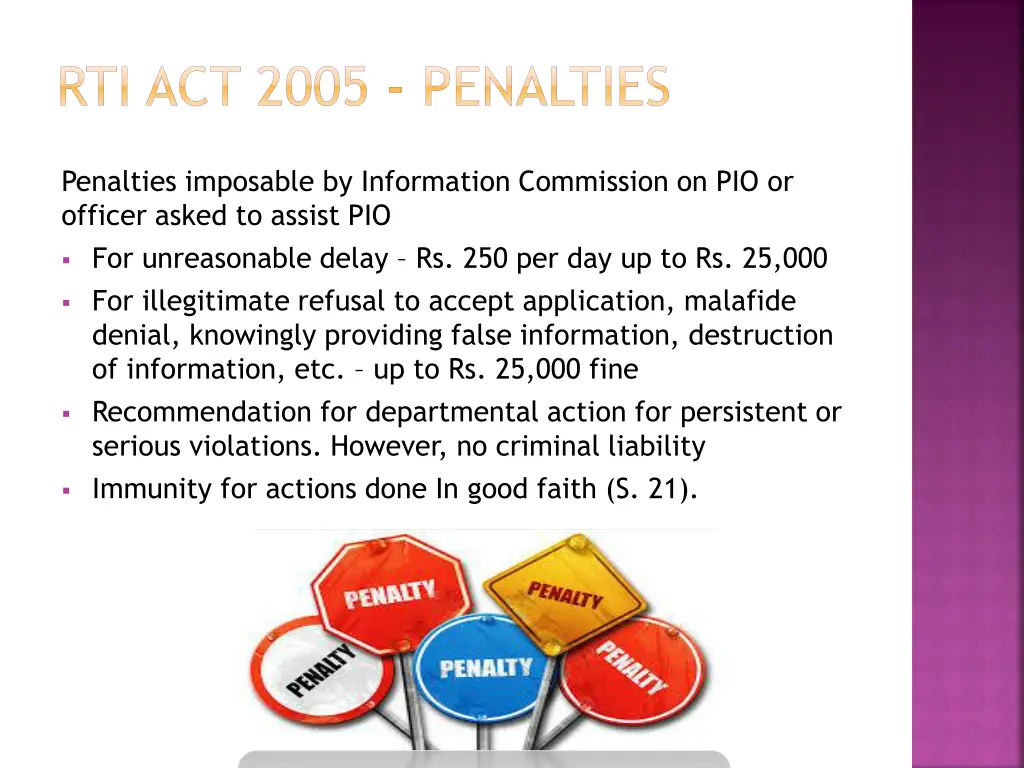
RTI ACT 2005 - PENALTIES Penalties imposable by Information Commission on PIO or officer asked to assist PIO For unreasonable delay Rs. 250 per day up to Rs. 25,000 For illegitimate refusal to accept application, malafide denial, knowingly providing false information, destruction of information, etc. up to Rs. 25,000 fine Recommendation for departmental action for persistent or serious violations. However, no criminal liability Immunity for actions done In good faith (S. 21).
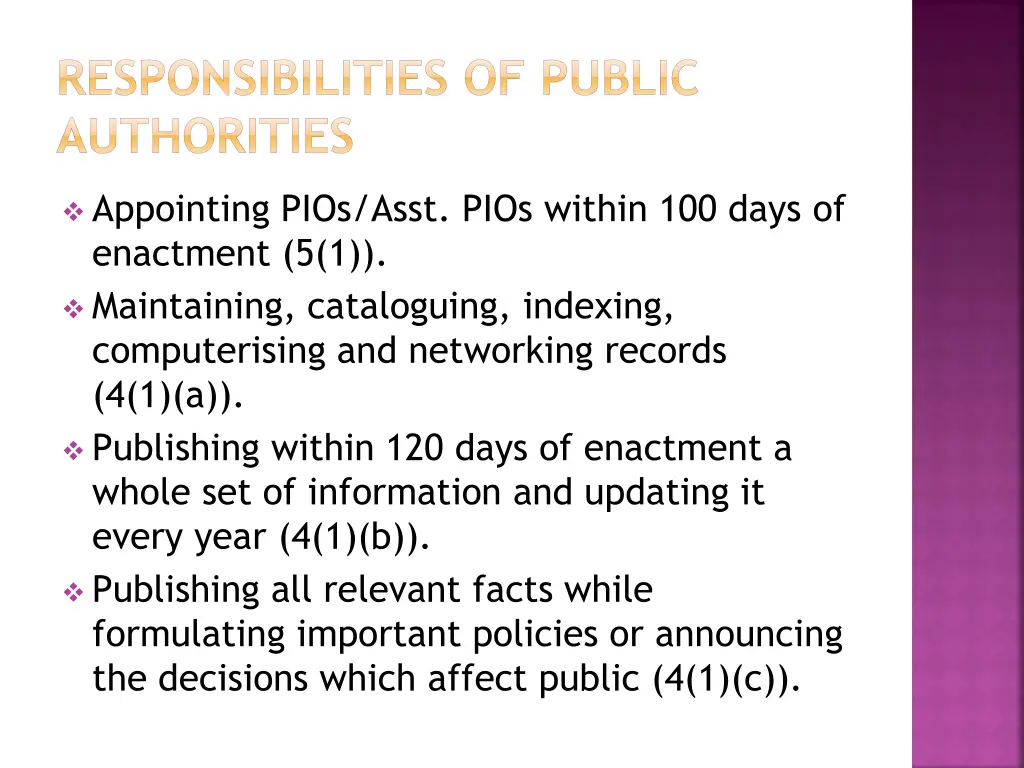
RESPONSIBILITIES OF PUBLIC AUTHORITIES Appointing PIOs/Asst. PIOs within 100 days of enactment (5(1)). Maintaining, cataloguing, indexing, computerising and networking records (4(1)(a)). Publishing within 120 days of enactment a whole set of information and updating it every year (4(1)(b)). Publishing all relevant facts while formulating important policies or announcing the decisions which affect public (4(1)(c)).
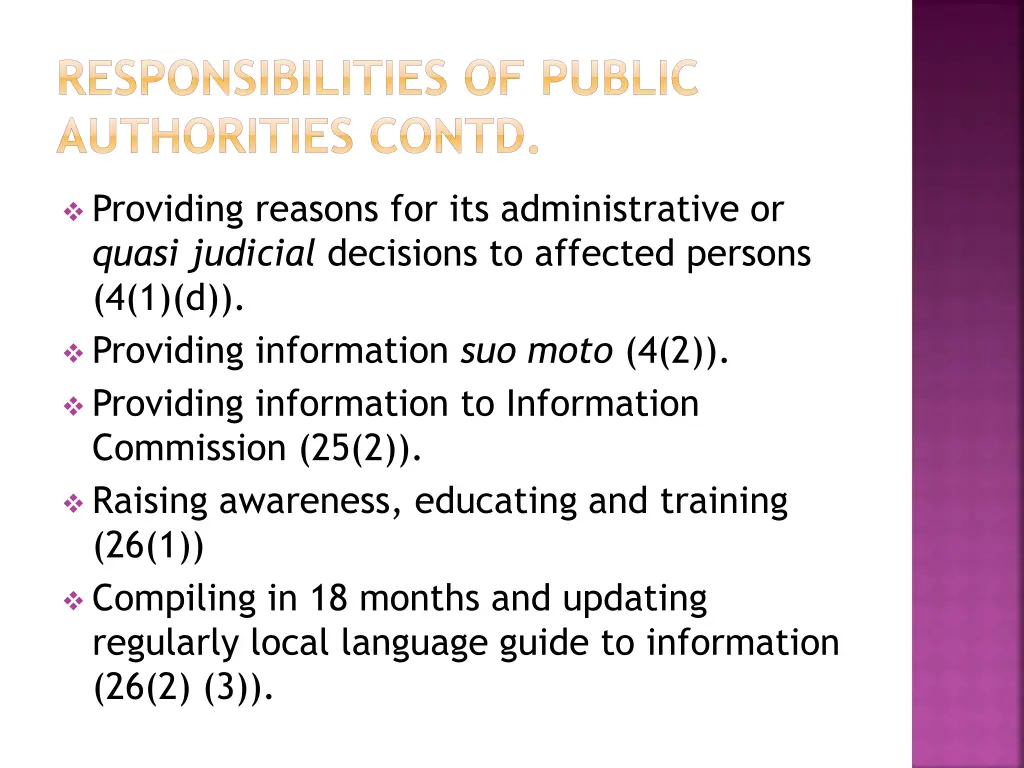
RESPONSIBILITIES OF PUBLIC AUTHORITIES CONTD. Providing reasons for its administrative or quasi judicial decisions to affected persons (4(1)(d)). Providing information suo moto (4(2)). Providing information to Information Commission (25(2)). Raising awareness, educating and training (26(1)) Compiling in 18 months and updating regularly local language guide to information (26(2) (3)).
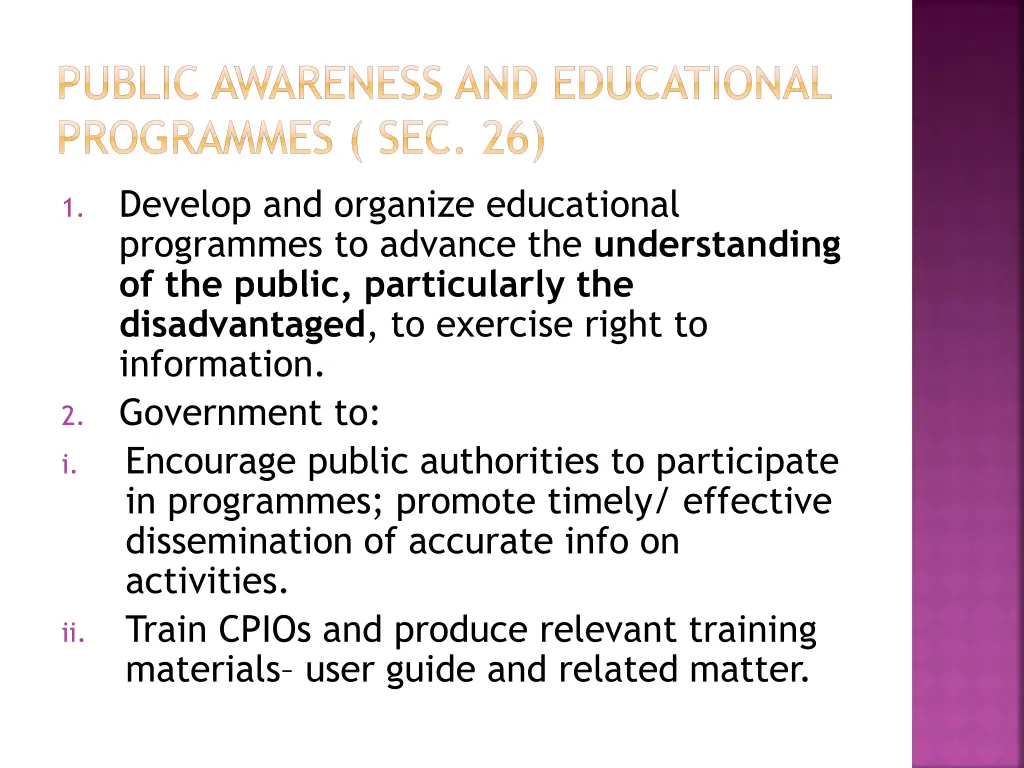
PUBLIC AWARENESS AND EDUCATIONAL PROGRAMMES ( SEC. 26) Develop and organize educational programmes to advance the understanding of the public, particularly the disadvantaged, to exercise right to information. Government to: Encourage public authorities to participate in programmes; promote timely/ effective dissemination of accurate info on activities. Train CPIOs and produce relevant training materials user guide and related matter. 1. 2. i. ii.