Understanding Theory of Mind in Children
Explore the concept of theory of mind in children, including studies on preschool-age kids and the False Belief Task. Delve into topics like understanding mental states and beliefs, and the capability of children to possess theory of mind.

Download Presentation

Please find below an Image/Link to download the presentation.
The content on the website is provided AS IS for your information and personal use only. It may not be sold, licensed, or shared on other websites without obtaining consent from the author. If you encounter any issues during the download, it is possible that the publisher has removed the file from their server.
You are allowed to download the files provided on this website for personal or commercial use, subject to the condition that they are used lawfully. All files are the property of their respective owners.
The content on the website is provided AS IS for your information and personal use only. It may not be sold, licensed, or shared on other websites without obtaining consent from the author.
E N D
Presentation Transcript
Presenter: Mai Hinton Mentors: Lindsey Powell & Kate Hobbs February 2011
Todays Presentation What is theory of mind? Theory of mind studies with preschool-age children False Belief Task Theory of mind studies with younger children Looking Time Helping Discussion
What is theory of mind? Understanding others mental states, such as thoughts, feelings and beliefs, and using them to predict and explain their behavior
Do children possess a ToM? Preschool studies (3- and 4-year-olds) Elicited response False Belief Task (Wimmer & Perner, 1983)
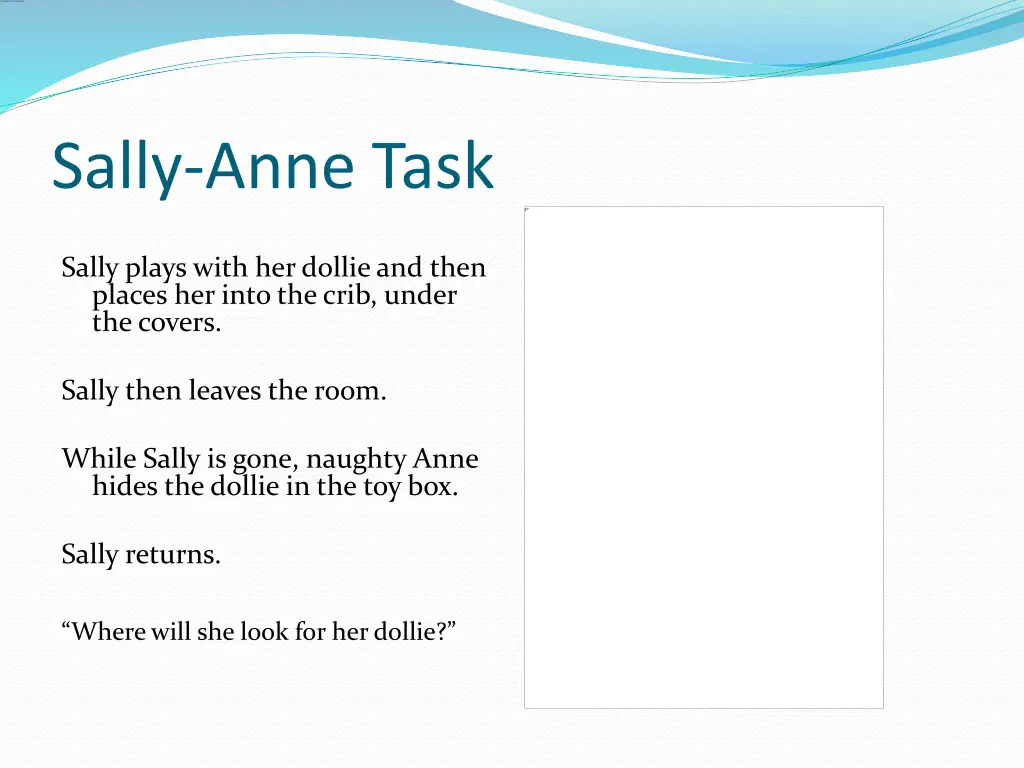
Sally-Anne Task Sally plays with her dollieand then places her into the crib, under the covers. Sally then leaves the room. While Sally is gone, naughty Anne hides the dollie in the toy box. Sally returns. Where will she look for her dollie?
Discussion of Sally-Anne Task Consistent and significant results over many studies 4-year-olds answer correctly; 3-year-olds do not Do you think this is good evidence of ToM? Why do 3-year-olds fail this task? Are 3-year-olds capable of a ToM? What could be done differently?
Spontaneous-response tasks Violation of Expectations Measure looking time Onishi & Baillargeon, 2005
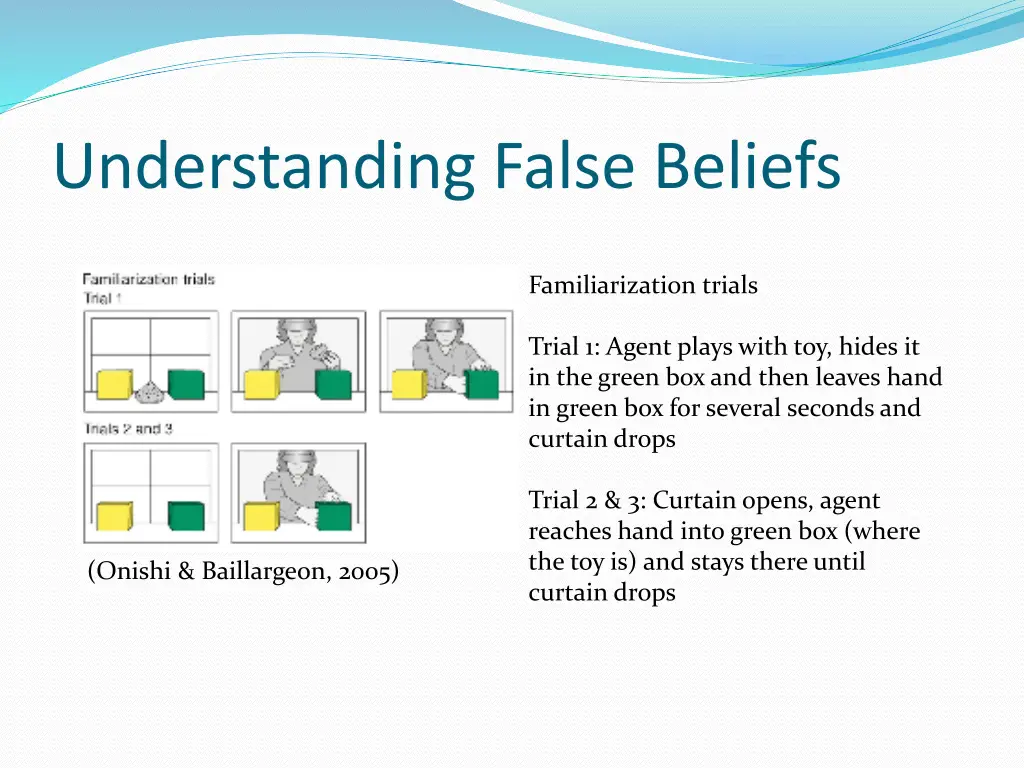
Understanding False Beliefs Familiarization trials Trial 1: Agent plays with toy, hides it in the green box and then leaves hand in green box for several seconds and curtain drops Trial 2 & 3: Curtain opens, agent reaches hand into green box (where the toy is) and stays there until curtain drops (Onishi & Baillargeon, 2005)
True Belief Expected Agent watches while the toy moves from the green to yellow box TB-yellow
False Belief Same as TB-yellow but then toy shifts to the green box when the agent is not watching FB-yellow Unexpected
ToM in 18-month-olds? Current Research Baillargeon reading In This Lab Helping Task Looking Time Task
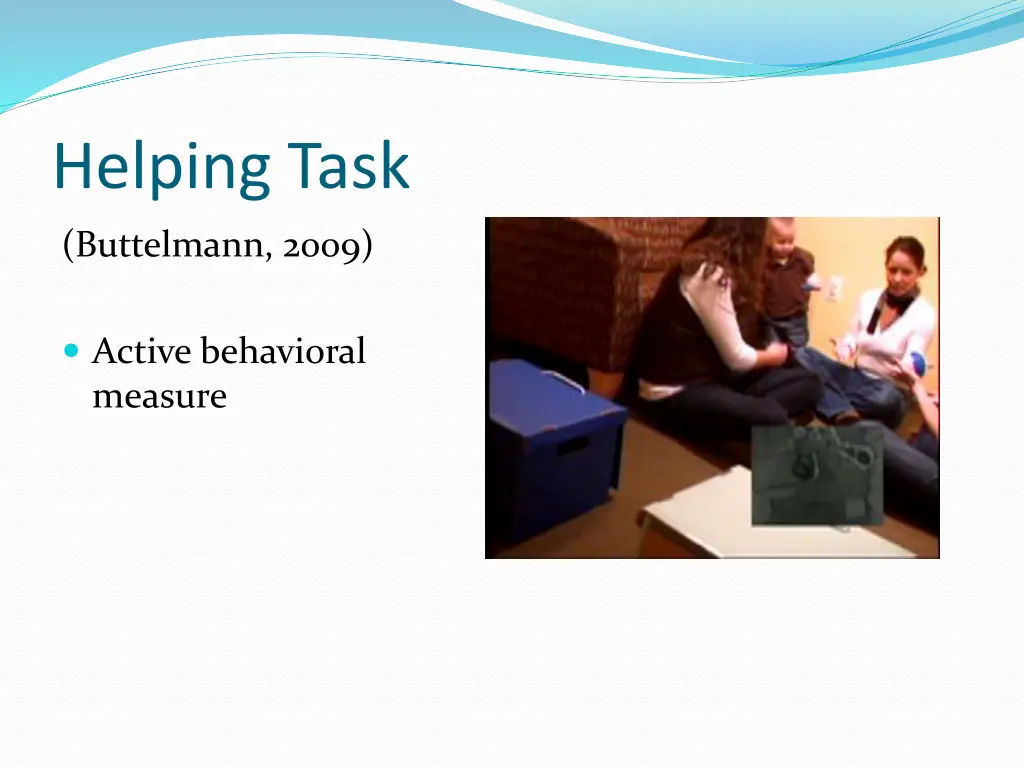
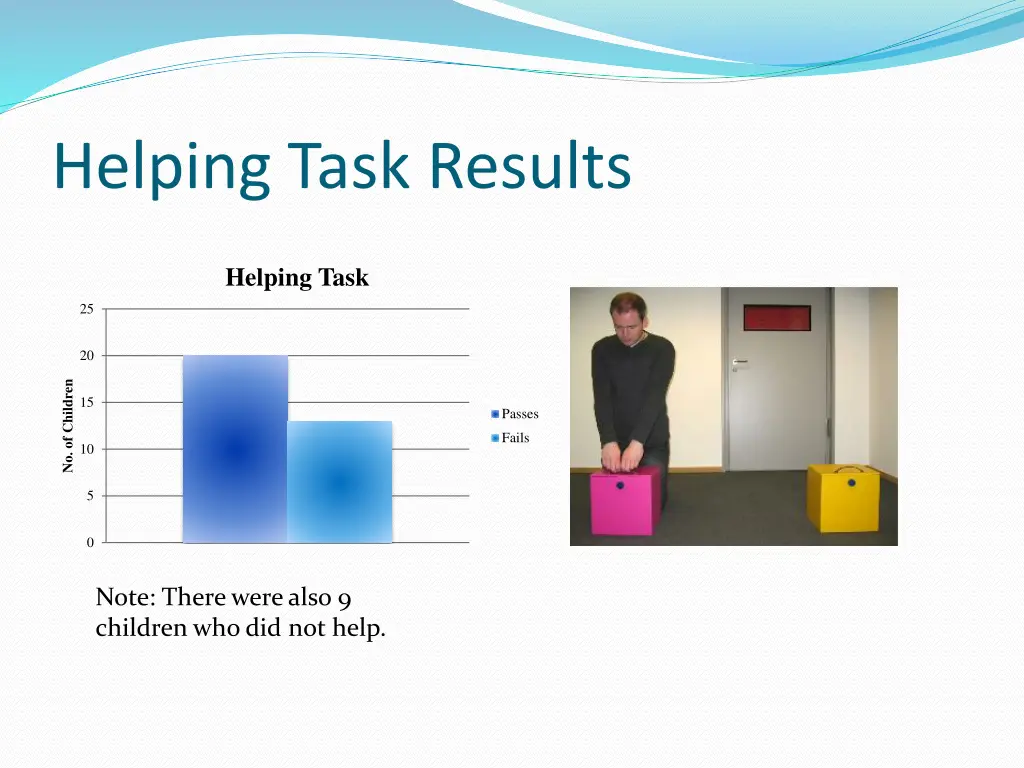
Helping Task (Buttelmann, 2009) Active behavioral measure
Looking Time Task in Our Lab Onishi & Baillargeon design
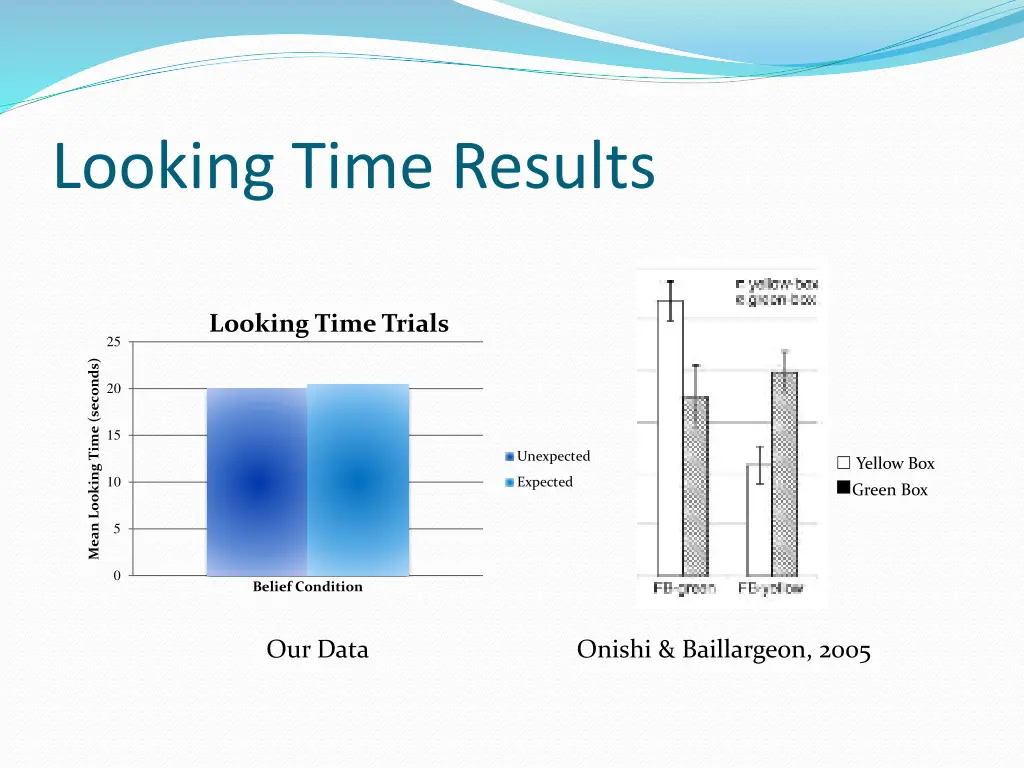
Looking Time Results Looking Time Trials 25 Mean Looking Time (seconds) 20 15 Unexpected Yellow Box Green Box 10 Expected 5 0 Belief Condition Our Data Onishi & Baillargeon, 2005
Helping Task Results Helping Task 25 20 No. of Children 15 Passes Fails 10 5 0 Note: There were also 9 children who did not help.
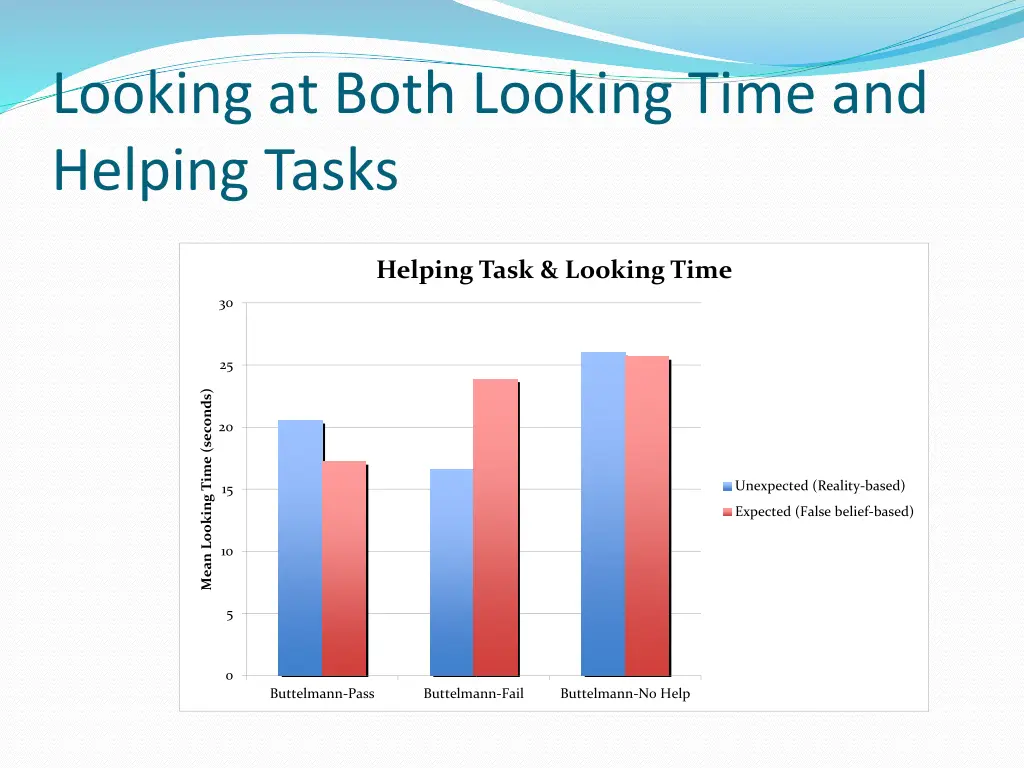
Looking at Both Looking Time and Helping Tasks Helping Task & Looking Time 30 25 Mean Looking Time (seconds) 20 Unexpected (Reality-based) 15 Expected (False belief-based) 10 5 0 Buttelmann-Pass Buttelmann-Fail Buttelmann-No Help
Discussion Recap Theory of mind Studies Thoughts?