Learn about ulcerative colitis, an autoimmune disease affecting the large intestine. Explore its signs, symptoms, epidemiology, pathogenesis, and diagnostic methods. Understand the impact of ulcerative colitis on individuals and how it can be managed effectively.
Please find below an Image/Link to download the presentation.
The content on the website is provided AS IS for your information and personal use only. It may not be sold, licensed, or shared on other websites without obtaining consent from the author. If you encounter any issues during the download, it is possible that the publisher has removed the file from their server.
You are allowed to download the files provided on this website for personal or commercial use, subject to the condition that they are used lawfully. All files are the property of their respective owners.
The content on the website is provided AS IS for your information and personal use only. It may not be sold, licensed, or shared on other websites without obtaining consent from the author.
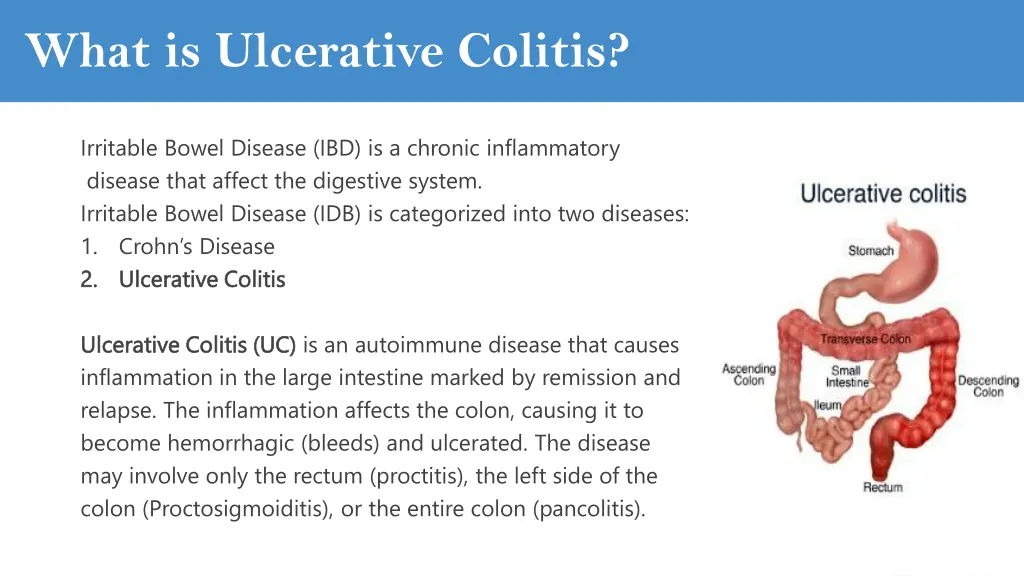
What is Ulcerative Colitis? Irritable Bowel Disease (IBD) is a chronic inflammatory disease that affect the digestive system. Irritable Bowel Disease (IDB) is categorized into two diseases: 1. Crohn s Disease 2. 2. Ulcerative Colitis Ulcerative Colitis Ulcerative Colitis (UC) Ulcerative Colitis (UC) is an autoimmune disease that causes inflammation in the large intestine marked by remission and relapse. The inflammation affects the colon, causing it to become hemorrhagic (bleeds) and ulcerated. The disease may involve only the rectum (proctitis), the left side of the colon (Proctosigmoiditis), or the entire colon (pancolitis).
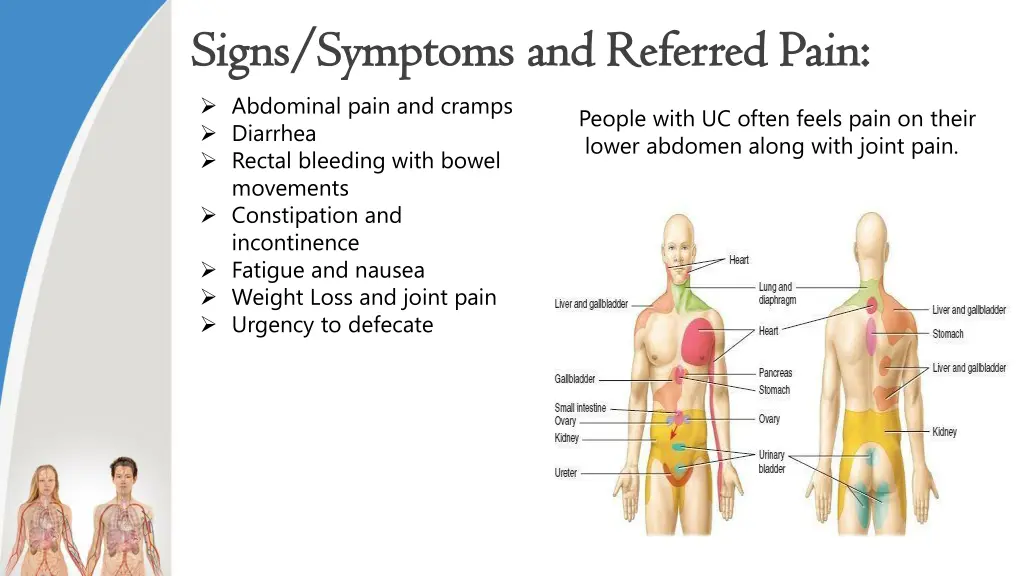
Signs/Symptoms and Referred Pain: Signs/Symptoms and Referred Pain: Abdominal pain and cramps Diarrhea Rectal bleeding with bowel movements Constipation and incontinence Fatigue and nausea Weight Loss and joint pain Urgency to defecate People with UC often feels pain on their lower abdomen along with joint pain.
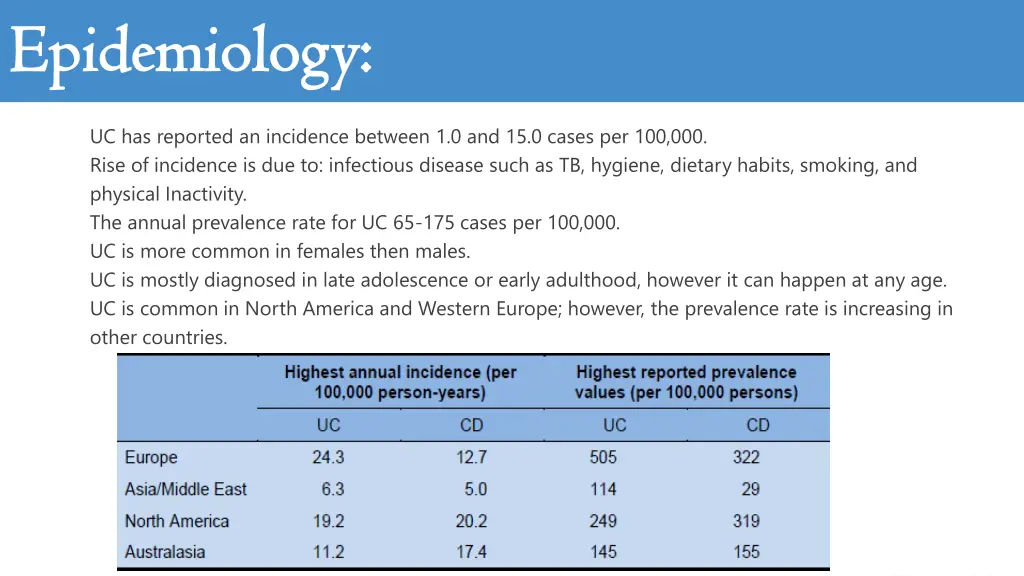
Epidemiology: Epidemiology: UC has reported an incidence between 1.0 and 15.0 cases per 100,000. Rise of incidence is due to: infectious disease such as TB, hygiene, dietary habits, smoking, and physical Inactivity. The annual prevalence rate for UC 65-175 cases per 100,000. UC is more common in females then males. UC is mostly diagnosed in late adolescence or early adulthood, however it can happen at any age. UC is common in North America and Western Europe; however, the prevalence rate is increasing in other countries.
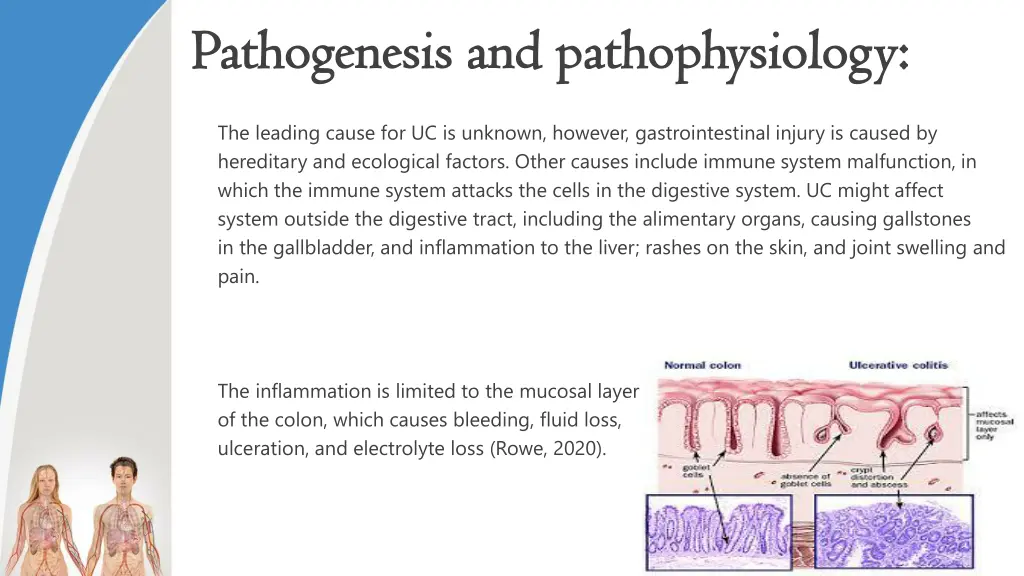
Pathogenesis and pathophysiology Pathogenesis and pathophysiology:: The leading cause for UC is unknown, however, gastrointestinal injury is caused by hereditary and ecological factors. Other causes include immune system malfunction, in which the immune system attacks the cells in the digestive system. UC might affect system outside the digestive tract, including the alimentary organs, causing gallstones in the gallbladder, and inflammation to the liver; rashes on the skin, and joint swelling and pain. The inflammation is limited to the mucosal layer of the colon, which causes bleeding, fluid loss, ulceration, and electrolyte loss (Rowe, 2020).
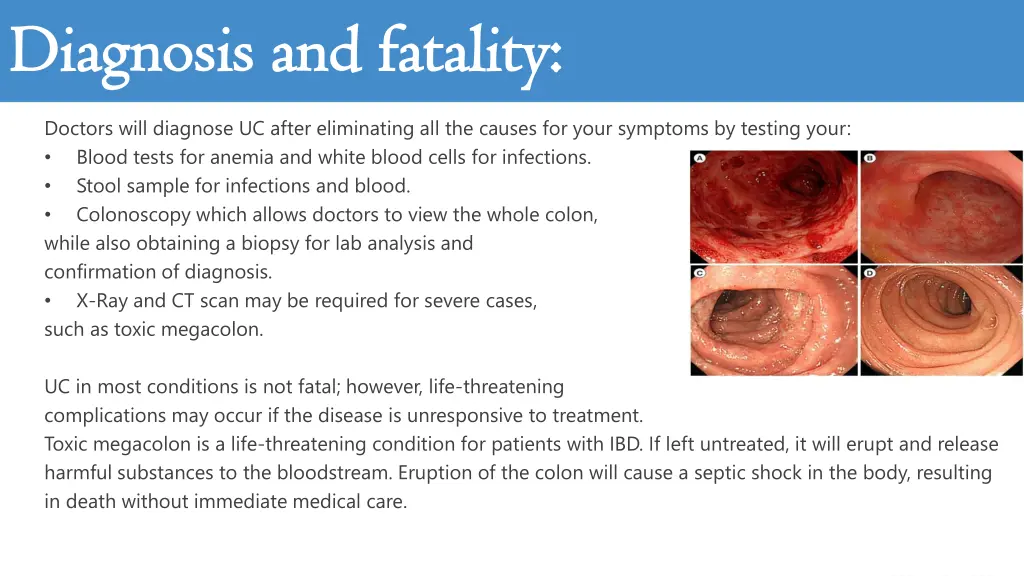
Diagnosis and fatality: Diagnosis and fatality: Doctors will diagnose UC after eliminating all the causes for your symptoms by testing your: Blood tests for anemia and white blood cells for infections. Stool sample for infections and blood. Colonoscopy which allows doctors to view the whole colon, while also obtaining a biopsy for lab analysis and confirmation of diagnosis. X-Ray and CT scan may be required for severe cases, such as toxic megacolon. UC in most conditions is not fatal; however, life-threatening complications may occur if the disease is unresponsive to treatment. Toxic megacolon is a life-threatening condition for patients with IBD. If left untreated, it will erupt and release harmful substances to the bloodstream. Eruption of the colon will cause a septic shock in the body, resulting in death without immediate medical care.
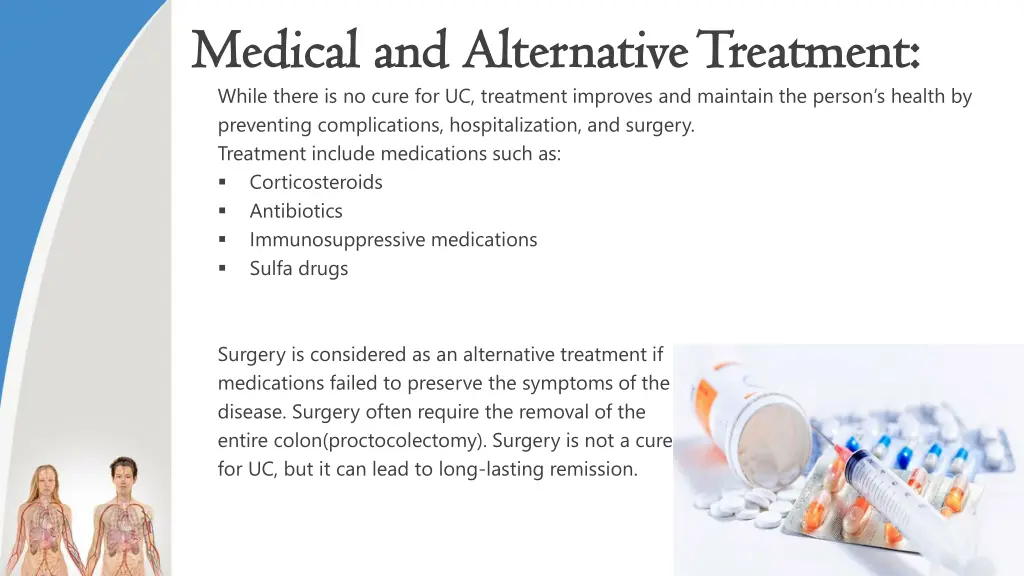
Medical and Alternative Treatment: Medical and Alternative Treatment: While there is no cure for UC, treatment improves and maintain the person s health by preventing complications, hospitalization, and surgery. Treatment include medications such as: Corticosteroids Antibiotics Immunosuppressive medications Sulfa drugs Surgery is considered as an alternative treatment if medications failed to preserve the symptoms of the disease. Surgery often require the removal of the entire colon(proctocolectomy). Surgery is not a cure for UC, but it can lead to long-lasting remission.
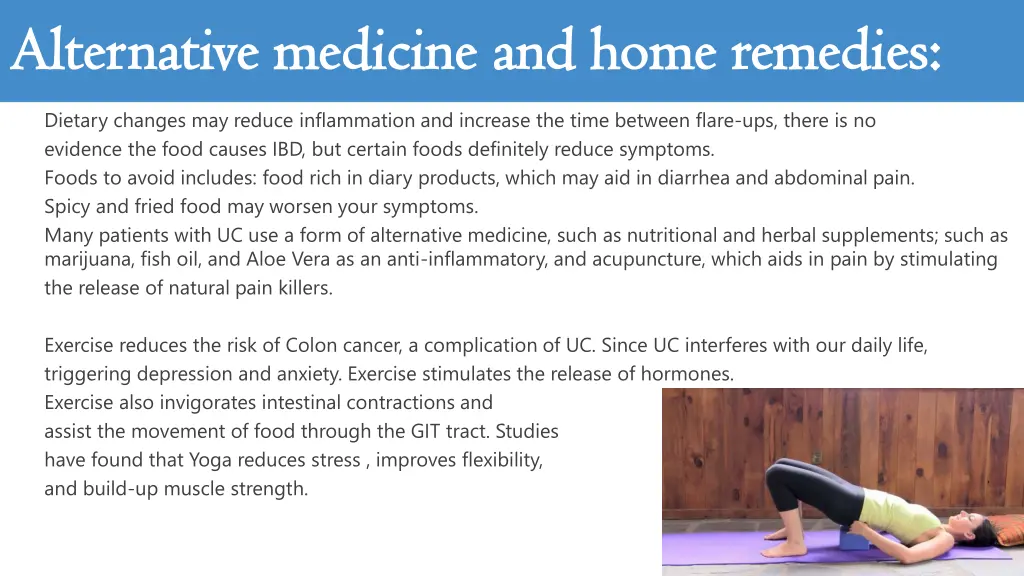
Alternative medicine and home remedies: Alternative medicine and home remedies: Dietary changes may reduce inflammation and increase the time between flare-ups, there is no evidence the food causes IBD, but certain foods definitely reduce symptoms. Foods to avoid includes: food rich in diary products, which may aid in diarrhea and abdominal pain. Spicy and fried food may worsen your symptoms. Many patients with UC use a form of alternative medicine, such as nutritional and herbal supplements; such as marijuana, fish oil, and Aloe Vera as an anti-inflammatory, and acupuncture, which aids in pain by stimulating the release of natural pain killers. Exercise reduces the risk of Colon cancer, a complication of UC. Since UC interferes with our daily life, triggering depression and anxiety. Exercise stimulates the release of hormones. Exercise also invigorates intestinal contractions and assist the movement of food through the GIT tract. Studies have found that Yoga reduces stress , improves flexibility, and build-up muscle strength.
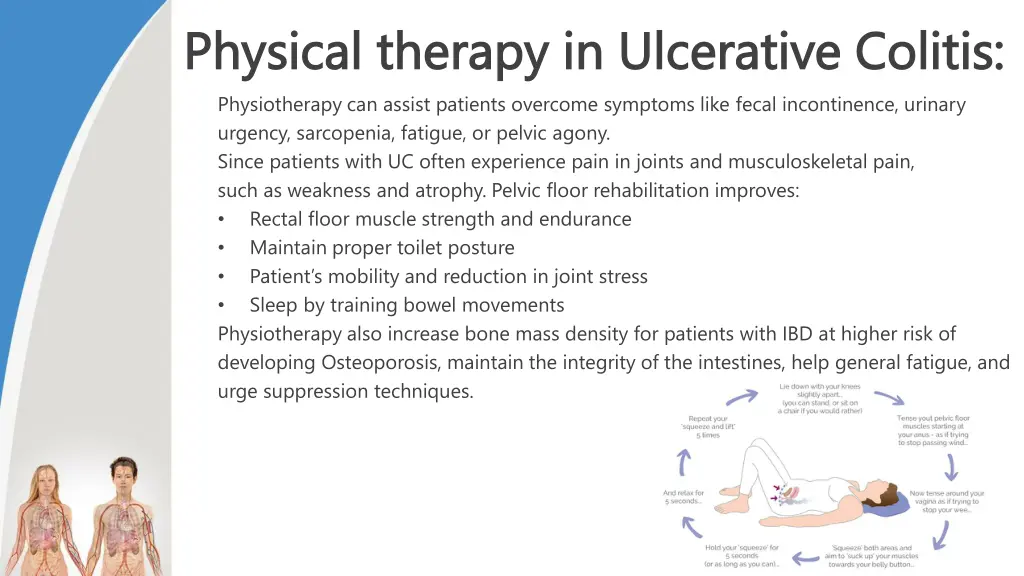
Physical therapy in Ulcerative Colitis: Physical therapy in Ulcerative Colitis: Physiotherapy can assist patients overcome symptoms like fecal incontinence, urinary urgency, sarcopenia, fatigue, or pelvic agony. Since patients with UC often experience pain in joints and musculoskeletal pain, such as weakness and atrophy. Pelvic floor rehabilitation improves: Rectal floor muscle strength and endurance Maintain proper toilet posture Patient s mobility and reduction in joint stress Sleep by training bowel movements Physiotherapy also increase bone mass density for patients with IBD at higher risk of developing Osteoporosis, maintain the integrity of the intestines, help general fatigue, and urge suppression techniques.
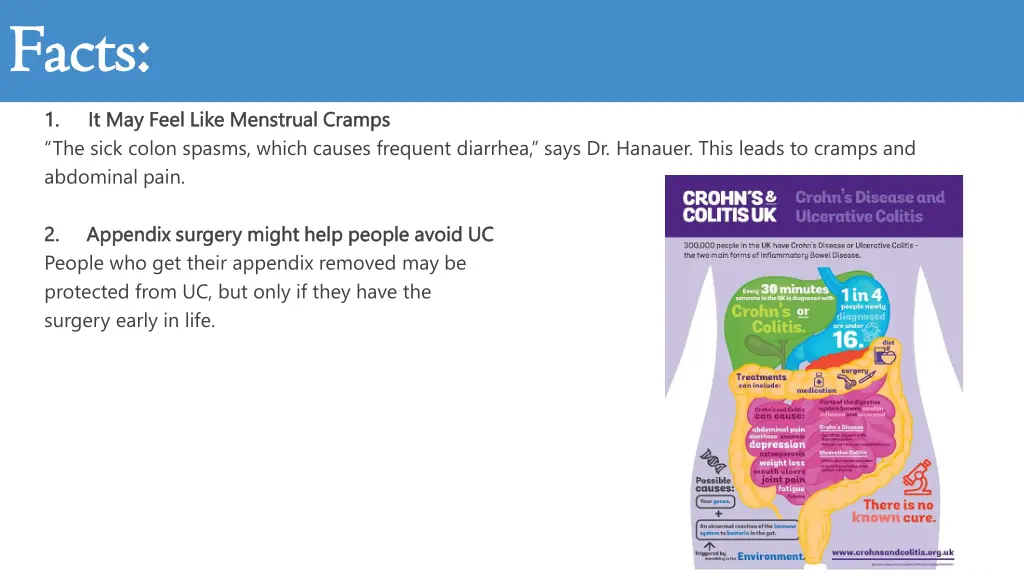
Facts: Facts: 1. 1. The sick colon spasms, which causes frequent diarrhea, says Dr. Hanauer. This leads to cramps and abdominal pain. It It May Feel Like Menstrual Cramps May Feel Like Menstrual Cramps 2. Appendix surgery might help people avoid UC 2. Appendix surgery might help people avoid UC People who get their appendix removed may be protected from UC, but only if they have the surgery early in life.