Undulator-Based Polarized Positron Source for Circular Electron-Positron Colliders
Explore the innovative approach of using undulators for polarized positron production in circular colliders, presented during a seminar at Tsinghua University and ANL. Learn about the comparison with conventional methods and the potential advantages for the future of collider projects like CEPC and FCC. Discover how a combination of undulator-based and Compton ring-based schemes could simplify the overall configuration of such colliders.

Download Presentation

Please find below an Image/Link to download the presentation.
The content on the website is provided AS IS for your information and personal use only. It may not be sold, licensed, or shared on other websites without obtaining consent from the author. If you encounter any issues during the download, it is possible that the publisher has removed the file from their server.
You are allowed to download the files provided on this website for personal or commercial use, subject to the condition that they are used lawfully. All files are the property of their respective owners.
The content on the website is provided AS IS for your information and personal use only. It may not be sold, licensed, or shared on other websites without obtaining consent from the author.
E N D
Presentation Transcript
Undulator based polarized positron source for Circular electron-positron colliders Wei Gai Tsinghua University/ANL a seminar for IHEP, 4/8/2015
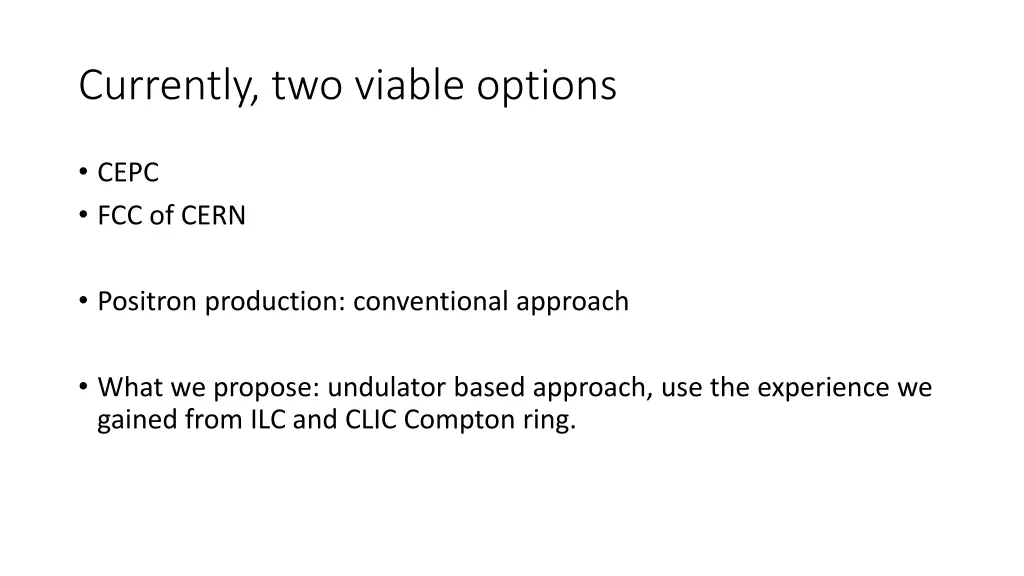
Currently, two viable options CEPC FCC of CERN Positron production: conventional approach What we propose: undulator based approach, use the experience we gained from ILC and CLIC Compton ring.
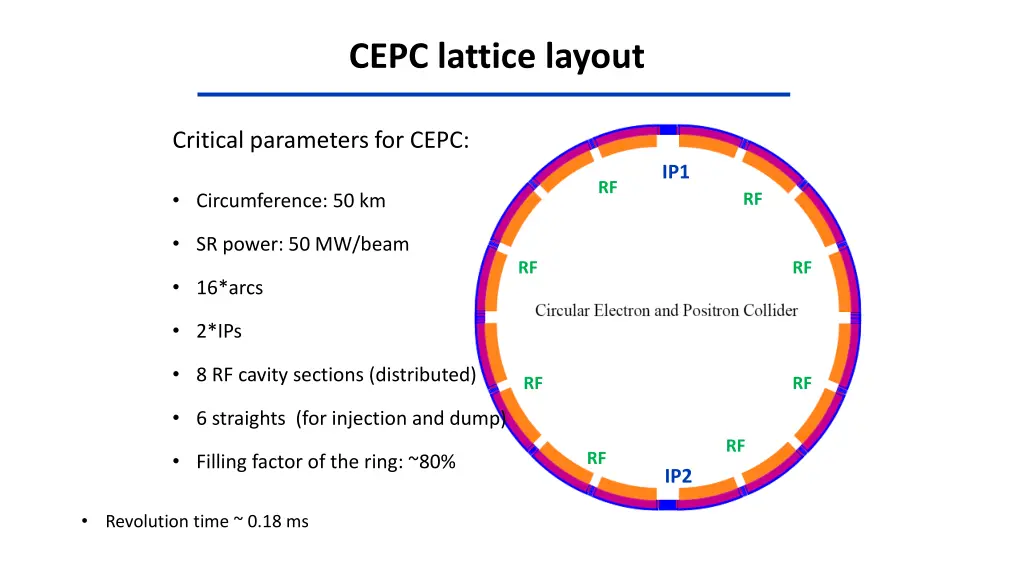
CEPC lattice layout Critical parameters for CEPC: IP1 RF Circumference: 50 km RF SR power: 50 MW/beam RF RF 16*arcs 2*IPs 8 RF cavity sections (distributed) RF RF 6 straights (for injection and dump) RF Filling factor of the ring: ~80% RF IP2 Revolution time ~ 0.18 ms
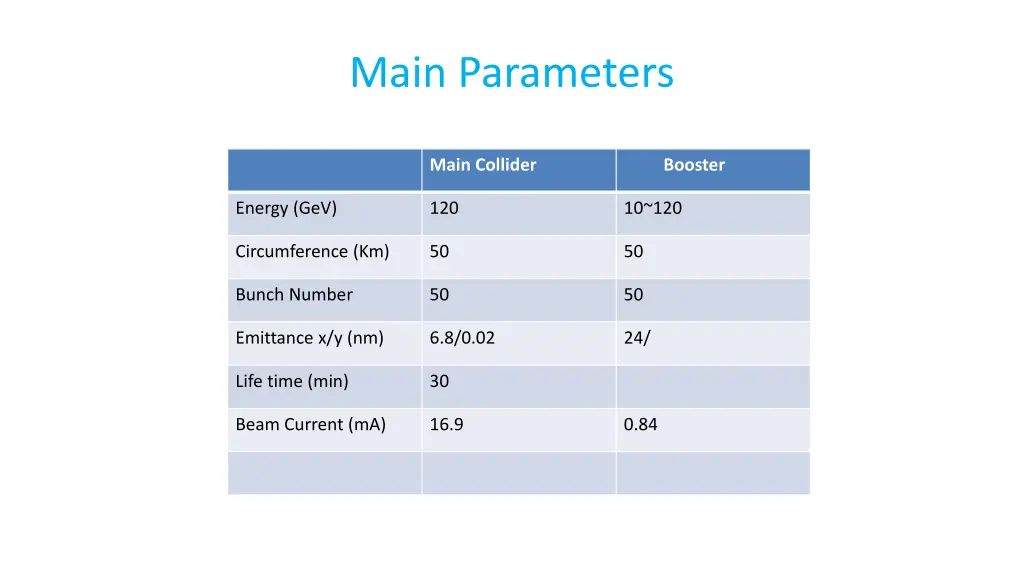
Main Parameters Main Collider Booster Energy (GeV) 120 10~120 Circumference (Km) 50 50 Bunch Number 50 50 Emittance x/y (nm) 6.8/0.02 24/ Life time (min) 30 Beam Current (mA) 16.9 0.84
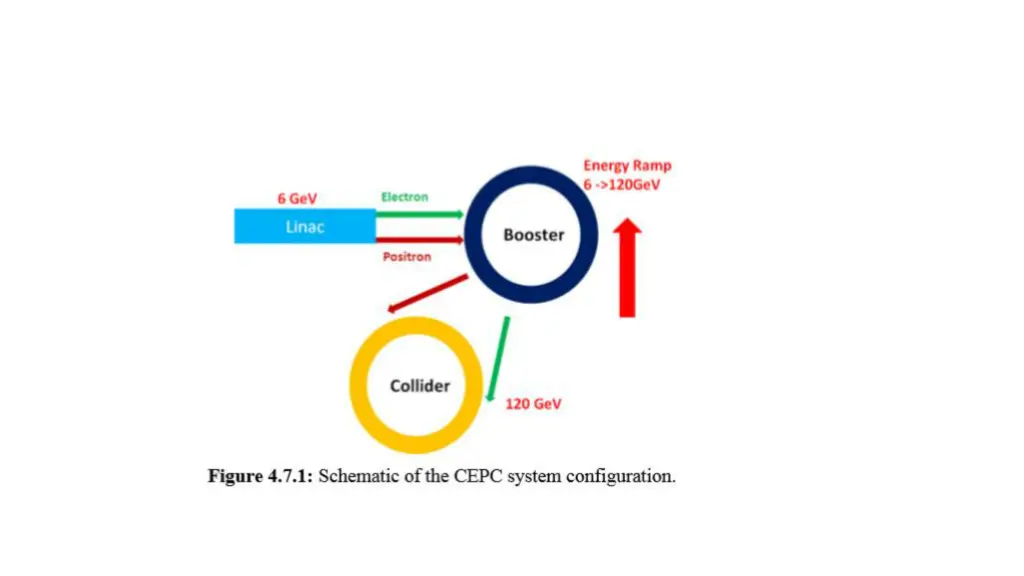
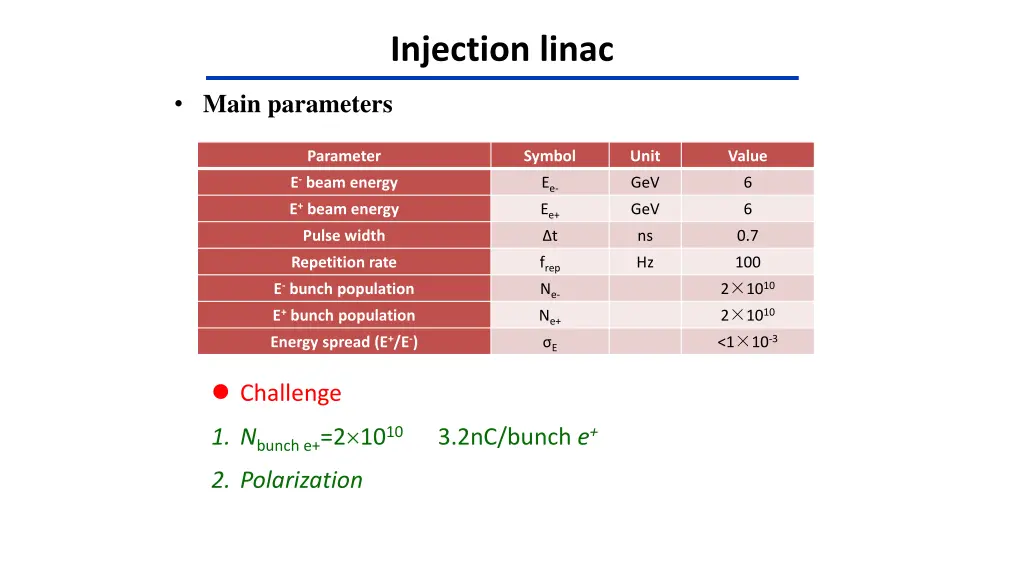
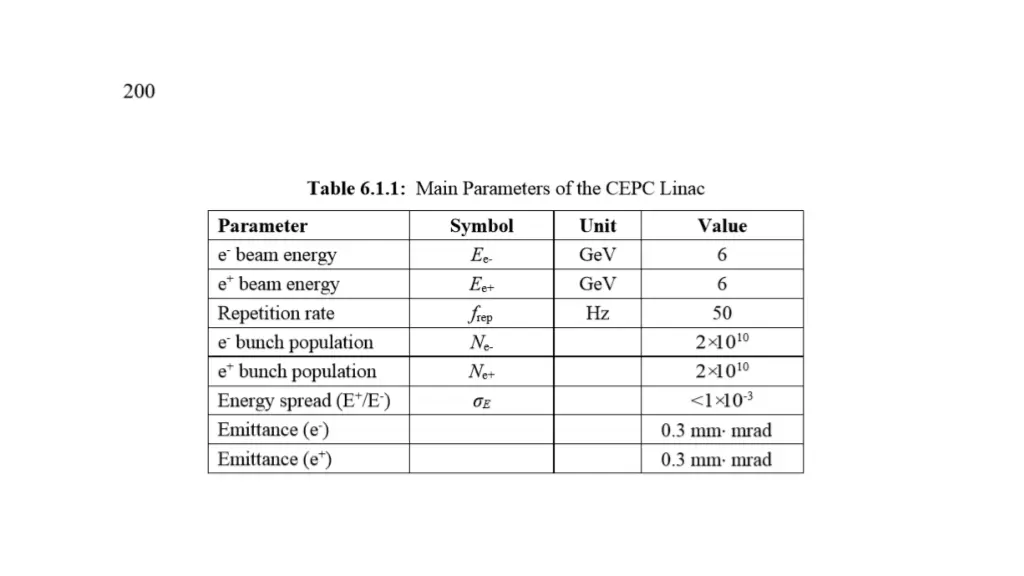
Injection linac Main parameters Parameter Symbol Unit Value E-beam energy Ee- Ee+ t GeV 6 E+beam energy GeV 6 Pulse width ns 0.7 Repetition rate frep Ne- Ne+ E Hz 100 2 1010 2 1010 <1 10-3 E-bunch population E+bunch population Energy spread (E+/E-) Challenge 1. Nbunch e+=2 1010 3.2nC/bunch e+ 2. Polarization
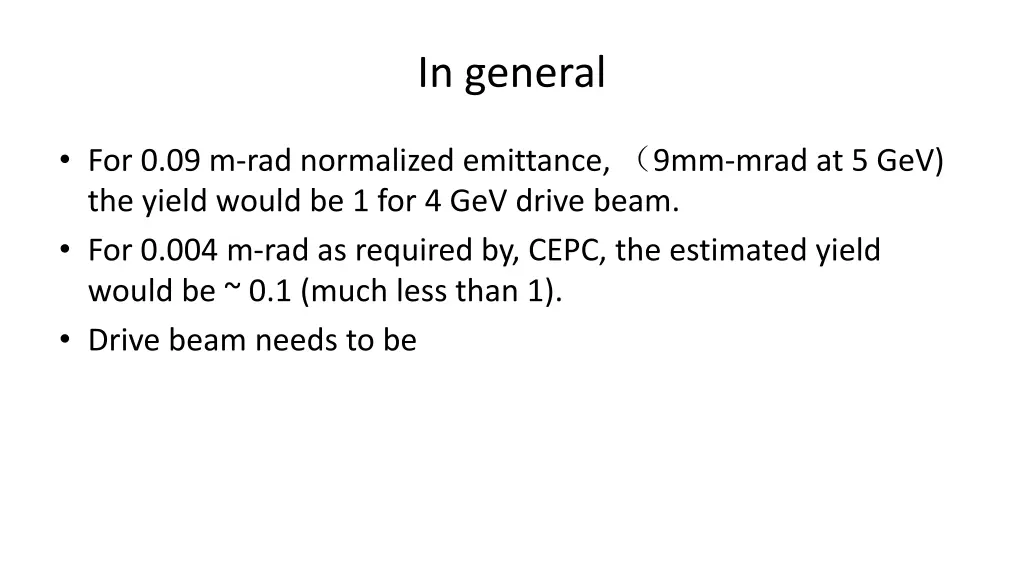
In general For 0.09 m-rad normalized emittance, 9mm-mrad at 5 GeV) the yield would be 1 for 4 GeV drive beam. For 0.004 m-rad as required by, CEPC, the estimated yield would be ~ 0.1 (much less than 1). Drive beam needs to be
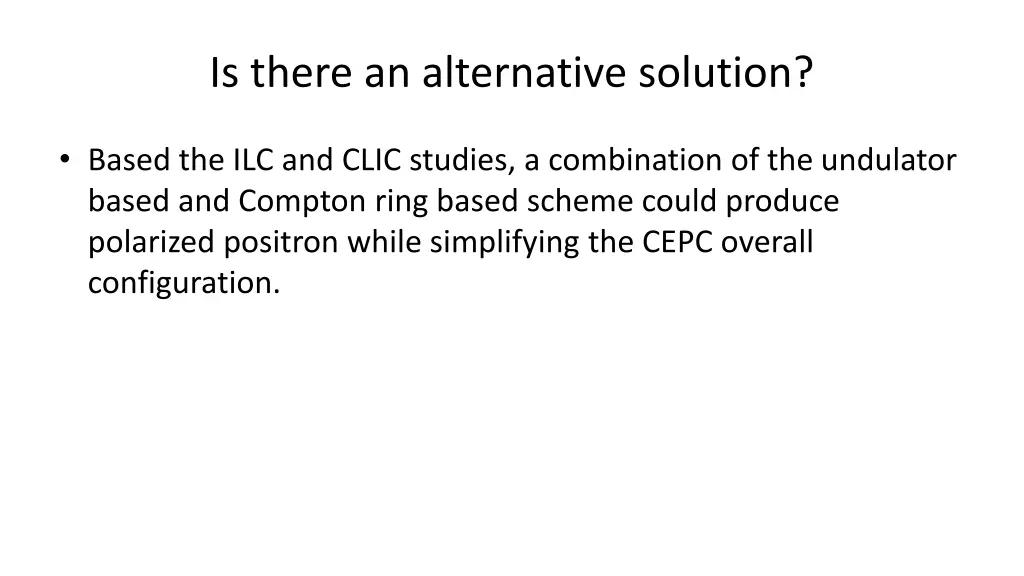
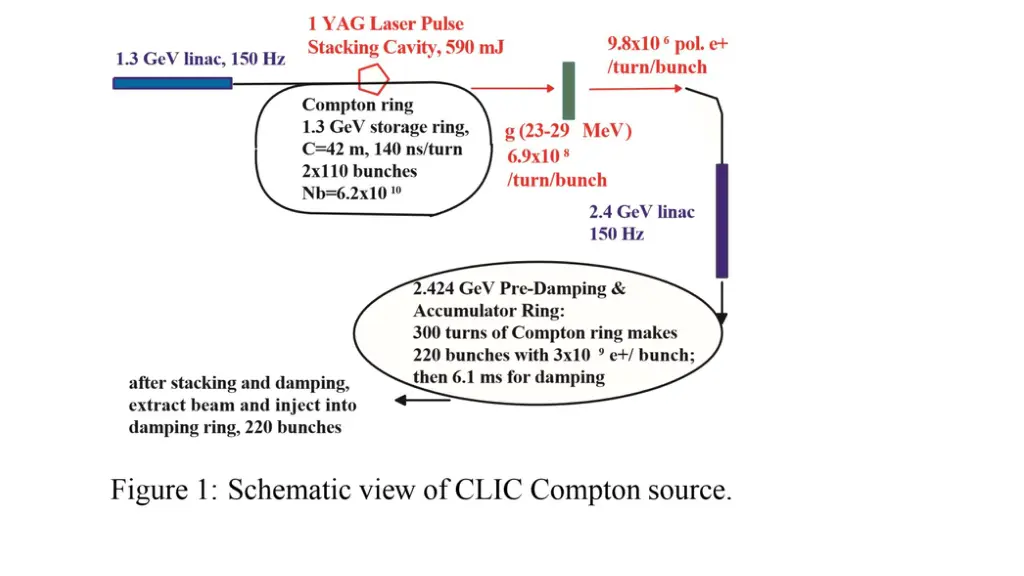
Is there an alternative solution? Based the ILC and CLIC studies, a combination of the undulator based and Compton ring based scheme could produce polarized positron while simplifying the CEPC overall configuration.
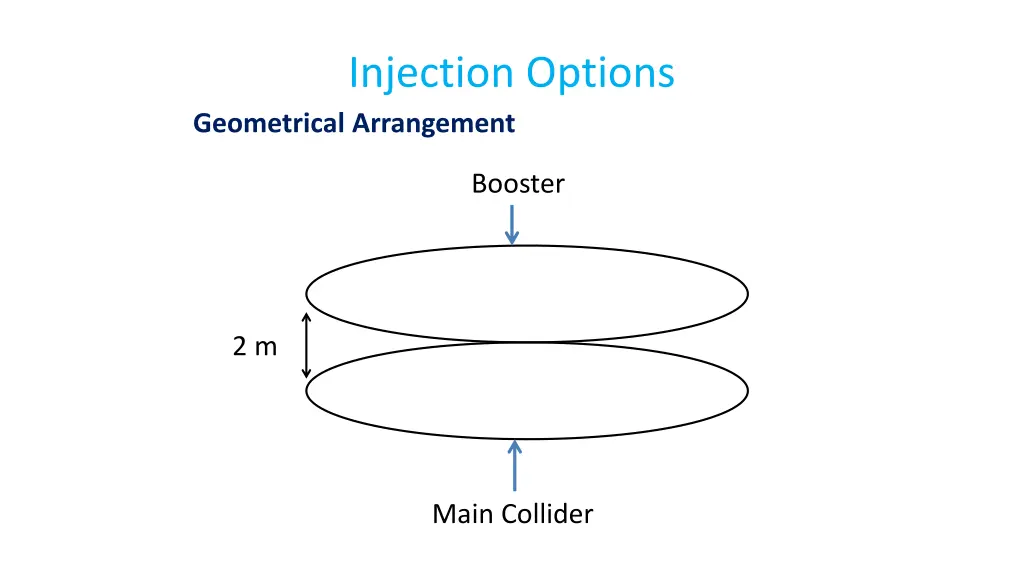
Injection Options Geometrical Arrangement Booster 2 m Main Collider
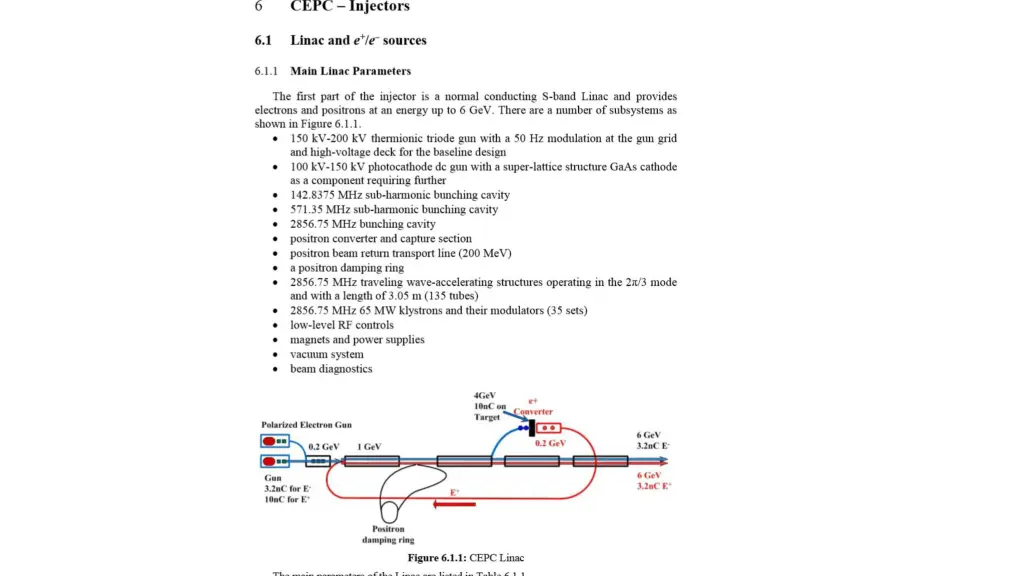
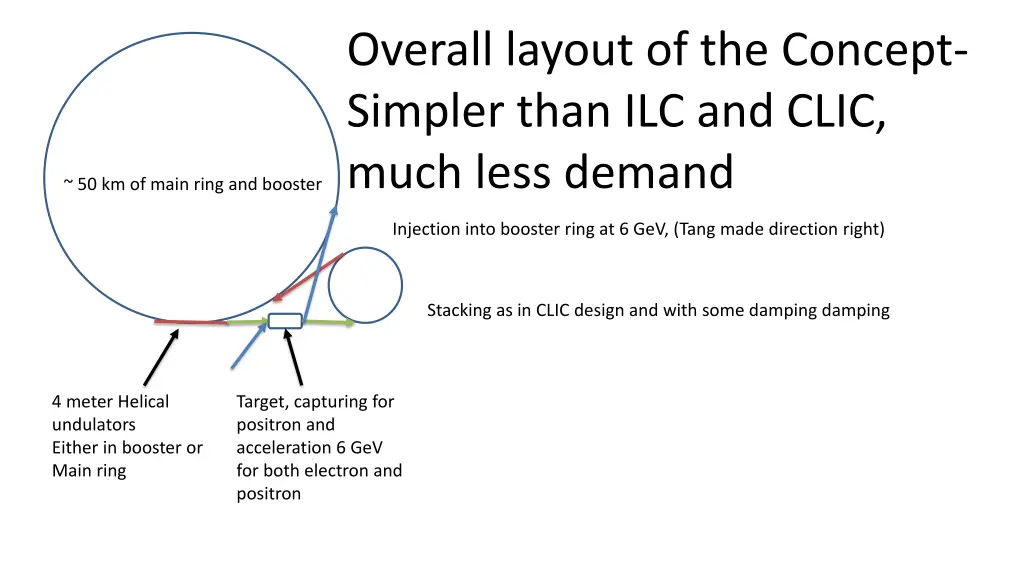
Overall layout of the Concept- Simpler than ILC and CLIC, much less demand ~ 50 km of main ring and booster Injection into booster ring at 6 GeV, (Tang made direction right) Stacking as in CLIC design and with some damping damping 4 meter Helical undulators Either in booster or Main ring Target, capturing for positron and acceleration 6 GeV for both electron and positron
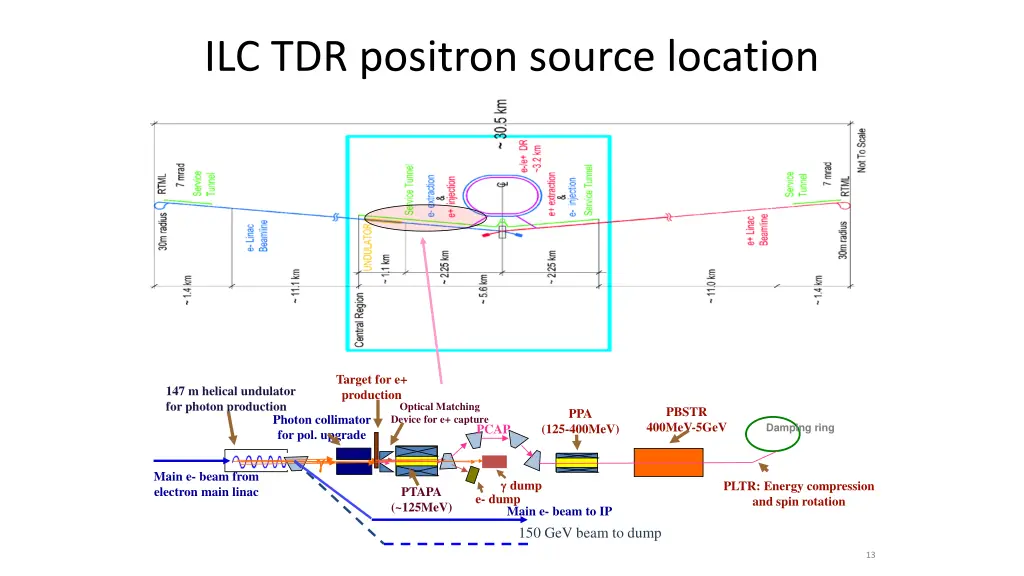
ILC TDR positron source location Target for e+ production 147 m helical undulator for photon production Optical Matching Device for e+ capture PBSTR 400MeV-5GeV PPA Photon collimator for pol. upgrade (125-400MeV) PCAP Damping ring Main e- beam from electron main linac dump PLTR: Energy compression and spin rotation PTAPA (~125MeV) e- dump Main e- beam to IP 150 GeV beam to dump 13
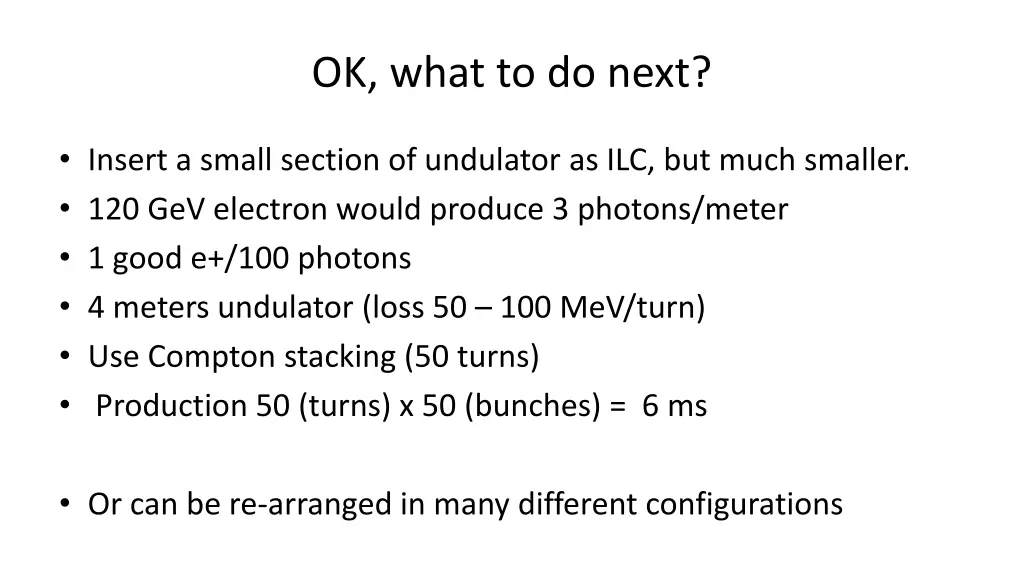
OK, what to do next? Insert a small section of undulator as ILC, but much smaller. 120 GeV electron would produce 3 photons/meter 1 good e+/100 photons 4 meters undulator (loss 50 100 MeV/turn) Use Compton stacking (50 turns) Production 50 (turns) x 50 (bunches) = 6 ms Or can be re-arranged in many different configurations
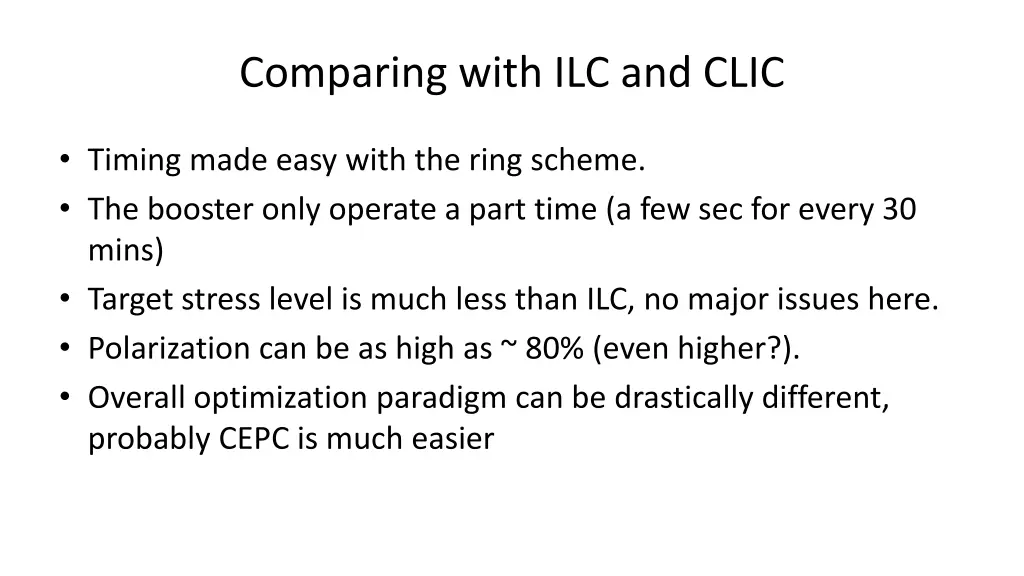
Comparing with ILC and CLIC Timing made easy with the ring scheme. The booster only operate a part time (a few sec for every 30 mins) Target stress level is much less than ILC, no major issues here. Polarization can be as high as ~ 80% (even higher?). Overall optimization paradigm can be drastically different, probably CEPC is much easier
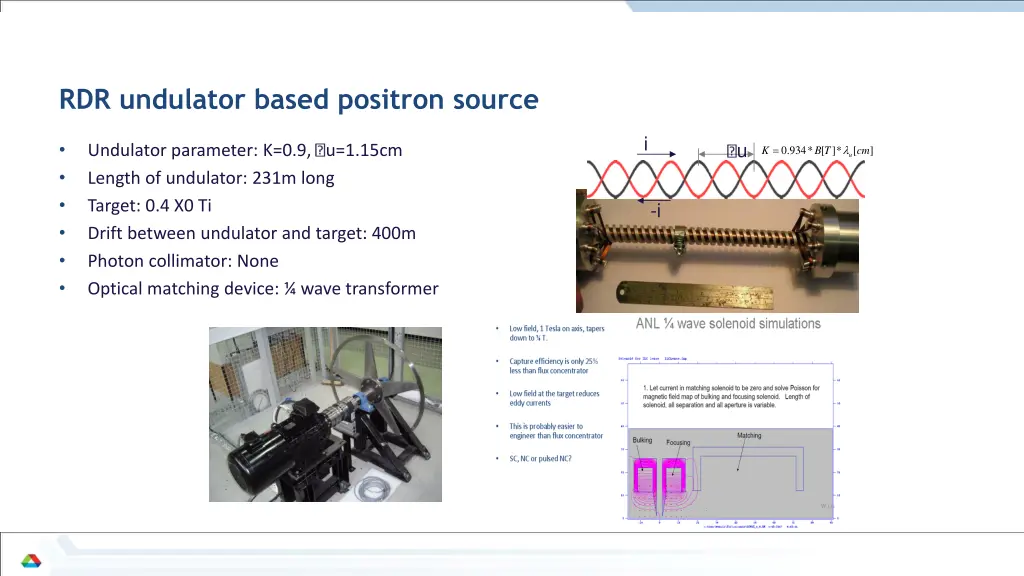
RDR undulator based positron source i u Undulator parameter: K=0.9, u=1.15cm Length of undulator: 231m long Target: 0.4 X0 Ti Drift between undulator and target: 400m Photon collimator: None Optical matching device: wave transformer = u . 0 934 * [ * ] T [ ] K B cm -i
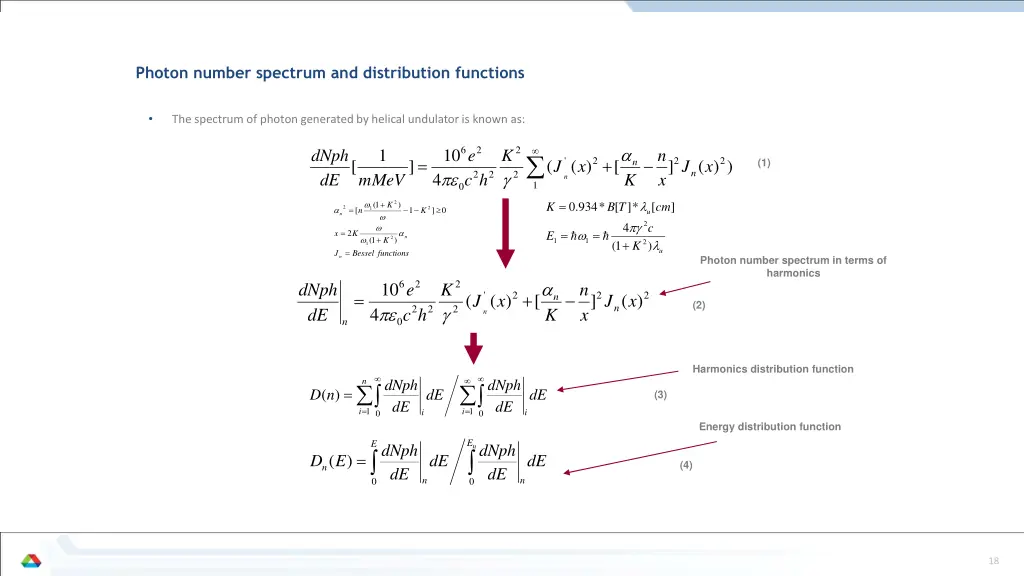
Photon number spectrum and distribution functions The spectrum of photon generated by helical undulator is known as: 6 2 2 1 10 dNph e K n 1 = + ' 2 2 2 [ ] ( ( ) [ ] ( ) ) n J x J x (1) n 2 2 2 4 dE m MeV c h K x n 0 = + 2 . 0 934 * [ * ] [ ] K B T cm 1 ( 1 ) K 2 = 2 [ 1 ] 0 n K u c ) n 4 + 2 = = = 2 x K E n + 2 1 ( 1 ) K 1 1 2 1 ( K u = J Bessel functions n Photon number spectrum in terms of harmonics 6 2 2 10 dNph e K n = + ' 2 2 2 ( ( ) [ ] ( ) J x J x n (2) n 2 2 2 4 dE c h K x n n 0 Harmonics distribution function n dNph dNph = 10 i = 10 i = ( ) D n dE dE (3) dE dE i i Energy distribution function E E dNph dNph n 0 0 = ( ) D E dE dE (4) n dE dE n n 18
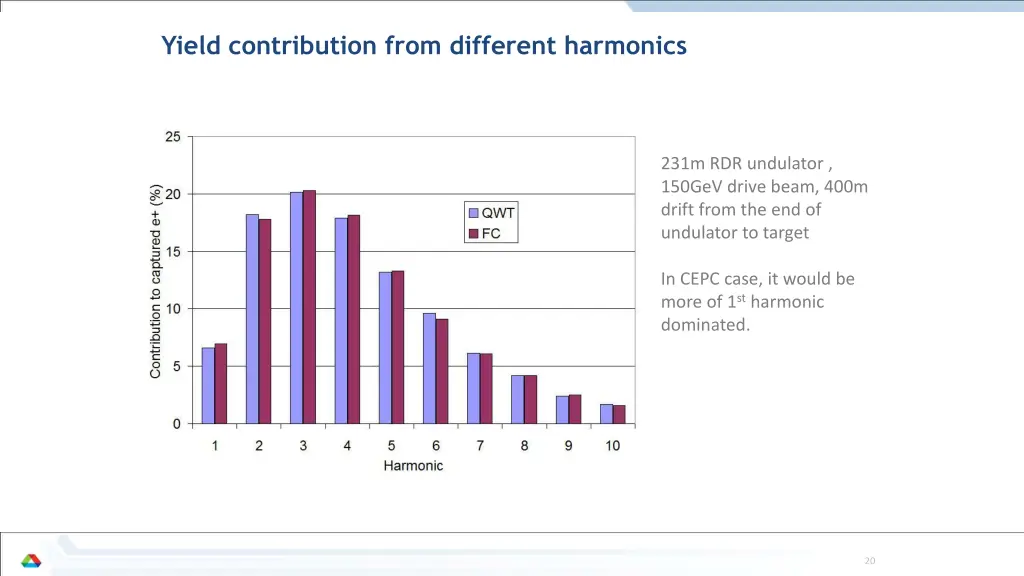
Yield contribution from different harmonics 231m RDR undulator , 150GeV drive beam, 400m drift from the end of undulator to target In CEPC case, it would be more of 1stharmonic dominated. 20
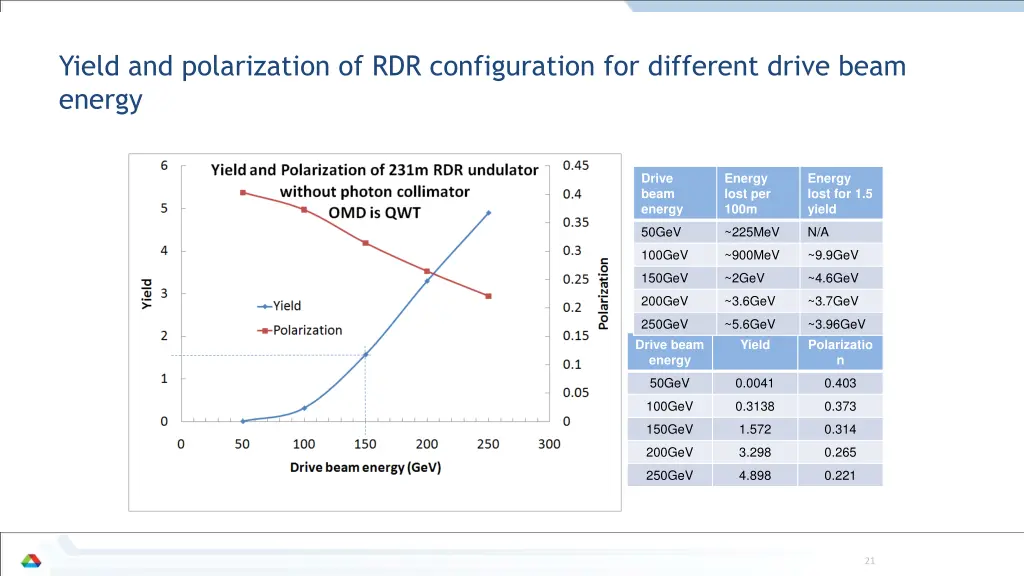
Yield and polarization of RDR configuration for different drive beam energy Drive beam energy Energy lost per 100m Energy lost for 1.5 yield 50GeV ~225MeV N/A 100GeV ~900MeV ~9.9GeV 150GeV ~2GeV ~4.6GeV 200GeV ~3.6GeV ~3.7GeV 250GeV ~5.6GeV ~3.96GeV Drive beam energy Yield Polarizatio n 50GeV 0.0041 0.403 100GeV 0.3138 0.373 150GeV 1.572 0.314 200GeV 3.298 0.265 250GeV 4.898 0.221 21
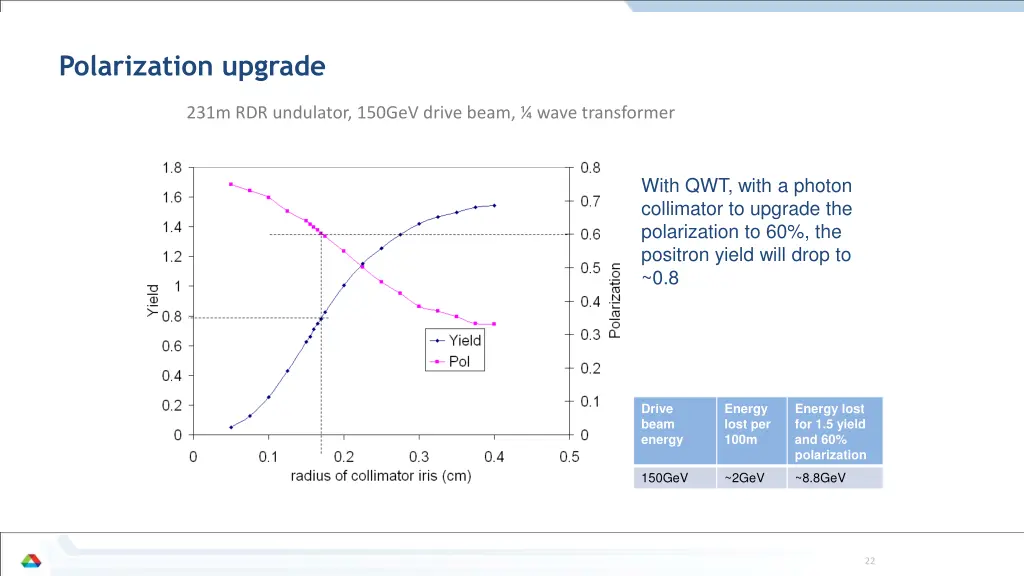
Polarization upgrade 231m RDR undulator, 150GeV drive beam, wave transformer With QWT, with a photon collimator to upgrade the polarization to 60%, the positron yield will drop to ~0.8 Drive beam energy Energy lost per 100m Energy lost for 1.5 yield and 60% polarization 150GeV ~2GeV ~8.8GeV 22
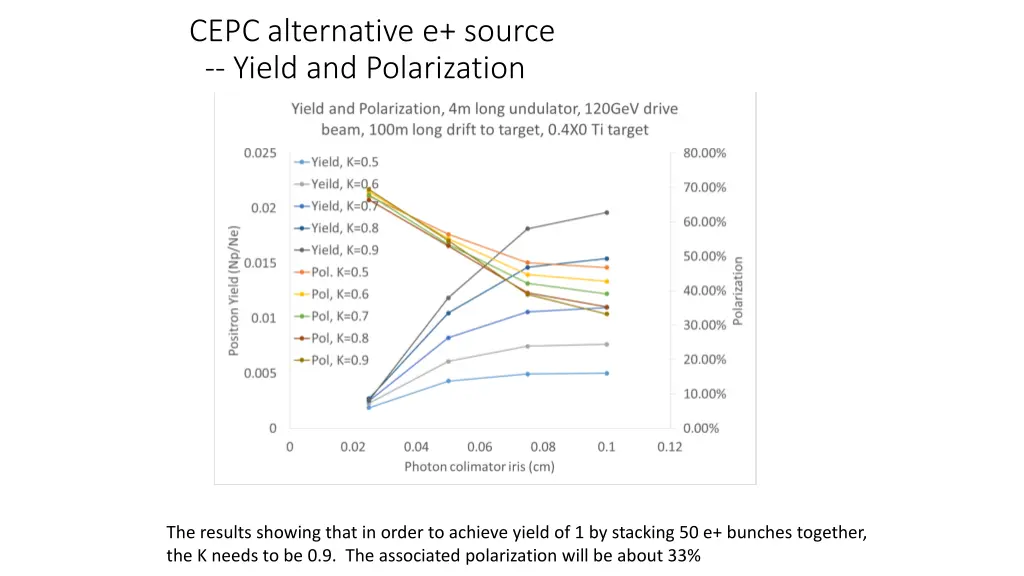
CEPC alternative e+ source -- Yield and Polarization The results showing that in order to achieve yield of 1 by stacking 50 e+ bunches together, the K needs to be 0.9. The associated polarization will be about 33%
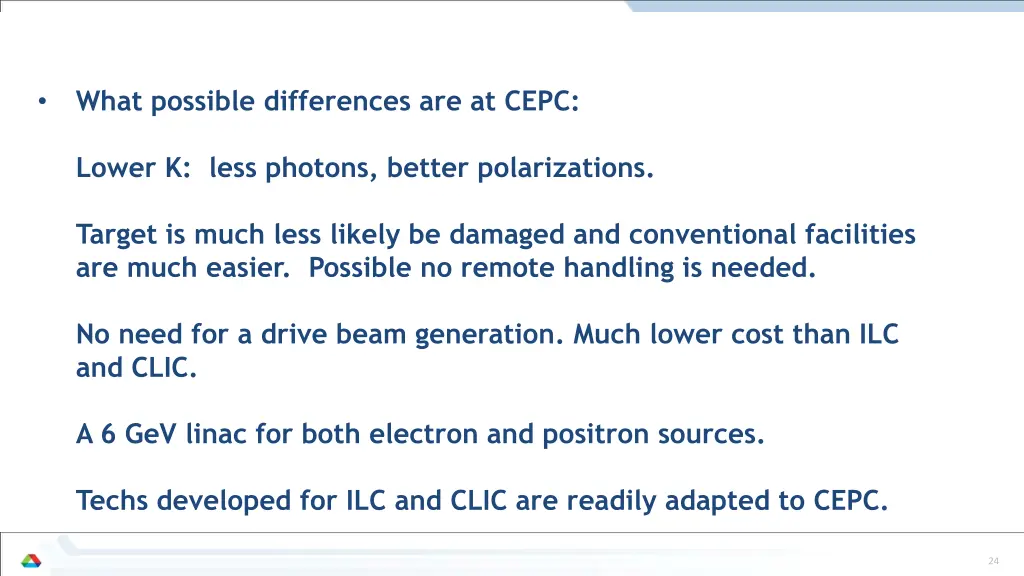
What possible differences are at CEPC: Lower K: less photons, better polarizations. Target is much less likely be damaged and conventional facilities are much easier. Possible no remote handling is needed. No need for a drive beam generation. Much lower cost than ILC and CLIC. A 6 GeV linac for both electron and positron sources. Techs developed for ILC and CLIC are readily adapted to CEPC. 24
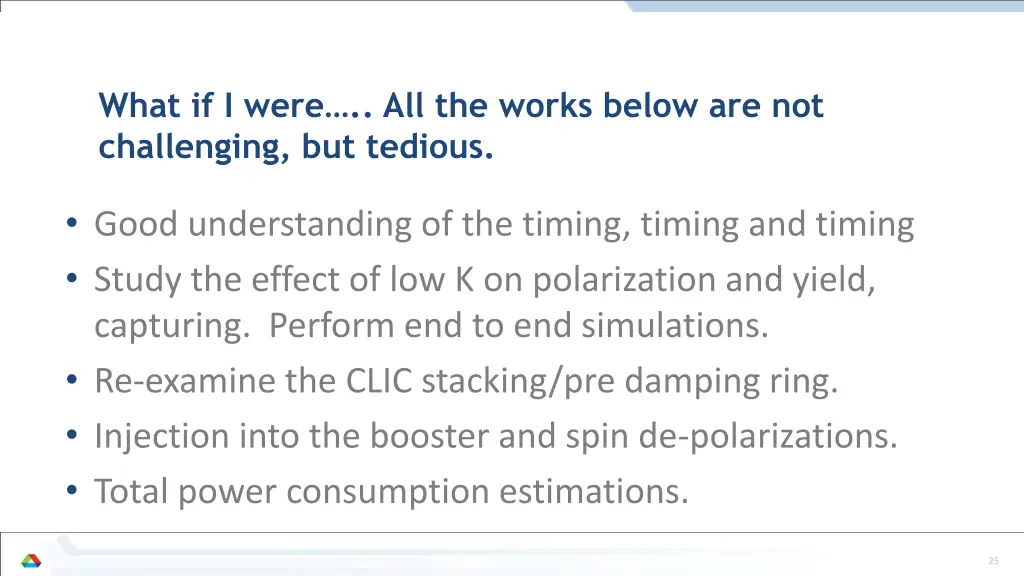
What if I were.. All the works below are not challenging, but tedious. Good understanding of the timing, timing and timing Study the effect of low K on polarization and yield, capturing. Perform end to end simulations. Re-examine the CLIC stacking/pre damping ring. Injection into the booster and spin de-polarizations. Total power consumption estimations. 25