Unit 7: Jurisprudence, Ethics and Animal Welfare
Mechanical injuries in animals from a veto-legal perspective, discussing bruises, contusions, abrasions, and their characteristics, with a focus on age of bruises and differentiation between ante-mortem and post-mortem bruises.

Download Presentation

Please find below an Image/Link to download the presentation.
The content on the website is provided AS IS for your information and personal use only. It may not be sold, licensed, or shared on other websites without obtaining consent from the author.If you encounter any issues during the download, it is possible that the publisher has removed the file from their server.
You are allowed to download the files provided on this website for personal or commercial use, subject to the condition that they are used lawfully. All files are the property of their respective owners.
The content on the website is provided AS IS for your information and personal use only. It may not be sold, licensed, or shared on other websites without obtaining consent from the author.
E N D
Presentation Transcript
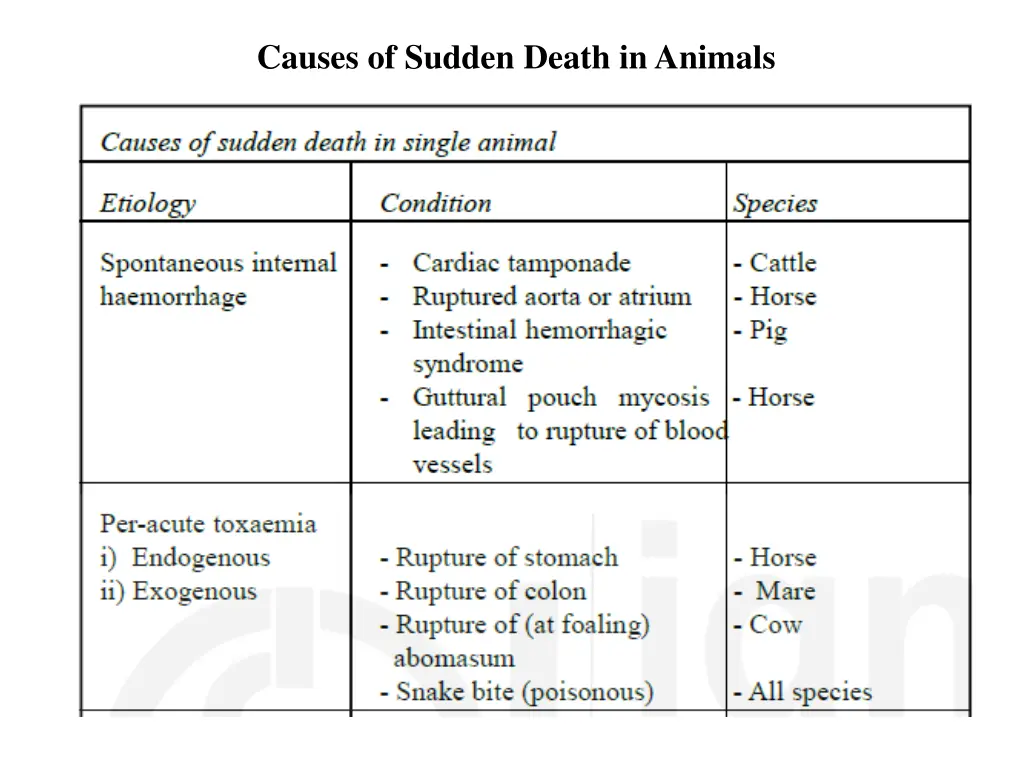
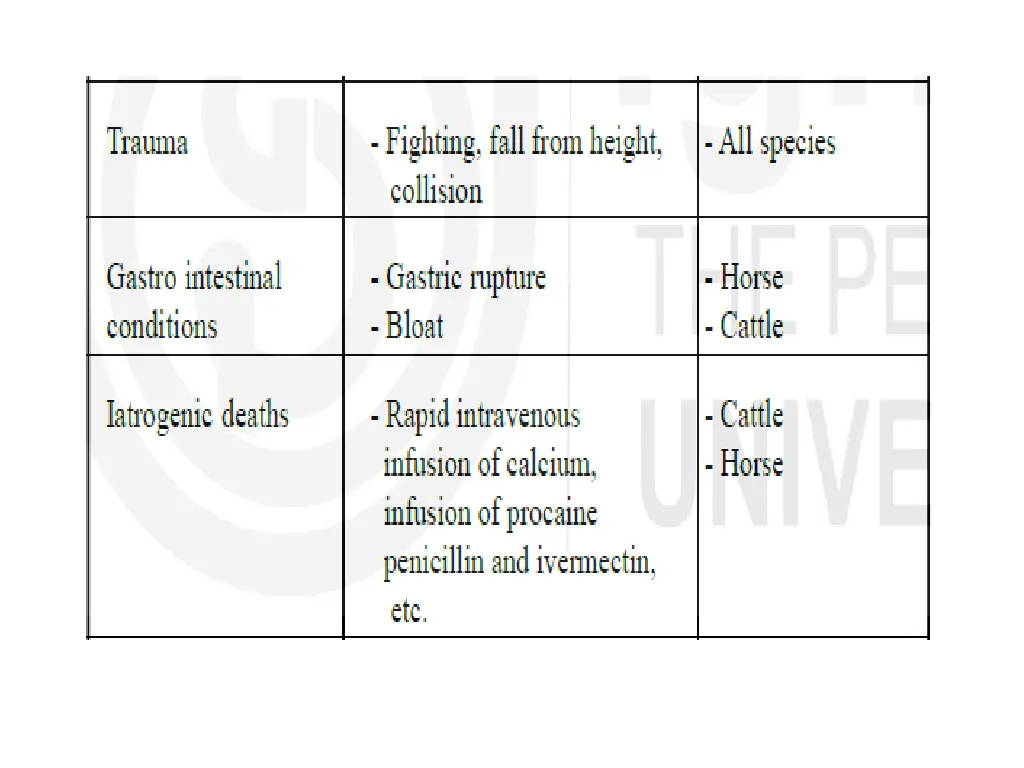
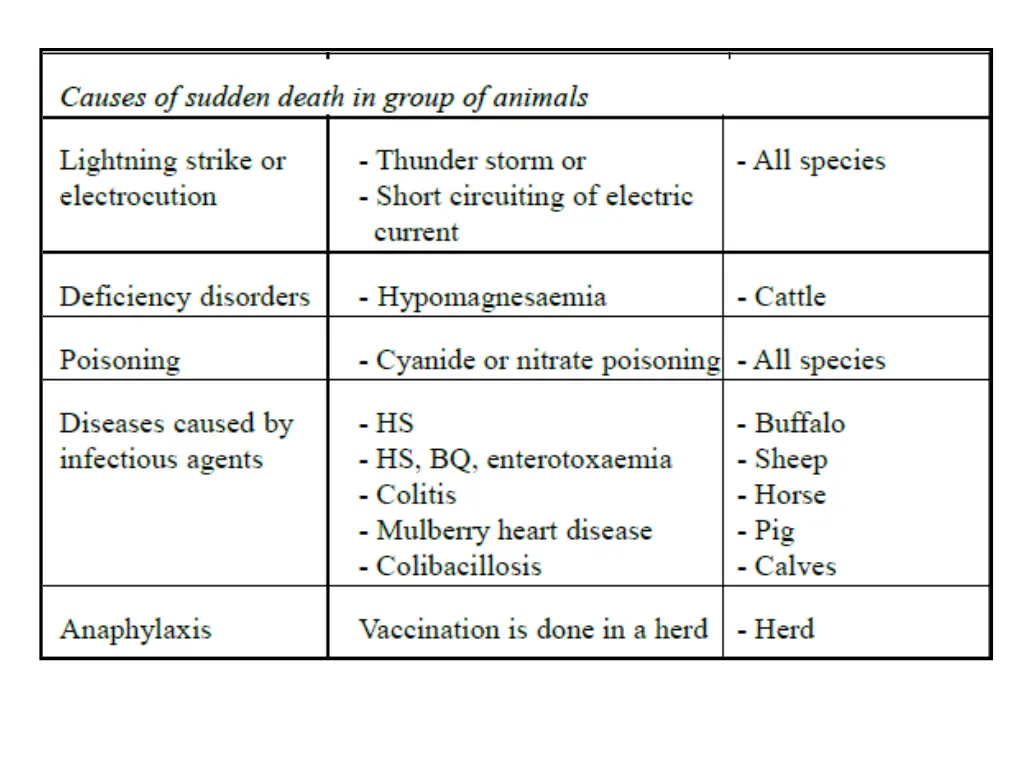
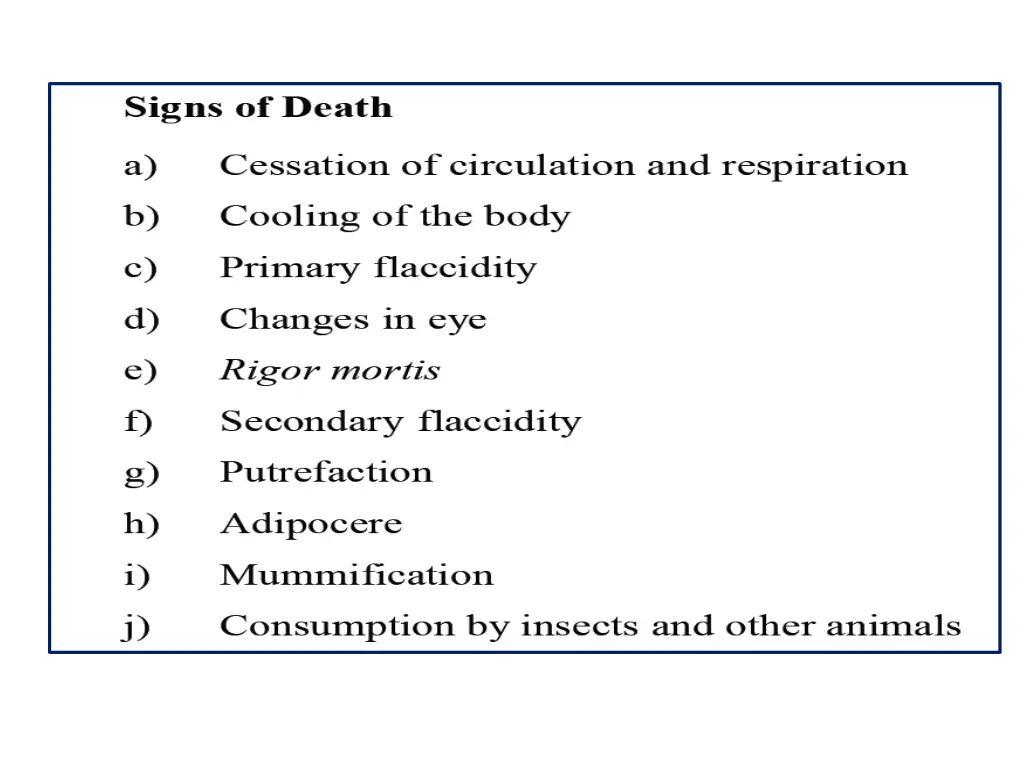
Unit 7: Jurisprudence, Ethics and Animal Welfare TOPIC: 1.Vetero-legal aspects of wound 2. Death and its Vetero-legal Aspects 3. Causes of sudden death in animals 4. Signs of Deaths By Dr. Anil Kumar Associate Professor Dept. of Veterinary Medicine BVC, Patna
Mechanical Injuries From vetero-legal point of view mechanical injuries are divided into: Bruises or Contusions Abrasions Wounds Bruises or Contusions Bruises or contusions are injuries which are caused by a blow from a blunt weapon such as club (lathi), whip, iron bar, stone, ball, fist, boots, etc. or by a fall, or by crushing or compression. These are accompanied by: A painful swelling and crushing or tearing of the subcutaneous tissues without dissolution of continuity of the skin. Swelling is due to rupture of the small subcutaneous blood vessels producing in the cellular tissues extravasation of blood, which is known as ecchymosis or effusion of blood. Haematomas are formed when large blood vessels are injured.
Age of Bruise: The colour changes which its ecchymosis undergoes during absorption. It is due to the disintegration of the red blood cells and staining of the haemoglobin thus set free by the action of tissue enzymes. The changes commence at the periphery and extend inwards to the centre. The colour is red at first but during the next 3 days appears blue, bluish-black, brown or livid red, and becomes greenish on 5-6th day, and yellow from the 7-12th day. This yellow colour slowly fades till or the fourteenth or fifteenth day when the skin regains its normal appearance. Moreover, its disappearance is more rapid in healthy animals than in sickly and aged animals whose circulation is feeble. It also depends on the nature of the violence used. These changes are well-marked and better observed in skinned animals.
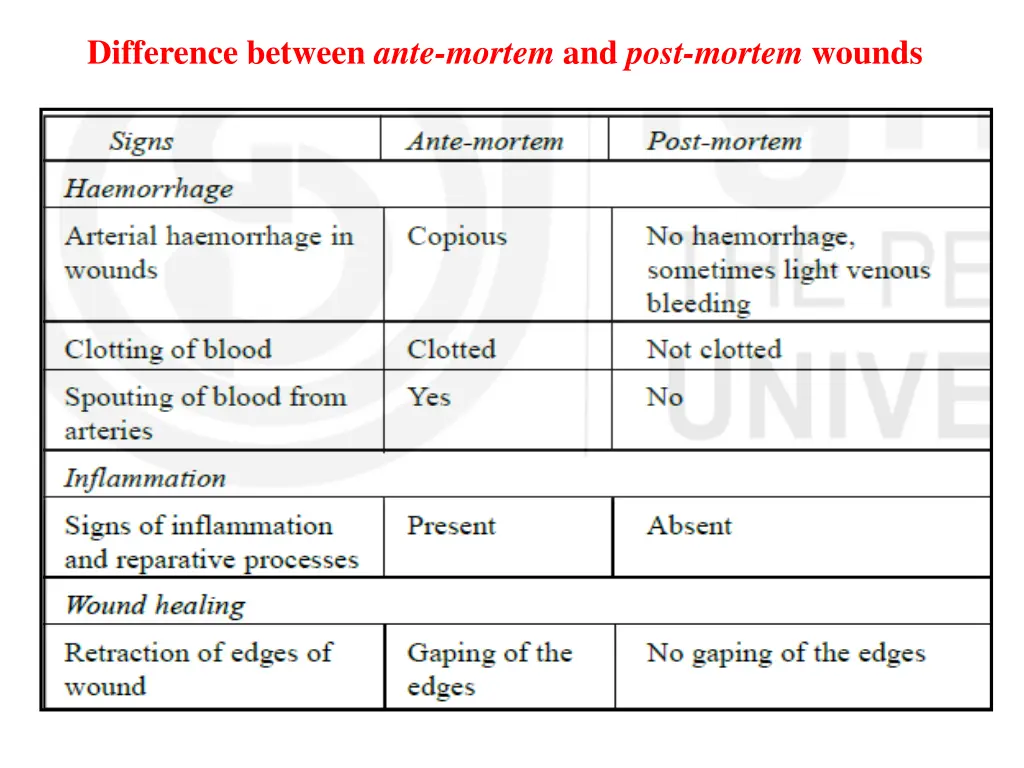
Difference between ante-mortem and post-mortem bruises A certain amount of swelling and colour changes are found in a bruise caused during life. There is usually coagulation of the effused blood in the subcutaneous tissues and infiltration of blood into the muscle fibres. In a doubtful case it is advisable to make a microscopic examination of the affected tissue for evidence of infiltration of blood. A bruise is likely to be disfigured by putrefaction, and it is difficult to differentiate between a bruise caused during life and that caused immediately after death.
Abrasions Loss of the superficial epithelial layer of the skin, and are produced by a blow or a fall on a rough surface, scratching and pressure of strings or ropes tied round the neck or other part of the body. Abrasions resulting from friction against a rough surface during a fall are associated with contusions or lacerated wounds and sometimes with very serious injuries.
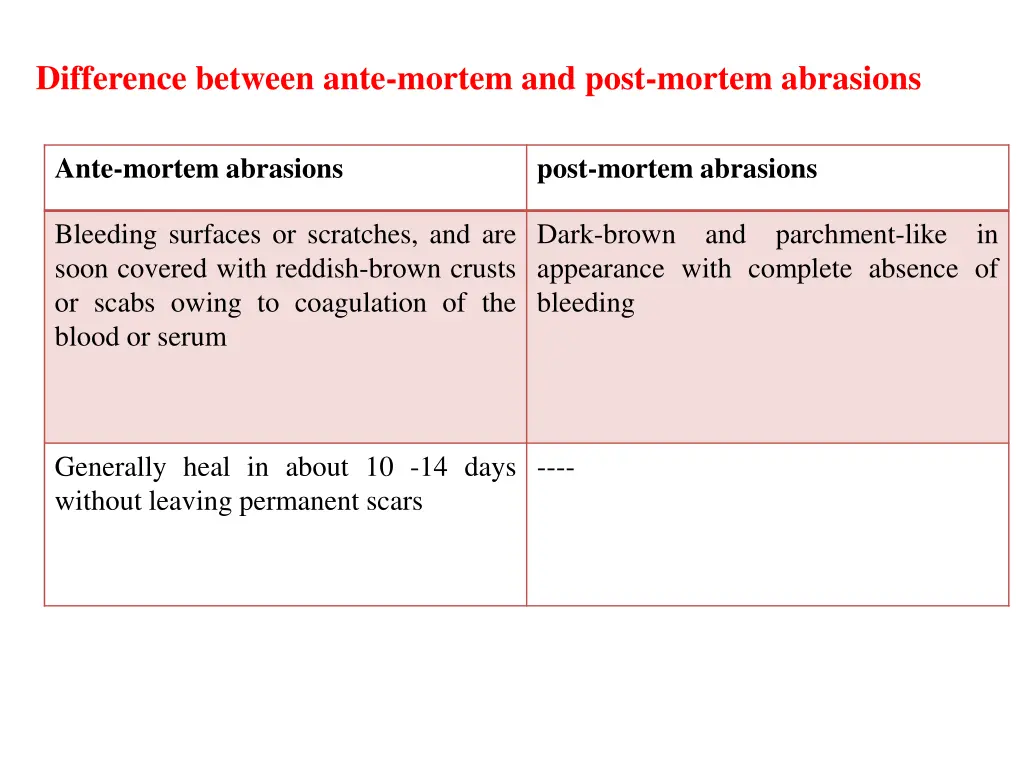
Difference between ante-mortem and post-mortem abrasions Ante-mortem abrasions post-mortem abrasions Bleeding surfaces or scratches, and are soon covered with reddish-brown crusts or scabs owing to coagulation of the blood or serum Dark-brown and parchment-like in appearance with complete absence of bleeding Generally heal in about 10 -14 days without leaving permanent scars ----
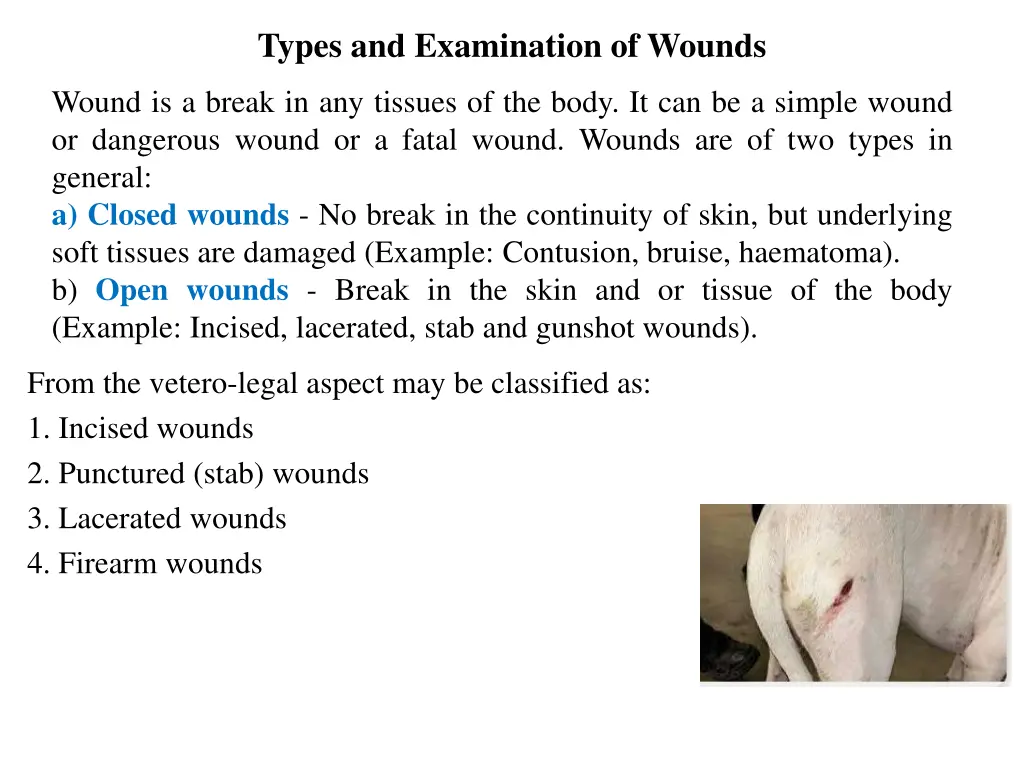
Types and Examination of Wounds Wound is a break in any tissues of the body. It can be a simple wound or dangerous wound or a fatal wound. Wounds are of two types in general: a) Closed wounds - No break in the continuity of skin, but underlying soft tissues are damaged (Example: Contusion, bruise, haematoma). b) Open wounds - Break in the skin and or tissue of the body (Example: Incised, lacerated, stab and gunshot wounds). From the vetero-legal aspect may be classified as: 1. Incised wounds 2. Punctured (stab) wounds 3. Lacerated wounds 4. Firearm wounds
Incised wounds: An incised wound is produced by sharp cutting weapon, such as razors, knives of various kinds, swords, axes, choppers etc. The edges of the wound are smooth, even, clean cut, and well defined. Incised wounds are characterized by "gaping" from retraction of the divided skin and tissues. While describing this type of wound, it is necessary to mention its direction. At the point of commencement the wound is deeper, and it gradually becomes shallower. The form of an incised wound depends upon the methods of using the weapon, When it is used as in stabbing, the form of the wound is fusiform or spindle shaped, due to the greater gaping of the tissues in the central part of the wound. When, the weapon is used for cutting, the wound will show a more or less linear contour. There will be severe haemorrhage and even death, if a main artery is cut.
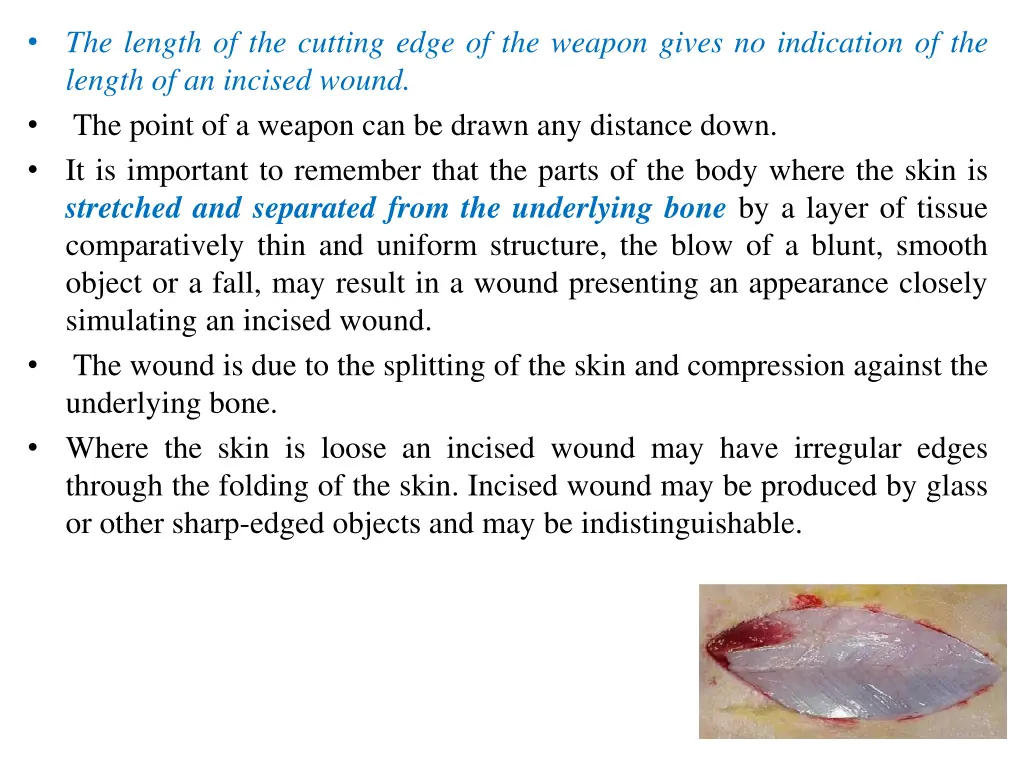
The length of the cutting edge of the weapon gives no indication of the length of an incised wound. The point of a weapon can be drawn any distance down. It is important to remember that the parts of the body where the skin is stretched and separated from the underlying bone by a layer of tissue comparatively thin and uniform structure, the blow of a blunt, smooth object or a fall, may result in a wound presenting an appearance closely simulating an incised wound. The wound is due to the splitting of the skin and compression against the underlying bone. Where the skin is loose an incised wound may have irregular edges through the folding of the skin. Incised wound may be produced by glass or other sharp-edged objects and may be indistinguishable.
Lacerated Wounds: Lacerated wounds are caused by tearing of the tissues. In this type of wounds, the edges are torn and irregular. These wounds are generally caused by barbed wires, and the claws, teeth or horns of animals. These are common in street vehicle accidents, from either impact or fall. Lacerated wounds do not correspond in shape and size to the weapon producing them These wounds are often associated with injuries to internal organs and fracture of bones. When a vehicle runs over the animal, the skin may be dragged away from the underlying connective tissue and split where the tension by dragging is opposed by some bony prominence or by stretching which exceed the limits of elasticity.
Lacerated wounds are usually accompanied by varying degree of contusion at the edges, and when death has not been immediate, the margins frequently show a degree of swelling. The extent of contusion and swelling found will depend upon the degree and incidence of the concussive force and resistance of the tissues, Bruising may be marked when the site of injury involved tissues overlying bone. Lacerated wounds may or may not bleed much. These wounds usually show some loss of substances, the process of healing is slow and suppuration is usually the rule.
Punctured Wounds: Punctured wound is also called as penetrating wound and is caused by pointed bodies such as knives, daggers and spears or by more or less pointed instruments. In this type of wound the external opening is small but the object may injure the important vital organs. In this type of wound, the external haemorrhage is less but internal haemorrhage may be profuse, 'causing death of the animal. The depth of the punctured wound is one of the most important points to note as it will give a clue to the length of the weapon used. The size of the wound does not necessarily correspond to the breadth of the blade, for in withdrawing the weapon the wound is commonly enlarged and in such cases a difference in the width of the stab may be observed in the deeper structures. More than one stab may be made in the deeper tissues through a single external wound, the weapon being only partially withdrawn and again thrust in. The wounds from arrows are similar to stab wounds from knives, but they are more liable to show tears at the two extremities and the head of the arrow will often be found in the tissues
Gunshot Wounds (Firearm Wounds): The gunshot wound is produced by various kinds of firearms. The appearance of these wounds depend upon the following conditions of the individual case under examination: a) The kind of the weapon employed. b) The nature of the projectile. c) The velocity of the projectile. d) The nature of the powder used. e) The range at which the weapon was fired. f) The part of the body struck. g) The direction of fire.
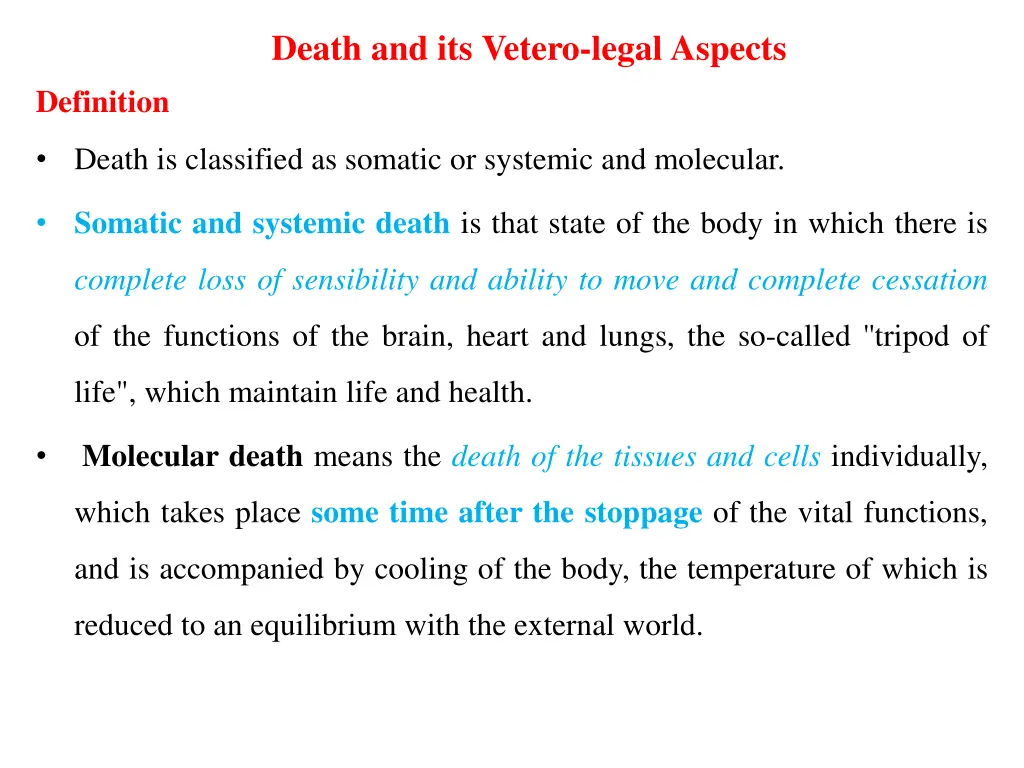
Death and its Vetero-legal Aspects Definition Death is classified as somatic or systemic and molecular. Somatic and systemic death is that state of the body in which there is complete loss of sensibility and ability to move and complete cessation of the functions of the brain, heart and lungs, the so-called ''tripod of life", which maintain life and health. Molecular death means the death of the tissues and cells individually, which takes place some time after the stoppage of the vital functions, and is accompanied by cooling of the body, the temperature of which is reduced to an equilibrium with the external world.
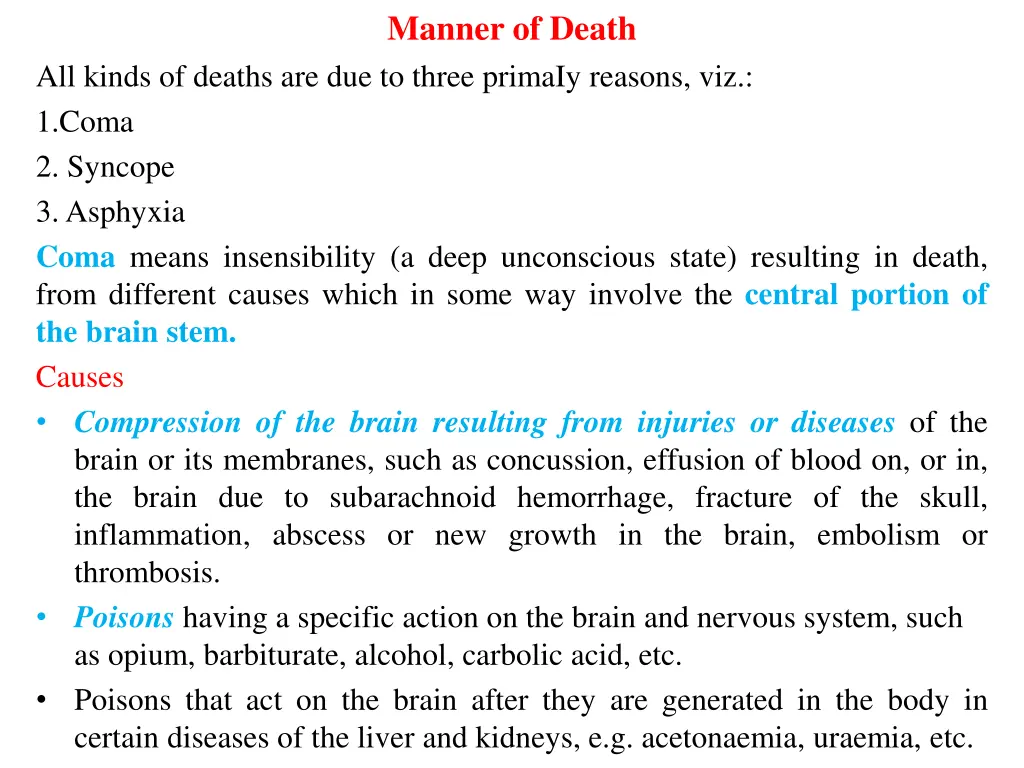
Manner of Death All kinds of deaths are due to three primaIy reasons, viz.: 1.Coma 2. Syncope 3. Asphyxia Coma means insensibility (a deep unconscious state) resulting in death, from different causes which in some way involve the central portion of the brain stem. Causes Compression of the brain resulting from injuries or diseases of the brain or its membranes, such as concussion, effusion of blood on, or in, the brain due to subarachnoid hemorrhage, fracture of the skull, inflammation, abscess or new growth in the brain, embolism or thrombosis. Poisons having a specific action on the brain and nervous system, such as opium, barbiturate, alcohol, carbolic acid, etc. Poisons that act on the brain after they are generated in the body in certain diseases of the liver and kidneys, e.g. acetonaemia, uraemia, etc.
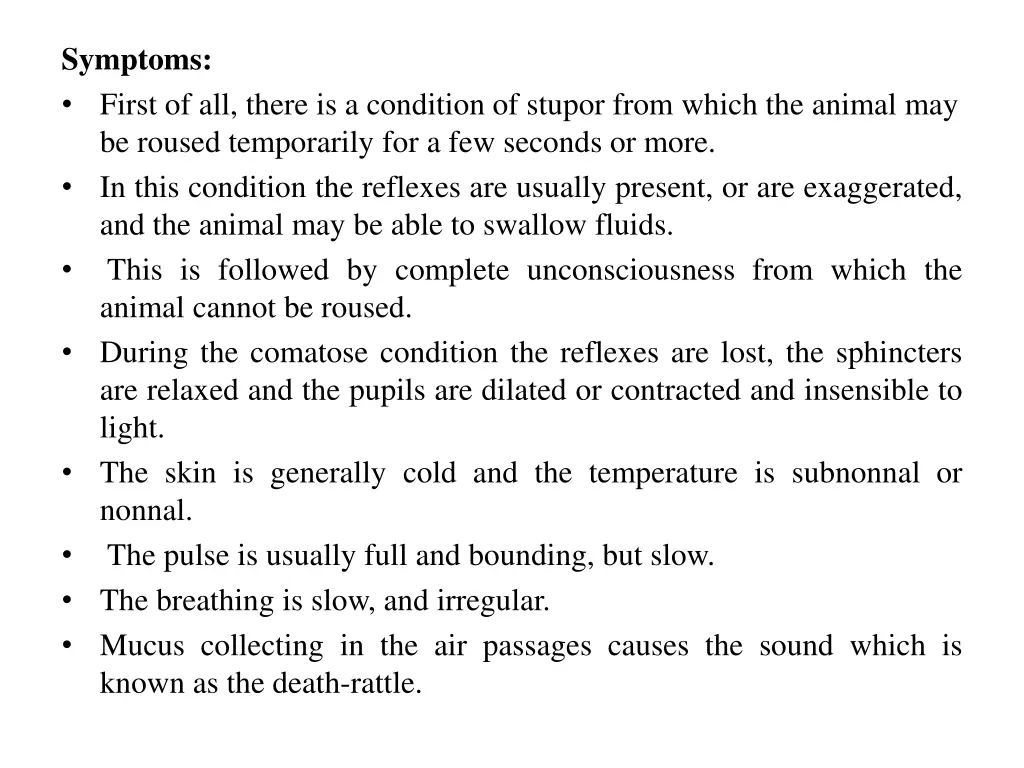
Symptoms: First of all, there is a condition of stupor from which the animal may be roused temporarily for a few seconds or more. In this condition the reflexes are usually present, or are exaggerated, and the animal may be able to swallow fluids. This is followed by complete unconsciousness from which the animal cannot be roused. During the comatose condition the reflexes are lost, the sphincters are relaxed and the pupils are dilated or contracted and insensible to light. The skin is generally cold and the temperature is subnonnal or nonnal. The pulse is usually full and bounding, but slow. The breathing is slow, and irregular. Mucus collecting in the air passages causes the sound which is known as the death-rattle.
Syncope: In this, death occurs due to stoppage of the heart's action, the causes of which may be: Anaemia, due to sudden and excessive haemorrhage from wounds of the large blood vessels, or internal organs, such as the lungs, spleen, etc. or from bursting of an aneurysm or a varicose vein. Shock, resulting from sudden fright, blows on the heart or on the epigastrium, drinking a large quantity of cold water when in a heated condition, extensive injuries to the spine or other parts of the body, the sudden evacuation of natural or pathological fluids from the body or sudden pressure or severe exposure to cold. Asthenia due to deficient power of the heart muscle as in fatty degeneration of the heart, aorta regurgitation and poisoning by certain poisons. Exhausting diseases
Symptoms: There is pallor of the mucous membranes Dimness of vision, dilated pupils Great restlessness, air hunger, gasping respiration, nausea, and possibly vomiting. Reflex vasodilation causes marked fall in blood pressure. The pulse is slow, weak and fluttering in anaemia, and rapid in asthenia. Slight delirium, insensibility and convulsions precede death. In collapse, the animal retains consciousness, though the condition is attended with failure of the heart's action. Post-mortem appearance: The heart is found to be contracted and the chambers empty when death occurs from anaemia, but both the chambers contain blood in the case of death resulting from asthenia. The lungs, brain and abdominal organs are usually found pale.
Asphyxia Death from asphyxia is said to take place when the respiratory function stops due to lack of oxygen, before the heart ceases to act. Causes 1. Mechanical obstruction of the air passages by foreign bodies, exudations, tumours, anaphylactic bronchospasm, suffocation or drowning by blocking of their lumen from within; and spasm of the glottis because of mechanical irritation and irritant gases, forcible closure of mouth and nose by any means. 2. Absence of sufficient oxygen as at high altitudes or presence of inert gases, such as carbon monoxide, in the atmosphere. 3. Stoppage of movements of the chest resulting from exhaustion of the respiratory muscles. (paralysis of the respiratory muscles due to disease or injury of the medulla or phrenic or Pneumo-gastric nerves, mechanical pressure in the chest or abdomen, and tonic spasm due to tetanus or poisoning by strychnin. 4. Collapse of the lungs from penetrating wounds ofthe thorax or diseases such as pleurisy with effusion, empyema, or pneumothorax.
CLASSIFICATION OF DEATH A classification of vetero-legal deaths is based upon the concept that the cessation of the vital functions depends upon tissue anoxia, which is brought about in the following 4 ways: 1. Defective oxygenation of the blood in the lungs or anoxic anoxia Obstruction to the passage of air into the respiratory tract as in suffocation, smothering and overlaying Obstruction in the passage of air down the respiratory tract as in drowning, choking from impaction of a foreign body, strangulation External compression of the chest and abdominal walls, e.g. on being buried under earth or debris; Primary cessation of respiratory movements causing respiratory failure, e.g. from narcotic poisoning and electrical shock Breathing in a vitiated atmosphere in which there is an excess of carbon dioxide or inert gases.
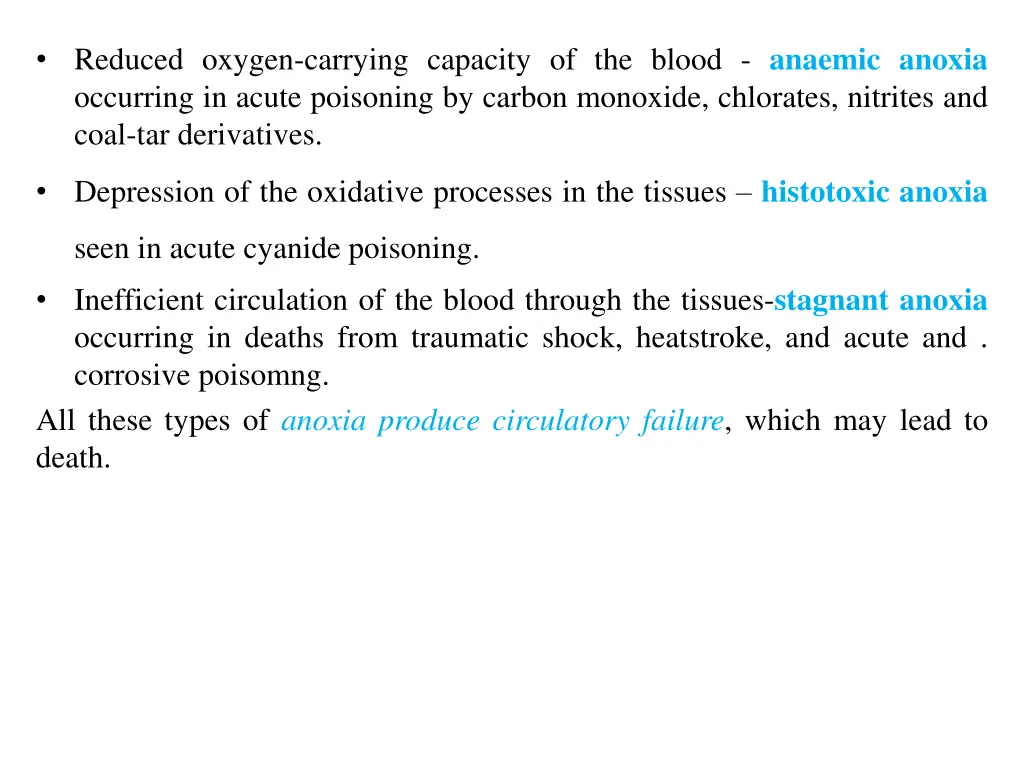
Reduced oxygen-carrying capacity of the blood - anaemic anoxia occurring in acute poisoning by carbon monoxide, chlorates, nitrites and coal-tar derivatives. Depression of the oxidative processes in the tissues histotoxic anoxia seen in acute cyanide poisoning. Inefficient circulation of the blood through the tissues-stagnant anoxia occurring in deaths from traumatic shock, heatstroke, and acute and . corrosive poisomng. All these types of anoxia produce circulatory failure, which may lead to death.