Utilizing Secondary Data in Research: Advantages, Disadvantages, and Analysis
Explore the benefits and drawbacks of using secondary data in research, including insights on national surveys, administrative datasets, and the integration of primary and secondary sources. Understand the nuances of sourcing data and its impact on research outcomes.

Download Presentation

Please find below an Image/Link to download the presentation.
The content on the website is provided AS IS for your information and personal use only. It may not be sold, licensed, or shared on other websites without obtaining consent from the author. If you encounter any issues during the download, it is possible that the publisher has removed the file from their server.
You are allowed to download the files provided on this website for personal or commercial use, subject to the condition that they are used lawfully. All files are the property of their respective owners.
The content on the website is provided AS IS for your information and personal use only. It may not be sold, licensed, or shared on other websites without obtaining consent from the author.
E N D
Presentation Transcript
SI0131 Dissertation Week 5 Luke Sloan Using & Sourcing Secondary Data
Introduction Defining Data Advantages of Secondary Data Disadvantages of Secondary Data Other Researchers Data National Surveys Administrative Datasets Mixing Primary and Secondary Sources of Secondary Data
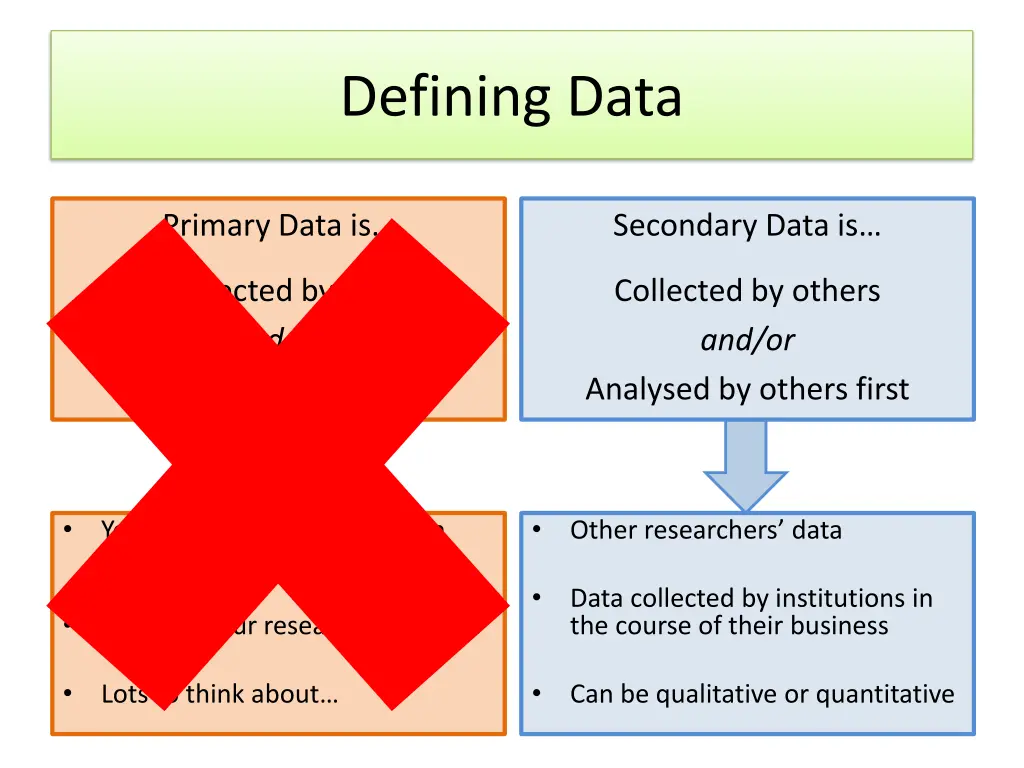
Defining Data Primary Data is Secondary Data is Collected by you and/or Analysed by you first Collected by others and/or Analysed by others first You design the data collection instrument Other researchers data Data collected by institutions in the course of their business Answers your research questions Lots to think about Can be qualitative or quantitative
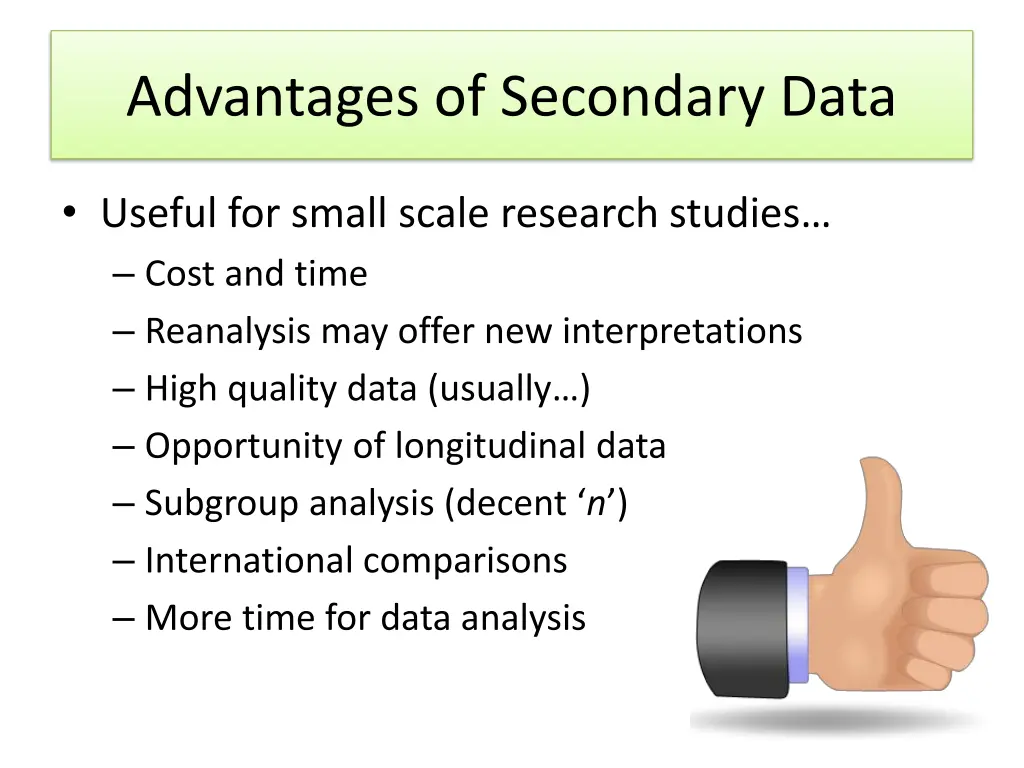
Advantages of Secondary Data Useful for small scale research studies Cost and time Reanalysis may offer new interpretations High quality data (usually ) Opportunity of longitudinal data Subgroup analysis (decent n ) International comparisons More time for data analysis
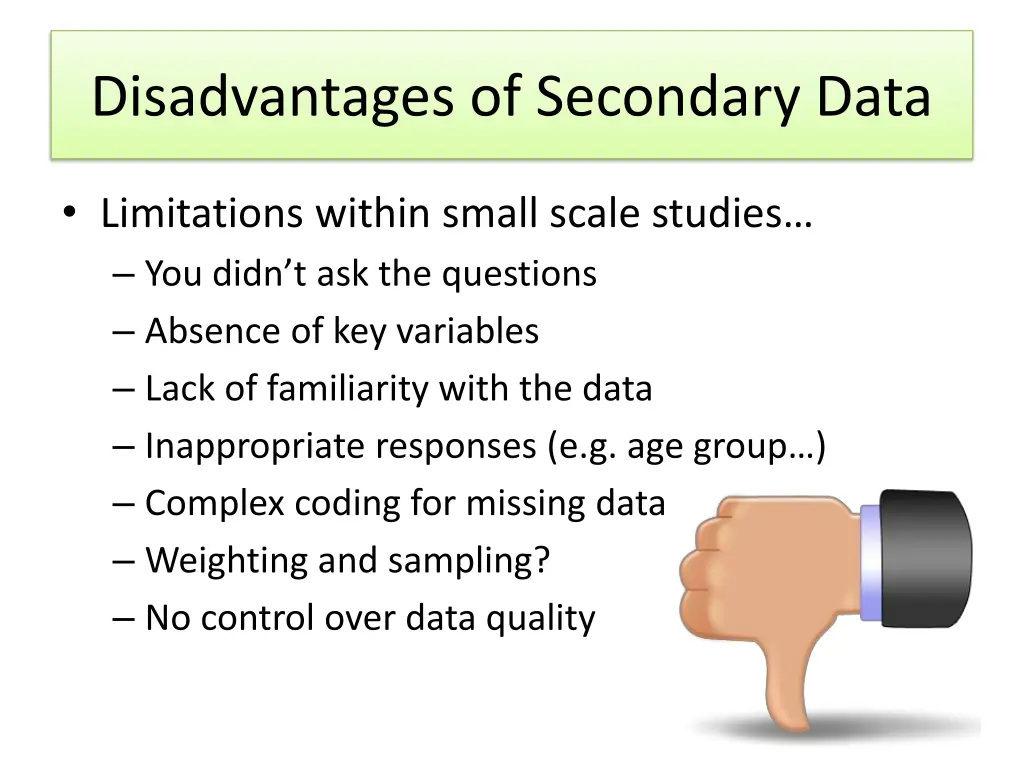
Disadvantages of Secondary Data Limitations within small scale studies You didn t ask the questions Absence of key variables Lack of familiarity with the data Inappropriate responses (e.g. age group ) Complex coding for missing data Weighting and sampling? No control over data quality
Other Researchers Data Have they done a good job? Who are they? PhD? MSc? UG dissertation? Working paper? Anyone can put something on the internet
National Surveys Well funded and thus well designed Population or representative (weighted) Skilled interviewer (reduces bias) But can be dated (last census available for 2001) Questions are not always what you want What level is the data available at (rarely individual due to anonymity issues)
Administrative Datasets High quality and high fidelity Rarely useful on their own Powerful when combined E.g. local authority boundaries, postcodes, HESA data etc, populations, unemployed, immigration
Mixing Primary & Secondary The two are not incompatible Use secondary data to frame research question Identify a gap in existing research Use statistics to justify project (e.g. increase in drug related crime, deprivation, illness) Primary data can be used to enhance secondary data through the addition of new variables (although unlikely that you can ask the same respondents )
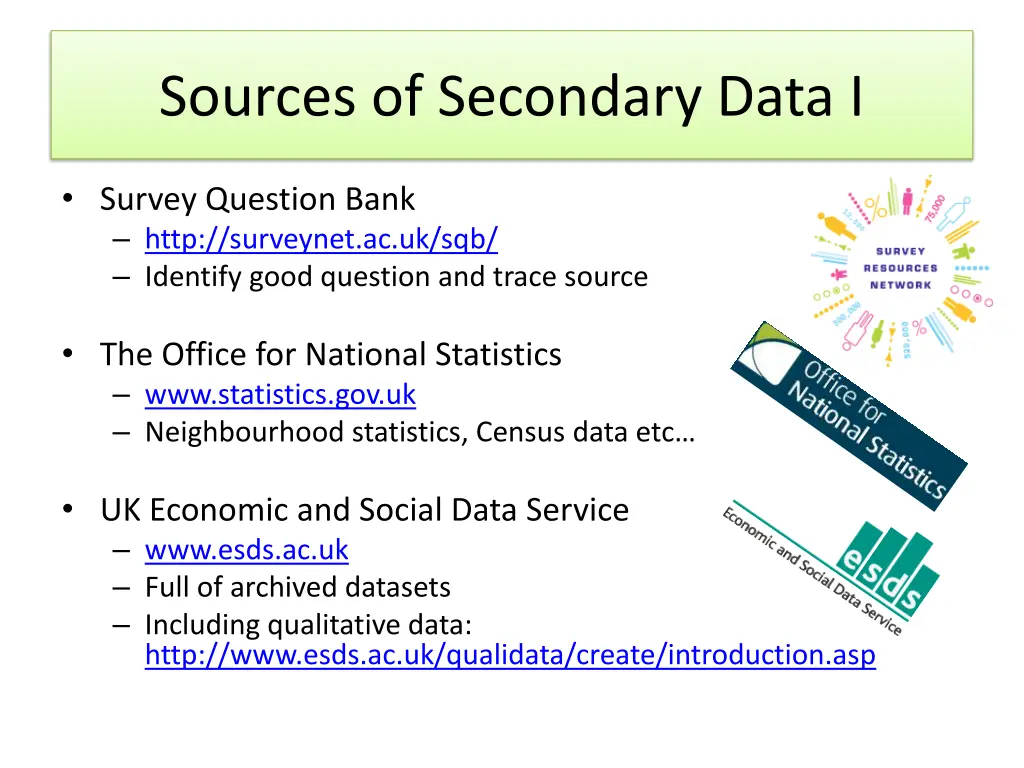
Sources of Secondary Data I Survey Question Bank http://surveynet.ac.uk/sqb/ Identify good question and trace source The Office for National Statistics www.statistics.gov.uk Neighbourhood statistics, Census data etc UK Economic and Social Data Service www.esds.ac.uk Full of archived datasets Including qualitative data: http://www.esds.ac.uk/qualidata/create/introduction.asp
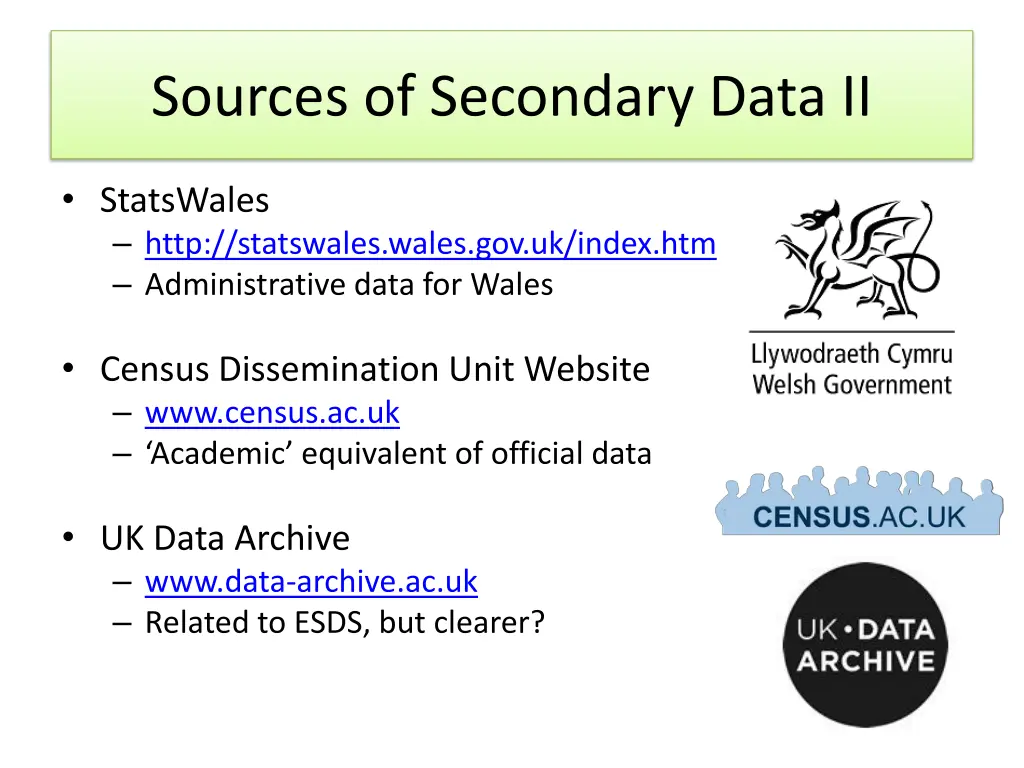
Sources of Secondary Data II StatsWales http://statswales.wales.gov.uk/index.htm Administrative data for Wales Census Dissemination Unit Website www.census.ac.uk Academic equivalent of official data UK Data Archive www.data-archive.ac.uk Related to ESDS, but clearer?
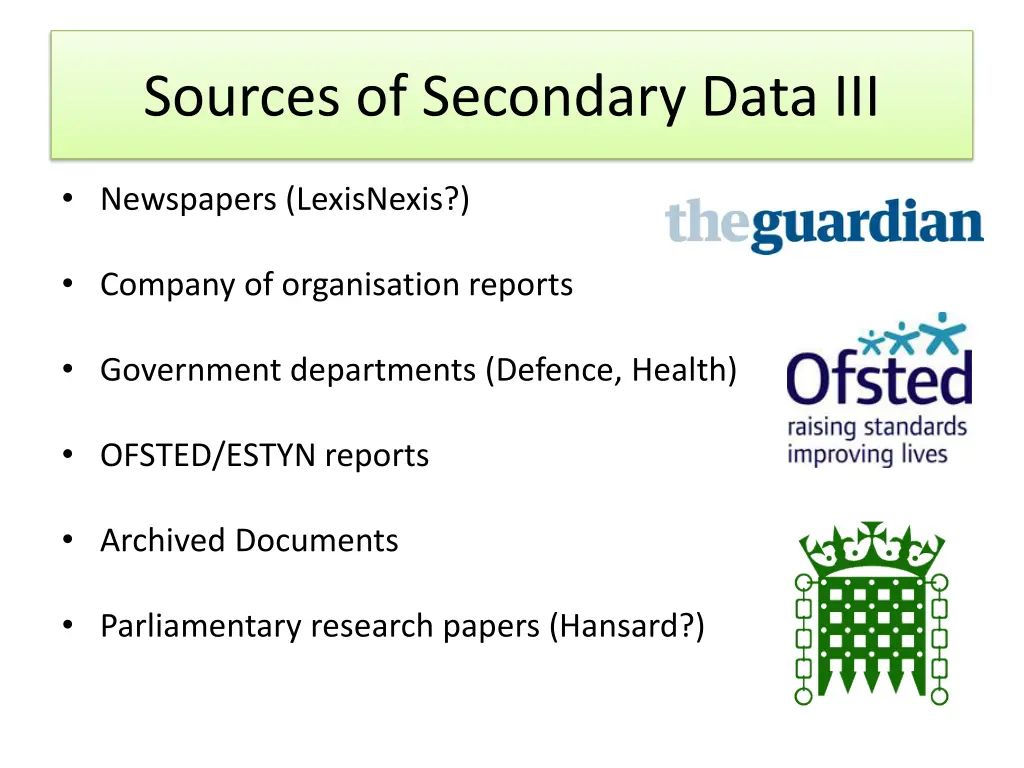
Sources of Secondary Data III Newspapers (LexisNexis?) Company of organisation reports Government departments (Defence, Health) OFSTED/ESTYN reports Archived Documents Parliamentary research papers (Hansard?)