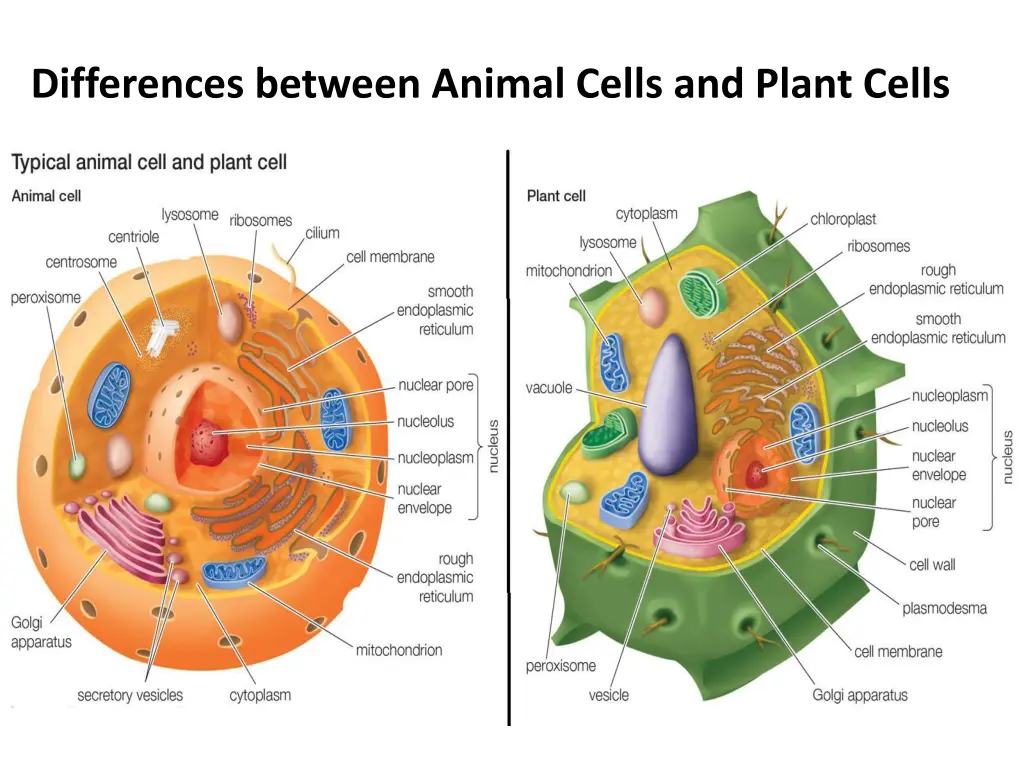
Explore the variations between animal cells and plant cells in terms of size, shape, energy storage, and protein synthesis. Learn how animal cells are smaller, have diverse shapes compared to the more uniform plant cells, store energy differently, and have distinct protein synthesis capabilities.
Please find below an Image/Link to download the presentation.
The content on the website is provided AS IS for your information and personal use only. It may not be sold, licensed, or shared on other websites without obtaining consent from the author. If you encounter any issues during the download, it is possible that the publisher has removed the file from their server.
You are allowed to download the files provided on this website for personal or commercial use, subject to the condition that they are used lawfully. All files are the property of their respective owners.
The content on the website is provided AS IS for your information and personal use only. It may not be sold, licensed, or shared on other websites without obtaining consent from the author.
1. Size: Animal cells are generally smaller than plant cells. Animal cells range from 10 to 30 micrometers in length, while plant cells range from 10 and 100 micrometers in length. 2-Shape: Animal cells come in various sizes and tend to have round or irregular shapes. Plant cells are more similar in size and are typically rectangular or cube shaped. 3. Energy Storage: Animals cells store energy in the form of the complex carbohydrate glycogen. Plant cells store energy as starch.
Proteins: 20 amino acids needed to produce proteins, only 10 can be produced naturally in animal cells. The other so-called essential amino acids must be acquired through diet. Plants are capable of synthesizing all 20 amino acids.