Virtual Community Prenatal Series

This virtual session provides support for a healthy pregnancy, labor, and beyond. It covers understanding the labor process, addressing fears, making informed choices, and the role of maternity care providers. Learn about the physiology of labor, hormone guidance, and navigating the stages of childbirth.

Download Presentation

Please find below an Image/Link to download the presentation.
The content on the website is provided AS IS for your information and personal use only. It may not be sold, licensed, or shared on other websites without obtaining consent from the author.If you encounter any issues during the download, it is possible that the publisher has removed the file from their server.
You are allowed to download the files provided on this website for personal or commercial use, subject to the condition that they are used lawfully. All files are the property of their respective owners.
The content on the website is provided AS IS for your information and personal use only. It may not be sold, licensed, or shared on other websites without obtaining consent from the author.
E N D
Presentation Transcript
Virtual Community Prenatal Series Support for a healthy pregnancy, birth and beyond Session # 2: Labour and Birth
Disclaimer Description We use video and audio technology so we can see and hear each other. We recommend you be in a quiet place so that others cannot overhear the session (unless you want to include others in your visit please tell us who is with you). Details of your attendance only will be noted in your record. We will not make an audio recording of the group program. We ask that you not record either Privacy We have taken appropriate steps to protect your privacy for this group program (paid Zoom business account) We cannot provide you with the same guarantee of security and confidentiality as if the program were being run in-person. Our presenters who are doing the group program may be working from the clinic or from home because of the pandemic. If working from home, they will use a private space away from others Risks It is possible there could be a problem with the technology and your session could be cut short or interrupted. The quality of the video or audio may vary depending on your own connection.
Planned goals for the session Understand the process of labor Address fear of unknown Support for making choices in labor
Goals of this session It offers you a basic idea of normal experiences in late pregnancy, labor and immediately after birth. When to seek help, and options for care. It does not meant to describe or replace an intrapartum clinical course of care, that is the responsibility of your PCP.
Role of the maternity primary care provider During pregnancy you will be followed by a primary provider and it can be a midwife, family doctor or an Obstetrician. Their role is to provide prenatal care and ensure normal progress of pregnancy. If a complication arises they will address it. This session is not designed to address pregnancy complications. If there is something that you are looking for let us know, we can talk.
What is What is Labour Labour It is a process that facilitates the birth of the baby. The uterus contracts and moves the baby downward, Cervix opens and allows the baby to descend into the vagina, and then out through the vaginal opening. Demo https://www.youtube.com/watch?v=P0PDw9mWeYM
Body guides the process of labor through Body guides the process of labor through hormones hormones Labor is guided by some hormones made in the body at the time of labour. This is also called the physiology of labour. It is good to know how it works so that you can support the process, rather than halting it.
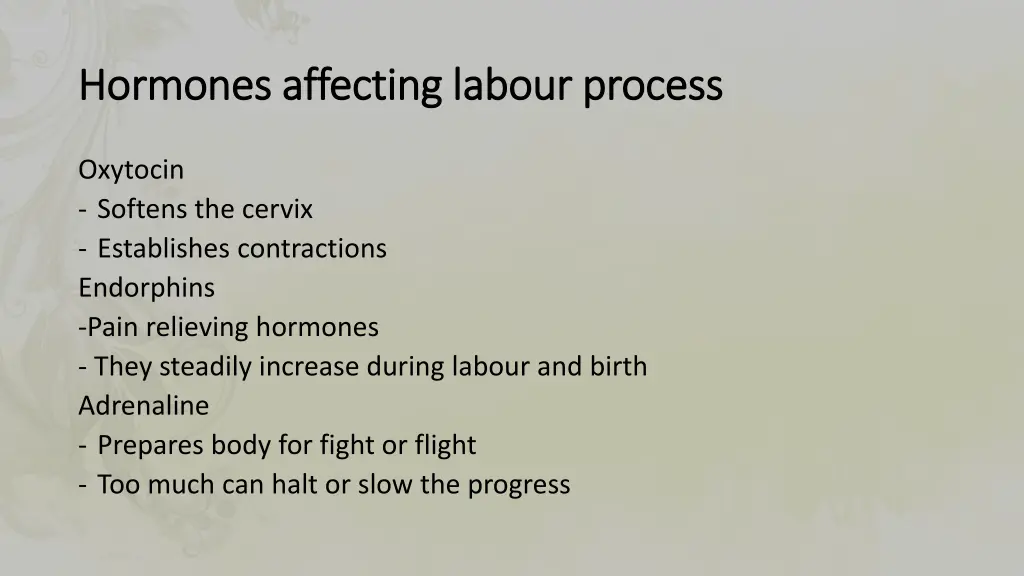
Hormones affecting labour process Hormones affecting labour process Oxytocin - Softens the cervix - Establishes contractions Endorphins -Pain relieving hormones - They steadily increase during labour and birth Adrenaline - Prepares body for fight or flight - Too much can halt or slow the progress
Ensure that hormones will support good Ensure that hormones will support good labour labour Keep up the oxytocin levels - Stay calm, confident and comfortable - Stay upright with pressure on cervix and pelvic floor - Avoid epidural - Nipple stimulation Keep up the endorphins - Epidural decreases endorphins, so delaying pain meds helps.
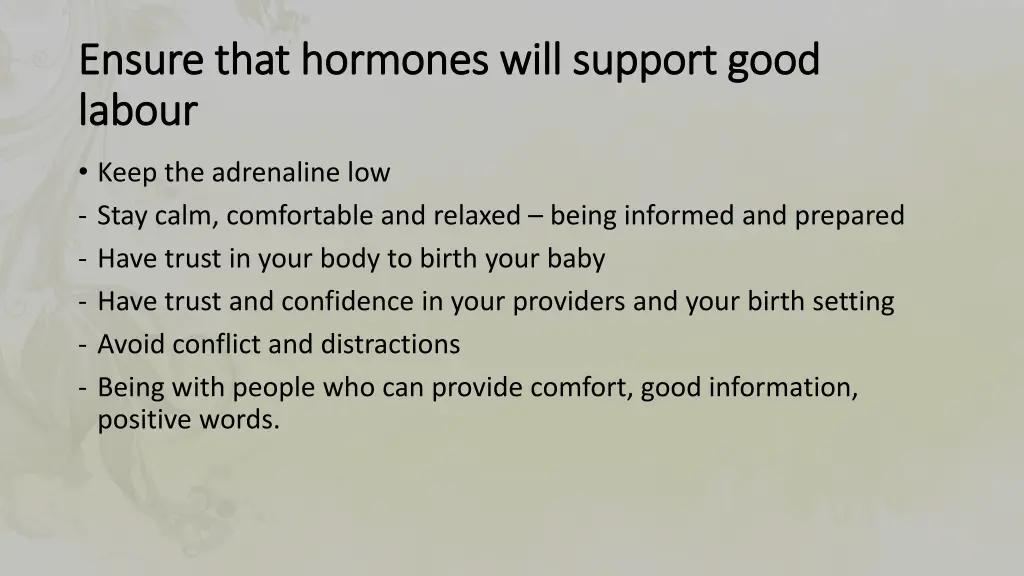
Ensure that hormones will support good Ensure that hormones will support good labour labour Keep the adrenaline low - Stay calm, comfortable and relaxed being informed and prepared - Have trust in your body to birth your baby - Have trust and confidence in your providers and your birth setting - Avoid conflict and distractions - Being with people who can provide comfort, good information, positive words.
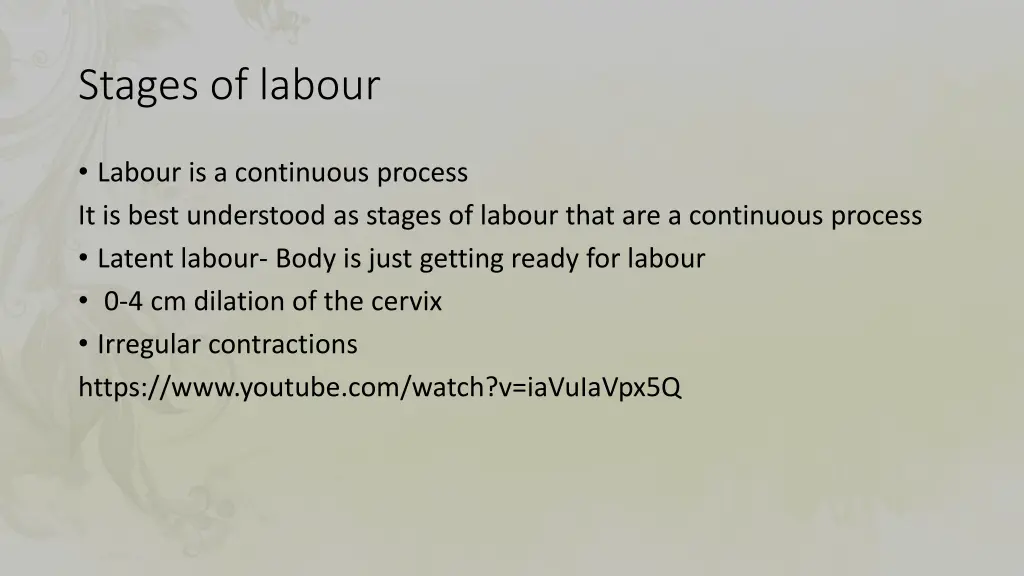
Stages of labour Labour is a continuous process It is best understood as stages of labour that are a continuous process Latent labour- Body is just getting ready for labour 0-4 cm dilation of the cervix Irregular contractions https://www.youtube.com/watch?v=iaVuIaVpx5Q
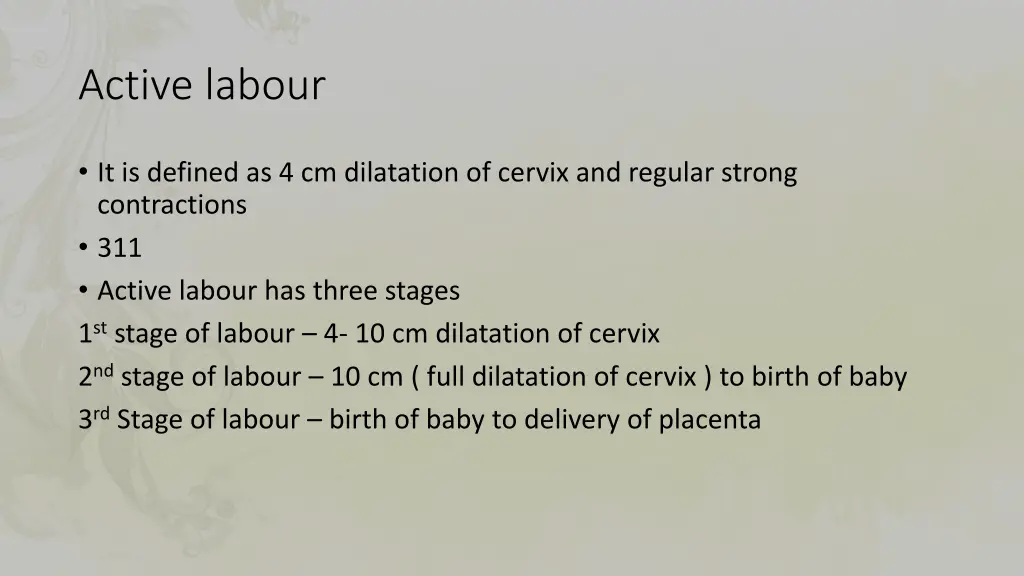
Active labour It is defined as 4 cm dilatation of cervix and regular strong contractions 311 Active labour has three stages 1st stage of labour 4- 10 cm dilatation of cervix 2nd stage of labour 10 cm ( full dilatation of cervix ) to birth of baby 3rd Stage of labour birth of baby to delivery of placenta
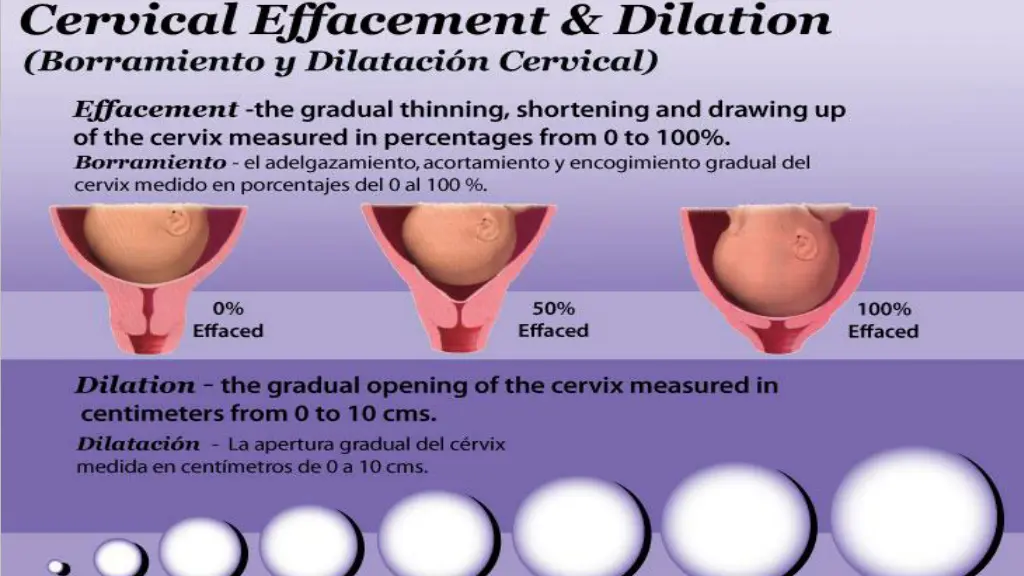
Latent labour or false labour Latent labour or false labour Important part of the preparation for the final event Contractions irregular in intervals, duration or intensity Cervix <4cm Involves changes to cervix - Dilation and effacement causes Bloody show Changes to uterine activity
How to Support yourself in latent labor - - - Don t forget to drink and eat Take lots of rest in between contractions Don t forget to go and void regularly, full bladder interferes with labor You can take a warm shower a massage, change positions and get comfortable -
Active labour Active labour Active labor is the part where you have one on one support And will be monitored for progress of labor. And mother and baby are monitored to see how well they tolerate labor. Regular strong contractions help the cervix dilate and the baby to descend Along with cervical dilatation of 4 cm
Active Labor Active Labor Stages of active labor Stages of active labor Active labor includes First Stage 4-10cm cervical dilatation Second stage - Full dilatation to delivery of the baby Third Stage Delivery of baby to delivery of placenta
What is Transition Stage what does it mean? Active first stage of labour from 7-10cm cervical dilatation The most intense stage of labour
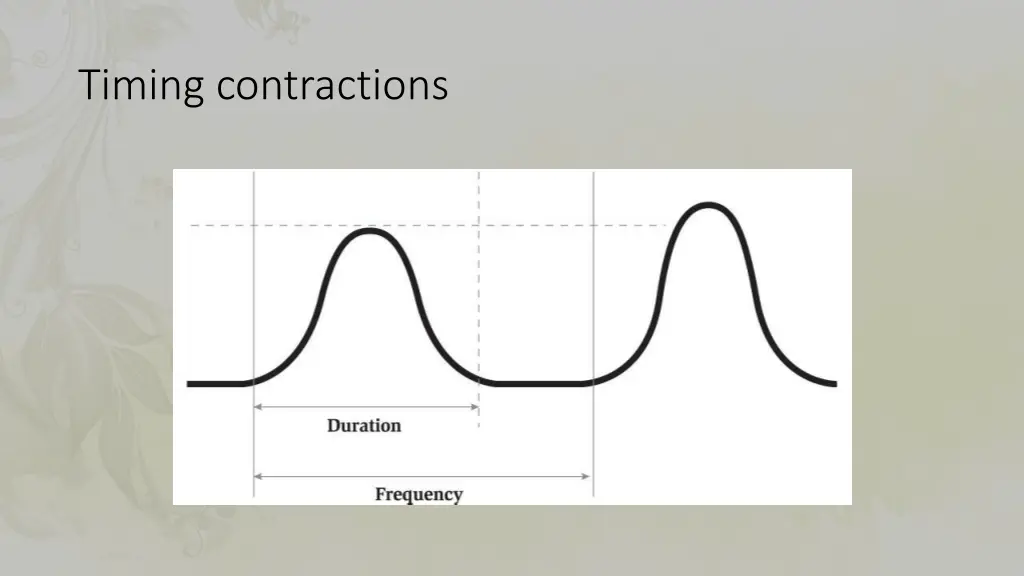
Contraction pattern in Active labor Contraction pattern in Active labor Regularity Intensity Duration 311 Nature of labour contractions starts in the back progresses to the front then to knees Timing Your contractions
When to go to the hospital or page your midwife For first time mothers For mothers who have had a vaginal birth before
Normal Progress of Labour Normal progress of Labour is measured by - Cervical dilatation - Baby s descent
What is the average duration of first time labor? 4 hours 8 hours 12 hours 14 hours
Coping strategies for Active labor Coping strategies for Active labor Non Pharmacological or natural Shower, tub Birth Ball Changing positions Practice various birth support measures, walking swaying Partners how they can support Breathing exercises TENS Pharmacological Pain relief options Narcotics Nitrous oxide Epidural Risks with interventions
Good labor support helps to cope with labour better It your personal choice to have labour support or not, some might not need it. Helps cope better with pain Decreases the use of pain medications Decreases chances of medical interventions Helps have a shorter labor Helps see the labor and birth as a positive experince
Who can give me support during labour and birth? A birth partner is someone with you during childbirth whose role is to help you stay comfortable, move through your birthing process, remind you that what's happening is normal and healthy and give you information about your care. Important sources of support are your partner, your clinical caregivers and friends or family members. You can have support from a doula or other labor support specialist who is present solely to provide continuous support.
Labour support or Birth Partner The labor process can put a lot of pressure on your spouse/ partner who may have little familiarity with the birth process Your spouse/ partner may need to acquire new skills for a physical and emotionally nurturing role Your spouse/ partner will have strong emotional/ physical needs of his/ her own
Considerations when asking a friend or family member to help with your birth if you choose to have one Are her or his thoughts and feelings about birth like mine? Can I be myself around this person without worrying what she or he may think? Would I feel comfortable having her or him present during the intimate time of labor and birth? Does my partner feel the same way? Is she or he able to commit to being available whenever I go into labor, and staying with me until I give birth? Is she or he interested in learning more about ways to support women in labor?
How can my partner help? Talk about what your goals are Discuss what your hopes, fears and expectations are Partners/ spouses are encouraged to learn as much about labour and birth as possible by reading, watching videos, attending prenatal classes Practice relaxation techniques and comforting touch before the day of labor When possible, together, plan for support after the birth; for rest, for care, meals, help with getting off to a good start with breastfeeding
Advice for Partners during Labour https://www.youtube.com/watch?v=FBWE7_Q5BcU&t=42s Breathing Tips https://www.youtube.com/watch?v=eK9BrVX8RhM Helpful tips for being an effective birth partner Positions https://www.youtube.com/watch?v=OEew83tcxrY Avoiding Panic: https://www.youtube.com/watch?v=NQA7hYFzrSg
Positions in labour Try these positions and rest when you need to: Walking and standing Kneeling you can rest by leaning forward between contractions Sitting you can sit astride a chair and lean forward resting on a cushion or pillow, sit on a birthing ball or a beanbag Use a birthing ball Supported standing or squatting Rock on all fours or rock your pelvis in whatever position you find comfortable
Positions in labor kneeling, using a chair or birthing ball (yoga, or 'fit' ball) for support swaying or walking and holding a support person during contractions standing and moving in the shower to help reduce pain sitting or kneeling in a bath, to reduce pain and make you buoyant, making it easier to change positions squatting, using a birthing stool, ball or squatting bar; this can help the flow of oxygen to your baby, reduce back pain and move the baby correctly into position sitting and rocking on a chair or edge of the bed sitting backwards on a chair, with arms resting on the chair-back leaning forward over the bed sitting on a chair leaning forward lunging with one foot up on a chair or footstool kneeling on hands and knees to help reduce back pain
Comfort Measures Comfort measures may ease labour pains directly or indirectly by calming and relaxing you Create a calm environment Dim lights Peaceful area Soft music Privacy warmth Increase physical comfort- changes throughout the labor process Remain resting until you can t rest anymore Walking The 3 R s- rest, rhythm, rocking Using pillows/ cushions STAY OFF YOUR PHONE! Massage Stroking Figure 8s Counter pressure Hip squeezes Acupressure
BOOKS The Birth Partner- by Penny Simkin https://www.amazon.ca/Nurturing-Family-Doulas-Supporting- Parents/dp/1946665436/ref=sr_1_28?dchild=1&keywords=doula+support+books&qid= 1600271591&sr=8-28 VIDEOS https://www.youtube.com/watch?v=TjeIu01yAG0 https://www.youtube.com/watch?v=Mg1SQ085xDI https://www.youtube.com/watch?v=eK9BrVX8RhM https://www.youtube.com/watch?v=4QKtXFJsTOI https://www.youtube.com/watch?v=TjeIu01yAG0 ONLINE https://birthingfromwithin.com/media/ https://www.amazon.ca/Supporting-Women-Labour-Birth-Thoughtful/dp/0415524296 https://www.pregnancybirthbaby.org.au/being-a-birth-support-partner http://www.childbirthconnection.org/giving-birth/labor-support/resources/ https://www.parents.com/pregnancy/giving-birth/labor-support/labor-delivery-advice- dads/ https://www.beststart.org/resources/rep_health/Your%20Guide%20to%20Labour%20a nd%20Birth.pdf https://www.dona.org/dads-doulas-myths-resources/
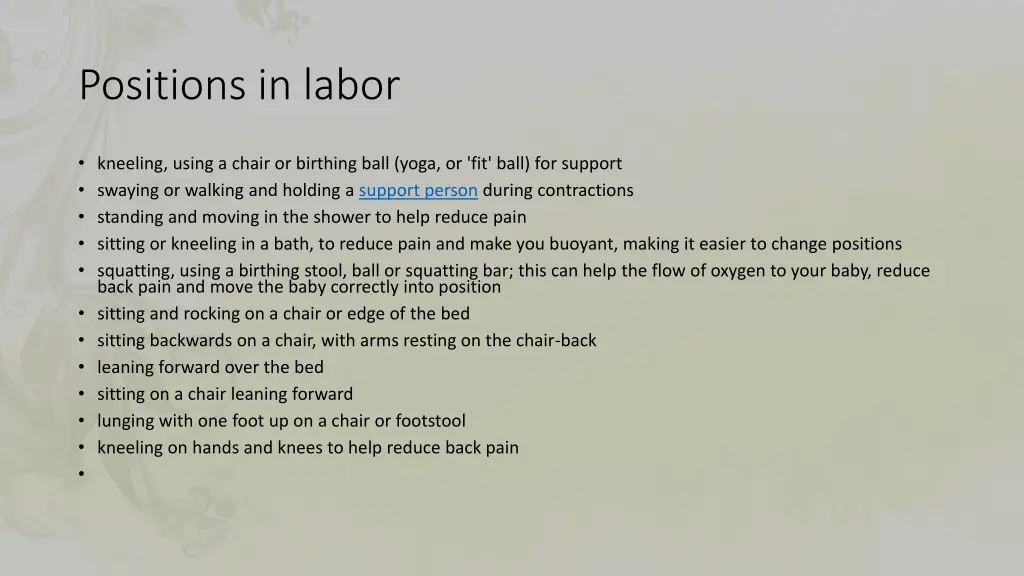
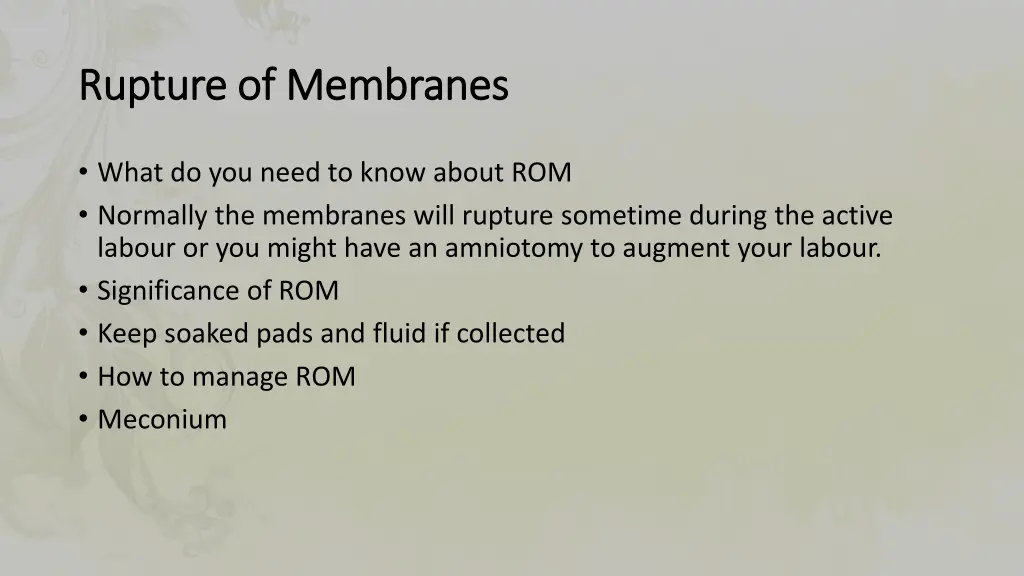
Rupture of Membranes Rupture of Membranes What do you need to know about ROM Normally the membranes will rupture sometime during the active labour or you might have an amniotomy to augment your labour. Significance of ROM Keep soaked pads and fluid if collected How to manage ROM Meconium
Rupture of Membranes Rupture of Membranes What do you need to know about ROM Normally the membranes will rupture sometime during the active labour or membranes maybe ruptured sometime to promote labour Significance of ROM You are time bound to have your baby Keep soaked pads and fluid if collected How to manage ROM Meconium
Second Stage of Labor - Considerations What is second stage of Labour ? Pushing Caput and Molding Perineal stretching and support Cord around the neck Delivery of the shoulder Delayed cutting of the cord
Complications of Second stage of Labour - Non-progressive second stage of labour - Abnormal FHR - What is an Episiotomy What is assisted vaginal delivery? Forceps Assisted delivery Vacuum Assisted delivery
Third stage of labour What is third stage of labour What is the normal management of third stage of labour - Physiological management of third stage of labour - Active management of third stage of labour
Third stage of labour Begins with the birth of baby Ends with the birth of placenta Two options for management 1. Physiological management of third stage 2. Active management of third stage - Oxytocin
Complications of Third Stage of Labour Retained placenta Hemorrhage Perineal and other tears
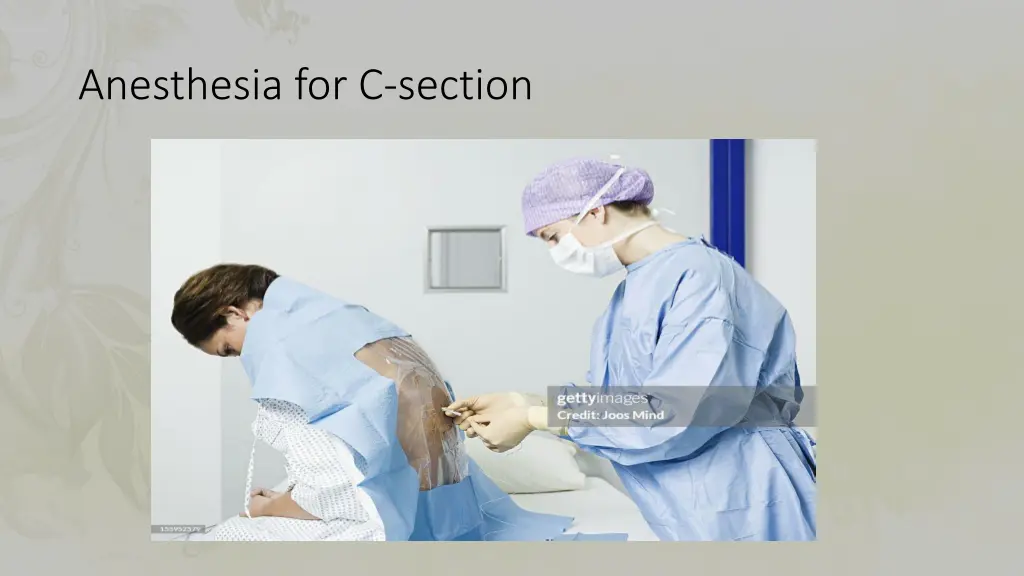
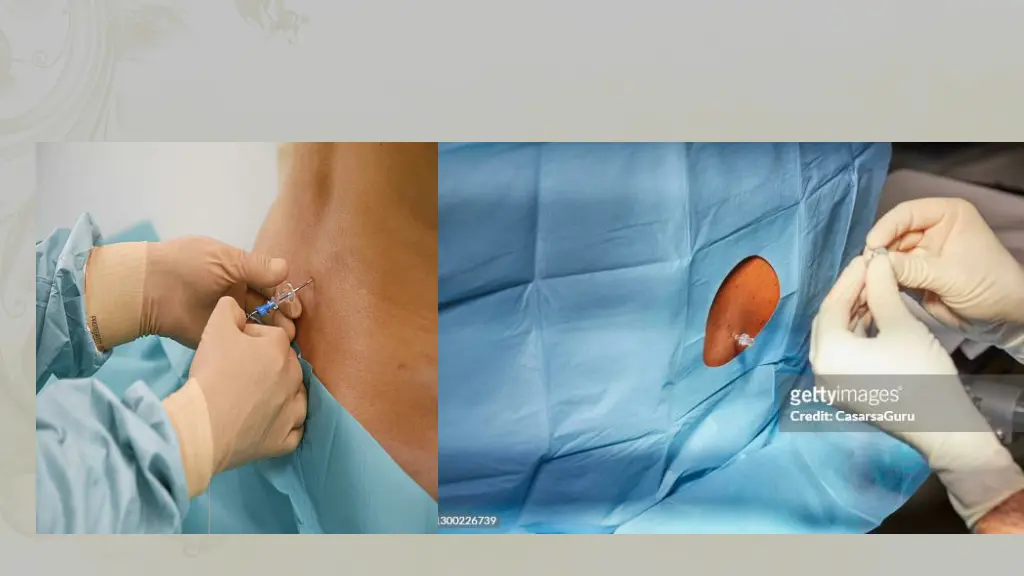
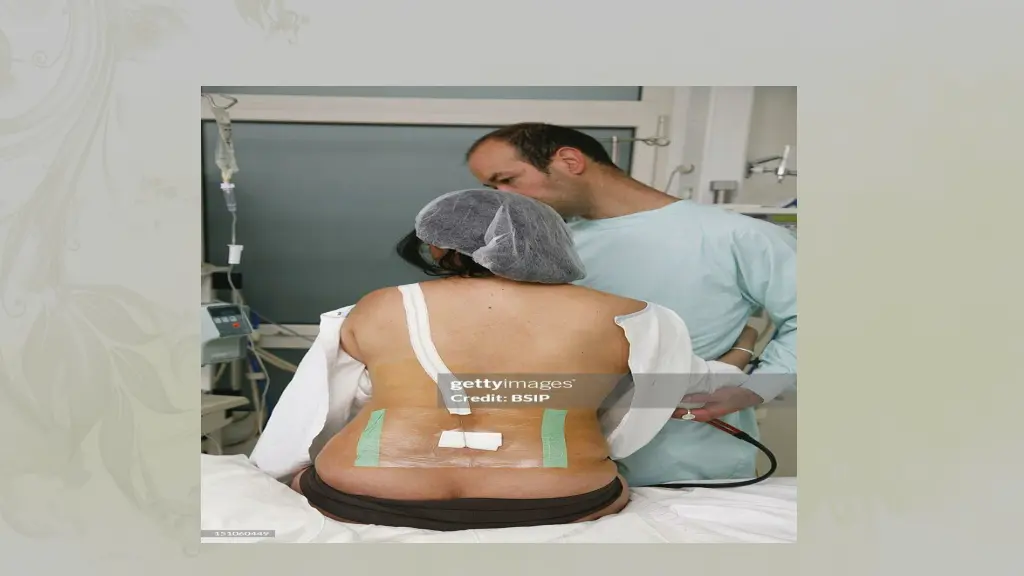
Birth by C-section Some women may not have a vaginal birth and may have a Operative birth. Commonly called Cesarean section. This involves a small incision above the pubic bone
You will need a running Intravenous line for a C- section birth
Emotional experience at the birth For the mother For the partner