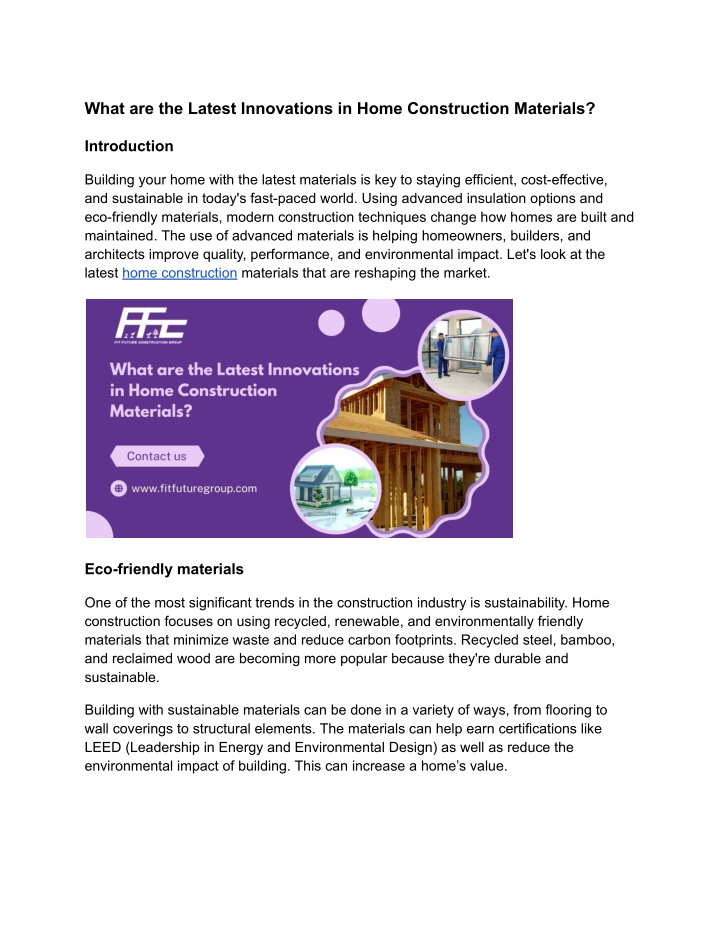
Building your home with the latest materials is key to staying efficient, cost-effective, and sustainable in today's fast-paced world. Using advanced insulation options and eco-friendly materials, modern construction techniques change how homes are b
Please find below an Image/Link to download the presentation.
The content on the website is provided AS IS for your information and personal use only. It may not be sold, licensed, or shared on other websites without obtaining consent from the author. If you encounter any issues during the download, it is possible that the publisher has removed the file from their server.
You are allowed to download the files provided on this website for personal or commercial use, subject to the condition that they are used lawfully. All files are the property of their respective owners.
The content on the website is provided AS IS for your information and personal use only. It may not be sold, licensed, or shared on other websites without obtaining consent from the author.
E N D
Presentation Transcript
What are the Latest Innovations in Home Construction Materials? Introduction Building your home with the latest materials is key to staying efficient, cost-effective, and sustainable in today's fast-paced world. Using advanced insulation options and eco-friendly materials, modern construction techniques change how homes are built and maintained. The use of advanced materials is helping homeowners, builders, and architects improve quality, performance, and environmental impact. Let's look at the latest home construction materials that are reshaping the market. Eco-friendly materials One of the most significant trends in the construction industry is sustainability. Home construction focuses on using recycled, renewable, and environmentally friendly materials that minimize waste and reduce carbon footprints. Recycled steel, bamboo, and reclaimed wood are becoming more popular because they're durable and sustainable. Building with sustainable materials can be done in a variety of ways, from flooring to wall coverings to structural elements. The materials can help earn certifications like LEED (Leadership in Energy and Environmental Design) as well as reduce the environmental impact of building.This can increase a home s value.
Energy-efficient materials Insulation is important for maintaining a comfortable living space while helping homeowners reduce their energy expenses. Recent advancements in insulation technologies now offer improved thermal efficiency, energy savings, and reduced environmental footprint. The latest materials like spray foam insulation and aerogel insulation are leading the way, offering superior heat resistance and insulation capabilities. These materials are quickly becoming popular for their ability to outperform traditional options. As an example, aerogel is incredibly light and insulating, and it's also extremely thin. These high-performance materials help conserve energy by maintaining a stable indoor temperature, helping your home stay warm in the winter and cool in the summer without a heavy reliance on heating or cooling systems. Smart glass and Energy-Efficient Windows Another major breakthrough in the construction industry is smartglass and energy efficient windows. Not only do these innovative materials improve the aesthetic appeal of a space, but they also contribute to substantial energy savings over time. This makes them a practical choice for homeowners seeking style and sustainability. Windows with low-emissivity (Low-E) glass or advanced coatings reflect heat back into the room in the winter and keep it out in the summer. This promotes energy efficiency while improving comfort. 3D-printed construction materials The rise of 3D printing in construction has brought major changes in material usage. Concrete and other 3D-printed materials can be used to construct structures in a rapid, cost-effective, and highly customized manner. Builders can now create complex, detailed designs with minimal waste and reduced labor costs. 3D printing also allows for a more sustainable use of resources, since the printing process utilizes exactly what is needed, eliminating excess waste. The innovative approach to home construction makes it particularly beneficial to creating low-cost housing solutions.
Self-healing concrete Self-healing concrete provides a solution to the problem of cracks in concrete in home construction. It contains bacteria that produce limestone when exposed to water and air, thereby healing small cracks over time. Self-healing concrete extends structures' lifespan by preventing deterioration that often leads to costly repairs. A lot of foundations, walls, and floors last longer with it especially in areas with frequent temperature fluctuations and high moisture levels. Cross-laminated timber (CLT). An evolving sustainable alternative to conventional construction materials like concrete and steel is cross-laminated timber (CLT). This renewable material is gaining recognition for its strength, versatility, and minimal environmental impact in home building. CLTs are made by bonding wood layers at different angles, which provides superior strength and durability. It s a versatile material that can be used for walls, floors, and roofs, providing excellent insulation properties while being lighter than traditional building materials. CLT is not only a renewable resource but also a carbon-friendly option that stores carbon, helping to reduce carbon emissions from other materials like steel and concrete. It is expected that CLT will become a staple in home construction as the demand for green building solutions increases. Advanced composite materials It is becoming increasingly common for the home construction industry to use composite materials, which combine two or more materials for improved performance. Fiberglass and carbon fiber composites are used in doors, windows, and roofing materials to increase strength and reduce weight. These materials are more durable and resistant to extreme weather conditions than traditional materials like wood and steel. Their ability to withstand corrosion, temperature fluctuations, and UV rays makes them ideal for outdoor applications, such as siding and decking.
Conclusion Building an energy-efficient, durable, and sustainable home requires the latest material innovations. From sustainable building materials and 3D printing to advanced insulation and self-healing concrete, these advanced solutions are transforming how we think about home construction. Ready to bring your dream home to life? Connect with Fit Future Group today to experience professional and innovative home construction in Perambalur where quality work meets exceptional value. More information: Call us: +91 9791995601 Mail ID: info@fitfuturegroup.com Website: https://www.fitfuturegroup.com