Writing the essay

Uncover the elements of an academic essay, from style to structure. Learn to craft a well-researched, coherent, and error-free piece with an impactful introduction, detailed body, and conclusive ending. Understand the significance of objective language, reported speech, and critical thinking. Dive into instruction words to effectively analyze, argue, evaluate, and present arguments. Enhance your writing skills and excel in academic essays effortlessly.

Download Presentation

Please find below an Image/Link to download the presentation.
The content on the website is provided AS IS for your information and personal use only. It may not be sold, licensed, or shared on other websites without obtaining consent from the author.If you encounter any issues during the download, it is possible that the publisher has removed the file from their server.
You are allowed to download the files provided on this website for personal or commercial use, subject to the condition that they are used lawfully. All files are the property of their respective owners.
The content on the website is provided AS IS for your information and personal use only. It may not be sold, licensed, or shared on other websites without obtaining consent from the author.
E N D
Presentation Transcript
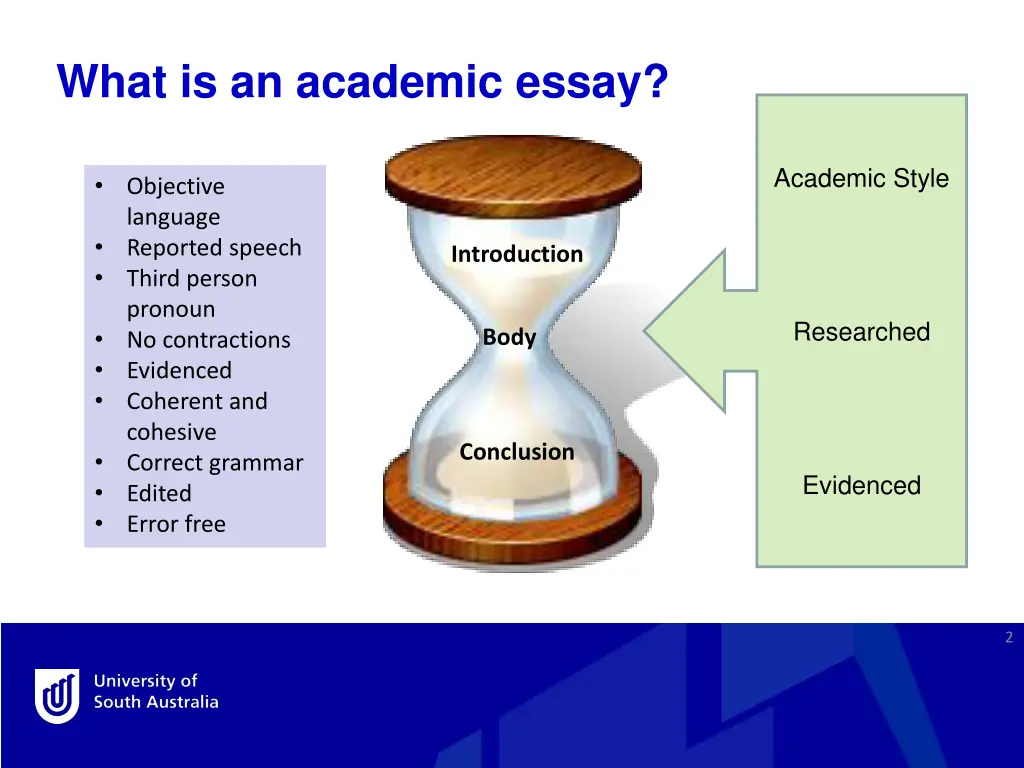
What is an academic essay? Academic Style Objective language Reported speech Third person pronoun No contractions Evidenced Coherent and cohesive Correct grammar Edited Error free Introduction Researched Body Conclusion Evidenced 2
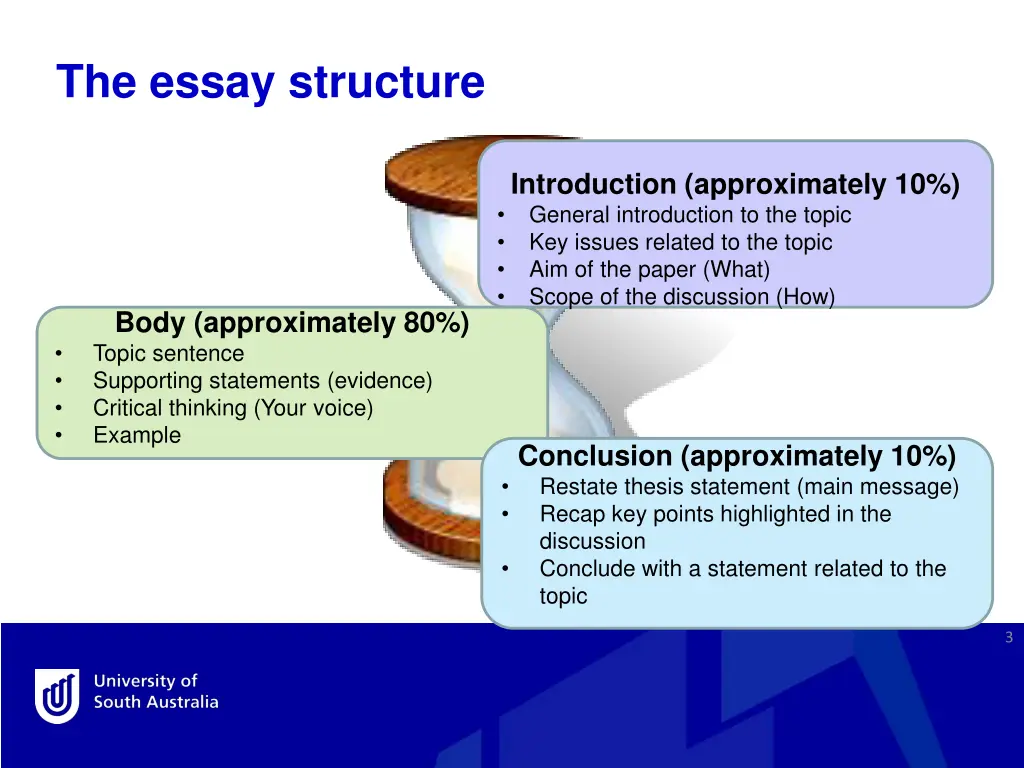
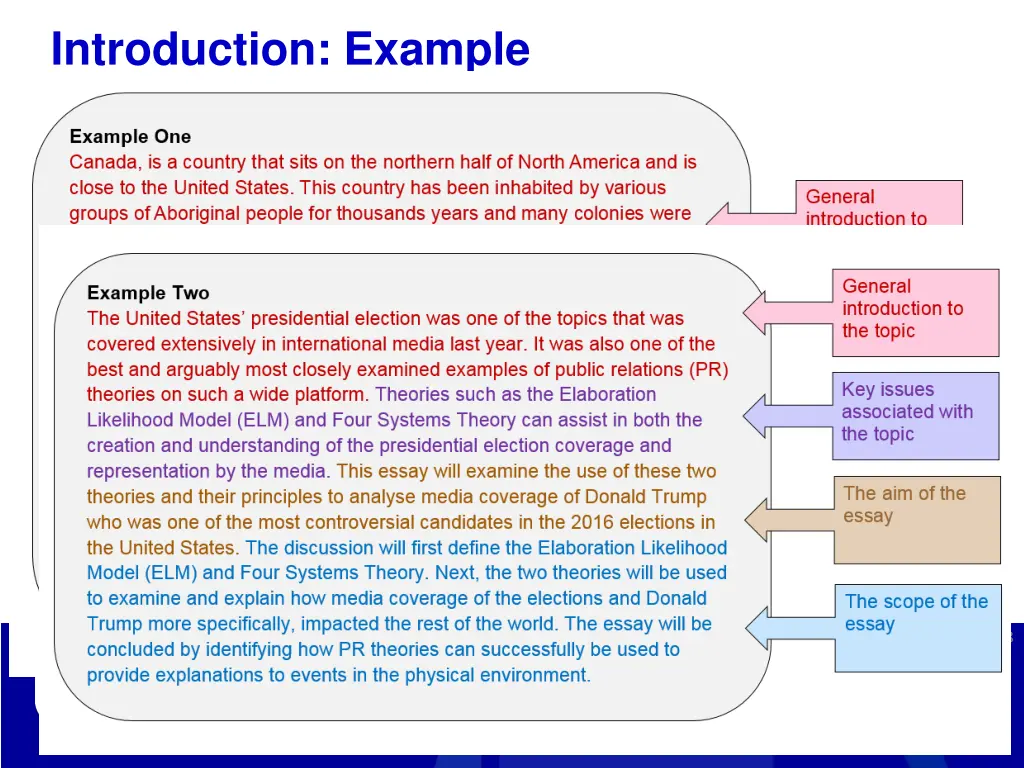
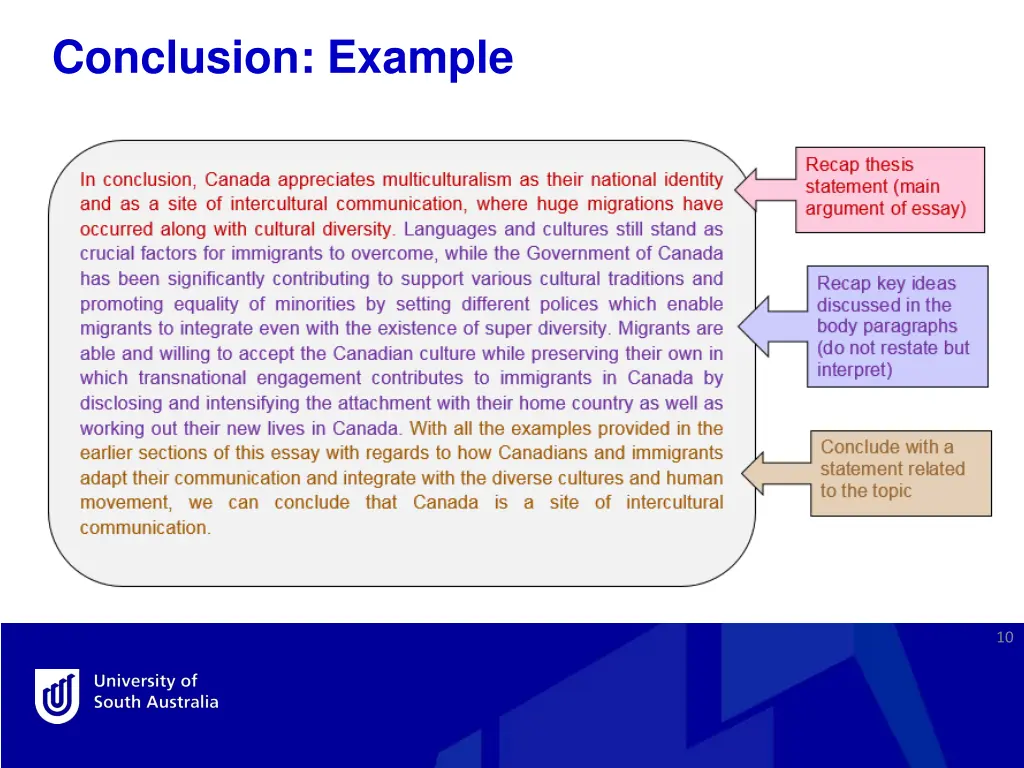
The essay structure Introduction (approximately 10%) General introduction to the topic Key issues related to the topic Aim of the paper (What) Scope of the discussion (How) Body (approximately 80%) Topic sentence Supporting statements (evidence) Critical thinking (Your voice) Example Conclusion (approximately 10%) Restate thesis statement (main message) Recap key points highlighted in the discussion Conclude with a statement related to the topic 3
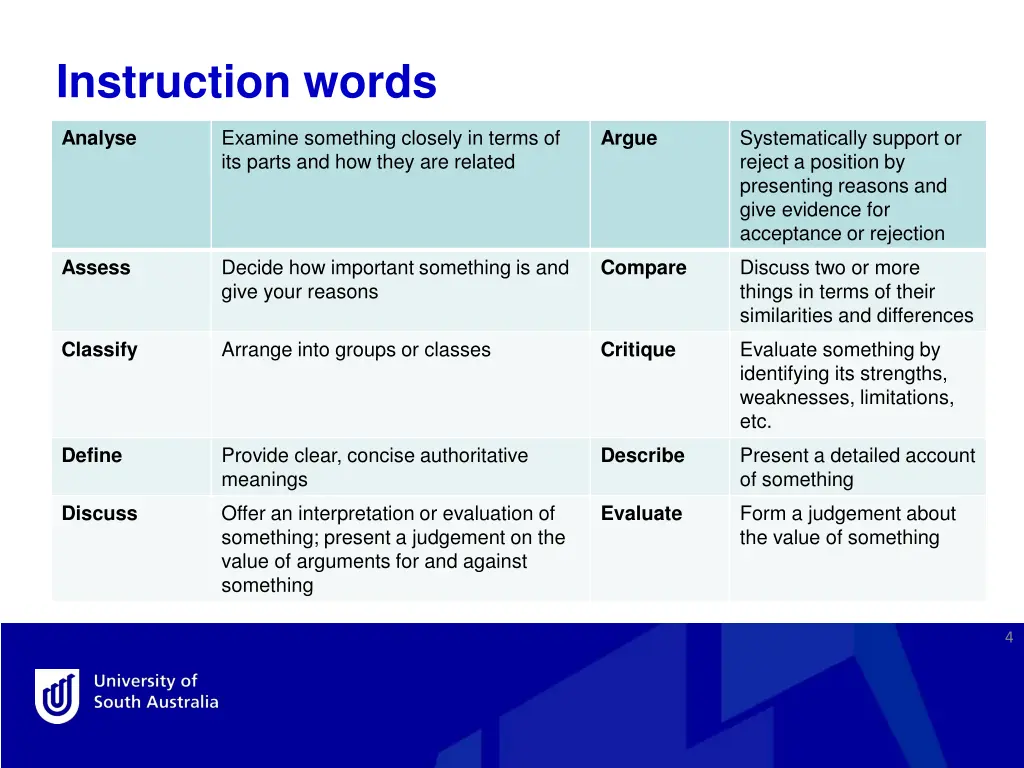
Instruction words Examine something closely in terms of its parts and how they are related Systematically support or reject a position by presenting reasons and give evidence for acceptance or rejection Analyse Argue Decide how important something is and give your reasons Discuss two or more things in terms of their similarities and differences Assess Compare Arrange into groups or classes Evaluate something by identifying its strengths, weaknesses, limitations, etc. Classify Critique Provide clear, concise authoritative meanings Present a detailed account of something Define Describe Offer an interpretation or evaluation of something; present a judgement on the value of arguments for and against something Form a judgement about the value of something Discuss Evaluate 4
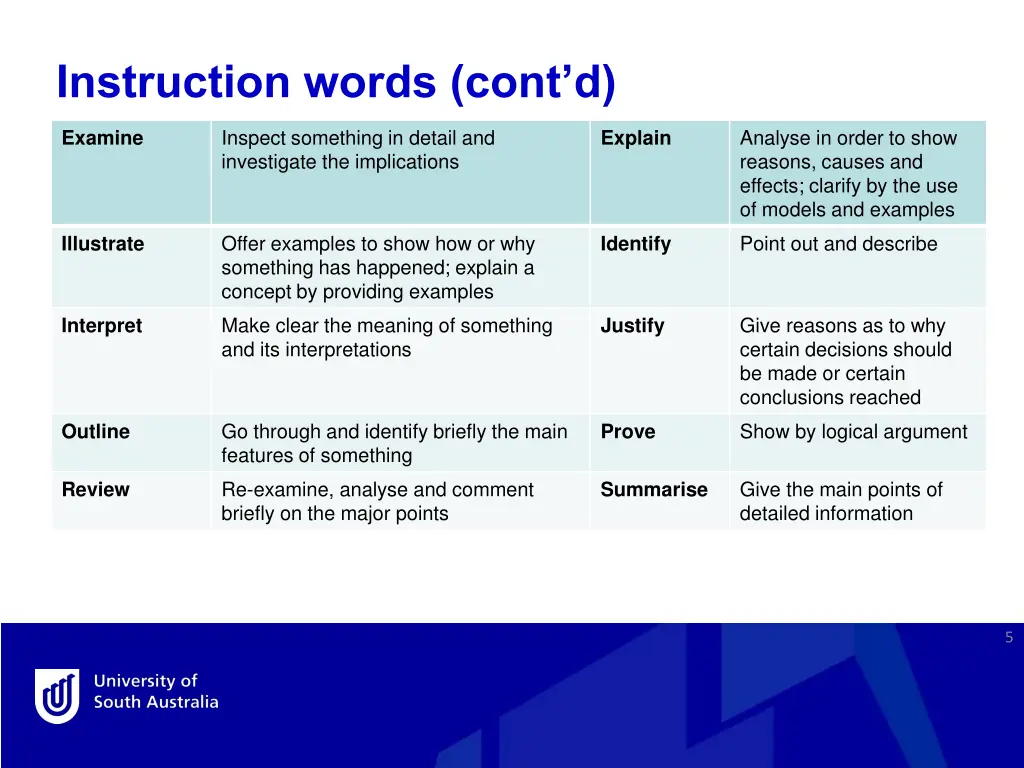
Instruction words (contd) Inspect something in detail and investigate the implications Analyse in order to show reasons, causes and effects; clarify by the use of models and examples Examine Explain Offer examples to show how or why something has happened; explain a concept by providing examples Point out and describe Illustrate Identify Make clear the meaning of something and its interpretations Give reasons as to why certain decisions should be made or certain conclusions reached Interpret Justify Go through and identify briefly the main features of something Show by logical argument Outline Prove Re-examine, analyse and comment briefly on the major points Give the main points of detailed information Review Summarise 5
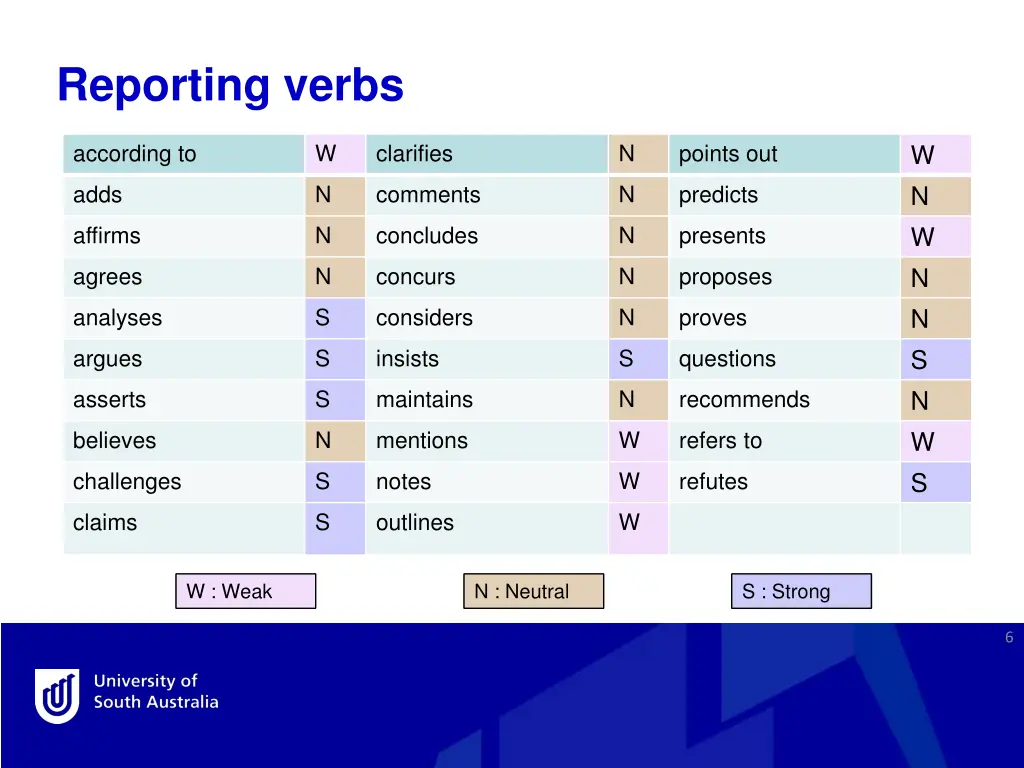
Reporting verbs W N W N N S N W S according to W clarifies N points out adds N comments N predicts affirms N concludes N presents agrees N concurs N proposes analyses S considers N proves argues S insists S questions asserts S maintains N recommends believes N mentions W refers to challenges S notes W refutes claims S outlines W W : Weak N : Neutral S : Strong 6
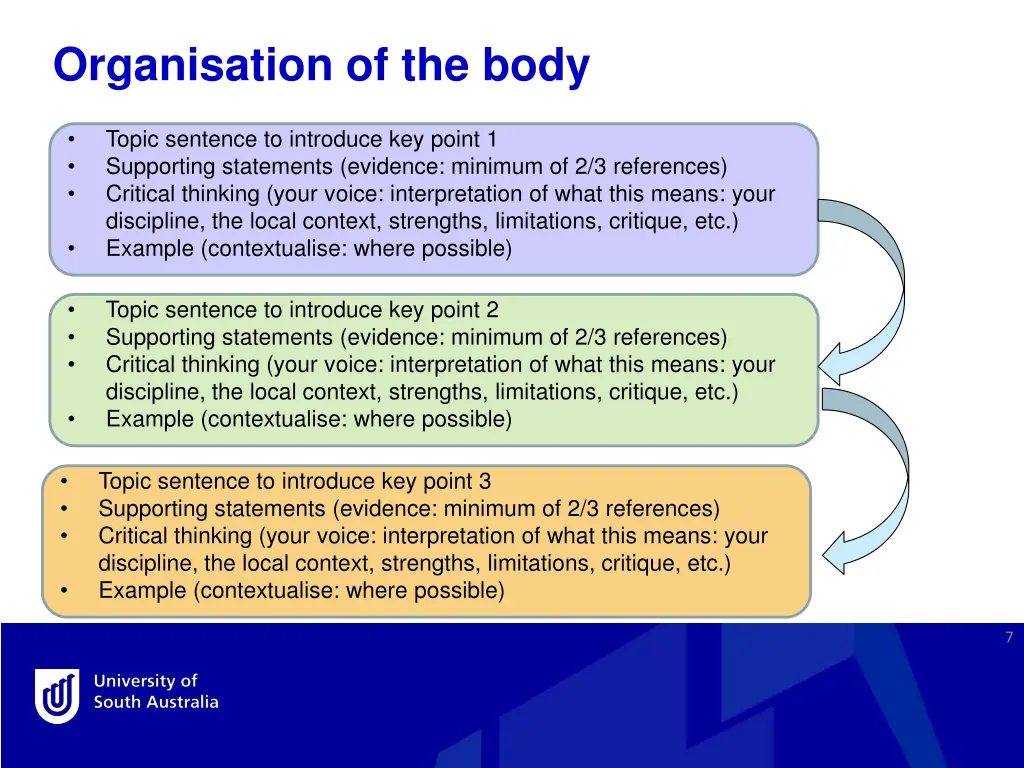
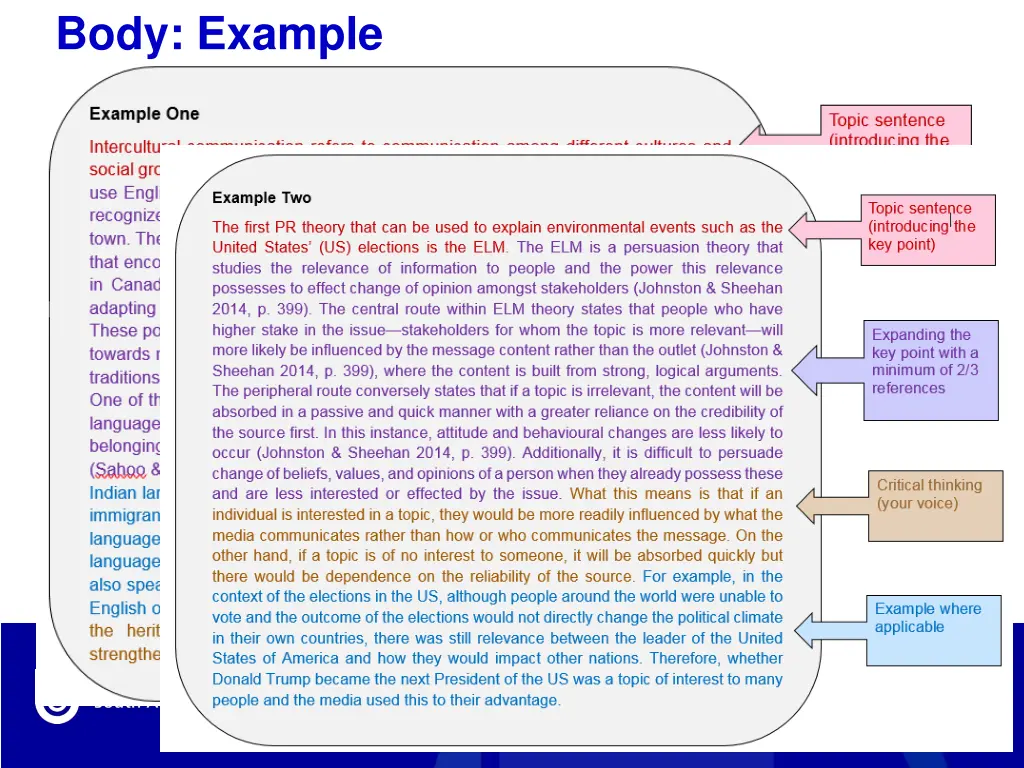
Organisation of the body Topic sentence to introduce key point 1 Supporting statements (evidence: minimum of 2/3 references) Critical thinking (your voice: interpretation of what this means: your discipline, the local context, strengths, limitations, critique, etc.) Example (contextualise: where possible) Topic sentence to introduce key point 2 Supporting statements (evidence: minimum of 2/3 references) Critical thinking (your voice: interpretation of what this means: your discipline, the local context, strengths, limitations, critique, etc.) Example (contextualise: where possible) Topic sentence to introduce key point 3 Supporting statements (evidence: minimum of 2/3 references) Critical thinking (your voice: interpretation of what this means: your discipline, the local context, strengths, limitations, critique, etc.) Example (contextualise: where possible) 7
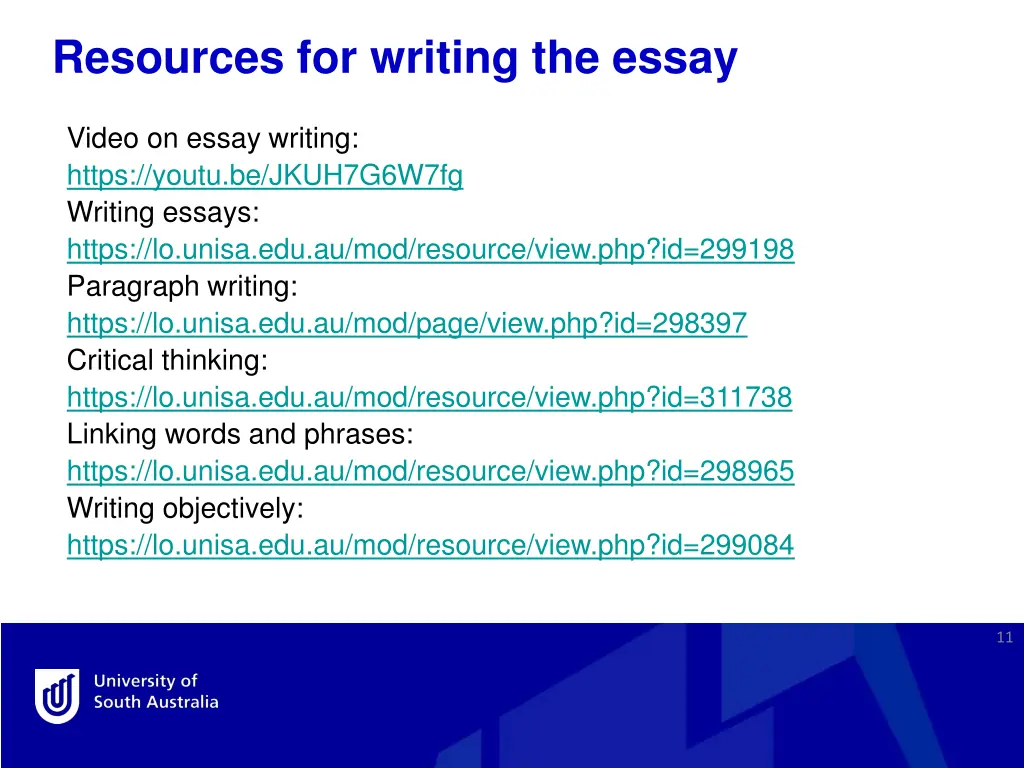
Resources for writing the essay Video on essay writing: https://youtu.be/JKUH7G6W7fg Writing essays: https://lo.unisa.edu.au/mod/resource/view.php?id=299198 Paragraph writing: https://lo.unisa.edu.au/mod/page/view.php?id=298397 Critical thinking: https://lo.unisa.edu.au/mod/resource/view.php?id=311738 Linking words and phrases: https://lo.unisa.edu.au/mod/resource/view.php?id=298965 Writing objectively: https://lo.unisa.edu.au/mod/resource/view.php?id=299084 11