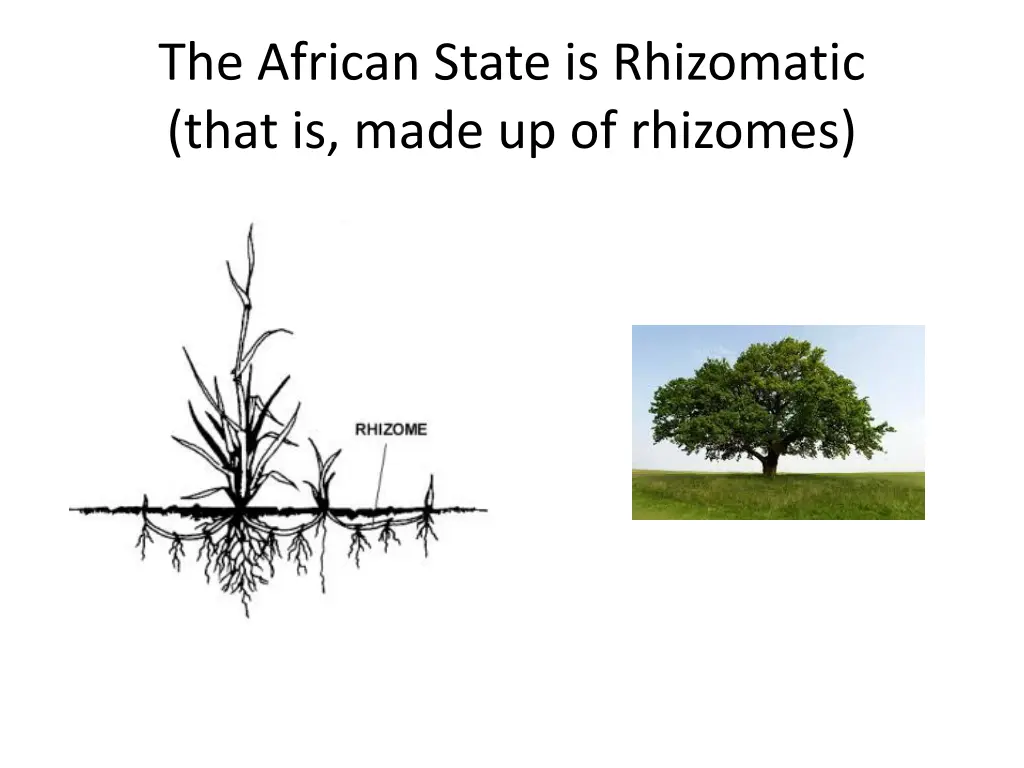
Explore the complex dynamics of the African state through the lenses of witchcraft, neoliberalism, debt, and societal outsiders. Delve into themes of modernity, corruption, personalized connections, and the rhizomatic nature of governance, all shaping the volatile landscape of African politics.
Please find below an Image/Link to download the presentation.
The content on the website is provided AS IS for your information and personal use only. It may not be sold, licensed, or shared on other websites without obtaining consent from the author. If you encounter any issues during the download, it is possible that the publisher has removed the file from their server.
You are allowed to download the files provided on this website for personal or commercial use, subject to the condition that they are used lawfully. All files are the property of their respective owners.
The content on the website is provided AS IS for your information and personal use only. It may not be sold, licensed, or shared on other websites without obtaining consent from the author.
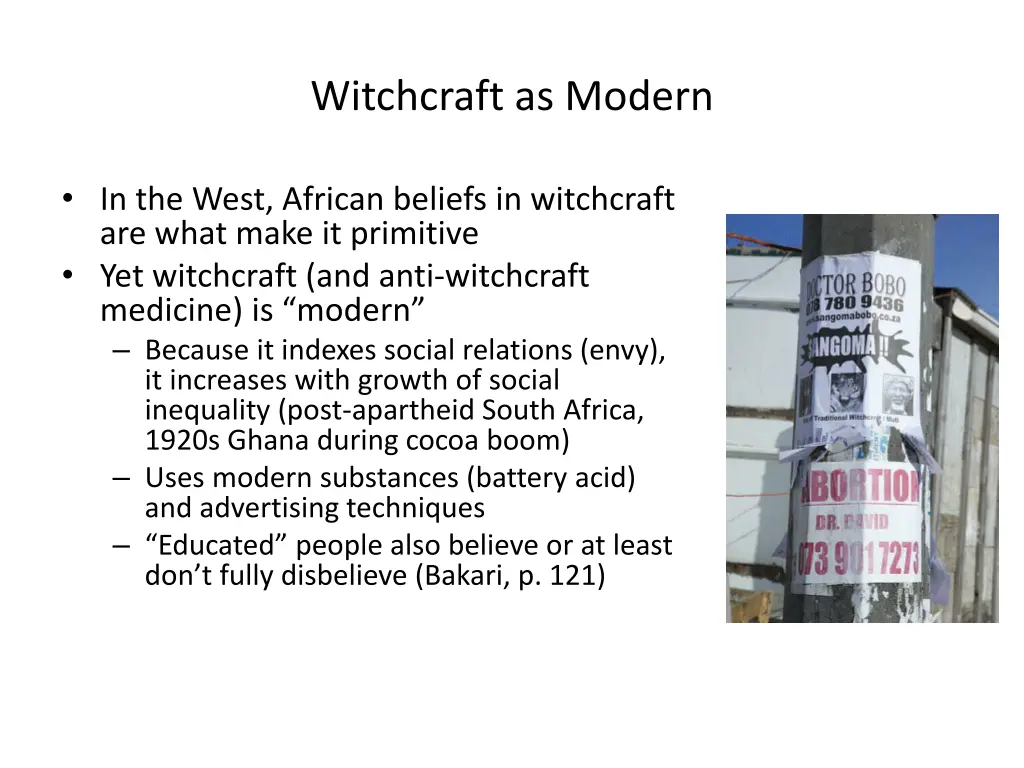
Witchcraft as Modern In the West, African beliefs in witchcraft are what make it primitive Yet witchcraft (and anti-witchcraft medicine) is modern Because it indexes social relations (envy), it increases with growth of social inequality (post-apartheid South Africa, 1920s Ghana during cocoa boom) Uses modern substances (battery acid) and advertising techniques Educated people also believe or at least don t fully disbelieve (Bakari, p. 121)
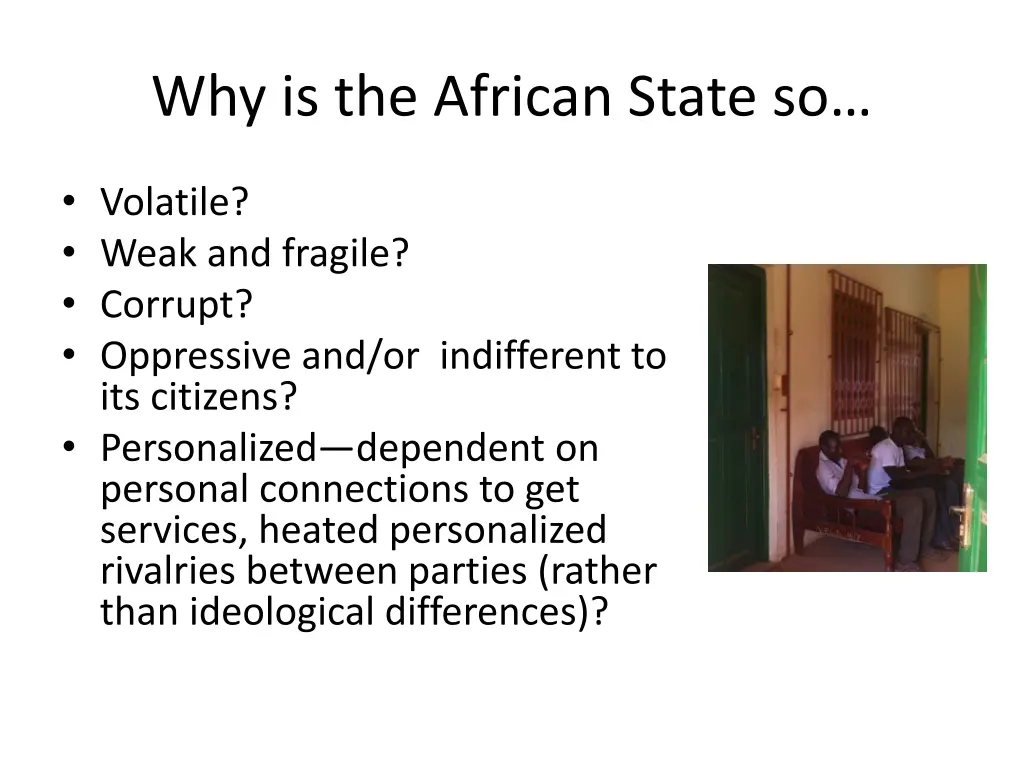
Why is the African State so Volatile? Weak and fragile? Corrupt? Oppressive and/or indifferent to its citizens? Personalized dependent on personal connections to get services, heated personalized rivalries between parties (rather than ideological differences)?
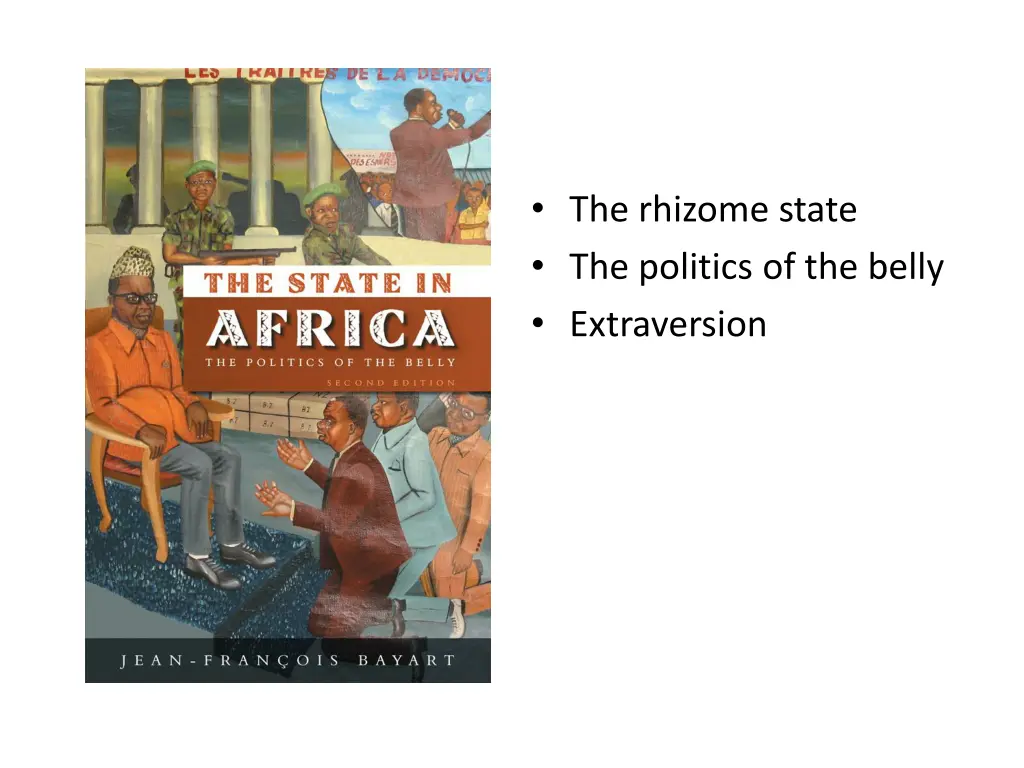
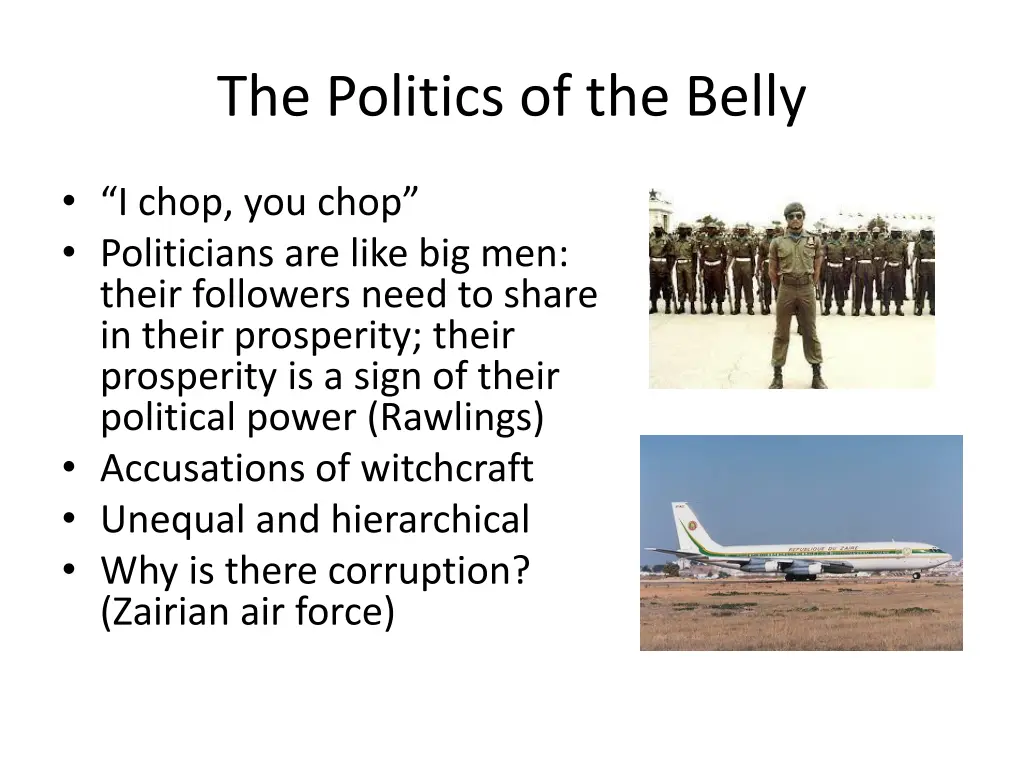
The Politics of the Belly I chop, you chop Politicians are like big men: their followers need to share in their prosperity; their prosperity is a sign of their political power (Rawlings) Accusations of witchcraft Unequal and hierarchical Why is there corruption? (Zairian air force)
Extraversion of the African State What does it mean for a person to be extraverted vs. introverted? The African state is similarly oriented to the outside---as a source of power and resources Some connections to pre-colonial ways that people obtain power; some connections to colonialism More accountable to the World Bank, oil companies, etc than to its own populace This extraversion works against democracy
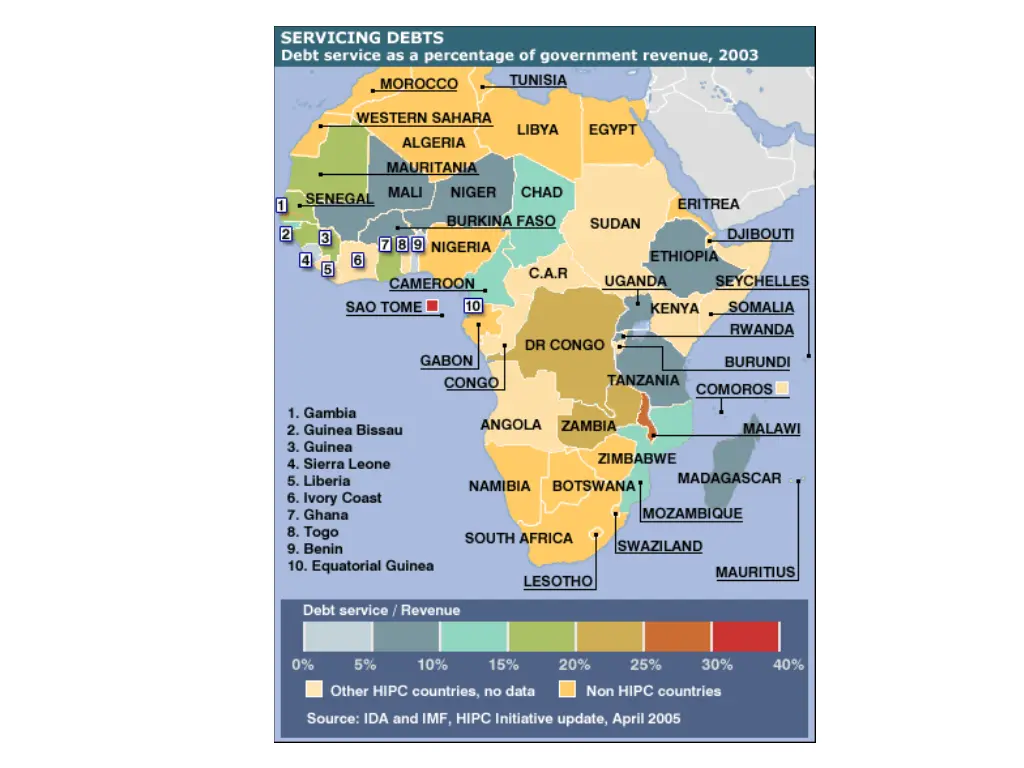
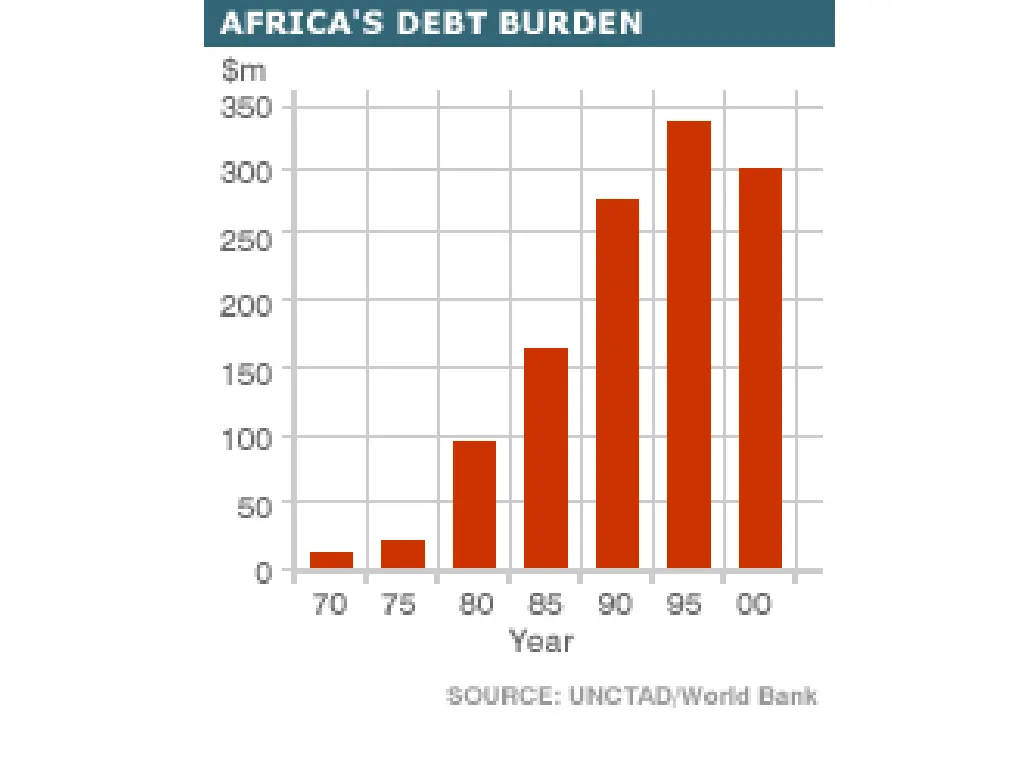
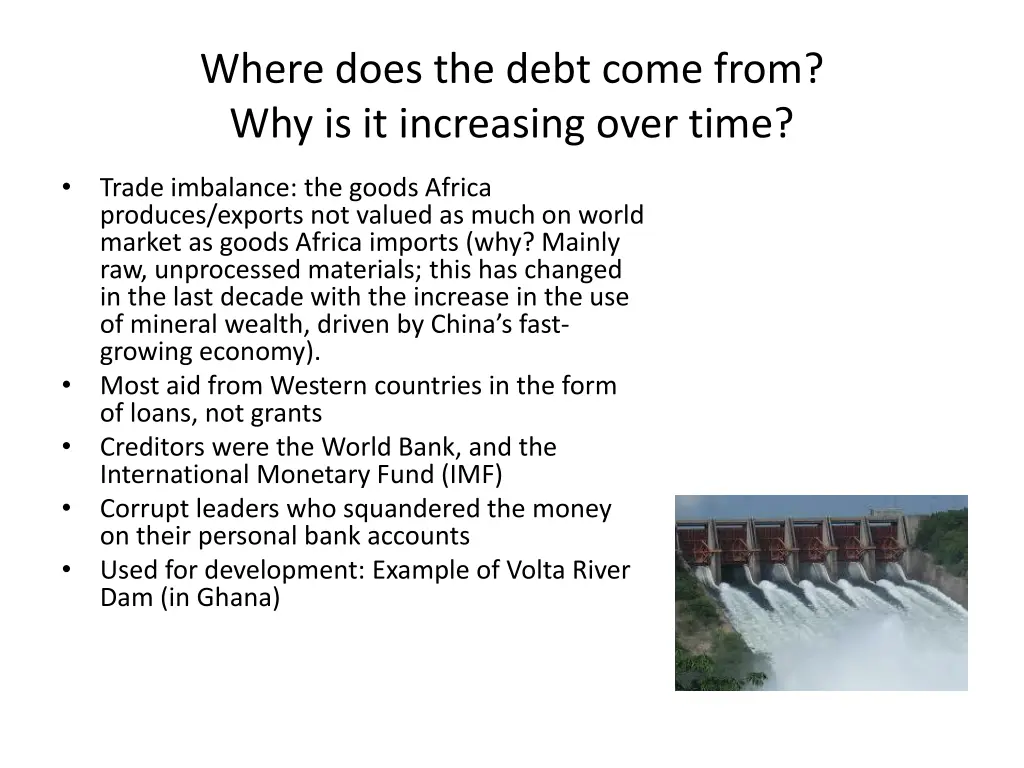
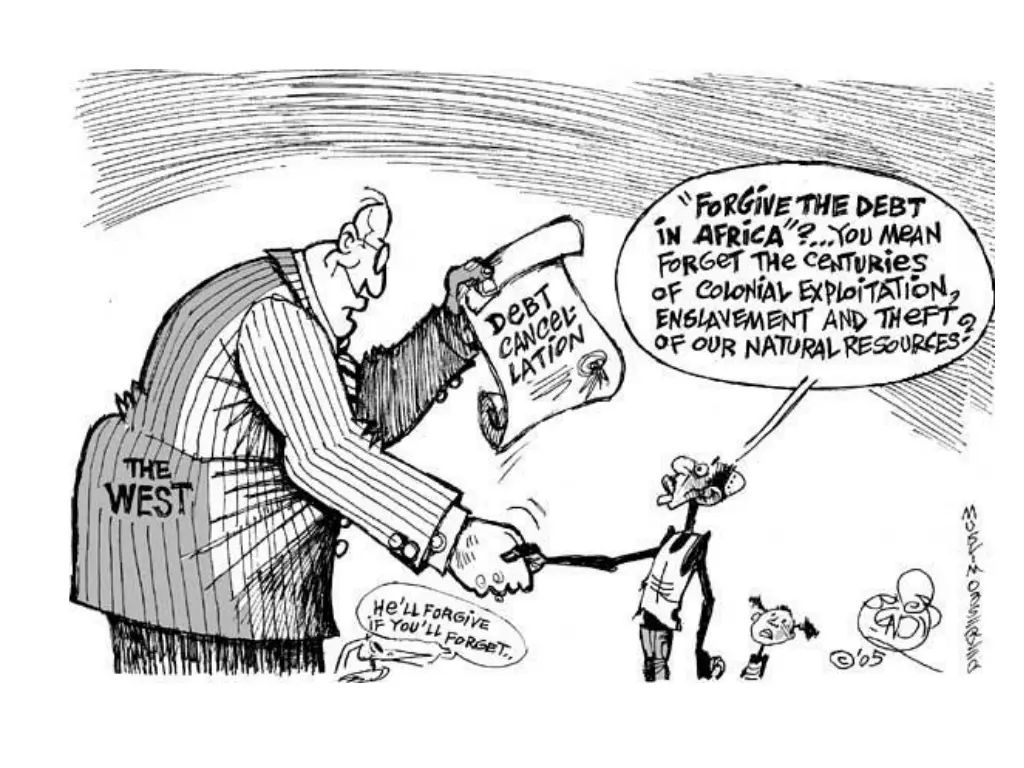
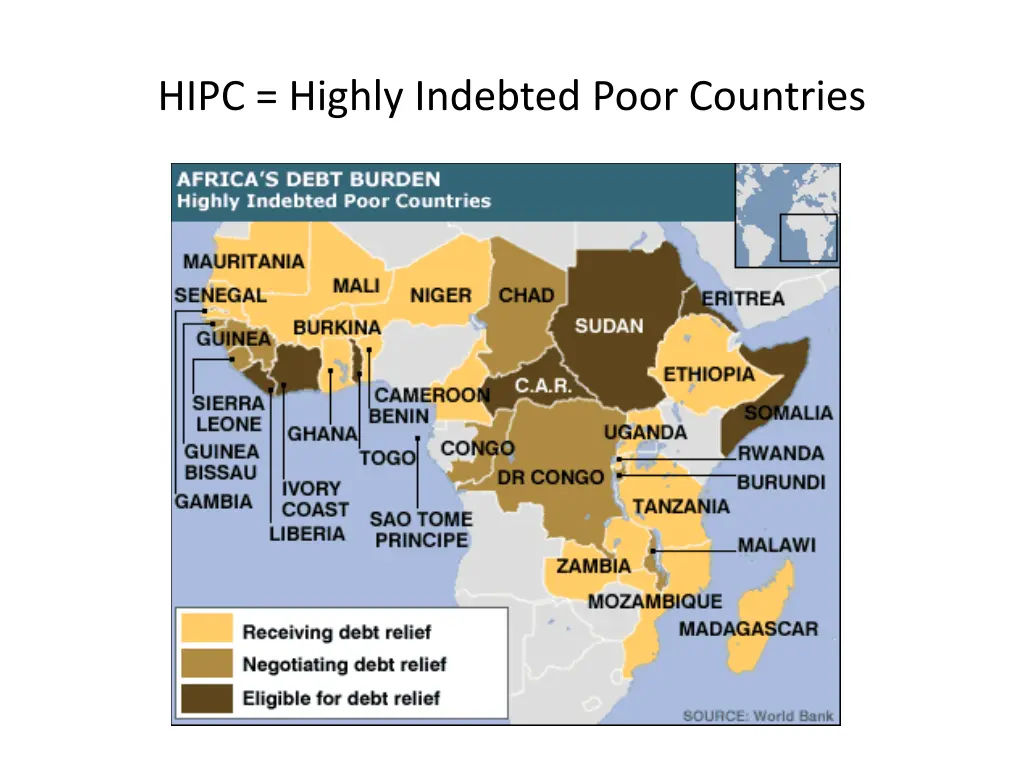
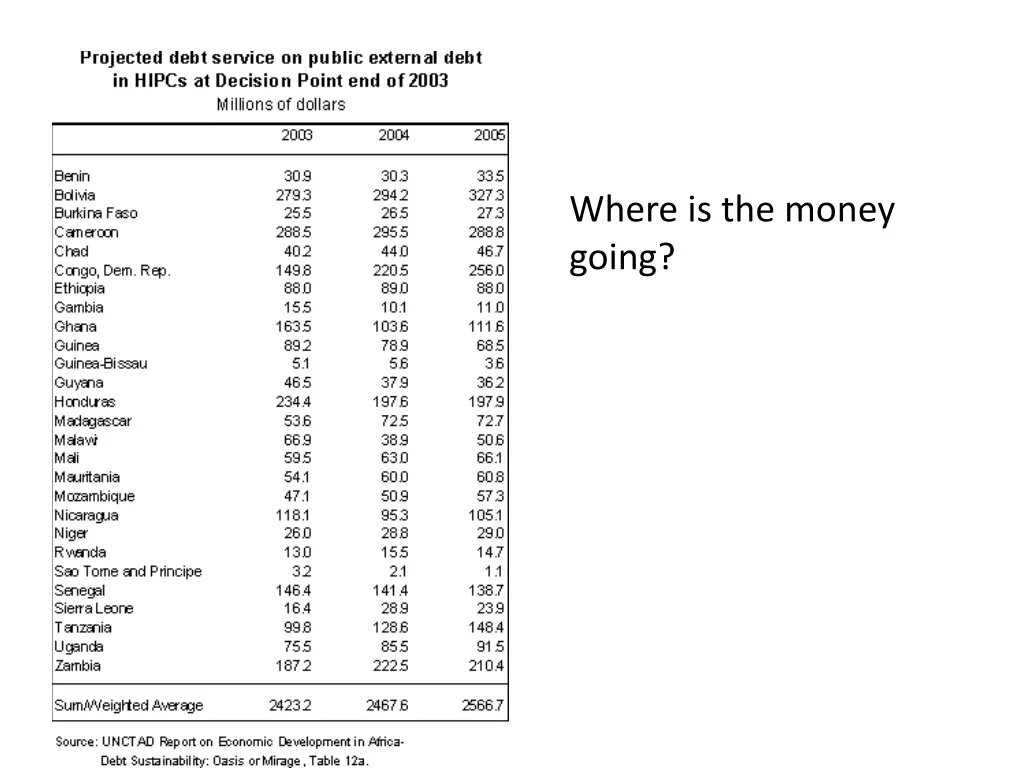
Where does the debt come from? Why is it increasing over time? Trade imbalance: the goods Africa produces/exports not valued as much on world market as goods Africa imports (why? Mainly raw, unprocessed materials; this has changed in the last decade with the increase in the use of mineral wealth, driven by China s fast- growing economy). Most aid from Western countries in the form of loans, not grants Creditors were the World Bank, and the International Monetary Fund (IMF) Corrupt leaders who squandered the money on their personal bank accounts Used for development: Example of Volta River Dam (in Ghana)
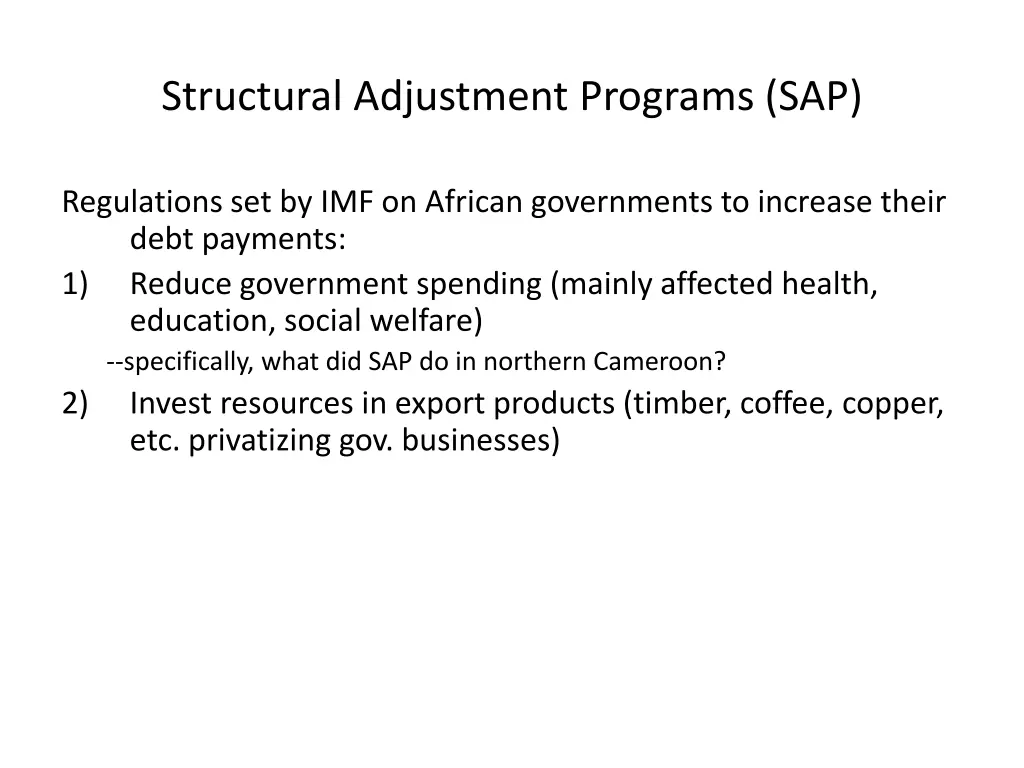
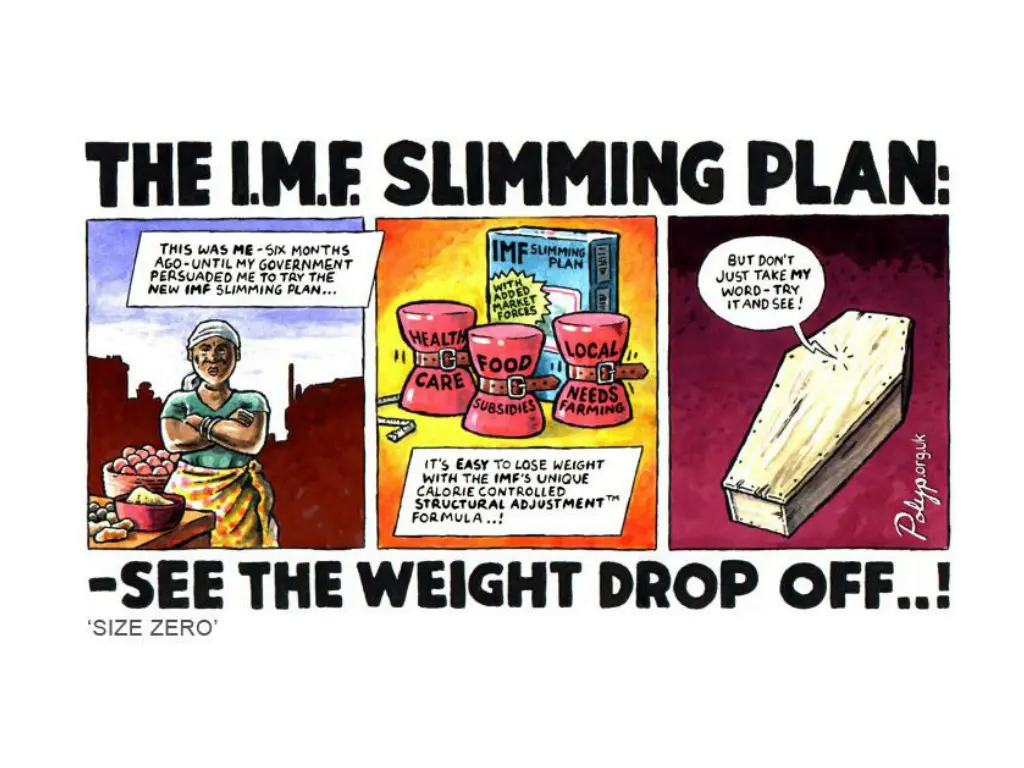
Structural Adjustment Programs (SAP) Regulations set by IMF on African governments to increase their debt payments: 1) Reduce government spending (mainly affected health, education, social welfare) --specifically, what did SAP do in northern Cameroon? 2) Invest resources in export products (timber, coffee, copper, etc. privatizing gov. businesses)