Insights from India's Time Use Data: Unpaid Work and Women's Participation
Explore the challenges faced by women in India's labor force participation, using time use data to analyze unpaid work, social norms, and more. Discover the impact on paid work and the effectiveness of surveys in capturing work activities.

Download Presentation

Please find below an Image/Link to download the presentation.
The content on the website is provided AS IS for your information and personal use only. It may not be sold, licensed, or shared on other websites without obtaining consent from the author. If you encounter any issues during the download, it is possible that the publisher has removed the file from their server.
You are allowed to download the files provided on this website for personal or commercial use, subject to the condition that they are used lawfully. All files are the property of their respective owners.
The content on the website is provided AS IS for your information and personal use only. It may not be sold, licensed, or shared on other websites without obtaining consent from the author.
E N D
Presentation Transcript
Unpaid Work and Work Participation of Women: Insights from India s Time Use Data Author: Surajit Deb (University of Delhi) Presenter: Sabrina Wulff Pabilonia (U.S. Bureau of Labor Statistics) IARIW 2021 General Conference August 24, 2021 1 U.S. BUREAU OF LABOR STATISTICS bls.gov
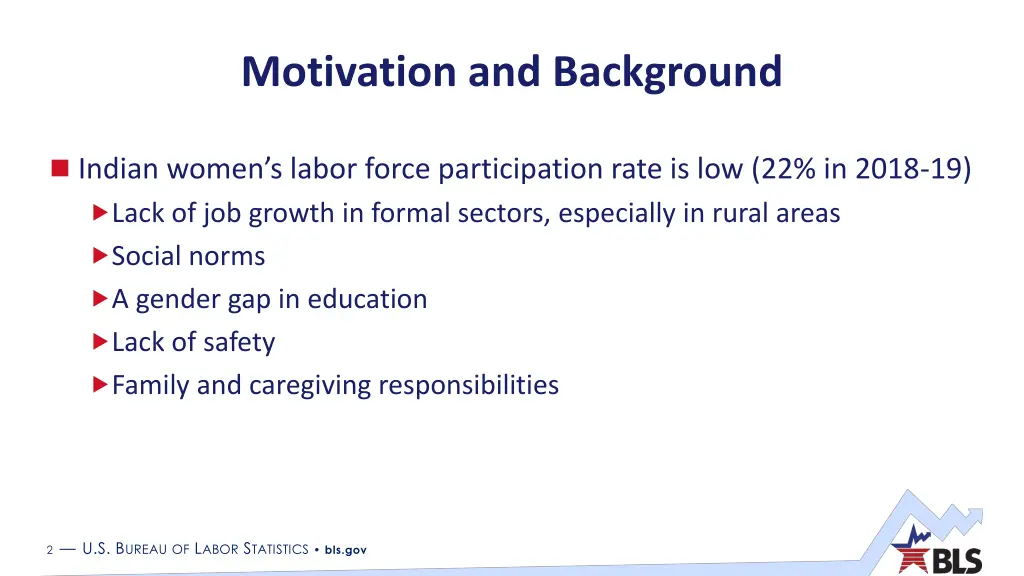
Motivation and Background Indian women s labor force participation rate is low (22% in 2018-19) Lack of job growth in formal sectors, especially in rural areas Social norms A gender gap in education Lack of safety Family and caregiving responsibilities 2 U.S. BUREAUOF LABOR STATISTICS bls.gov
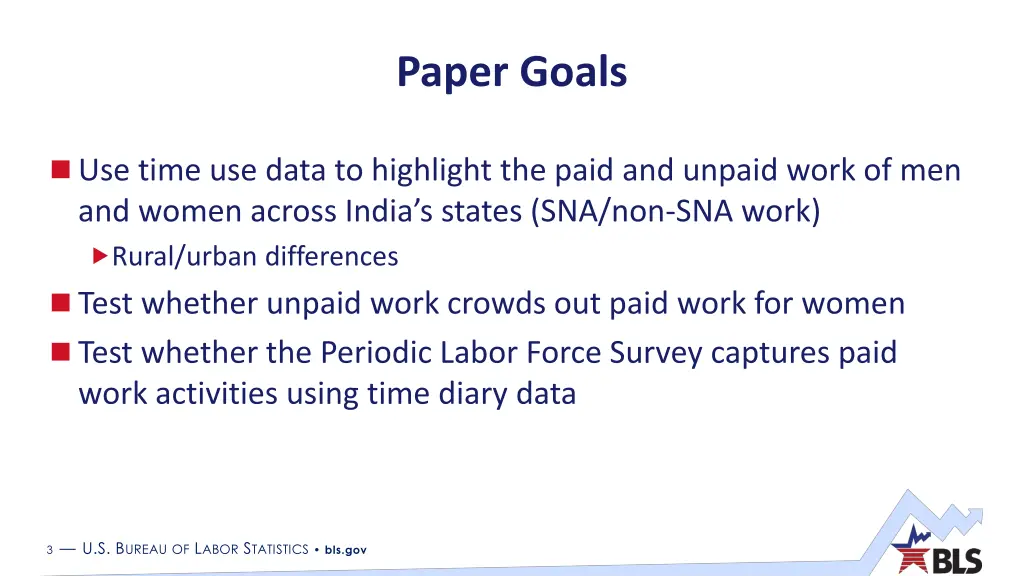
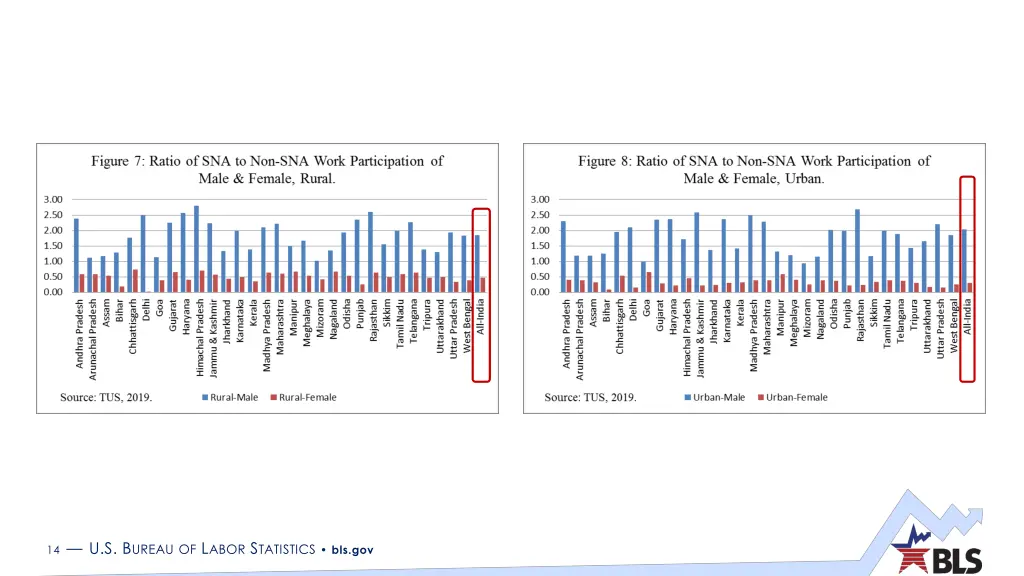
Paper Goals Use time use data to highlight the paid and unpaid work of men and women across India s states (SNA/non-SNA work) Rural/urban differences Test whether unpaid work crowds out paid work for women Test whether the Periodic Labor Force Survey captures paid work activities using time diary data 3 U.S. BUREAUOF LABOR STATISTICS bls.gov
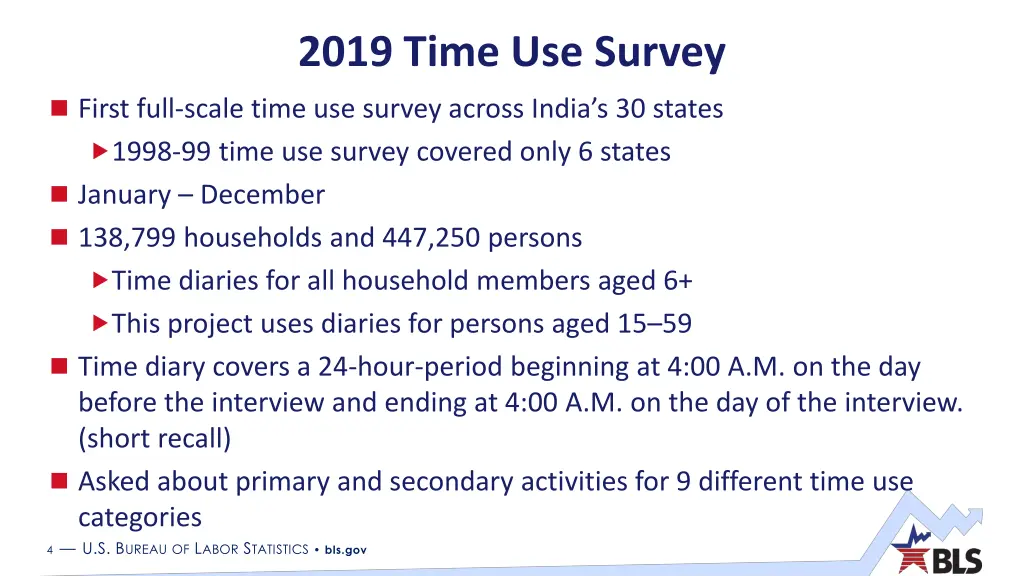
2019 Time Use Survey First full-scale time use survey across India s 30 states 1998-99 time use survey covered only 6 states January December 138,799 households and 447,250 persons Time diaries for all household members aged 6+ This project uses diaries for persons aged 15 59 Time diary covers a 24-hour-period beginning at 4:00 A.M. on the day before the interview and ending at 4:00 A.M. on the day of the interview. (short recall) Asked about primary and secondary activities for 9 different time use categories 4 U.S. BUREAUOF LABOR STATISTICS bls.gov
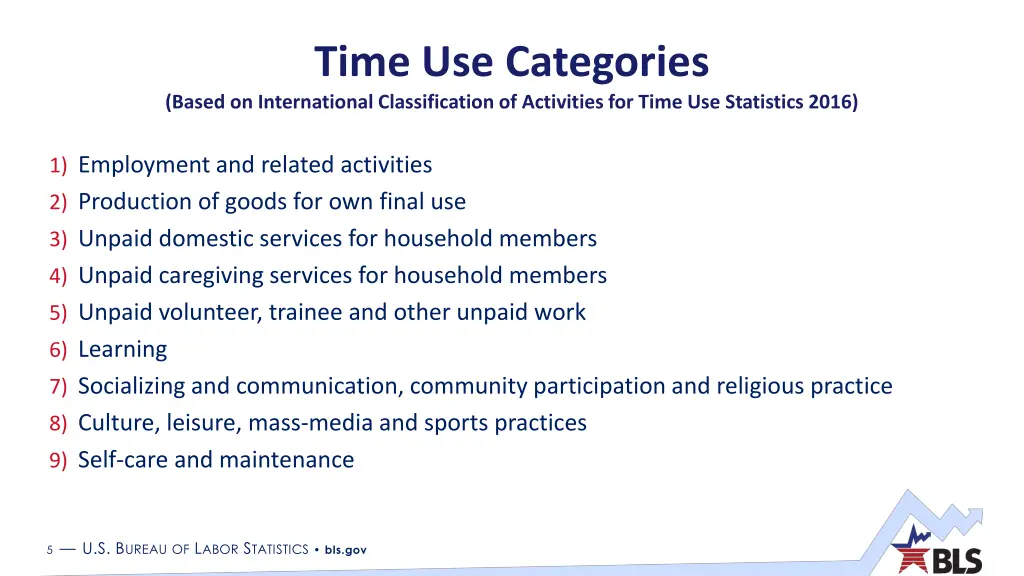
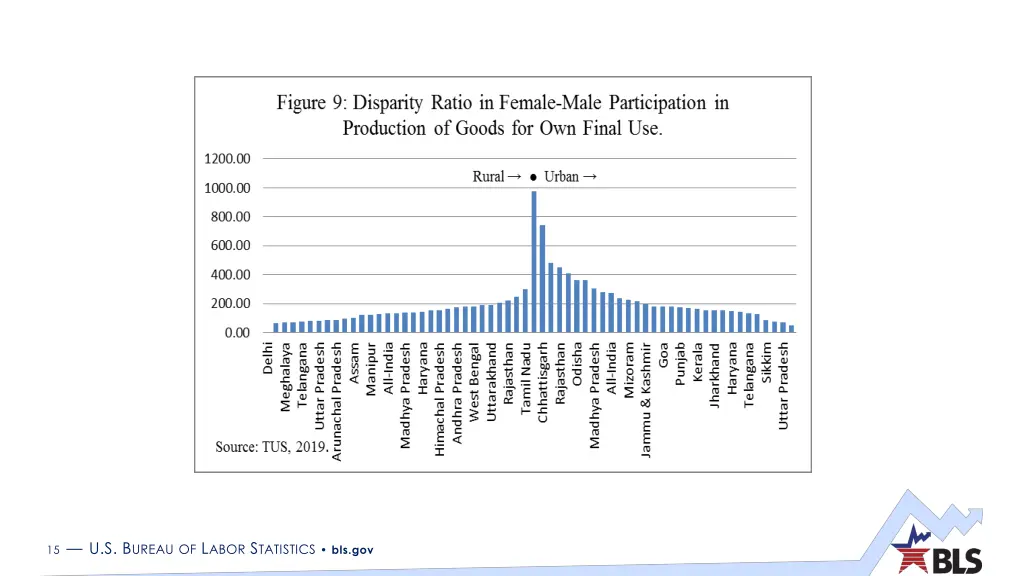
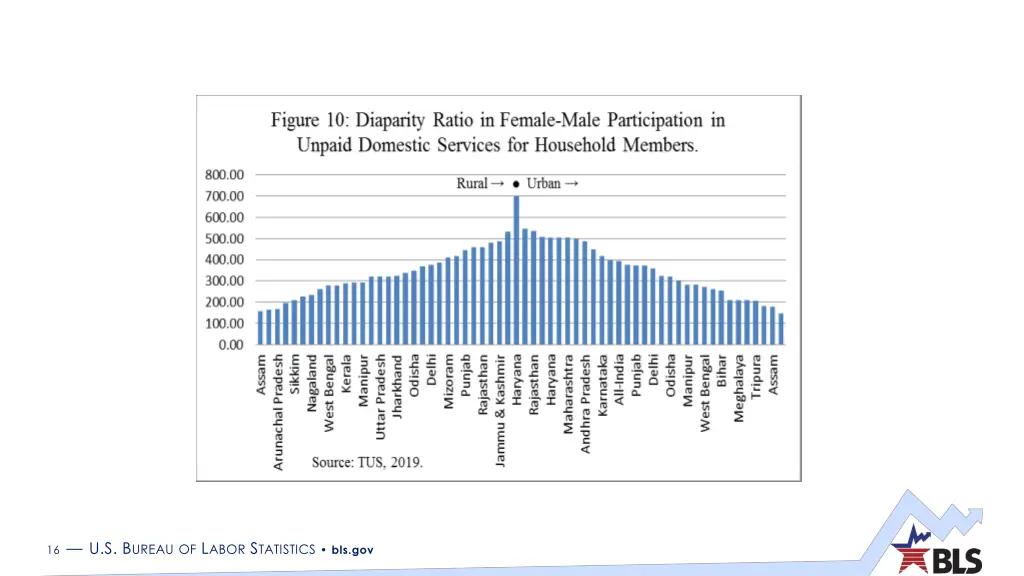
Time Use Categories (Based on International Classification of Activities for Time Use Statistics 2016) 1) Employment and related activities 2) Production of goods for own final use 3) Unpaid domestic services for household members 4) Unpaid caregiving services for household members 5) Unpaid volunteer, trainee and other unpaid work 6) Learning 7) Socializing and communication, community participation and religious practice 8) Culture, leisure, mass-media and sports practices 9) Self-care and maintenance 5 U.S. BUREAUOF LABOR STATISTICS bls.gov
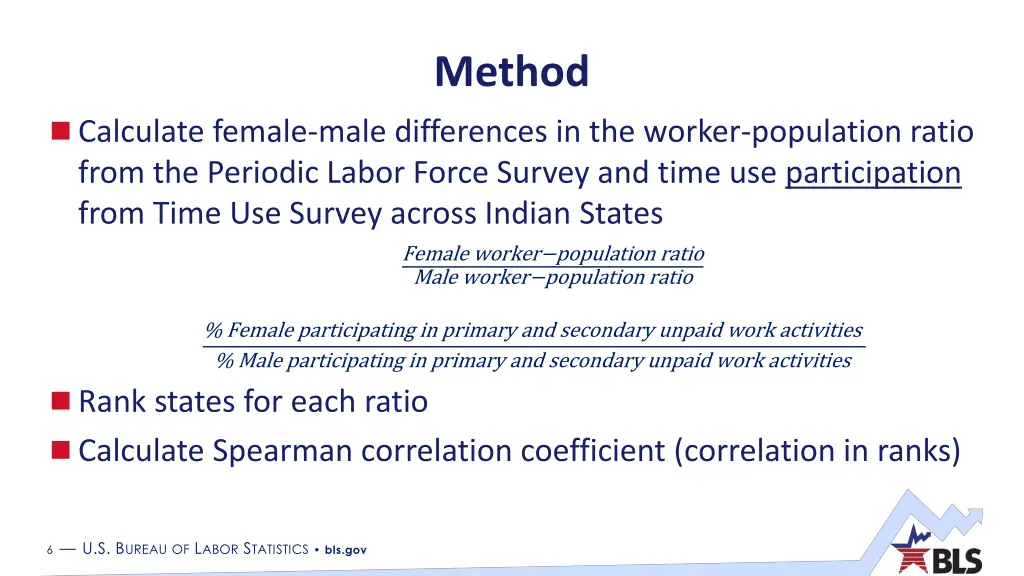
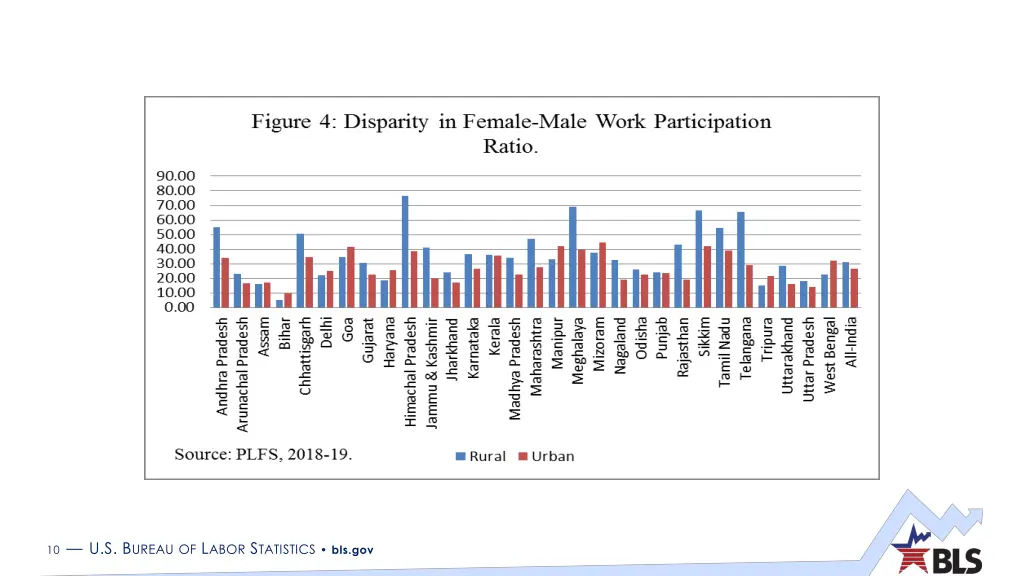
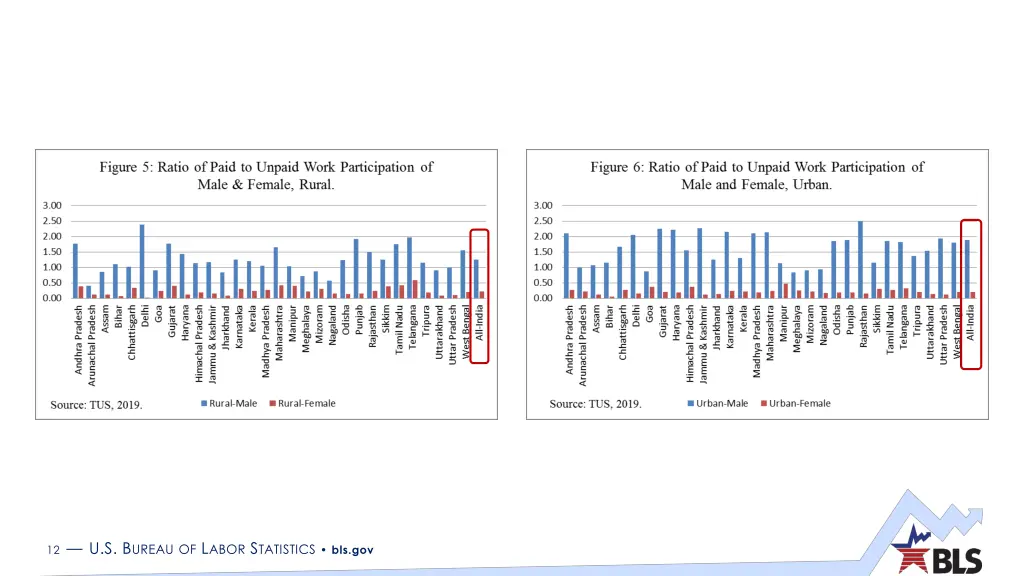
Method Calculate female-male differences in the worker-population ratio from the Periodic Labor Force Survey and time use participation from Time Use Survey across Indian States Male worker population ratio Female worker population ratio % Female participating in primary and secondary unpaid work activities % Male participating in primary and secondary unpaid work activities Rank states for each ratio Calculate Spearman correlation coefficient (correlation in ranks) 6 U.S. BUREAUOF LABOR STATISTICS bls.gov
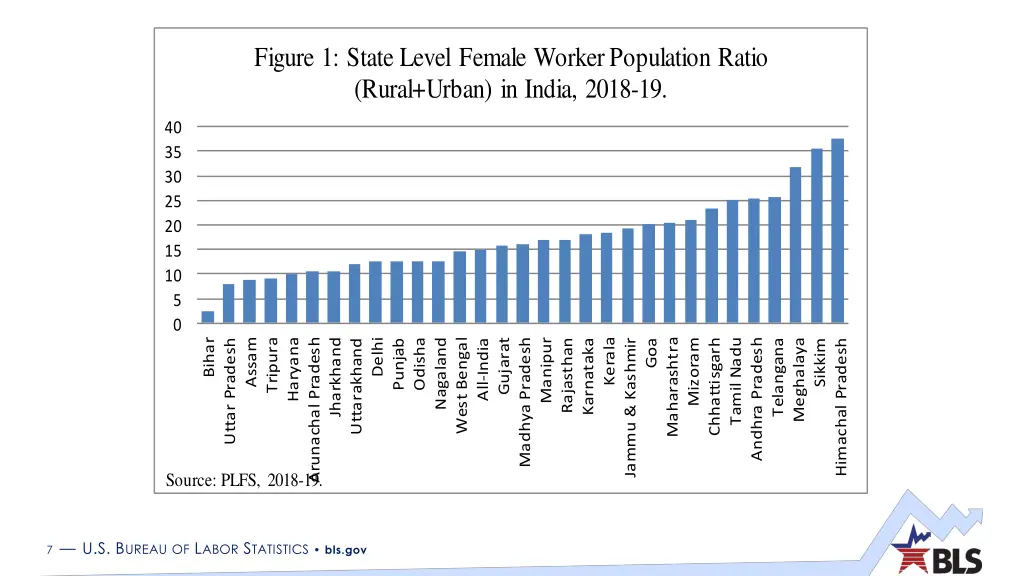
Figure 1: State Level Female Worker Population Ratio (Rural+Urban) in India, 2018-19. 40 35 30 25 20 15 10 5 0 Maharashtra Arunachal Pradesh Assam Bihar Kerala West Bengal Tripura Andhra Pradesh Haryana Delhi Tamil Nadu Jharkhand Manipur Madhya Pradesh Mizoram Nagaland Gujarat Chhattisgarh Meghalaya Odisha Jammu & Kashmir Telangana Rajasthan Karnataka Uttar Pradesh Goa All-India Himachal Pradesh Sikkim Uttarakhand Punjab Source: PLFS, 2018-19. 7 U.S. BUREAUOF LABOR STATISTICS bls.gov
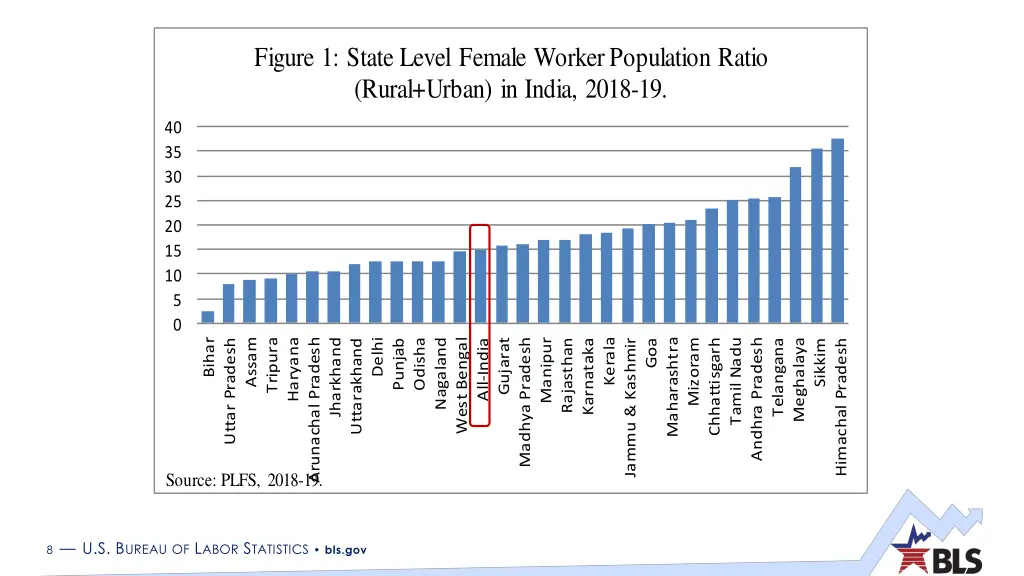
Figure 1: State Level Female Worker Population Ratio (Rural+Urban) in India, 2018-19. 40 35 30 25 20 15 10 5 0 Maharashtra Arunachal Pradesh Assam Bihar Kerala West Bengal Tripura Andhra Pradesh Haryana Delhi Tamil Nadu Jharkhand Manipur Madhya Pradesh Mizoram Nagaland Gujarat Chhattisgarh Meghalaya Odisha Jammu & Kashmir Telangana Rajasthan Karnataka Uttar Pradesh Goa All-India Himachal Pradesh Sikkim Uttarakhand Punjab Source: PLFS, 2018-19. 8 U.S. BUREAUOF LABOR STATISTICS bls.gov
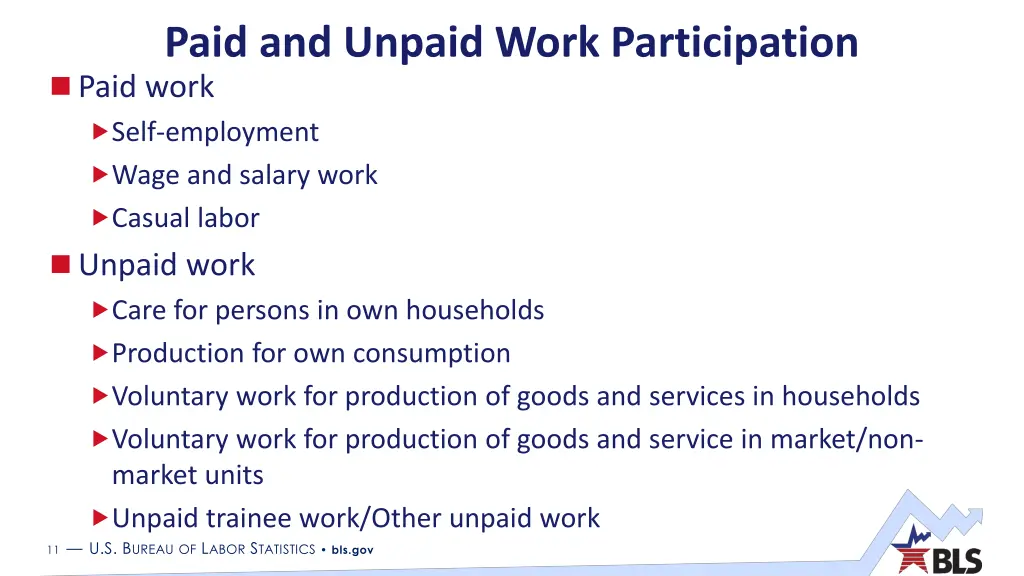
Paid and Unpaid Work Participation Paid work Self-employment Wage and salary work Casual labor Unpaid work Care for persons in own households Production for own consumption Voluntary work for production of goods and services in households Voluntary work for production of goods and service in market/non- market units Unpaid trainee work/Other unpaid work 11 U.S. BUREAUOF LABOR STATISTICS bls.gov
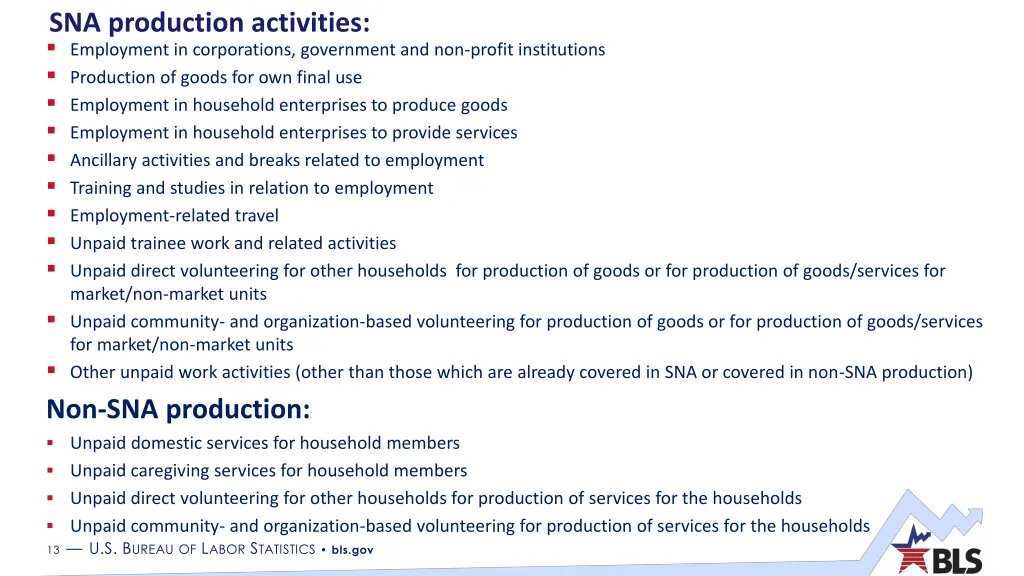
SNA production activities: Employment in corporations, government and non-profit institutions Production of goods for own final use Employment in household enterprises to produce goods Employment in household enterprises to provide services Ancillary activities and breaks related to employment Training and studies in relation to employment Employment-related travel Unpaid trainee work and related activities Unpaid direct volunteering for other households for production of goods or for production of goods/services for market/non-market units Unpaid community- and organization-based volunteering for production of goods or for production of goods/services for market/non-market units Other unpaid work activities (other than those which are already covered in SNA or covered in non-SNA production) Non-SNA production: Unpaid domestic services for household members Unpaid caregiving services for household members Unpaid direct volunteering for other households for production of services for the households Unpaid community- and organization-based volunteering for production of services for the households 13 U.S. BUREAUOF LABOR STATISTICS bls.gov
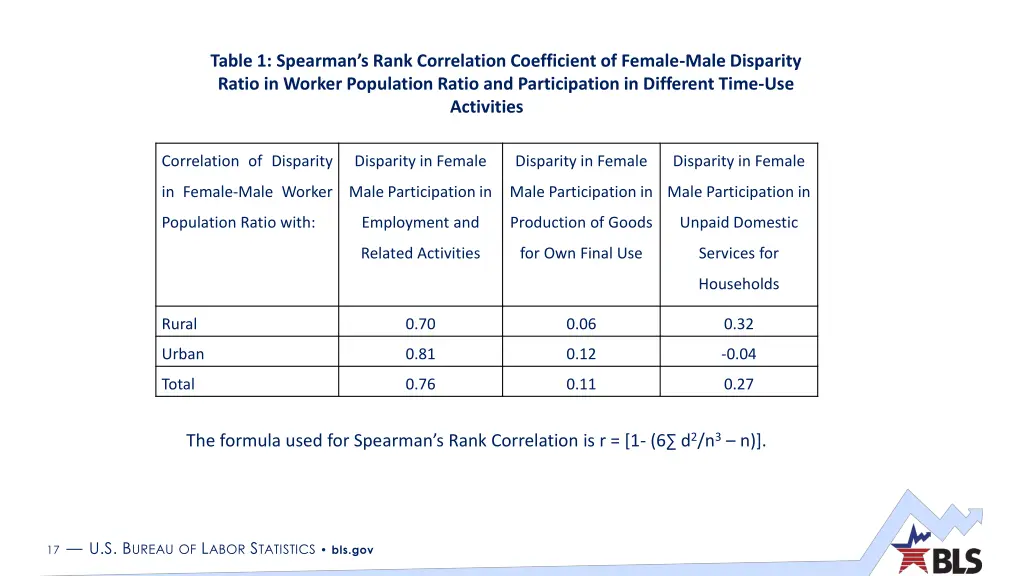
Table 1: Spearmans Rank Correlation Coefficient of Female-Male Disparity Ratio in Worker Population Ratio and Participation in Different Time-Use Activities Correlation of Disparity Disparity in Female Disparity in Female Disparity in Female in Female-Male Worker Male Participation in Male Participation in Male Participation in Population Ratio with: Employment and Production of Goods Unpaid Domestic Related Activities for Own Final Use Services for Households Rural 0.70 0.06 0.32 Urban 0.81 0.12 -0.04 Total 0.76 0.11 0.27 The formula used for Spearman s Rank Correlation is r = [1- (6 d2/n3 n)]. 17 U.S. BUREAUOF LABOR STATISTICS bls.gov
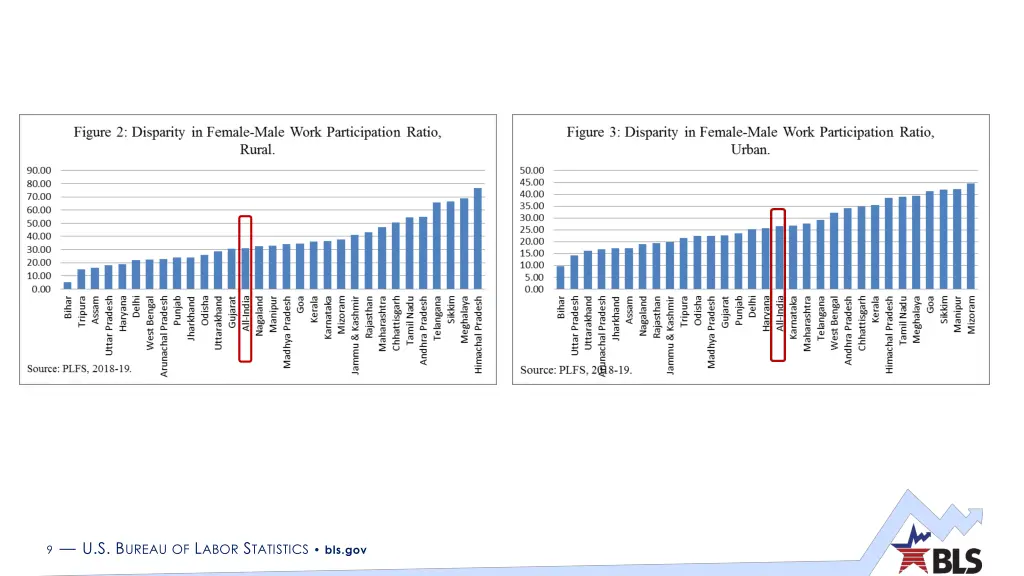
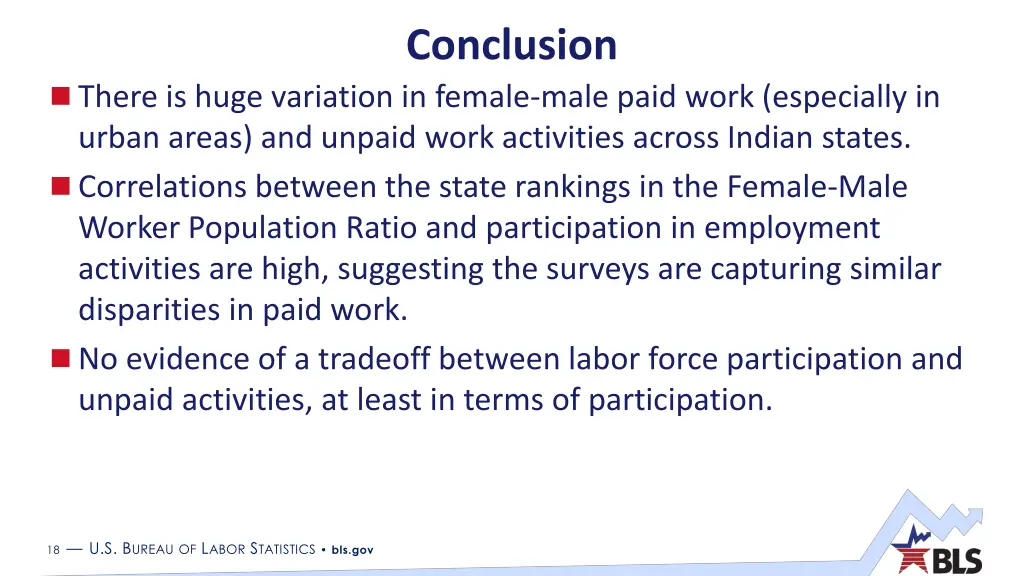
Conclusion There is huge variation in female-male paid work (especially in urban areas) and unpaid work activities across Indian states. Correlations between the state rankings in the Female-Male Worker Population Ratio and participation in employment activities are high, suggesting the surveys are capturing similar disparities in paid work. No evidence of a tradeoff between labor force participation and unpaid activities, at least in terms of participation. 18 U.S. BUREAUOF LABOR STATISTICS bls.gov
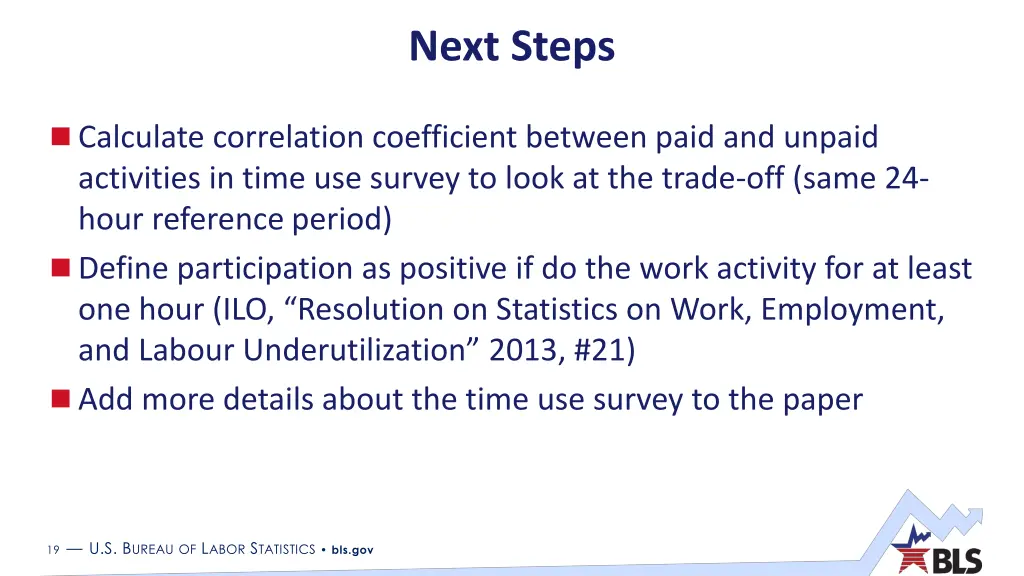
Next Steps Calculate correlation coefficient between paid and unpaid activities in time use survey to look at the trade-off (same 24- hour reference period) Define participation as positive if do the work activity for at least one hour (ILO, Resolution on Statistics on Work, Employment, and Labour Underutilization 2013, #21) Add more details about the time use survey to the paper 19 U.S. BUREAUOF LABOR STATISTICS bls.gov
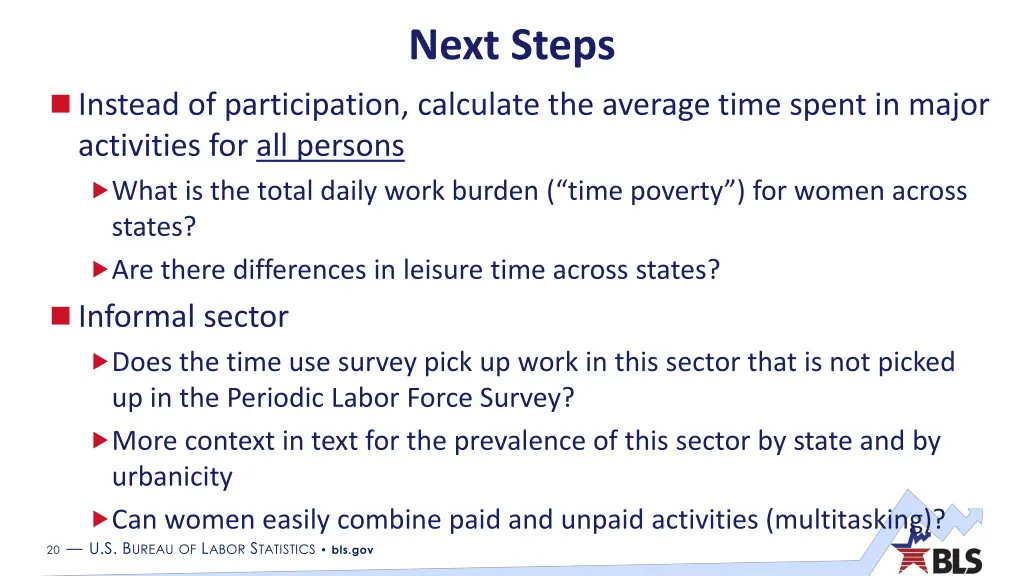
Next Steps Instead of participation, calculate the average time spent in major activities for all persons What is the total daily work burden ( time poverty ) for women across states? Are there differences in leisure time across states? Informal sector Does the time use survey pick up work in this sector that is not picked up in the Periodic Labor Force Survey? More context in text for the prevalence of this sector by state and by urbanicity Can women easily combine paid and unpaid activities (multitasking)? 20 U.S. BUREAUOF LABOR STATISTICS bls.gov
Contact Information Sabrina Wulff Pabilonia Office of Productivity and Technology Bureau of Labor Statistics www.bls.gov/dpr 202-691-5614 Pabilonia.Sabrina@bls.gov 21 U.S. BUREAUOF LABOR STATISTICS bls.gov