Modeling Inference Rules
This content delves into the concept of modeling inference rules, showcasing examples such as Modus Ponens and its application in logical assertions. It illustrates how assertions can be validated using the Alloy Analyzer, emphasizing a particular case about Socrates and his mortality. The content further examines scenarios involving personal responsibilities and caring behaviors, demonstrating the logical conclusions derived from these assertions.

Download Presentation

Please find below an Image/Link to download the presentation.
The content on the website is provided AS IS for your information and personal use only. It may not be sold, licensed, or shared on other websites without obtaining consent from the author.If you encounter any issues during the download, it is possible that the publisher has removed the file from their server.
You are allowed to download the files provided on this website for personal or commercial use, subject to the condition that they are used lawfully. All files are the property of their respective owners.
The content on the website is provided AS IS for your information and personal use only. It may not be sold, licensed, or shared on other websites without obtaining consent from the author.
E N D
Presentation Transcript
Modeling Inference Rules Roger L. Costello March 26, 2018
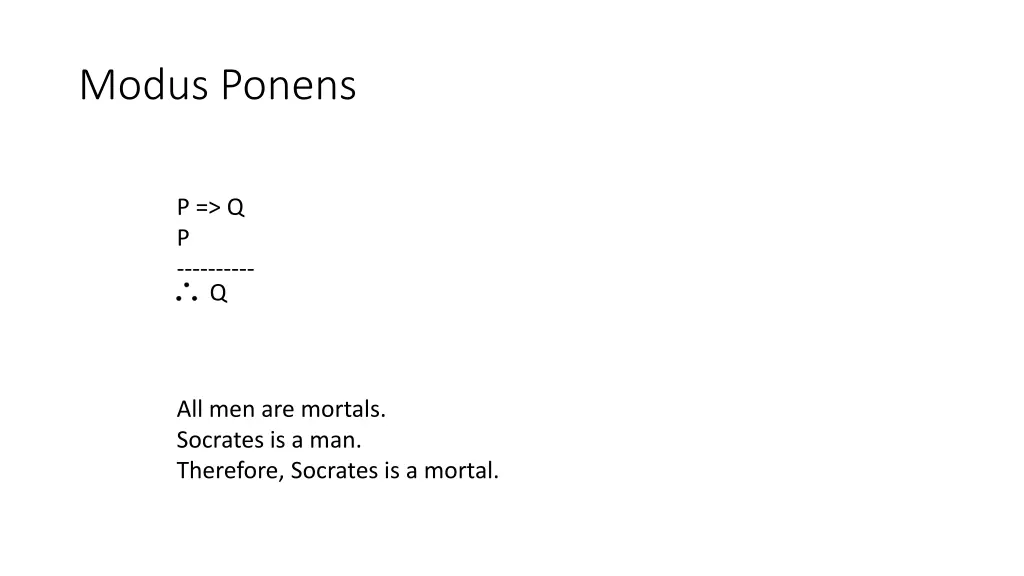
Modus Ponens P => Q P ---------- Q All men are mortals. Socrates is a man. Therefore, Socrates is a mortal.
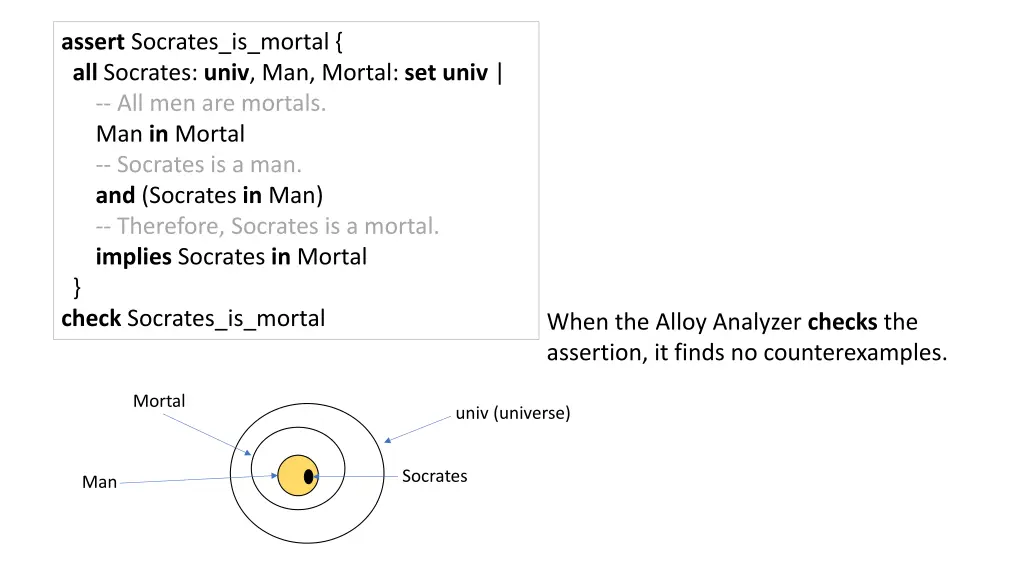
assert Socrates_is_mortal { all Socrates: univ, Man, Mortal: setuniv | -- All men are mortals. Man in Mortal -- Socrates is a man. and (Socrates in Man) -- Therefore, Socrates is a mortal. implies Socrates in Mortal } check Socrates_is_mortal When the Alloy Analyzer checks the assertion, it finds no counterexamples. Mortal univ (universe) Socrates Man
Model consists of just an assert This example shows that an Alloy model may consist of just an assert (and check command). The model does not contain any signatures, facts, or predicates.
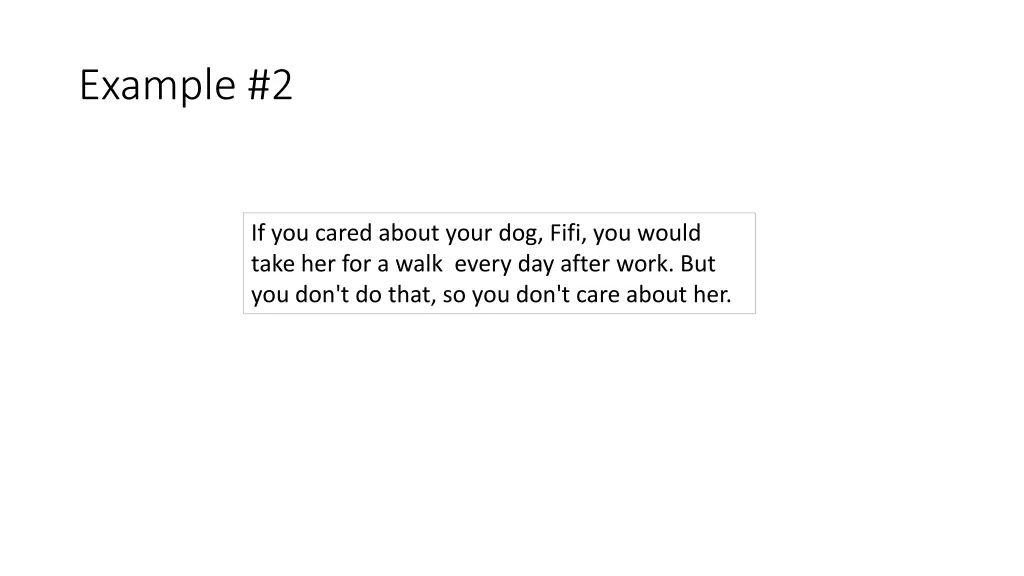
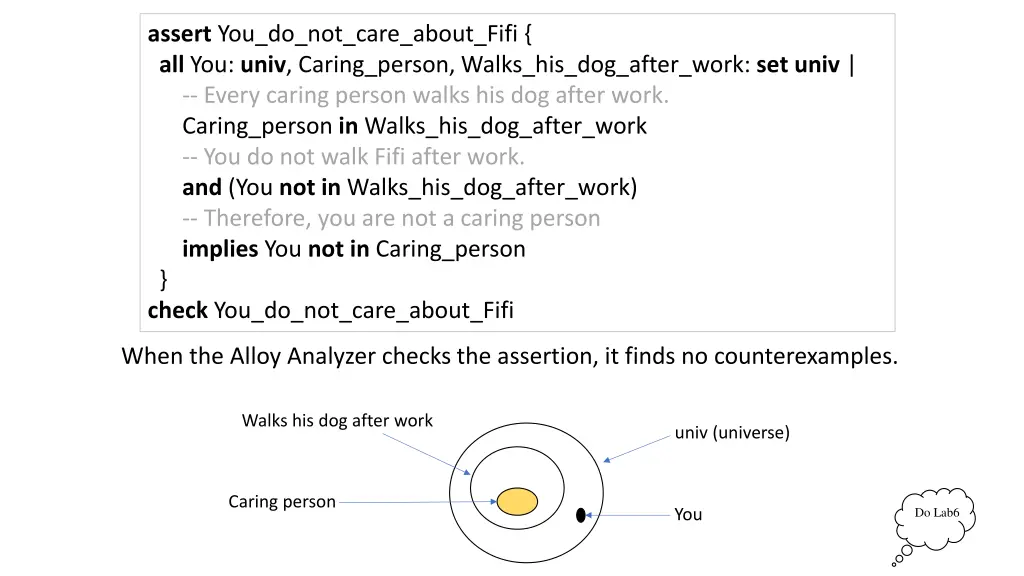
Example #2 If you cared about your dog, Fifi, you would take her for a walk every day after work. But you don't do that, so you don't care about her.
assert You_do_not_care_about_Fifi { all You: univ, Caring_person, Walks_his_dog_after_work: setuniv | -- Every caring person walks his dog after work. Caring_person in Walks_his_dog_after_work -- You do not walk Fifi after work. and (You notin Walks_his_dog_after_work) -- Therefore, you are not a caring person implies You notin Caring_person } check You_do_not_care_about_Fifi When the Alloy Analyzer checks the assertion, it finds no counterexamples. Walks his dog after work univ (universe) Caring person Do Lab6 You